Bodega García Hidalgo: Plan Your Ronda Wine Visit
Bodega García Hidalgo sits in the Guadalcobacín valley outside Ronda. Here is what its tasting includes, how bookings work, and how to reach it from town.
On this page
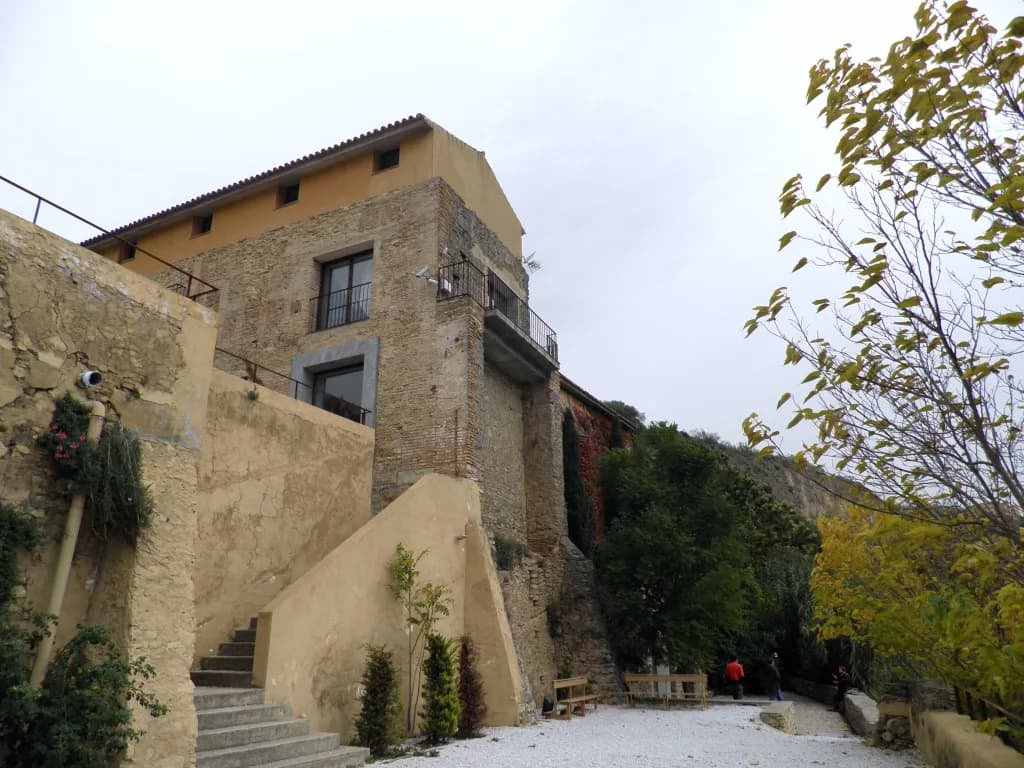
Bodega García Hidalgo is the Ronda-area winery to pick when you want the tasting to turn into a long table rather than a slot in a schedule. The family estate sits in the Guadalcobacín valley, roughly eight kilometres from Ronda on the road towards Arriate, and bottles its organic wines under the Alcobazín label. It is one of around twenty small bodegas scattered through the hills between Ronda and Arriate, most of them family-run and most of them working by appointment.
This guide covers what the estate publishes about its visits, what the food decision means for your afternoon, and how to build the day around it. Distances and taxi ranges come from a local hotelier's guide to the Serranía's bodegas, and the wider appellation context from Spain's official tourism site. Where the winery has not published a figure, the practical move is to ask directly rather than assume; the broader Ronda wine tasting picture is worth reading first if you are still choosing between estates.
Where the Estate Sits in the Serranía
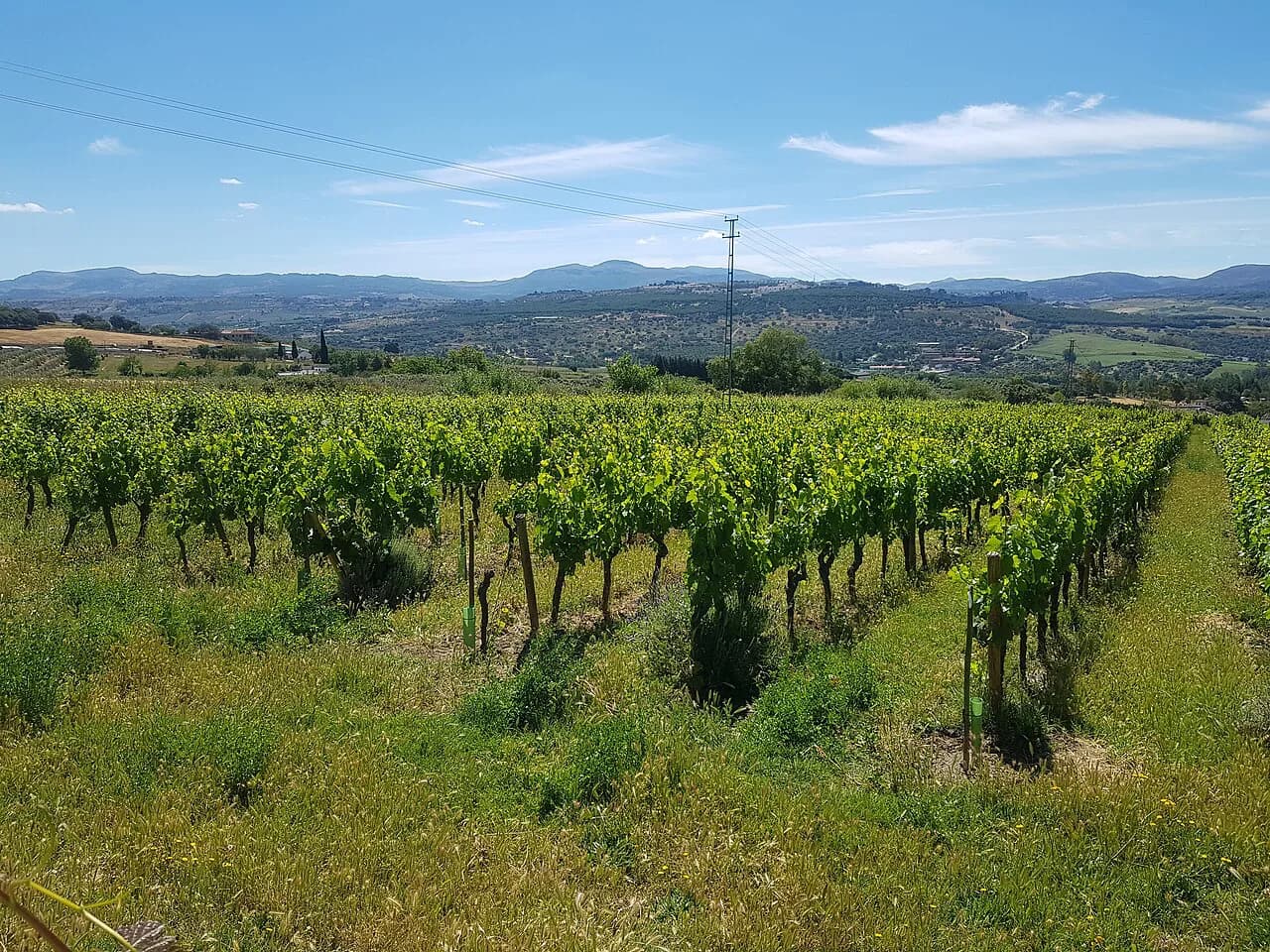
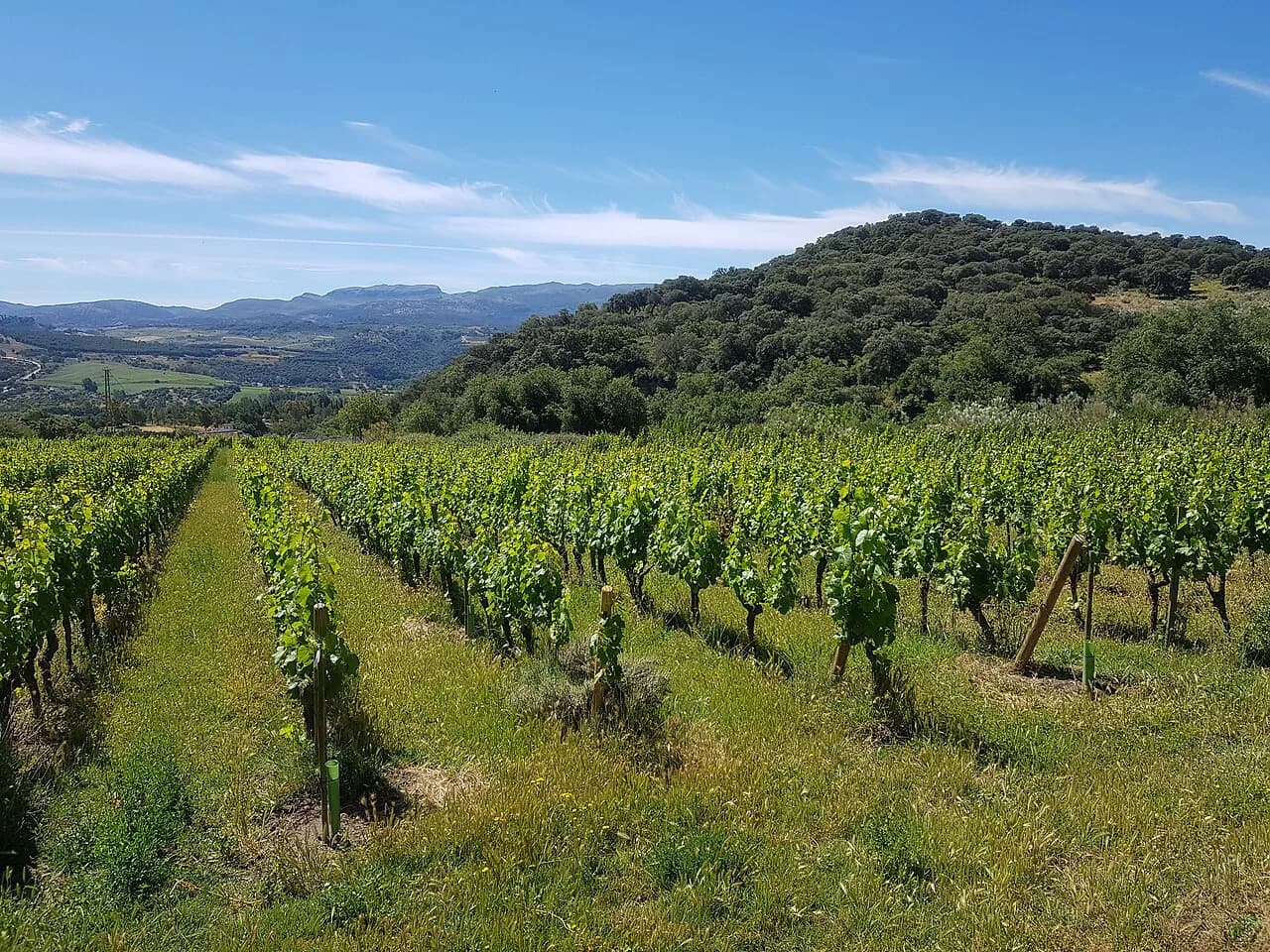
The winery lies in the green of the Guadalcobacín valley, eight kilometres out from Ronda on the Arriate road. That puts it in the same short-drive band as most of the region's visitor-ready bodegas, which cluster between three and fifteen kilometres from town along the Arriate and Campillos roads and the MA-7402 towards the Roman ruins at Acinipo. Distances are short, but these are country roads with modest signposting, so a navigation app and a note of the turn are worth having.
The estate appears in the shortlist of six Serranía bodegas worth an afternoon, described as the most affordable serious tasting in the area and the one where the food matters as much as the wine. Nearby neighbours include Cortijo Los Aguilares, north of town on the Ronda to Campillos road, and Bodega Doña Felisa, nine kilometres north along the MA-7402. Grouping visits by road rather than by reputation saves you a lot of backtracking on narrow lanes, and the same group-by-road logic applies if you plan wine tasting in Avignon, where the appellation villages sit on distinct routes.
What the Published Visit Covers
The estate's own site describes a visit that takes in the vineyards and their cultivation, the winemaking, the ageing room and a tasting of three wines. That is a tighter pour count than some neighbours: Bodega F. Schatz, ten kilometres north towards Ronda la Vieja, pours four to six biodynamic wines, and La Melonera, near Llano de la Cruz, runs visits of around two and a half hours with tapas. Three wines with a walk through the vines and the ageing cellar is a coherent, unhurried format rather than a flight for note-takers.
A typical Serranía visit runs one to two and a half hours and usually begins outdoors among the rows before moving into the cellar and then to the tasting. Expect the wines to be poured alongside local cheese, ham and bread. Tastings in the region are commonly offered in Spanish and English, and often in German or French; ask which language your host will use when you make the booking rather than on arrival.
Tapas or the Full Table: The Booking Decision That Matters
The key choice at García Hidalgo is food. You can take a simple tasting with tapas, or stay on for a fuller table with paella and dessert, which the local guide reports is the version most guests end up choosing. Because the kitchen is cooking for you rather than plating from a set menu, that decision has to travel with your booking request, not arrive as a question on the day.
Say which format you want in your first message, and add dietary requirements at the same time. Paella and dessert are not casual add-ons in a small family kitchen, and vegetarian or allergy needs are far easier to accommodate with notice. If you are weighing the estate against a more formal seated tasting elsewhere, this is the bodega to choose when the table, the orchard and the conversation are the point of the afternoon.
Price and How to Book
Visits across the Serranía sit broadly between fifteen and fifty euros per person and average close to thirty-five, with longer visits including a full meal costing more; the winery's own rates and what the lunch adds are best confirmed on its site or by message. Those regional figures come from a hotelier's guide, not from the estate's tariff, so treat them as a planning band rather than a quote.
Nearly every bodega in these hills receives visitors by appointment, and several ask for a minimum group size. Rather than guess at García Hidalgo's rules, use the contact page to send the essentials in one message: date, two or three alternative times, party size, tapas or full table, dietary needs and preferred language. A day or two of notice is usually enough, though weekends and harvest fill sooner.
Getting There Without Driving
A taxi from Ronda to most bodegas costs roughly ten to twenty euros each way, which makes a single visit reasonable and a circuit of three hard to justify. García Hidalgo's eight-kilometre position on the Arriate road falls squarely in that band. Descalzos Viejos, three kilometres from the centre and walkable, is the only one of the group you can comfortably reach on foot.
Book the return at the same time as the outward trip, or ask the winery to call a car when you finish, since the valley has no taxi rank and the fuller lunch format makes the finish time unpredictable. A six-hour guided option runs from Málaga with minivan transport, two unnamed boutique cellars, at least eight wines between them and cheese and cold cuts, priced at ninety-five euros per person, running Monday to Saturday and requiring two days' notice; it runs in English, Spanish and Italian and does not name its wineries, so enquire before assuming García Hidalgo is included.
Anyone driving should stay off the wine and use the spittoons, so that the designated driver is not the only sober person at a table built around paella and a tasting. That is the practical argument for the taxi or the tour here: the estate's selling point is a long, generous lunch, which does not combine well with the Arriate road afterwards.
Pairing It With a Second Visit or With Ronda Itself
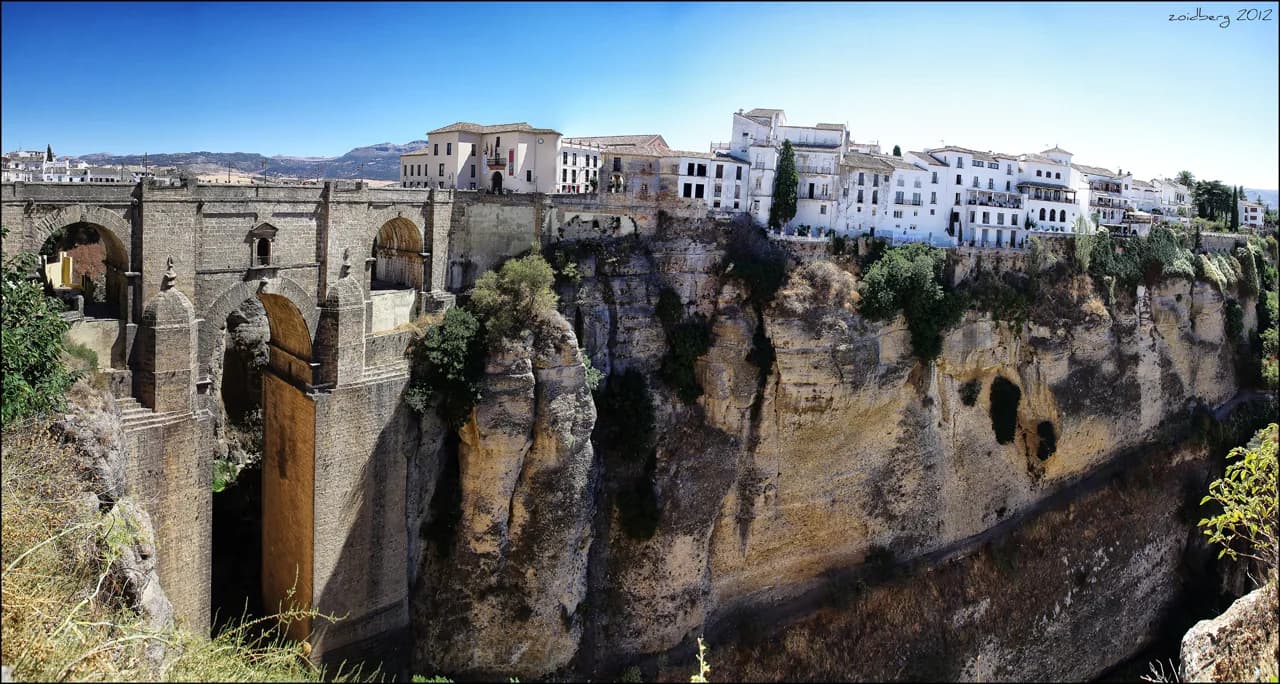
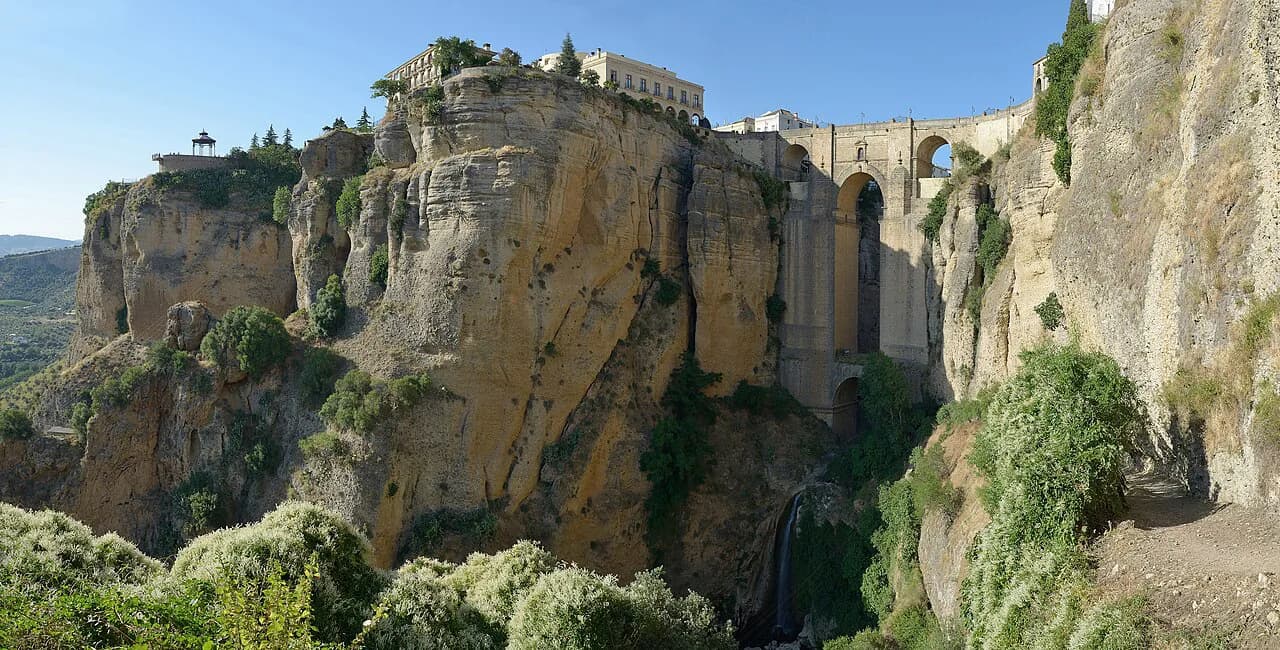
With a driver, García Hidalgo pairs naturally with a second bodega on the same side of town. Cortijo Los Aguilares, on the A-367 towards Campillos, pours structured reds and Pinot Noir by appointment only, and the local guide recommends pairing it with another estate on the same road when someone else is driving. Two visits plus the old town makes a full but unhurried day, and a tasting takes only a morning or an afternoon, leaving the Puente Nuevo, the old town and the bullring for the other half.
Without a car, the sensible plan is one bodega and Ronda. Take a taxi out to the valley in late morning, eat the long lunch, return mid-afternoon, and walk the old town in the evening light. Descalzos Viejos, in a sixteenth-century convent on the lip of the Tajo with steel vats under frescoes, is the alternative for a car-free day, and its terrace looks straight down into the gorge.
The Wines You Will Be Tasting
Ronda's wines belong to the DO Sierras de Málaga, within the Serranía de Ronda subzone, one of three designations covered by the Ronda and Málaga Wine Route alongside Málaga and Pasas de Málaga. The Sierras de Málaga designation covers whites, rosés, reds and sweet reds, and the subzone has six wine-producing areas. That structure explains why a bottle from eight kilometres outside town can carry a broad regional name rather than the town's own.
Reds dominate local production, built on Syrah, Petit Verdot, Cabernet Sauvignon, Merlot and Tempranillo, with recovered native varieties such as Romé and Tintilla becoming a signature; whites include Chardonnay, Sauvignon Blanc and Macabeo. The vineyards sit between seven hundred and a thousand metres, where cold nights slow ripening and limestone forces roots deep, giving reds structure and lift rather than heat. Petit Verdot in particular ripens fully in the area's clay soils and is the variety many growers here point to first.
The Alcobazín wines are the estate's organic range, and the visit's three-pour format is a good match for a producer whose identity rests on farming rather than on a long flight of cuvées. Ask which varieties are in the glass as they are poured; growers here are used to explaining the altitude, soils and varieties, and the vineyard walk is where that conversation starts. Ronda's winemaking history runs back to Phoenician and Roman times, though most vines now in the ground were replanted within living memory after phylloxera, war and poverty ended the earlier tradition.
When to Go and What the Season Changes
Spring and autumn are the best windows: April to June brings wildflowers through the vines, and September and October bring the harvest, when the bodegas are at their busiest and most alive. Summer visits work better early in the morning or late in the day, when the limestone stops giving back the heat it stored overnight. If you want the full table with paella, a midday booking is the natural fit, which in high summer means arriving before the valley warms up.
Harvest and weekends fill sooner, so book further ahead if your dates fall in late September or on a Saturday. The estate has not published fixed opening days, so your message should propose a date and let the reply set the time. For a wider view of how the region's tasting days fit together, the guide to Ronda wine tours covers operators, transport and how a guided day compares with going independently.
When This Bodega Is the Wrong Choice
Skip García Hidalgo if you have no car and only a short window, because the eight-kilometre taxi each way and a leisurely lunch will eat most of an afternoon. It is also the wrong pick for a group expecting a formal seated masterclass with a long flight of wines; the pour count is three, and the format leans on the vineyard, the orchard and the table rather than on structured comparison. The local guide frames it as a warm, generous visit happiest with a small group around the table, and that is the experience to book it for.
It is also worth knowing that the estate's own pages give the shape of the visit without a public tariff or a calendar, so an independent traveler needs one exchange before committing. If you want a published price, a fixed timetable and a bookable slot in advance, a guided tour or an estate that sells online may suit better. Otherwise, this is the bodega for a slow midday in the Guadalcobacín valley.
Plan Your Visit
Build the day around the table: request a late-morning arrival, choose between the tapas tasting and the full lunch with paella and dessert when you write, and confirm the return taxi before you sit down. Bring the party size, two possible dates, any dietary needs and your preferred language in the first message, and use the estate's contact page to enquire rather than turning up.
If you are staying in Ronda without a car, treat García Hidalgo as a single destination reached by taxi, and give the old town the rest of the day. With a driver, add one more estate on the Arriate or Campillos road and keep the circuit to two. Either way, the driver stays off the wine, and the group's tasting day stays a good one.
Frequently Asked Questions
Where is Bodega García Hidalgo and how far is it from Ronda?
The estate is in the Guadalcobacín valley, about eight kilometres from Ronda on the road towards Arriate. That is a short drive on country roads with modest signposting, so plan the route before setting out and allow extra time if you are meeting a fixed booking.
What does a visit at Bodega García Hidalgo include?
The winery describes a visit through the vineyards and their cultivation, the winemaking, the ageing room and a tasting of three wines. The local format usually adds local cheese, ham and bread, and you can extend the tasting with tapas or a fuller table with paella and dessert.
How much does a visit cost?
The estate does not publish a public tariff, so ask for the current rate when you book. Visits across the Serranía generally fall in a broad band of fifteen to fifty euros per person, averaging near thirty-five, and formats that include a full meal cost more.
Do I need to book in advance, and is there a minimum group size?
Yes, book ahead: almost every bodega in the area receives visitors by appointment only, and several ask for a minimum party. The estate's own conditions are best confirmed in your first message, which should include your date, party size and whether you want the tapas or the full table.
What is the difference between the tapas tasting and the full lunch?
The tapas version is a shorter tasting with local cheese, ham and bread. The full table adds paella and dessert and takes considerably longer, so choose it when the meal is the point of the day and say so at booking so the kitchen can plan.
Can I get there without a car?
A taxi from Ronda costs roughly ten to twenty euros each way, which suits a single visit rather than a circuit of several bodegas. Arrange your return trip in advance or ask the winery to call a car, and note that Descalzos Viejos, three kilometres from the centre, is the only easy walk.
Which wines should I expect to taste?
The estate bottles organic wines under the Alcobazín label, and the visit includes three wines. Across the Serranía de Ronda subzone of the Sierras de Málaga designation, expect reds built on Syrah, Petit Verdot, Cabernet Sauvignon, Merlot and Tempranillo, plus native varieties such as Romé and Tintilla.
When is the best time of year to visit?
Spring and autumn are the most rewarding, with wildflowers in the vineyards from April to June and the harvest in September and October, when the bodegas are busiest. In summer, book early in the morning or late in the day, and reserve further ahead for weekends and harvest.
Sources
Notes for your next wine trip
Optional updates to our winery and wine-town guides.
You might also like
Continue reading
More guides you'll find useful