Wine Tasting in Santorini: Which Wineries to Visit
Plan wine tasting in Santorini: which wineries welcome visitors, where they sit near Fira and Oia, what tastings cost, and how to get around without driving.
On this page
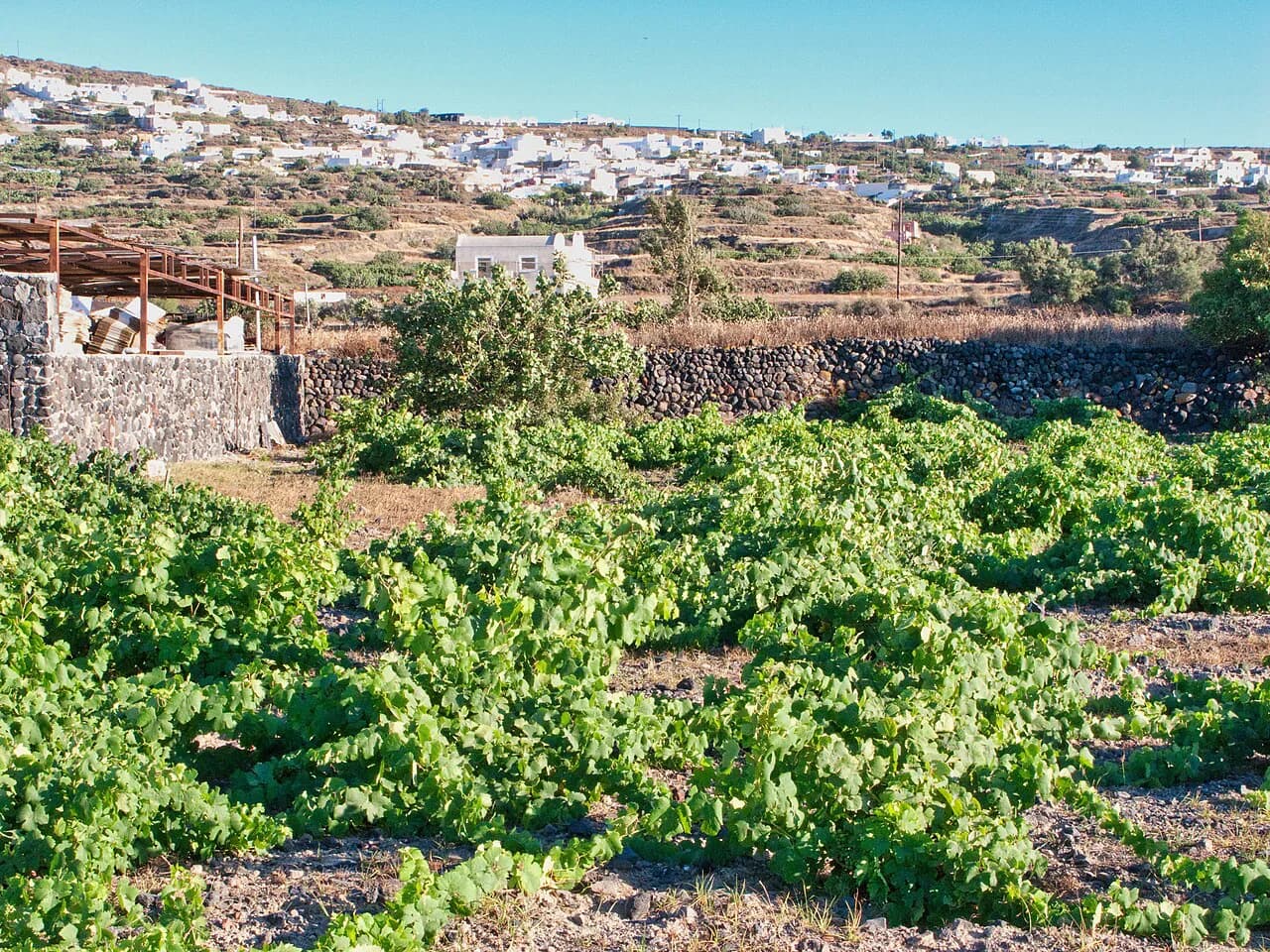
Santorini is one of the few Greek islands where a wine day can be planned around named estates rather than a single cooperative hall. The vineyards sit on volcanic ash and pumice, the vines are trained into low basket shapes called kouloura to survive wind and salt, and many parcels are decades or centuries old. That makes the wines distinctive and, by Greek standards, relatively expensive to produce.
The practical challenge is not finding a winery but stringing a few together. Visitors based in Fira or Oia are usually 15 to 30 minutes by road from the main cluster of cellars around Pyrgos and Megalochori, with a second group near Kamari and Exo Gonia. This guide covers which estates receive visitors, what a tasting involves, how booking works and how to build a route.
Why Santorini Tastes Like Nowhere Else
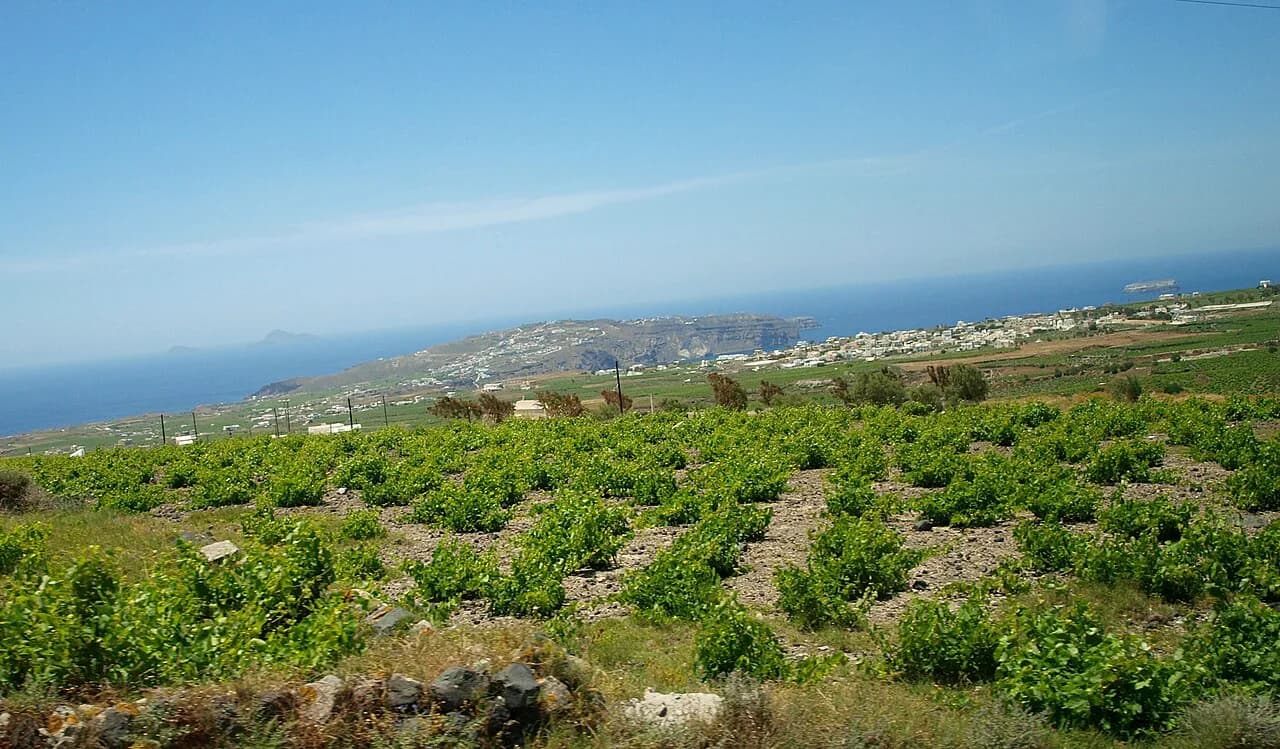
The island's vineyards sit on lava, ash and stone, and rainfall is scarce enough that vines draw much of their moisture from overnight humidity and sea mist. Growers coil each vine into a low basket so the fruit ripens inside a windbreak close to the warm ground. Because the soil is so inhospitable, the vineyards escaped the phylloxera blight that destroyed most of Europe's vines in the nineteenth century, and some parcels are said to be several hundred years old.
For a visitor, the visible consequence is yield: old, ungrafted, dry-farmed vines produce little fruit per hectare, which is the main reason Santorini bottles cost more than wines from irrigated mainland regions. Expect to pay a premium in tasting rooms and shops and to see vineyard names and old-vine claims on labels. The scenery is part of the experience, so allow time to walk a vineyard edge rather than treating the estate as a bar.
The Wines to Know Before You Book
Assyrtiko is the island's flagship white: bone dry, high in acid and marked by a salty, mineral edge that comes through even in young bottles. Nykteri is a richer white style, historically picked and pressed at night, while Vinsanto is the island's sweet wine, made from grapes sun-dried for days before fermentation and aged for years in barrel. Athiri and Aidani are softer white grapes often blended with Assyrtiko, and Mandilaria supplies the reds and rosés.
Tasting rooms usually pour a spread across these styles, so it helps to decide in advance whether you want to focus on dry Assyrtiko, on sweet Vinsanto or on a broad flight. If you plan to buy bottles, note that Vinsanto is the one style that travels and ages well; dry whites are best drunk young. Ask which wines are estate-grown and which are négociant blends, a distinction that matters on an island where vineyard land is fragmented.
How the Wine District Is Laid Out
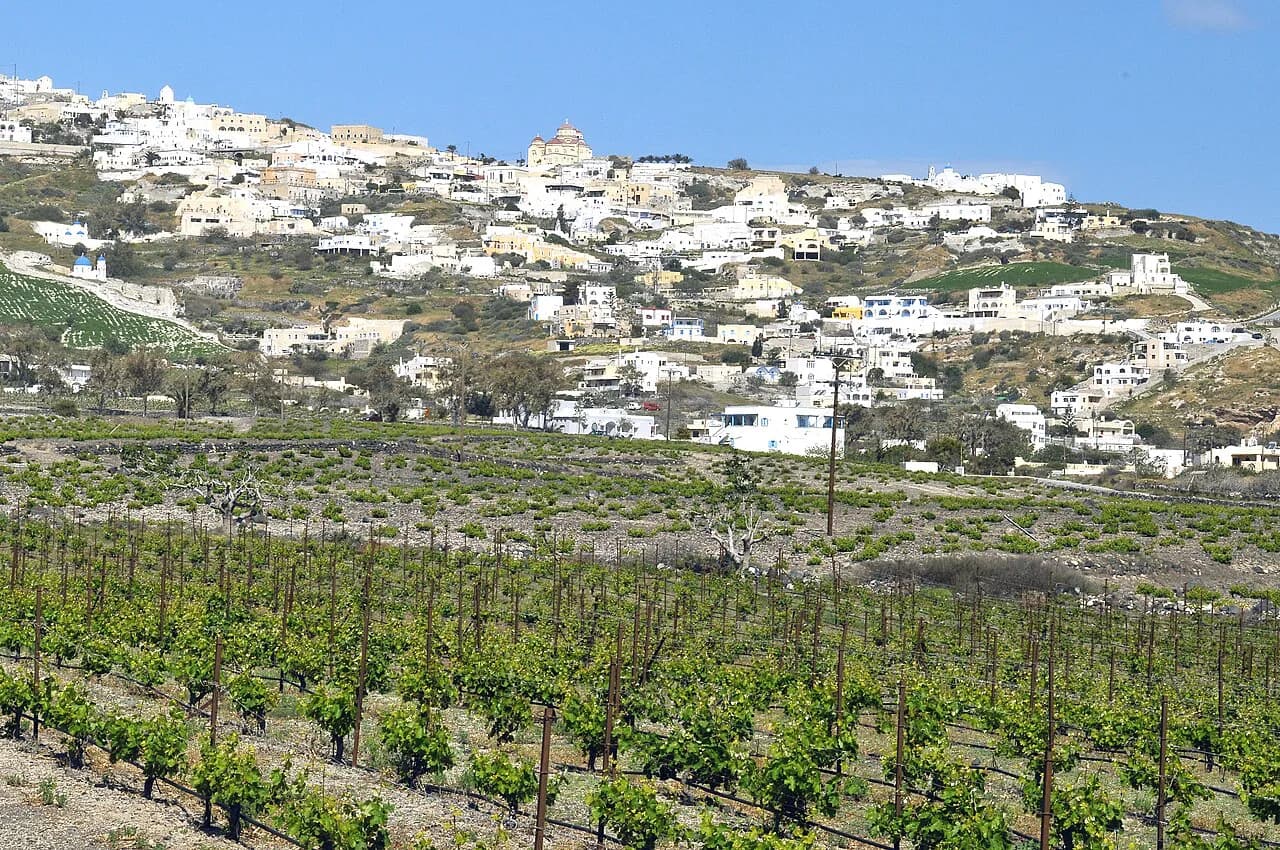
Most visitable wineries fall into three clusters. Pyrgos and Megalochori sit in the center of the island, close to each other and within easy reach of Fira. Exo Gonia and Kamari lie to the east and southeast, near the airport and the coast. Oia, in the north, has its own estate and is the least convenient to combine with the others on the same afternoon.
A sensible day groups Pyrgos and Megalochori together, since the drive between them is short and the two villages offer very different experiences: a large cooperative visitor center and small family cellars. Exo Gonia and Kamari pair naturally for a second day or a long half-day. Trying to add Oia to a Megalochori afternoon means crossing the island twice; better to treat Oia as its own stop on a northern day. If you are weighing Crete instead, our guide to wine tasting in Chania covers a similar cluster-by-village approach. If your trip later moves to Croatia, our guide to wine tasting in Hvar takes the same village-by-village approach.
SantoWines (Pyrgos): The Cooperative Visitor Center
SantoWines sits at Pyrgos, on the caldera rim, and runs a dedicated wine tourism center with tastings, a restaurant and a shop, open year-round according to the cooperative. It is the largest and most organized single stop on the island, with caldera views from the terrace and a gravity-fed production building terraced down the cliff, and with more than 1,200 cooperative members behind it.
Tasting options range from a simple flight to a guided tour of the production levels with food. One travel account reports paying about €50 for the tour and tasting, which included a four-wine flight with traditional snacks; treat that figure as indicative, since the cooperative sells several packages and prices change. Booking online is the reliable route in peak season, and groups of more than ten are handled separately.
Domaine Sigalas (Oia): The Booking-First Stop
Domaine Sigalas, on the northern edge of Oia, is the island's most food-focused winery visit, with seated tastings and a kitchen that produces full plates rather than crackers. Its wines, particularly Assyrtiko and Mavrotragano, have drawn attention from international critics, and the estate's tasting experiences are best reserved ahead. Because it sits in Oia, it works poorly as a quick add-on to a southern circuit.
Plan Sigalas as a lunch stop rather than a flight: the combination of a long tasting and a proper meal takes two hours or more. Ask when booking whether you are reserving a tasting with food, a table, or both, since those formats can differ. Oia's afternoon crowds and parking squeeze make an early slot the more comfortable choice.
Gavalas (Megalochori): Small Family Cellar, Lower Prices
Gavalas is a family winery in Megalochori with a history stretching back centuries and a compact, old-fashioned cellar rather than a view. Visits are relaxed and the prices sit at the low end of the island's scale: one account reports a four-wine tasting at about €18 with cheese, crostini and olives. Late August is the moment to ask about traditional grape stomping, which the family has been known to let visitors join.
Because Gavalas is small, it fills quickly when a tour group arrives; going earlier in the day improves your chances of a table and a conversation with whoever is pouring. The trade-off compared with SantoWines is real: no caldera panorama and no restaurant, but a more personal introduction to the wines at roughly a third of the price.
Venetsanos (Megalochori): Gravity, Views and Sunset
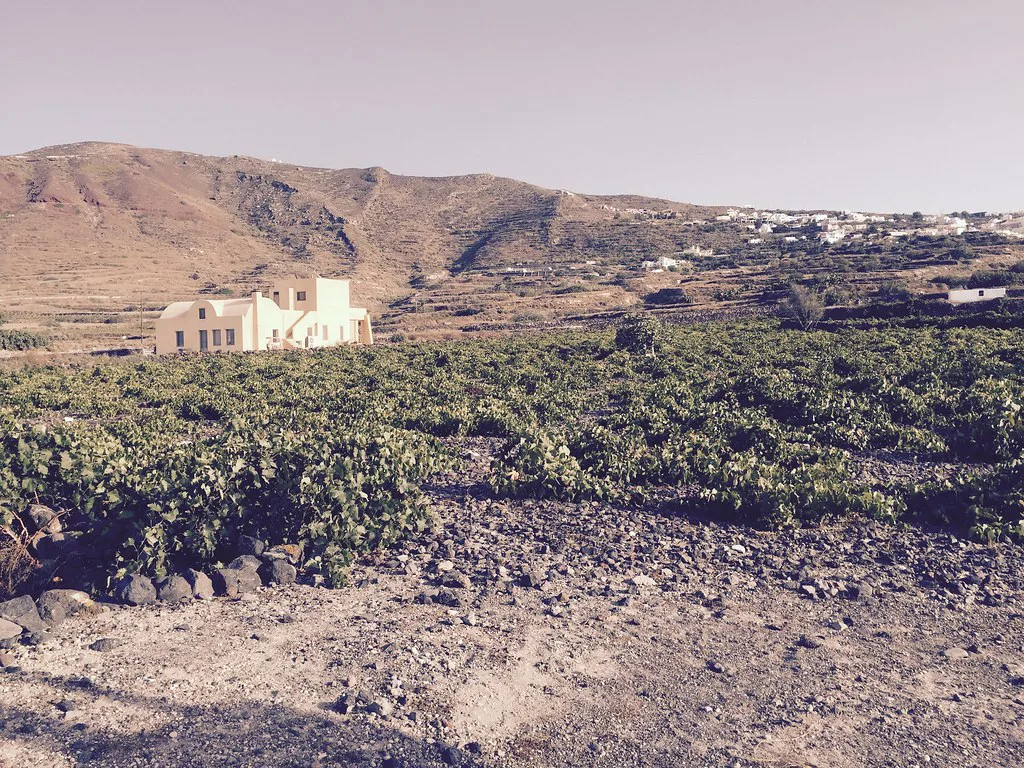
Venetsanos clings to the cliff above Athinios port, and its 1940s design used gravity to move wine downhill toward the harbor when electricity was scarce. The cellar tour is short but architecturally interesting, and the terrace has one of the most dramatic caldera outlooks on the island. Tastings come with food pairings and light lunches, and the estate sells sunset slots on its terrace.
Sunset is the reason most people book here, which means the late sitting is the one to reserve first and the one most exposed to weather. If you want the view without the crowd, an earlier afternoon tasting delivers the same panorama. Pair it with Gavalas in the same village for a contrast between scenery and cellar craft.
Artemis Karamolegos (Exo Gonia): Garden, Cellar and Vinsanto
Artemis Karamolegos occupies a garden site in Exo Gonia, east of Pyrgos, with cellar tours and a kitchen that uses produce from the property. The estate is a good place to understand Vinsanto, since the grapes are dried in the sun for around two weeks before pressing. Tastings here are generally calmer than at the caldera-rim estates.
Exo Gonia sits close to Kamari and the airport, so the Artemis Karamolegos estate slots neatly into an eastern route. Ask on arrival whether a cellar tour is running that day; smaller estates often run tours at set times.
Estate Argyros and Boutari: The Bigger Names
Estate Argyros near Episkopi Gonia is known for long-aged Vinsanto as well as dry Assyrtiko. Boutari's Santorini facility is a striking white-domed building that hosts tastings, tours and art programming, and the company, established in 1879, has been producing wine on the island for decades. Both are established, professional visits rather than rustic cellar drop-ins.
These estates suit travelers who want a structured tour and a broad lineup in one stop. They are also the most likely to be on coach itineraries, so an opening-time slot is the calmer choice. Confirm tour times directly when you book.
What a Tasting Actually Includes
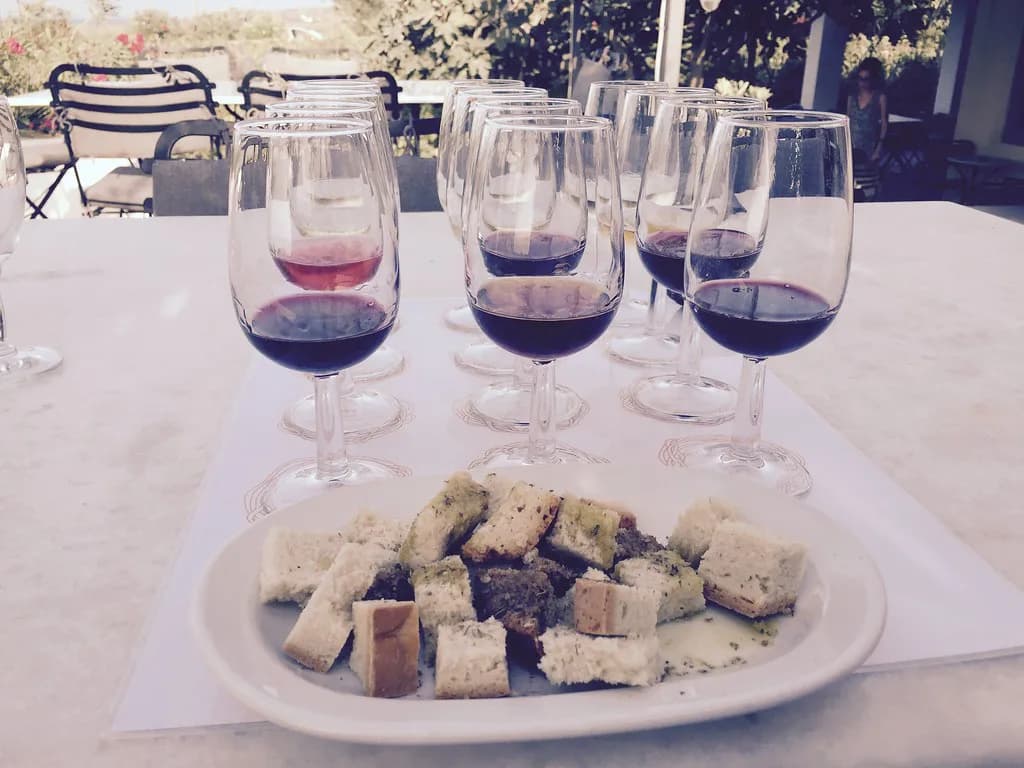
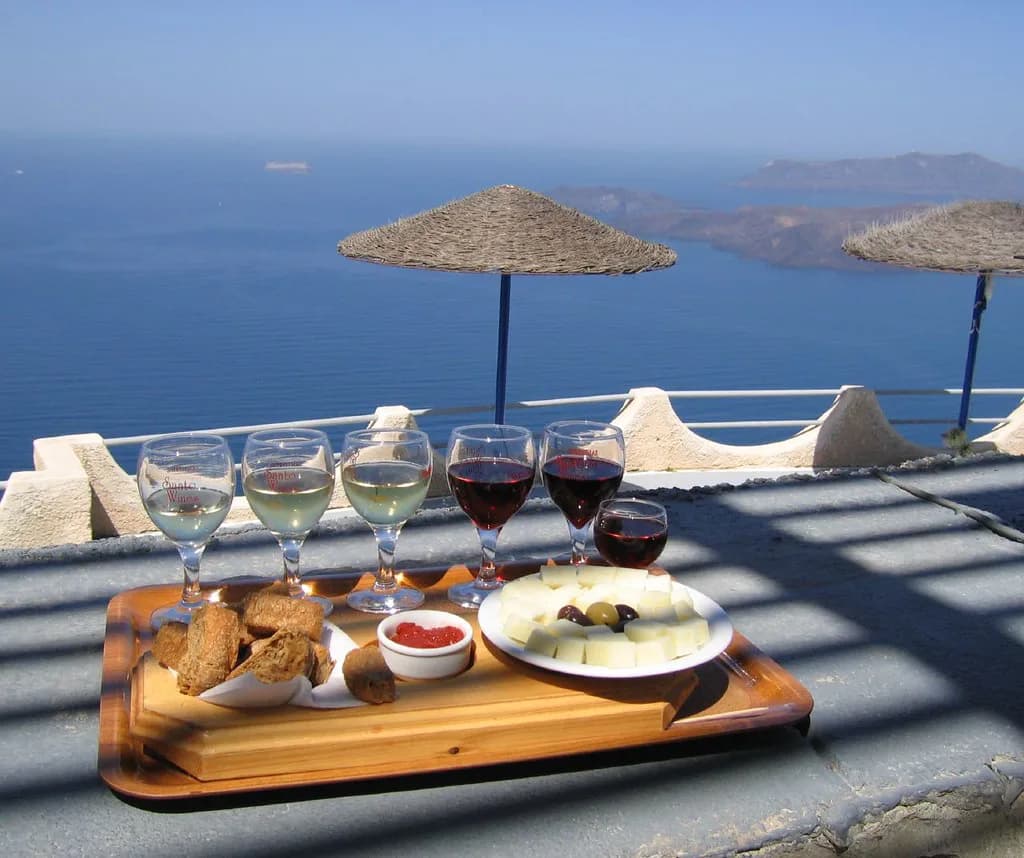
A standard Santorini tasting is a short flight of wines, usually including at least one Assyrtiko and finishing with Vinsanto, poured at a table or bar with water and breadsticks or a small platter of cheese and olives. Longer experiences add a walk through the production area or cellar, a seated food pairing, or a guided comparison of vintages. Allow 45 minutes for a simple flight and two hours for a tour with food.
Food matters more than on most wine routes because Santorini's whites are high in acid and benefit from something to eat alongside. If you are visiting two estates in an afternoon, book the food pairing at one and keep the other to a short flight. Ask whether the pourer speaks through the wines or leaves you to taste alone, since that shapes how much you learn.
Prices and Booking: What to Expect
Reported tasting prices on the island range from roughly €18 for a four-wine flight at a small family cellar to about €50 for a guided tour with food at the cooperative. Those figures come from traveler accounts rather than official price lists, so treat them as a bracket rather than a quote. Estate restaurants and sunset slots cost more than a bar tasting.
Booking culture varies by size. Large estates take online reservations and run fixed tour times; small family cellars often accept walk-ins but may have limited seats when a group is in. When you reserve, ask how many wines are poured, whether a cellar tour is included, whether food is part of the price, and how long the slot lasts. Those four questions settle most of the uncertainty.
Getting There Without Driving
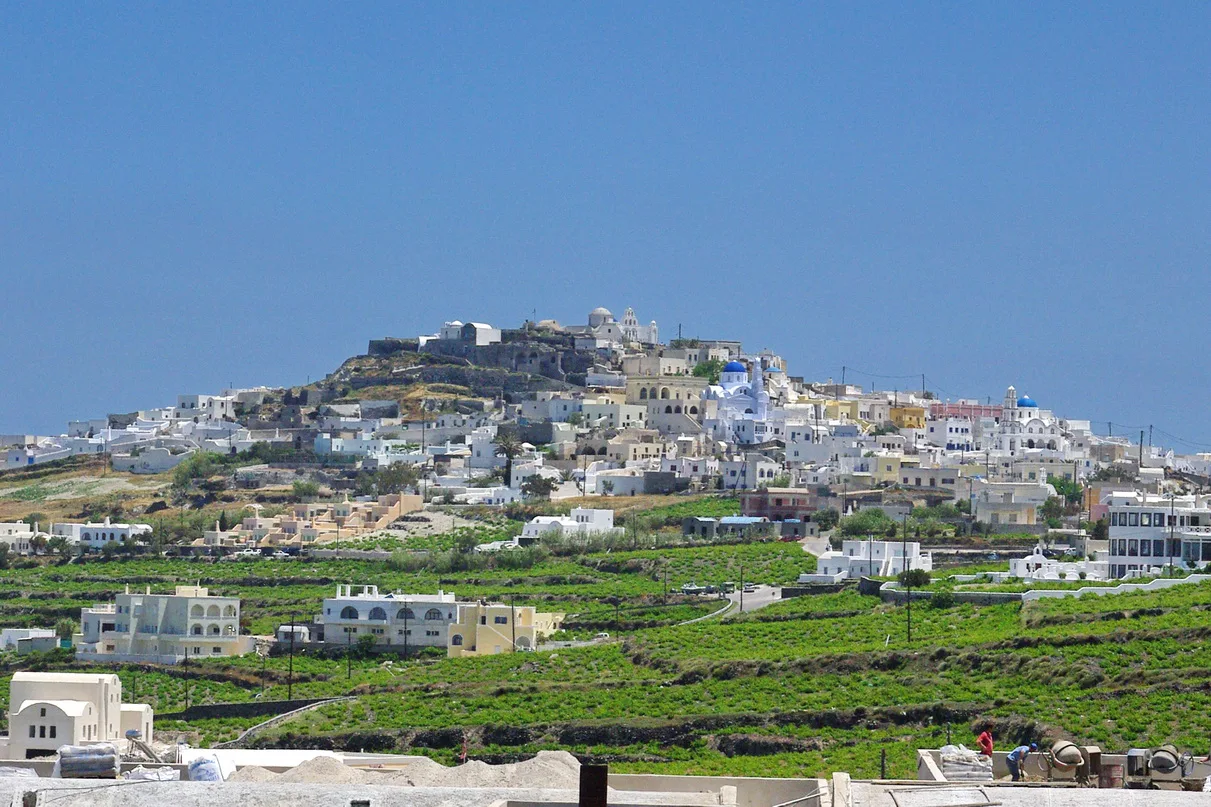
Santorini's buses connect Fira with the main villages, including Pyrgos, Megalochori and Oia, but they stop in village centers rather than at winery gates, so the last stretch is a walk or a short taxi ride. Taxis are limited in number and busy at sunset, when everyone wants the same caldera views. Organized small-group wine tours solve both problems by collecting you and driving between estates.
The trade-off is control: a tour sets the pace and the estates, while independent travel lets you linger but puts you at the mercy of taxi availability. For two people doing three tastings, a tour often costs less than the combined taxis and removes the designated-driver problem entirely. Anyone driving should use the spittoon rather than finish each glass.
Building a Half-Day or Full-Day Route
For a half-day from Fira, start at SantoWines in Pyrgos when it opens, move to Gavalas in Megalochori for a small-cellar contrast, and finish with the Venetsanos terrace if you want the caldera view. That route covers three very different scales of visit within a short drive and leaves the evening free. Add a fourth stop only if you are spitting and eating.
For a full day, run the eastern cluster in the morning, taking in Exo Gonia and the estates near Kamari, then cross to Pyrgos and Megalochori in the afternoon. Keep Oia and Sigalas for a separate northern day built around lunch. Trying to cover both coasts in one day means spending more time in the car than at the bar.
If you want more structure, the island also has a wine museum and other cellar options worth folding into a route.
Practical Timing: Harvest, Crowds and Heat
Harvest on Santorini runs from late summer into early autumn, with Vinsanto grapes left to dry after picking, so August and September bring activity in the vineyards and, at some family estates, stomping events. Cruise-ship days swell the caldera-rim wineries around midday; early morning and late afternoon are calmer. Summer heat is real, and tasting rooms with terraces are far more pleasant in the shoulder hours.
Sunset is the island's busiest slot, so book terrace tables well ahead if that is the plan and have an indoor or earlier alternative ready. Winter visits are quieter but some smaller estates keep reduced hours, so confirm before making a special trip.
Responsible Tasting on a Volcanic Island
Santorini's roads are narrow, winding and busy with quad bikes, which makes the designated-driver rule more important than on flat wine routes. If you are driving, taste sparingly and spit; otherwise book a tour or take taxis between village stops. The same applies to the strong Vinsanto served at the end of most flights.
Plan Your Visit
Santorini rewards a plan built around two or three estates rather than a tick-list. Pick one large, organized visit for context, one small family cellar for conversation, and one terrace for the view, then group them by village so the driving stays short. Book the sunset slot and any seated food experience first, and leave the rest flexible.
Before you go, decide how you will get home from the last tasting: a pre-booked tour, a taxi arranged in advance, or a driver who spits. That single decision shapes the rest of the day. Confirm tour times and tasting formats directly with each estate when you reserve, and the rest follows easily.
More wine guides from Santorini
- Domaine Sigalas
- Estate Argyros
- Gavalas Winery in Megalochori
- Santorini Wine Tours
- Santorini Wineries
- Venetsanos Winery
- Visiting Santo Wines in Pyrgos, Santorini
- Hatzidakis Winery
- Santorini Wine Museum
- Vinsanto Santorini
- Visiting Artemis Karamolegos Winery in Exo Gonia, Santorini
- Winery Hotel Santorini
- Art Space Santorini
Frequently Asked Questions
Which Santorini winery is best for a first visit?
SantoWines at Pyrgos is the easiest introduction because it runs a full visitor center with tastings, a restaurant and a shop, and the caldera view gives immediate context. Pair it with a small family cellar such as Gavalas in Megalochori to see how differently the island's wineries operate.
What wine is Santorini famous for?
Assyrtiko is the signature white, valued for its dry, high-acid, mineral character grown on volcanic soil. The island is also known for Vinsanto, a sweet wine made from sun-dried grapes and aged in barrel, plus Nykteri, Athiri, Aidani and the red Mandilaria.
How much does wine tasting in Santorini cost?
Traveler accounts put simple four-wine flights at small family cellars in the region of twenty euros, and guided tours with food at the cooperative closer to fifty. Those are reported figures rather than official rates, so ask each estate for its current tasting list and what food is included before you book.
Do you need to book Santorini wineries in advance?
Large estates take online reservations and run fixed tour times, and sunset slots sell out first. Small family cellars often accept walk-ins but fill when a group arrives. Reserve anything with food, a cellar tour or a caldera terrace, and leave one flexible stop for the day itself.
Can you visit Santorini wineries without a car?
Yes, but the last stretch is the issue: buses serve the villages rather than winery gates, and taxis are limited and heavily booked at sunset. Organized small-group wine tours pick you up and drive between estates, which is usually the simplest option if everyone wants to taste.
When is the best time to visit Santorini's wineries?
Late summer and early autumn bring harvest activity in the vineyards, while spring and October offer cooler terrace weather and fewer crowds. Cruise-ship days are busiest around midday. Book sunset slots well ahead whatever the season, and confirm reduced winter hours with smaller estates.
Sources
Notes for your next wine trip
Optional updates to our winery and wine-town guides.
You might also like
Continue reading
More guides you'll find useful