Santorini Wine Tours: Group vs Private & Winery Picks
Compare Santorini wine tours by group size, wineries visited and tasting inclusions, with the visitor-ready cellars and where to find official prices.
On this page
Santorini packs a surprising number of visitor-ready wineries into a small volcanic island, which is exactly why a guided day can feel efficient and chaotic in equal measure. The choice that shapes your day is not which operator has the prettiest website but three smaller decisions: group or private, sunset or daytime, and whether the wineries on the route are the ones you actually want to taste.
Published tasting prices on the island give you a benchmark for judging a bundled tour. Santo Wines sells a tour-and-tasting experience at €50, while Gavalas in Megalochori charges €18 for a four-wine tasting, a gap wide enough to explain most of the difference between a polished cliffside visit and a small family cellar.
Why Santorini Tastes Unlike Anywhere Else in Greece
The island's white wines dominate production, built mainly on Assyrtiko alongside Athiri and Aidani, with the red Mandilaria filling out the range. Vinsanto, a sweet wine made from grapes dried in the sun, is the style most associated with the island's dessert tradition. If you want to understand what makes the local bottles distinctive before you book, start with our overview of wine tasting in Santorini rather than arriving cold at the first bar.
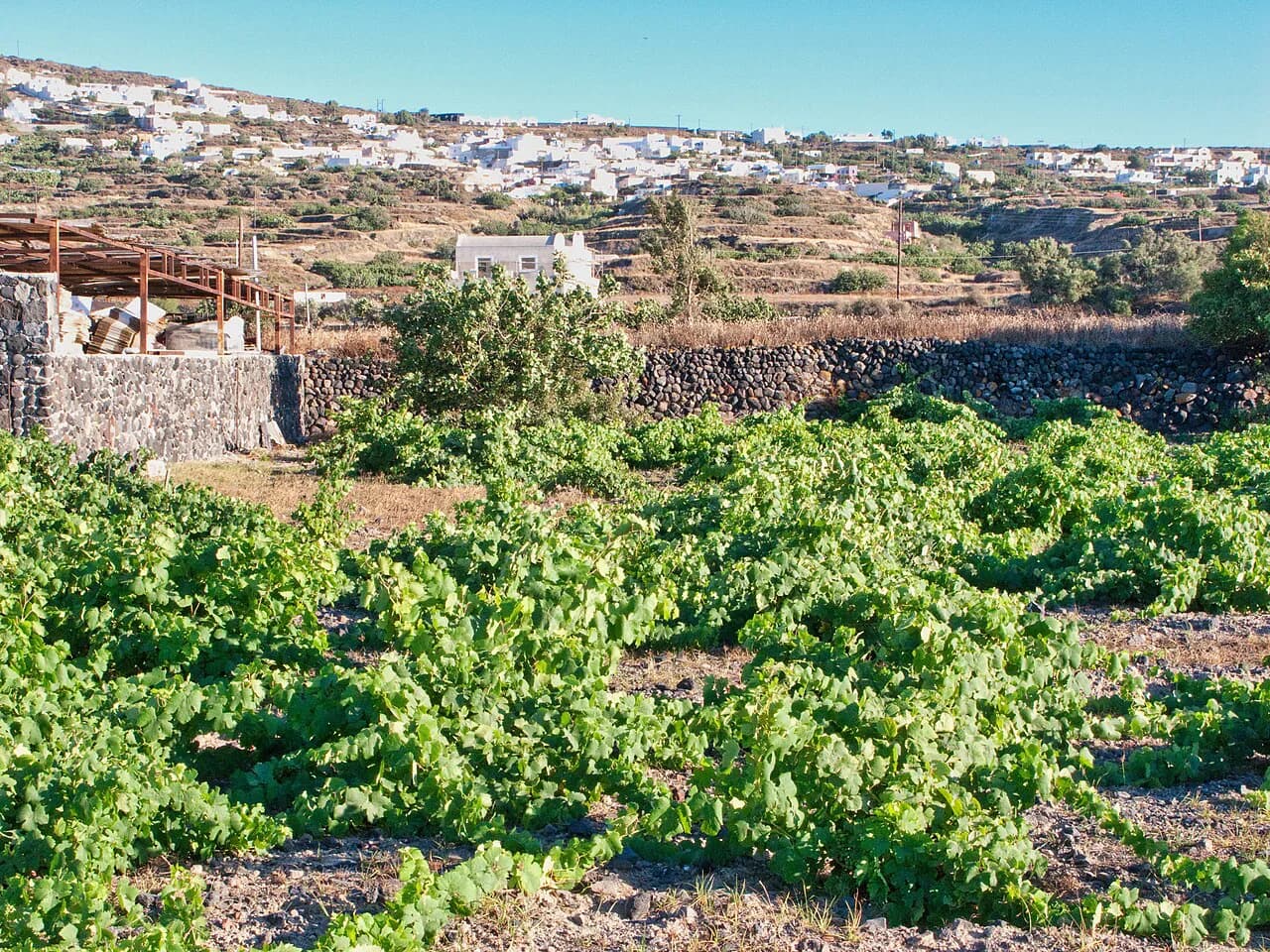
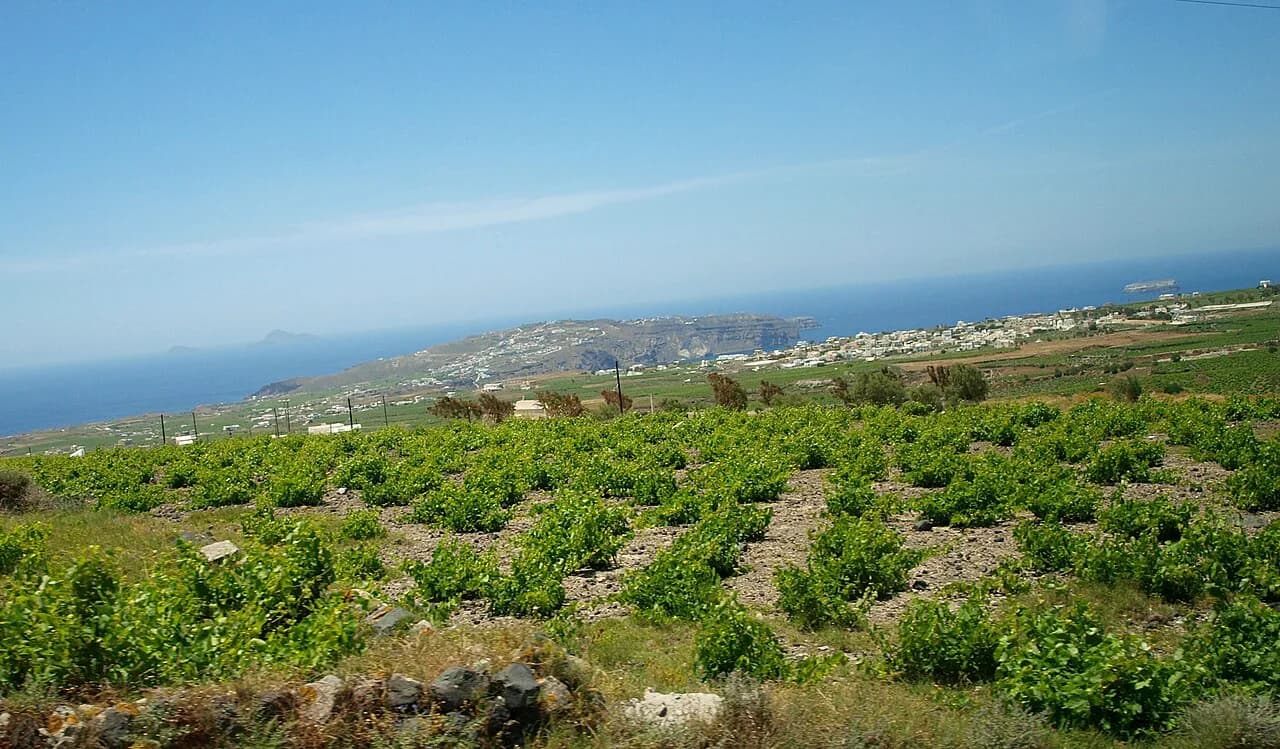
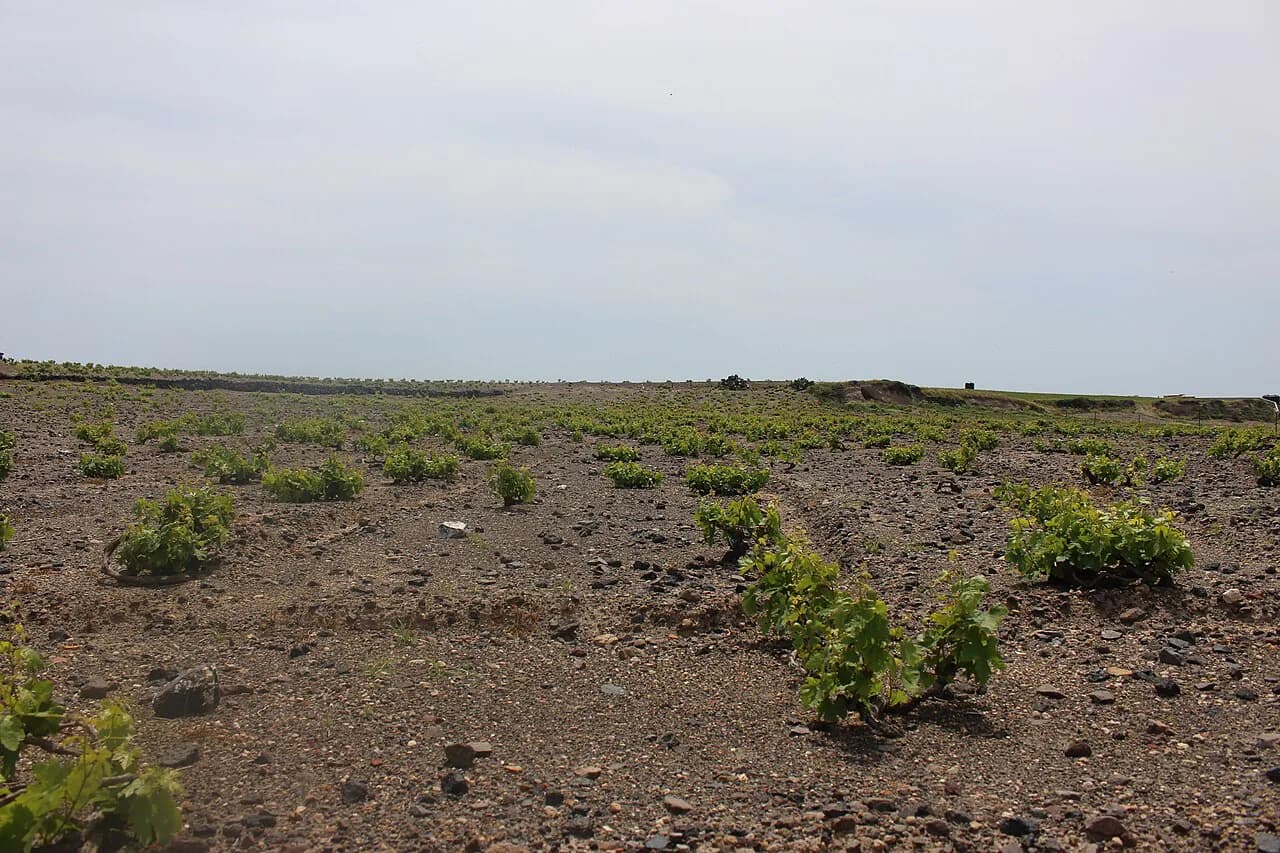
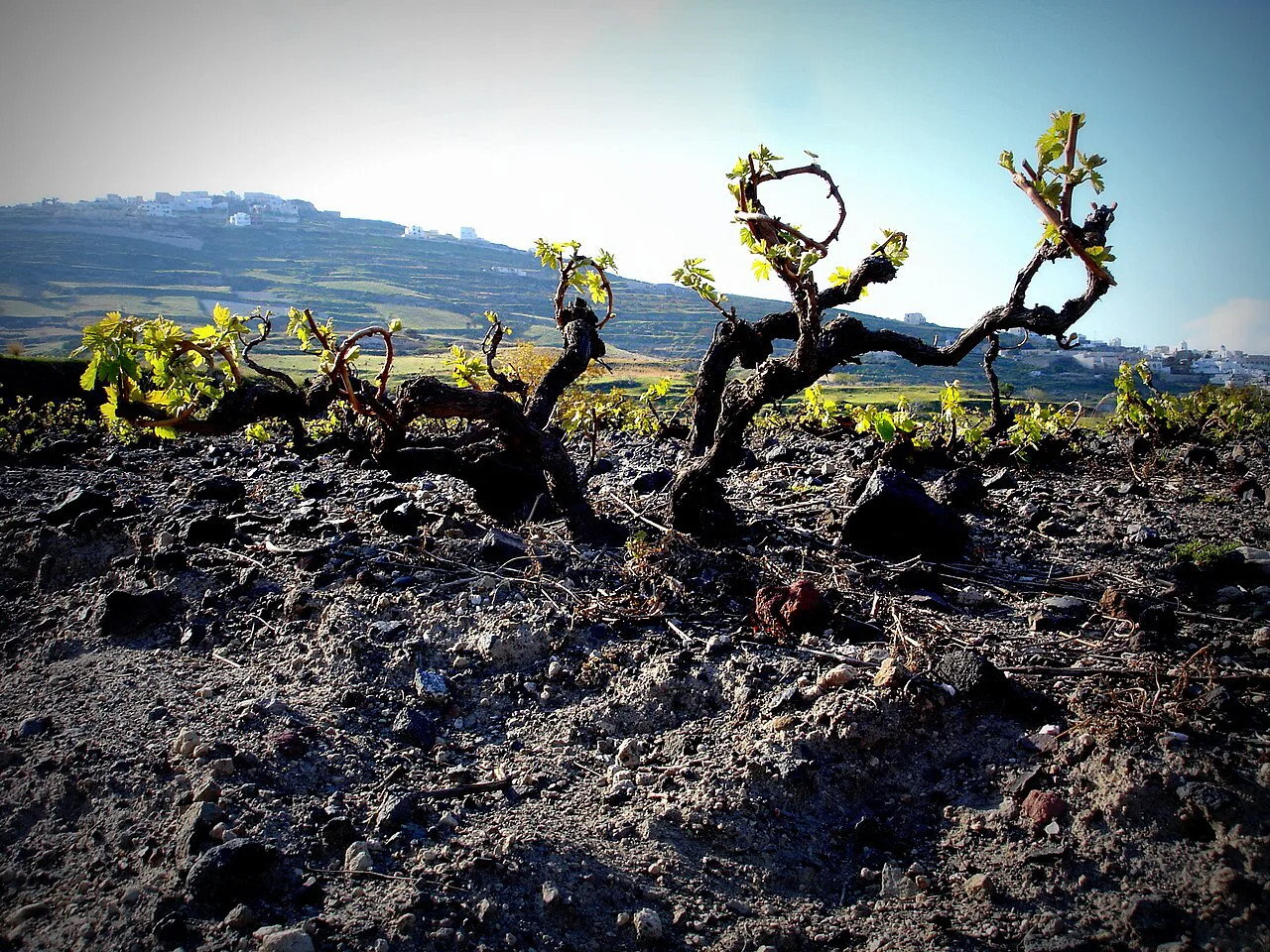
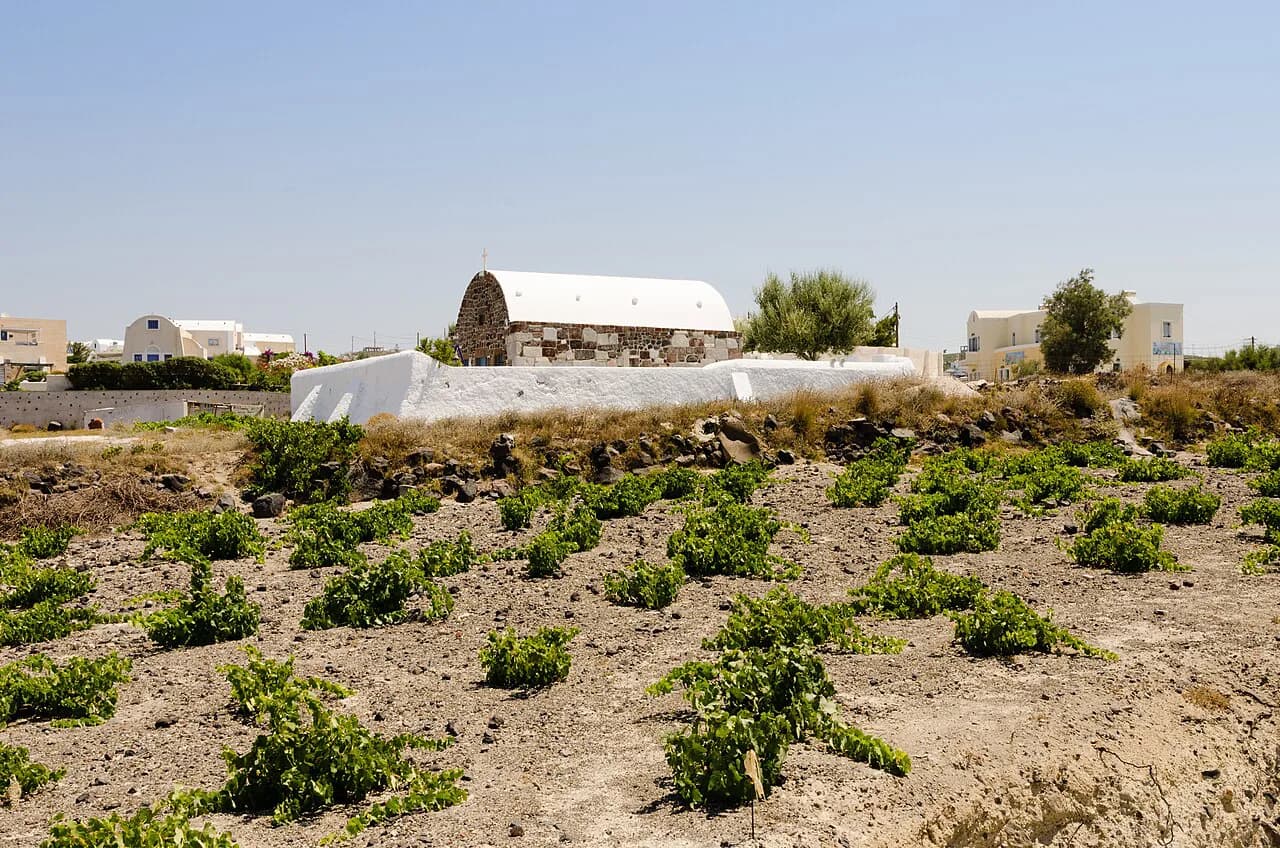
The vines themselves explain part of the price. Growers train them into low basket shapes called kouloura, which shelter the fruit from wind and collect moisture, and the volcanic soil of lava, ash and stone kept phylloxera out of the island's vineyards when it devastated much of Europe in the nineteenth century. The same source notes that some of these never-replanted vineyards are claimed to be as old as 400 years, which is one reason Santorini bottles often cost more than wines from the Greek mainland.
The Wine Map of the Island: Which Villages Pair in One Loop
The visitor-ready wineries cluster on the middle and eastern side of the island. Pyrgos sits inland on high ground, Megalochori lies south-west of it toward the caldera rim, Exo Gonia is on the eastern slope above Kamari, and Kamari itself is the coastal strip near the airport. Venetsanos sits on the road above Athinios port, on the caldera side below Megalochori.
A sensible half-day loop groups Pyrgos with Megalochori and the Athinios port road, then finishes at Exo Gonia or Kamari. That order keeps driving short and puts the caldera-view stops late in the afternoon, when the light and the sunset terrace at Venetsanos matter most. Grouping Fira and Oia into the same wine loop is where itineraries start to fall apart, because the island's road distances are greater than the map suggests. If you are weighing a self-driven route against a guided one, our Chania wine tours comparison shows how the same DIY-vs-guided decision plays out on Crete.
Santo Wines near Pyrgos: The Gravity-Fed Cliff Winery
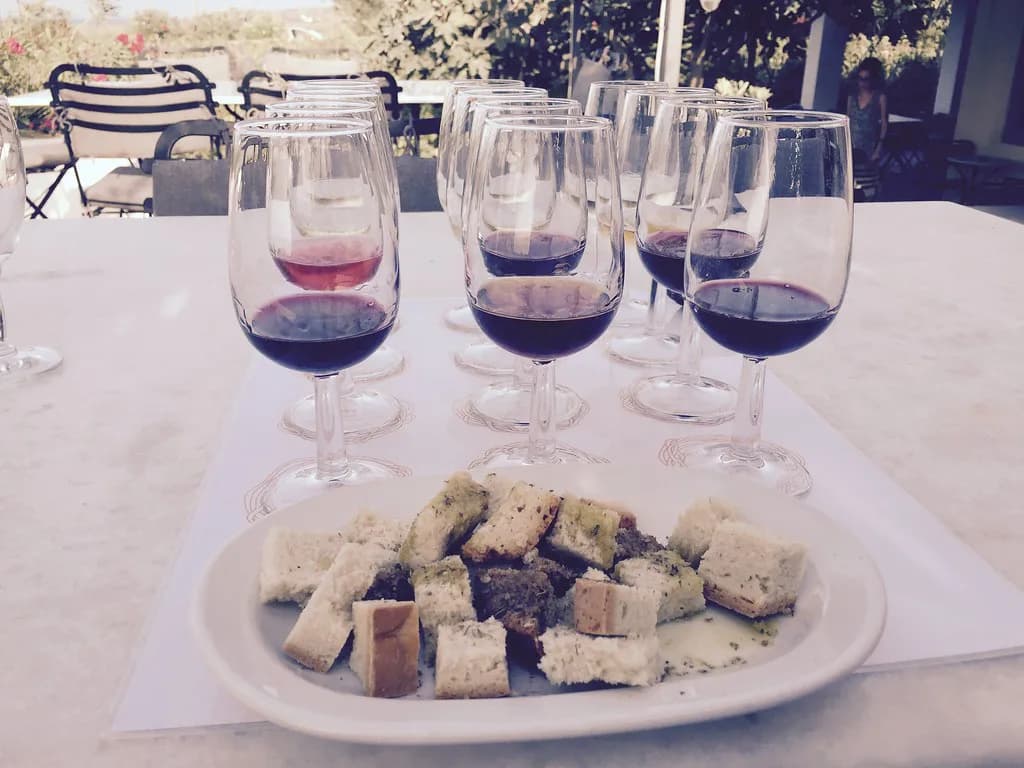
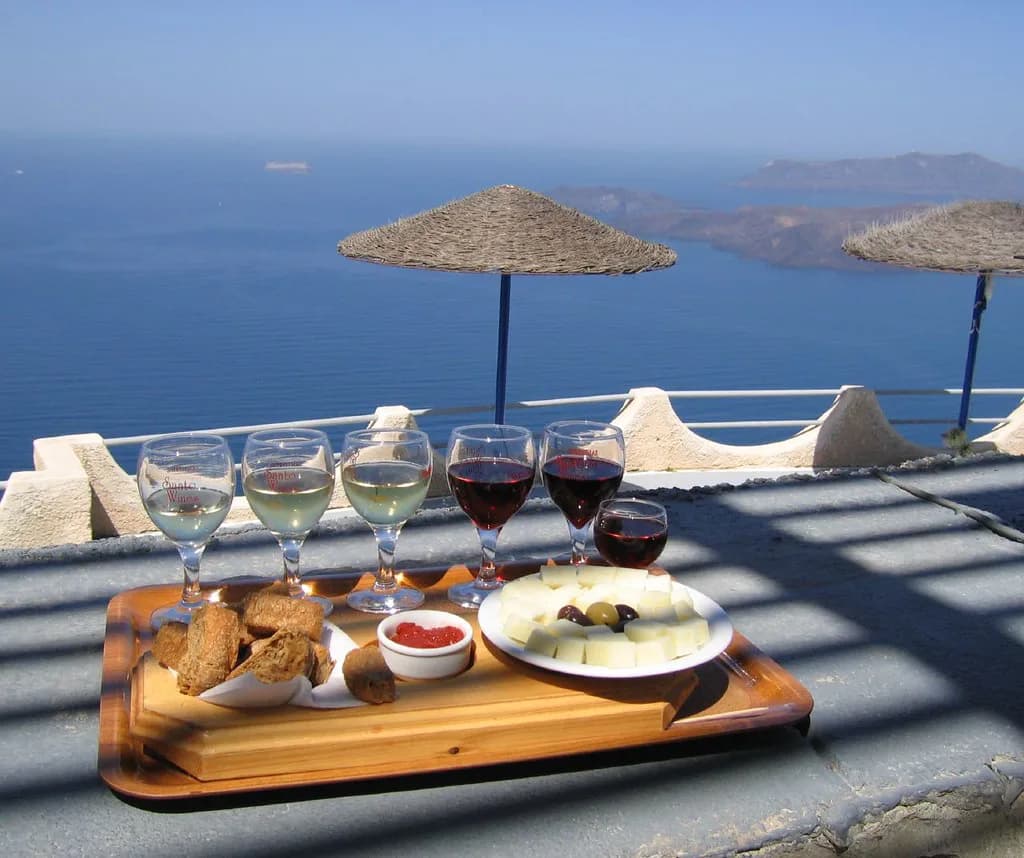
Santo Wines sits on the cliff below Pyrgos with views over the caldera, and its production facilities are built down the cliff across several levels so wine flows downhill by gravity rather than being pumped. The published tour-and-tasting option runs €50, the priciest single tasting experience documented among the island's well-known wineries, and it includes a guided walk through the winery buildings followed by a four-wine flight with traditional snacks.
That price buys setting and structure as much as wine. If your priority is a broad introduction with a proper look at production, Santo is the clearest one-stop choice; if you would rather spend the same budget across two smaller cellars, treat it as an optional splurge rather than the anchor of the day.
Gai'a Wines in Kamari: Four or Eight Wines by the Coast
Gai'a sits on the coast near the airport at Kamari, which makes it the natural first or last stop if you are coming from or going to the island's air terminal. The tasting format is the most useful budget lever on the island: a four-wine flight or an eight-wine flight, with the tasting room pouring Assyrtiko alongside a pair of rosés named for the hours the skins stayed in contact with the juice.
Choose four wines if you are visiting two or three wineries in a day and want to stay sharp; choose eight if Gai'a is your main stop. Water and a small plate of nibbles came with the tasting in the visit described, and booking ahead online was how that tasting was secured, so treat the winery's own booking page as the first place to look for current flight options.
Gavalas in Megalochori: The Small Family Cellar
Gavalas is a much smaller, family-owned operation in Megalochori, and its four-wine tasting is published at €18. That works out at roughly the price of a single glass per wine, which makes it the most economical structured tasting among the island's established visitor wineries and a good counterweight to a pricier cliffside stop earlier in the day.
The cellar also takes unbooked visitors when there is room at the tables, so a walk-in is worth attempting on a quiet afternoon even though it is not a guarantee. Expect a pamphlet and a short explanation of each wine rather than a full production tour, and pair it with a wander through Megalochori's lanes.
Venetsanos above Athinios Port: Caldera Views and Food
Venetsanos perches above the port of Athinios with a wide caldera panorama and a sunset terrace that can be reserved for the evening. The winery offers tastings with food pairings and light lunches, which makes it the most practical stop if you want a proper meal folded into the wine day rather than a plate of cheese.
Because the terrace is the draw, this is the stop where timing matters most. Book the sunset slot if you want the view at its best, or come earlier in the day for a quieter table, and confirm the current pairing menu and terrace reservation policy directly with the winery when you book.
Artemis Karamolegos in Exo Gonia: Gardens, Vinsanto and a Cellar Tour
Artemis Karamolegos in Exo Gonia is built around a garden whose produce feeds the kitchen and cooking school, and cellar tours take in both the wine cellars and the garden. Vinsanto is the style to try here: white grapes are harvested late, then sun-dried for around two weeks to concentrate the sugar before fermentation.
This is the best stop on the island if you want food and wine in the same visit without the crowds of a caldera terrace. Pair it with Gai'a at Kamari, a short drive east, and you have a coherent eastern half-day that works as well for a group tour as for a private car.
Group, Semi-Private or Private: Which Tour Actually Fits
Group tours trade flexibility for price: you share a minivan, follow a fixed route and taste whatever the tour company has negotiated that day. Semi-private tours sit in the middle, with a smaller vehicle and a shorter list of stops, while private tours let you choose the wineries, the pace and the pickup time, which is what most matters if you have a specific cellar like Artemis Karamolegos or Venetsanos in mind.
One operator markets its small-group and private tours as led by certified Greek sommeliers and has been running them since 2012, a credential claim that comes from the company itself. Read operator descriptions closely on two points: how many wineries are actually visited, and whether commentary is in your language throughout or only at the first stop, since that is where cheap tours cut corners.
Sunset Tours versus Daytime Tours
Sunset tours are the island's signature product, and they exist because the caldera terraces at Venetsanos and the Pyrgos cliff at Santo are at their best in the last hour of light. The trade-off is crowds and a compressed final stop: you may get the view but not a leisurely flight, and the drive back to Fira or Oia happens after dark.
Daytime tours let you spread tastings across three wineries with time for a cellar tour and a proper lunch, and they leave your evening free. If you are on the island for only two or three nights, do one daytime tour built around the wineries you care about and keep the sunset for a single reserved terrace rather than an entire circuit.
What's Typically Bundled into a Tour Price
A tour price usually folds together transport, a driver, tasting fees at each stop, and sometimes a food plate or a pickup from your hotel. Because individual tastings range from the four-wine flight at Gavalas to the tour-and-tasting at Santo Wines, a bundled price only looks expensive or cheap once you total the stops on the itinerary.
Ask four questions before paying: which wineries are confirmed rather than subject to availability, whether tasting fees and food are included or billed on site, whether hotel pickup is in the price, and how long you actually spend at each stop. If an operator cannot name the wineries in advance, the itinerary is likely to shift with the day's bookings.
Doing It Independently Without a Car
Santorini's buses link Fira with Kamari, Pyrgos and the port area, but they are built around local commuting rather than wine tourism, and the walk from a village stop to a cellar can be long and unlit. Taxis are limited in number and expensive to keep waiting between three wineries, so stringing together Santo, Gavalas and Venetsanos in one afternoon without a driver is genuinely difficult.
A realistic car-free day is one winery reached by bus or taxi, with a booked tasting and a planned ride home, rather than a multi-stop circuit. If you want the full three-cellar loop, a driven tour is the practical answer; for the wider picture of which wineries welcome visitors and how they group, see our guide to Santorini wineries.
Booking Logistics and How Far Ahead to Reserve
Book the winery tastings you care most about before booking the tour that carries you to them. Sunset slots and terrace tables at the caldera-facing wineries are the first to go in high season, and tour companies build their routes around whoever has confirmed space, so reserving a week or more ahead protects both your winery and your seat in the van.
Online booking is the norm for the larger wineries and for tour operators, while smaller family cellars often work by email or phone and may still seat you without notice. Keep one confirmation email per stop with the time, party size and what the price includes, and have a backup cellar in mind in case a stop is full.
Where to Base Yourself for an Easier Wine Day
Fira is the most practical base: it sits centrally, has the island's main bus hub and taxi rank, and puts Pyrgos, Megalochori and Exo Gonia within a short drive. Oia is beautiful but sits at the northern tip, adding time to every winery transfer and making an early sunset tour departure tighter. Pyrgos itself is the quietest option and the closest to Santo and the Megalochori cellars.
If you would rather stay among the vines than in a caldera village, a winery hotel Santorini option can shorten your transfers, though it usually means relying on the property's own transport or a taxi. Weigh that against the convenience of Fira's bus hub if you plan to mix wine stops with beach and village days.
Wine Beyond the Tours: Museums and Named Estates
Santorini's wine story has more than tasting rooms. A wine museum on the island traces the history of local viticulture and makes a sensible wet-weather stop or an add-on for anyone travelling with non-drinkers, and it pairs well with a short tasting rather than replacing one.
Domaine Sigalas is the estate most often cited as the island's benchmark producer, and a visit there rewards anyone who wants to compare a single estate's range against the multi-winery tour format. Read our Domaine Sigalas visit notes before you build a route around it.
Plan Your Wine Day
Start by choosing the wineries, then choose the format. A small family cellar such as Gavalas, a coastal flight at Gai'a and a caldera terrace at Venetsanos make a balanced day without repeating the same style of visit three times, and knowing the published tasting prices tells you whether a tour quote is fair.
Someone in your group should stay off the wine if they are driving; spittoons, a designated driver or a booked tour solve this cleanly, and tours are the simplest option on an island where taxis between cellars are scarce. Confirm opening days and seasonal closures with each winery when you book, then leave the rest of the day open.
Frequently Asked Questions
What is the most famous wine from Santorini?
Assyrtiko is the grape the island is known for, and it anchors most of the dry whites poured in Santorini tasting rooms, often blended with Athiri and Aidani. Vinsanto, the sweet wine made from late-harvested grapes dried in the sun, is the other style visitors associate with the island.
Which Santorini wineries can you visit without booking a tour?
Santo Wines near Pyrgos, Gai'a at Kamari, Gavalas in Megalochori, Venetsanos above Athinios port and Artemis Karamolegos in Exo Gonia all receive visitors and can be booked directly. Small family cellars such as Gavalas sometimes seat unbooked guests when tables are free, but that is observed practice rather than a policy, so reserve ahead for the caldera terraces and sunset slots.
Is a private wine tour in Santorini worth it over a group tour?
A private tour pays off when you want specific wineries, a fixed pickup time or a slower pace, since you set the route instead of following a shared one. A group or semi-private tour costs less per person and covers the same villages, so choose it if you are flexible about which cellars you taste at. To judge a quote, add up the individual tasting fees listed on each winery's own booking page.
Can you visit Santorini wineries by bus without a car?
Buses connect Fira with Kamari, Pyrgos and the port area, but they serve local commuting and the walk from a stop to a cellar can be long. One winery per day reached by bus or taxi with a booked tasting and a planned ride home is realistic; a three-winery loop is far easier with a driven tour.
How much does a Santorini wine tour cost?
Tour operators package transport, a driver and tasting fees into one price, and the total depends on how many cellars you visit and whether food and hotel pickup are included. Each winery publishes its own tasting list, so total those fees for the stops on your route and compare the result with the operator's quote.
How long does a Santorini wine tour last?
Duration depends on the route, the number of wineries and whether the tour stops for a meal, and operators publish the timing on their own booking pages rather than a single island standard. Check the stated start and finish times against your pickup point in Fira or Oia, since transfers at either end add to the day.
Sources
Notes for your next wine trip
Optional updates to our winery and wine-town guides.
You might also like
Continue reading
More guides you'll find useful