Estate Argyros, Santorini: Visiting the Episkopi Winery
Estate Argyros sits at Episkopi Gonia on Santorini. Plan a tasting of Assyrtiko, Nykteri and Vinsanto and find out what the estate does and how to reach it.
On this page
Estate Argyros is the kind of Santorini stop that rewards a little preparation. It is a serious, old-family estate with a large holding of very old vines, and it receives visitors through structured wine tours rather than as an informal walk-in tasting room. Knowing what the estate offers makes the difference between a pleasant hour and a genuinely instructive visit to the island's volcanic wine country.
This guide covers where the winery sits, the wines worth understanding before you arrive, the two visit formats the estate advertises, and how to slot Episkopi Gonia into a day from Fira, Oia or Pyrgos. Volatile details such as fees, start times and the day's availability sit with the winery itself, so the emphasis here is on what to ask and how to structure the booking.
Why Estate Argyros Matters on Santorini
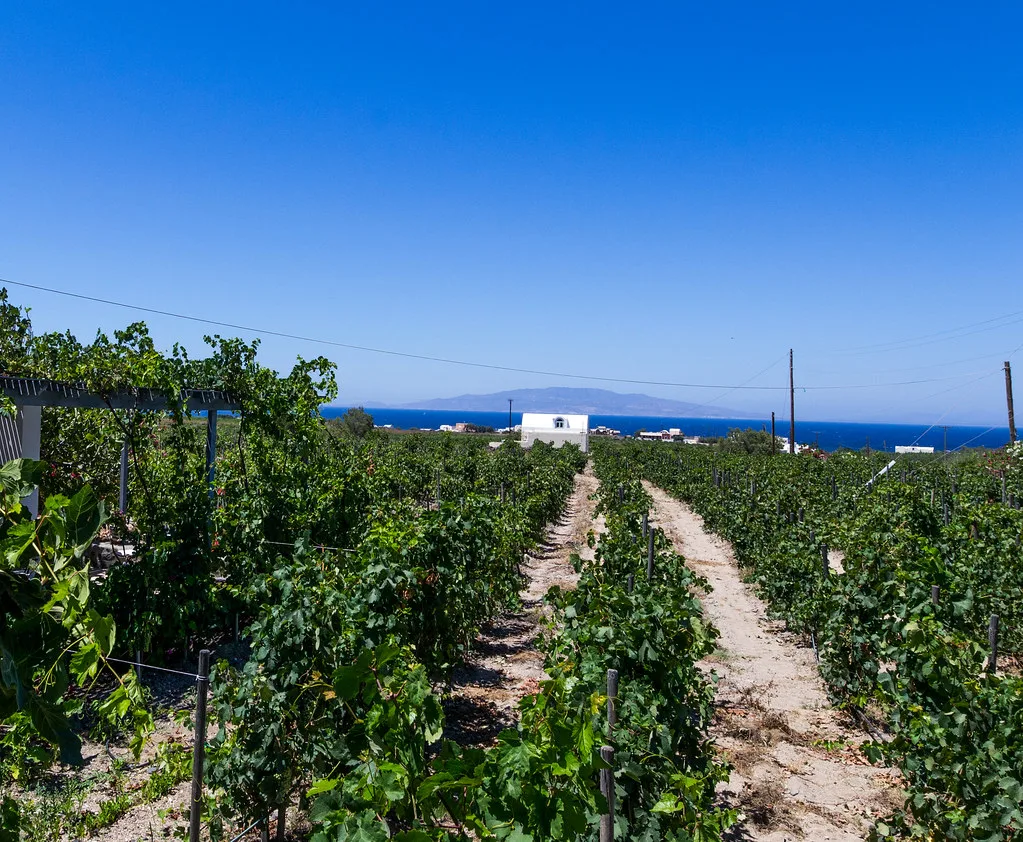
The Argyros family has been producing wine on Santorini for generations, and the estate itself dates from 1903. It is now run by the fourth generation, and it describes itself as the largest private vineyard owner on the island, with landholdings exceeding 120 hectares. That scale matters on an island where vineyard land competes with tourism development.
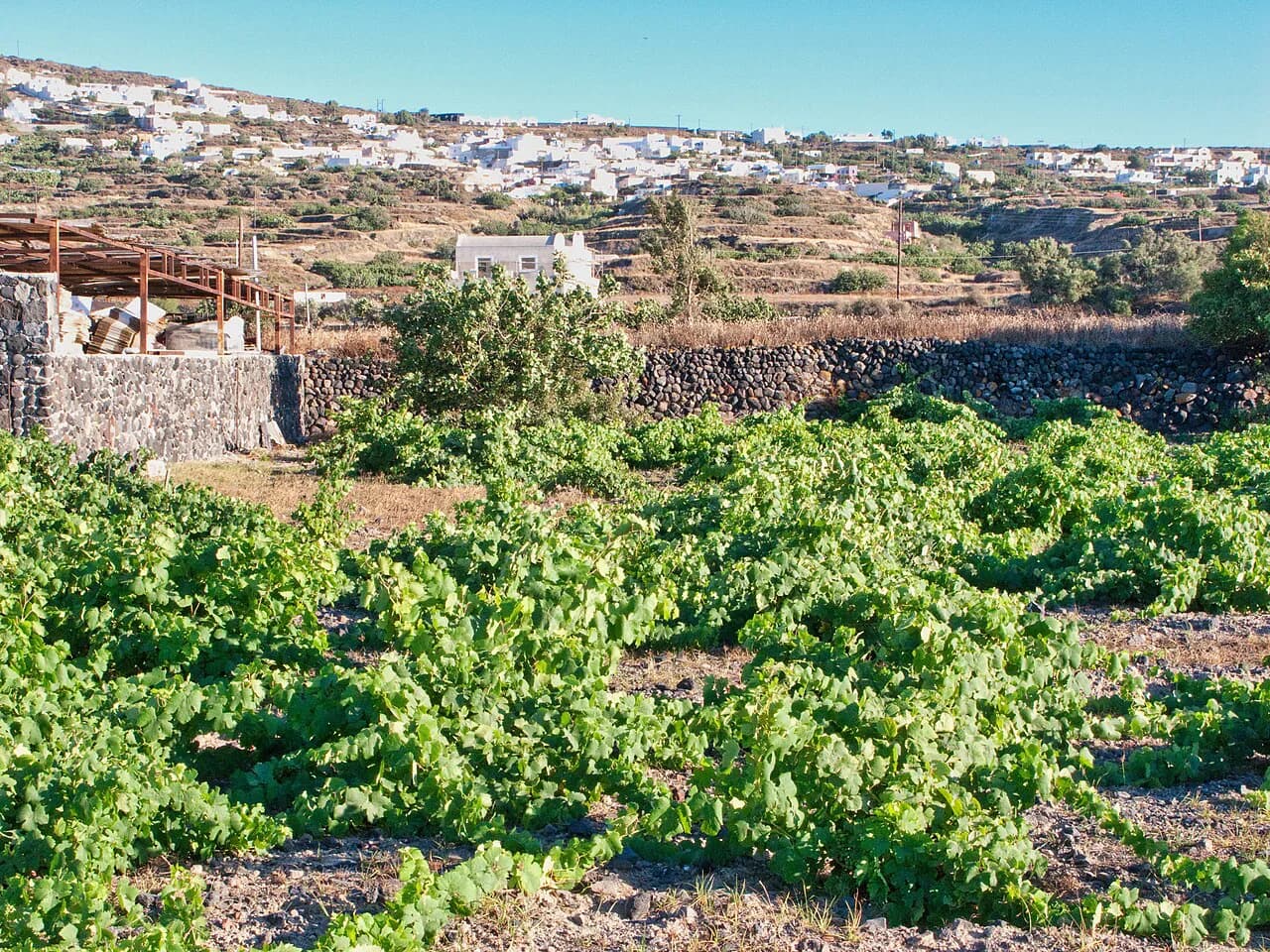
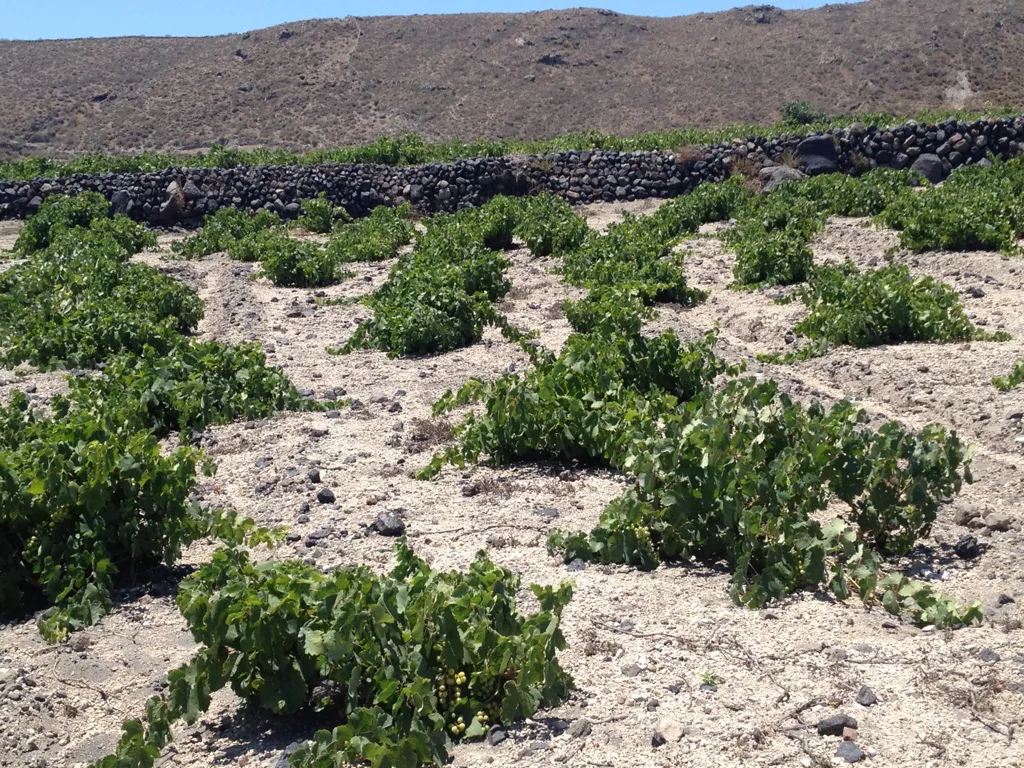
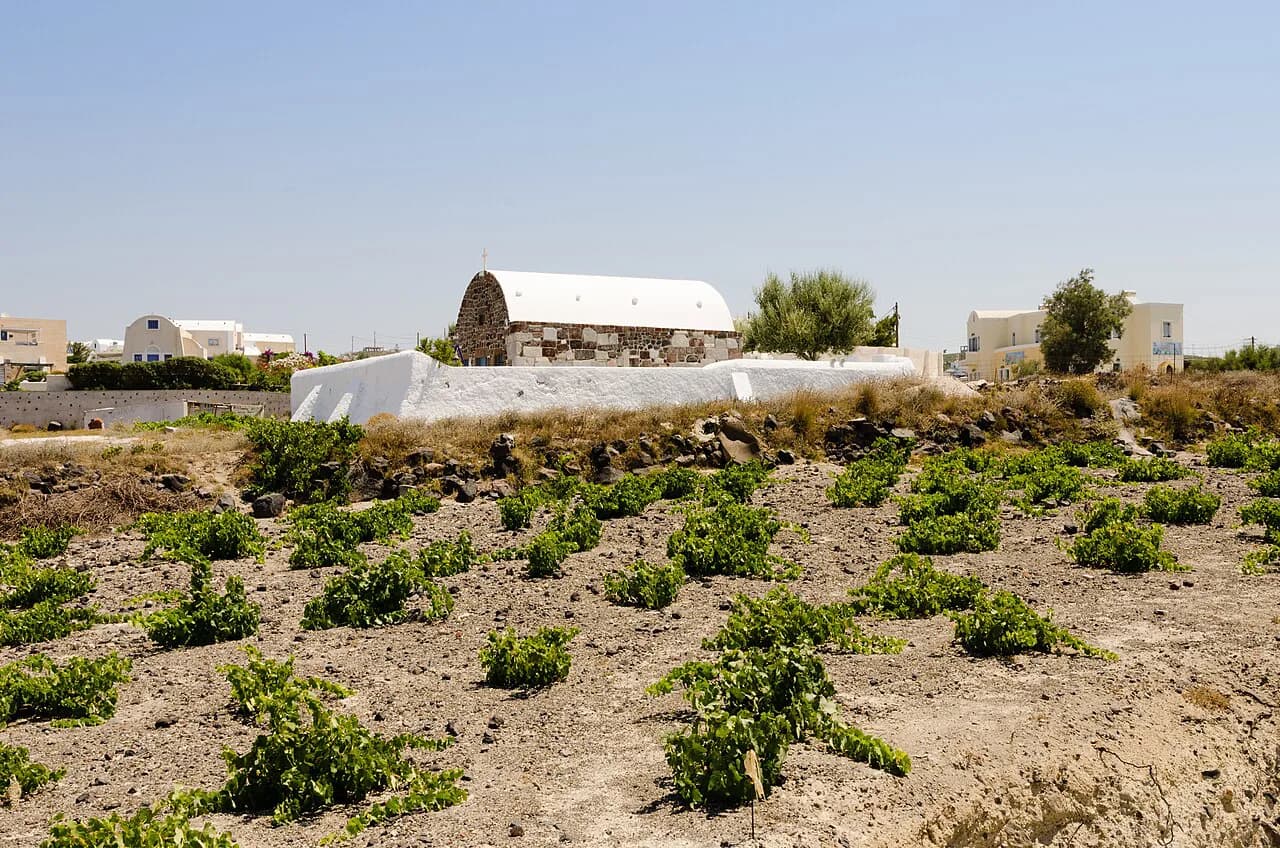
The vine age is the more striking figure. The average age of the estate's vines exceeds 70 years, and some of the oldest parcels are more than two centuries old. Old vines on Santorini are not a marketing flourish: they are ungrafted, low-yielding plants trained into the island's basket-like kouloura shape, and they give the concentrated fruit behind the estate's top bottlings.
Production stays small despite the landholding. Yields in a good year sit around 20 hectoliters per hectare, and the estate farms organically without pesticides, working the soil by mule rather than machine. For a visitor, that context explains why the tasting lineup leans on a handful of distinctive wines rather than a broad catalog.
Where the Winery Is: Episkopi Gonia and Your Base Town
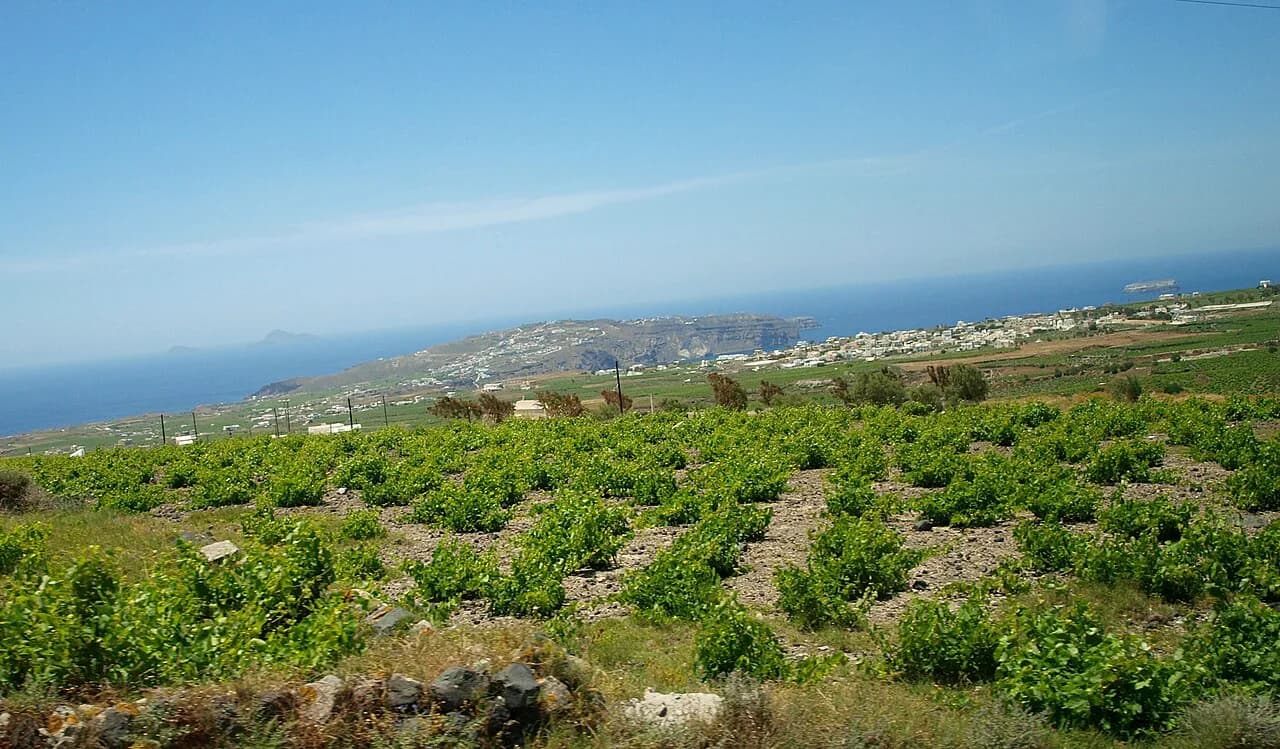
Estate Argyros is in Episkopi Gonia, on Thira, the main island of the Santorini group, with a postal address of Episkopi Gonia, Thira 847 00 Santorini. Episkopi Gonia sits inland on the southeastern side of the island, away from the caldera villages, which shapes how you plan the day.
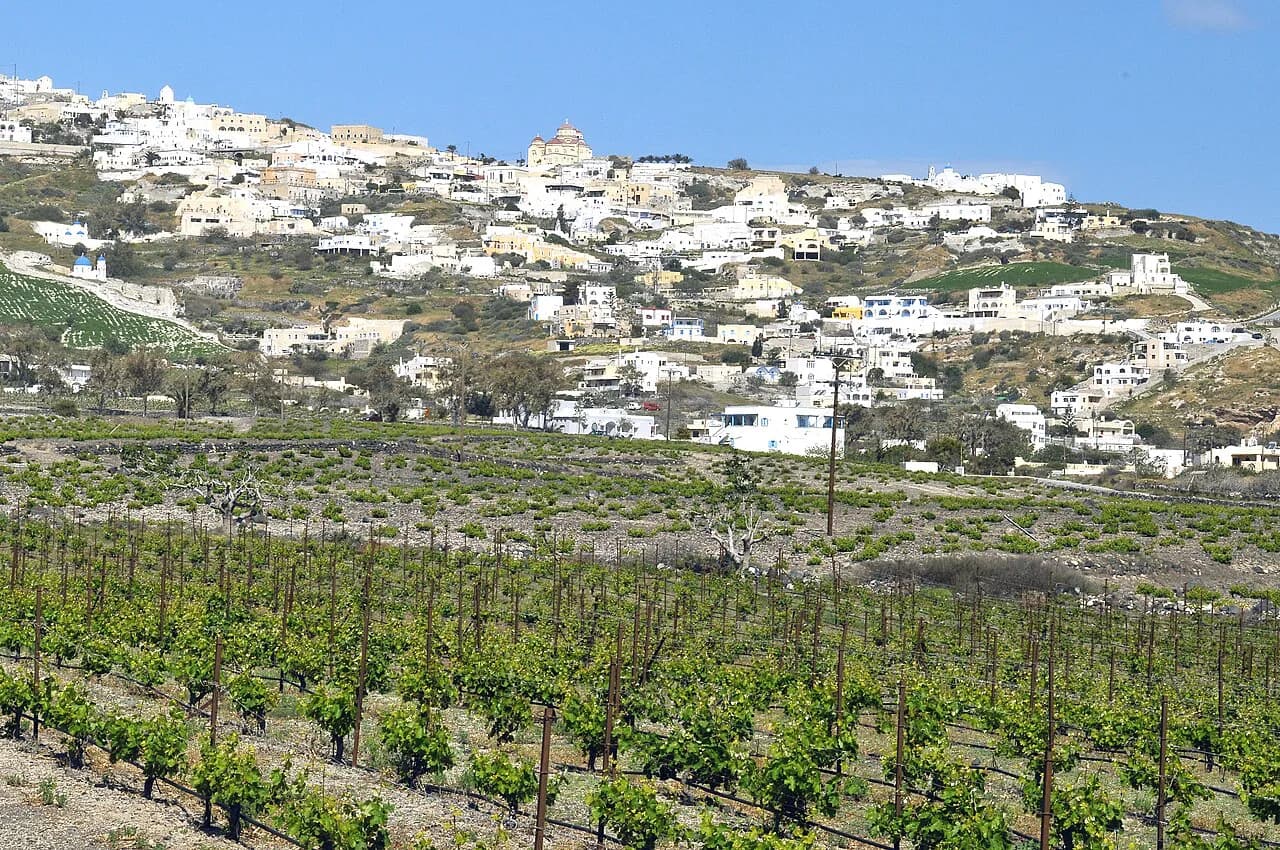
Most travelers base themselves in Fira, on the caldera's western edge, or in Oia at the northern tip. Both are well north and west of Episkopi Gonia, so a winery visit there is a deliberate outing rather than a stroll. Pyrgos, the hill village closer to the island's center, is a more practical anchor if wine is the point of the trip, and it pairs naturally with a stop at the estate.
The airport sits on the eastern side of the island, closer to the Episkopi area than either caldera village, which makes a late-arrival or departure-day tasting more feasible than it first appears. Check the estate's location on a map before fixing your day: island roads are slow and winding, and a short distance on paper can take longer than expected.
The Wines to Know Before You Go
Assyrtiko is the island's signature white and the backbone of the Argyros range. The flagship is a varietal estate Assyrtiko, and beneath it sits Atlantis, an approachable blended white that serves as the estate's introductory bottle. Tasting both side by side is the quickest way to understand what the grape does in Santorini's volcanic soils.
Above the entry level, the estate bottles a set of tiny-production old-vine cuvées, including Monsignori, Evdemon, Gerontampelo and Palatia. Nykteri, the island's traditional late-harvest style, is also part of the range. These are the wines to ask about when you book, because their availability varies and they are rarely poured in full at every tasting.
Santorini's heritage grapes go beyond Assyrtiko. Mavrotragano is the island's serious red variety, and Aidani contributes aromatic white fruit, often in blends. Knowing these three names gives you a useful vocabulary for any tasting on the island, not just at this estate.
Vinsanto Explained
Vinsanto is Santorini's great sweet wine, made from grapes dried in the sun for days before pressing, then aged for years in barrel and bottle. The result is a concentrated, amber dessert wine that has no relation to Italian Vin Santo beyond a shared name and a love of long aging. The Argyros Vinsanto program is widely treated as one of the island's benchmarks, developed under Yiannis Argyros in the 1970s and 1980s.
The estate releases its Vinsanto in tiers. A current bottling is already mature at roughly seven years when it is released, and it is paired with a library release of around two decades of age. Older Heritage bottlings reach back decades further. If sweet wine interests you, say so when you inquire, since the depth of the Vinsanto lineup on offer depends on what is open at the time.
Tours and Tastings: The Two Visit Formats
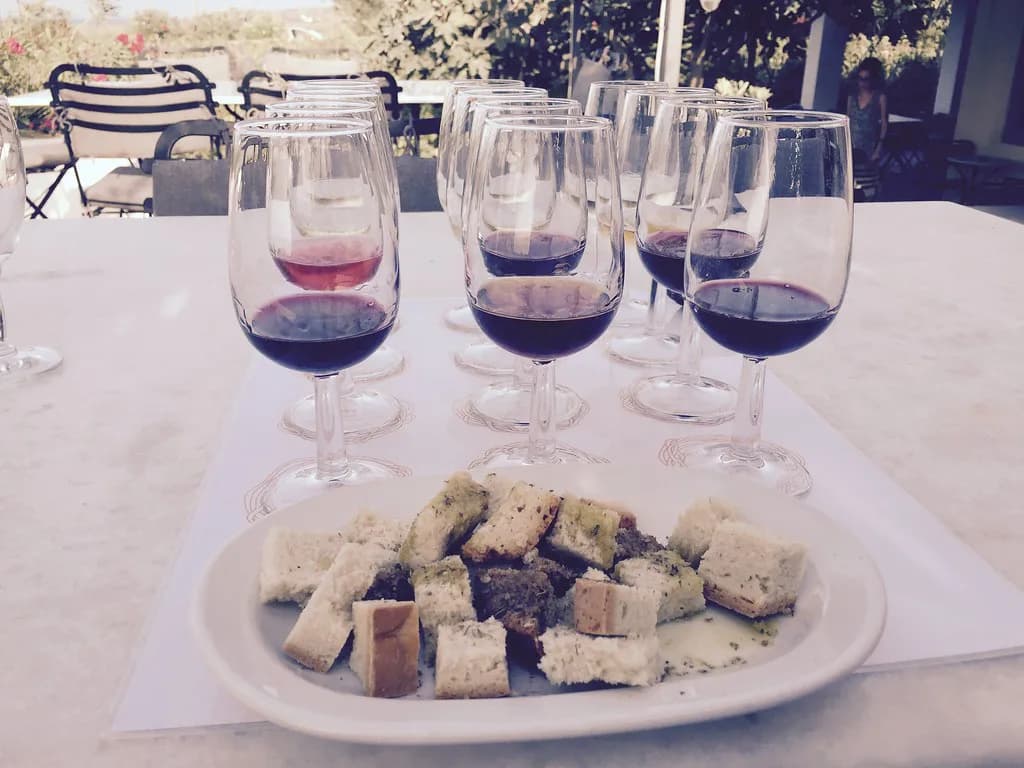
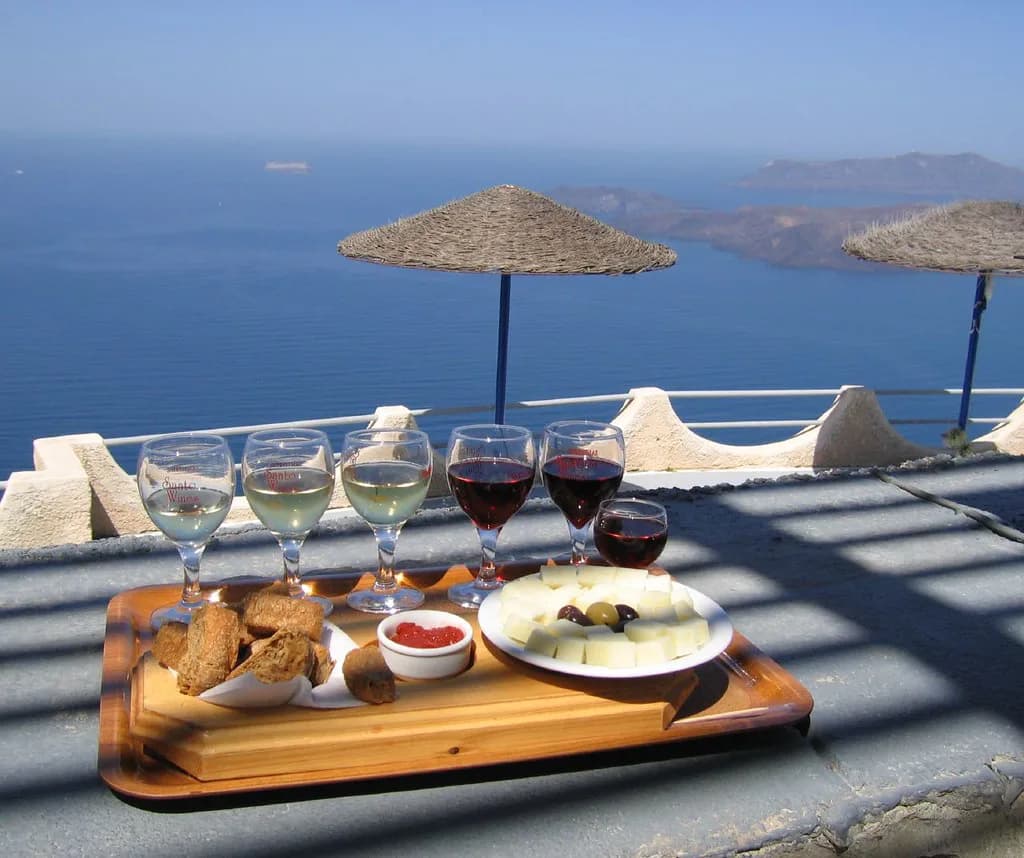
The estate advertises two distinct visitor offerings. The first is an introductory wine tour built around Santorini's indigenous grapes and the story of the Argyros family, pitched as an accessible entry point for wine lovers. The second is a seated tasting of estate wines paired with selected regional bites, focused on Assyrtiko and the island's flavors.
Choosing between them comes down to what you want from the stop. If this is your first Santorini winery visit and you want the vineyard and cellar context, take the tour. If you have already done a winery or two and would rather sit with the wines alongside food, the pairing format is the better fit. Both are described on the estate's own site, which is where the current lineup and timing are set out. The same choice faces anyone weighing the Hvar wine guide, where tours and seated tastings are also split by format.
The estate does not publish tasting fees, tour lengths or the number of wines poured in the material available, and those details change with the season and the format. Ask for them directly when you book, along with whether the pairing format can be adapted for dietary restrictions or non-drinkers in your group.
Booking in Practice
Santorini's better estates run on appointments, and Argyros is no exception in spirit: tours are structured and scheduled rather than spontaneous. Contact the winery by phone at +30 2286 031489 or by email at info@estateargyros.com, or use the booking route on the estate's site. Naming the format you want, the date, the time window and the number of people in one message saves a round of emails.
A useful booking script covers five points: how many are in your party, which of the two formats you prefer, your preferred date and time, whether anyone is driving and will be spitting, and whether anyone in the group does not drink. If you are arriving by cruise ship or have a fixed transfer, say so and ask how long the visit runs before you commit to a slot.
Group size and language matter more than they seem. Ask whether there is a minimum party for the format you want and whether the tour is offered in English on your date. For families, ask whether children can attend and what the policy is for non-drinking guests, since the answers vary by season and by format.
Getting There Without Driving
Santorini has a bus network linking the main villages, but services to individual wineries are limited, and Episkopi Gonia is not on the caldera circuit. A taxi from Fira or Oia is the simplest independent option, though you should agree the fare and, ideally, a return pickup before you set out, since taxis are scarce on the island in high season.
A guided wine tour removes the logistics entirely. Operators handle transport between estates, which lets you taste rather than count glasses, and they often combine Argyros with other stops in the same part of the island. The trade-off is less flexibility: you see what the itinerary covers, on the operator's schedule, rather than lingering over the Vinsanto list.
Renting a car gives you the most freedom to pair Episkopi Gonia with other estates and with Pyrgos, but it puts a driver in the tasting room. The sensible rule is simple: whoever is driving does not taste, uses the spittoon, or hands the keys to someone who has not been drinking. Walking between wineries is not realistic on Santorini's roads, so plan transport before you plan the tasting.
Building a Santorini Wine Day Around Argyros
Episkopi Gonia sits in the island's southeastern wine belt, which makes it natural to combine with other estates in the same area rather than crisscrossing the island. If you are building a full day, pair the Argyros visit with one or two nearby producers and a stop in Pyrgos, where the village streets and tavernas give the day a non-wine anchor.
Readers who want more context on the island's producers and appellations will find the wider wine tasting in Santorini material useful for choosing which estates to group with Argyros. If your interest runs to history rather than vineyards, the wine museum at Koutsoyannopoulos Wine Museum & Winery is a different kind of stop and works well as a rainy-day or family alternative.
For a comparison point on the island's white wines, Domaine Sigalas is a natural second stop, and Paris Sigalas's estate is often mentioned alongside Argyros when travelers ask which Santorini wineries to prioritize. Two estates in one day is a sensible ceiling if you want to remember the wines.
How Long to Allow and When to Come
Santorini's growing season runs long, and harvest typically falls in the later summer and early autumn, when the island's vineyards are at their busiest and the light is at its best. Late spring and early autumn are comfortable for visiting, while midsummer brings heat, crowds and the cruise-ship surge that can compress available tasting slots at popular estates.
Allow more time than the tasting itself. Between the transfer from your base, the visit and the return, a single estate can take a substantial part of a morning or afternoon, and a two-estate day fills most of the daylight. Build in slack for island traffic, and do not schedule a winery visit immediately before a flight or a ferry.
The estate has not published opening hours, closing days or seasonal closures in the material available. Ask for the day's operating hours when you book, and confirm the day before if your trip depends on a specific slot.
Reading the Price
The estate has not published tasting fees or tour prices in the material available, and fees on Santorini vary with the format, the wines poured and the season. Treat any figure you see on a third-party booking page as a quote for that specific product, not as the estate's standard entry price.
When you receive a quote, ask what it covers. A good answer distinguishes the tasting itself from the food pairing, specifies the number of wines and whether the old-vine cuvées or Vinsanto are included, and states the duration and cancellation terms. Importer pages listing the estate's wines are trade information, not visitor pricing, so do not use them to budget your visit.
For a small group, comparing a private taxi round trip plus individual tasting fees against a guided tour that includes transport is the practical calculation. The tour usually wins on convenience and loses on flexibility; a taxi wins if you want a single estate and a long, unhurried tasting.
Plan Your Argyros Visit
Estate Argyros rewards travelers who treat it as a destination rather than a detour. Book the format that matches your interest, whether that is the introductory grape tour or the seated wine-and-food pairing, confirm the fee and timing directly with the estate, and arrange transport before you fix a slot.
With those details settled, Episkopi Gonia becomes easy to fit into a Santorini itinerary alongside Pyrgos and one other producer. Go for the old-vine Assyrtiko and the Vinsanto, give the visit more time than you think it needs, and leave the driving to someone who is not tasting.
Frequently Asked Questions
Where is Estate Argyros and how do I get there from Fira or Oia?
The winery is at Episkopi Gonia, Thira 847 00 Santorini, inland on the southeastern side of the island. From Fira or Oia it is a taxi or tour transfer rather than a walk; agree on a return pickup with your driver, or book a guided wine tour that includes transport between estates.
Do I need to book a tasting at Estate Argyros in advance?
The estate runs scheduled tours and tastings rather than an open walk-in tasting room, so booking ahead is the reliable approach. Contact the winery by phone at +30 2286 031489 or email at info@estateargyros.com with your date, party size and preferred format.
What does a tasting at Estate Argyros include?
The estate advertises two formats: an introductory tour of Santorini's indigenous grapes and the Argyros family story, and a seated tasting of estate wines paired with selected regional bites. The number of wines, duration and fee are not published, so ask when you book.
What is Assyrtiko and is it the same as the Atlantis white?
Assyrtiko is Santorini's signature white grape, and the estate's flagship is a varietal estate Assyrtiko. Atlantis is a separate, more approachable blended white in the same range, which makes the two a useful pair to taste side by side.
What is Vinsanto and why is Santorini known for it?
Vinsanto is a sweet wine made from grapes dried in the sun before pressing and then aged for years in barrel and bottle. The Argyros program releases a current bottling at roughly seven years alongside a library release of about two decades, with older Heritage bottlings beyond that.
Is a visit to Estate Argyros worth it compared with other Santorini wineries?
The estate holds more than 120 hectares of vineyard with vines averaging over 70 years old, and its old-vine Assyrtiko cuvées and Vinsanto are the draw. Combine it with one other estate in the same part of the island rather than trying to cover several in a day.
Can I visit Santorini wineries without a car?
Yes, through taxis and guided wine tours, though public buses do not conveniently serve individual estates. Agree on a return pickup if you use a taxi, and remember that whoever is driving should not taste; use the spittoon or let a tour handle transport.
Sources
Notes for your next wine trip
Optional updates to our winery and wine-town guides.
You might also like
Continue reading
More guides you'll find useful