Wine Tasting in Siena: Best Tours, Enoteche and Classes
Plan wine tasting in Siena with city enoteche, Chianti Classico and Brunello day trips, booking norms and car-free options for a Tuscan wine day.
On this page
Siena sits in southern Tuscany with Chianti Classico to the north and Montalcino roughly an hour southeast, so the city works as a base for both a lazy afternoon of glasses and a full countryside day. The catch is that Siena's tasting scene splits cleanly in two: walk-in enoteche inside the medieval center, and wineries outside the walls that run on appointments rather than passing trade. Deciding which half you want on which day is the single most useful planning move you can make.
Inside the city, a tasting is a one-hour, seated affair with a handful of Tuscan wines and a host talking through grapes and local culture, which suits a rainy afternoon or the day you arrive. Outside it, you are dealing with estates that need scheduled visits, multi-vintage lineups and, often, a driver. This guide covers the Sangiovese styles that tie the whole area together, the named cellars that take visitors, how tours compare with independent travel, and what to settle with a winery before you commit.
Sangiovese Decoded: What Siena's Wine Country Actually Pours
Sangiovese is the grape behind almost everything you will taste in this corner of Tuscany, and the appellations are mostly a map of where and how it grows. Chianti Classico comes from the hills between Florence and Siena and tends toward a firm, savory red; the Riserva label requires longer aging before release, which usually means a denser wine than the standard bottling. Brunello di Montalcino, made from a Sangiovese clone called Sangiovese Grosso, is a step up in weight and price, and it comes from a warmer, drier zone to the southeast.
Rosso di Montalcino is the same grape and zone as Brunello but released far earlier, so it drinks brighter and costs less — a sensible order when you want the Montalcino profile without the Brunello markup. Around Montalcino you also meet the Super Tuscan idea: Sangiovese blended with international grapes such as Merlot or Cabernet Sauvignon, an approach producers adopted to loosen the rules of the classic appellations. Knowing these four labels in advance makes tasting-room lists much easier to read and lets you ask for what you actually want.
On the Chianti side, estates also make olive oil and balsamic vinegar, and tastings often fold these into the lineup rather than presenting wine alone. If you care about that broader table, say so when booking — a visit built around oil and vinegar plus a couple of reds is a different, shorter format.
City Tastings: Three Glasses in the Center of Siena
The easiest way to taste on arrival day is Enoteca Ambrogio on Via Pantaneto, a small wine bar in the historic center running a one-hour guided tasting focused on Tuscan wines with a few Italian bottles alongside. You get three glasses, a host explaining the grapes and local wine culture, and a room small enough for questions; the format is capped at ten guests and welcomes everyone from beginners to curious drinkers. The published adult price is €25 per person, with slots from 10:15 onward and the last listed start at 19:15.
Booking is online rather than at the door: the experience runs daily, requires a reservation at least one day ahead, and free cancellation up to three days before the start. The venue is wheelchair accessible, pets on a leash are allowed, and tastings run in English or Italian, which you select during booking. Because the room holds ten, a group of six or more should book early in the trip-planning process rather than hoping for a same-day slot.
Late-afternoon and early-evening starts are the ones worth targeting after a day of sightseeing, since the tasting is indoors and unaffected by weather. If you plan a bigger survey of the city's bars and wine shops before or after, a broader look at Siena Wine Bars and Enoteche helps you line up addresses near your hotel. Pacing matters: three glasses at 18:15 followed by dinner is a pleasant evening, whereas the same three glasses at noon can flatten an afternoon of walking.
Adding Food: Cheese and Cured Meat Pairings in Central Siena
A step up from the three-glass format is a tasting with cured meats and cheeses, also run in the city center on a one-hour, small-group basis, with published rates higher than the plain wine flight. This is the version to pick if you are treating the tasting as a light meal rather than a pre-dinner aperitivo, because the food does real work in softening tannic Sangiovese. It also makes a sensible first-day anchor when you are jet-lagged and want something structured but short.
Order the food version before a countryside day only if you are eating early enough to leave the afternoon free — a cheese board at 13:00 is a lunch, but at 17:00 it competes with dinner. On countryside days the pairing question shifts entirely, because several Montalcino estates build lunch into the visit.
How the Wine Districts Are Laid Out from Siena
Think of Siena as the hub of a wheel. Chianti Classico runs north toward Florence through hilltop villages and cypress-lined roads; Montalcino lies about an hour southeast with a very different, drier landscape; and continuing south you reach the UNESCO Val d'Orcia with Pienza, San Quirico d'Orcia and Bagno Vignoni, then Montepulciano beyond. San Gimignano and Monteriggioni sit on the Chianti side and combine well with two winery stops in a single day.
The practical consequence is that you cannot sensibly cover Chianti Classico and Montalcino in one day. Chianti suits a loop with villages and a castle lunch; Montalcino suits a corridor of estate visits with time inside cellars. Val d'Orcia rewards a slower day built around Pienza's pecorino and one organic estate rather than three rushed appointments.
Chianti Classico Wineries That Host Visitors
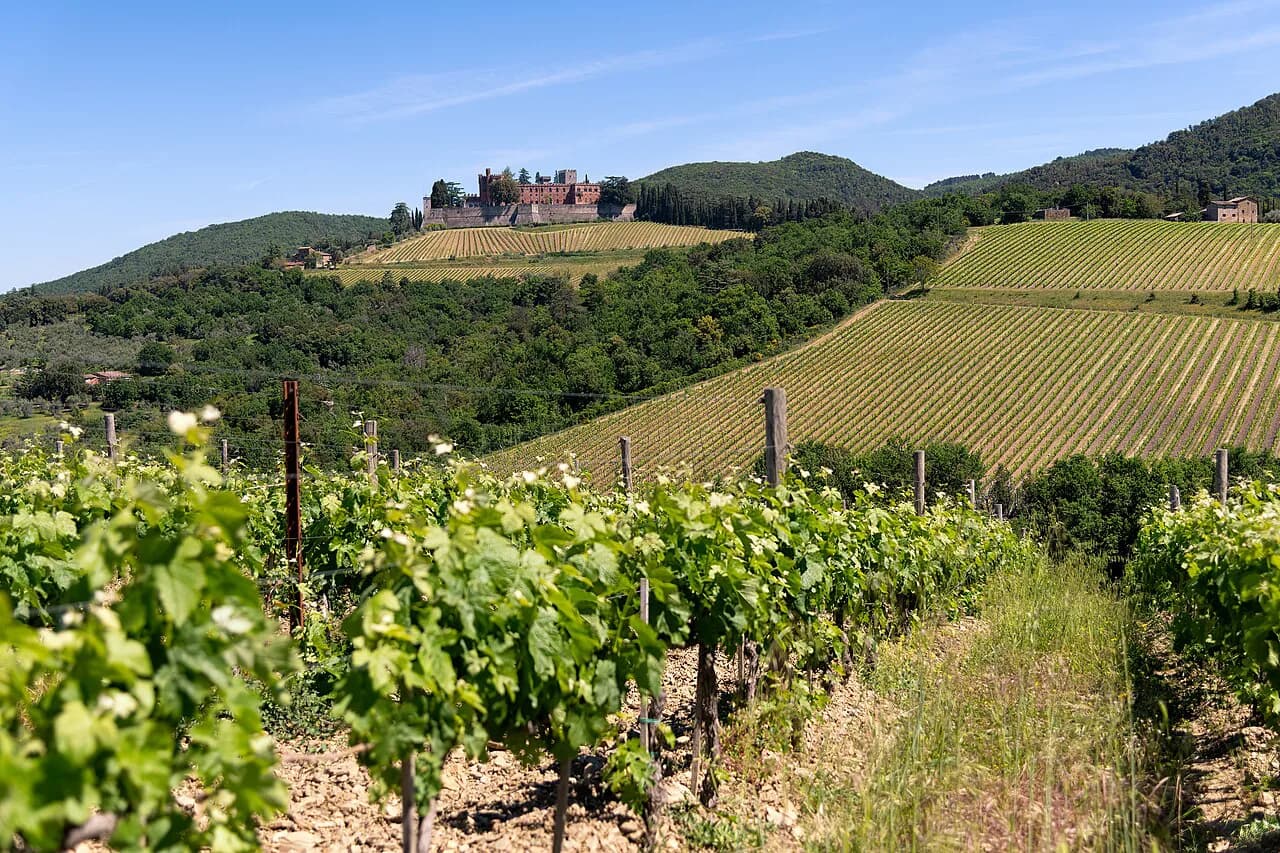
Badia a Coltibuono is the reference Chianti Classico estate for first-time visitors: a former Vallombrosan abbey founded in the 11th century, now producing Chianti Classico Riserva and the Sangiovese-based Sangioveto alongside olive oil and balsamic vinegar. Visits take in the historic wine caves and the Renaissance garden, and tastings typically follow with a meal at the estate. It sits in the Chianti hills north of Siena and is usually folded into a guided or chauffeured day rather than reached cold.
Because estate visits in Chianti Classico are arranged rather than dropped into, the practical route for most travelers is a scheduled day that pairs two wineries with a castle lunch and a stop in San Gimignano — a format local operators run from Siena with hotel pickup. Independent travelers can replicate the shape with a rental car or a hired driver, but the booking burden falls on you, and midday slots fill first.
If you would rather build your own list of estates and enoteche around the city before committing to a district, the wider set of Wineries in Siena gives you a place to start comparing addresses and visit formats.
Montalcino Estates: Cellar Tours and Vertical Tastings
Montalcino is where pre-booked appointments are simply the norm, and a well-planned day strings together three estates with quite different characters. Luce della Vite, created by the Mondavi and Frescobaldi families, runs vineyard and cellar tours followed by tastings of Luce, Lux Vitis and Luce Brunello. Castiglion del Bosco, owned by Massimo Ferragamo, offers a full tour with six vintages of its cru Brunello Campo del Drago and Brunello Riserva Millecento. Nardi pairs a traditional home-style lunch with single-vineyard Brunello Manachiara, and boutique estate Il Palazzone closes the day with older vintages.
That sequence — two structured tastings, a long lunch, then a smaller estate — is a reasonable template whether you book a private guide or assemble it yourself, because it alternates palate-heavy cellar work with food and a lighter finish. Two vertical tastings back to back without lunch is the common mistake; young Brunello is tannic and the third flight stops registering.
A private, chauffeured Montalcino day from Siena is the low-friction option if nobody in your party wants to drive: a full-day, small-group-format tour with a vehicle and driver is published at several hundred euros per group rather than per person, which changes the arithmetic for couples versus groups of six to eight. Check the per-group basis and what the fee covers before comparing it with a rental car.
After the estates, Montalcino's fortress and the town's enoteche are the natural place to stretch your legs, photograph the views and buy bottles you cannot ship easily. Shops in town often pour by the glass, so the day can end in town rather than at a fourth appointment.
Val d'Orcia: Organic Estates and Pecorino Near Pienza
South of Montalcino, the Val d'Orcia day is built around two things: the organic estate Fabbrica near Pienza, where visits include a vineyard ride, a cellar tour and a vertical tasting, and the sheep-cheese farms producing Pecorino di Pienza. Fabbrica's grounds are scattered with contemporary artworks, which makes it a good compromise for mixed groups where not everyone wants a third cellar. Around it, Pienza, San Quirico d'Orcia and Bagno Vignoni — the last with its medieval thermal pool in place of a main square — fill out the sightseeing.
Lunch in a hamlet such as Monticchiello, with pici pasta and local pecorino, is the usual midday anchor before or after the Fabbrica visit. Because these estates sit on country roads with little public transport, this is the day where a driver or a guided day earns its cost most clearly.
Tour or Independent: Comparing the Two Approaches
A guided day buys you three things: someone else drives the winding country roads, appointments are already secured, and lunch is arranged. The trade-off is fixed timing and a set lineup — you see the estates on the itinerary, not necessarily the ones you would have chosen. Typical shared and private formats from Siena combine a Chianti Classico winery stop with a castle lunch and a second tasting, plus a village walk in San Gimignano.
Going independently gives you longer at a single estate and freedom to change plans when a tasting runs long. The costs are real, though: you must email or phone each winery, respect appointment windows, and either hire a car or pay for taxis between villages, which rarely come cheap in the Tuscan hills. For one countryside day from a two-night stay, a tour usually wins; for a week based outside the city, self-driving with pre-arranged visits is more rewarding.
Getting to the Wine Country Without Driving
Within Siena, everything in the center is walkable, so the city enoteca tasting needs no transport planning at all. For Chianti villages, regional buses run from Siena toward Greve in Chianti and Castellina, but the wineries themselves sit kilometers from the stops and often up unpaved driveways. Montalcino has bus service from Siena, yet the estates are spread across a wide zone with no practical bus link between them.
That geography is why taxis, private drivers and guided minivans dominate countryside days. If you plan a self-drive loop, appoint a designated driver who skips the tastings and uses the spittoons at each estate — every tasting room provides them, and it keeps the day legal and safe. Public transport plus a pre-booked taxi for the final few kilometers is a workable middle path but needs confirming with the taxi company in advance.
Booking Mechanics: Email, Phone and What Wineries Ask
Most Tuscan estates take bookings by email or phone and confirm by reply, sometimes with a deposit link. When you write, give the date, the number in your party, whether you want a cellar tour, and whether you want food; you will usually get back a choice of morning or afternoon slots. Morning visits tend to be quieter and cooler in the cellars, while afternoons allow a longer lunch but risk running into closing time.
Party size matters more than you might expect: small enoteca tastings may cap at ten guests, while private tours quote per group and reward larger parties. Harvest, generally late August into October depending on the vintage and zone, is the busiest and most disrupted period — cellars are working, so tours may be shortened or shifted. Ask about cancellation terms in the same email as availability, since policies vary from free cancellation days ahead to deposits held.
Before confirming any estate visit, settle four points: how many wines are poured and which, whether the cellar and vineyards are included or just the tasting room, how long the visit runs, and what happens if you cancel. If you are staying outside the city, matching your base to the district you plan to taste saves hours of driving; Agriturismo near Siena for Wine Tasting covers the options that put you among the vines rather than behind the wheel.
Building a Two-Day Tasting Plan
A clean split for a short stay is city on day one and countryside on day two. Book a late-afternoon enoteca tasting for arrival day, spend the evening in Siena, then commit the second day entirely to one district — Chianti Classico if you want villages and a castle lunch, Montalcino if vertical Brunello flights are the priority. Trying to fit both districts into two days means most of your time is spent in a vehicle.
With an extra day, add the Val d'Orcia for Fabbrica and Pienza's cheese farms, which also gives you the most photogenic countryside of the trip. If you already have a producer shortlist, the Siena Wine Tours overview pairs well with a district-by-district plan, and nearby cities make useful add-ons: wine tasting in bologna suits a separate Emilia-Romagna leg, while wine tasting in amalfi has nothing in common with Tuscany's Sangiovese and is best treated as its own trip.
One named estate worth slotting into a Chianti day for its city-adjacent position and visitor setup is La Lastra, which appears among the city's winery listings; confirm its current opening days before you build a route around it.
Plan Your Siena Tasting Day
Siena rewards a divided strategy: taste in town first, where a one-hour, three-glass flight needs only a day-ahead booking, then give a whole day to a single district. Choose Chianti Classico for abbey estates, historic caves and village stops, or Montalcino for cellar tours and multi-vintage Brunello flights that reward an appointment made weeks ahead.
Whichever you choose, settle the wines poured, the cellar access, the duration and the cancellation terms when you book, and check current opening days and prices directly with each estate or platform near your travel date, since published details shift by season. Keep the driver sober, use the spittoons, and let the long lunch be the point rather than an interruption.
More wine guides from Siena
- Antinori nel Chianti Classico
- Badia a Coltibuono
- Castello di Ama
- Castello di Brolio
- Castello di Fonterutoli
- Castello di Gabbiano
- Castello di Meleto
- Castello di Verrazzano
- Castello di Volpaia
- Castello Vicchiomaggio
- Chianti Wine Tasting
- Chianti Wine Tours
- Fontodi Winery
- Rocca delle Macìe in Castellina in Chianti
- Siena Wine Tours
- Tuscany Wine Tours Compared
- Vignamaggio
- Wineries in Tuscany
- Querciabella Winery
- Siena Wine Bars and Enoteche
- Wine Tasting in Castellina in Chianti
- Wineries in Siena
- Agriturismo Near Siena
- Wine Tasting in Greve in Chianti
- Fèlsina Winery
- Castello di Albola
- Dievole Winery
- San Felice Winery in Castelnuovo Berardenga
- Tuscany Winery Hotels
- Castello di Querceto
Frequently Asked Questions
What wine is Siena known for?
Siena sits in Sangiovese country. Chianti Classico and Chianti Classico Riserva come from the hills to the north, Brunello di Montalcino and Rosso di Montalcino from roughly an hour southeast, and Super Tuscan blends of Sangiovese with Merlot or Cabernet appear throughout the region. City enoteche usually pour a Tuscan-focused flight that covers several of these.
Do I need to book wine tasting in Siena in advance?
For city enoteca tastings, yes: the small-room formats typically require booking a day ahead and cap guests at around ten. Countryside estates also work on appointments rather than walk-ins, so email or phone before you travel. Walk-in glasses at wine bars are the exception, but a seated guided tasting should be reserved.
Can I visit Chianti Classico wineries without a car?
It is possible but awkward. Buses from Siena reach Chianti villages such as Greve and Castellina, yet estates sit kilometers off the stops. Most travelers without a car use a guided day with hotel pickup, a private driver, or a bus plus a pre-arranged taxi. Confirm taxi availability in advance, since rural rides are hard to hail.
How long does a winery visit in Tuscany take?
Plan on one to two hours for a cellar tour and tasting, and allow longer where lunch is included — a Montalcino estate day with three stops and a meal fills the whole day. City enoteca tastings run about an hour. Ask for the expected duration when you book so the day's schedule holds together.
Where should I stay for wine tasting around Siena?
Staying inside Siena suits city tastings, dining and car-free arrivals, while an agriturismo in the countryside puts you among the vines and shortens drives to estates. The trade-off is that rural stays usually need a car or a driver. Pick your district first, then match the base to it.
Sources
Notes for your next wine trip
Optional updates to our winery and wine-town guides.
You might also like
Continue reading
More guides you'll find useful