Wine Tasting in Montepulciano: Nobile Cellars Guide
Plan a wine tasting day in Montepulciano: historic town cellars, walk-in versus booked visits, Vino Nobile styles, and estates that need a car or driver.
On this page
Montepulciano is one of the few Tuscan wine towns where the tasting happens inside the town itself. Historic cantinas sit under palaces and along the main climbing street, so you can walk from one underground cellar to the next with nothing more than comfortable shoes and a plan for how many pours you actually want.
The wine in the glass is Sangiovese under a local name: Rosso di Montepulciano and Vino Nobile di Montepulciano, the latter a DOCG. Because the appellation rules leave room for other grapes alongside Sangiovese, two cellars a hundred meters apart can taste quite different, which is the argument for visiting several rather than picking one.
This guide separates the cellars you can drop into from those that run on fixed tour slots, explains what the tasting tiers include, and covers the out-of-town estates that require a car, taxi or booked driver. If you would rather have someone else handle the driving and the itinerary, compare the options in these wine tours before you lock dates.
Rosso, Vino Nobile and Riserva: What You Are Tasting
Rosso di Montepulciano must be at least 70 percent Sangiovese, with the remaining share open to other grapes. That flexibility is where each producer's signature sits, so a useful question at the counter is which grapes fill the rest of the blend and why.
Vino Nobile di Montepulciano uses the same minimum Sangiovese base but adds aging: two years before release, at least one of them in barrel. A Riserva extends that to three years, which is why it usually commands a higher price and shows more structure than the standard bottling.
Practically, this means a tasting list that moves from Rosso through Vino Nobile to Riserva is a lesson in aging rather than a random flight. If you only have time for one cellar, choose a tasting that includes all three tiers so you can judge the difference yourself.
How the Town Is Laid Out for Tasting
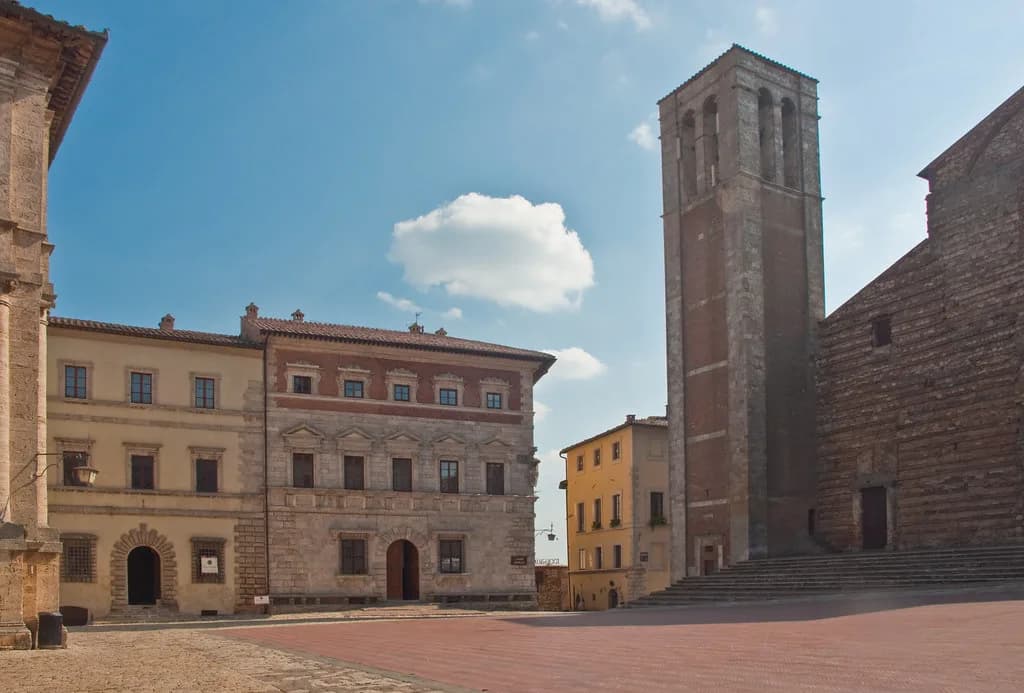
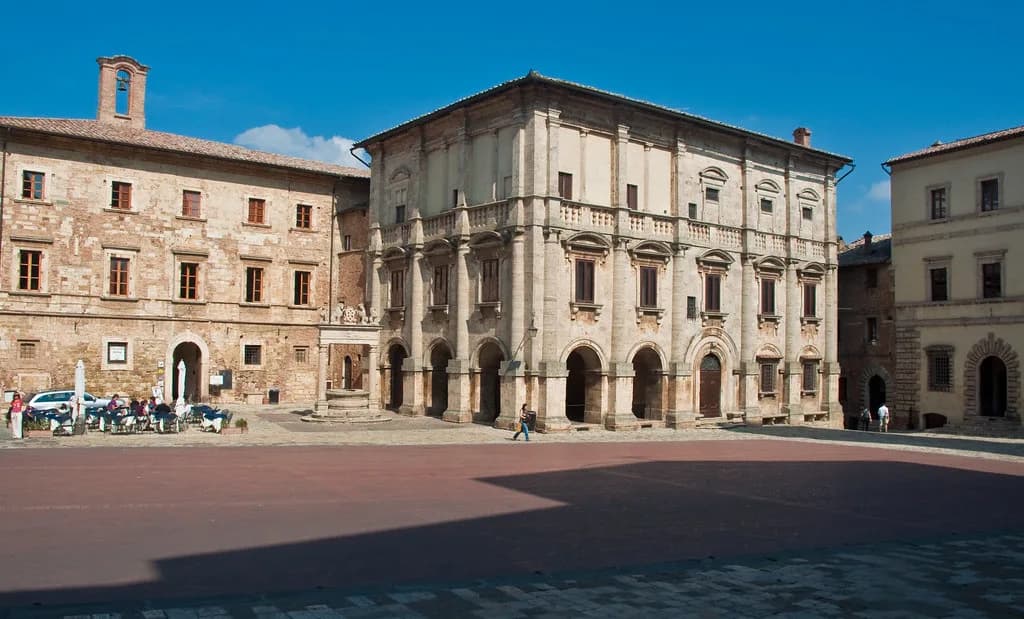
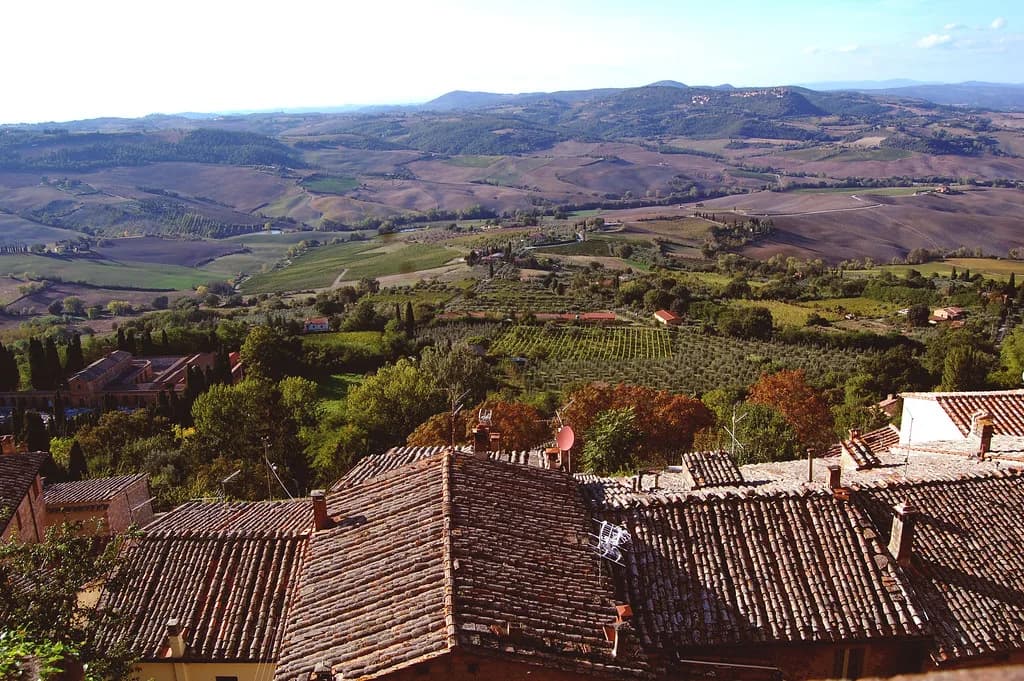
Montepulciano is a ridge town, and the wine route follows it upward. Porta al Prato is the lower entrance most visitors reach first, Via di Gracciano nel Corso is the climbing spine lined with cellars and shops, and Piazza Grande sits at the top with the Palazzo Comunale and the Fortezza nearby.
That geography matters for planning. A sensible loop starts at the lower gate, works up through the cantinas on the Corso, and finishes near Piazza Grande, so the walking is uphill while you are fresh and downhill at the end of the day.
The cellars themselves are the attraction as much as the wine: barrel rooms cut into the tufa beneath Renaissance palaces, some reached by long staircases, others opening straight off the street. If underground spaces interest you as much as the glasses, this guide to the Montepulciano wine cellars explains what each one is like below ground.
Walk-In Cellars: Contucci and Fattoria della Talosa
Contucci, just off Piazza Grande on Via del Teatro, is the oldest of the historic houses and lets visitors wander its cellar without a pre-booked guide. You move at your own pace, which suits slow travelers and families, and a more formal seated tasting with cheese and charcuterie is available upstairs at the Contucci Enoteca.
Fattoria della Talosa on Via Talosa also runs a self-guided underground visit with no booking needed, and its cellar is one of the deepest and most dramatic in town. Dining or a tailored tasting down in the cellar does require reserving ahead, so decide before you arrive whether you want the quick look or the sit-down version.
Nearby, Crociani on Via del Poliziano keeps a small, quiet tasting room where staff walk you through the wines, and Fattoria Pulcino on the Corso is the first historic cellar you meet coming up from Porta al Prato. Pulcino has tables in back for a snack with your wine; its cellar tours were not running at the time of reporting, but its family-friendly restaurant with parking sits just outside the walls on the Chianciano road.
Cellars That Need a Booking: De' Ricci, Fanetti and Gattavecchi
Cantina De' Ricci, just below Piazza Grande, runs guided visits of its historic cellar at set times, and pre-booking by email is required. The published options are a three-wine tour with bruschetta, Tuscan cheese and salame at 20 euros per person, or a six-wine version of the same format at 25 euros; minors not tasting pay 10 euros for the cellar visit, and payment is taken on arrival.
Fanetti–Tenuta S. Agnese sits outside the walls on Viale Calamandrei, which filters out casual crowds and makes it a good pick for a calmer, more curated tasting. Its underground cellar is not open to the public the way the town cantinas are, so email ahead if the barrel rooms are the reason you are coming; the family also makes grappa and vin santo worth asking about.
Gattavecchi, on Via di Collazzi near the top of town, pairs its cellar with a restaurant inside the former convent of Santa Maria dei Servi, with views over the Valdichiana. Reserve a table and say at the time of booking that you want the cellar tour included, since the two are arranged together.
Families, Groups and the Ercolani Tour
Città Sotterranea di Ercolani, at Via di Gracciano nel Corso 80 near the lower gate, leans into entertainment: free family-friendly tours run several times a day through an underground route with a wishing well, armor and a cistern. The tours fill quickly, so signing up when it opens for a later slot, or emailing ahead, is the practical move.
Ercolani also sells local food products alongside the wine, which makes it a useful stop for gifts and picnic supplies rather than purely a tasting. Groups of six or more should treat every one of these historic cantinas as an appointment: the houses host large parties gladly, but they ask for email contact several weeks in advance.
If you want the tastings organized around a group, a private driver-guide solves both the booking and the transport problem in one go. Local operators run fixed-format days, including a six-hour Vino Nobile wine tour from Montepulciano covering the cellars and the countryside between them.
Estates Outside the Walls: Salcheto and Avignonesi
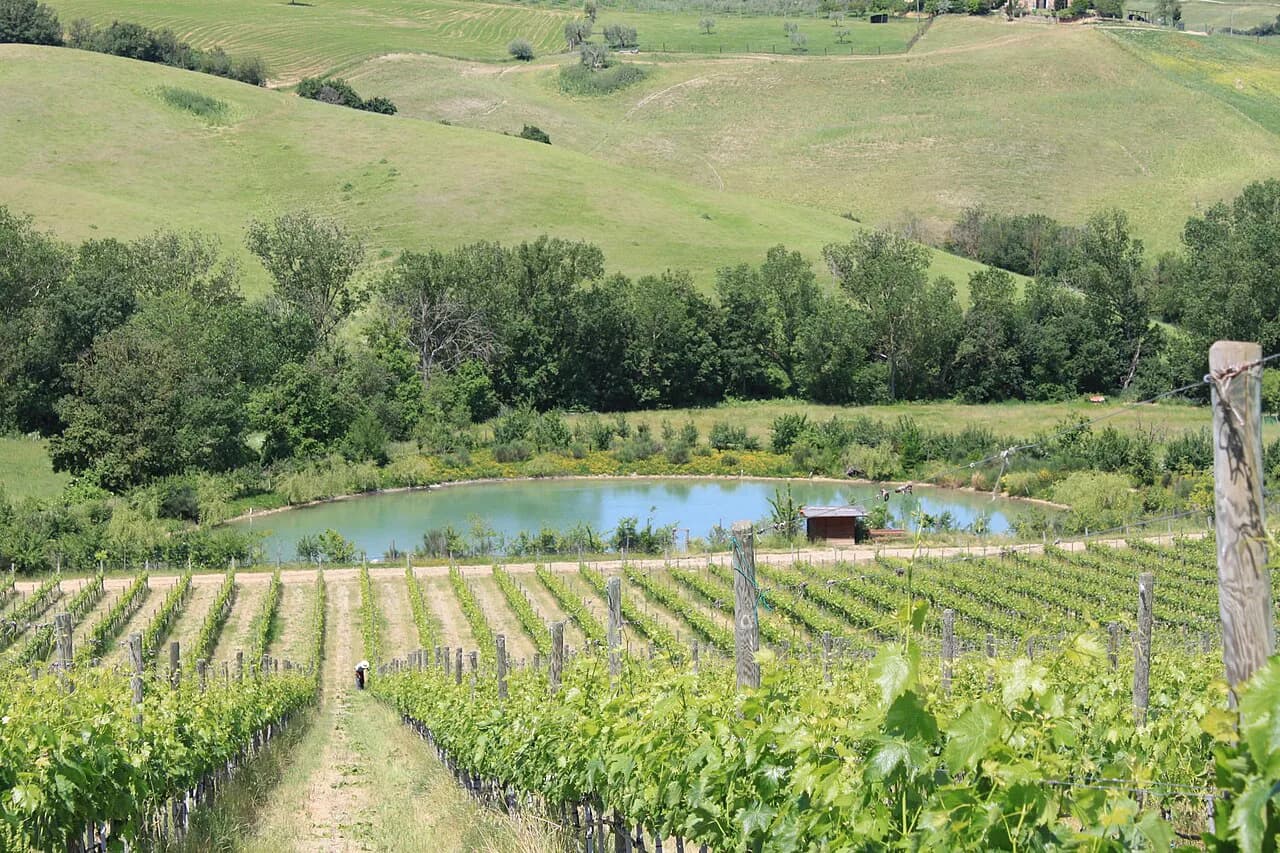
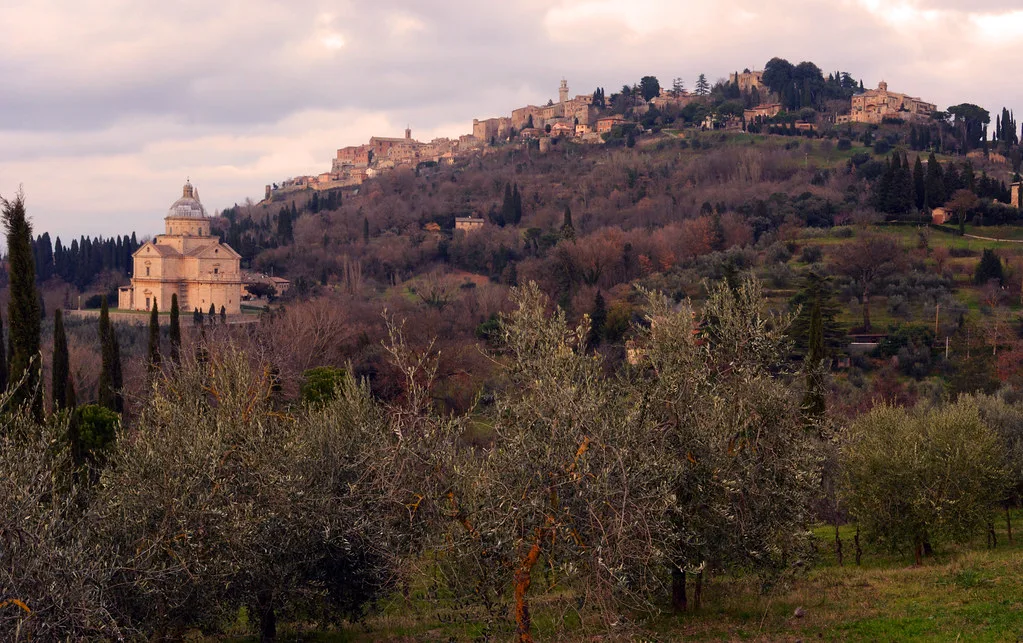
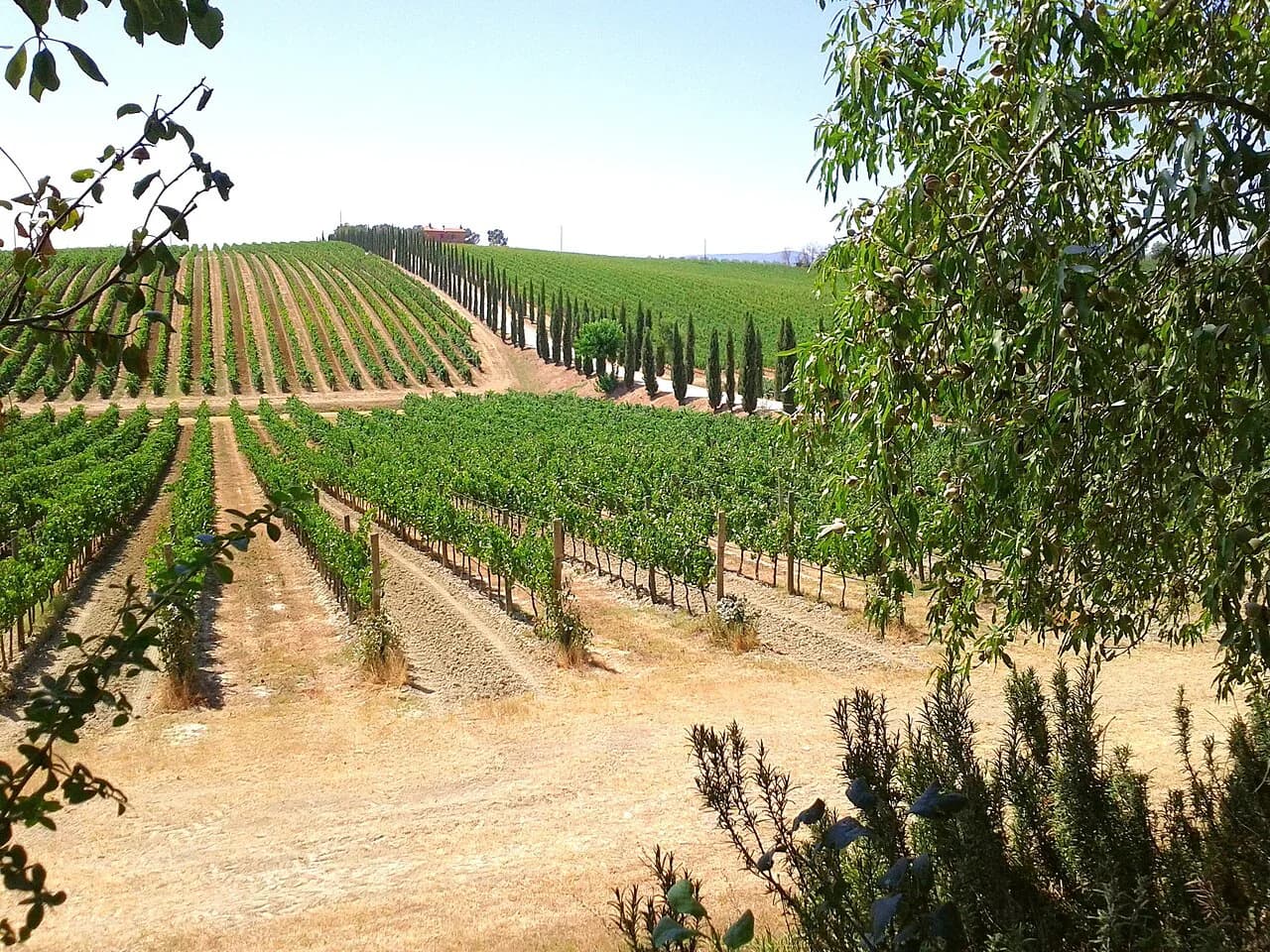
Salcheto sits below Montepulciano among the vines and is known for an organic, low-intervention approach, with long communal tables and a terrace looking back at the town on its ridge. It works well for families and groups, and its food comes from a daily menu rather than a fixed tasting sheet.
Avignonesi is a large estate near the village of Valiano, roughly a 25-minute drive from town, with a showroom, tasting space and shop. Its tastings sit at the higher end of the local price range, and booking ahead is how you secure a place on the facility tours rather than just a glass at the bar.
Neither estate is a walk from the center, so plan the transport before you commit: a taxi, a hired driver or a guided day. Since someone has to stay sober on the country roads, this is the point to decide who is driving and who is tasting.
Tours Versus Doing It Yourself on Foot
The independent version is genuinely easy here: arrive in town, walk the Corso, and mix free cellar entries with one booked tour such as De' Ricci. The trade-off is that you handle timing, group limits and the uphill walking yourself, and you see only what is inside the walls.
A chauffeured day buys the opposite: door-to-door transport, estates like Salcheto and Avignonesi that you could not comfortably reach on foot, and no driving decisions. The cost is higher and the pace is set by your driver-guide at A Day in Tuscany, so read each itinerary's inclusions before you book.
A middle path suits many visitors: stay in or near town, taste on foot one day, and book a half-day driver for the outlying estates on another. If you are basing yourself locally, this selection of agriturismo Montepulciano stays puts you close enough to walk into the center.
Getting There and Getting Around Without Driving
Montepulciano sits on a ridge south of Florence and is reachable by bus or by train plus a connecting bus to the town, with the final stretch on foot or by local shuttle up to the gates. Once inside Porta al Prato, everything in this guide is walkable, though the streets are steep and uneven.
Build in time for the climb: the distance from the lower gate to Piazza Grande is short on a map but involves a sustained ascent. Comfortable shoes, a water bottle and a realistic two-to-three-cellar limit make for a better afternoon than a sprint through all eight.
If your trip continues elsewhere in Italy, the same planning logic applies to other wine cities: compare this approach with wine tasting in Bologna, where the cellars sit in the hills just outside the city, or wine tasting in Amalfi, where the terraced vineyards drop to the sea.
What to Ask When You Email a Cantina
Use email rather than a phone call if your Italian is limited, and cover the essentials in one message: preferred date, start time, number of people, and whether anyone in the party will not be drinking. The historic houses routinely confirm bookings by reply with names and a contact number, and payment is often taken at the cellar rather than online.
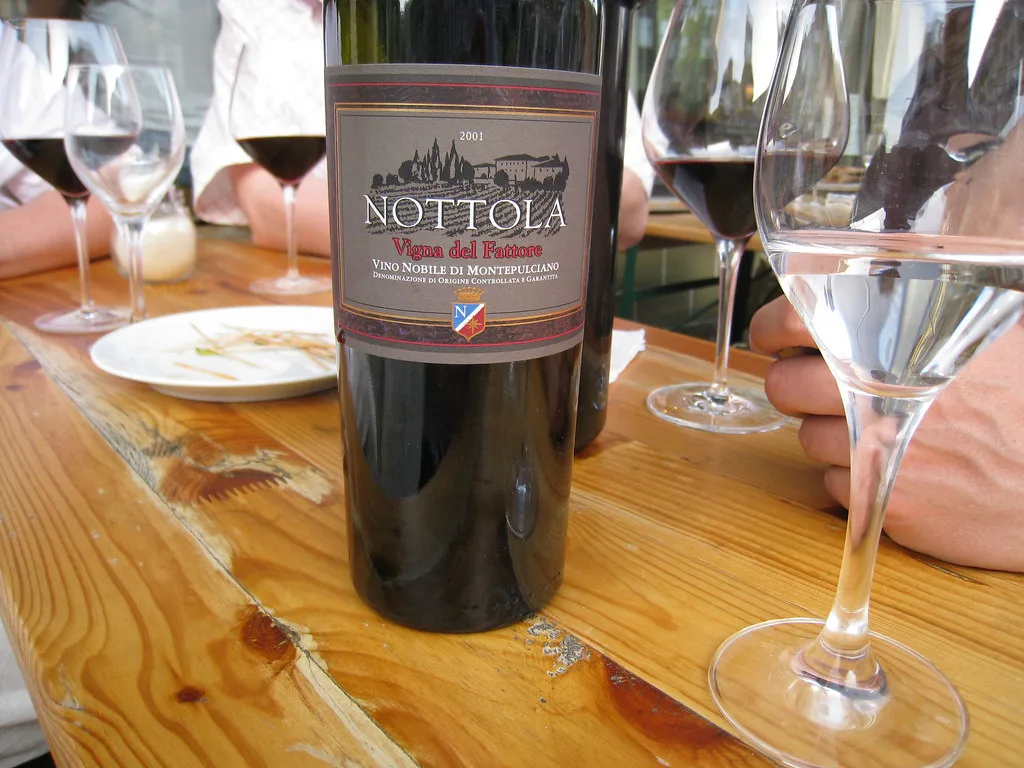
Ask specifically what the tasting includes: how many wines, whether the cellar tour is part of it, and whether food such as bruschetta, cheese and salame is served or costs extra. At De' Ricci, for example, the food is included with both the three-wine and six-wine tours, so the step up in price reflects the extra wines rather than a separate food charge.
Finally, ask about timing and access: how long the visit lasts, whether there are stairs, and whether a larger party needs a set slot. Comparing the visit formats across the montepulciano wineries in advance saves you from arriving at a cellar that only tours at fixed hours.
Building a Realistic Tasting Day
Two to three cellars is a comfortable afternoon once you factor in walking, tours and lunch. A workable shape is a free cellar visit in the morning, one booked tour with food around midday, and a final stop near Piazza Grande before the light goes.
Tie the wine to the rest of the town: Piazza Grande, the Fortezza and the Palazzo Comunale are all within a few minutes of the top cellars, and a long lunch is part of the local rhythm rather than a delay. Many visitors find the midday break is what makes an evening tasting possible at all.
Harvest runs in the autumn, when the countryside is busy with picking and some cellars are absorbed in the vintage, so ask about the period you plan to visit when you book. Outside the main season, town cellars generally keep more predictable hours than rural estates, which is another argument for footing it in the center first.
Drinking Responsibly on a Wine Day
Anyone driving should not taste: use the spittoons, which are standard in every tasting room, or split the party so a designated driver handles the country roads. For the outlying estates like Avignonesi and Salcheto, a booked driver or a guided day removes the question entirely, and in town the climb back down is on foot anyway.
Water, bread and a proper lunch are part of pacing yourself through a multi-cellar day, especially with Vino Nobile's structure. Tasting is about attention, not volume, and the cellars are used to visitors who spit.
Plan Your Montepulciano Tasting Day
Start with the town: pick one booked cellar such as De' Ricci for a structured tour with food, add a free self-guided visit at Contucci or Talosa, and let the walking route from Porta al Prato to Piazza Grande organize the rest. Confirm current tour times and tasting fees directly with the cantina before you travel, since published details change.
Save the estates outside the walls, Avignonesi near Valiano and Salcheto below town, for a day when you have a driver or a booked tour. That split keeps the car question separate from the wine, and it means no one at the table has to choose between tasting and driving.
More wine guides from Montepulciano
- Argiano Winery
- Avignonesi Winery
- Biondi Santi and Tenuta Greppo
- Boscarelli Winery in Montepulciano
- Brunello di Montalcino Wineries
- Cantina Contucci in Montepulciano
- Casanova di Neri in Montalcino
- Castiglion del Bosco
- Col d'Orcia Winery Visits
- Il Poggione Winery
- Montepulciano Wine Tours
- Montepulciano Wineries
- Salcheto Winery Near Montepulciano
- Visiting Castello Banfi in Montalcino
- Agriturismo Montepulciano
- Gattavecchi Winery in Montepulciano
- Poggio Antico Winery
- Poliziano Winery
- Montepulciano Wine Cellars
- Visiting Fattoria del Cerro
- La Braccesca
- Montalcino Wine Tours
- Canneto Winery Near Montepulciano
Frequently Asked Questions
Is Montepulciano similar to Chianti?
Both are Tuscan Sangiovese country, but the appellations differ. Montepulciano's Rosso and Vino Nobile require at least 70 percent Sangiovese with set aging for the Nobile, and the town's historic cellars sit inside the walled center, which makes tasting here more compact than driving between Chianti estates.
What is the difference between Rosso di Montepulciano and Vino Nobile di Montepulciano?
Both start from a minimum 70 percent Sangiovese. Vino Nobile must age two years before release, at least one in barrel, while a Riserva ages three years. Rosso is the younger, more immediate wine and is usually the entry point on a tasting list.
Do you need to book wine tasting in Montepulciano?
Not always. Contucci and Fattoria della Talosa allow self-guided cellar visits without a reservation, and Ercolani runs frequent free tours. De' Ricci requires pre-booking for its set tour times, and Gattavecchi and Fanetti need advance arrangements for tours, dining or group visits.
Can you do Montepulciano wine tasting without a car?
Yes, for the historic cellars inside the walls. Arrive by bus or train plus a local connection, then walk from Porta al Prato up the Corso to Piazza Grande. Estates outside town, including Salcheto and Avignonesi near Valiano, need a taxi, driver or organized tour.
How much does a wine tasting cost in Montepulciano?
It varies by cellar and format. Some visits, including Contucci's unguided cellar walk and Ercolani's tours, are free, while De' Ricci publishes tiered prices for its guided tour with food. Ask each cantina for its current fees when you book, since they change.
How many wineries can you visit in one day in Montepulciano?
Two to three is realistic on foot, allowing for walking, a cellar tour and a sit-down lunch. Trying to cover all eight historic cellars in one day leaves little time to actually taste, and it is worth saving the outlying estates for a separate day with transport.
Which is better to visit, Montepulciano or Montalcino?
Montepulciano puts its historic cellars inside a walkable hill town, which suits a car-free tasting day. Montalcino is the home of Brunello di Montalcino and its estates are more spread across the surrounding countryside, so it rewards having a driver or a booked tour.
Is Montepulciano wine dry?
Vino Nobile and Rosso di Montepulciano are dry red wines made from Sangiovese, the same grape family behind Chianti and Brunello. The style is structured rather than sweet, though some producers also make dessert wines such as vin santo.
Sources
Notes for your next wine trip
Optional updates to our winery and wine-town guides.
You might also like
Continue reading
More guides you'll find useful