Castiglion del Bosco: Winery Visits Near Montepulciano
Plan a Castiglion del Bosco winery visit in Montalcino: how to book a Brunello tour and tasting, where the estate sits, and how to reach it without a car.
On this page
Castiglion del Bosco sits in the Montalcino countryside, not in Montepulciano, and that distinction shapes every practical decision about visiting. The estate combines a historic Brunello di Montalcino winery with a Rosewood hotel, restored villas and suites, restaurants and a private golf club across roughly 5,000 acres of Val d'Orcia landscape. Knowing which part of that estate you are booking is the difference between a cellar visit and a resort day.
This guide separates the cantina from the hotel, explains the Sangiovese behind Brunello, and lays out a realistic no-car plan for a rural Tuscan estate. It also tells you what to pin down when you request an appointment, since the estate publishes a tour offer but not a fixed tasting menu or a public price list. Treat the visit as a booking task first and a wine day second.
What Castiglion del Bosco Is
Castiglion del Bosco describes itself as one of the historic producers of Brunello di Montalcino, and the winery is the reason most wine travelers seek it out. The same 5,000-acre property holds a medieval borgo at its heart, now the core of a Rosewood hotel with villas, suites, restaurants and a members' golf club. The winery and the resort share land and branding, but they are separate operations with separate contacts.
The practical consequence is that the estate publishes two different phone lines and email addresses, one for the hotel and one for the cantina. Use the winery contact for anything tasting-related, including tour requests, party sizes and arrival times, rather than the reservations desk for the hotel.
Many travelers find Castiglion del Bosco while planning wine tasting in montepulciano and assume it is a short hop from that town's cellars. It is not the same district: Montepulciano makes Vino Nobile di Montepulciano from a different clone and a different appellation, and the two towns sit in separate valleys. Plan Castiglion del Bosco as a Montalcino day, not an add-on to a Montepulciano morning. If Siena is on your itinerary instead, the same separate-day logic applies to wine tasting in Siena.
Where the Estate Sits Relative to Base Towns
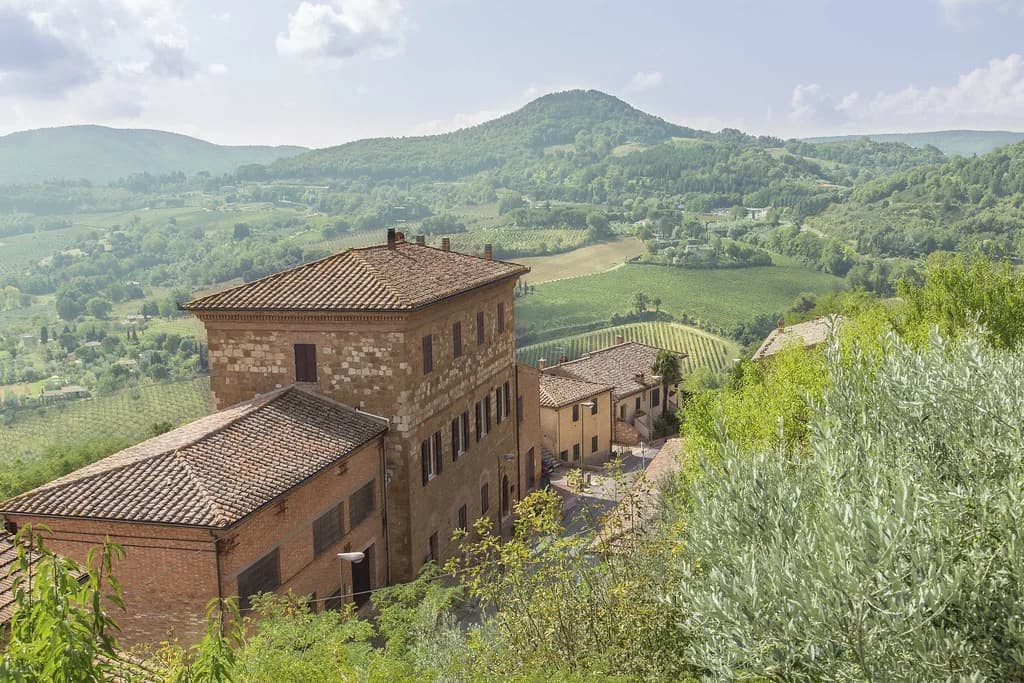
Montalcino is the reference town for this estate, and the winery lies in the countryside outside it rather than in the town center. The official address places the property in the comune of Montalcino in the province of Siena, which matters when you type a destination into a rental car's navigation or hand an address to a taxi driver. Ask for the locality by name rather than the town alone, because Montalcino's wineries are scattered across a large rural municipality.
From Montepulciano, Siena or the Val d'Orcia villages, this is a rural drive on secondary roads, and the sensible approach is to plan the day around one winery rather than stringing three estates across two valleys. The estate's own site is the place to pull the current location details before you commit to a route, since access roads and arrival points matter on a working estate. Build in slack: hill roads in this part of Tuscany are slower than the map suggests.
If Montepulciano is your base, keep the Montalcino day separate from your local wineries. The wineries in and around Montepulciano reward a full day on their own, and combining them with a Brunello estate usually means rushed tastings and a long return drive in the dark. Two shorter, focused days beat one sprawling one.
The Wine: Brunello di Montalcino from Sangiovese
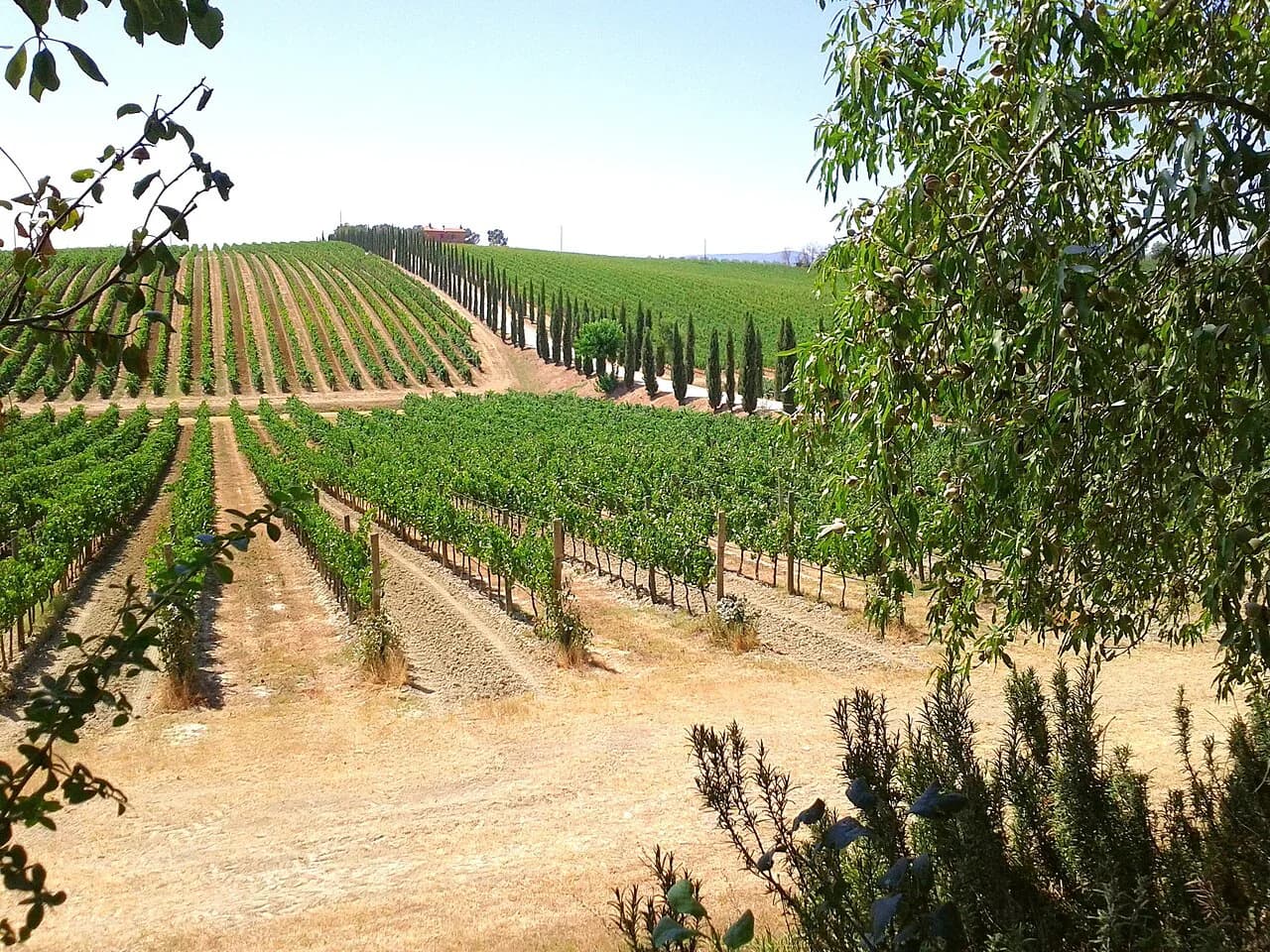
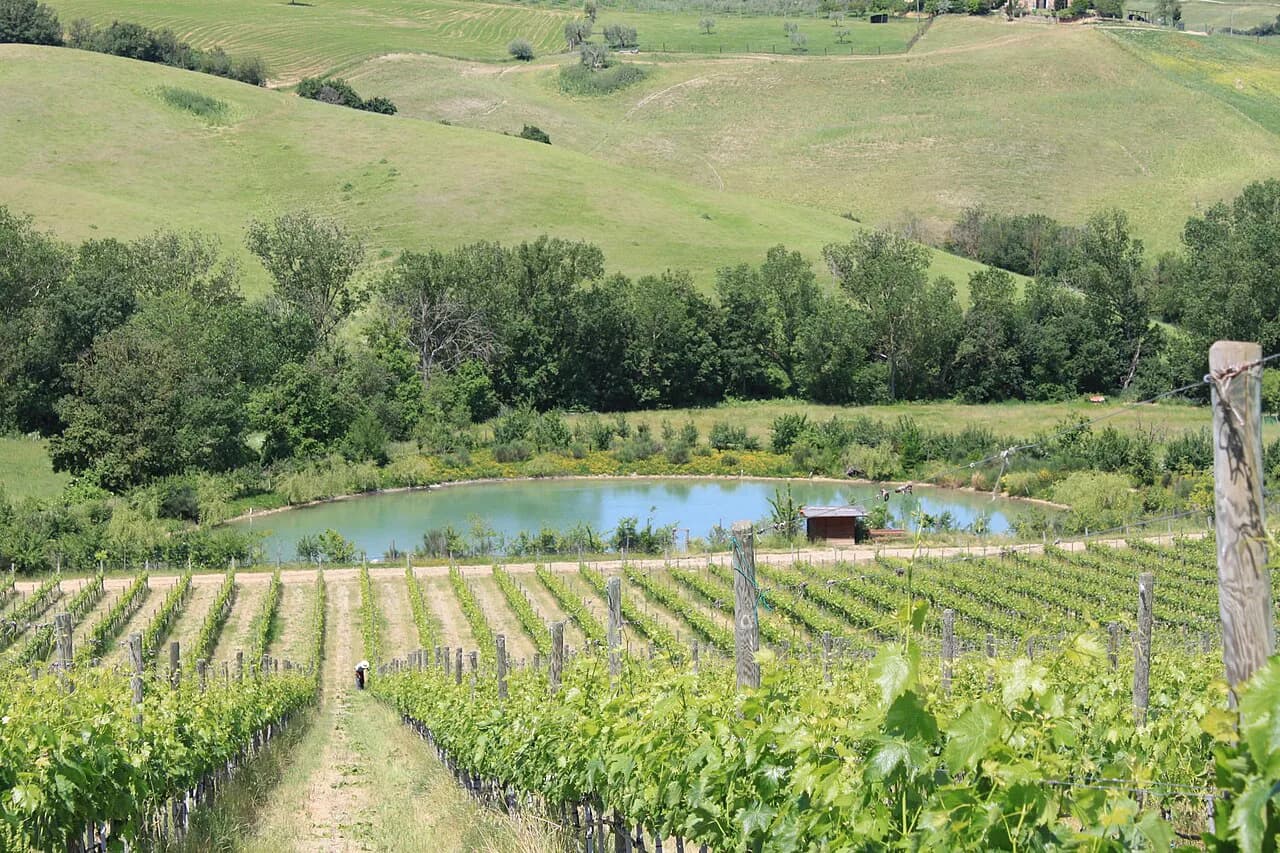
Brunello di Montalcino is a red wine made entirely from Sangiovese, known locally as Sangiovese Grosso, grown in the warm, dry hills around Montalcino. The appellation rules require extended aging before release, which is why Brunello is typically a structured, slower-maturing wine than the Sangiovese-based reds of Chianti Classico further north. When a cantina pours for you, that aging regime is the single most useful thing to ask about.
The climate story is simple and worth carrying into the tasting room: Montalcino's southern position and drier conditions give Sangiovese more ripeness and body than the cooler Chianti zone, so the wines tend to show darker fruit and firmer structure. Montalcino also produces Rosso di Montalcino, the same grape with less aging, which is often the more approachable pour on a warm afternoon. Ask which wines in your flight are Brunello and which are Rosso so you can compare them side by side.
Because appellation rules rather than winery marketing define what is in the bottle, you can choose an estate by geography and visit style with confidence. Castiglion del Bosco's own claim to the appellation is as a historic Brunello producer, so the tasting should be built around Sangiovese rather than international varieties. If you want a second Montalcino name for contrast, look south of the town toward estates near Sant'Angelo in Colle.
Winery Tours and Tasting Seminars
The estate presents its winery offering as guided tours and tasting seminars set in the historic cellars and among the Brunello vineyards. That description is the published scope, not a fixed itinerary: no number of wines, tasting duration or pairing menu is stated. Read the tour page before booking so you request the format you actually want, whether a cellar walk-through or a seated seminar.
When you contact the cantina, ask five specific questions: how many wines are poured, whether the cellar is included, how long the visit runs, whether food is served, and which languages the host works in. Those five answers determine whether the visit suits a curious beginner or a collector, and they are exactly the details a short web page cannot settle. Get the reply in writing so your group knows what it is paying for.
A working estate of this size is also a place where hospitality and production overlap, so do not assume a casual drop-in at the cellar door. Brunello estates generally run visits on scheduled appointments tied to staff availability, and harvest is the least flexible period of the year. Frame appointments as the norm, send your preferred dates early, and keep the confirmation with your travel documents. Confirm the final arrival time with the cantina shortly before you travel.
Booking the Cantina
The estate publishes a dedicated winery phone line and a wine email address, separate from hotel reservations, and that is the channel to use. Put your party size, preferred date, arrival time, language and whether you will arrive by car or taxi in the first message, because the answer shapes which tour slot you are offered. The winery contact is listed on the estate's main site.
If you are staying at the Rosewood hotel on the estate, book the winery through the hotel's experience desk and say plainly that you want the cantina tour rather than a resort activity. The estate also sells experiences such as truffle hunting followed by a Brunello tasting and a helicopter flight over the Val d'Orcia, and those are resort products with their own arrangements. Independent visitors should ask for the winery tour specifically so the request does not land with the concierge.
Where a winery publishes no tasting price, do not read that as free entry. Ask for the per-person rate for your chosen format when you request the appointment, and ask what the cancellation terms are, since rural estates often hold slots for a single group. That one email resolves both the budget question and the planning risk. No price is quoted here because the estate has not published one.
Hotel Guest Versus Independent Visitor
Staying on the estate changes what you can book, but it does not make the winery a private club. The Rosewood hotel runs a broad experiences program, from cooking at La Canonica Cooking School to truffle hunts and helicopter tours, and those are arranged through the hotel for guests. The cantina, by contrast, is a commercial winery that receives visitors, and outside guests request tours through the winery contact rather than the hotel front desk.
Independent visitors should also expect the estate's geography to shape the day: the golf club is reserved for members and hotel guests, and the restaurants sit within the resort. For a wine-focused visit, the cantina plus a meal in Montalcino town is the cleaner plan than trying to attach resort facilities to a day visit. Decide which part of the estate you are there for before booking anything.
If you would rather sleep among the vines than drive back after a tasting, agriturismo montepulciano options make a practical base on the Montepulciano side, with the Montalcino run saved for one dedicated day. Staying close to your tasting also solves the designated-driver problem, since a driver should not taste at all: use spittoons, bring a non-drinking driver, or book a tour or public transport.
Getting There Without Driving
The nearest useful rail link for this part of Montalcino is the line through Buonconvento, south of Siena, and from there the estate is a road journey best covered by taxi. Train schedules and taxi availability change, so check the current timetable with the rail operator and arrange a return taxi in advance rather than hoping to find one at the station. A pre-booked car is the difference between a relaxed tasting and a stranded afternoon.
Local bus service in the Montalcino hills is thin and built around residents rather than winery itineraries, so don't plan a rural estate visit around a single bus line. The honest no-car plan is train to the Buonconvento area, pre-arranged taxi to the cantina and back, with the taxi fare treated as part of the day's cost. Ask the taxi company to wait or return at a fixed time.
The alternative is a guided day from Montepulciano or Siena, which solves transport and the driver problem in one booking. Montepulciano wine tours that include a Montalcino estate let you taste without worrying about the return road, at the cost of a fixed itinerary and a group pace. Compare the tour's inclusions against what the cantina actually offers before you pay, since a tour that lists a winery stop may not include the full cellar visit.
Independent Booking Versus a Guided Brunello Day
Booking the cantina yourself gives you the most control: you choose the date, the tour format and how long you linger, and you pay the winery directly. The trade-off is logistics, because someone must drive the rural roads or you must assemble a train-plus-taxi chain and absorb the cost of a waiting car. For two people, the taxi often costs as much as joining an organized day.
A guided Brunello day shifts the driving and scheduling to someone else and usually bundles two or three estates, which suits travelers who want breadth in a single day. The cost is flexibility and depth: group tastings run to a timetable, and a large tour may not include the cellar seminar a smaller booking would. Read the tour company's inclusions line by line and compare them with the tour format the estate describes.
A middle path works well for couples and small groups: one independently booked cantina visit, a pre-arranged taxi from the station, and a slow lunch in Montalcino town afterward. That gives you the cellar time you came for without committing to a full-day group schedule. Whatever you choose, decide who is driving before anyone lifts a glass.
Pairing the Visit with Montalcino and Other Estates
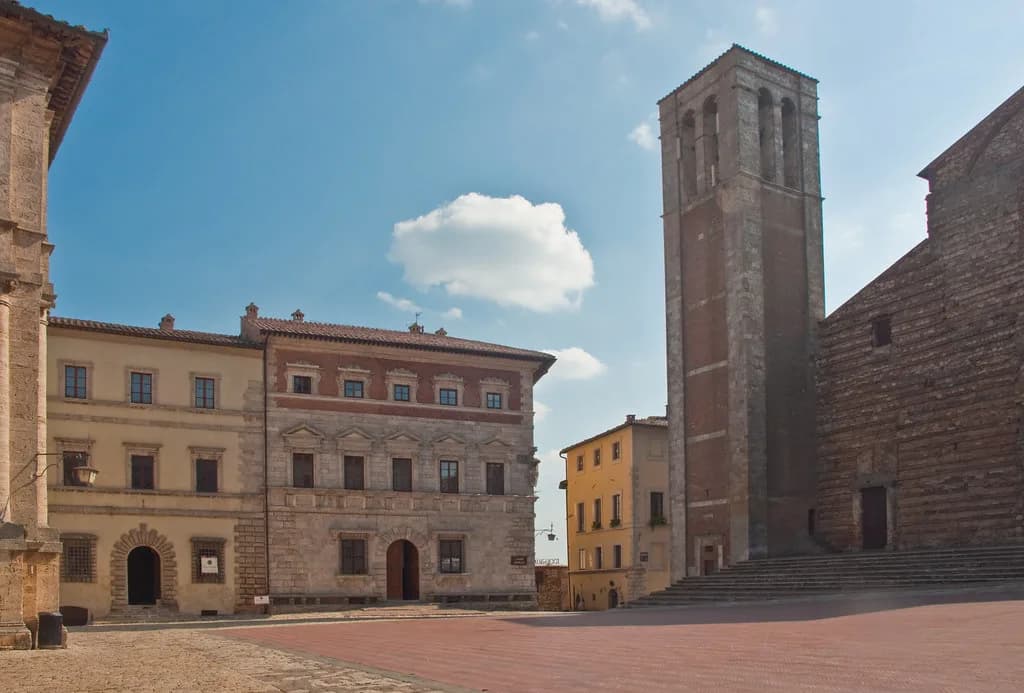
Montalcino town itself deserves an afternoon: the fortress walls, the enoteche and the walkable center make it a natural bookend to a morning cellar visit. A realistic day is one estate tour, a town lunch and a stroll, rather than three estates and a museum. The wineries around Montalcino are spread across the hills, so each additional stop adds real driving time.
If you want a second tasting in the same day, choose an estate close to your first and book both appointments with an hour of buffer between them. Argiano winery, south of Montalcino, is a useful reference point for how another historic Brunello estate structures visits. Check the estate's own site for visitor arrangements before you build it into a route.
Travelers who base in Montepulciano often want to compare the two appellations in one trip, and that works well across separate days. The wineries around Montepulciano make Vino Nobile di Montepulciano DOCG from Sangiovese, and tasting it beside Brunello shows how soil and climate change the same grape. Book the Montepulciano day and the Montalcino day separately and you get the comparison without the driving.
Practical Timing and What to Reconfirm
Harvest in Montalcino generally falls in September into October, when estate staff are busiest in the vineyards and cellar and tour availability tightens. Late spring and early summer are the most comfortable months for a hill-country visit, with long daylight for the drive back. Avoid scheduling a winery tour on a travel day with a flight or train to catch, because rural roads and a relaxed tasting run long.
Book well ahead for a weekend visit in high season and be flexible on timing for weekdays in the shoulder months. Ask about the estate's seasonal rhythm when you request the appointment, since a working winery closes its tour calendar around key production moments. A short lead time is fine in November and a long one is wise in May.
Before you leave home, reconfirm your arrival time, the meeting point on the estate, and the language of the tour with the cantina, then keep that reply on your phone for the taxi driver. Those three details are where rural winery visits most often go wrong. Everything else, from wine count to duration, should already be in your booking confirmation.
Plan Your Montalcino Wine Day
Castiglion del Bosco rewards travelers who treat it as a Montalcino winery with a resort attached, not the reverse. Request the cantina tour through the winery contact, ask for the wine count, cellar access, duration and per-person rate in writing, and settle your transport before the day. The estate's own pages are the place to confirm current visitor arrangements closer to your date.
If you are based in Montepulciano, keep the Brunello day separate and enjoy your local wine tasting on its own schedule, with the wineries of the Vino Nobile zone given the time they deserve. Sort out who is driving, use spittoons or book a tour, and the day stays about the wine rather than the logistics.
Frequently Asked Questions
What is Castiglion del Bosco?
It is a 5,000-acre estate in the Montalcino countryside of Tuscany that combines a historic Brunello di Montalcino winery with a Rosewood hotel, villas and suites, restaurants, and a private members' golf club. The winery and the resort share the land but have separate contacts, so wine visitors should use the cantina's own phone and email.
Can you visit the Castiglion del Bosco winery without staying at the hotel?
Yes, the winery is a working producer that presents tours and tasting seminars, and outside visitors request them through the winery contact rather than the hotel. The estate does not publish a walk-in policy, so send an appointment request with your dates, party size and preferred format. Resort experiences such as truffle hunting are separate hotel products.
How much does a Castiglion del Bosco wine tour cost?
The estate does not publish tasting prices on its tour pages, so there is no reliable figure to plan around. Ask for the per-person rate for the specific format you want, plus the cancellation terms, when you request the appointment. Getting that in writing is the only way to budget the visit accurately.
How do you get to Castiglion del Bosco without a car?
The practical route is the train to the Buonconvento area south of Siena, then a pre-arranged taxi to the estate, with the same car booked for the return. Bus service in the Montalcino hills is thin and not built around winery visits. A guided day from Montepulciano or Siena is the alternative that removes the driving entirely.
How long should you allow for a Castiglion del Bosco winery visit?
The estate does not publish a tour duration, so ask when you book. For planning purposes, treat a cellar tour and seated tasting as a half-day commitment including the rural drive, and pair it with lunch in Montalcino town rather than a second estate. Confirm the schedule in your booking reply before you finalize the day.
Who owns Castiglion del Bosco?
The estate operates as part of the Rosewood Hotels collection, which manages the hotel, and the winery sits on the same 5,000-acre property. For corporate or ownership details, the estate's official site and the hotel group's pages are the authoritative places to check. The operational point for visitors is simply that the cantina has its own contact channel.
Sources
Notes for your next wine trip
Optional updates to our winery and wine-town guides.
You might also like
Continue reading
More guides you'll find useful