Montepulciano Wine Tours: Town Cellars vs. Country Estates
Plan a Montepulciano wine tour: how in-town cantinas differ from countryside estates, how tours and shuttles work, and when to go independently by foot.
On this page
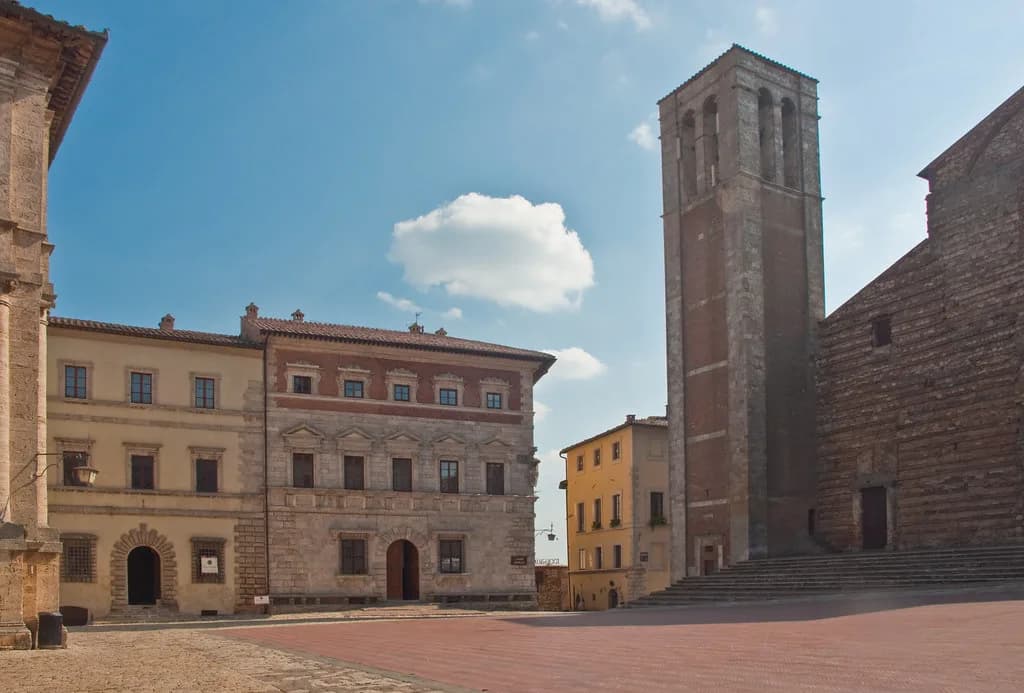
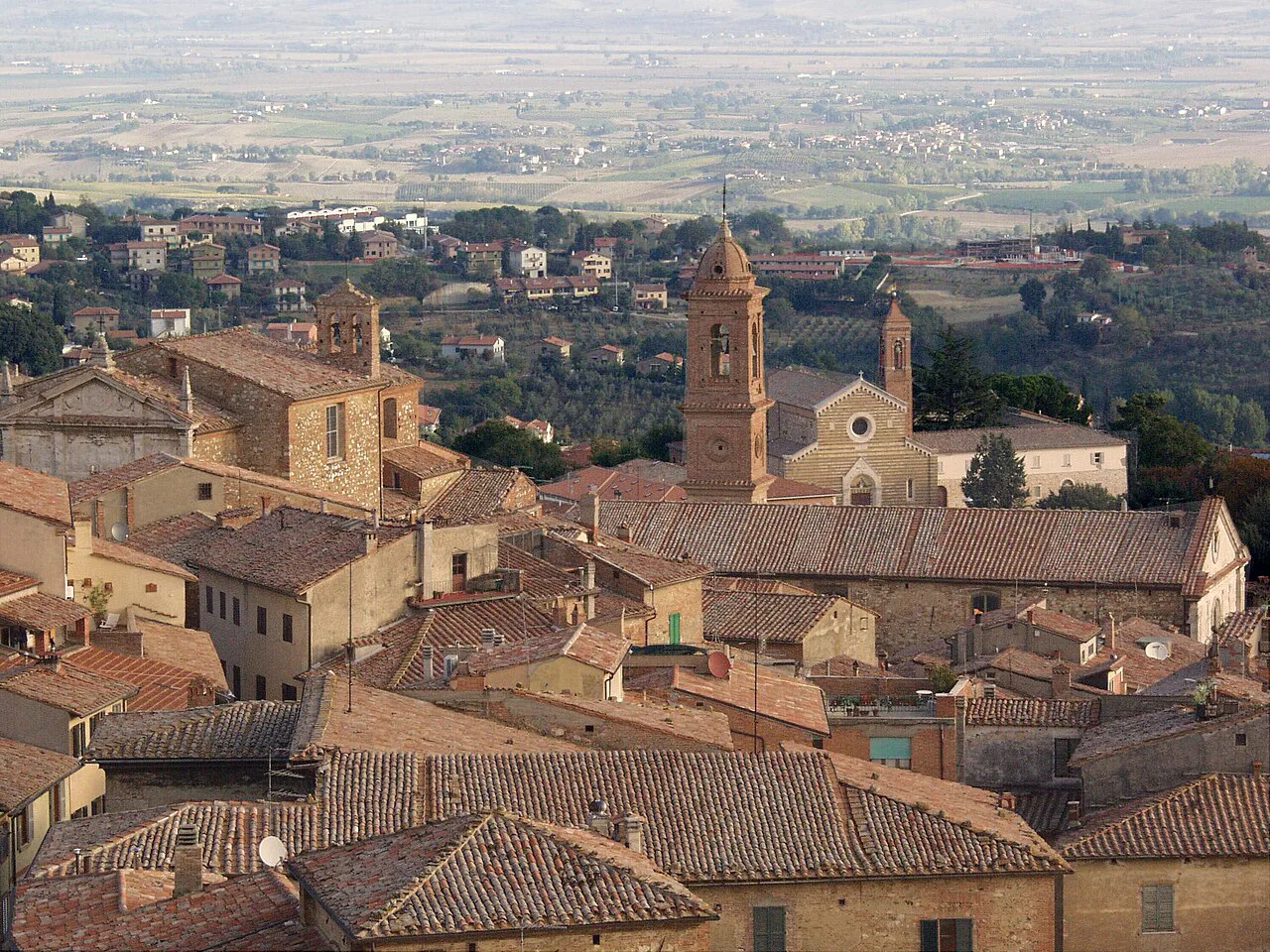
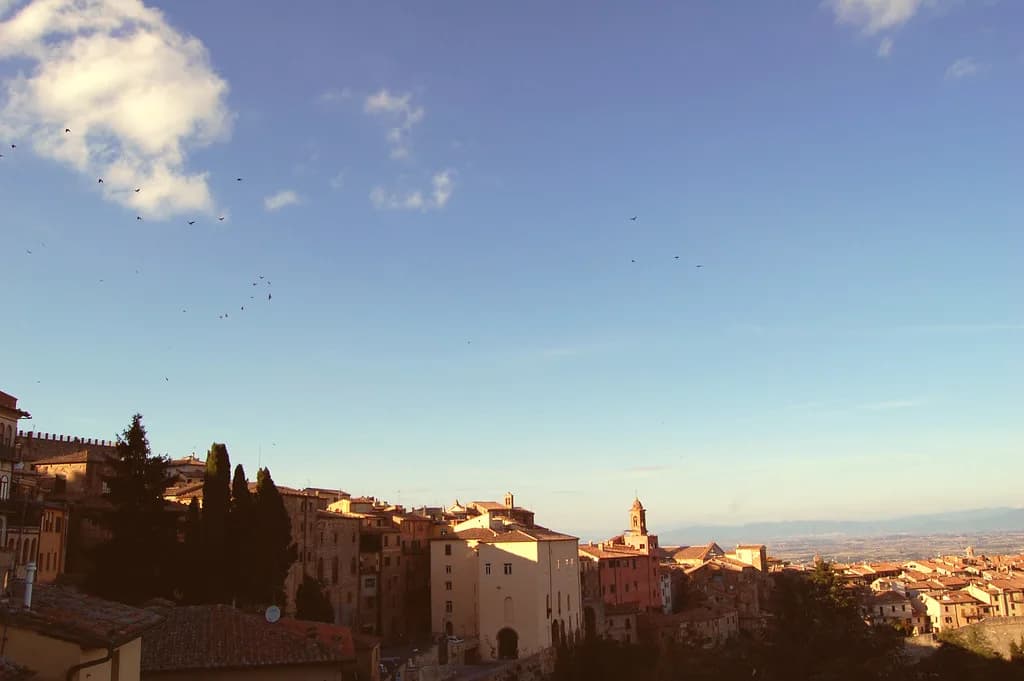
Montepulciano, Italy, sits on a ridge in southern Tuscany, and its historic center slopes more than 60 meters from the lower gates to the main square. That climb is the reason the town has so many underground cellars, dug into the tuff beneath the streets. For a wine traveler, it means one genuine decision: stay inside the walls and taste on foot, or book transport and head out to the countryside estates.
The town is also routinely confused with Montepulciano d'Abruzzo, a different wine from a different region. What you taste here is Vino Nobile di Montepulciano DOCG, plus the lighter Rosso di Montepulciano and a handful of neighboring appellations. Sorting that out first makes tour itineraries much easier to compare.
Vino Nobile in Brief: What You Are Actually Tasting
Vino Nobile di Montepulciano is built on Sangiovese, known locally as Prugnolo Gentile, which must make up at least 70 percent of the blend, with up to 30 percent other varieties authorized for Tuscany. Yields are capped and the wine cannot be sold until it has aged at least two years, or three for the Riserva. Vinification and aging must legally happen inside the municipal boundaries of Montepulciano, which is why the cellars under the town matter so much.
The appellation earned DOC status in 1966 and was the first Italian wine to be granted DOCG, in 1980. Around it sit Rosso di Montepulciano DOC, the white Bianco Vergine della Valdichiana, Chianti Colli Senesi and Vin Santo. On a tour, a flight that includes a Rosso alongside the Nobile tells you more about the estate's style than two vintages of the same wine.
Style-wise, the wine is full-bodied with pronounced but softened tannins after aging, and the source describes aromas in the blackberry, plum, cherry and violet register rather than anything light. Expect pours built for food, not aperitivo sipping, and plan the rest of the day accordingly.
Why Montepulciano Works So Well on Foot
Most Tuscan wine towns push you into a car to link one estate to the next. Montepulciano inverts that: the historic cantinas are excavated beneath the medieval streets, so several can be visited on foot inside the walls without moving your car. If you are staying in town, you can build a whole afternoon of tasting around a walk uphill through the borgo.
The gradient is real, though. The climb from the lower town to the main square is described as a workout, so wear shoes that handle cobbles and allow more time than the map suggests. Parking areas P8 on Via dei Filosofi and P7 on Via dell'Oriolo sit reasonably close to the center if you arrive by car.
Arriving by train means the Chiusi-Chianciano Terme station, roughly 21 kilometers out on the SP146, or Valdichiana on the Florence side, about 20 kilometers via SP327 and SP135. From either station you need a bus, taxi or prearranged transfer for the final stretch, so build that leg into the plan before you commit to a tasting time.
In-Town Cantinas That Receive Visitors
Cantine Fanetti is the historic anchor of the in-town circuit. The source ties the family to Adamo Fanetti, credited as the first to use the name Vino Nobile, and notes that the cantina opens year-round with three generations still working in traditional methods. That year-round access makes it a sensible first stop if your dates fall outside the main season.
For the wider set of cellars inside and just outside the walls, a specialist booking platform lists estates that accept visitors and lets you filter by what each offers. Use it as a directory rather than a ranking, and treat the published visit description as the thing you are actually buying.
One recurring recommendation among travelers is the De'Ricci cantina, whose ancient cellars sit under the town and come up repeatedly as a highlight of a Montepulciano visit. Treat forum enthusiasm as a prompt to look at the cellar's own published visit information, not as a substitute for it.
Countryside Estates Worth Grouping Into a Driven Day
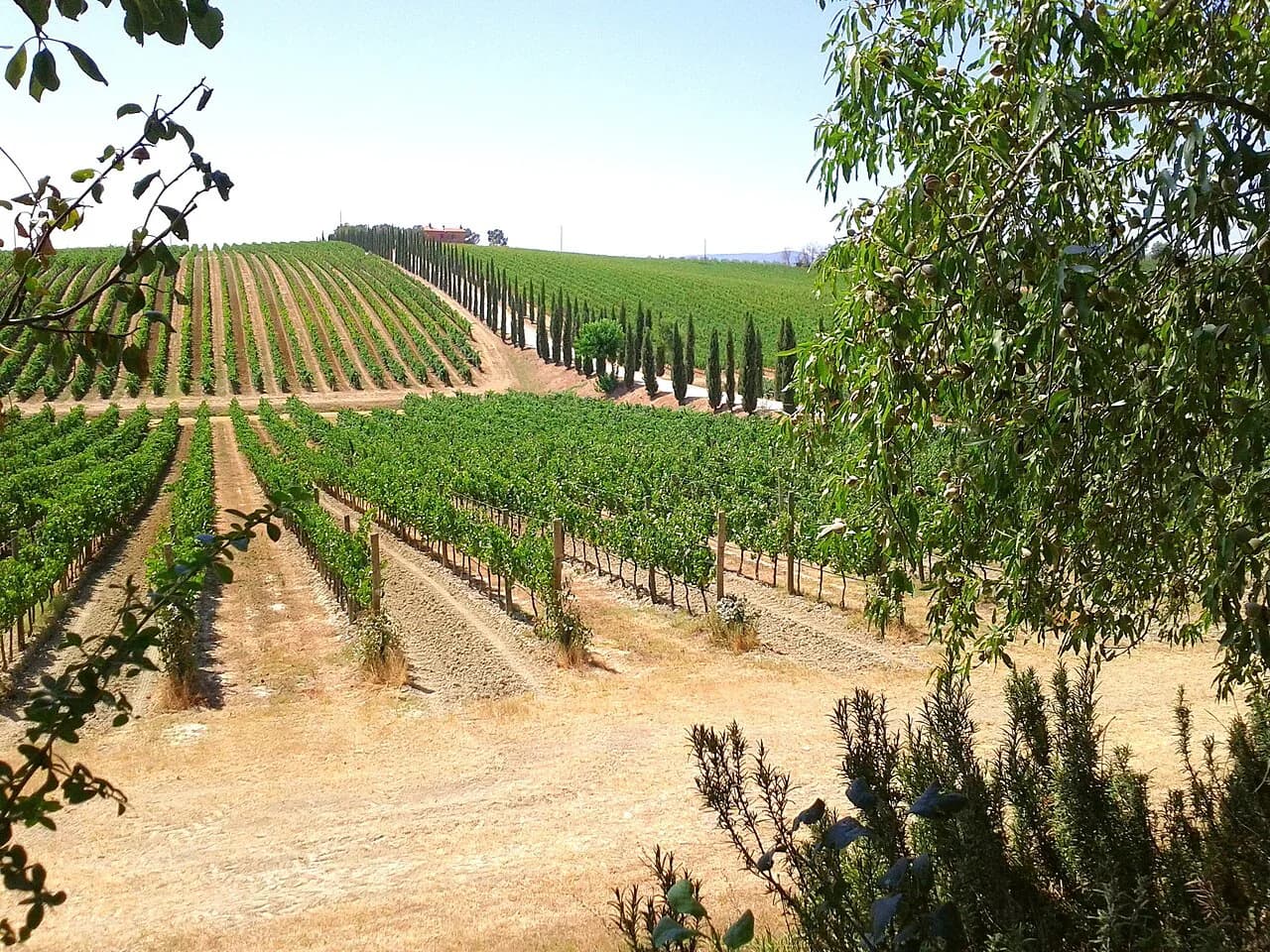
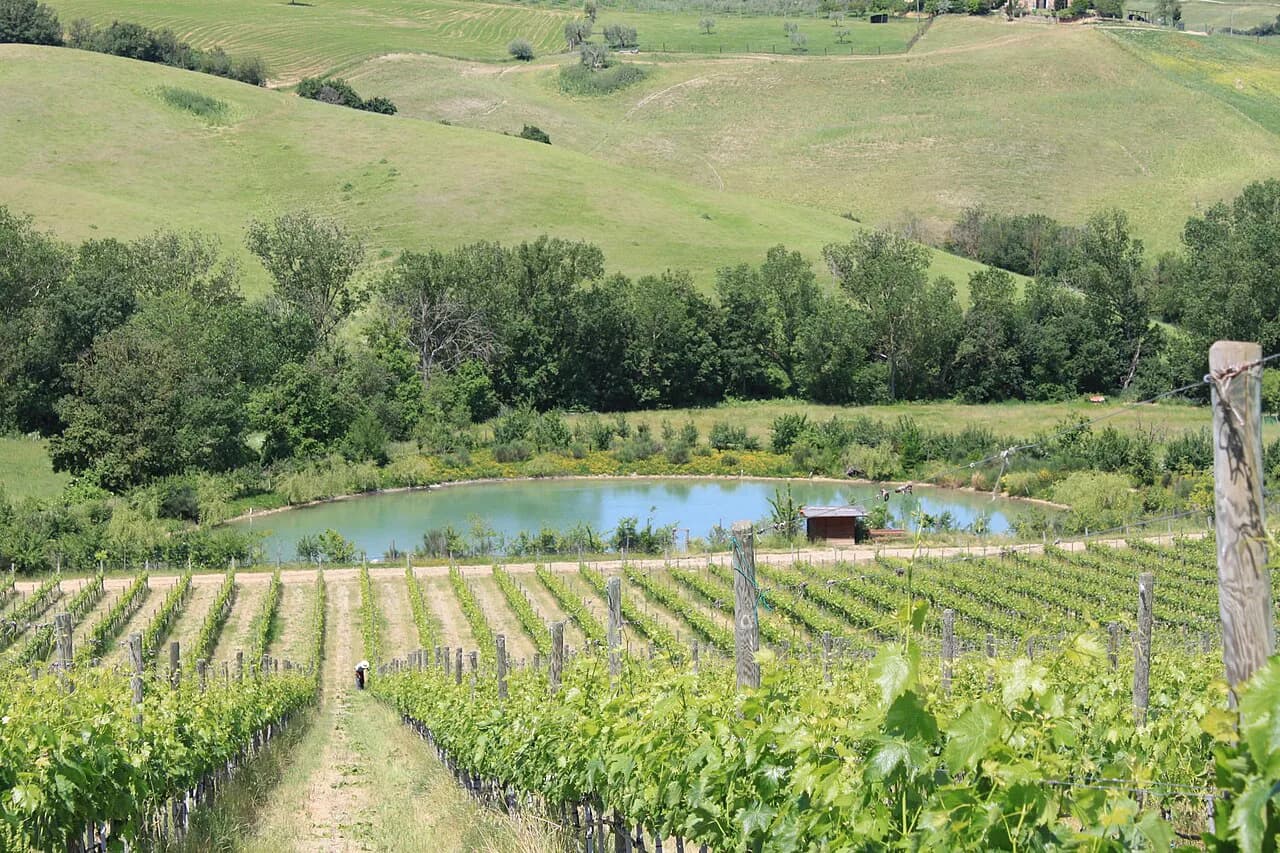
Outside the walls, the estates are scattered across the surrounding hills rather than lined up along one road, so a driven day makes sense. Salcheto is the modern, sustainability-forward name, farmed organically and biodynamically, with willow trees on the property feeding biomass energy for the cellar. Icario is a younger project that pairs a contemporary building with traditional methods, and both sit in the countryside rather than the center.
Villa S. Anna is noted as an all-women team making wines just outside Montepulciano, with high-density plantings and aging in centuries-old underground cellars kept at natural temperatures. Montemercurio traces back to a first vineyard planted by the grandfather in the early 1960s and remains a family operation. Both reward a booked visit rather than a drop-in.
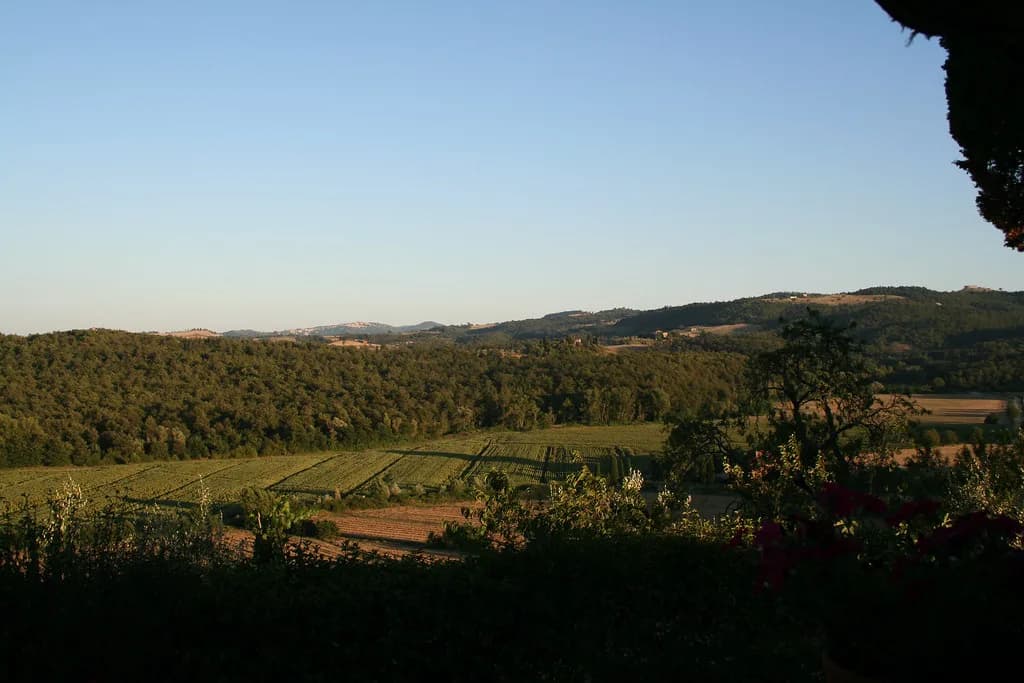
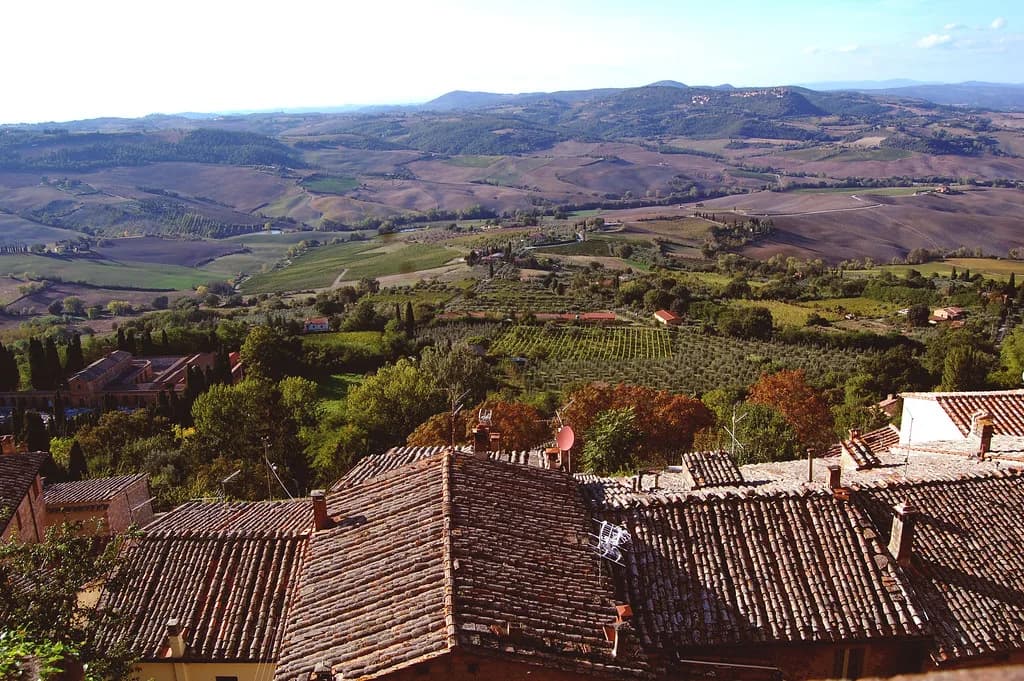
Stay somewhere on the vineyard side and the logistics get easier, since you are already out among the estates when the day starts. Farm stays in the surrounding countryside also put you closer to dinner after a long tasting.
What a Guided Tour From Montepulciano Usually Bundles
A tour sold out of Montepulciano typically combines three things: a cellar visit, a seated tasting, and transport between estates, often with a lunch stop. Comparing tours means counting those elements rather than looking at the headline figure. A cheaper option that includes one estate and a standing pour at a counter is a different product from a two-estate day with a seated flight and lunch.
Read the itinerary for four specifics: how many estates you actually enter, whether the tasting is seated or at a counter, whether food is included or an extra, and the maximum group size. A day listing three estates with 45 minutes at each is mostly driving and pouring; two estates with time in the cellar usually leaves more room to ask questions.
Published tour prices vary by operator, group size and season, and operators generally show current rates on their own booking pages rather than in aggregator listings. Ask directly for the per-person total including any tasting fees and lunch, and whether gratuity is expected.
Half-Day or Full-Day: Pairing the Town With Pienza and Montalcino
A half day covers Montepulciano itself comfortably: one or two in-town cellars, the climb up to the main square, and time in the streets between them. If you only have an afternoon, stay inside the walls and skip the countryside entirely rather than squeezing in a rushed estate visit.
Pienza is the low-friction add-on for a full day, alongside Montepulciano on the panoramic SP146 and easy to fold into a loop. Montalcino is a different calculation: adding Brunello country to a Montepulciano day means real drive time in each direction, so it deserves its own day, not an extra hour at the end of one.
Look at the Vald'Orcia as the connective tissue between the two: the same ridge roads link Montepulciano, Pienza and the Brunello zone. If a tour promises all three in one day, count the hours in the vehicle before you count the wineries.
Tours From Florence or Siena vs. Tours Based in Montepulciano
Day trips sold in Florence and Siena spend a substantial share of the day on the road before the first glass is poured, and often combine Montepulciano with a second region to justify the distance. That suits travelers who want a single hassle-free day out of a city base and do not mind a short visit in each place.
If you are sleeping in Montepulciano, a locally based guide or driver buys you something a city tour cannot: a later start, a slower pace, and the option to end with dinner in town. The trade-off is that local operators run smaller fleets, so popular dates fill earlier.
Travelers comparing other Italian wine regions should note that the model differs by city; Bologna, for example, runs its own set of guided wine tours into the Colli Bolognesi hills. The format carries over, but the estate culture and appellations do not.
Doing It Without a Car: What Is Walkable and What Is Not
The honest split is simple. In-town cantinas and the whole historic center are walkable, if steep, and you can taste entirely on foot when you stay inside the walls. Countryside estates are not connected by a practical public network for wine visits, so reaching them means a driver, a taxi arranged in advance, or a guided tour.
Taxis in a town this size are limited and best booked ahead for a return leg, especially late in the afternoon when demand peaks. A private driver for a half day costs more than a shared tour but gives you the freedom to stay longer at one estate instead of splitting time across three.
City-based operators do sell wine and food days in the region with no driving on your part, which is the cleanest option if nobody in your group wants to stay sober. Anyone driving should use the spittoon and keep the tasting small, and the alternative is a designated driver or public transport back to the station.
Booking Mechanics: Appointments, Party Size and Language
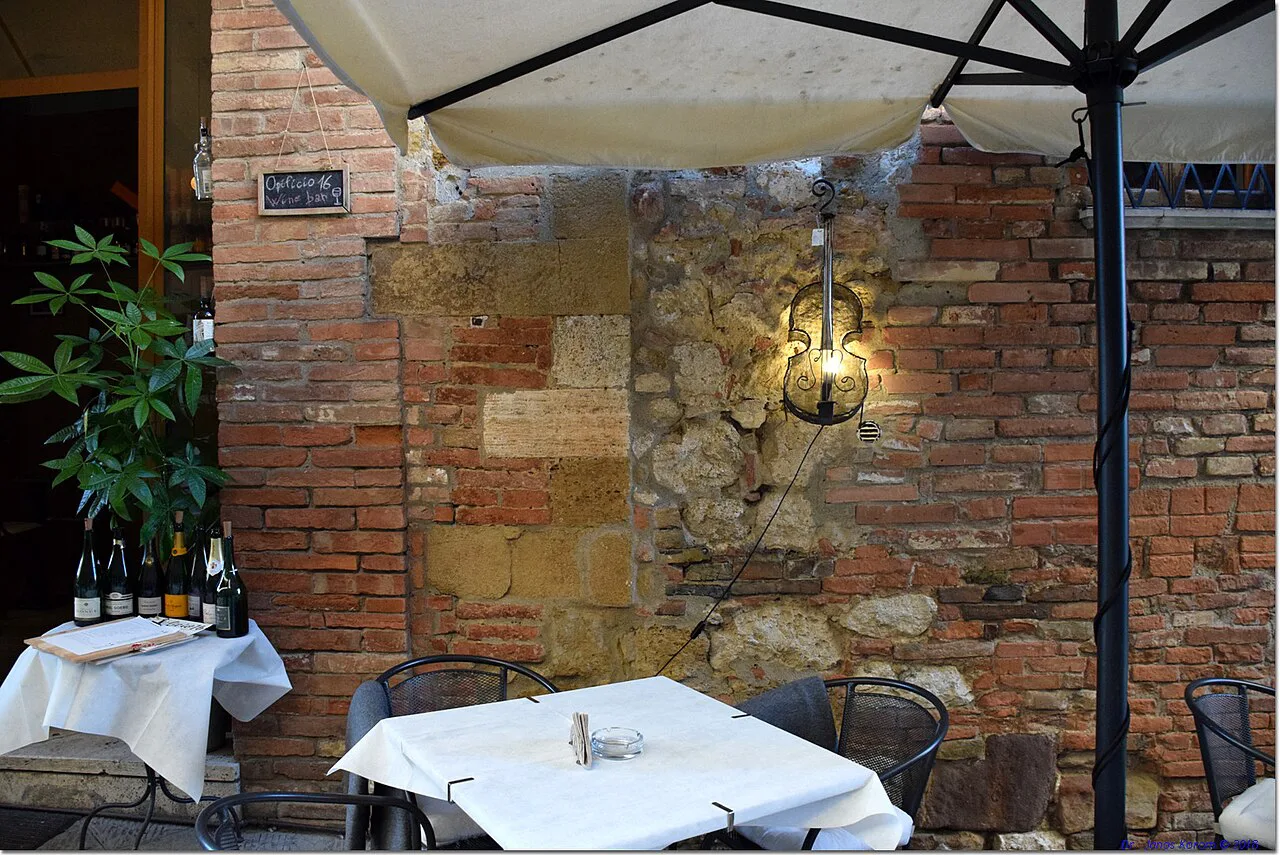
Countryside estates in this part of Tuscany generally work on booked visits rather than walk-in traffic, and small family operations often need a minimum party to open the cellar. When you write, state the date, the number of people, whether anyone is driving and therefore spitting, and the language you prefer for the visit.
Ask three questions that reveal what you are actually booking: how many wines are poured, whether the visit includes the aging cellar, and how long the whole thing runs. None of this can be assumed from a generic listing, and an estate that answers precisely is usually the one that runs a tighter visit.
In-town cantinas are more forgiving of spontaneity, and Cantine Fanetti in particular opens its cantina year-round, which helps on shoulder-season trips. Even so, a quick message the day before saves a wasted climb.
Harvest, Seasonality and Timing Your Visit
Late September and October change the look of the vineyards: fruit is coming off, cellar work intensifies, and estate teams are stretched. Ask whether visits still run during harvest before you build a day around one producer, and have a second choice ready.
The town's own calendar matters too. The Bravio, with its barrel races through the streets, transforms the center into a crowded, festive place, which is either the highlight of your trip or a reason to move your dates. Check the current program with the local tourist office rather than relying on last year's timing.
If a Brunello day is part of the plan, look at estates with their own visitor programs and cellar tours before you map the route, as with a villa estate near Montalcino that runs its own visits. The logistics are similar to Montepulciano's, but the drive between the two zones is the part most itineraries underestimate.
How to Read a Tour Description Before You Book
Start with what the tour physically does: which villages you enter, which cellars you go down into, and whether tastings are seated with a host or standing at a counter. A description that lists regions rather than named estates is usually a sign of a flexible route built around whatever has space that day.
Then check the boring parts: group size cap, pickup point, whether the return time is fixed, and whether lunch is a set menu or a stop where you pay separately. These details decide whether the day feels relaxed or like a coach schedule, and they rarely appear in the headline.
Finally, check the current visit arrangements with the cellar or estate before you travel, since schedules and offerings shift between seasons. One email settles it.
Choosing Your Montepulciano Wine Day
If you are staying in town and want to keep things simple, taste on foot in the historic cantinas, wear proper shoes for the climb, and add one booked countryside estate only if you have a driver or a tour. That combination gives you the town's unusual cellar scene plus a look at the hills where the grapes grow.
If you have a car and a full day, group two countryside estates by direction rather than crossing the valley twice, and keep Montalcino for a separate outing. If you are coming from Florence or Siena without a car, a guided day removes the transport problem entirely, at the cost of a shorter stay in the town itself.
Frequently Asked Questions
Can you visit Montepulciano wine cellars on foot?
Yes. Several historic cantinas are dug beneath the streets of the historic center, which is why Montepulciano is unusually well suited to tasting on foot. The town climbs more than 60 meters from the lower gates to the main square, so allow time for the walk between stops. Countryside estates outside the walls do require transport.
Do you need a car for Montepulciano wine tours?
Not for the town itself. In-town cellars and the historic center are walkable, and guided tours handle transport for countryside estates. If you want to visit outlying producers independently, you need a car, a pre-booked taxi or a private driver, since public transport does not connect the estates in a practical way.
Are Montepulciano wine tours by appointment only?
Countryside estates generally work on booked visits, and small family operations often need a minimum party size to open the cellar. In-town cantinas are more flexible, and Cantine Fanetti opens its cantina year-round. Confirm the current visit policy directly with the estate when you book.
How much time do you need in Montepulciano?
A half day covers the town: one or two in-town cellars and the walk up to the main square. Add a full day if you want to reach countryside estates such as Salcheto, Icario, Villa S. Anna or Montemercurio. Adding Montalcino requires a separate day because of the drive time between the two wine zones.
Is Montepulciano or Montalcino better for a wine tour?
They suit different plans. Montepulciano lets you taste Vino Nobile in cellars beneath the town itself, with no car needed inside the walls. Montalcino is Brunello country and needs its own transport and a dedicated day. Trying to combine both in one tour means spending a significant share of the day in the vehicle.
What wine is Montepulciano known for?
Vino Nobile di Montepulciano DOCG, made from at least 70 percent Sangiovese, called Prugnolo Gentile locally, with up to 30 percent other authorized varieties. It ages at least two years before release, or three for the Riserva, and must be vinified and aged within the municipality. It is unrelated to Montepulciano d'Abruzzo.
When is the best time to visit Montepulciano for wine?
Late September and October bring harvest, when the vineyards look their most active but estate teams are busy, so confirm visits still run. Spring and early autumn give comfortable walking weather for the town's steep streets. Check the timing of the Bravio barrel race if you want to avoid or catch the crowds.
Sources
Notes for your next wine trip
Optional updates to our winery and wine-town guides.
You might also like
Continue reading
More guides you'll find useful