Col d'Orcia Guide: Decide Your Visit from Montepulciano
Plan a Col d'Orcia visit from Montepulciano: the organic Brunello estate in Montalcino, its wines, how tours are arranged, and no-car options.
On this page
Montepulciano rewards a full day on its own, but the town also sits close enough to Montalcino that a second appellation fits into a longer wine trip. Col d'Orcia is one of the estates that makes that extension worthwhile: a large organic property on Montalcino's southern edge, with sangiovese at the center of everything it bottles.
This guide treats the estate as an annex to a base in Montepulciano, not as a standalone Montalcino itinerary. It covers where the winery sits, which wines to prioritize in a tour request, how the booking conversation works, and the realistic no-car choices. For the home base itself, the broader guide to wine tasting in montepulciano covers the town's cellars and cantinas.
Where Col d'Orcia Sits in the Val d'Orcia
The estate takes its name from its position on the hill overlooking the Orcia River, on Montalcino's southern slope inside the Orcia Valley. Its address is Via Giuncheti in Montalcino, and the property lies at roughly 300 meters above sea level, lower and warmer than the high ground around Montalcino town.
That southern position matters when you plan the day. Col d'Orcia sits on the far side of Montalcino from Montepulciano, so the drive passes through or near Montalcino town rather than stopping at the first estates you meet. Treat the visit as the anchor of a loop, with Montalcino town or the Sant'Antimo abbey as a second stop rather than squeezing in a third winery.
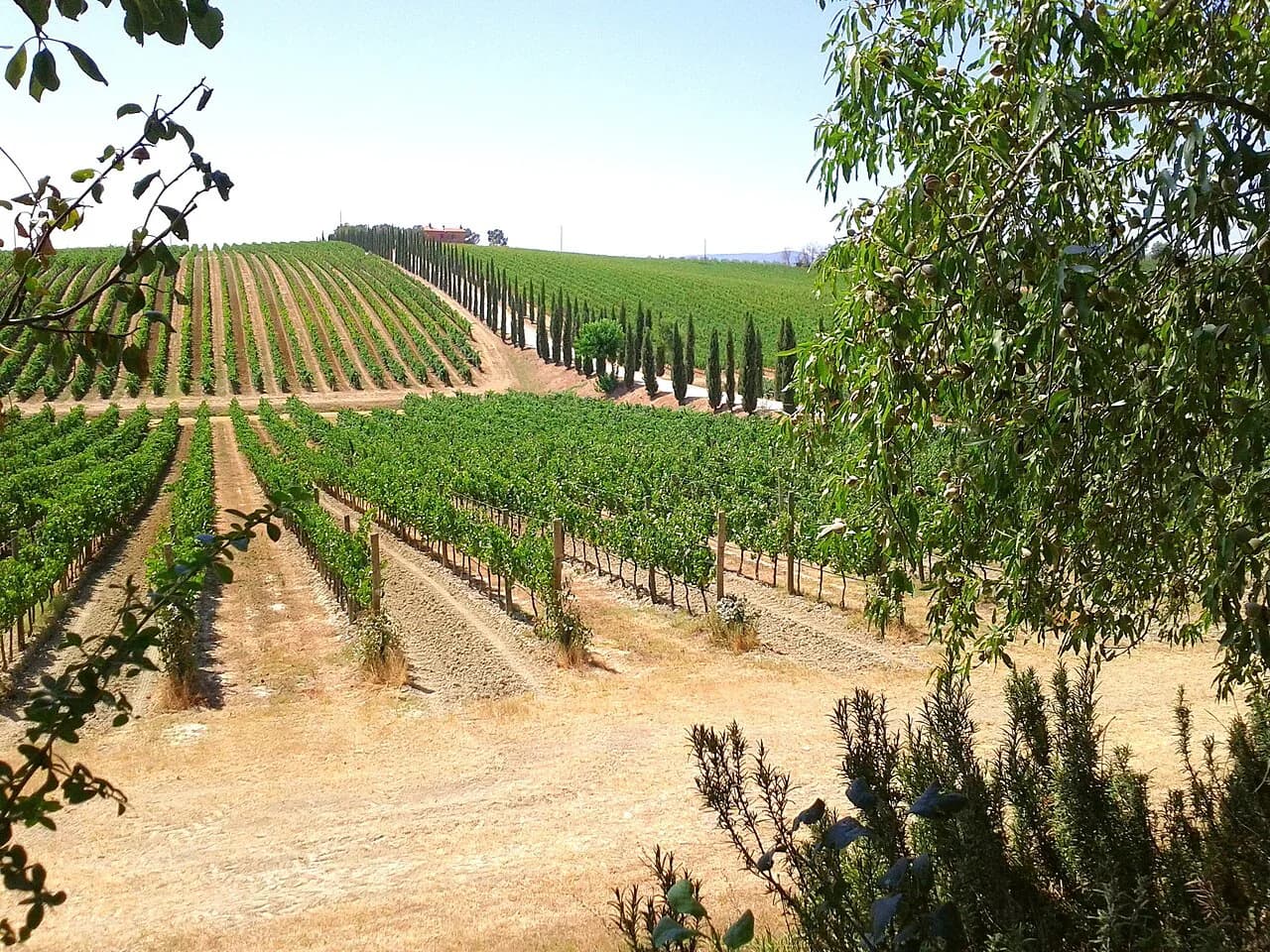
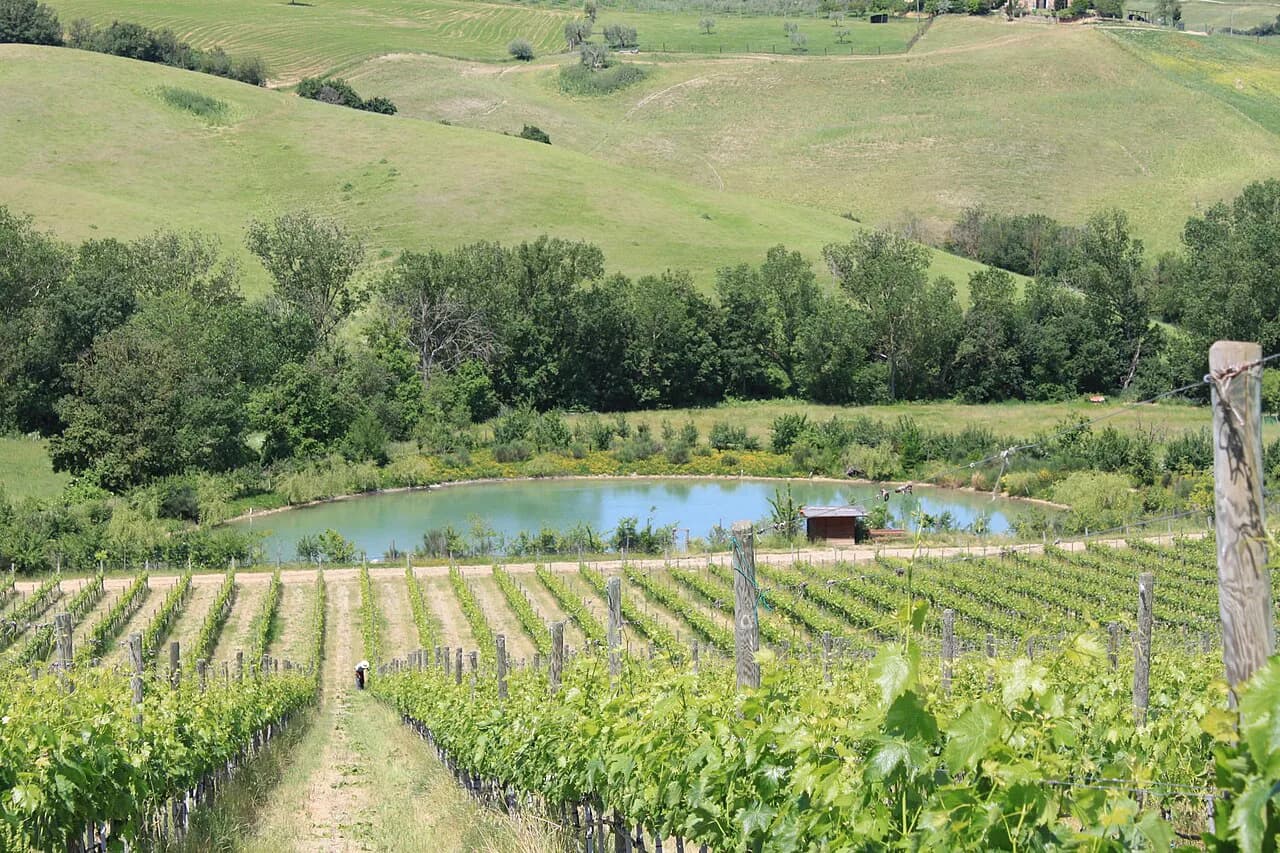
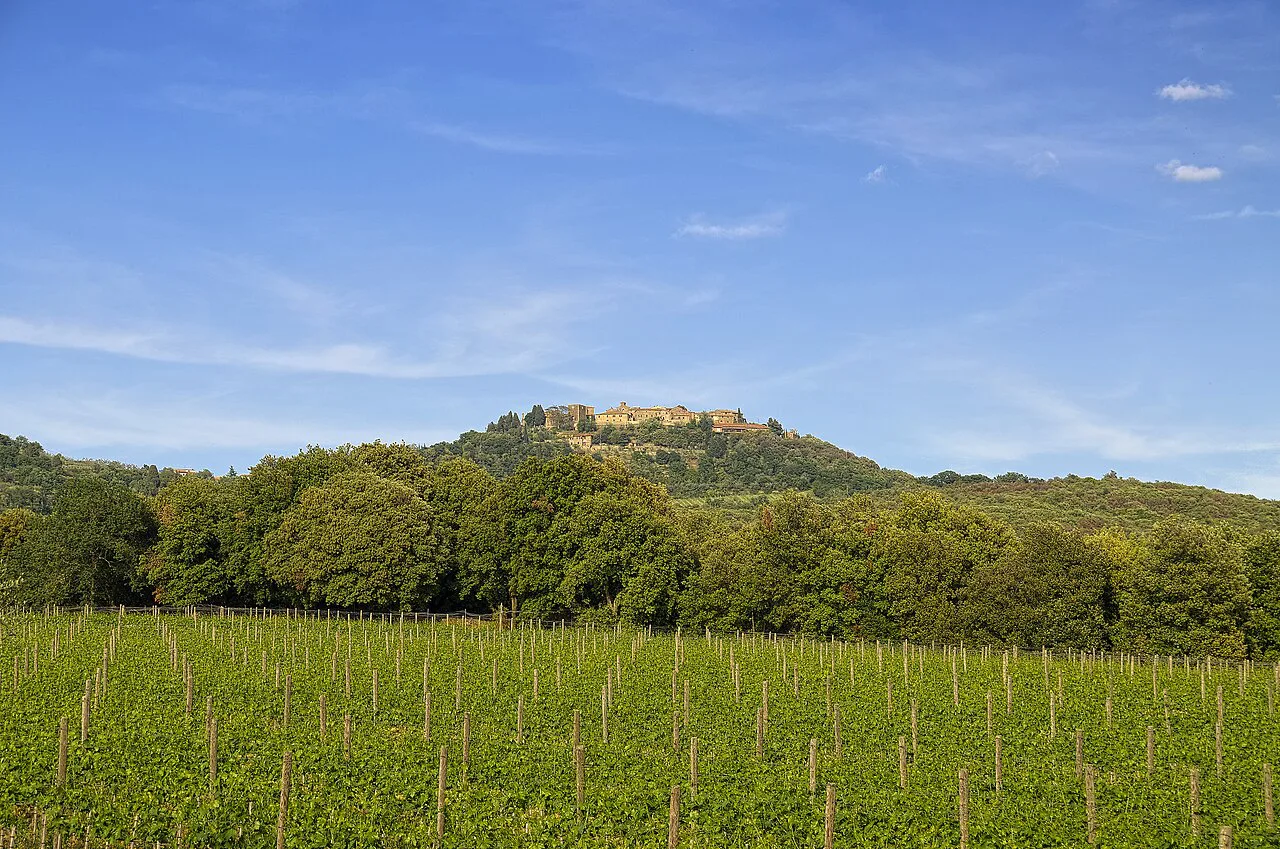
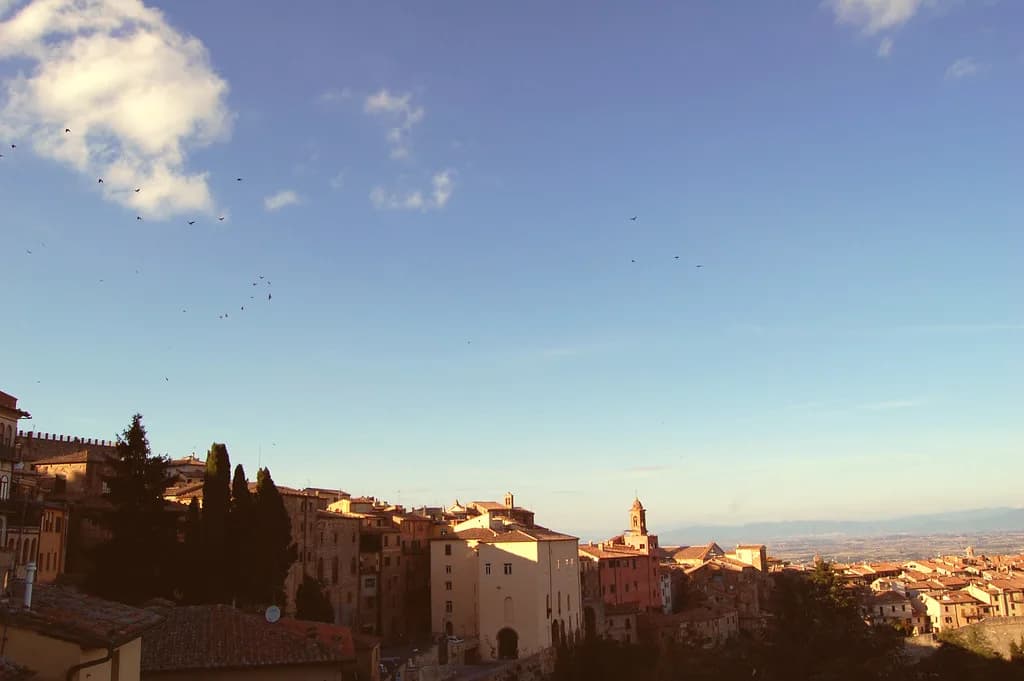
For orientation, picture the Val d'Orcia as a shallow bowl of wheat fields, cypress lines, and hill towns between Montepulciano and Montalcino. Col d'Orcia's vineyards face the valley from the Montalcino rim, which is why the estate describes itself as an organic island within the wider landscape.
What the Estate Is: An Organic Sangiovese Property
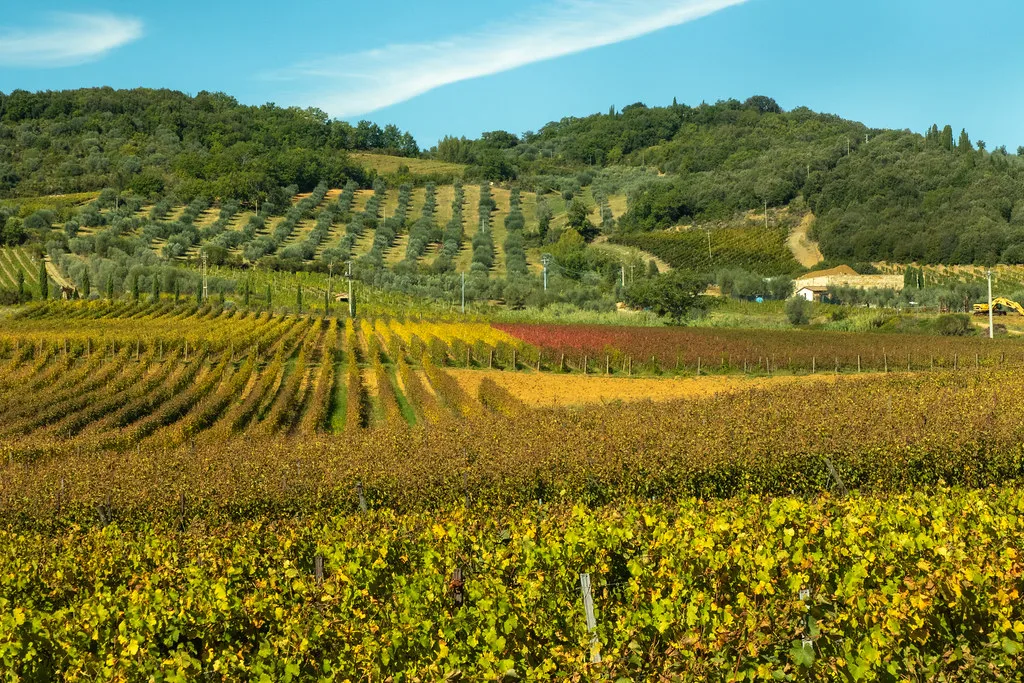
Col d'Orcia is a 520-hectare estate of vineyards, olive groves, fields, and woodland, all farmed organically since 2010, with sangiovese as the dominant grape. It is owned by the Marone Cinzano family, and the property has become one of the reference points for certified organic Brunello.
Biodynamic practices have been applied across a large share of the property since 2018, alongside organic certification and research partnerships on cover crops and erosion control. Those choices are a fair conversation topic on a visit: ask how the estate handles the humid Orcia Valley seasons without conventional treatments, and how the lower, warmer southern slope shapes picking dates.
A word on scale: this is not a small family cellar poured at a kitchen table. It is a substantial agricultural estate with a formal tours section on its site, which in practice means visits are organized rather than spontaneous.
The Wines You'll Meet on a Visit
Col d'Orcia's portfolio runs in tiers, and knowing them helps you ask for the right tasting. At the base is Rosso di Montalcino, the younger sangiovese bottling released earlier than Brunello. Above it sits Brunello di Montalcino, aged for years in large Slavonian and French oak before release, plus a Riserva, Poggio al Vento.
There is also a single-vineyard Brunello, Vigna Nastagio, which the estate matures partly in 500-liter French tonneaux before finishing in large casks and bottle. Alongside the reds, look for Pascena Moscadello di Montalcino, a sweet white from a local grape that is rare enough to be worth requesting if you want contrast at the end of a sangiovese lineup.
The estate also keeps a library of older vintages, so if mature Brunello interests you, say so when you write. Which bottles are open on any given day is a scheduling decision the estate makes, not something to assume from a website list.
How a Visit Works: Tours, Requests, and Timing
The estate publishes a dedicated Tours section on its site rather than a fixed public timetable, and it handles visit requests through its contact channels at info@coldorcia.it and +39 057780891. State your preferred date, the size of your party, whether you want a cellar walk-through or a seated tasting, and whether anyone in the group is not drinking.
Ask directly about the current options and cost when you write, because the estate sets tasting formats and fees itself. A short email with dates and numbers gets a faster, more useful answer than a general inquiry about opening times.
If your trip runs late September or October, mention it: that is harvest season in Montalcino, when estate staff are busiest and visitor capacity tightens. The Val d'Orcia also looks its best in that window, with stubble fields and low light, so book earlier than you would for a spring visit. Confirm the final details once your date is set, and keep the reply with your travel documents.
Getting There from Montepulciano Without Driving
The honest trade-off on this run is that public transport does not deliver you to a winery gate. Trains and buses link the towns of the Val d'Orcia, but not the rural lanes where estates like Col d'Orcia sit, so the realistic no-car options are a guided excursion, a pre-booked taxi, or a private transfer.
Organized wine tours from Montepulciano solve the logistics in one booking, usually pairing a Montalcino estate with a town stop, though they set the schedule rather than you. If you want a comparison of what is available, montepulciano wine tours lays out how the guided options work from the town.
A taxi or private driver gives you a custom start time and lets you combine Col d'Orcia with Montalcino town or the abbey at Sant'Antimo, but you will pay for waiting time between stops. Ask the driver for a fixed round-trip quote from Montepulciano with a set pickup hour before you commit.
Whoever drives, the driver should not taste. Use the spittoons, split a tasting between two people, or put the whole group in a tour vehicle so nobody has to choose between the wine and the road.
Pairing the Stop with the Rest of the Val d'Orcia
A sensible shape for the day is a morning departure from Montepulciano, a booked visit at Col d'Orcia, lunch in Montalcino town, and a slow return through the valley. Montalcino's own enoteche pour Brunello by the glass, which lets you compare styles without committing to a second full tour.
If you would rather build the day around another estate, the guide to Argiano Winery Visit covers a different Montalcino property, and this one makes a natural second booking on a longer stay. For the Montepulciano side of the trip, the overview of montepulciano wineries explains which town cellars take visitors without an appointment.
Do not try to fit Col d'Orcia and a full Montepulciano tasting day into the same hours. The two towns sit in different appellations, and rushing between them means you taste neither properly; give each its own half-day at minimum. If you are weighing a closer alternative for a shorter trip, wine tasting in Siena covers the city's enoteche and classes, but keep it to a separate day rather than folding it into this one.
Making It Part of a Longer Wine Trip
Travelers who want to stay among the vines rather than in town can base themselves at an agriturismo Montepulciano property and drive out to Montalcino from there, which shortens the morning transfer. The same logic applies on the Montalcino side if Col d'Orcia is your priority.
Keep the two appellations straight in your head. Montepulciano makes Vino Nobile di Montepulciano DOCG from sangiovese grown around that town, while Montalcino makes Brunello di Montalcino from its own sangiovese clone; they are separate zones with separate rules, even though the grape is related.
Walking the Estate Grounds with a Dog
The estate describes itself as an organic oasis of 520 hectares of vineyards, olive groves, fields and woodland, entirely under organic farming since 2010, so a walk here is through working farmland rather than a formal garden. Since the grounds are farmed organically and shared with wildlife, the sensible approach with a dog is to keep it close and under control along the tracks and edges of the fields, and to stay out of the vineyard rows and olive groves themselves. If your dog needs a leg-stretch, plan that as a short walk before or after your stop rather than during it, and keep a lead on hand for the points where the route passes close to the plantings.
The property also runs a wildlife monitoring plan, whose results were published on 1 July 2026, which is a reminder that the woodland and fields around the vines are actively used by animals. Dogs arriving with the scent of a car journey are likely to react to that wildlife, so a calm, leashed entry into the estate is the easiest way to keep the stop pleasant for everyone. Use the walk to settle the dog before you turn to the wines, and give it water in the shade while the group decides what to taste, so the animal is not left waiting in a hot car.
A dog also changes the arithmetic of a shared visit. If one person in the group holds the lead outside while the others are inside, that person misses part of the tour, so it is worth splitting the stop: one walks the dog in the surrounding countryside while the other tastes, then swap roles at the point where the group reassembles. Keep the timing flexible, because a farm walk with a dog at midday in warm weather takes longer than the map suggests. Pack a bowl, water and bags, and treat any shaded spot near the buildings as a resting place rather than a place to tie the dog up unattended.
None of this replaces the estate's own arrangements for animals, which are not set out in its general description, so the practical thing is to make your intentions clear in the request you send before the visit. Say plainly that a dog will be with you, how many people will be holding the lead, and whether you need to wait outside for part of the stop. If the answer is no, the alternative is straightforward: someone in the party stays with the dog in the car with water and shade while the others go in, and the group regroups afterwards. Either way, the visit works best when the dog has had its walk first and the tasting comes second.
Plan Your Visit
Col d'Orcia works best as a booked, focused stop on a Montalcino day out of Montepulciano, with the transfer arranged before you leave. Send your dates, party size, and tasting preferences to info@coldorcia.it, and plan the drive or tour so nobody has to taste and drive.
Leave the afternoon free for Montalcino town or the Val d'Orcia lanes, and you get a full wine day without overloading it. The town itself still deserves a proper visit back in Montepulciano, so keep an evening free for a glass of Vino Nobile after the return leg.
Frequently Asked Questions
Is Col d'Orcia in Montalcino or Montepulciano?
Col d'Orcia is in Montalcino, on the southern slope of the town inside the Orcia Valley, at Via Giuncheti. It is not in Montepulciano; the two towns sit in separate appellations about a valley apart.
Do you need an appointment to visit Col d'Orcia?
The estate handles visits through its Tours section and its contact channels rather than a published drop-in timetable. Write ahead with your dates and party size, and the estate will confirm what is available for your day.
What wines does Col d'Orcia produce?
The portfolio centers on Rosso di Montalcino, Brunello di Montalcino, the Poggio al Vento Riserva, and the single-vineyard Vigna Nastagio, all from sangiovese. It also bottles Pascena Moscadello di Montalcino, a sweet white, among other wines.
How far is Col d'Orcia from Montepulciano?
The estate lies on the far side of Montalcino from Montepulciano, so the trip crosses the Val d'Orcia and passes near Montalcino town. Plan for a road transfer arranged in advance rather than a short walk or a single bus ride.
Can you visit Col d'Orcia without a car?
Yes, but not on scheduled public transport that reaches the estate gate. The workable choices are a guided wine tour, a pre-booked taxi, or a private driver with a fixed round-trip quote from Montepulciano.
Who owns Col d'Orcia?
The estate is owned by the Marone Cinzano family and has been managed by Count Francesco Marone Cinzano since the 1990s. It has been certified organic since the early 2010s and applies biodynamic practices across much of the property.
Sources
Notes for your next wine trip
Optional updates to our winery and wine-town guides.
You might also like
Continue reading
More guides you'll find useful