Montalcino Wine Tours: Brunello Tastings from Montepulciano
Plan Montalcino wine tours from Montepulciano: how Brunello tastings work, published estate prices, booking steps, and transport trade-offs.
On this page
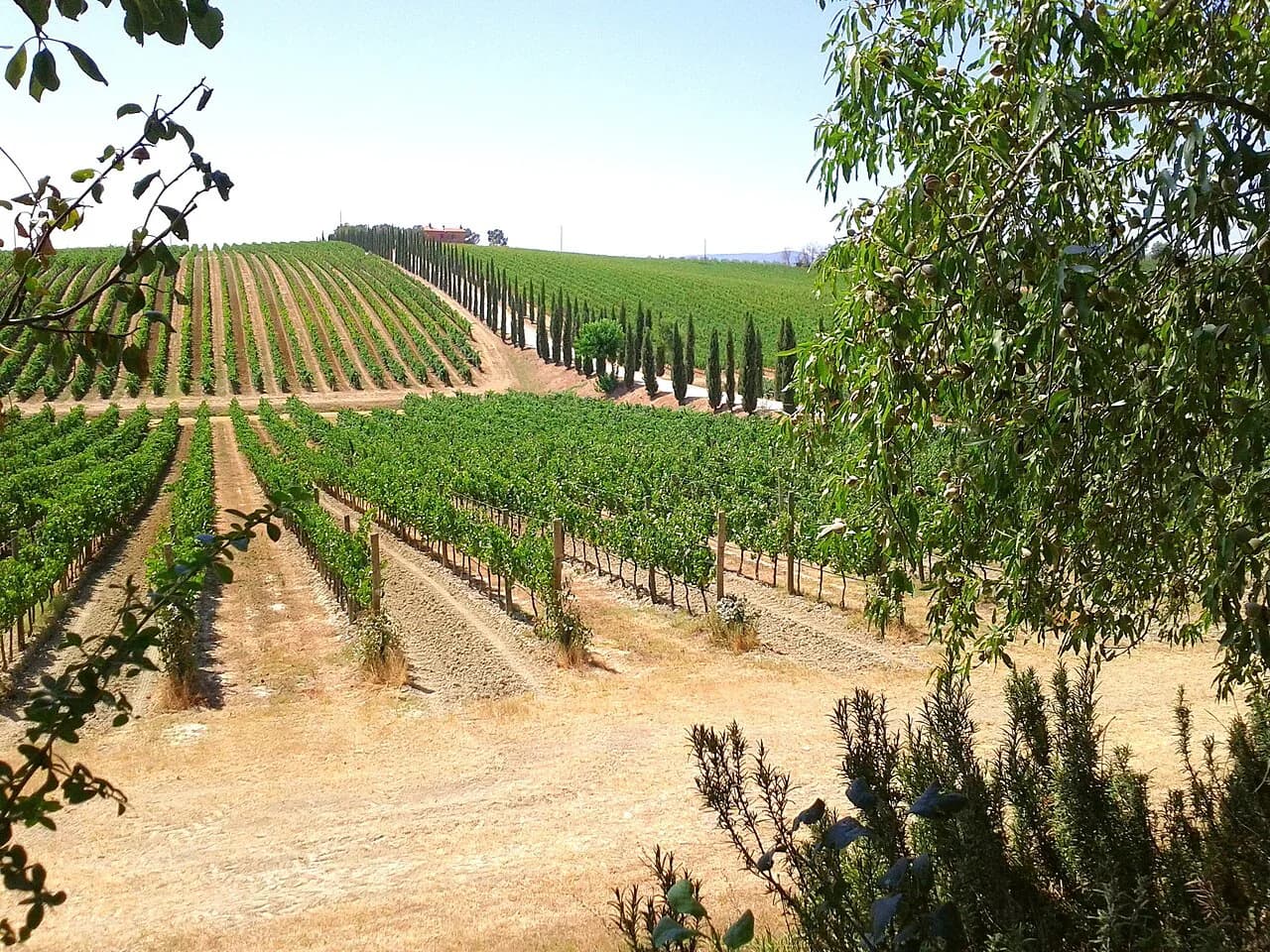
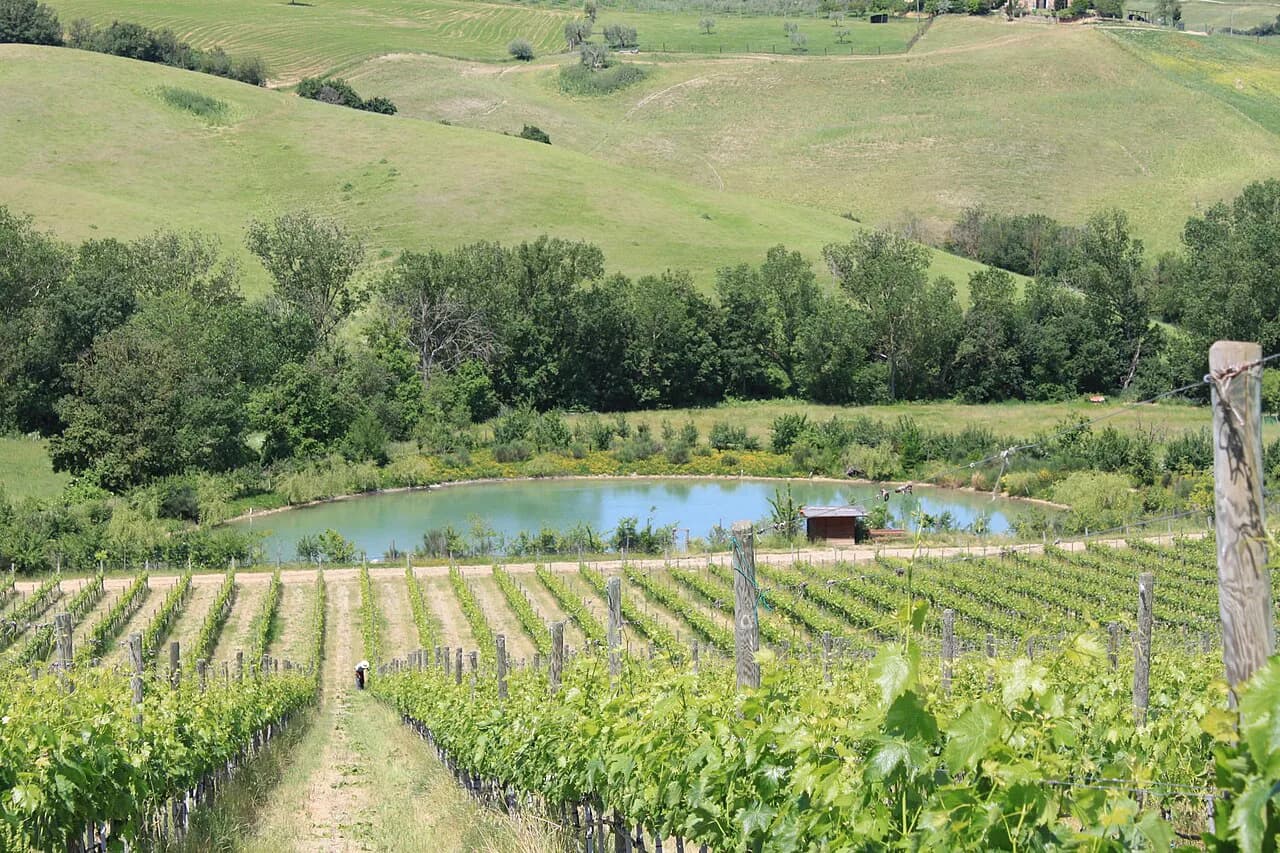
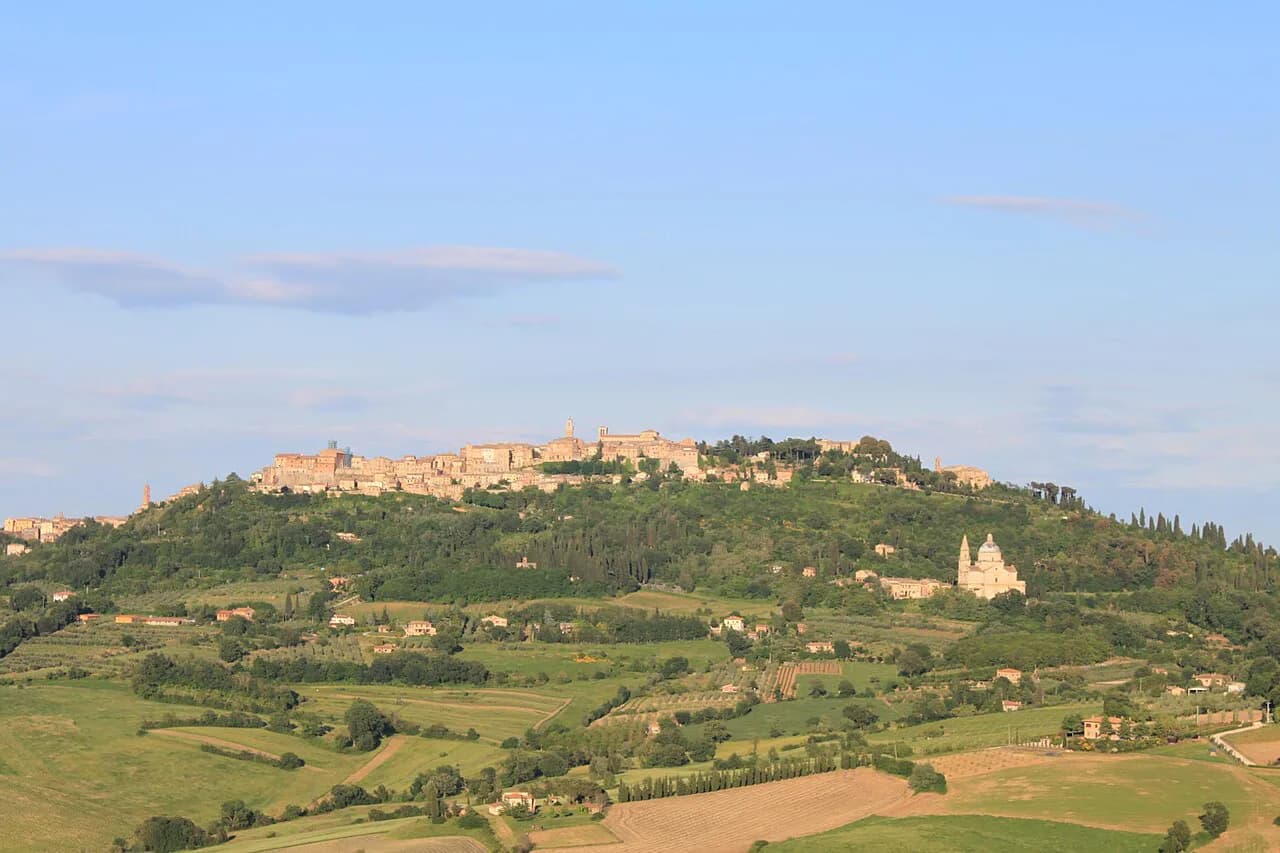
Montalcino sits south of Montepulciano in the same corner of Tuscany, yet it is a different kind of wine day: a walled hill town above a vast vineyard zone, with addresses spread across the countryside rather than stacked along a single street. Treat it as a full day built around two or three appointments, not as a stroll between cellars.
This guide explains what you will be offered, which areas to group, how visits are booked at named estates, and what transport really looks like without a car. Prices that appear here come from an estate's own published tasting page, such as the Poggio Antico tours and tastings in Montalcino, so treat them as published starting points and check dates when you book.
Why Montalcino Is a Different Tasting Day Than Montepulciano
Montepulciano works well as a base because so much tasting happens on foot: historic cellars sit inside the town walls, so you can walk from one to the next and stop for lunch without moving the car. If you want to compare in-town cellars and countryside estates first, start with the guide to Montepulciano wine tasting and treat that as your default pattern.
Montalcino inverts that. The town is compact, but the estates that receive visitors are scattered through the surrounding hills, along roads that climb, curve and rarely run straight between addresses, so a single tasting can consume half a morning once you add the drive and the welcome. The practical consequence is to plan fewer stops than you would in town, and to group them by location rather than by reputation.
That difference also shapes your budget and your booking: an appointment-based estate visit is a timed, hosted, paid experience, while a town enoteca stop can be flexible and spontaneous. Combining the two styles across your trip usually works better than trying to force one model onto both towns.
Brunello in Brief: Sangiovese, the DOCG, and the Styles You Will Be Offered
Montalcino's fame rests on Sangiovese, called Sangiovese Grosso here, grown in warm hillside vineyards around the town. The flagship wine, Brunello di Montalcino DOCG, must be made entirely from that grape and is aged before release; it is a structured, long-lived red that rewards a slow tasting rather than a quick pour.
The second wine to know is Rosso di Montalcino DOC, from the same grape but in a fresher, earlier-drinking frame. Most tasting lists run from that fresher style upward into Brunello and then a riserva or a single-vineyard bottling, which is exactly the ladder you see at Poggio Antico, where the entry option includes a Rosso and the upper tiers climb into Riserva and site-specific Brunello.
Non-Montalcino wines also turn up on tasting sheets, usually Toscana Igt or a rosé, and they can show how an estate handles Sangiovese outside the strict appellation rules. If your aim is to buy Brunello, taste the range upward and note which step you actually like, since the price gap between Rosso and an aged Brunello is wide.
The Layout of the Montalcino Zone and Which Villages to Group
Think of Montalcino as a hub with vineyard spokes: the town on its hill, and estates spread toward the Val d'Orcia to the south and east, and toward the road down to Sant'Antimo and the Orcia valley. A sensible day picks one side of town and stays there, rather than crossing the whole zone twice.
A common pairing is a morning estate visit followed by the Romanesque abbey of Sant'Antimo, which sits in the landscape below the vineyards and gives a natural pause between tastings. Tour operators in the zone describe itineraries built exactly this way, combining wineries with the abbey, the old town and a hamlet or two, which is a good template to copy even if you drive yourself.
When you look at a map, group two properties that are 10 to 15 minutes apart rather than two that sit on opposite sides of the DOCG boundary; the second pairing always takes longer than it looks because the roads are narrow and the entrances are easy to miss.
Getting from Montepulciano to Montalcino: Car Time, Bus Realities, and Guided Options
By road the two towns are linked through the Val d'Orcia landscape, with Siena on one flank and the Orcia valley between them; the drive is manageable but not a five-minute hop, and rural buses in this area are infrequent and geared to local schedules, not to wine itineraries. Check any connection you plan to use with the bus company or the estate before you commit, because services and timetables change. If you extend the trip west, the Orvieto wine guide covers a similar appointment-led rhythm in a hill town reached via the same valley roads.
A private car and driver or a guided tour removes the hardest part of the day: the last few kilometers on unlit country roads after a tasting. Operator pages in the Montalcino area describe tailor-made private and group options that include winery visits and local stops, which is the simplest way to combine several estates without one person staying dry.
If you drive yourself, decide before you leave Montepulciano who is driving and keep that person on spittoons or water; there is no scenic exemption from the alcohol limit.
Named Estate Visit: Poggio Antico and Its Published Tasting Tiers
Poggio Antico, in the Montalcino hills at 53024 Montalcino (Siena), publishes a clear ladder of hosted experiences that makes it a useful reference point for what a Brunello visit can cost. The entry-level option is a guided tour and four-wine tasting at forty euros per person; the next step adds a riserva and a fifth wine at fifty euros, and a six-wine range tasting is sixty-five euros per person.
Above those sit private experiences: a Great Vintages tasting of six wines across multiple vintages at one hundred fifty euros per person, and a vertical of Vigna i Poggi and Riserva vintages at two hundred euros per person. A separate full-day Palio Edition, combining a visit to a nearby Palio stable, a Tuscan lunch and a private six-wine tasting, is quoted on request rather than fixed.
Treat those figures as the shape of the market rather than the going rate everywhere: a small family estate with one appointment a day may charge less, a large estate with a restaurant more. The ladder is still the right question to ask at any estate, namely which wines, how many, whether the cellar is included, and whether the visit is private.
How Booking Works at Montalcino Estates
Montalcino runs on appointments. The estates that receive visitors schedule hosted tastings rather than leaving a tasting room open to passing traffic, so an email or a phone call days or weeks ahead is normal, and shorter notice works best outside high season. Poggio Antico publishes a phone number, an email address and a booking route for its experiences, which is typical of the better-organized estates.
In your first message give the date, the number in your party, whether anyone is driving, any food allergies, and the style of visit you want. Ask directly about the minimum party size, whether a single visitor can join a shared slot, and what happens if you arrive late, since a missed slot in a booked cellar usually cannot be recovered the same day.
It also helps to ask whether the estate can recommend a local taxi or driver for the return leg, because rural transfers in the Montalcino zone are limited and should be arranged before the tasting rather than after it.
What a Typical Visit Includes
A hosted visit generally follows a pattern: a short walk through the winemaking areas or the barrel cellar, then a seated tasting of a defined number of wines, sometimes with bread, cheese or olive oil, occasionally with a fuller lunch. Poggio Antico's standard tiers pair a winery tour with tastings of four to six wines, which is a realistic half-day anchor rather than a quick stop.
Duration is the detail most often left out of booking pages, so ask for an estimate when you reserve; a four-wine tour and tasting and a six-wine private vertical are different commitments, and the second can run well past an hour. Build a buffer around lunch if you have a second appointment in the afternoon.
Tours and Operators: Private Versus Group
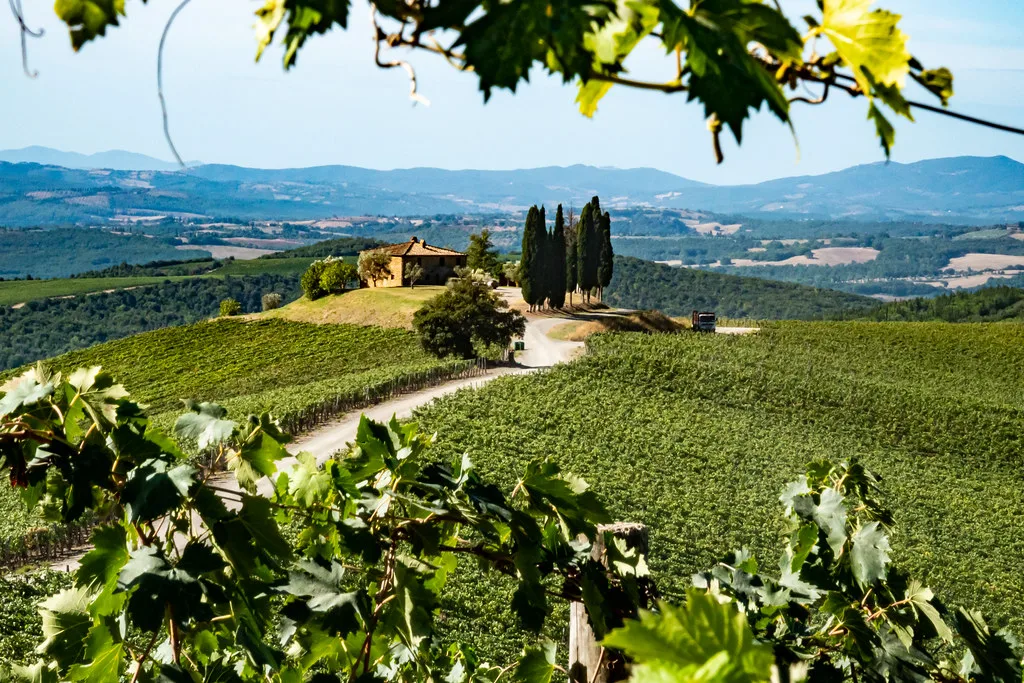
Montalcino has a small industry of local operators offering private and group days built around two or more wineries, the abbey of Sant'Antimo, the old town and nearby hamlets. Their advantage is logistics: someone else drives the country roads, knows which estates take short-notice guests, and can adjust when a visit runs long.
Private tours cost more per person but let you choose the estates and the pace; group tours are cheaper and social but follow a fixed itinerary that may include a winery you would not have picked. Before booking, ask which estates are included, whether tasting fees are separate, the group size, and the language of the tour.
If your base is Montepulciano rather than Montalcino, compare local options first, since a tour leaving from your own town saves an hour of transfer each way. The guide to Montepulciano wine tours covers how in-town cellars and countryside estates are usually combined.
Doing Montalcino Without a Car
Without a car, the realistic options are a guided day, a private transfer with a driver who waits, or a combination of a train or bus to a nearby hub and a pre-booked local driver for the estate legs. None of these is spontaneous, so treat transport as the first thing you book, not the last.
A driver who waits between two estates is often the most efficient arrangement for a couple, because the waiting time costs less than two separate transfers on rural roads. Ask the estate whether they have a preferred local driver, and confirm the pickup point and the return time in writing.
If you are staying overnight in the wine zone instead of day-tripping, look at vineyard stays near Montepulciano and apply the same logic: book the accommodation first, then build the tasting day around its location.
Building a Two- or Three-Estate Day
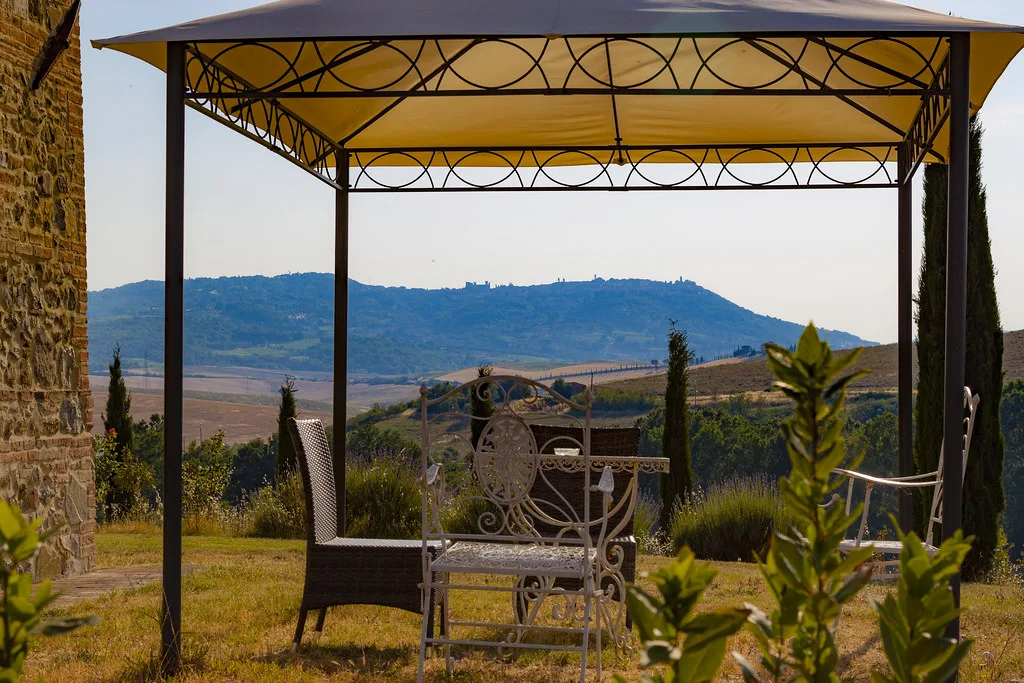
Two estates plus lunch is a comfortable day; three is possible only if the properties are close together or the visits are short. Put the longest, most formal visit in the morning when you are fresh, keep the second lighter, and leave the last hour for the drive back before the light goes.
Space tastings with food and water. A long lunch between a morning estate and an afternoon one is not a wasted hour; it is what keeps the afternoon tasting enjoyable and keeps the driver sober.
If you want a looser day, mix one booked estate with a stop in Montalcino town itself, where enoteche and wine shops allow a glass without an appointment. That structure gives you the cellar tour and the hill-town atmosphere without three separate drives.
Pairing Montalcino With Sant'Antimo and the Town
The abbey of Sant'Antimo lies below the vineyards in the Orcia valley and is one of the reasons a Montalcino day feels different from a pure tasting crawl. It appears in local tour itineraries alongside the wineries, so a mid-afternoon stop there fits naturally between two estates or on the way back toward Montepulciano.
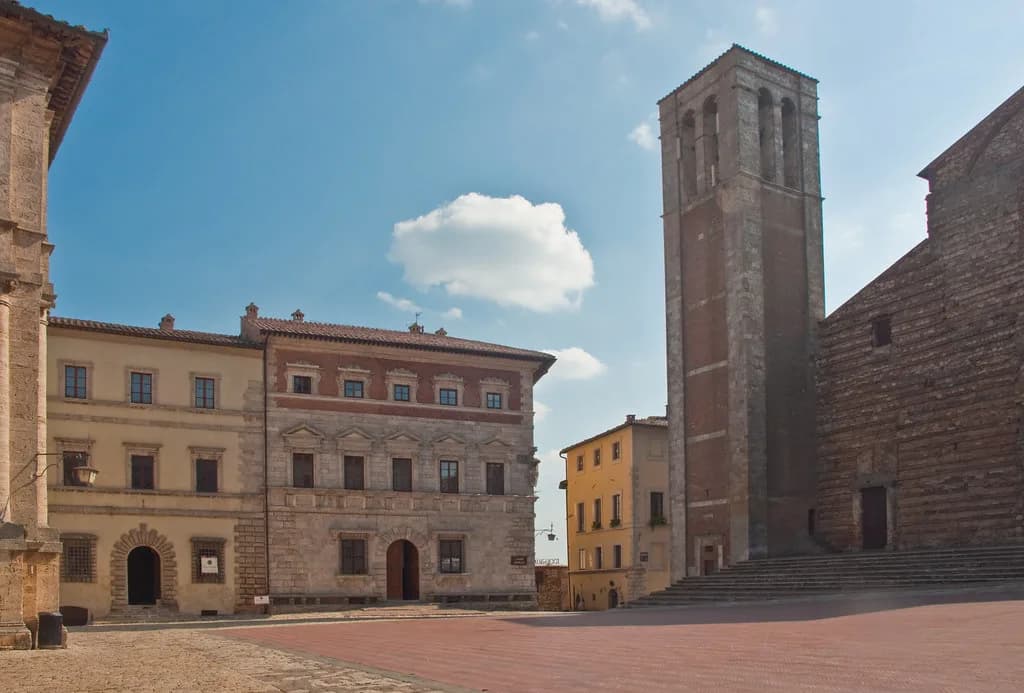
Montalcino town itself is worth an hour: the fortress walls, the views over the vineyards, and wine shops that pour by the glass. Do the town on foot after the estates rather than before, so you are not parking twice in the same day.
Brunello Versus Rosso di Montalcino: What to Taste If You Are Buying
If you plan to buy, taste both levels deliberately: Rosso for drinking soon, Brunello for the cellar or a special meal, and a riserva only if you want the denser, longer-aged expression. Asking to taste the same vintage across the tiers shows the difference more clearly than tasting across unrelated years.
Ask about shipping and customs before you fall for a large bottle, and check whether the estate ships to your country or whether you carry bottles home in a suitcase. That practical question often decides how much you buy at the last estate of the day.
For a Brunello-focused comparison in a different setting, the Argiano winery visit guide shows how a single Montalcino estate structures its tour, tastings and booking.
Montalcino or Montepulciano: How to Split Your Wine Days
Montepulciano is the easier base: cellars in town, Vino Nobile di Montepulciano as the local red, and short drives to countryside estates. Montalcino is the more deliberate day out, with a different grape expression and a booking-led rhythm. Doing one of each gives you the contrast rather than doubling up on the same experience.
If you only have time for one, choose Montalcino when Brunello is the point of the trip and you are happy to pre-book and travel; choose Montepulciano when you want walkable tasting and flexibility. Neither is the better wine region in the abstract; they suit different itineraries.
Harvest and Seasonal Timing
Late summer and early autumn bring harvest activity, which means more traffic on the rural roads, busier estates and fewer last-minute slots, while winter is quieter but some small estates run reduced visitor schedules. The general rule is to book earlier for September and October and to be flexible about which day of the week you visit.
No seasonal closure pattern applies across the whole zone, so the specific dates matter more than the season. When you reserve, ask whether the cellar is working that day and whether the tour route changes during harvest.
Costs Beyond the Tasting Fee
Budget for transport, lunch and shipping, not just the tasting. A published tasting ladder like Poggio Antico's, from forty euros per person at the entry tier to two hundred for a private vertical, is only one line of the day's cost once you add a driver or a tour seat.
Ask whether the tasting fee is credited against a wine purchase, whether gratuities are expected, and whether lunch is included in an all-day package or paid separately. Those three questions usually explain the difference between two quotes that look similar.
Common Booking Mistakes That Cost Travelers a Slot
The classic mistakes are booking only one estate for a day that needs two, assuming a walk-in welcome at a property that hosts by appointment, and leaving the return transfer until the end of the tasting. Each is easy to avoid with one planning session a few weeks ahead.
Another is treating a tour company's listing as the estate's own diary: the wineries included by a company such as Montalcino Wine Tours can change, so confirm the estate and the time directly before you build your day around it.
What to Ask When You Confirm Your Visit
Confirm four things in your final message: the exact start time, the number of wines and whether the cellar tour is included, the price per person and what it covers, and the cancellation terms. If you are not driving, add the pickup point and a phone number for the driver.
A short written confirmation protects the day better than any guidebook, and it takes five minutes at the point of booking.
Plan Your Visit
Montalcino works best as a planned day: one or two booked estates grouped on the same side of the zone, lunch in between, and transport settled before you leave Montepulciano. Use the published tasting tiers as your benchmark, then ask each estate the same four questions about wines, duration, price and cancellation.
Balance the day with the town and Sant'Antimo so it is not only cellar rooms, and keep the driver off the wine. With the appointments made and the return leg booked, the only remaining decision is which tier to taste.
Frequently Asked Questions
How far is Montalcino from Montepulciano?
The two towns sit in the same part of southern Tuscany, with the Val d'Orcia and Sant'Antimo between them, so a day trip by road is realistic. Exact drive times vary by route and by the estate you visit, so plan the day around one side of the Montalcino zone and confirm transport arrangements when you book.
Can I visit a Brunello di Montalcino winery?
Yes. Estates such as Poggio Antico receive visitors for guided tours and tastings by appointment, with published options ranging from a short four-wine visit to private vertical tastings. Book directly with the estate by email or phone and confirm the time, the wines and the price in writing.
Do you need reservations for Montalcino wine tours?
For estate visits, yes: Montalcino runs on appointments rather than open tasting rooms. Tour operators also require advance booking because they schedule estates and transport. If you want a spontaneous glass, do it in Montalcino town at an enoteca and keep the estate visits for booked slots.
How much does a Brunello tasting cost?
It depends on the estate and the depth of the visit. Poggio Antico publishes tiers from forty euros per person for a tour and four wines up to two hundred euros for a private vertical tasting, with mid-range options in between. Ask each estate for its current price list when you book, since fees change.
Can you do Montalcino wine tasting without a car?
Yes, but it needs planning: a guided day, a private driver who waits between estates, or a pre-booked local transfer are the practical routes. Rural buses are not built around wine itineraries, so arrange the return leg before the tasting rather than hoping to find a taxi afterwards.
Is it better to visit Montalcino or Montepulciano?
They suit different trips. Montepulciano is easier for walkable, in-town tasting, while Montalcino rewards pre-booked estate visits and a full day out. If time allows, do one of each to compare Vino Nobile and Brunello in their own settings.
What is the best time of year for a Montalcino wine tour?
Spring and early autumn are popular, and September and October bring harvest activity that fills appointments quickly, so book earlier for those months. Winter is quieter but some small estates run reduced visitor schedules, so ask about the specific date rather than relying on a seasonal rule.
Sources
Notes for your next wine trip
Optional updates to our winery and wine-town guides.
You might also like
Continue reading
More guides you'll find useful