Mumm Champagne Tour in Reims: Cellars, Tastings and Booking
Plan a Mumm champagne tour in Reims: what the cellar visit covers, how to book, where the house sits on Rue du Champ de Mars, and how to arrive from the city.
On this page
Maison Mumm is one of the names that defines Reims, and its Cordon Rouge label is probably the red-sashed bottle you already recognize from shop shelves and race podiums. That fame makes it an easy first cellar for anyone building a Champagne day in the city, but it also sets expectations: this is a large-house visit with a formal tour route, not a walk through a grower's vines.
The useful planning work is narrow. Fix the address, understand how the visit is sequenced, reserve through the house's own booking channel, and settle the practical questions you cannot answer from a homepage before you pay. Here is how to approach it, plus the honest trade-offs against smaller cellars and against day-tripping from Paris.
Why Mumm Is a Natural First Cellar in Reims
Mumm's scale is the point. The house is part of the Pernod Ricard portfolio, its wines are poured widely, and the Cordon Rouge Brut is a recognizable benchmark for the non-vintage style: fresh, blended across many villages and reserve wines rather than tied to a single slope. A visit here gives you the industrial and commercial side of Champagne explained clearly, which is a useful frame before you taste with smaller producers.
What it does not give you is vineyard time. Reims houses sit in the city, above chalk quarries, so the visit is underground and indoors; there is no walk between rows. If your idea of a wine day is standing in a parcel with the winemaker, plan a second stop or read up on the wider Reims wine tasting scene before you commit a whole day to one address.
The other thing to accept is group format. Big houses move visitors through in timed batches with a guide, so the pace is set for you and the tasting room is shared. That suits first-timers and mixed groups who want a structured hour or two; it frustrates anyone hoping to linger over a single cuvée and interrogate the dosage.
Where Maison Mumm Is: 31 Rue du Champ de Mars
The house publishes its address as 31 Rue du Champ de Mars, 51100 Reims. That puts it on the southern edge of the city center, in the same belt as several other Champagne addresses, rather than out among the villages. Use the street name rather than a landmark when you navigate, because the entrance sits inside a working production site.
From Reims station the walk into the center is short, and Rue du Champ de Mars is a further ten to twenty minutes on foot depending on your pace and where you start. The same Mumm page lists roughly 10 minutes and 20 minutes for access to the venue, which is a fair hint that you should leave margin rather than sprinting from a train.
If you are stringing together two or three houses in a day, group them by district. Mumm, Veuve Clicquot, Taittinger and the other big names cluster within a walkable band south and west of the cathedral, so the sensible plan is one morning visit, lunch in the center, then a second cellar in the afternoon with the cathedral in between.
How the Mumm Cellar Visit Runs
Expect a sequence rather than a wander. Visitors describe an introductory film on how Champagne is made and how the house works, a briefing on the grapes Mumm uses, then the descent into the chalk cellars, a walk past antique equipment and cooperage, and finally the tasting room. Knowing the order helps you decide how much time to give the visit beyond the guided portion.
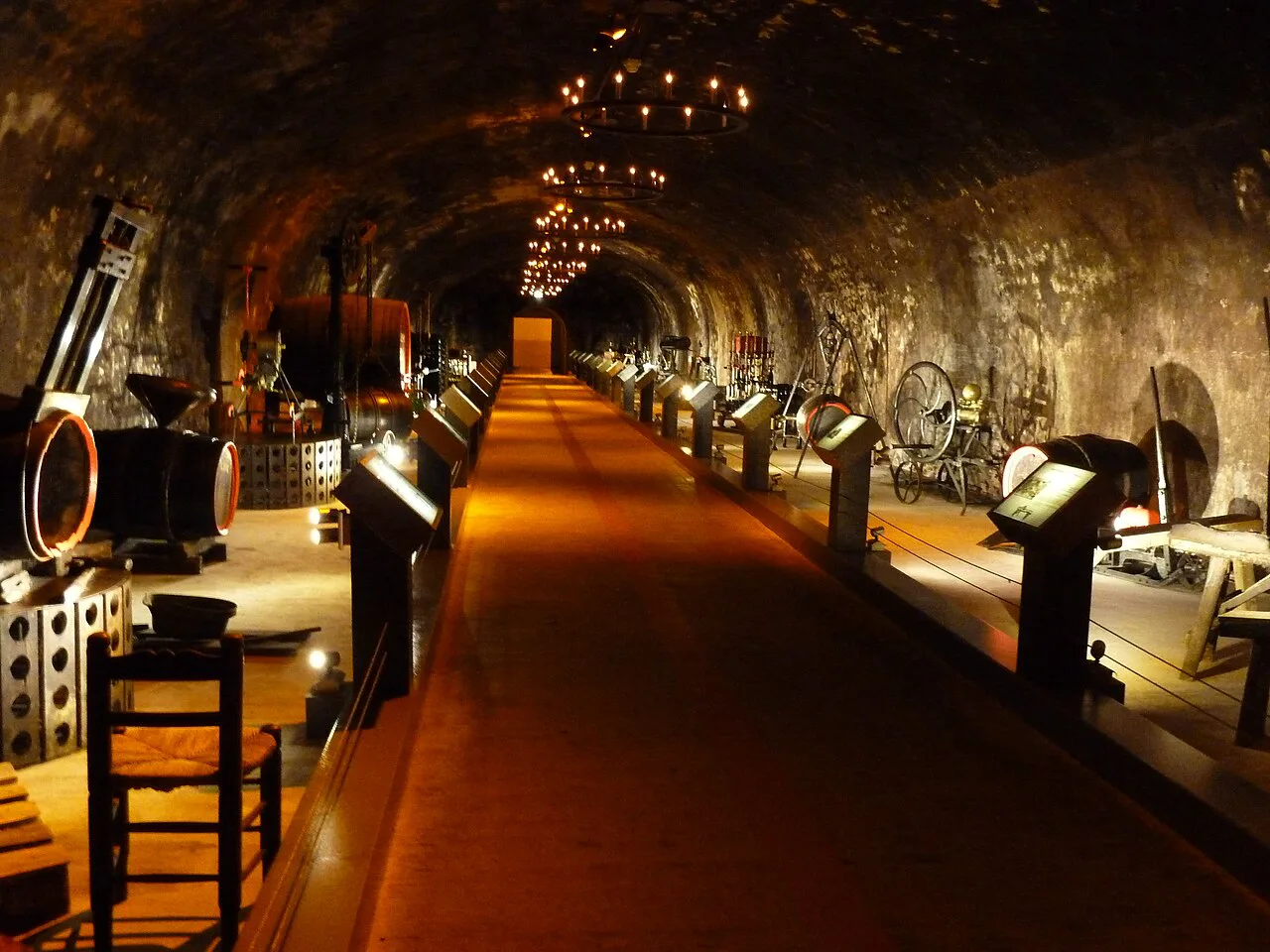
The cellars are the reason to go underground at all. They are carved chalk galleries, cool and humid year-round, lined with racks and riddling equipment, and the walk through them explains why Reims became a Champagne capital in the first place. Even a short passage underground gives you a physical sense of the aging process that no tasting room can.
The tasting comes at the end, in a dedicated room, and the guide typically demonstrates the sabrage or opening technique associated with the house's red sash. Treat the exact flight as something to confirm when you reserve: the house's commercial pages promote visit booking without publishing a fixed cuvée list, so ask which wines are poured for the slot you are buying.
What the Cellars Themselves Add
The practical value of the underground section is temperature. Chalk cellars hold a steady cool range, which is why the house can age millions of bottles in the city without mechanical cooling, and why you should bring a layer even on a warm June afternoon. The same goes for footwear: the floors are uneven and the route involves stairs.
Scale is the other takeaway. The galleries run long and the racks are dense, and visitors often come away startled by the sheer volume of bottles resting beneath an ordinary city street. That is the clearest illustration of how Champagne differs from still-wine regions: the vineyard is hours away in the Marne, but the aging and the blending happen here, under Reims.
Booking the Visit Through the House's Own Channel
Reserve ahead rather than turning up. The house runs its public visits through its own online booking, and the site's prompt is simply to book a visit before you travel; timed slots for groups fill on busy weekends and around holidays. Walk-in space exists in theory but is not something to build a train connection around.
When you reserve, put four questions in the booking form or email: the language of the tour, the number of wines poured, the total duration including the tasting, and whether children or non-drinkers in your party can join. The house's public pages market the visit without listing a per-person rate, so confirm the current price at the point of payment rather than budgeting from an old blog post.
Do not use the private-events contact for a standard tour. The events team handles the Maison Cordon Rouge townhouse, a separate venue at the same street address, and routing a normal visit request there will only slow you down; the online booking flow is the correct path for individuals and small groups.
Prices, Times and Languages: What to Settle Before You Pay
The house has not published a public tour price, start-time list or language schedule on the pages that describe its visits, so there is no responsible figure to quote here. The price you actually pay depends on the package and the season, and it appears at checkout in the booking system. Compare that figure against the other Reims Champagne houses before you commit, because the spread between a basic cellar tour and a longer tasting is wide.
A visitor review on Tripadvisor mentions a tour of about one hour with a French-speaking guide, which is a useful signal about format but not an official schedule. Treat any duration or language you read in reviews as one person's experience and confirm both in your own booking, particularly if you need an English-language tour on a specific date.
If your dates are fixed, book the slot first and build the rest of the day around it. Tours run in batches, so a mid-morning reservation leaves the afternoon free for the cathedral and a second house, while a late slot makes a Paris day trip tight once you add the return train.
The Tasting: Reading the Cordon Rouge Range
Mumm's core wine is Cordon Rouge, a non-vintage brut built on Pinot Noir with Meunier and Chardonnay in support, and the house also releases vintage Champagnes, a Blanc de Blancs and the RSRV range. Knowing that hierarchy before you taste helps you place what is in your glass: the non-vintage brut is the blend, and the vintage and single-varietal wines show what the house does with a narrower palette.
Champagne blending is the concept to hold onto during the tour. Most non-vintage cuvées combine wines from many villages and several years, with reserve wines added for consistency, which is why the same label tastes broadly similar each release. That is the opposite of the vintage-dated, single-village logic you will meet at small growers, and tasting both in one trip is the fastest education in the region.
If bubbly is only part of your Reims plan, the city's tasting rooms and bars let you compare houses without committing to a full tour, and they are a good use of the evening after an afternoon cellar.
Private and Group Options at Maison Cordon Rouge
Separate from the public tour, the house rents out Maison Cordon Rouge, an 1899 townhouse on Rue du Champ de Mars that once housed the firm's directors and has hosted receptions since the 1950s. It is open for private events' bookings starting this summer, and it is a venue for ceremonies, celebrations, cocktail parties and dinners rather than a tasting add-on; the booking route is the events team rather than the visit system.
Published capacities are specific: up to 50 guests indoors and 100 outdoors for the reception offer, up to 30 for a four-course meal paired with Mumm cuvées, and 15 to 50 indoors or up to 100 outdoors for a cocktail reception with two cuvées. Those numbers matter if you are organizing a group, because they cap what you can book and shape which of the three formats fits.
Enquiries go to events@mumm.com or +33 (0)3 26 49 69 65, both listed by the house alongside the street address. For a corporate group or a celebration, that is the correct door; for six friends who simply want to taste, use the public visit booking instead.
Mumm Versus Other Reims Houses
Choosing between Mumm and a smaller cellar comes down to what you want explained. A big house gives you polished logistics, a clear method walkthrough and reliable English-language tours; a small grower gives you the family, the parcels, and a conversation. Neither is better, but they answer different questions, and a first trip often benefits from one of each. The same big-house-versus-grower trade-off shapes wine tasting in Colmar, where the Alsace route runs through villages rather than city cellars.
If your group is split, use geography to decide. Mumm sits close to the other major Reims addresses, so pairing it with a second big house is efficient on foot, while a grower visit usually means a car or a short regional train ride out to the Montagne de Reims villages. Budget the travel before you promise anyone two tastings in an afternoon.
For a broader view of what each Reims address offers, including which houses publish prices and which run on appointment only, the city's cellar-tour guide is the place to start planning.
Getting There Without Driving
Reims is one of the easiest Champagne bases to manage car-free. High-speed trains from Paris run frequently and land you at the central station, from which the cathedral and most of the big houses are walkable; within the city, the bus network and taxis cover the rest, and Mumm's own access notes mention a short drive from the station area.
If you plan to reach grower villages or Épernay the same day, consider how the transport changes. Reims to Épernay is a short regional train ride, and Épernay's Avenue de Champagne puts several houses on one street; if that is on your list, read up on the Champagne de Castellane in Épernay visit before you build the itinerary.
Whoever is driving should not taste. Use the spittoons at the tasting counter, nominate a designated driver, or book a tour or train so the day does not depend on a sober driver at the wheel; every house in Reims provides dump buckets for exactly this reason.
Independent Visit Versus a Guided Champagne Day Tour
Doing Mumm independently is straightforward and usually cheaper: book a slot, take the train and walk, and add a second house on your own schedule. The trade-off is logistics on the day, since you handle reservations, transfers and timing yourself, and the visit itself remains a fixed group tour rather than a private one.
A guided day tour shifts that burden. Operators handle pickup, the driving between houses and often a lunch stop, and they can pair a large house like Mumm with a small producer you would struggle to reach by train. That structure is worth the premium if your group is large, your time is one day, or you are coming from Paris without a car.
The Paris calculation is the real decision. A day trip works because the train is quick, but you spend part of it in transit and you cannot drink freely if you plan to drive at either end; staying overnight in Reims lets you spread two or three visits across two days and eat a proper dinner in the city instead of rushing for the last train.
Pairing Mumm With the Rest of a Reims Day
The cathedral is the anchor of any Reims day and sits within walking distance of the main Champagne addresses, so put it between two visits rather than at the end when your palate is tired. Allow enough time for the interior and, if you are there in the warmer months, the surrounding squares where the city's café life happens.
Two cellar tours in one day is a comfortable maximum for most visitors. The format is similar, the rooms are cool, and the tasting portions add up; if you want a third Champagne experience, make it a glass at a bar or a walk through the vineyards rather than a third guided tour.
Build in time for the shop at the end of the Mumm visit. House boutiques often stock cuvées that are not exported, and browsing after the tasting is when people buy; squeezing it into a tight train connection is the usual way that pleasure gets lost.
Champagne Basics to Follow the Tour
Three grapes matter: Pinot Noir for structure and body, Meunier for fruit and approachability, and Chardonnay for freshness and aging potential. The region's rules allow the sparkling wine to carry the Champagne name only if it is made within the delimited area using the traditional method, which is why the tour spends time on pressing, blending and second fermentation rather than on soil.
Aging rules explain the price ladder. Non-vintage Champagne must rest on its lees for a minimum period before release, and vintage wines stay longer; houses often exceed the minimum, and it is fair to ask your guide how long the cuvées you taste spent underground. That single question makes the tasting far more informative than any note sheet.
Dosage is the other lever you will hear mentioned. It determines how dry or sweet the finished wine is, from brut nature through extra brut and brut to demi-sec, and it explains why two Champagnes from the same cellar can feel so different in the glass.
Plan Your Mumm Visit
The workable plan is simple: reserve a Mumm tour slot online before you fix your train, put the language, wine count and duration questions in the booking request, and pair the visit with the cathedral and one other Reims house rather than squeezing in three. Walk from the station area or use the city bus, and leave the driving to someone who is not tasting, or to public transport.
Confirm the day's schedule and the price you will actually pay at the moment of booking, since those details shift with the season and the package; everything else about a large-house visit in Reims you can plan with confidence.
Frequently Asked Questions
How long does the Mumm champagne tour take?
The house does not publish a duration on its visit pages. Visitors have reported a tour of roughly an hour including the tasting, but treat that as one person's experience rather than an official figure and ask for the total time, tasting included, when you reserve, so you can plan the rest of your day in Reims.
Do you need to book the Mumm cellar tour in advance?
Yes, reserve ahead through the house's own booking channel rather than arriving at the door. Timed slots fill on weekends and around holidays, and a walk-in visit is not something to build a train connection around. Book first, then arrange your travel around the slot you secure.
How much does a Mumm champagne tour cost?
The house does not list a public per-person tour price on its visit pages, so the honest answer is that you check the rate in the booking system for your date and package. Prices vary with the format and season, and comparing that figure against other Reims houses before paying is worthwhile.
Is the Mumm tour within walking distance of Reims station?
The address is 31 Rue du Champ de Mars on the southern side of the city center. It is walkable from the station area, with the venue's own access notes suggesting a short trip of roughly ten to twenty minutes depending on your starting point, so leave a margin rather than rushing from a train.
What champagnes do you taste at Mumm?
The house does not publish a fixed cuvée list for the public visit, so ask which wines are poured for the slot you buy. The commercial range centers on Cordon Rouge non-vintage brut, with vintage, Blanc de Blancs and RSRV wines also released, so the flight may vary by package and season.
Can you visit Mumm without a reservation?
It is not a reliable plan. The house sells public visits through advance booking, and slots are timed, so turning up without one risks being turned away on a busy day. Reserve online before you travel and keep the confirmation with your tickets.
How do you get to Mumm from Paris?
Take a high-speed train from Paris to Reims, then walk or take a bus or taxi to Rue du Champ de Mars. The train ride is short enough for a day trip, but staying overnight lets you visit two or three houses at a relaxed pace and avoids rushing for a return train after the tasting.
What is the difference between the Mumm tour and Maison Cordon Rouge?
The public tour takes you through the working cellars with a guide and a tasting. Maison Cordon Rouge is a separate 1899 townhouse at the same street address used for private ceremonies, dinners and cocktail receptions, booked through the events team at events@mumm.com or +33 (0)3 26 49 69 65.
Sources
Notes for your next wine trip
Optional updates to our winery and wine-town guides.
You might also like
Continue reading
More guides you'll find useful