Wine Tasting in Colmar: Alsace Villages & Wineries Guide
Plan wine tasting from Colmar: which Alsace villages to group, wineries that receive visitors, tour options, and how to taste without driving.
On this page
Colmar is the most practical base for tasting in central Alsace. The town sits on the plain with the vineyard villages of Eguisheim, Turckheim, Kaysersberg, Riquewihr and Ribeauvillé strung along the hillside just west and north of it, so you can reach several tasting rooms in a single morning. The catch is that the villages are linked by country roads rather than a dense rail network, which makes transport the first decision you make, not the last.
This guide treats the region as a set of clusters rather than a checklist. It names producers and cooperatives that the sources confirm welcome visitors, explains the grape varieties you will meet in the glass, and sets out how organized tours differ from going it alone. Prices and schedules change, so where a figure is not published, the guide tells you what to ask and where to look instead of guessing.
Why Colmar Works as a Tasting Base
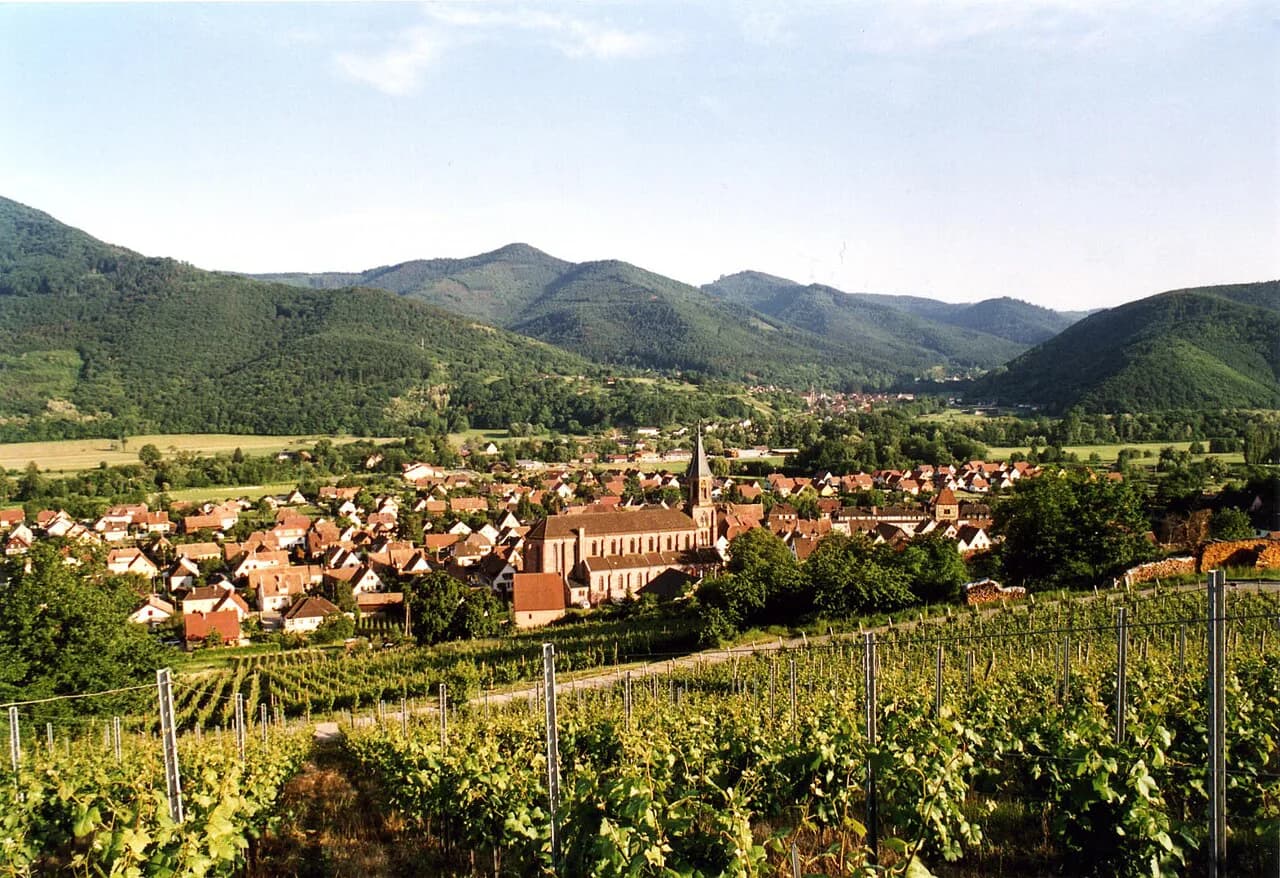
The Route des Vins d'Alsace runs roughly 170 km from north to south, threading through more than 70 towns and villages, and Colmar sits close to its southern-central stretch. The Colmar vineyard area is described as a mix of plain, mountain and vines, with Eguisheim, Kaysersberg and Riquewihr as the best-known wine villages around it. That geography means you can be standing in a cellar within fifteen to twenty minutes of your hotel.
Almost nothing in the vineyards is genuinely walkable from Colmar's old town; the town itself is for wine bars and shops, while the vines start in the villages beyond the suburbs. Plan on a car, a taxi, a bike or a booked tour for any village visit. Staying two nights rather than one lets you split the belt into a northern day and a southern day instead of racing through both.
The local wine-tourism board splits the route into five sections, from the northern vineyards near Wissembourg and Cleebourg down to the southern slopes between Thann and Soultzmatt. Colmar gives you quick access to the central section but leaves the far north and far south as genuine day trips rather than quick stops. Choose your base position deliberately if Grand Cru diversity in the south matters more to you than village charm close to town.
The Wines in One Screen
Alsace is unusual in France for labeling wines by grape variety rather than by village. The seven permitted varieties are Sylvaner, Pinot Blanc with Auxerrois, Riesling, Pinot Noir, Pinot Gris, Muscat and Gewurztraminer. Riesling and Pinot Gris dominate the serious dry whites, Gewurztraminer brings the aromatic weight, and Pinot Noir is the region's red grape, often made in a pale, light-bodied style.
Crémant d'Alsace is the region's sparkling wine, made by the same method as Champagne but usually from Pinot Blanc, Pinot Noir and other local grapes, which gives it a different fruit profile at a lower price point. Several Colmar operators run sparkling-focused visits alongside standard cellar tours, so it is worth seeking out if you want a contrast to the still whites.
Grand Cru is a vineyard designation, not a producer name, and it confuses first-time visitors more than anything else in Alsace. A handful of named sites illustrate the scale: Dambach-la-Ville has the Frankstein Grand Cru, Bergheim the Altenberg, Thann the Rangen, and Guebwiller hosts four separate Grands Crus. When you book, ask which Grand Cru vineyard the estate farms and whether the tasting includes a bottling from it.
Two smaller appellations reward attention: Klevener de Heiligenstein, a rare pink-skinned grape grown around one village, and Rouge d'Ottrott, a Pinot Noir-based red from the northern vineyards. Both appear on local lists rather than in most export markets, which makes them good targets for a tasting room visit.
Eguisheim: The Closest Village Cluster
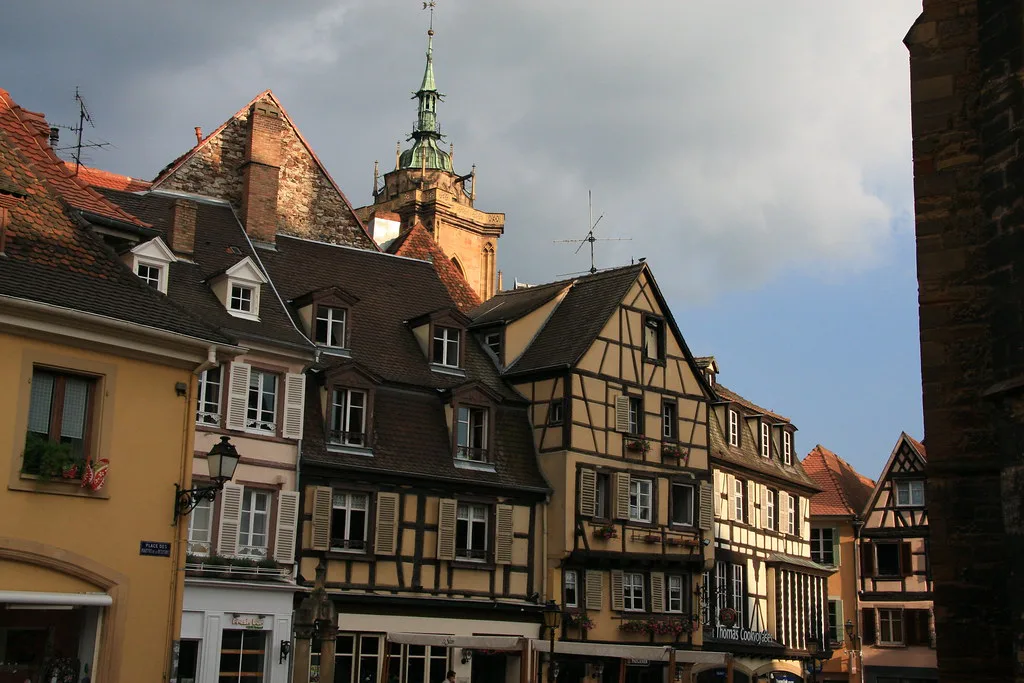
Eguisheim is the nearest of the celebrated wine villages to Colmar, a short drive southwest through the vines, and its concentric medieval streets make it the easiest place to combine a walk with a tasting. The village is known for its intact half-timbered houses and the castle of the Counts of Eguisheim, so a cellar visit slots naturally into a couple of hours of sightseeing.
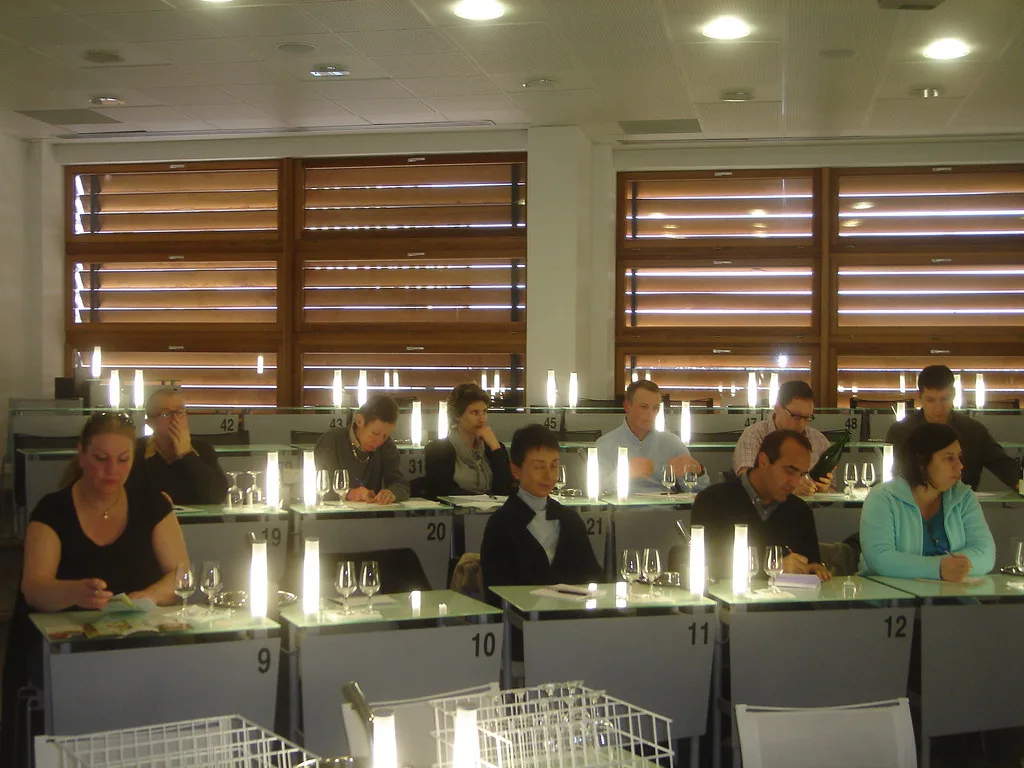
Appointment culture in Alsace is real but not uniform. Larger estates and cooperatives keep regular tasting-room hours, while small family domaines often receive visitors only when someone is free from the vines or the cellar, so a phone call or email the day before is normal practice. Ask what the visit covers, how many wines are poured, and whether there is a cellar walk-through, because a fifteen-minute counter tasting and a ninety-minute guided visit are both sold as wine tasting.
English is widely spoken in tasting rooms aimed at visitors, but German and French remain the working languages in many family cellars. If your group is larger than four or five people, say so when you book, as small domaines often have a single table and limited glassware. Travelers who would rather not manage those conversations can hand the logistics to a booked experience instead.
Kaysersberg and Turckheim: Village-to-Village Logistics
Kaysersberg lies a short drive northwest of Colmar and Turckheim sits between the two, so the three form a natural half-day loop. Kaysersberg's ruined imperial castle and riverside lanes pull crowds in high season, while Turckheim is quieter and known for its evening night watchman rounds and its Pinot Blanc vineyards. Tasting early in one village and walking the other in the afternoon is a sensible split.
Turckheim is where the François Baur estate has been established since 1741, run by Pierre and Thomas Baur and open to visitors interested in the family's long winemaking history. Treat it as a good example of the mid-sized family house that sits between the cooperative and the tiny domaine: structured enough to receive visitors, small enough that the person pouring may also be the winemaker.
Parking in these villages is the main friction point. Village-center lots fill by late morning in summer and during the Christmas market period, and the streets are too narrow for casual stopping. Arrive before the lunch hour, park on the edge of the village, and walk in; Alsace cellars also commonly close for lunch, so a midday gap in your schedule is normal rather than a sign you have been turned away.
Riquewihr and Ribeauvillé: The Classic Middle Route
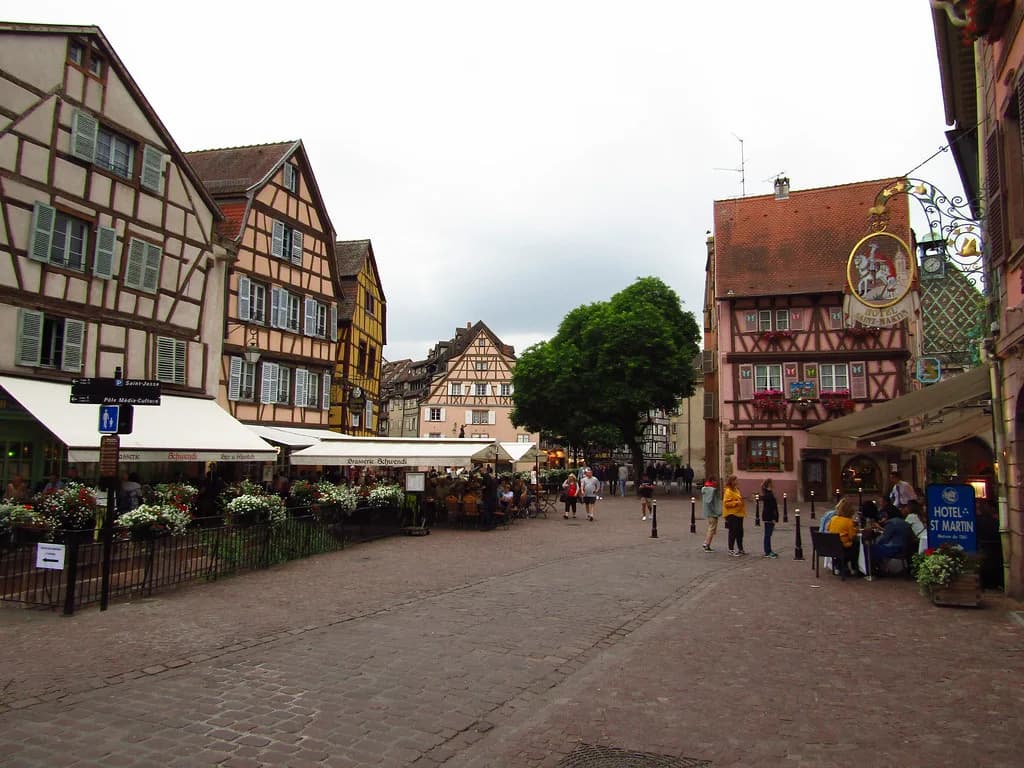
Riquewihr and Ribeauvillé are the postcard villages of the central route, both wrapped in preserved ramparts and half-timbered fronts. Riquewihr in particular is heavily visited and its Christmas market is among the region's biggest draws, so a tasting there in December needs more planning than the same visit in October. Ribeauvillé is a little larger and slightly less compressed, which makes it easier to combine a tasting with a proper meal.
Ribeauvillé's tasting scene includes Louis Sipp, Domaine Bott and Maison Jean Huttard, three estates with different scales that give you a useful comparison in a single afternoon. Larger houses tend to run structured tasting-room service with set flights, while small domaines may offer whatever is open that day. If you want a predictable visit, book the larger house first and leave the small domaine as the flexible second stop.
Dopff au Moulin, just south near Riquewihr, has grown into one of the most important estates within the Alsace Grand Cru appellation and is a reliable stop for Crémant d'Alsace. The trade-off is that a visit there feels more like a modern winery tour than a farmhouse conversation, which suits some travelers and disappoints others. Mixing one large estate with one small domaine per day keeps both experiences in perspective.
Dambach-la-Ville, Bergheim and Sélestat: Quieter Communes
North of Colmar, Dambach-la-Ville is one of the region's largest wine-producing communes yet sees a fraction of the Riquewihr crowds. Its medieval gates and market square are worth an hour on their own, and its Frankstein Grand Cru is the reason to book a tasting rather than simply stroll. Bergheim nearby is smaller still, ringed by intact ramparts with a walkable circuit and the Altenberg Grand Cru on its slopes.
Sélestat sits between them as a market town with a humanist library and Romanesque church, useful as a lunch stop and a place to break up the day. It also has its own surrounding vineyards, so you can taste without committing to a village visit. This trio suits travelers who would rather talk to a winemaker than queue at a famous cellar door.
Note that the Frankstein and Altenberg names refer to vineyard sites, not to any single producer. Several estates farm parcels within each Grand Cru, so the label on the bottle tells you the vineyard while the producer name tells you the style. Ask at the cellar which parcels they hold and whether the Grand Cru bottling is poured in the standard flight or costs extra.
Southern Alsace: Guebwiller and Thann
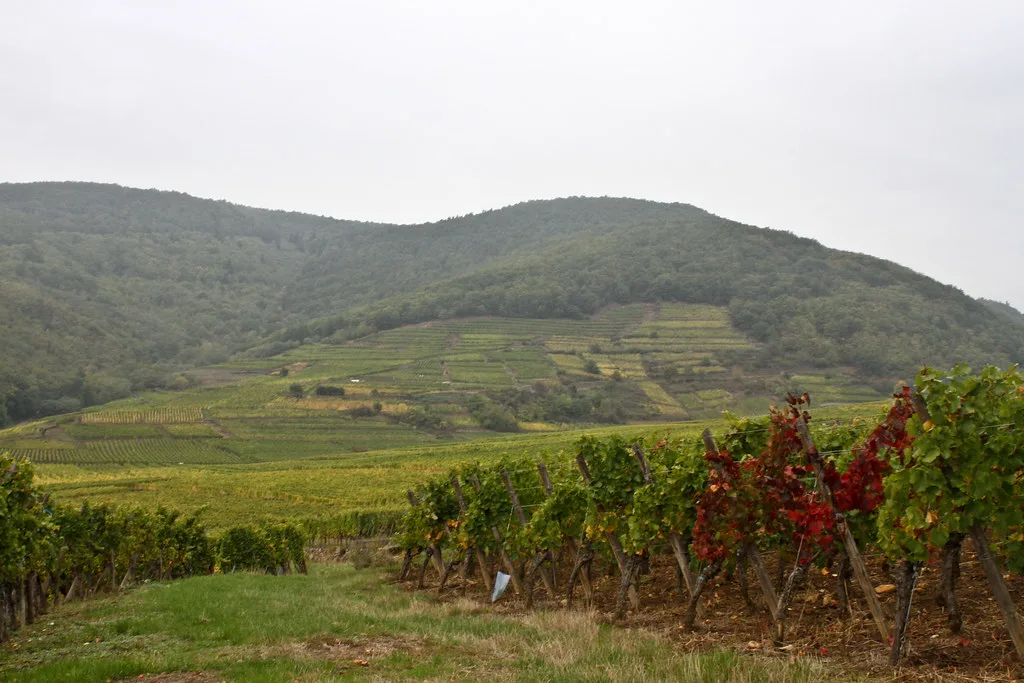
The southern stretch between Thann and Soultzmatt drops from the Vosges into steeper, sometimes dizzyingly sloped vineyards, and it is the land of the Grands Crus. Thann is known for the Rangen Grand Cru, while Guebwiller can claim four separate Grand Cru sites. The geology and southerly exposure here give a different register of wines from the central belt, which justifies the longer drive. If this comparison of estate styles and appointments has made you want a contrasting region, our guide to wine tasting in Avignon covers the Rhône Valley's Grenache-based reds.
Treat this as a full day from Colmar rather than an afternoon add-on. Drive times are longer, villages are further apart, and fewer estates keep visitor-friendly tasting hours, so two booked appointments with a lunch between them is a more realistic plan than trying to improvise. The payoff is quieter cellars and wines you will rarely find at home.
Northern Vineyards: Molsheim, Obernai and Cleebourg
If you are combining Colmar with Strasbourg, the northern section of the route earns a day. The Strasbourg vineyards stretch from Marlenheim to Molsheim through medieval villages, and Obernai and Ottrott sit just south with their own Pinot Noir tradition. The far north around Wissembourg and Cleebourg holds the most northerly vineyards in Alsace, planted since the eighth century, and is best paired with a Strasbourg base rather than Colmar.
Gertwiller, near Obernai, is home to Zeyssolff, a family winery founded in 1778 and now run by the eleventh generation, with a historic 1897 cask made for the Paris Universal Exhibition on display. The estate also runs winemaker lunches and food-and-wine pairings, which makes it a strong choice if you want a tasting that includes a meal rather than a plate of charcuterie.
Nearby, Schneider Jean Marc and Maison Klipfel are two further estates in the same corner of the vineyard, useful if you want a second stop without moving the car. The distances between the northern villages are short but the roads are rural, so a designated driver or a booked driver makes more sense here than in the compact central belt.
Organized Tasting Options Booked from Colmar
Colmar has a dense supply of bookable wine experiences, and the listings give a fair picture of what is on offer. Half-day Alsace village tours, a traditional visit and tasting, a cellar tour focused on organic wines, a wines-with-cheese-and-charcuterie visit, and a Crémant-focused sparkling tour are all sold as standalone activities. Several include free cancellation, which matters when you are booking weeks ahead.
Platform prices are displayed in whatever currency your session is set to and are converted by the booking site, so they are not a reliable guide to what the winery itself charges at the door. Use the listing to compare what each visit includes, then check the winery's own site or ask by email for its published tariff if you plan to book directly. Places fill fastest on weekends and during the Christmas market season.
The Alsace Wine Museum in Colmar is a sensible rainy-day anchor and a good arrival-day introduction before you start visiting cellars. It explains the region's history and grape varieties without requiring a booking weeks in advance. Pair it with a tasting in town on your first afternoon and you will read the rest of the trip's wine lists far more comfortably.
Independent Versus Tour
Going independently gives you control over which estates you visit, how long you stay and what you buy, and it is the only way to reach the small domaines that do not work with booking platforms. The cost is logistics: someone has to drive, parking has to be found in villages with narrow streets, and you carry the risk of arriving at a cellar that is closed for lunch or full.
A booked tour removes the driving problem entirely and adds a guide who can translate cellar conversation and stitch villages together efficiently. The trade-off is fixed itineraries, group pace and less time in any single cellar. Half-day tours suit travelers with one free afternoon; full-day tours make more sense if you want to cover both the central villages and a Grand Cru site in one go.
There is a middle path: book a private driver or taxi for a half day and design your own route between two or three estates. It costs more than a shared tour but less than you might expect when split across a group of four, and it lets you keep the small-producer visits that group tours rarely include. Ask your hotel to arrange it a day ahead.
Getting Around Without a Car
Colmar has a mainline rail station with connections to Strasbourg and Mulhouse, and several wine-route towns have their own stations, which makes a car-free tasting day possible in principle. Schedules on these local lines are limited, particularly on Sundays, and village stations can sit a walk from the vineyards. Check the current timetable with SNCF or the regional TER network before you build a day around a train.
Taxis in Colmar are available but not plentiful, and a driver who takes you between three villages and waits will charge accordingly. Bicycles are a realistic option for the flat plain between Colmar, Eguisheim and Turckheim, and the vineyard cycle route is signed, though the ride back from a hill village is more demanding than it looks. E-bike rental solves most of that.
The villages deep in the vines, such as Dambach-la-Ville, Bergheim and the southern Grand Cru sites, are genuinely car-dependent. If you have no car and no tour booked, concentrate on Eguisheim, Turckheim and the Colmar tasting rooms rather than trying to reach the quieter communes by public transport. That is a real restriction, not a minor one, and it should shape where you stay as much as what you book.
Booking Mechanics and Timing
For small domaines, email is usually more reliable than a phone call if your French is limited, and a short message naming your date, party size, preferred language and whether you want a cellar tour gets a faster answer than a general inquiry. Larger houses and cooperatives often accept online bookings or walk-ins during standard hours. Give at least a few days' notice in shoulder season and a week or more in summer.
Harvest, usually running from late August into October depending on the year, is the most awkward window for casual visits because cellar teams are fully occupied. Some estates pause tours entirely; others keep the tasting room open but cancel cellar walks. Ask directly whether visits are running during your dates rather than assuming, and keep a flexible second choice in the same village.
Autumn is often recommended for the route because the colors are at their best and the crowds thin after the summer peak. Spring is quieter still, though some small estates open only part-time outside the main season. Winter is dominated by the Christmas markets, when Colmar and the famous villages are busiest and accommodation prices peak.
Where to Taste in Colmar Itself
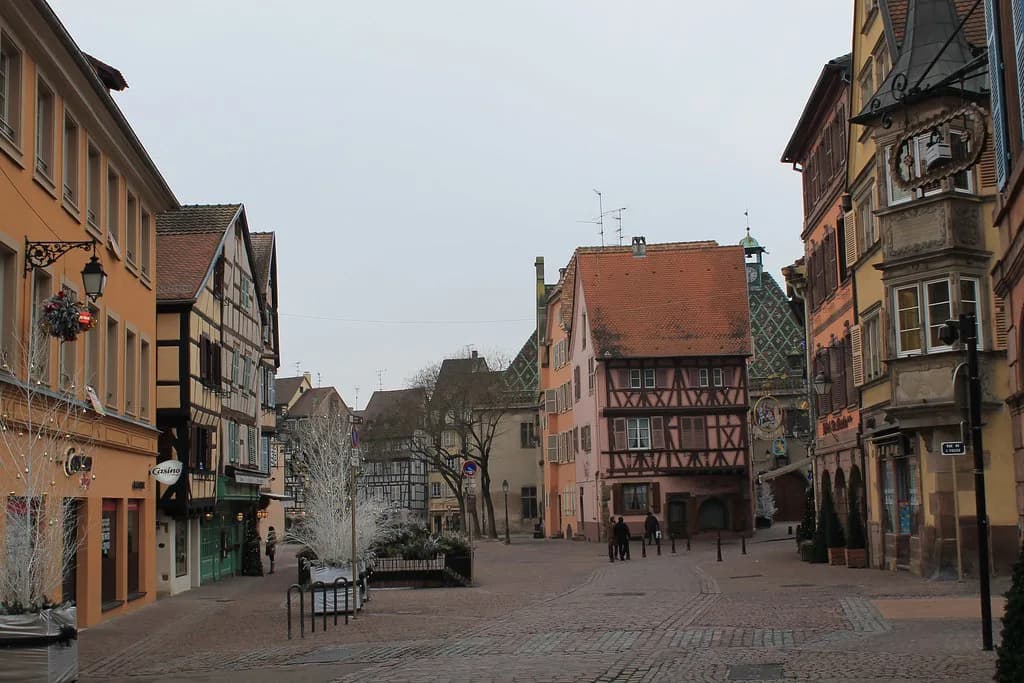
Colmar's old town has wine bars, caves and shops where you can taste a flight without leaving town, which is the right move on an arrival evening or a wet afternoon. Wistub Brenner is a reliable address for regional cooking with local wines by the glass, and the town's wine shops generally pour before you buy. These stops let you calibrate your palate before committing to village appointments.
Buying wine to take home is easiest in town, where shops can arrange shipping and packaging, rather than at a village estate where you may be carrying bottles for the rest of the day. If you find a wine you love at a cellar, note the producer and cuvée and buy it in Colmar later. Prices at the cellar door are usually the lowest you will see, so a small purchase on the spot is still worthwhile.
Practical Day Shapes
A half day works best as Eguisheim plus one more stop: walk the village, book one cellar visit, and return to Colmar for a late lunch. A full day can pair Kaysersberg and Turckheim in the morning with Riquewihr or Ribeauvillé in the afternoon, leaving time for one proper sit-down meal. Trying to add a third village usually means rushing the tastings, which defeats the purpose.
For a wet-weather day, start at the Alsace Wine Museum, taste in a Colmar wine bar, and save the village driving for the next morning. For a two-day visit, give the first day to the central villages and the second to either the quieter northern communes or the southern Grand Cru sites, depending on whether you prefer atmosphere or vineyard diversity.
Plan Your Colmar Tasting Trip
Colmar rewards a plan built around two or three villages rather than a long list. Decide first how you will travel, then pick the estates that fit that constraint, and let the wines follow: Riesling and Pinot Gris for the dry whites, Gewurztraminer for aromatic weight, Pinot Noir for something lighter, and Crémant d'Alsace for the sparkling contrast.
One responsible-drinking note, said once: if you are driving, do not taste, or spit and keep to the smallest pours. A designated driver, a booked tour or public transport removes the problem entirely and makes the day better for everyone in the car. Confirm the specifics of any visit with the estate when you book, and leave room in the schedule for a village you did not plan to fall for.
More wine guides from Colmar
- Alsace Wineries
- Domaine Weinbach
- The Alsace Wine Route from Colmar
- Colmar Wine Tours
- Domaine Paul Blanck
- Hugel Winery
- Visiting Trimbach in Ribeauvillé
- Wolfberger in Eguisheim
- Zind-Humbrecht in Turckheim
- Cave de Turckheim and Turckheim Tastings
- Colmar Wineries
- Visiting Domaine Marcel Deiss in Bergheim
- Domaine Albert Mann
Frequently Asked Questions
Do you need a car for wine tasting from Colmar?
Not for the town itself or for Eguisheim and Turckheim, which you can reach by bike, taxi or booked tour on the flat plain. You do need wheels for Dambach-la-Ville, Bergheim and the southern Grand Cru villages, where rail and bus coverage is thin and estates sit outside the village centers. Decide this before you shortlist estates, because it rules some of them in or out.
Which Alsace villages are closest to Colmar for wine tasting?
Eguisheim is the nearest celebrated wine village, a short drive southwest through the vines. Turckheim, Kaysersberg, Riquewihr and Ribeauvillé follow in a loose arc to the northwest and north, all reachable within roughly fifteen to thirty minutes by car. Group two of them per half day rather than trying to cover all five.
Are Alsace winery visits by appointment or can you walk in?
Larger estates and cooperatives generally keep regular tasting-room hours and accept walk-ins, while small family domaines often receive visitors only when cellar work allows. A short email naming your date, party size and language a day or two ahead is normal practice. Ask whether the visit includes a cellar walk-through, since counter tastings and guided tours are both marketed as wine tasting.
What does a wine tasting in Alsace typically include?
It ranges from a short counter flight of a few wines to a ninety-minute guided visit with a cellar walk-through and a food pairing of cheese and charcuterie. Sparkling-focused visits built around Crémant d'Alsace are a separate option. Ask how many wines are poured and whether any Grand Cru bottling is included before you commit.
Can you do the Alsace Wine Route by train from Colmar?
Colmar has a mainline station, and several wine-route towns have their own stops, so a car-free day is possible in principle. Local services are limited, especially on Sundays, and village stations can sit a walk from the vineyards. Check current timetables with SNCF or the regional TER network before planning a day around a train.
Is a guided wine tour from Colmar worth it?
It is the simplest solution if nobody in your group wants to drive and you want two or three villages in one day. Tours fix the itinerary and move at group pace, and they rarely include the smallest domaines. A private driver costs more than a shared tour but lets you design your own route between estates.
What is the difference between Crémant d'Alsace and Champagne?
Both are sparkling wines made by the traditional method, but Crémant d'Alsace is usually built on Pinot Blanc and Pinot Noir rather than Chardonnay and the Champagne varieties. That gives it a different fruit profile, and it is generally the cheaper of the two. Several Colmar operators run visits built specifically around it.
When is harvest season in Alsace and does it affect visits?
Harvest usually runs from late August into October, depending on the year, and it is the least convenient window for casual cellar visits because the teams are fully occupied. Some estates pause tours, while others keep the tasting room open but drop cellar walks. Ask whether visits are running during your dates and keep a second choice in the same village.
Sources
Notes for your next wine trip
Optional updates to our winery and wine-town guides.
You might also like
Continue reading
More guides you'll find useful