Hugel Winery Guide: Visit Famille Hugel from Colmar
Plan a visit to Hugel winery in Riquewihr, a short trip from Colmar. What the estate is known for, how tours and tastings work, and getting there by bus.
On this page
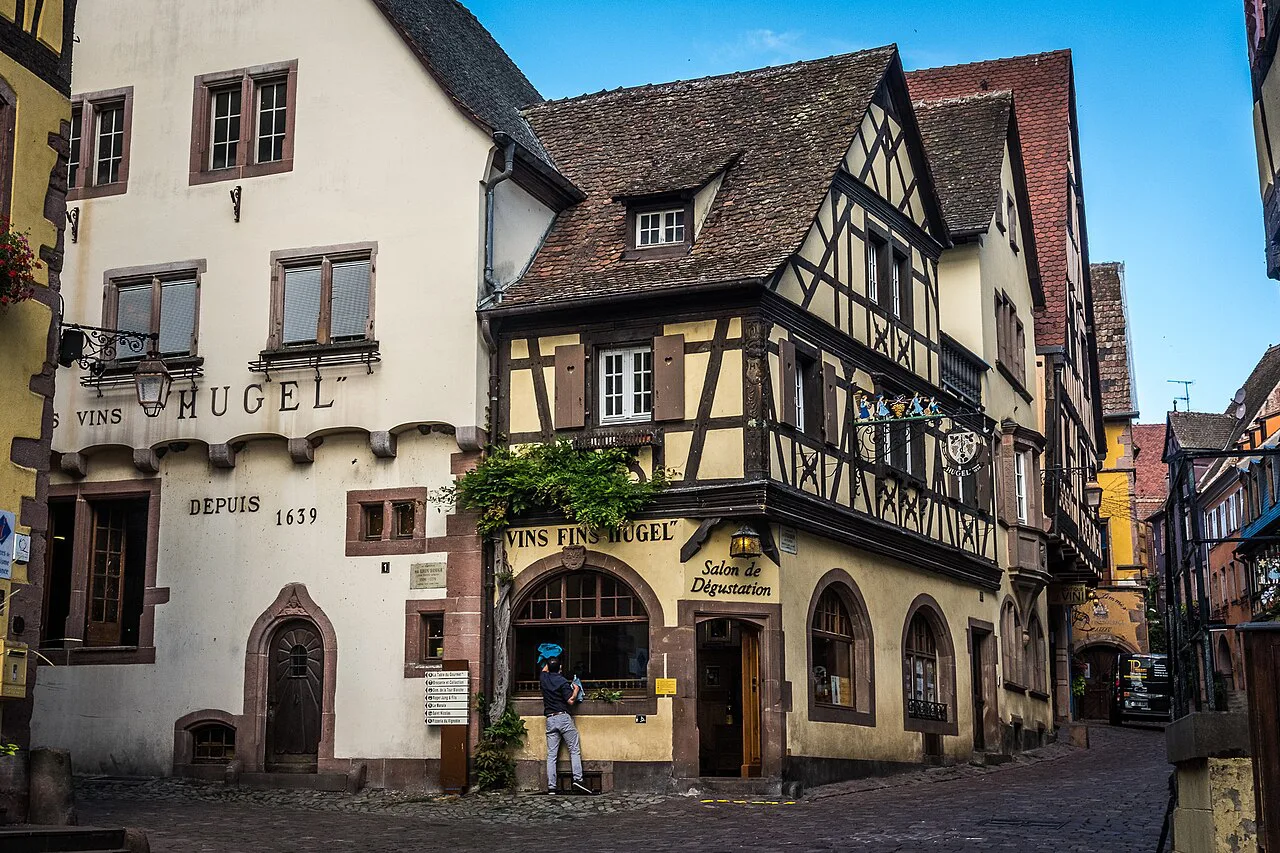
Hugel is the surname most travelers associate with Alsace wine, and the family's cellars in Riquewihr are within easy reach of Colmar. The visit itself is straightforward once you understand how the estate handles guests: individuals book a guided tour, while private customers and organized groups are received for free tasting.
What follows separates the details the estate and the regional wine-tourism board publish from what they leave open, so you can plan a Riquewihr day around a confirmed appointment rather than a hopeful walk-in. The village itself rewards a slow half-day: several cellars sit inside the old walls, and the vineyards begin at the edge of town.
Hugel in one minute: a family name since 1639
The Hugel estate was founded in Riquewihr in 1639 and has stayed in the same family across many generations, which is why the name carries so much weight in Alsace. The modern estate is run by the 12th and 13th generations of the family, and the house is known internationally for classic Alsace styles rather than for a single vineyard or a single grape.
Two cuvées are worth knowing before you arrive: Grossi Laüe, the estate's name for its finest vineyard sites, and Schoelhammer, which revived the Alsace tradition of bottling from a single vineyard. You will see these names on the list at the cellar, and recognizing them makes the tasting easier to follow.
Where Hugel is: the Riquewihr address and distance from Colmar
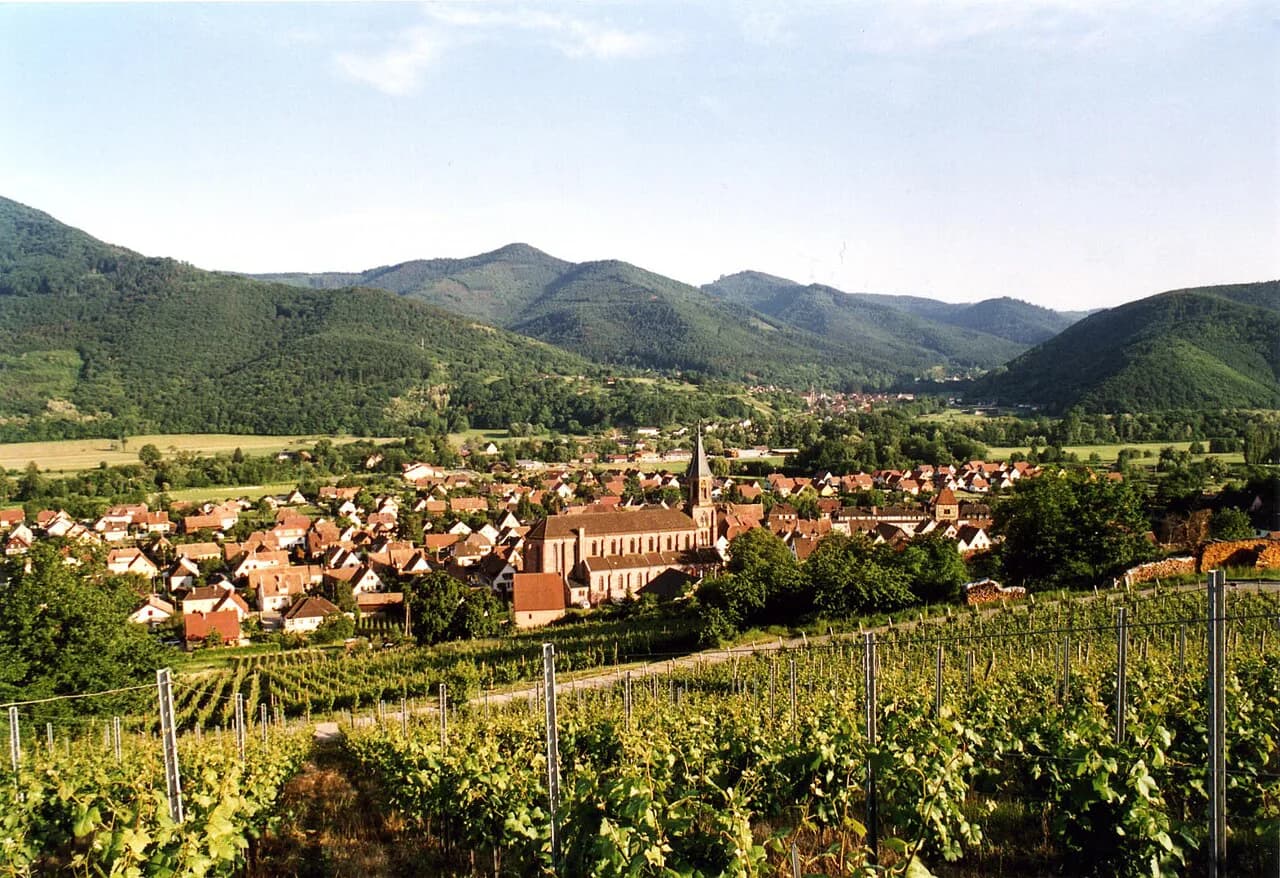
The estate's listed address is 3 et 1 rue de la 1ère Armée in Riquewihr, a small walled village in the Haut-Rhin department of Alsace. Riquewihr sits on the classic stretch of the Alsace Wine Route between Colmar and Ribeauvillé, and the drive from Colmar is short enough that the village works as a half-day or full-day outing.
Because Riquewihr is compact, the cellar is best treated as one stop among several rather than a standalone destination. Park outside the walls or arrive by bus or taxi, then walk the main street and pick your cellars on foot.
How visiting works: reservation tours, free tastings
The Alsace Wine Route listing for Hugel is specific about visit formats. Guided tours are offered to individuals with a reservation, and free tasting is offered to groups and to private customers, with the group headcount capped at 10 people. That structure tells you what to plan around: an individual or couple should reserve a guided tour, while a small private group may be received for a tasting.
The listing does not publish tasting prices, tour durations, opening hours, or closing days, and no source here supplies them. Plan to ask about those when you request your date, and treat the reservation confirmation as the real schedule rather than any secondary listing.
Group limits: what the cap of 10 means for booking
With a published maximum of 10 people, Hugel suits a small party of friends, a family group, or a compact club outing, but not a coach load. If your group is larger, split into two bookings on different time slots or look at larger houses elsewhere in the region for the main visit.
Groups should say up front how many people are coming, whether anyone is driving, and whether the tasting is the whole visit or part of a longer day in Riquewihr. That lets the estate slot you into the right format and avoids turning up with a party the cellar cannot seat.
Booking practicalities: contact, languages, and the request email
The estate is reachable by phone and email, and staff speak French, German, English, and Spanish, so an English-language booking request is realistic. Write with your preferred date, an alternative, your party size, and whether you want a guided tour or a tasting, then keep the reply with your itinerary. If you are comparing how appointment-based family estates handle visitors, the same questions apply to wine tasting in Dijon.
Reservation culture matters in Alsace: many family cellars receive visitors by appointment rather than holding open shop hours for tours. Building your Riquewihr day around a confirmed Hugel slot, then filling the rest of the day with walk-in cellars nearby, is the lowest-risk approach.
What you will taste: Alsace AOC, late harvest, and noble rot styles
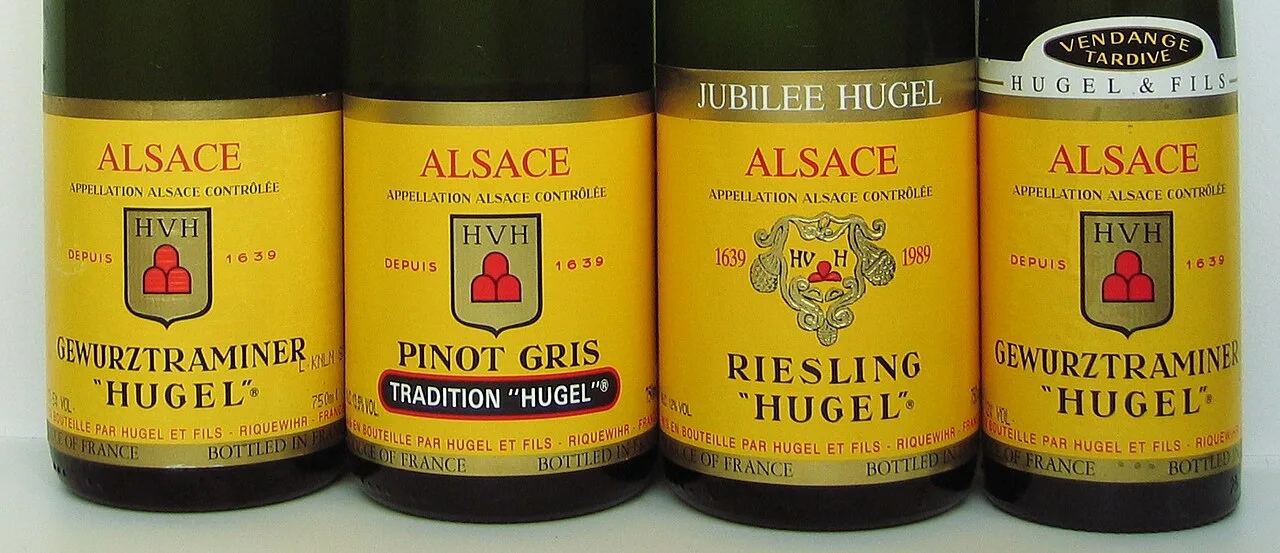
Hugel's listed range covers Alsace AOC wines alongside Late Harvest and Selection de Grains Nobles bottlings. In practice that means dry-to-off-dry whites from the classic Alsace grapes, plus sweeter wines made from late-picked or botrytized fruit, which are typically poured in small quantities and often carry a higher price per bottle.
Alsace labels name the grape rather than the village, so expect Riesling, Gewurztraminer, Pinot Gris, and Muscat on a tasting list. Riesling tends toward a lean, mineral style, Gewurztraminer is aromatic and fuller, and Pinot Gris sits between the two; knowing that vocabulary helps you choose which bottles to buy afterward.
Fitting Hugel into an Alsace wine day
Riquewihr is dense with cellar doors, so a sensible day pairs one reserved visit, such as Hugel, with two or three walk-in tastings in the village. Ribeauvillé and Kaysersberg sit nearby and can be added by car or bus if you are spending more than one day on the Route des Vins d'Alsace.
If you would rather not assemble the day yourself, guided wine tours from Colmar handle transport and appointments and often include a cellar visit in Riquewihr. The trade-off is fixed timing and a set itinerary in exchange for not worrying about reservations or a designated driver.
Getting there without a car
The train brings you to Colmar, and from there a local bus line serves the wine villages around Riquewihr; a taxi covers the last stretch when bus timing does not suit. Neither schedules nor fares are published in the sources here, so confirm the current bus line and departure points at the Colmar tourist office before you rely on it.
Cycling is a genuinely practical option in this part of Alsace, where the vineyard tracks between villages are gentle and signed. A bike gives you freedom between cellars, but you will need to pace yourself and spit rather than swallow if you are riding; the alternative is a taxi back to Colmar with the bike.
Independent visit versus guided tour
Going independently costs less on paper and lets you linger in Riquewihr, but it puts the reservation, the transport, and the driving on you. A tour removes those frictions and adds commentary, at the price of a fixed schedule and less time in any one cellar.
For a couple with one reserved Hugel tour and a couple of walk-in tastings, independence works well if you use the bus or a taxi. For a group of six or more, a tour or a hired driver often makes better sense than trying to coordinate several people around one bus timetable.
Best time to go
Late spring through early autumn is the comfortable window, when the vineyards are green to golden and the village streets are at their liveliest. Harvest in Alsace generally falls in the September-to-October period, which is atmospheric but also the busiest time for cellar work, so book earlier than you would in summer.
Winter is quiet and many small cellars reduce their hours, which makes a confirmed appointment more important than ever. If you visit in the colder months, plan Riquewihr as a single focused stop with a booked tasting rather than a day of wandering between doors.
Where to stay: Colmar or Riquewihr
Colmar gives you the train station, a wider choice of hotels, and an easy base for wine tasting across the region, but you will need transport out to the villages each day. Riquewihr lets you walk to cellars from your room and see the village after the day-trippers leave, though the choice of accommodation is smaller and rates peak in season.
A workable compromise is to base in Colmar and spend one night in Riquewihr if you want the evening atmosphere. Either way, book accommodation before you fix your cellar appointments, since a confirmed room determines which day you can reserve.
Drinking responsibly on a wine day
Whoever is driving should not taste; use the spittoons that every Alsace cellar provides, or choose a designated driver, a tour, or public transport so nobody has to choose between the wine and the road. Spitting is normal and expected in tasting rooms, not rude, and it lets a driver sample without drinking.
Final Booking Checklist
Before you travel, request your Hugel visit by email or phone with a date, an alternative, and your party size, and note that groups above 10 need a different plan. Ask about the tour format, the length, and the cost in the same message, since those details are not published.
Then layer in transport: confirm the current bus from Colmar, line up a taxi for the return, or book a tour that includes Riquewihr. With a reservation, a route, and a driver settled, the day itself is simply a walk through the village and a seat in a very old cellar.
Frequently Asked Questions
Where is Hugel winery located?
The estate's listed address is 3 et 1 rue de la 1ère Armée in Riquewihr, in the Haut-Rhin department of Alsace. Riquewihr is a small walled village on the Alsace Wine Route between Colmar and Ribeauvillé, close enough to Colmar for a half-day or full-day trip.
Can you visit Hugel winery without an appointment?
The published visitor listing describes guided tours for individuals with a reservation, plus free tasting for groups and private customers, with a maximum group size of 10. It does not list open walk-in tour times, so individuals should request a slot by phone or email before traveling to Riquewihr.
How do you get to Hugel winery from Colmar without a car?
Take the train to Colmar, then a local bus toward the wine villages around Riquewihr, with a taxi for the final stretch when bus timing does not suit. Schedules and fares change, so confirm the current bus line and departure point with the Colmar tourist office before you depend on it.
What wines does Hugel produce?
The listed range covers Alsace AOC wines alongside Late Harvest and Selection de Grains Nobles bottlings. In practice that means whites from the classic Alsace grapes, including Riesling, Gewurztraminer, Pinot Gris, and Muscat, plus sweeter styles made from late-picked or botrytized fruit.
How long has the Hugel family been making wine in Alsace?
The estate was founded in Riquewihr in 1639 and has remained in the same family, and it is now run by the 12th and 13th generations. The house is known for classic Alsace styles and for cuvées such as Grossi Laüe and Schoelhammer.
What is the difference between Alsace AOC and Selection de Grains Nobles?
Alsace AOC is the standard appellation for the region's still wines, labeled by grape variety rather than by village. Selection de Grains Nobles is a sweeter style made from grapes affected by noble rot, picked selectively, so it is usually poured in smaller quantities than the dry wines.
Sources
Notes for your next wine trip
Optional updates to our winery and wine-town guides.
You might also like
Continue reading
More guides you'll find useful