Domaine Albert Mann: Colmar Guide to the Wettolsheim Estate
Plan a cellar visit to Domaine Albert Mann in Wettolsheim from Colmar: the family, the Grand Cru sites, the grapes to ask for and no-car routes.
On this page
Domaine Albert Mann appears on almost every shortlist of serious Alsace producers, yet the estate itself sits in Wettolsheim, a village a few kilometers southwest of Colmar that many visitors pass straight through on the way to Eguisheim. That geography matters: it makes the domaine easy to fold into a southern Alsace day rather than a separate expedition. This guide explains who farms the estate, which vineyards sit behind the labels, which grapes to ask about, and how to arrange a visit.
Read it as a planning document rather than a tasting note. Published details on cellar-door appointments, prices and opening days change, so the estate is the place to settle them once your dates are fixed. What follows focuses on what stays stable: the location, the family history, the appellations and the transport logic.
Why Domaine Albert Mann Matters in Alsace
The estate earns its reputation on farming as much as on fame. James Suckling's profile of the domaine records that the Barthelmé brothers began working biodynamically in 1997 and that the entire vineyard has been farmed that way since 2010, which places them among the region's early converts rather than recent followers.
That history gives a tasting room conversation a concrete starting point. You can ask how biodynamic practice changes work in a vintage like 2021 or how it shapes the estate's Pinot Noir, rather than treating the certification as a label on a shelf. Visitors who care about viticulture will get more from this domaine than from a stop chosen purely on village convenience.
The estate is also unusually well documented for a family domaine of its size, which helps you prepare. A detailed profile traces the family lines, the vineyard holdings and the range of bottlings, including the shift in quality after the Barthelmé brothers took over the operation. Reading it before you go makes the tasting feel like a continuation of a story rather than a first encounter.
Where Wettolsheim Sits Relative to Colmar
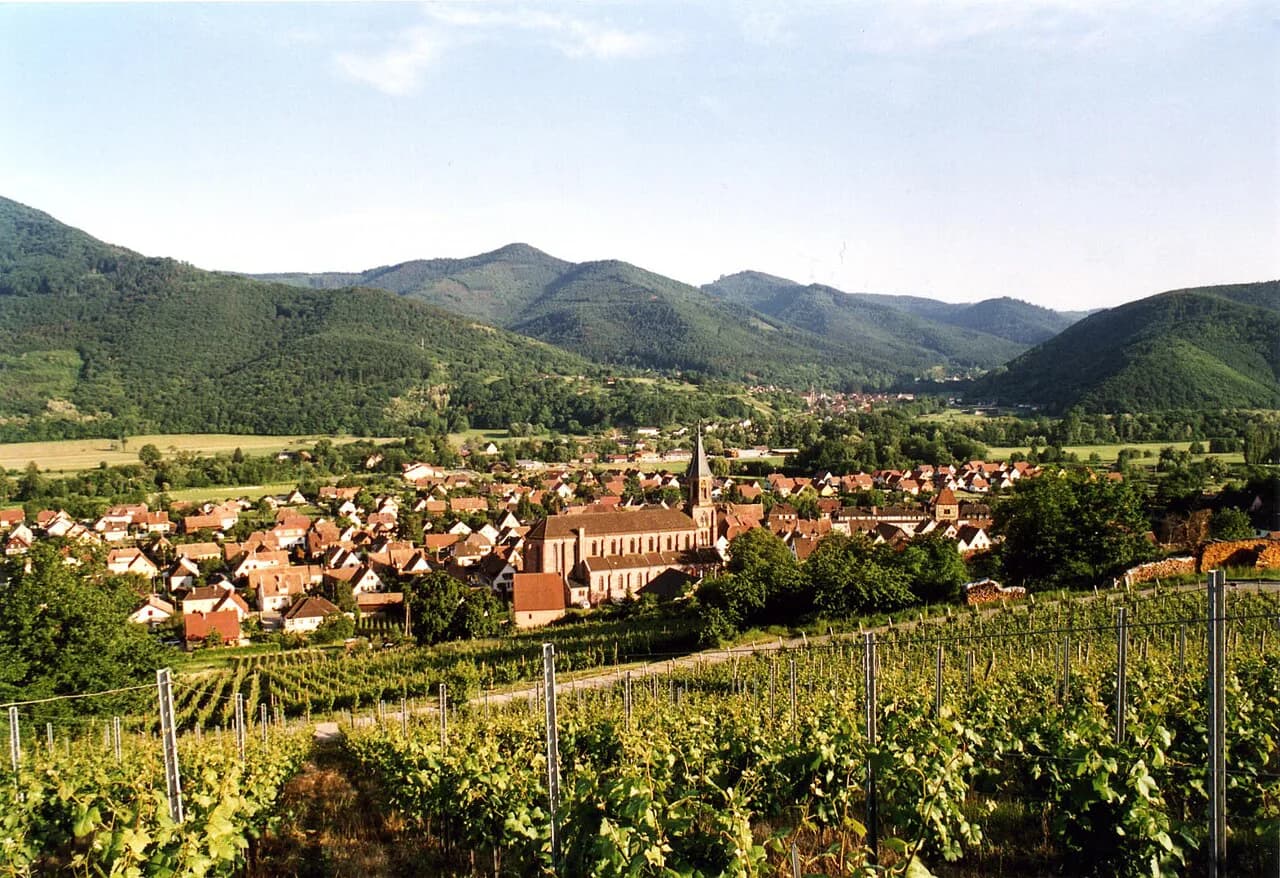
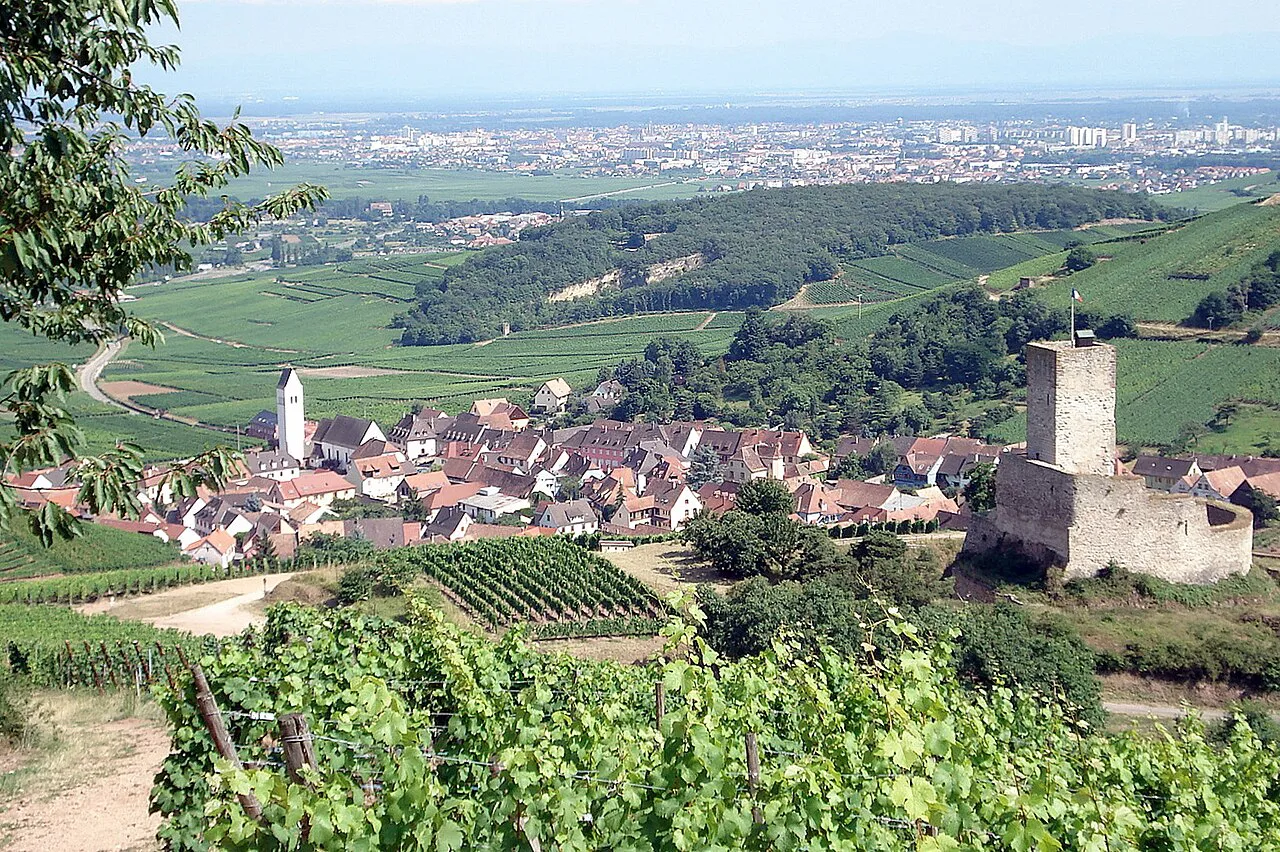
Wettolsheim lies just southwest of Colmar, immediately north of Eguisheim and close to Wintzenheim. The three villages form a tight cluster at the southern end of the Colmar wine circuit, which means you can link a visit here with a walk through Eguisheim's concentric streets without spending the day in the car. If you are still sketching the route, the broader [Colmar wine tasting](/colmar-wine-tasting) overview shows how the villages connect.
Think in driving minutes rather than kilometers when you build the day. Colmar to Wettolsheim is a short hop, and Wettolsheim to Eguisheim is shorter still, so two estates plus a village lunch is a realistic schedule. The mistake is adding Kaysersberg or Riquewihr on the same afternoon and spending the best tasting hours behind a windshield.
The wider [Alsace Wine Route](/alsace-wine-route) rewards a slower pace than most itineraries allow, so treat the Wettolsheim-Eguisheim-Wintzenheim triangle as a full day in itself. If you want to compare several estates before committing, the [Colmar wineries](/colmar-wineries) guide sets out which villages suit which kind of visit. Wine tasting in Reims follows a similar logic of clustering cellars by district rather than crisscrossing the region.
The Estate's Identity: Two Families, One Domaine
Domaine Albert Mann grew out of two long-established winemaking families, the Manns and the Barthelmés, and takes its name from Albert Mann, who was among the first growers in Wettolsheim to bottle his own wine in the postwar years. The domaine as it exists today was formed in 1989, when Maurice Barthelmé and his brother Jacky consolidated the family holdings into a single estate.
Maurice and Jacky Barthelmé still run the domaine with their wives, Marie-Claire, who is Albert Mann's daughter, and Marie-Thérèse. Maurice is the co-winemaker and vineyard manager, Jacky the winemaker, a division of labor worth knowing because it explains why the estate talks about soil and farming as much as about vinification.
The estate farms roughly 20 to 21 hectares, spread across several communes and including five Grand Cru appellations, two lieu-dit sites and one monopole. That relatively modest size explains the breadth of the range without mass production: many bottlings, each tied to a specific parcel.
What Is Planted, and What to Ask For
The vineyard is dominated by white varieties, with Riesling and Pinot Blanc/Auxerrois each accounting for roughly a quarter of plantings, followed by Gewurztraminer and Pinot Gris. Pinot Noir makes up a smaller share, and Muscat a smaller one still, so a tasting here leans white unless you specifically ask otherwise.
Auxerrois deserves your attention because it is easy to miss. Often blended into wines sold simply as Pinot Blanc, it is a distinct grape in Alsace and can be bottled on its own, particularly from older vines. Ask whether an Auxerrois or a vieilles vignes cuvée is open when you book, and you will taste something most visitors skip.
Pinot Noir is the estate's quiet strength rather than its headline. The domaine bottles several single-vineyard Pinots from Grand Cru and monopole parcels, which makes a side-by-side comparison of those bottlings a good use of a tasting slot if red wine is your priority.
Grand Cru and Lieu-Dit Sites to Know Before You Book
The estate's five Grand Cru holdings are scattered across villages you will likely drive through anyway, and knowing them prevents confusion at the tasting table. Hengst sits in Wintzenheim, Steingrubler in Wettolsheim, Pfersigberg in Eguisheim, Schlossberg in Kaysersberg and Furstentum in Kientzheim, with each site planted to the varieties its soil suits.
Beyond the Grands Crus, the estate farms lieu-dit sites at Altenbourg, which borders Furstentum, and Rosenberg in Wettolsheim, plus a monopole called Clos de la Faille in Wintzenheim, planted in part to Pinot Noir. These names appear on labels and are worth recognizing before you taste, because they explain why two wines from the same grape can taste so different.
If your trip is built around appellations rather than producers, the [Alsace wineries](/alsace-wineries) guide covers how the region's Grand Cru system works village by village. Arriving with that context turns an impressive lineup into a legible one.
Styles to Ask For at the Cellar Door
Start with the still whites, since they define the house: Riesling with the cut and mineral edge the region is known for, Pinot Gris with more body, and Gewurztraminer for its perfume. Crémant d'Alsace is the region's sparkling appellation, made in the traditional method, and the estate's version is a Pinot Blanc-led blend rounded out with Pinot Gris and a touch of Pinot Noir from vines averaging around thirty years old, aged on the lees for at least eighteen months.
Late-harvest bottlings are produced in small quantities and are usually the last flight of a tasting rather than the first. If you want to taste one, say so when you arrange the visit, because these wines are not always open on a standard lineup.
Ask about bottle formats too, since late-harvest wines often come in half bottles. If you are buying to carry home, sparkling and dry whites travel well, while the sweeter styles are worth buying in smaller sizes to try rather than to stock.
How Visits and Tastings Work in Alsace's Appointment Culture
Across Alsace, small family estates generally receive visitors by arrangement rather than keeping fixed public hours, and email is the usual first contact. Write in French or English with your preferred date and time, the number in your party, the language you would like the tasting in, and the wines you most want to try. A clear request gets a clearer answer.
The estate publishes its own contact details and current visitor arrangements, and those are the pages to rely on rather than a third-party listing. Ask at the same time whether a cellar tour is part of the visit, how long the appointment lasts, whether there is a charge and whether that charge is credited against purchases.
Several aspects of a winery visit cannot be answered from published descriptions: whether the tasting is seated or standing at the counter, whether a group of six can be split, and whether the fee is waived on a minimum purchase. None of these is worth guessing, and the answer is one email away. If you are comparing how appointments work across several villages, the [Wine tours](/colmar-wine-tours) planning guide sets out how bookings differ between independent estates and organized visits.
Getting to Wettolsheim from Colmar Without a Car
The village is close enough to Colmar that a taxi is a practical one-way option, especially if you are combining the estate with a walk around Eguisheim afterwards. Ask the driver for a return time or have a local taxi number ready, because rural Alsace does not always have cars waiting outside tasting rooms.
Cycling is a genuinely appealing choice here in good weather. The villages sit on flat land with vineyard tracks connecting them, and bikes can be rented in Colmar, though you should plan a modest number of stops and keep tasting portions small if you are riding between them.
Organized [Colmar Wine tours](/colmar-wine-tours) solve the logistics problem at a fixed cost and usually bundle two or three estates with a guide who handles introductions. The trade-off is less flexibility: you taste what the itinerary offers rather than choosing your lineup. Independent travelers get more control over which cuvées they try but must arrange transport and appointments themselves.
Building the Day Around Wettolsheim and Eguisheim
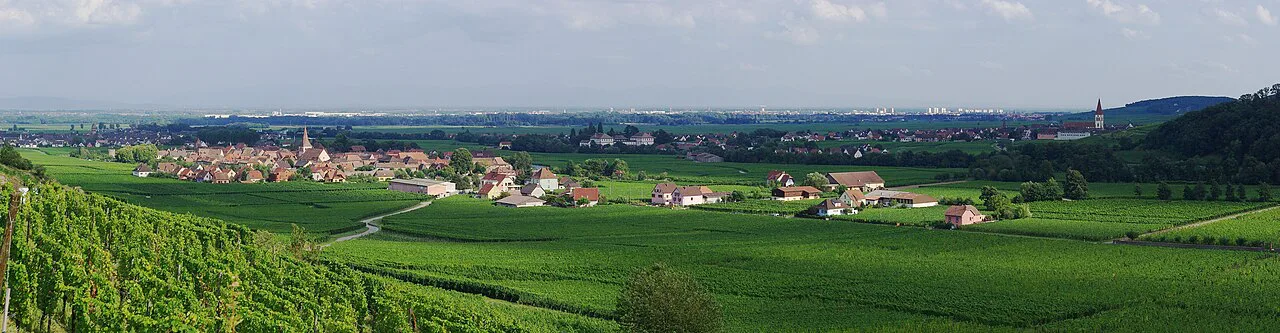
The most efficient version of this day pairs one morning appointment with an afternoon in Eguisheim, whose circular medieval streets are pleasant to walk without booking anything. Wintzenheim lies nearby too, which matters if you want to see where the Hengst and Clos de la Faille parcels are. Keep the number of scheduled tastings to two at most.
Eat lunch in one of the villages rather than at the estate, and leave a clear gap between a tasting and the drive back. Alsace's winstubs serve substantial local food, and a proper meal is the simplest way to pace a day that involves several pours.
Harvest usually falls in early autumn, and the weeks around it are the busiest of the year for small estates. If you travel then, book further ahead than you would in spring, and expect to be asked to come at a specific time rather than whenever suits you.
Practical Planning Before You Travel
Settle four questions before booking transport: the date and time the estate can receive you, whether the tasting includes a cellar visit, the number of wines poured, and whether children or non-drinkers in your group can come along. Each answer changes how you structure the day and whether you need to plan a second stop.
Prices for tastings and for bottles bought at the cellar door are set by the estate, and published figures vary by cuvée and format. Rather than relying on retail listings from other countries, ask for the current fee and the range of bottle prices when you book, and remember that shipping wine home is a separate cost from buying it on the spot.
Do not build the day around a specific vintage or bottling. Availability shifts each year and some cuvées sell out quickly, so treat the lineup as a starting point and let the estate recommend what is open when you arrive.
One person in the party should stay sober if you are driving yourselves. Spittoons are standard at Alsace tasting counters and using them is normal rather than rude, while a designated driver, a taxi or a guided tour removes the question entirely.
Plan Your Visit
Domaine Albert Mann is a strong anchor for a southern Alsace wine day from Colmar: a serious family estate in Wettolsheim, minutes from Eguisheim, with five Grand Cru sites and a grape range worth exploring beyond the obvious Rieslings. Book ahead, ask for the Auxerrois and the Pinot Noir, and confirm the current visit details directly with the estate before you travel.
Keep the itinerary small, choose your transport before you leave Colmar, and leave room for lunch between tastings. That combination, more than a long list of producers, is what makes a wine day in Alsace work.
Frequently Asked Questions
Where is Domaine Albert Mann located?
The estate is in Wettolsheim, a village a few kilometers southwest of Colmar in southern Alsace, close to Eguisheim and Wintzenheim. Its vineyards extend into several surrounding communes where it holds Grand Cru parcels.
Do you need an appointment to taste at Domaine Albert Mann?
Small Alsace estates typically receive visitors by arrangement rather than keeping public hours, so contact the domaine in advance with your dates, party size, preferred language and the wines you want to try. Confirm the arrangement directly, since visitor policies change.
What wines is Domaine Albert Mann known for?
Riesling, Pinot Gris and Gewurztraminer dominate the plantings, with Pinot Blanc and Auxerrois also significant, alongside smaller amounts of Pinot Noir and Muscat. The estate also makes Crémant d'Alsace and late-harvest bottlings in limited quantities.
Which Grand Cru sites does Domaine Albert Mann farm?
The domaine's five Grand Cru holdings are Schlossberg in Kaysersberg, Furstentum in Kientzheim, Hengst in Wintzenheim, Pfersigberg in Eguisheim and Steingrubler in Wettolsheim. It also farms lieu-dit sites and the Clos de la Faille monopole.
Is Domaine Albert Mann biodynamic?
The Barthelmé brothers began working biodynamically in 1997 and the whole vineyard has been farmed that way since 2010 according to published profiles. Ask in the tasting room how the practice shapes a particular vintage if you want the detail.
How do you get to Wettolsheim from Colmar without a car?
A taxi is quick and practical, and cycling on the flat vineyard roads works well in good weather with bikes rented in Colmar. A guided tour removes the logistics entirely at the cost of a fixed itinerary.
Sources
Notes for your next wine trip
Optional updates to our winery and wine-town guides.
You might also like
Continue reading
More guides you'll find useful