Alsace Wine Route from Colmar: Villages and Tasting Guide
Plan the Alsace Wine Route from Colmar: how the 170-km trail is laid out, which villages to group, and how to taste by bus, bike or tour without driving.
On this page
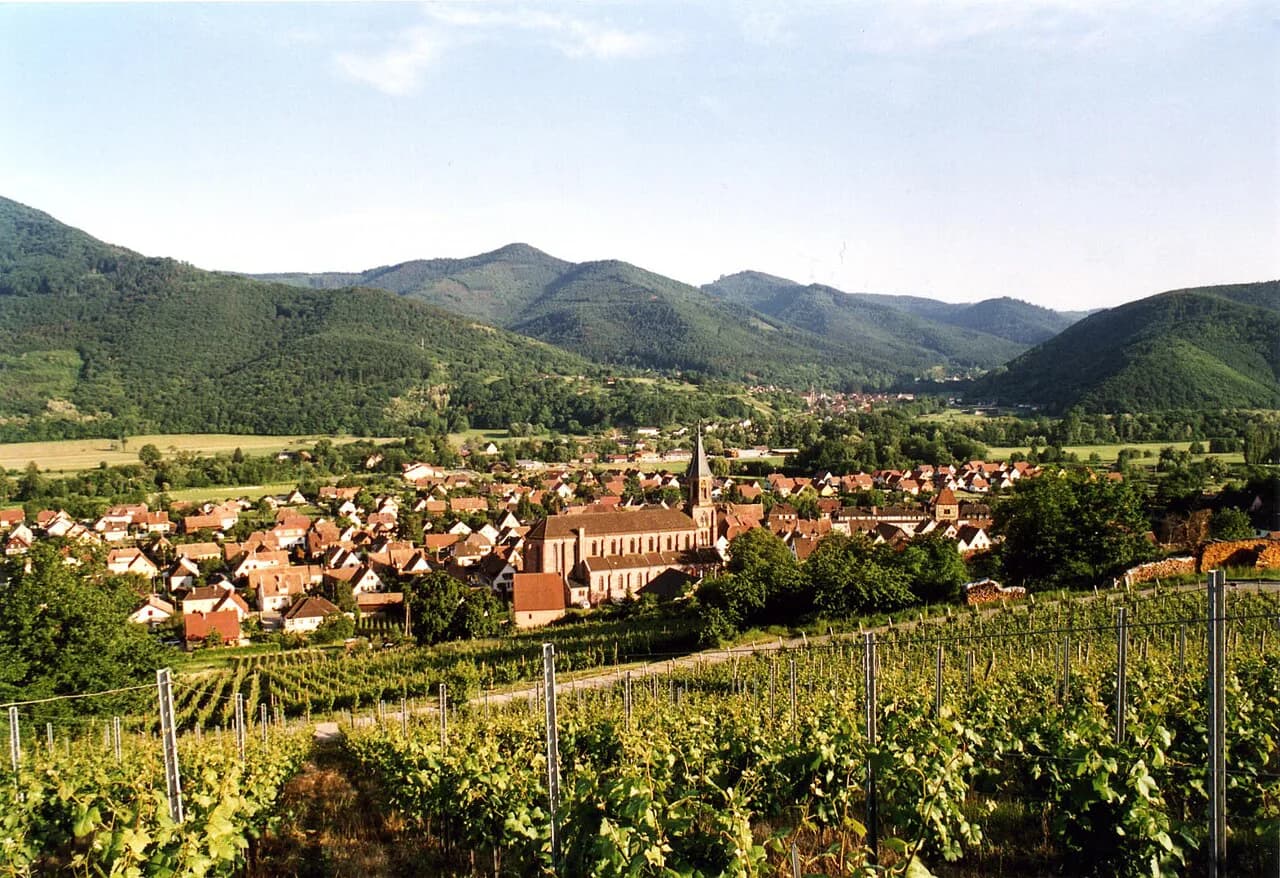
The Alsace Wine Route, or Route des Vins d'Alsace, is a signposted trail of roughly 170 km running along the eastern foothills of the Vosges, from Marlenheim in the north to Thann in the south, and it threads through the villages and towns that make Alsace one of France's most visited wine regions. Colmar sits near the middle of that line, which is why so many travelers use it as the base for wine tasting in Colmar and the surrounding villages rather than relocating every night.
The trail's official tourism site describes the route as a north-to-south itinerary designed to be taken at your own pace, with stops where and whenever you like. The regional tourism board confirms the 170-km length and the Marlenheim-to-Thann endpoints, and adds that the route runs close to TGV stations and TER regional rail links, which matters if you plan to taste without a car.
How the Route Is Laid Out and Which Stretch to Prioritize
Think of the route as a spine with clusters of villages hanging off it. The northern stretch begins at Marlenheim, near Strasbourg, and works down through Obernai, Ribeauvillé and Hunawihr toward the central section around Riquewihr, Kaysersberg, Eguisheim and Colmar, before continuing south to Thann. On a short trip you do not need the whole line: the villages within roughly 15 to 25 km of Colmar hold the densest concentration of cellars and the easiest transport links. The same cluster-by-cluster approach is worth applying to wine tasting in Reims if you are weighing Champagne against Alsace for a future trip.
A one-day visit is best spent on two adjoining villages rather than racing the length of the trail. A long weekend gives you the central circuit plus one northern day toward Ribeauvillé and Obernai. The tourism board's own maps and the interactive route map on the wine route site are the most reliable planning tools for distances between villages, since road layouts and one-way streets in the old centers make straight-line estimates misleading.
If you are driving the full route rather than sampling it, a source writing a five-day car itinerary covers Colmar, Eguisheim, Kaysersberg, Riquewihr, Obernai and Strasbourg in about 104.5 km of driving. That pace leaves room for cellar visits and village walks. For a wine-focused trip, two or three base days in Colmar with shorter loops usually deliver more tasting time than a continuous drive.
The Grapes and Styles to Know Before You Book
Alsace is unusual in France for labeling most wines by grape variety rather than by village appellation. The core white grapes are Riesling, Gewurztraminer, Pinot Gris, Muscat, Pinot Blanc and Sylvaner, and the region also produces Pinot Noir, mostly as a pale red or rosé. Crémant d'Alsace is the local sparkling wine, and it is often made from Pinot Blanc or Pinot Noir.
Grand Cru designations refer to specific named vineyard sites rather than to a producer, so the same village can offer several Grand Cru bottlings from different domaines. Schlossberg, above Kaysersberg, and Brand near Turckheim are among the Grand Cru names you will see most often on labels and tasting lists in this central section. Recognizing the site name helps you compare two domaines on even terms when you book.
The regional tourism board notes that Alsace grows seven grape varieties plus Grand Cru wines, and describes the style as fresh and aromatic. Because most Alsace whites see little or no new oak, the grape's own character dominates the glass. If you have time for only one cellar appointment, pick a domaine that pours a broad varietal range so you can compare Riesling and Gewurztraminer side by side.
Colmar as a Base: Orient Yourself Before Heading into the Villages
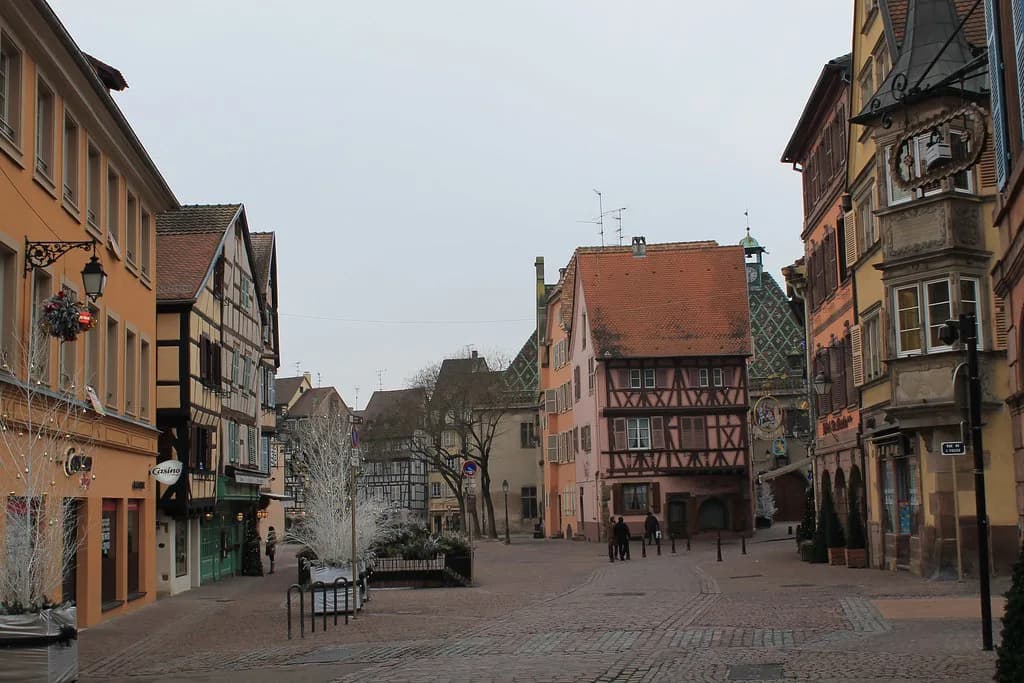
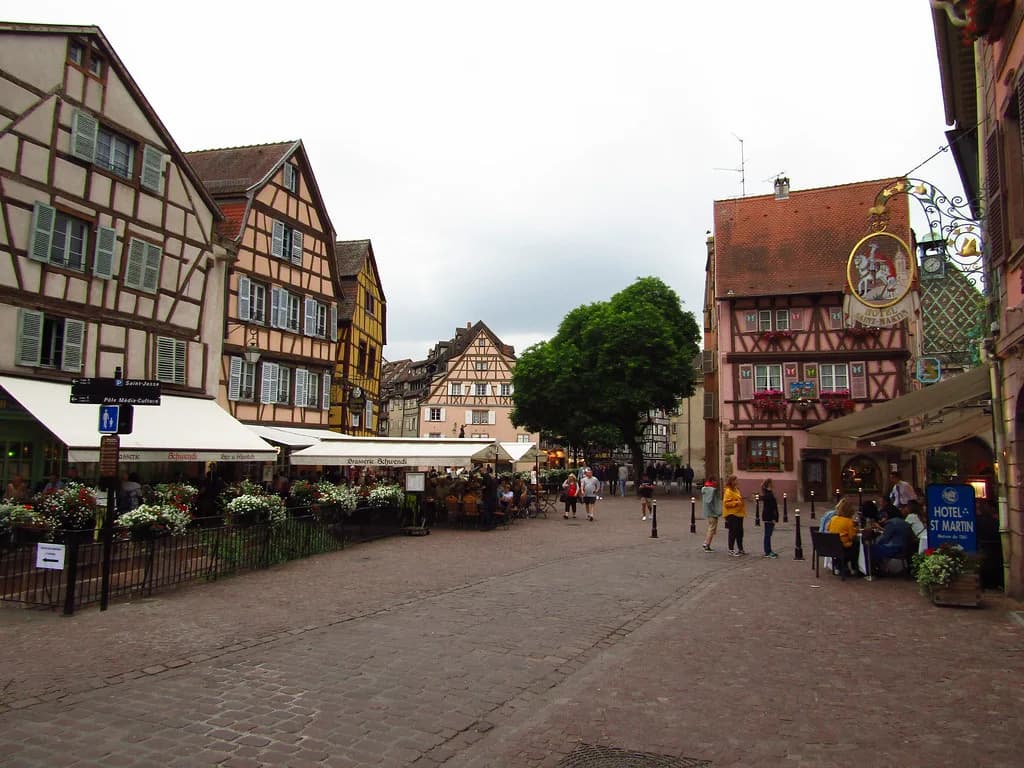
Colmar rewards an hour of orientation before you head into the vineyards. The Museum of Alsatian Wines, near the cathedral, uses a multimedia walkthrough to explain the region's history and grape varieties, and pours some wines. Close by, the Domaine Viticole de la Ville de Colmar on the Grand Rue is a city-run wine merchant where you can taste and buy before committing to village appointments.
Both of these are in the compact old town, so you can pair them with a walk along the canals of Little Venice without a car. Use the visit to note which producers' bottles you want to taste at the source, then book those domaines for the following day. This is also the moment to sort out transport: Colmar's station is on the TER network, and the wine route tourism site notes that its seasonal convertible bus departs from in front of the station, reachable by regional train from Strasbourg, Mulhouse or Sélestat.
Village Group 1 — Eguisheim and the Central Circuit
Eguisheim sits about a ten-minute drive from Colmar and is one of the most rewarding short hops on the route. Its old town is built in concentric rings around the castle, with half-timbered houses and a central square that make it easy to walk. Several cellars operate within the village itself, so you can combine a tasting with a loop of the streets without moving the car.
The surrounding vineyards include the Eichberg and Pfersigberg sites, which appear on labels from Eguisheim domaines. If you want a walk between tastings, a path leads up through the vineyards and forest to the ruined Three Castles on Schlossberg hill. Allow a couple of hours for the round trip and carry water, since the climb is steady and the tasting rooms do not always have shade outside.
Practical pairing: book one Eguisheim cellar for late morning, walk the village and eat lunch there, then return to Colmar or continue to a second appointment nearby. This is the day to leave slack in the schedule, because village traffic and parking in the old centers can eat into a tight itinerary.
Village Group 2 — Kaysersberg and Riquewihr
Kaysersberg and Riquewihr sit north-west of Colmar and pair naturally on one day. Kaysersberg has a compact historic center, a fortified bridge and the ruins of an imperial castle above the town, and it gives its name to the Schlossberg Grand Cru. Riquewihr is a walled village surrounded by vines, with a long main street of shops and tasting rooms inside the walls.
Two named cellars confirm visits in this pair of villages. In Kaysersberg, Domaine Bernard Haas & Fils on the Rue du Général Rieder runs vineyard tours with tastings in French and English, covers 13 hectares including Schlossberg Grand Cru vines, and requires advance online booking. About a kilometer out of town, Domaine Kirrenbourg on the Route du Vin makes the Schlossberg and Brand Grand Crus and receives visitors for tastings and shopping, also by advance booking.
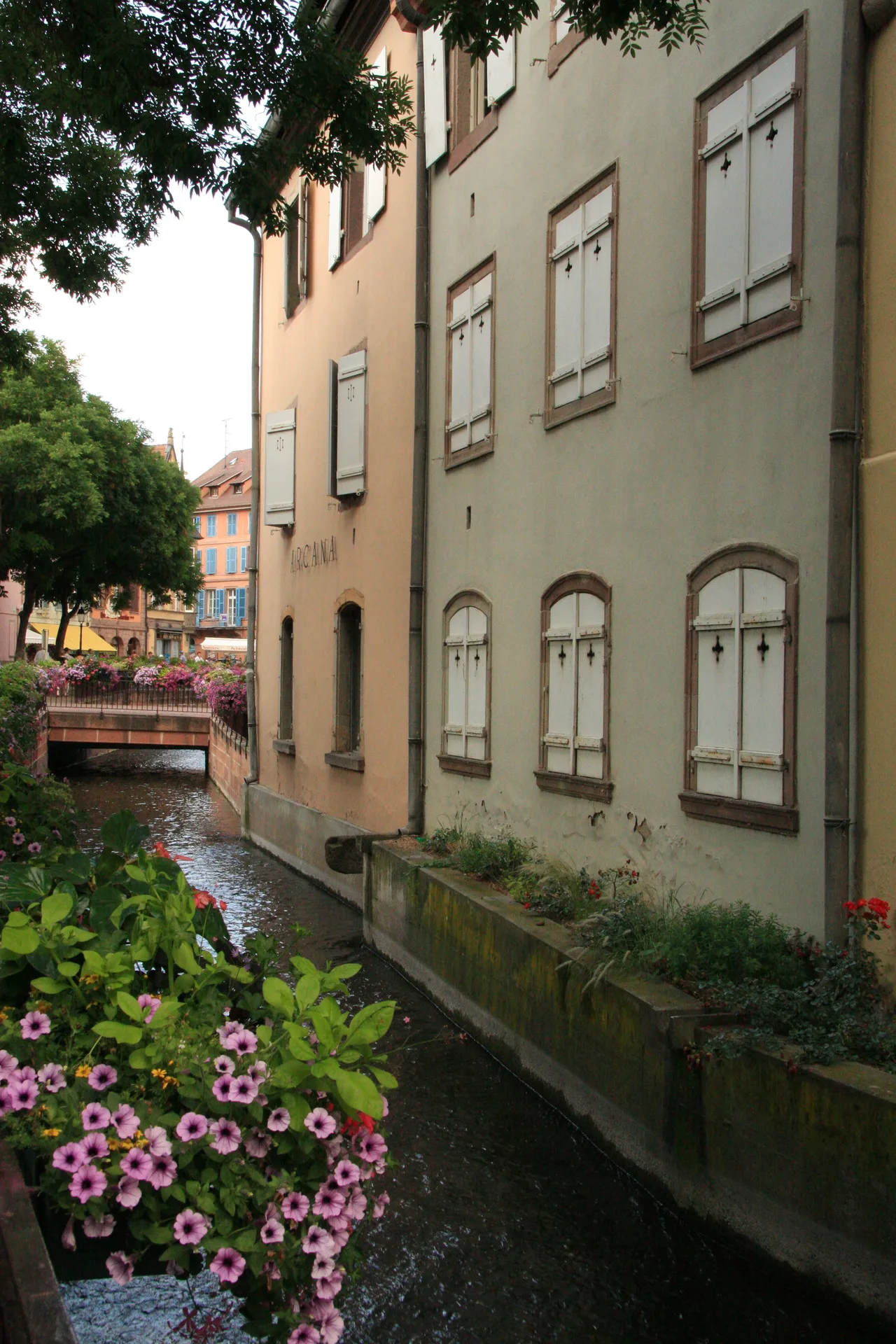
In Riquewihr, Domaine Dopff au Moulin at the entrance to the village is a long-established producer where you can taste and buy. Just beyond the walls, a waymarked trail through the vineyards of Riquewihr, Beblenheim, Bennwihr, Hunawihr and Zellenberg covers around 16 km in full; the first section toward Hunawihr makes a manageable hour-long walk between appointments.
Village Group 3 — Ribeauvillé, Hunawihr and Obernai
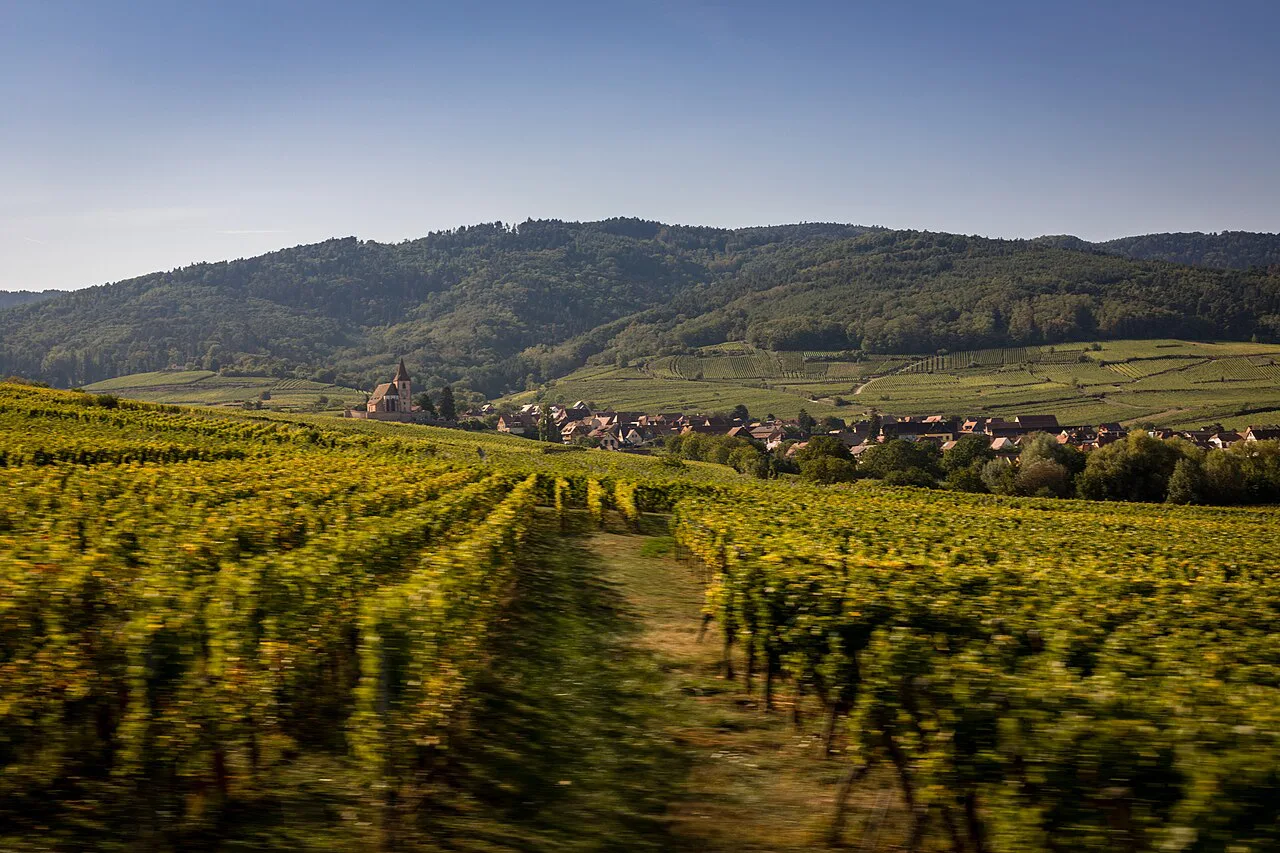
For a northern return day, chain Ribeauvillé and Hunawihr with Obernai further up the route. Hunawihr is small but has a fortified church that is one of the most photographed sights in Alsace, and it hosts Domaine François Schwach on the Route de Ribeauvillé, which runs themed wine tours including an introduction to Alsace wines and a Crémant-focused session, booked in advance. Ribeauvillé itself is a good lunch stop between the two.
Obernai adds a larger town with a belfry, a covered market and a 16th-century well on the Place du Marché, and it makes a natural turnaround point if you are using Colmar as a base. The wine route tourism site also lists Obernai as the setting for La Tablée des Vignes, a communal table event in the market square where regional dishes are served with Alsace wines, which can fill an evening after a day of tastings.
Named Cellars and How Booking Actually Works
Alsatian wine is largely a family-domaine business, and many small producers receive visitors by appointment rather than keeping open tasting-room hours. Larger domaines and village wine merchants are more likely to welcome walk-ins, but the reliable approach is to contact the domaine first with your date, party size and language preference. Ask explicitly how many wines are poured, whether a cellar tour is included, how long the visit lasts and whether food is served, because these vary widely between producers and often between seasons.
Beyond the named domaines above, the regional tourism board's cellar and winery listings are the best starting point for building a shortlist, since they are maintained by the tourist office and include contact details. Cross-check any cellar you find on a third-party booking site against the producer's own page before you commit, especially for groups larger than four, which often need separate arrangements.
For anyone who wants the logistics handled, organized wine tours from Colmar bundle transport with two or three cellar visits and remove the appointment work entirely. The trade-off is less flexibility: you taste at the estates the tour company works with and move on the group's schedule rather than lingering over a favorite bottle.
Getting Around Without Driving
The TER regional rail network links Colmar with Strasbourg, Mulhouse and Sélestat, and the regional tourism board notes the wine route runs close to these stations and train links. Trains serve the bigger towns well but not the wine villages themselves, so rail works best for getting to Colmar or Strasbourg and then switching to a bus, bike or tour for the vineyard legs.
The wine route tourism site promotes two car-free options in particular. One is the Kutzig, a red convertible hop-on hop-off bus that runs seasonally along the route and departs from in front of Colmar's station; confirm the current season's operating window and stops on the site before relying on it, since the published window covers a past year. The other is the Véloroute du Vignoble d'Alsace, a signposted vineyard cycle route, with bike rental available in Colmar and the larger villages.
A designated driver, a tour, or a combination of train and bike solves the drinking-and-driving problem cleanly. If you do drive, use the spittoons that most tasting rooms provide, and plan the day so the driver tastes last or not at all.
Independent Versus Guided: The Real Trade-Offs
Going independently gives you the freedom to stay longer at a domaine you like and to follow a tip from a winemaker to a neighbor's cellar. It also means you handle parking in medieval village centers, book each appointment yourself, and absorb the cost of a rental car or taxi if public transport does not reach your chosen villages.
A guided tour shifts those logistics to the tour company and typically includes transport between two or three domaines, which suits anyone who wants to taste without worrying about the drive. The cost is itinerary control: you will not choose every cellar, and the pace is set by the group. For a first visit, a half-day tour plus one independent village day is a good compromise.
When to Go: Harvest and the Festival Calendar
The wine route tourism site describes wine and harvest festivals running from early August to mid-October, when villages hold music, food and wine events in the streets and squares. That window overlaps with the harvest itself, when producers are busiest and some cellars restrict visits. If you want festival atmosphere, book accommodation and cellar appointments well ahead; if you want quiet tastings, aim for late spring or early summer.
Outside the harvest, many domaines still receive visitors through the year, including weekends, though smaller family estates may close for holidays in winter or during the picking. Check current opening days with each estate when you make contact. Autumn also brings gourmet walks through the vineyards, where each stage pairs an Alsace wine with a local specialty.
A Sample Two-Day and Five-Day Split
With two days from Colmar, use day one for Eguisheim and a central cellar appointment, returning via a vineyard walk if the weather holds. Use day two for Kaysersberg in the morning and Riquewihr in the afternoon, with a booked tasting at a domaine in each village. This covers the densest cluster and keeps driving or cycling time under half an hour per leg.
With five days, add a northern day for Ribeauvillé, Hunawihr and Obernai, and a southern day toward Thann for a change of scenery and a quieter stretch of the route. Keep one day flexible for a tour or a bike ride on the Véloroute, and leave a Colmar day for the wine museum and city merchants at the start or end. That structure gives you village variety without backtracking along the same road repeatedly.
Plan Your Visit
The Alsace Wine Route works best when you treat it as a set of village clusters rather than a single road to tick off. Anchor yourself in Colmar, prioritize the central villages around Eguisheim, Kaysersberg and Riquewihr, and save the northern stretch for a second or third day. Book cellar visits directly with the domaines, confirm the current season's transport options before you arrive, and if you plan to drive, plan the day so the driver stays under the legal limit.
Frequently Asked Questions
How long does it take to drive the Alsace Wine Route?
The full signposted route runs roughly 170 km from Marlenheim to Thann, and driving it end to end takes a few hours without stops. Realistically, plan at least two or three days if you want to visit villages and taste along the way, since the old centers and vineyard roads slow you down. A five-day car itinerary covering Colmar, Eguisheim, Kaysersberg, Riquewihr, Obernai and Strasbourg covers about 104.5 km of driving.
Which towns are best to visit on the Alsace Wine Route?
For a first trip from Colmar, prioritize Eguisheim, Kaysersberg and Riquewihr for the combination of scenery and cellar access. Add Ribeauvillé, Hunawihr and Obernai on a northern day, and consider Thann if you want to explore the southern end. Larger towns such as Colmar and Strasbourg work as bases and for wine museums and merchants rather than as vineyard stops.
Can you do the Alsace Wine Route by train or bus without a car?
Regional TER trains connect Colmar with Strasbourg, Mulhouse and Sélestat, but they do not serve the wine villages directly. The wine route tourism site lists a seasonal convertible hop-on hop-off bus departing from in front of Colmar's station and a signposted vineyard cycle route with bike rental in the area. Confirm the current season's bus schedule and stops before you rely on it.
Is the Alsace Wine Route worth visiting outside harvest season?
Yes. Many domaines receive visitors year-round, and spring and early summer bring quieter tasting rooms and easier booking. The trade-off is that harvest, roughly September into October, offers festival atmosphere and the chance to see picking in progress but comes with busier villages and less availability at small estates. Winter visits are possible but require more advance planning around producer holidays.
Do Alsace wineries require appointments for tastings?
Many small family domaines receive visitors only by appointment, while larger domaines and village wine merchants often accept walk-ins during normal hours. Contact each domaine ahead with your date, party size and language, and ask how many wines are poured, whether a cellar tour is included and whether food is served. Check current details with the winery.
What wines should I taste on the Alsace Wine Route?
Start with Riesling, Gewurztraminer, Pinot Gris and Pinot Blanc to understand the region's range, then try Muscat and Sylvaner if a domaine offers them. Ask for a Pinot Noir to see the pale, light style made here, and finish with a Crémant d'Alsace to compare sparkling methods. Grand Cru bottlings such as Schlossberg or Brand show what the named vineyard sites contribute.
Sources
Notes for your next wine trip
Optional updates to our winery and wine-town guides.
You might also like
Continue reading
More guides you'll find useful