Domaine Weinbach Guide: Colmar to the Kaysersberg Estate
Plan a Domaine Weinbach visit from Colmar, from the estate's address and appointment culture to wines, groups, transport and village grouping.
On this page
Domaine Weinbach is one of the names travelers ask about first when they plan a wine day from Colmar. It occupies a walled site in the valley above Kaysersberg, close enough to Colmar for a half-day and easily combined with the villages of the central Alsace route. This guide covers what the estate publishes about visiting, which wines you are likely to encounter, how to make a booking request that gets answered, and the honest trade-offs between train, bus, taxi, bike and tour.
Where Domaine Weinbach is
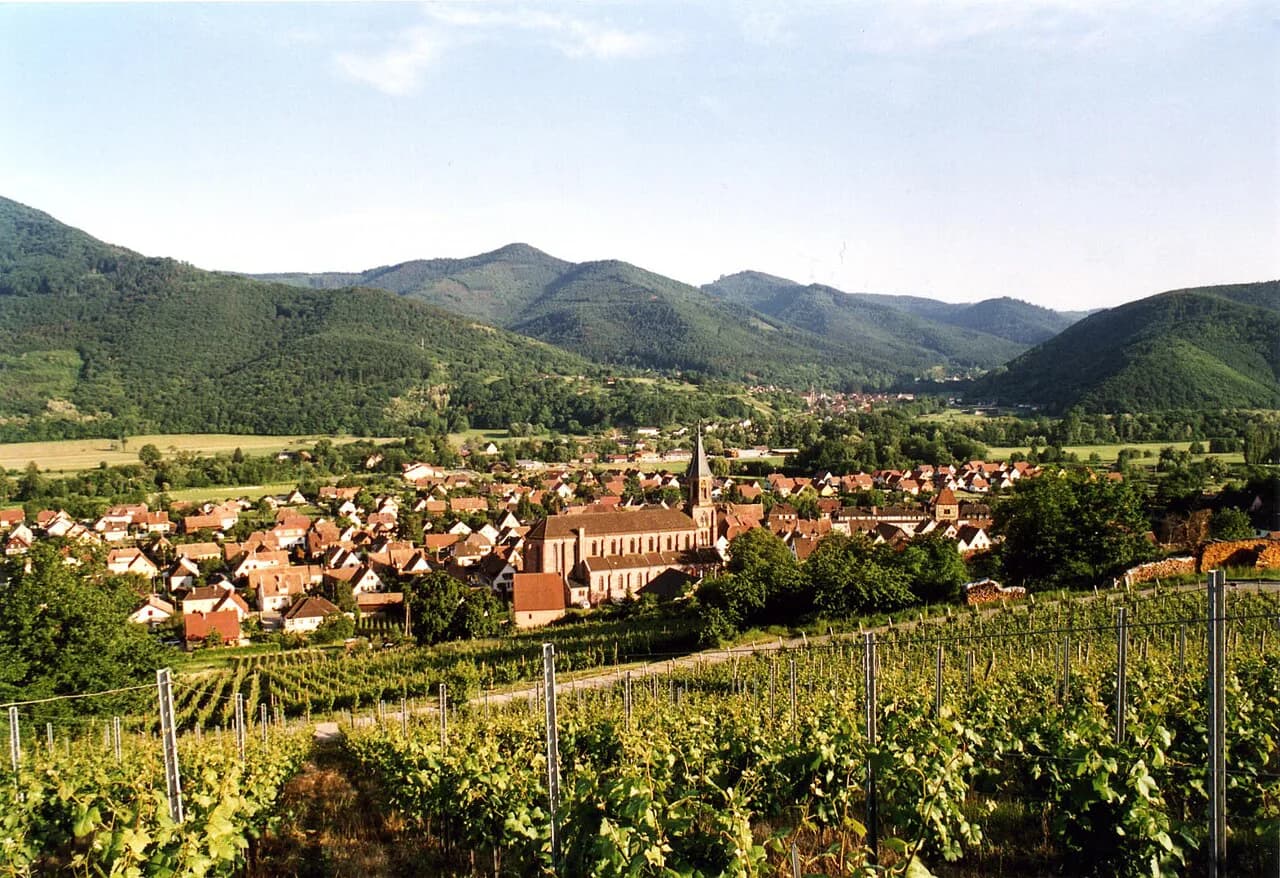
The estate's address on the Alsace Wine Route listing is 25 Route du Vin, 68240 Kaysersberg Vignoble. That puts it in the vineyard valley above Kaysersberg town, not in a big city, so plan on a village-scale outing rather than an urban tasting room. Kaysersberg Vignoble is a short drive or a moderate bike ride from Colmar, and the village itself is one of the prettiest stops on the central stretch of the route.
Because the address sits on the Route du Vin rather than in the town center, saying "Kaysersberg" is usually enough for a taxi or a GPS. If you come by bike from Colmar, expect a gradual climb into the vineyards, so leave buffer time before a fixed appointment. On the way back, gravity does the work.
Why Domaine Weinbach matters in Alsace
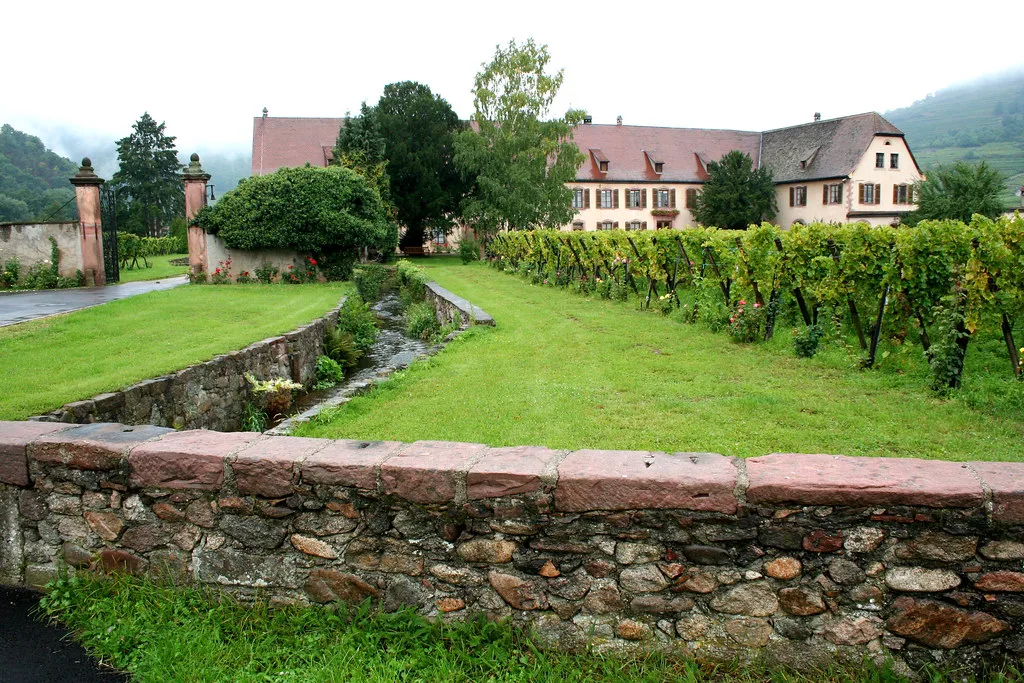
Domaine Weinbach grew out of a monastic estate, and the walled vineyard around the house, the Clos des Capucins, still defines the property. The Faller family acquired the estate at the end of the nineteenth century, and the domaine is now run by Catherine Faller with her sons. The site was farmed organically for two decades and biodynamics were introduced in 1998, with the whole estate certified by 2005, according to the importer's producer profile.
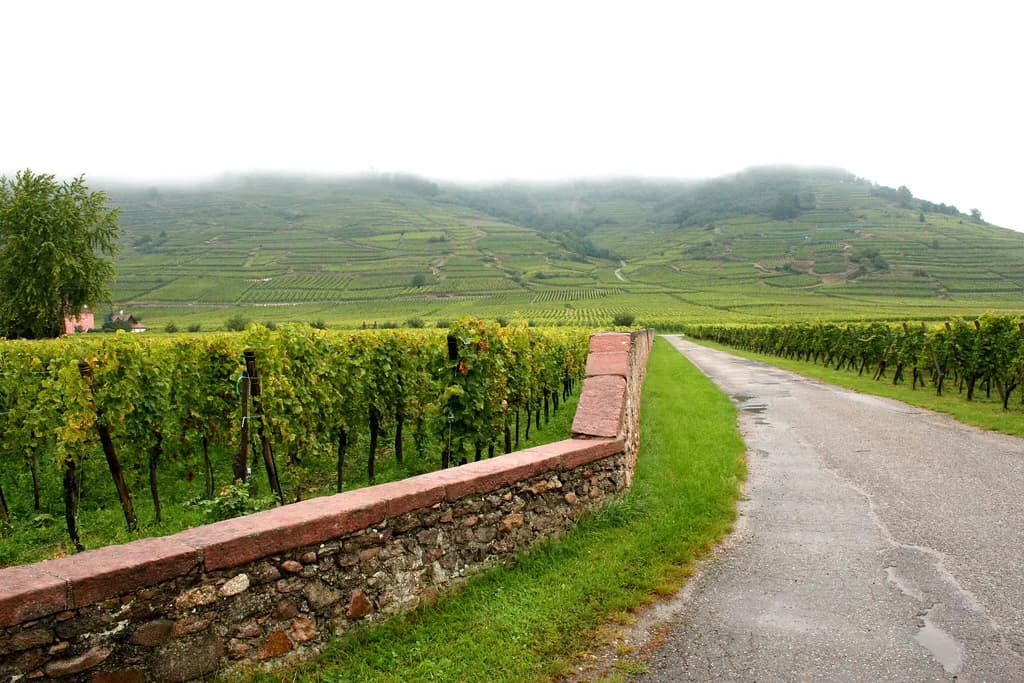
The estate holds roughly 29 hectares in the Kaysersberg valley, around a third of them on the steep south-facing slopes of Grand Cru Schlossberg. Other holdings include Grand Cru Furstentum, Mambourg and Marckrain, plus the Altenbourg lieu-dit below Furstentum. That range explains why a single visit can feel like a tour of Alsace terroirs rather than a single-vineyard tasting.
Wines to expect on a visit
Alsace wines are labeled by grape variety, and the Weinbach range covers the region's core set: Riesling, Pinot Gris, Gewurztraminer, Muscat, Pinot Blanc, Sylvaner and Pinot Noir. Estate-level bottlings sit alongside single-vineyard and Grand Cru wines, and the estate also makes late-harvest styles and selections de grains nobles in suitable years. If you only know Alsace from Riesling, ask to taste across the range, since Pinot Gris and Gewurztraminer carry much of the region's character.
A useful distinction before you go: Alsace Grand Cru is a separate appellation from plain Alsace AOC, and the estate's wines span both. The Grand Cru Schlossberg slopes suit Riesling, while marl and calcareous soils at Furstentum, Mambourg and Marckrain are associated with Gewurztraminer. Knowing this helps you steer a tasting toward what you actually want to learn.
How the visit works
The wine route listing describes the visit type simply as a tasting for private customers, and states a maximum group headcount of four. Treat four as the published ceiling rather than a booking guarantee, and assume that a tasting here is a scheduled, hosted affair, not a drop-in tasting bar. Wine shops in Colmar and the villages sell the wines if you want to taste at home instead.
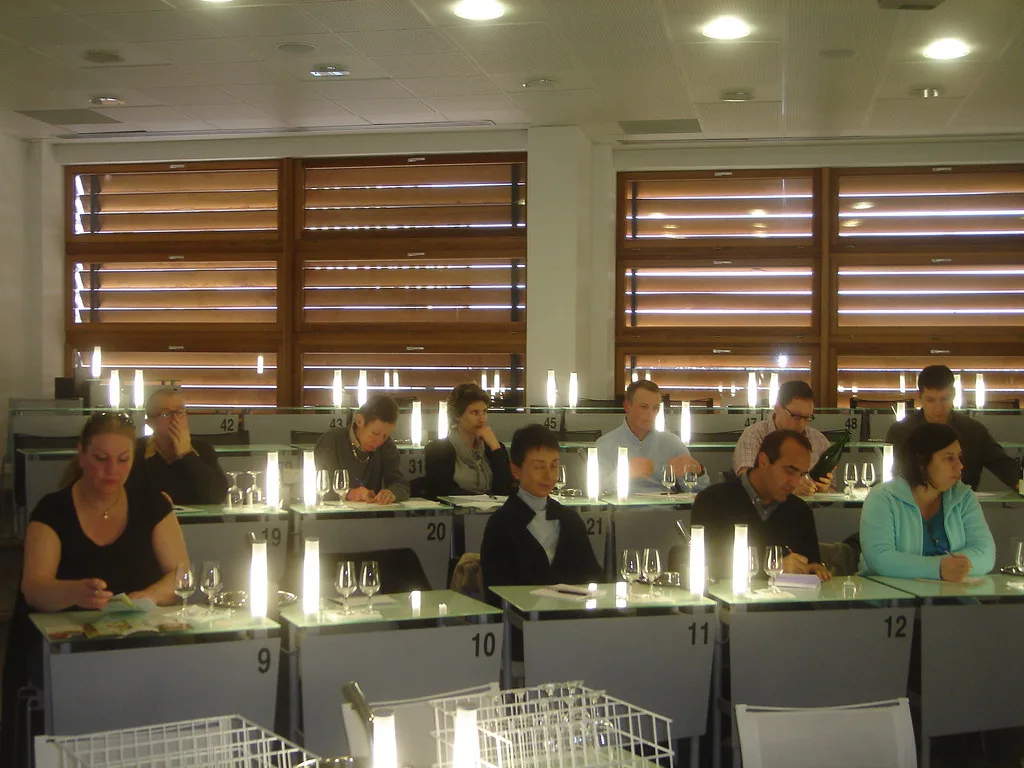
The published listing does not state tasting fees, the number of wines poured, whether a cellar tour is included, how long a visit lasts, or opening days and seasonal closures. It does carry a standard note that opening times and days can change, so confirm the specific day and time when you book rather than arriving on the strength of a listing alone. For a fuller picture of how tastings work around Colmar, our guide to wine tasting in colmar covers the format and etiquette locally.
Booking the visit
The listing gives a phone number and an e-mail contact form for the estate, so a booking request can reasonably go by e-mail or phone. State the date, your preferred time window, the number of people (remembering the published maximum of four), the languages you speak, and whether you want to focus on Riesling or the fuller-bodied varieties. Ask explicitly how many wines are poured, whether the cellar is part of the visit, how long it lasts, and what it costs, since none of this is published.
In Alsace, small family domaines work by appointment during harvest and often for much of the year, so a request sent well ahead is more likely to succeed. If your dates are fixed around a weekend or a public holiday, ask early and have a second estate in mind. One polite follow-up is enough; repeated e-mails rarely speed things up.
Getting there from Colmar without driving
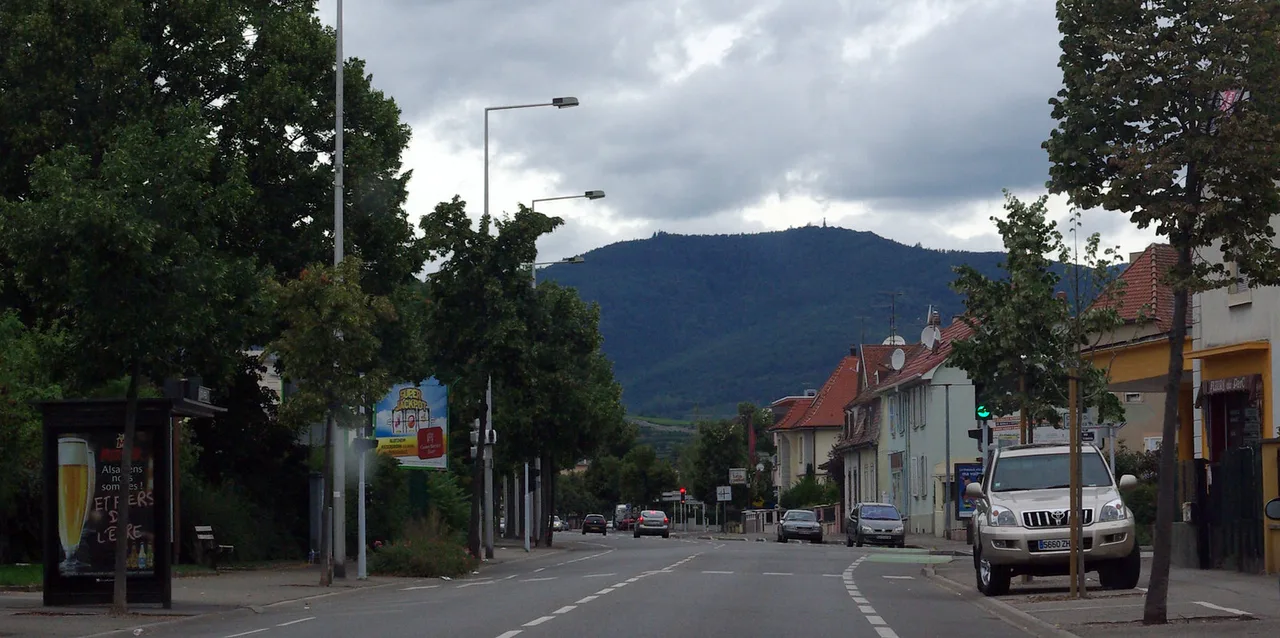
The simplest non-driving option is the regional train from Colmar toward the Kaysersberg valley, then a taxi or a rented bike for the final climb up to the Route du Vin. Local bus services link Colmar with the wine villages on the route, but schedules vary by season, so check the timetable for your date rather than relying on an hourly service. A taxi from Colmar is the most predictable way to arrive on time for a fixed tasting slot.
Cycling is realistic for fit travelers based in Colmar, with the vineyards offering the climb and the return offering the descent. Guided wine tours from Colmar solve the logistics entirely, with a driver and a planned circuit of estates. Our colmar wine tours page sets out how those circuits are organized.
Whatever you choose, a driver should not taste. Use the spittoons at the estate, book a tour with a driver, or rely on public transport, and keep the day comfortable for everyone.
Grouping your day: Kaysersberg, Kientzheim, Riquewihr and Ribeauville
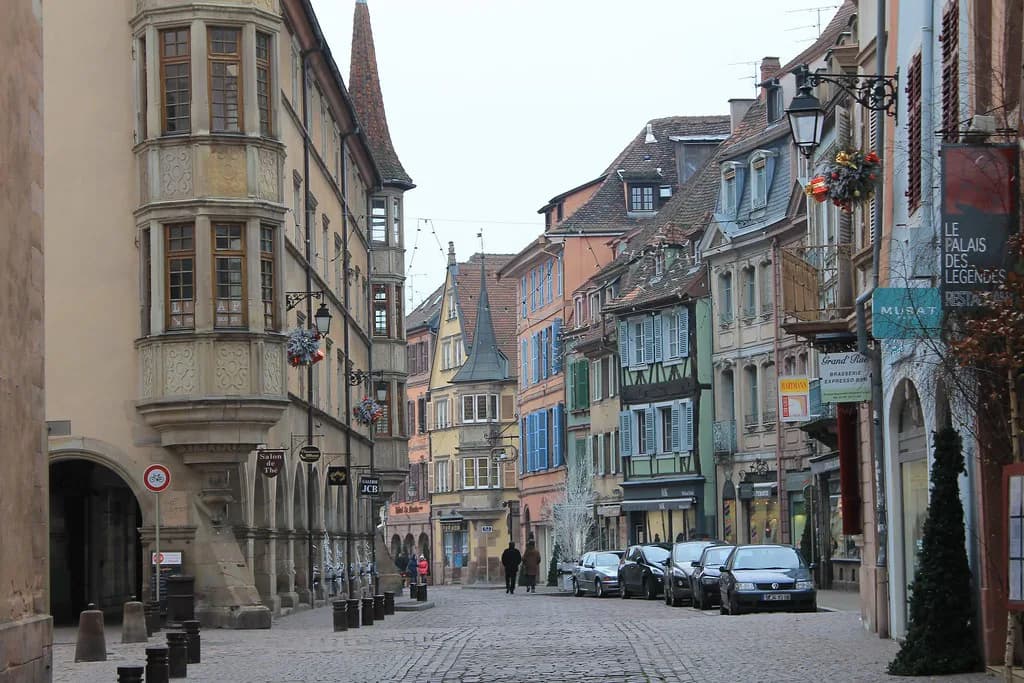
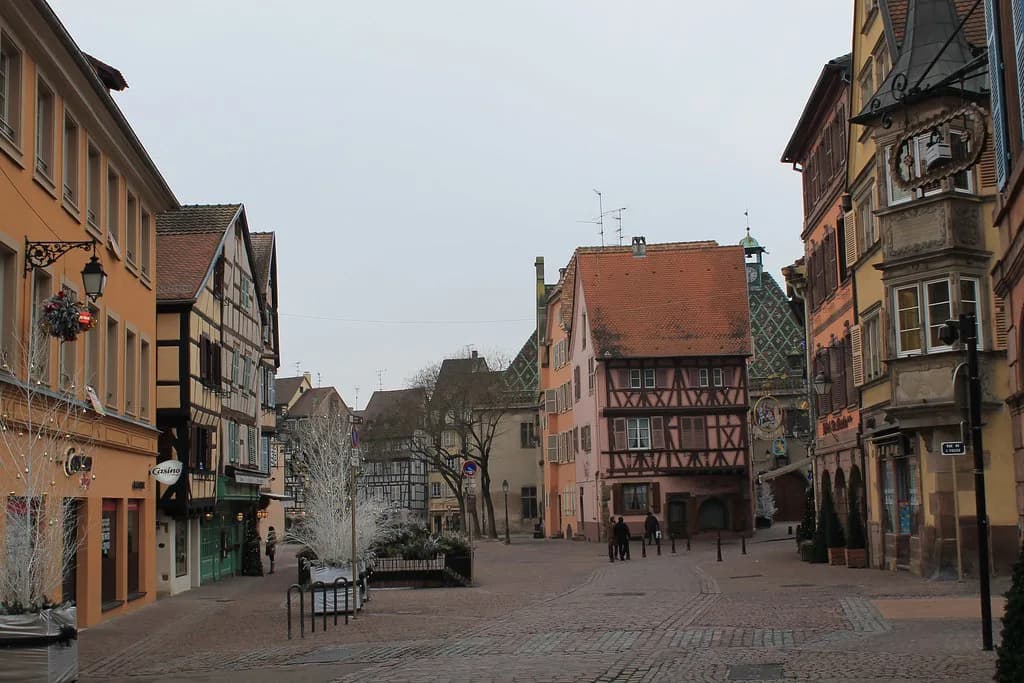
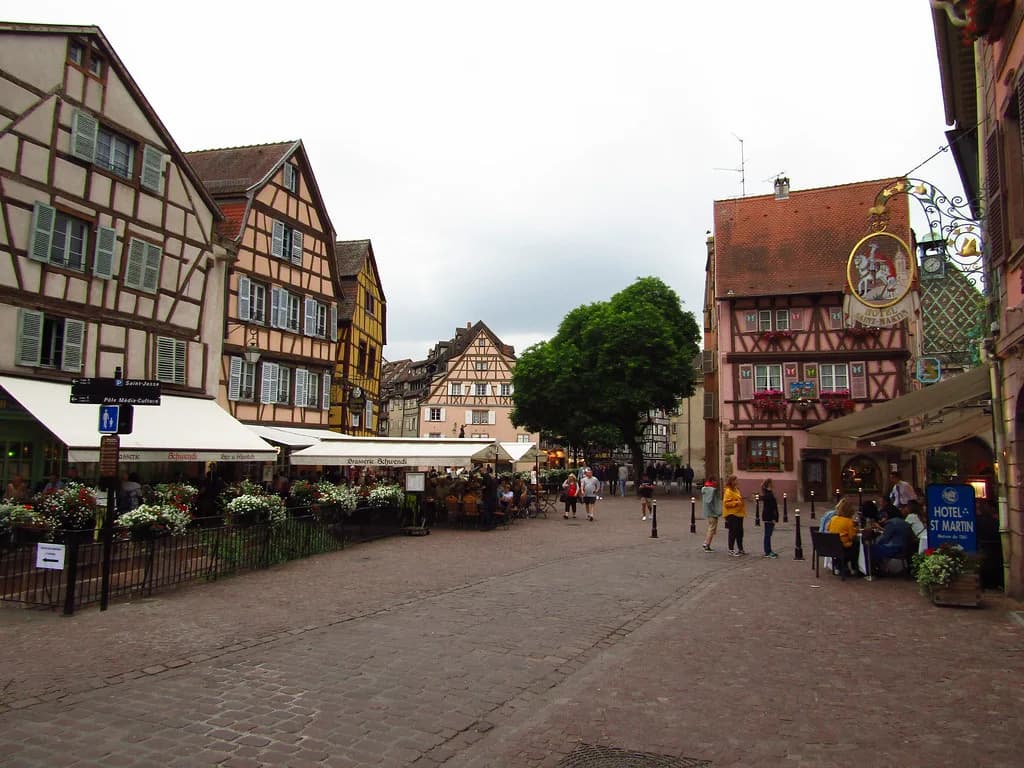
Domaine Weinbach slots neatly into a loop of the central wine route. Kaysersberg and Kientzheim sit practically next door, while Riquewihr and Ribeauville are a short drive or a solid bike ride further north. A sensible plan is one hosted tasting at Weinbach, then a walk and lunch in Kaysersberg, with time to browse cellars and shops in Riquewihr afterward.
Trying to squeeze in too many estates is the classic mistake in Alsace. Each tasting takes time, the roads between villages are slow, and the villages themselves reward a stroll. Two estates and two villages make a full day from Colmar; three tastings usually means rushing past everything in between.
Independent trip versus guided tour
Going independently gives you control over timing and lets you linger in the villages, but it puts the transport problem on you, especially in the late afternoon when buses thin out. A tour costs more upfront and follows someone else's schedule, yet it removes the worry about a driver who cannot taste and about finding a taxi from a vineyard road. For a single estate with a fixed appointment, a taxi or bike often works out well; for several estates across the route, a tour is the more practical buy. If you are weighing a different region entirely, the same city-versus-village logistics come up in wine tasting in Reims.
If you book independently, decide your transport before you confirm the tasting, not after. The winery will want a specific arrival time, and the train, bus and taxi options near Kaysersberg do not always align with a relaxed tasting slot.
When to go
Harvest in Alsace generally runs from late August into October, depending on the year and the grape, and this is when small domaines are at their busiest. If you visit during that window, request an appointment far in advance and expect a shorter, more focused visit. Outside harvest, the villages are quieter and appointments are easier to arrange, though some domaines restrict visits in the depths of winter.
Weekdays are the calmer bet for tastings and village traffic alike, while weekends bring day-trippers from Strasbourg and Colmar. Late-harvest and selections de grains nobles wines only exist in certain years, so do not plan a trip around tasting them; ask what the current releases are when you book.
Practical budget notes
The wine route listing does not publish a tasting fee for Domaine Weinbach, so budget for a modest per-person charge and confirm it when you request your appointment. For a sense of how estate visits compare around Colmar, our overview of alsace wineries explains the common formats.
Bottle prices are a separate matter from tasting fees. Wine-searcher lists an average retail price for Domaine Weinbach Pinot Blanc Reserve, but that reflects the secondary market rather than what the estate charges at the door. If you plan to buy bottles, ask about current release prices and shipping when you visit.
A dog-friendly visit to Domaine Weinbach?
Domaine Weinbach is located at 25 Route du Vin, 68240 Kaysersberg Vignoble. The winery is in the valley of Kayserberg, surrounded by the original 9th Century monastic vineyard, the Clos du Capucin. If you are visiting Colmar with a dog, you might wonder whether the estate is suitable for your four-legged companion. The information available about Domaine Weinbach focuses on its wines and visiting conditions but does not specifically mention dogs. The winery offers tasting for private customers, and group headcount is listed as Maxi: 4. This suggests that visits are intimate and may take place indoors, where dogs might not be allowed. To avoid disappointment, it is advisable to contact the estate directly before planning to bring your dog.
The area around Domaine Weinbach is part of the Alsace Wine Route, which passes through Kaysersberg, Kientzheim, Riquewihr, and Ribeauville. These towns are known for their picturesque streets and vineyards, which could be pleasant for walking with a dog. However, specific dog-friendly policies at the estate are not documented. Since the winery practices biodynamic farming and has been certified since 2005, the vineyards are managed without herbicides, fertilizers, chemical treatments, and insecticides since 1990. This might make the outdoor surroundings more welcoming for pets, but it does not guarantee access to the property. The best approach is to inquire in advance about bringing a dog, especially if you plan to join a tasting or tour.
In summary, while Domaine Weinbach is a renowned wine estate with a rich history, there is no explicit information about dog access. Visitors with dogs should verify the policy directly with the winery before visiting. The estate speaks German, English, and French, so you can communicate your needs. With a group headcount maximum of 4, small groups might be accommodated, but dogs are not mentioned. Plan accordingly and enjoy the surrounding Alsace Wine Route with your pet, keeping the winery visit contingent on confirmation.
Plan Your Visit
Domaine Weinbach rewards planning: the address on the Route du Vin, the appointment-based tasting format, and the published maximum of four people all shape how the day should work. Pair a single hosted tasting with Kaysersberg and one neighboring village, choose your transport before you fix a time, and confirm the specific day, duration and fee when you book.
Frequently Asked Questions
Where is Domaine Weinbach located?
The estate's Alsace Wine Route listing gives its address as 25 Route du Vin, 68240 Kaysersberg Vignoble, in the vineyard valley above Kaysersberg. That is within easy reach of Colmar by car, taxi, bike or a combination of train and taxi.
Can you visit Domaine Weinbach for a tasting?
Yes. The wine route listing describes visits as a tasting for private customers. Fees, the number of wines poured and visit duration are not published, so include those questions in your booking request.
Do you need an appointment at Domaine Weinbach?
The listing does not use the word appointment, but it presents a hosted tasting rather than a drop-in tasting bar, and the published maximum group size is four people. Contact the estate by phone or e-mail to arrange a specific date and time.
How do you get to Domaine Weinbach from Colmar without a car?
Options include the regional train into the Kaysersberg valley with a taxi or bike for the final stretch, local buses along the wine route, a taxi from Colmar, or a guided tour with a driver. Check timetables for your date, as services vary by season.
What wines does Domaine Weinbach produce?
The estate works with Riesling, Pinot Gris, Gewurztraminer, Muscat, Pinot Blanc, Sylvaner and Pinot Noir, across estate, single-vineyard and Grand Cru wines, plus late-harvest and selections de grains nobles styles in suitable years.
Is Domaine Weinbach worth visiting from Colmar?
For travelers interested in Alsace's Grand Cru sites and the Clos des Capucins, yes, especially combined with Kaysersberg and a nearby village. A small group of up to four people fits the published group limit and keeps the tasting personal.
Sources
Notes for your next wine trip
Optional updates to our winery and wine-town guides.
You might also like
Continue reading
More guides you'll find useful