Wine Tasting in Chania: Crete Wineries and Tours to Pick
Plan wine tasting in Chania with named Crete wineries near Vatolakkos and Alikampos, appointment culture, tour versus independent travel, and booking tips.
On this page
Chania sits on Crete's northwest coast, with the Akrotiri peninsula to one side and the vine-growing villages of Apokoronas folded into the hills inland. That layout is what makes the town useful as a wine base: you can spend a morning in the Old Town and still reach a winery courtyard in the afternoon. Two producer visits anchor most trips, and both sit outside the city, so the real planning question is transport rather than choice.
This guide names only wineries whose own sites confirm they receive visitors, explains what Crete's main grapes taste like in general terms, and is honest about the gaps. Tasting fees, hours and tour lengths are not published consistently, so where no figure exists you will find the question to ask rather than a guess.
Why Chania Works as a Wine Base
Western Crete's wineries cluster in two directions from Chania. Inland and slightly south lies Vatolakkos, in the Apokoronas hills; further west and south, toward Rethymno, sits Alikampos. Neither is a stroll from the Venetian harbor, so treating Chania as a base means accepting a short drive or taxi ride in exchange for restaurants, ferries and an airport on your doorstep.
The town also gives you a fallback. If a winery visit falls through or you would rather not travel after a long flight, Chania's own bars and shops let you taste Cretan bottles without leaving town. A practical split is one full day out among the vines and one evening in the Old Town, rather than trying to cram both into a single afternoon.
The Grapes and Appellations to Know
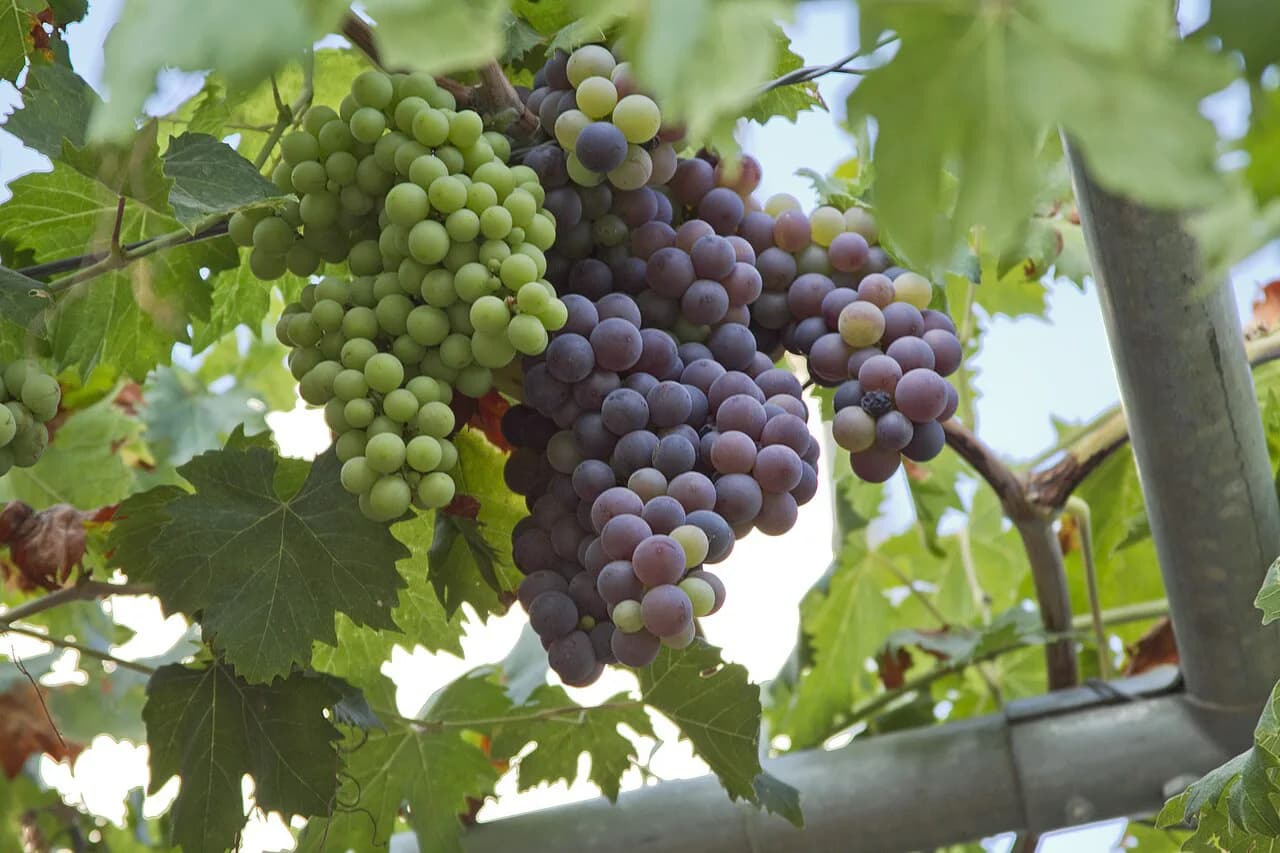
Romeiko is Chania's signature red grape, and it is unusual in that it is often vinified as a pale white wine as well as a red. Lihnos Vidiano, a white named on Dourakis' wine list, uses Vidiano, a variety more associated with the Rethymno and Heraklion side of the island. Kotsifali appears in blends such as Kudos Cuvee Kotsifali Syrah, and Muscat of Spinas shows up as a white and in sweeter styles.
If you want to understand the labeling before you arrive, think in two tiers: broad regional wines and tighter protected-origin wines tied to defined zones. Crete's structure rewards a little reading, because the same grape can appear under several designations. Knowing which village and which variety a bottle comes from tells you more than the front label's artwork.
Manousakis Winery in Vatolakkos
Manousakis Winery sits in Vatolakkos, postal code 73005, in the hills above Chania, and describes itself as a boutique operation working with organic and regenerative farming. The winery publishes a dedicated wine-tasting menu and a booking function on its site, which is the clearest signal that visits are arranged in advance rather than on impulse.
For a booking, the site lists both an email address and a phone number, and the address places it clearly within the Chania municipality rather than out toward Rethymno. That matters when you are sequencing a day: Vatolakkos pairs naturally with an Akrotiri peninsula loop or a return through the villages rather than with a long westward push.
Dourakis Winery in Alikampos
Dourakis Winery is in Alikampos, a village in the Apokoronas mountains, and its own site puts it roughly 30 minutes from Chania and 20 minutes from Rethymno. Those are the winery's stated figures rather than measured drive times, but they explain why Alikampos suits travelers moving between the two towns. The site also says the winery is open year round for tours and tastings, which is rare enough in Crete to be worth planning around.
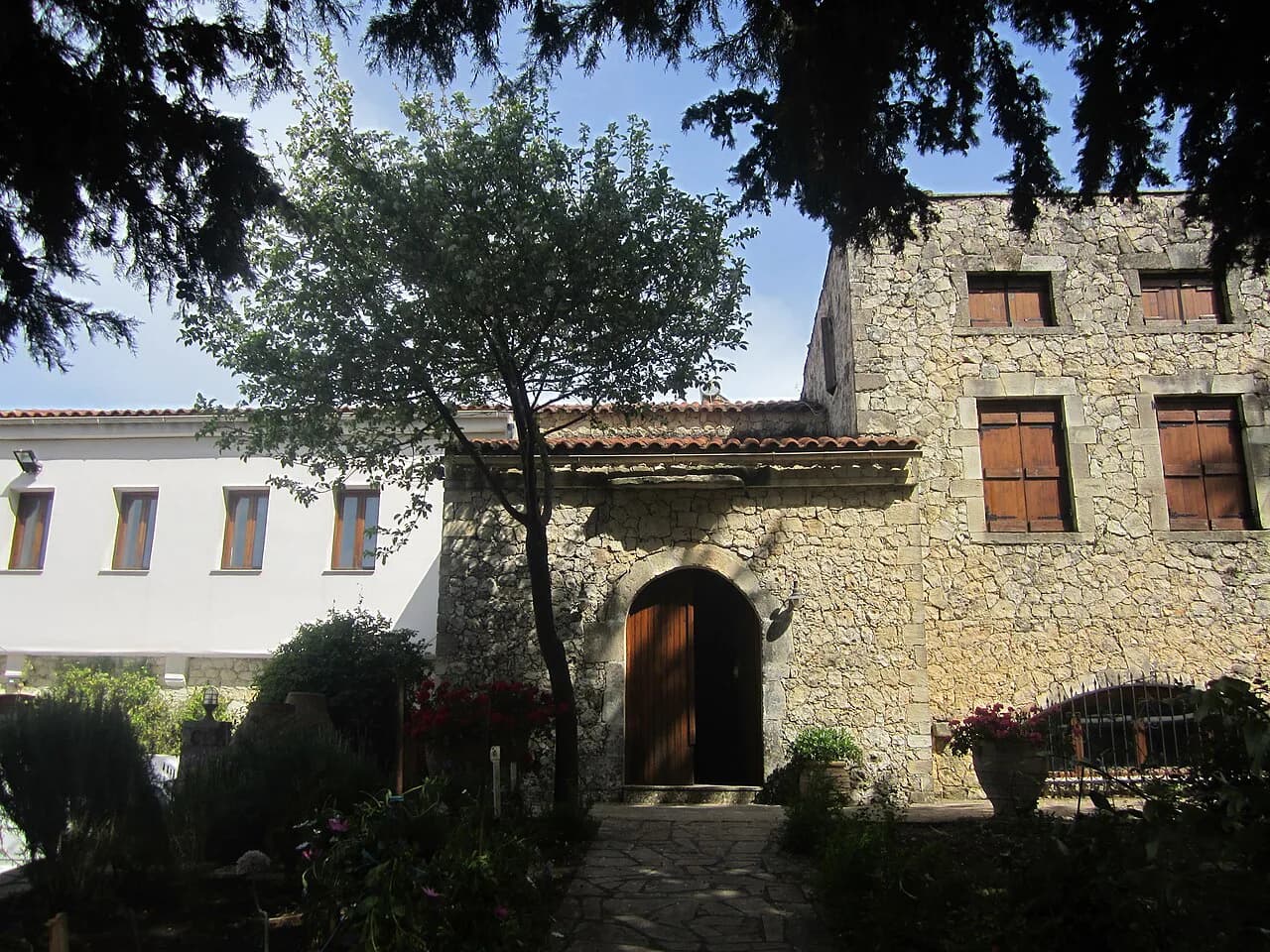
The visit format is a guided tasting, in a rustic courtyard or indoors beside a working and folklore museum, and the site describes a route through a botanical garden, a sparkling wine room and a barrel room built into the mountainside. A restaurant on site pairs local dishes with the wines, so a tasting here can stretch into lunch. Bookings are made through the winery's own tasting page rather than by simply turning up.
The wine list leans heavily on indigenous varieties: Pavo Romeiko as a white, Lihnos Vidiano, Kudos Muscat of Spinas, Zelos Kotsifali, and a traditional-method sparkling Romeiko called Cassiopeia Brut. If you want to taste Crete's native grapes in one sitting, this is a broad introduction.
How Booking Works in Crete
Appointment-first is the norm at Crete's smaller estates, and a booking email is more effective than a phone call if your Greek is limited and your dates are fixed. State the date, your preferred time window, the number of adults, whether you need the tasting in English, and whether you want food. Ask for the price and the expected duration in the same message, since neither is reliably published.
Group size and season shape what is available. Small estates may set a minimum party for a guided visit, and some formats only run when enough people are booked. When a winery replies, confirm the meeting point and whether the price includes the cellar tour or only the glass set.
This matters most in the shoulder months. A courtyard tasting that runs comfortably in summer may move indoors or be offered on fewer days in winter, and the olive-harvest period pulls staff toward the groves. If a specific format is the reason for your trip, say so at booking and ask whether it is running on your date.

Tasting Fees and What They Cover
None of the winery sites consulted publishes a standard tasting fee, and quoting one here would be guesswork. Prices in Crete typically track what is included, so a glass-only tasting, a guided cellar walk, and a seated food pairing are three different products at three different price points. Ask which of those your booking covers before you commit.
Useful questions are concrete: how many wines are poured, are they red, white or both, is the cellar tour included, is bread or cheese served, and how long does the visit last. A winery that answers these in writing is also a winery that is likely to be organized on the day. Payment method matters too, since smaller estates may prefer cash.
Getting There Without Driving
Wineries in Apokoronas are not served by a simple bus network, and the villages are spread across hill roads. A taxi from Chania is the most flexible option, and negotiating a return pickup at the same time avoids being stranded after a long tasting. Renting a car widens your choices considerably but brings the obvious constraint that the driver stays dry.
Organized day tours solve the transport problem and the tasting-while-driving problem at once, and operators run from Chania to the surrounding estates. Chania Wine Tours states that its wine tours run from early April to the beginning of November, with its wine, olive oil and honey tour available all year. That schedule belongs to this operator only, so compare any other company's calendar separately.
Before booking, ask the operator which wineries are visited, whether tasting fees are included in the tour price, and how many people share the vehicle. A short list of two estates with a real cellar visit usually beats a rushed four-stop circuit. If you would rather mix sources, we cover broader Crete options including estates near Kato Asites in our guide to crete wineries.
Independent Versus Guided
Going independently gives you time. You can linger over a barrel room, ask the winemaker about a single vineyard, and stop in a village on the way back. The cost is complexity: two separate bookings, a taxi or a rental car, and a plan for who is not drinking. For two people, a shared taxi and two tasting fees can work out cheaper than two seats on a tour.
A guided day removes the logistics and usually adds commentary that connects the wines to the landscape, which is a real benefit if you are new to Cretan varieties. The trade-off is fixed timing and a group pace. Whichever you choose, a driver should not taste: use spittoons, book a designated driver, or take a tour or taxi so the day stays safe for everyone.
How many wineries fit in a day is a transport question, not an ambition question. Two visits with a meal between them is a comfortable rhythm given the hill roads. Three is possible only if the estates are close together, so group by village rather than by reputation.
Old Town Tasting Instead
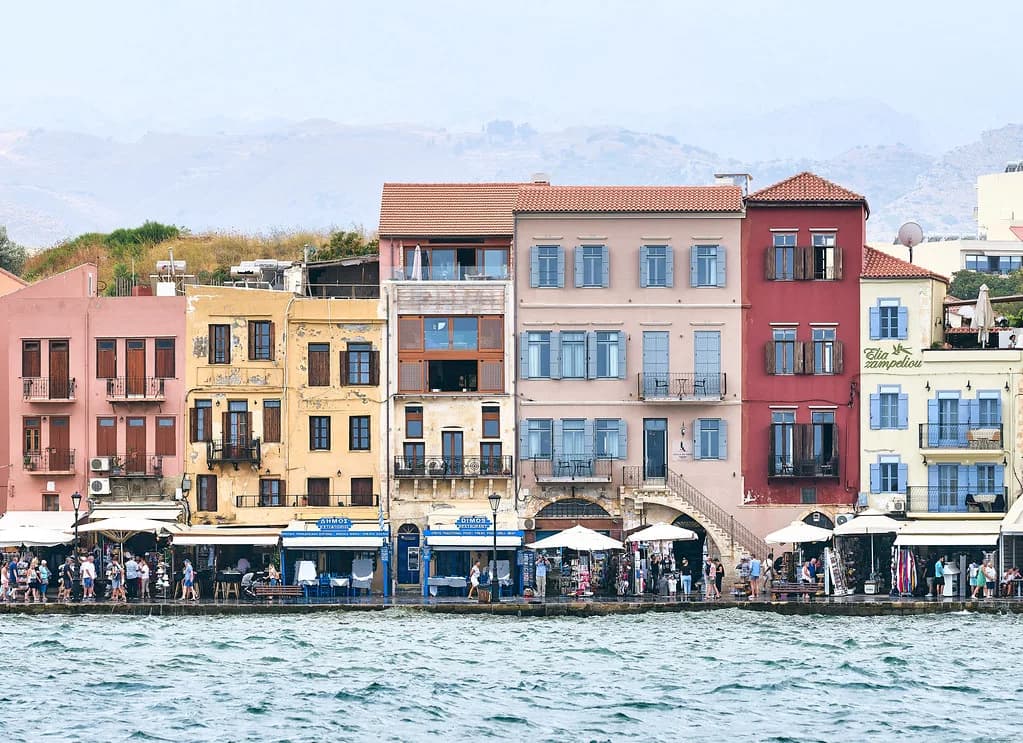
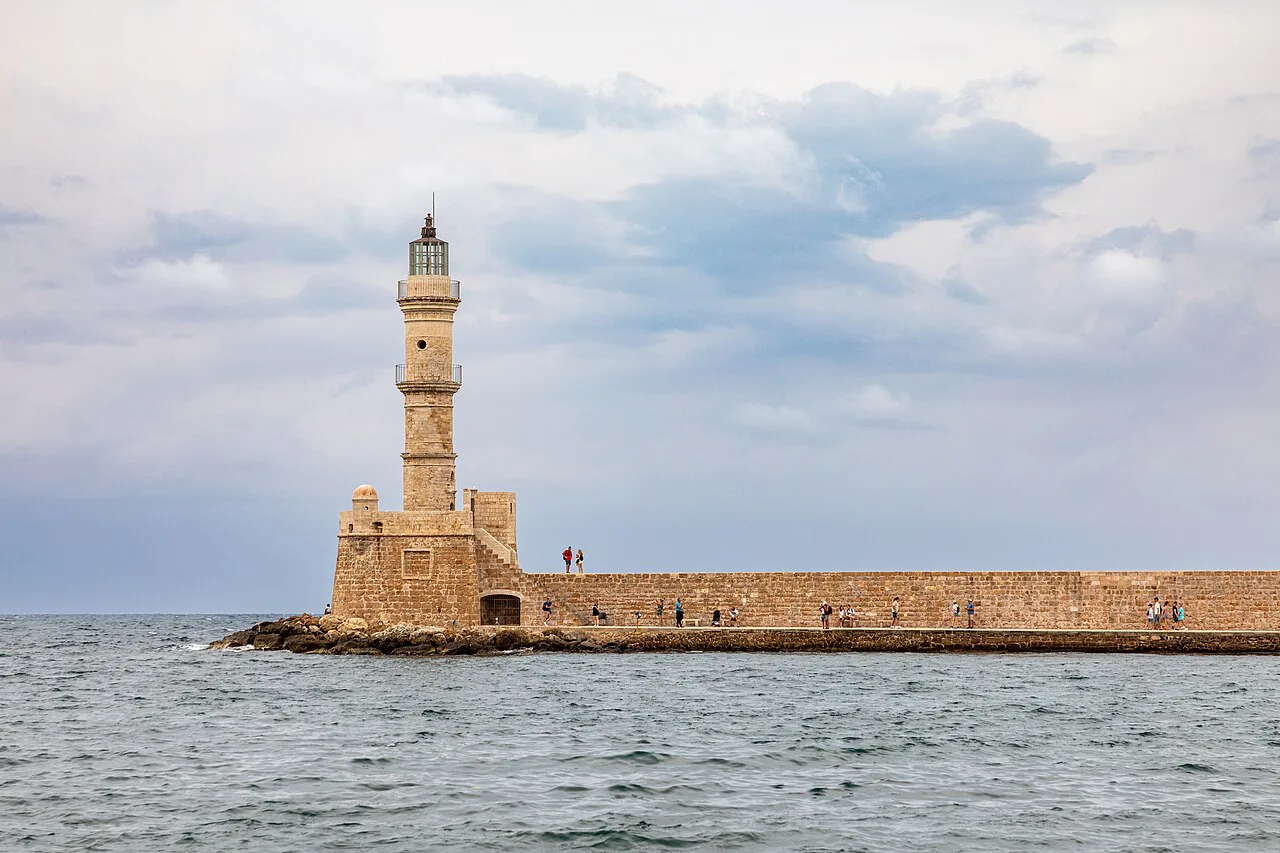
If your schedule does not allow a day in the countryside, Chania itself is a reasonable place to taste. The Old Town and the harbor area support wine bars and shops that pour Cretan bottles, and a few hours there is a low-commitment way to learn the local grape names before deciding whether to book a winery.
Treat town tasting as a complement to a winery visit rather than a replacement. You will meet the wines but not the cellars or the vineyards. Choose a bar that lists producer names on the menu, then use those names to pick your estate visit for the following day.
Timing the Trip
Harvest in Crete generally falls in late summer into early autumn, and that is when village roads see more vineyard traffic and wineries are busiest with production. Visiting during harvest can be atmospheric, but it can also mean a shorter or less predictable tour. Late spring and early summer are quieter for the wineries and comfortable for the drive.
Tour-operator season and winery season do not always align. Dourakis states year-round operation, while the tour operator cited here runs wine tours from spring to early November. If you are traveling in winter, plan around the winery calendar rather than the tour calendar, and ask directly about opening days and seasonal closures.
A Sample Wine Day from Chania
Start with an early taxi or rental pickup from Chania and drive inland toward Vatolakkos for a morning tasting, when the courtyard is quiet and the light is good. Ask for the cellar walk if it is offered, and plan to be there about two hours. From there, continue south through the Apokoronas villages rather than returning to the coast.
Take lunch in a village on the route, then reach Alikampos for an afternoon visit at Dourakis, combining the vineyard walk with the tasting and, if you have booked it, the restaurant. End the day with a driver who has not tasted heading back to Chania by the coastal road. Two estates, one meal and one direction of travel is a realistic plan.
Plan Your Visit
Chania rewards travelers who treat wine as a half-day out rather than an afterthought. Pick one estate for its location and one for its wines, book both in writing, and build the route around a single direction of travel so you are not crossing the island twice. If you are comparing island wine regions, our guide to wine tasting in santorini covers the same decisions in a very different landscape.
Ask for the fee, the glass count and the duration when you book, since these details are not consistently published, and check current prices and dates with the winery before you set off. Arrange transport before you taste, and the day takes care of itself.
More wine guides from Chania
Frequently Asked Questions
Is wine tasting in Chania worth it?
Yes, if you want to understand Cretan grapes rather than only drink them. Two estates near Chania, Manousakis in Vatolakkos and Dourakis in Alikampos, accept visitors and both work with indigenous varieties such as Romeiko, Vidiano and Kotsifali. The catch is transport: neither is walkable from the Old Town, so budget for a taxi or a tour.
Which winery in Chania is considered the best?
There is no ranking that holds for everyone, and the choice depends on what you want. Manousakis suits travelers staying close to Chania who want a focused tasting in Vatolakkos, while Dourakis offers a cellar-and-courtyard format with a restaurant and states it is open year round. Pick by wines and location rather than reputation.
Do you need to book Chania winery tastings in advance?
Book ahead in almost all cases. Both named wineries take bookings through their own sites, and a short email with your date, party size, language and food preference gets the fastest answer. Ask for the price and duration in the same message, since these are not reliably published.
Can you visit Chania wineries without a car?
Yes, by taxi or organized tour. The wineries sit in hill villages without a simple bus connection, so a taxi with a pre-arranged return or a guided day tour is the practical route. Note that the tour operator cited here runs wine tours from early April to early November, so winter visitors rely on taxis or the estates themselves.
What wines is Crete known for?
Romeiko is the grape most associated with Chania, made as both a pale white and a red, and it also appears in traditional-method sparkling wines. Vidiano, Kotsifali and Muscat of Spinas are other varieties you will meet on local lists, often in blends. Tasting across these gives a clearer picture of the island than sticking to international grapes.
Sources
Notes for your next wine trip
Optional updates to our winery and wine-town guides.
You might also like

Continue reading
More guides you'll find useful