Karavitakis Winery: Chania Visit Guide & Estate Tips
Plan a visit to Karavitakis Winery near Kolymbari, Chania: where the estate sits, opening days, how tastings work, and how to get there without driving.
On this page
Karavitakis is one of the estates that comes up first when travelers plan a wine day out of Chania, and the reason is partly geography: it sits at Pontikiana in the Kolymbari area on the west side of the Chania region, close to the coast road that runs toward Kissamos. That places it within reach of Chania town, the Platanias and Kolymbari beach strip, and the hill villages behind them, so a visit can be folded into a beach day rather than treated as a separate expedition. Our Chania Wine tasting guide covers the rest of the district if you want to compare before choosing.
What the estate publishes is limited but useful: a street address, two email addresses and two phone numbers, plus a contact form for booking a wine tour. A separate visitor listing describes a facility tour and a tasting of the estate's wines, and a local transfer operator sells a day trip to the same property. Those three sources describe the visit from three different angles, and this guide keeps them apart so you know which details come from the winery itself.
Why Karavitakis Belongs on a Chania Wine Shortlist
Chania's wine scene spreads across a wide arc, from the Akrotiri peninsula east of town to the foothills of the White Mountains and the warmer slopes toward Kissamos. Karavitakis sits in the western part of that arc, which makes it a natural partner for a day built around Kolymbari, Platanias and the beaches at the foot of the Rodopos peninsula rather than a detour south into the mountains.
The estate is a family operation now run across generations, with Manolis Karavitakis associated with production and Nikos Karavitakis with the next phase of the business. Chania Transfers credits the property with roughly 150 acres of vineyards and olive groves around the winery and a focus on low yields and organic farming, alongside a mix of indigenous, international and experimental grape varieties. Treat those production figures as the transfer company's account rather than a number the winery publishes on its own site.
If you are comparing estates before committing to one, the broader list of Chania wineries is worth reading first, because the drive times and the appointment culture differ sharply between the coast estates and the mountain ones. Karavitakis is one of the easier properties to slot into a coastal itinerary; the mountain estates demand more of a day.
Where the Winery Is: Pontikiana and the Kolymbari Coast
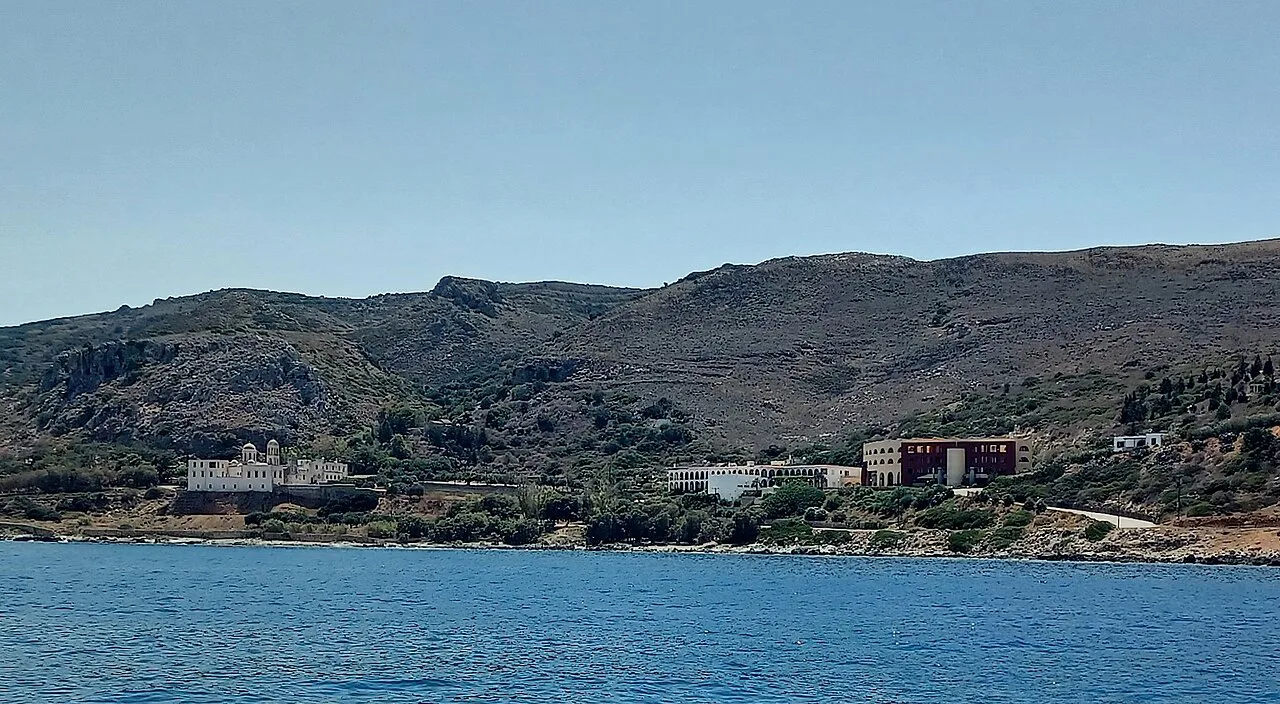
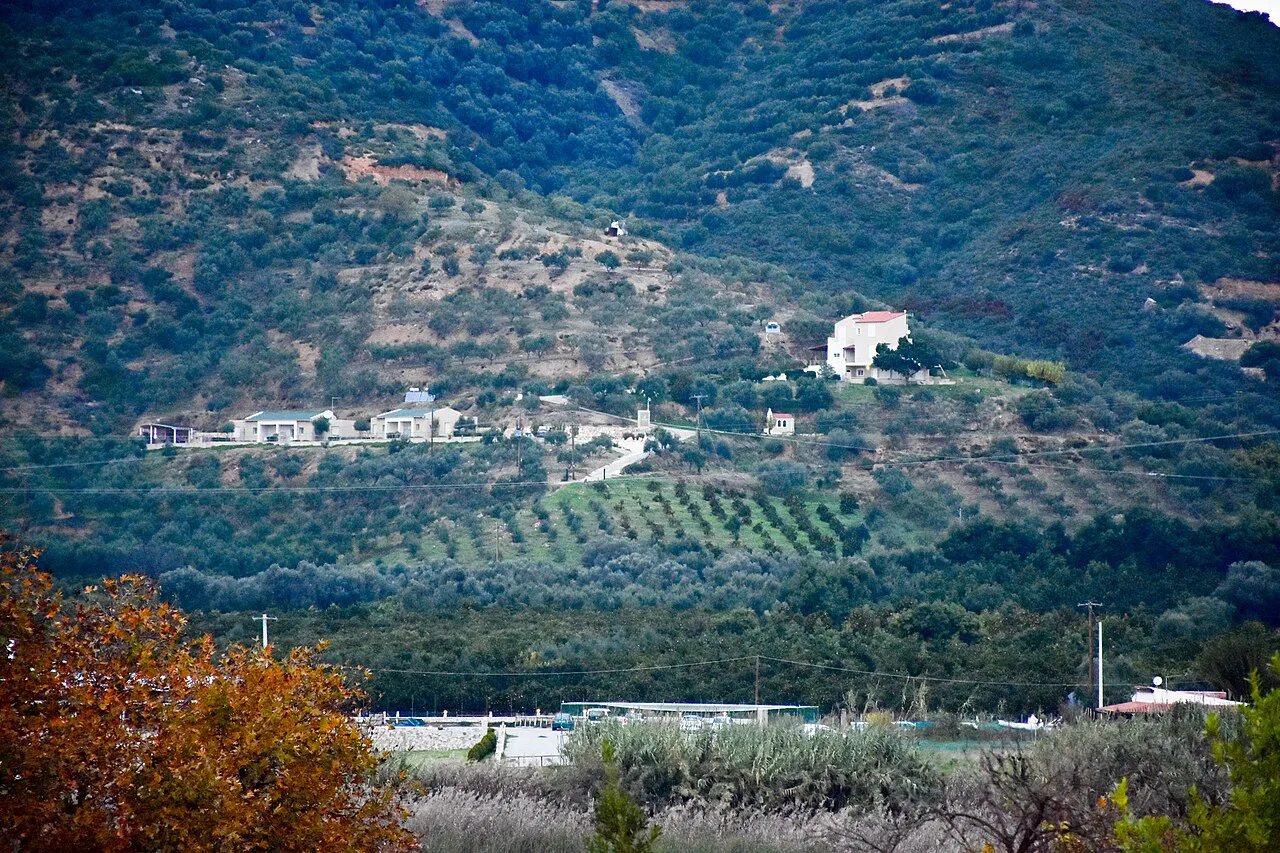
The winery's own contact page gives its location as Pontikiana Village in the Platanias Municipality of Chania, with the surrounding area usually described as Kolymbari. Pontikiana is a small inland hamlet set slightly above the coastal strip, which is why the estate's setting is described in terms of hilltop vineyards looking out over the Kolymbari area rather than a flat coastal plain.
For orientation, Kolymbari is a coastal town on the western edge of the Chania region, and Platanias is the resort strip immediately west of Chania town. The winery lies between the two in spirit: inland enough to feel rural, close enough to the coast that you can pair a tasting with an afternoon swim. Use a mapping app to route to the Pontikiana address rather than a village name alone, since hamlets in this area share similar names and the final approach is on minor roads.
The property itself is described as having a small chapel dedicated to Saint Tryphon on the grounds, which is a useful landmark when you are confirming directions or arranging a pickup point with a taxi. Ask the driver to go to the winery by name and the Pontikiana address, not simply to Kolymbari, or you will spend the last stretch of the trip renegotiating the route.
The Wines to Know Before You Arrive
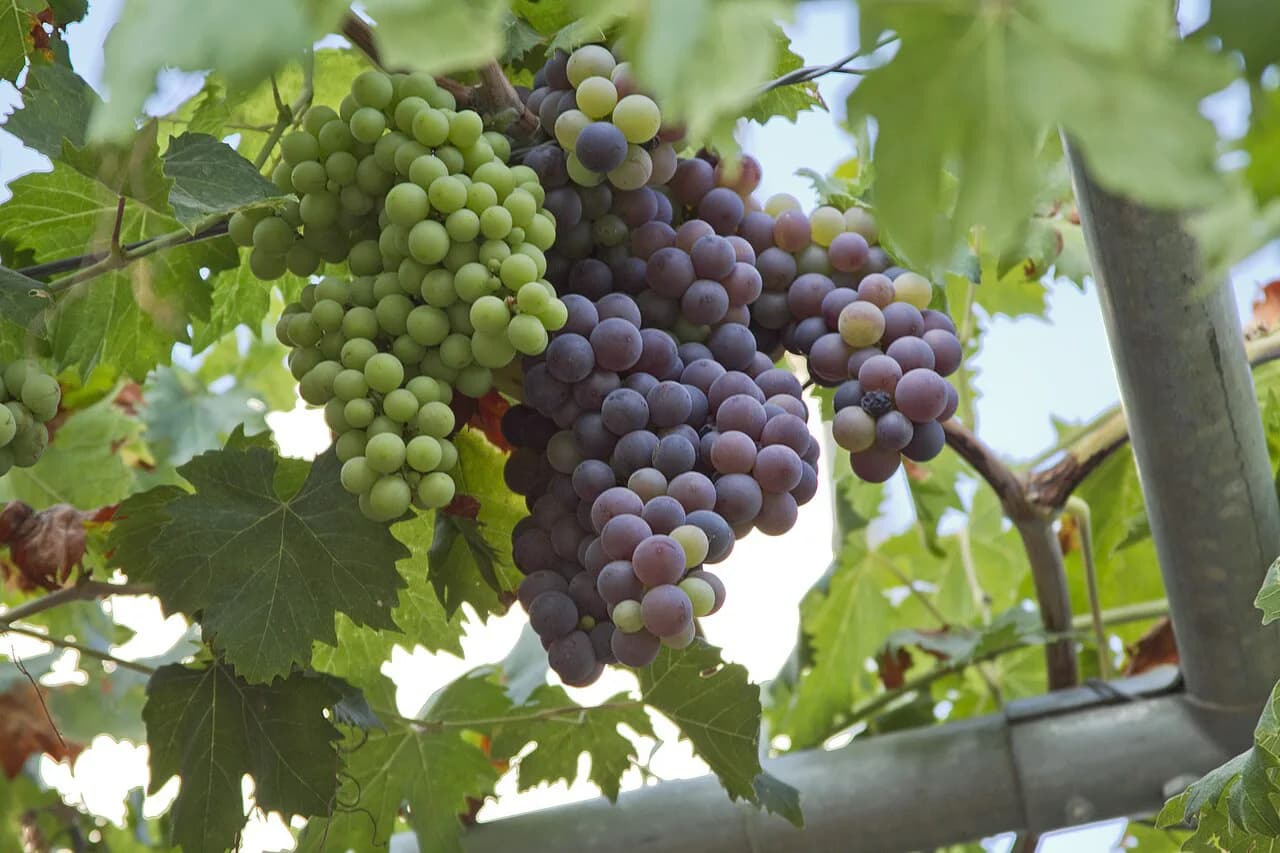
Crete's indigenous white grape is Vidiano, and it is the one most visitors come away remembering from a Chania tasting: it gives aromatic, moderately textured whites that sit somewhere between the freshness of an Assyrtiko and the roundness of a Viognier. Karavitakis works with Vidiano alongside international varieties, so a tasting here is a good place to meet the grape in a modern, cleanly made style before you compare it with bottles from other Cretan producers. If you want to taste Assyrtiko at its island source instead, the Santorini wine guide shows where that comparison leads.
On the red side, Kotsifali is the local grape to watch for, often blended with Syrah or with the darker Mandilari to add color and structure. The transfer operator's description of the estate's range names Vidiano, Syrah and local Kotsifali blends, with the winery also experimenting with rarer varieties. That mix tells you what to expect in the glass: a lineup that moves between Cretan tradition and an international register rather than a single-style portfolio.
Chania's appellation framework is thin compared with mainland Greece, so most bottles you meet here are labeled by variety or by the wider Crete regional designation rather than by a village-level appellation. That makes the grape names the most reliable guide when you are choosing what to taste, and it also means a conversation with whoever pours your wines is more informative than reading the label alone. The wider Crete wineries guide sets out how the island's main tasting zones differ if you plan to visit more than one.
What a Visit Includes
The visitor listing for the estate describes the standard experience as a tour of the facilities followed by a tasting of the winery's wines, with both reds and whites poured. The transfer operator adds that tastings are often paired with local products and that the setting includes views over the vineyards and the small chapel on the grounds. Neither source publishes a fixed number of wines poured or a set duration, so plan on a visit that runs comfortably longer than a quick counter tasting.
Because the tour element is part of the offer, this is a visit where you should expect to walk the production area rather than sit straight down at a bar. That suits travelers who want the winemaking story alongside the wines, and it means the visit works less well as a spontaneous twenty-minute stop on the way to the beach. Build in time for the walk-through before the first pour.
When you book, the questions worth asking are the ones the published material leaves open: how many wines are included, whether the local-product pairing is standard or an add-on, how long the whole visit takes, and whether there is a minimum party size for a tour. Ask about the language of the tour as well if your group is not comfortable in English or Greek. Those four answers will tell you more about whether the visit fits your day than any brochure description.
Opening Days, Hours and Season
The estate's visitor listing states that the winery is open daily except Sundays from 10:00 to 18:00, with the season qualifier cut off in the published excerpt. In practice that means you should treat Sunday as closed and the daytime window as the working assumption, then confirm the seasonal dates directly before you build a day around it, since Greek estates commonly shorten hours or close entirely outside the main visitor months.
Harvest in this part of Crete generally falls in late summer into early autumn, and that is the period when a working winery is most likely to be absorbed by production rather than visitors. If you are traveling in that window, book further ahead than you would in spring and be flexible about the day. Outside harvest, the pace on the Kolymbari coast is gentler and a same-week request is more likely to find a slot.
Public holidays are the other variable that published hours rarely capture, and Greek national and religious holidays can shift opening patterns without notice. Rather than trying to guess which dates are affected, send your preferred date in the booking request and let the winery confirm or redirect you. That single step removes most of the uncertainty from the planning.
How to Book a Visit
Karavitakis publishes three booking routes on its own site: a contact form headed for wine tour bookings, two email addresses, and two Greek mobile and landline numbers. The listed contact details are info@karavitakiswines.com and karavitakiswines@hotmail.com, with phone numbers 0030 2824023381 and 0030 6974323852. Both numbers are mobiles, according to the site, so email or the form keeps your request in writing, which is useful when you are confirming a date and a party size.
Write the request with the details a winery needs to schedule a tour: date, preferred arrival time, number of adults, whether anyone in the group is not drinking, and the language you would like the tour in. Mention if you are coming by taxi or transfer so they can advise on the drop-off point. A short, specific message gets a faster and more useful answer than a general enquiry about availability.
The winery also publishes a cancellation policy on its site, which is worth reading before you commit to a date if your trip involves several stops or a tight transfer schedule. For a group visit or a visit tied to a paid transfer, understand the notice period required and plan your day so a single change does not unravel the rest of the itinerary. The estate's own terms are the ones that apply, not those of any third-party tour seller.
Getting There Without Driving
There is no published winery shuttle or dedicated bus line to Pontikiana, so the realistic car-free options are a taxi from Chania or the Kolymbari and Platanias coast, or a pre-booked private transfer. Local transfer operators, including the one that advertises a Karavitakis day trip, run private vehicles from Chania airport and Souda port as well as from town, which makes a round trip with a fixed waiting time straightforward to arrange. Agree the pickup time for the return leg before you leave, because hailing a taxi in the hamlet itself is not reliable.
If you are staying on the Kolymbari or Platanias coast, the transfer is short enough that a taxi both ways is a reasonable cost for two or more people sharing, and it leaves your afternoon free for the beach afterward. From Chania town the journey is longer and crosses the resort strip, so a pre-booked return is worth the small extra planning. Ask the taxi company for a fixed round-trip quote rather than a meter estimate so the day has no surprises.
Cycling is possible for confident riders based on the coast, but the final approach to Pontikiana climbs into the hills and the minor roads carry local traffic. If you ride, plan the visit for the cooler part of the day, carry water, and do not plan to taste and cycle back on the same afternoon. Public buses serve the Kolymbari coast road, but they do not deliver you to the winery gate, so a bus-plus-taxi combination is the practical version of the car-free plan.
Independent Visit vs. Organized Day Trip
Booking directly with the winery gives you control over the date, the time and the pace, and it usually costs less than a packaged excursion because you are paying only for the visit and your transport. The trade-off is that you handle the logistics: the taxi, the return pickup and the coordination if the winery's schedule shifts. For a couple or a small group already staying on the coast, that is rarely a burden. Our comparison of Chania wine tours sets out how the packaged options differ on inclusions and timing.
A packaged day trip bundles transport and the visit, which suits travelers without a car who are based in Chania town, anyone traveling with a group that would rather not split the planning, and visitors who want the winery combined with other stops on the same route. The cost is higher and the schedule is set by the tour company, so you trade flexibility for simplicity. Neither approach is better in the abstract; the right choice depends on how many people are sharing the vehicle and how much of the day you want to commit.
Whichever route you take, remember that the person driving should not taste. Spittoons are standard at tastings, a designated driver can enjoy the tour without drinking, and a taxi or transfer removes the question entirely. That is the simplest way to keep a wine day safe on Cretan roads, which are winding and unfamiliar to most visitors.
Building a Half-Day Around the Visit
The most natural pairing is a morning tasting followed by an afternoon on the Kolymbari coast, where the beaches sit below the vineyards and the drive between them is short. Book the earlier slot if you can, since a morning visit leaves the rest of the day open and the light over the hills is at its best before midday. Bring a layer for the tasting room even in warm weather, as working cellars stay cool.
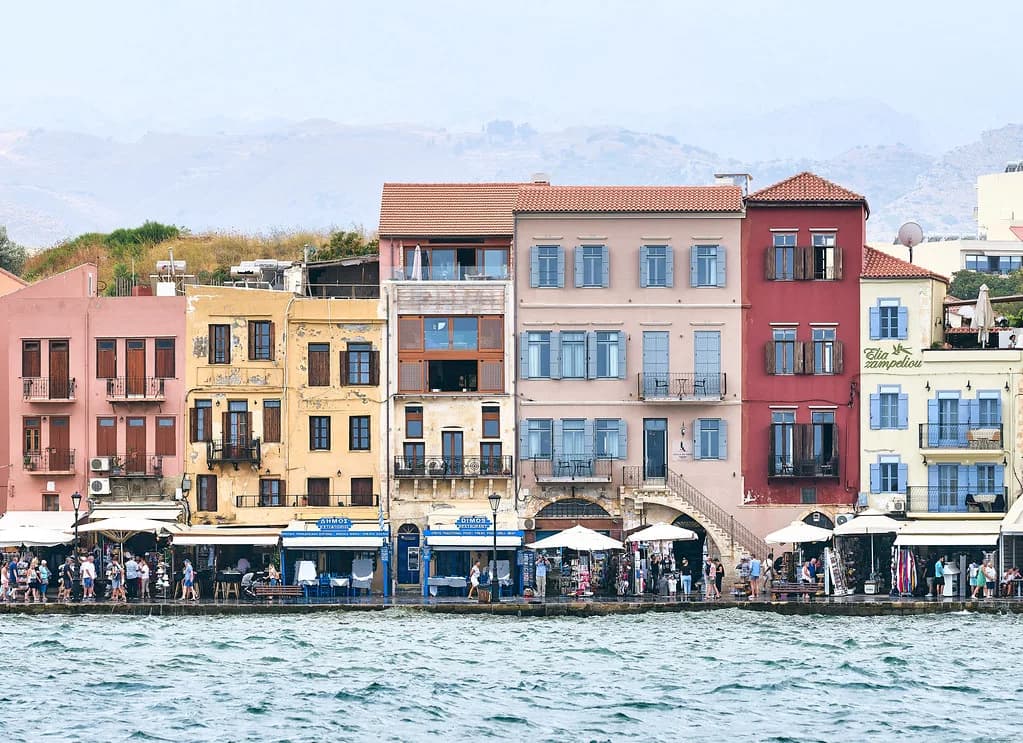
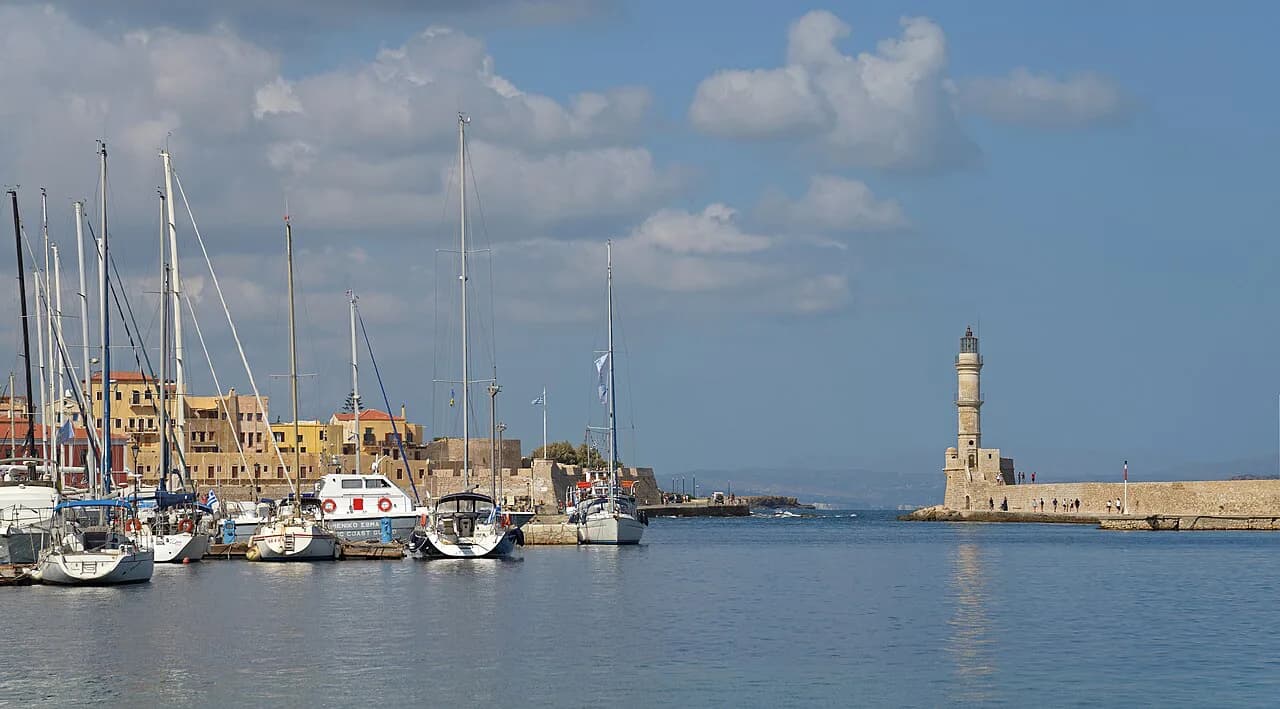
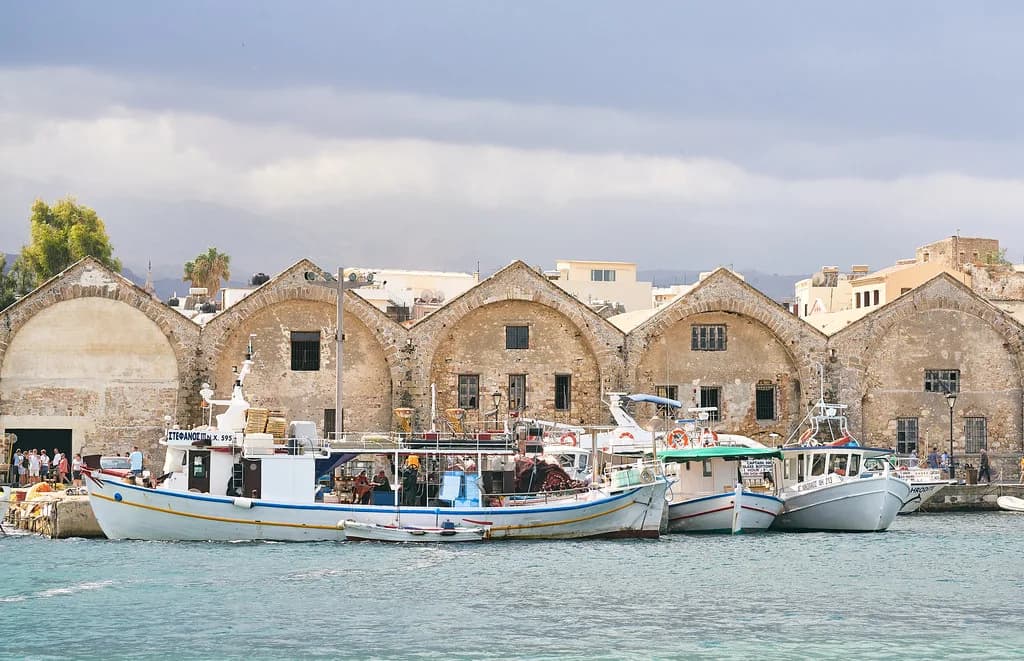
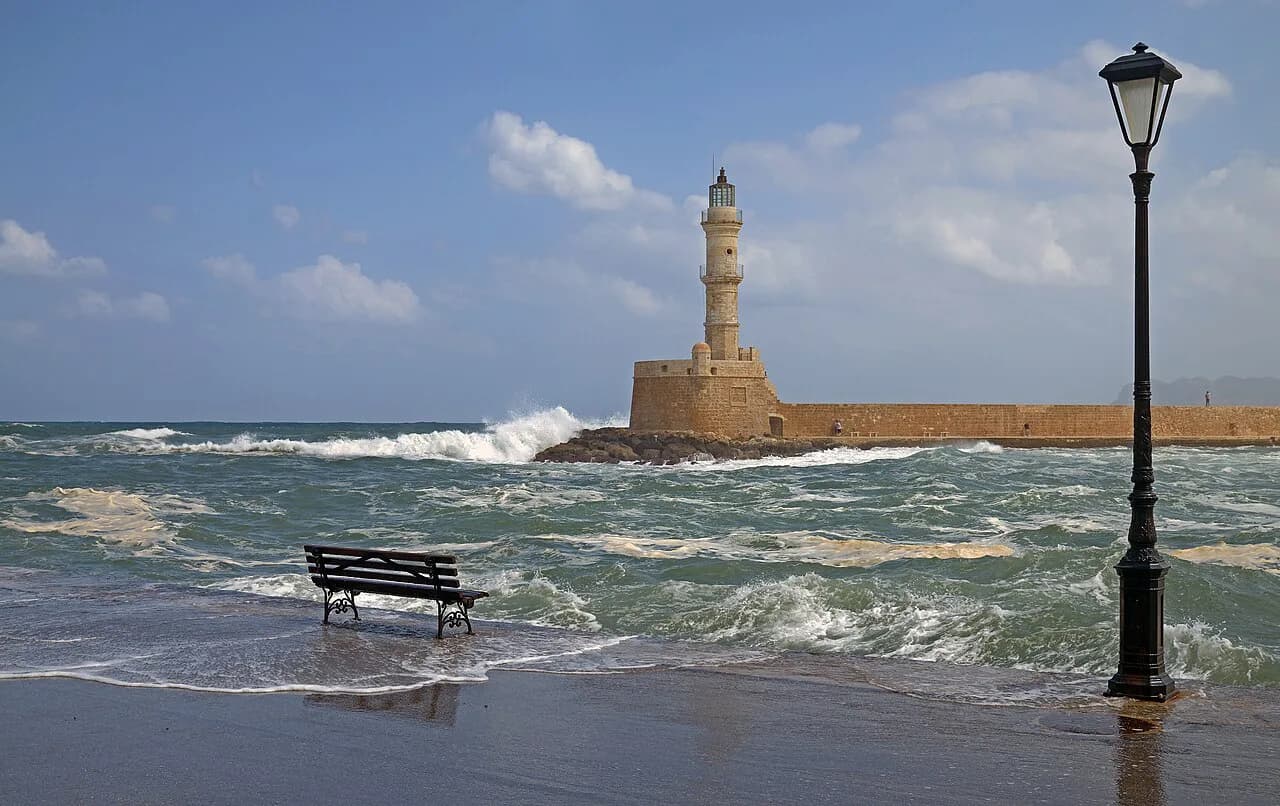
In the other direction, a late-afternoon visit slots neatly before an evening in Chania's old town, with its Venetian harbor and dense grid of tavernas inside the old walls. Allow time for the drive back into town and for parking, which is the real constraint in the center. If you are relying on a taxi, ask the driver to drop you at the edge of the old town rather than trying to thread the car into the pedestrian lanes.
If you want a second estate on the same trip, compare the geography before you book: a winery in the foothills of the White Mountains will not combine easily with a Kolymbari morning, whereas one on the same western side of the region will. The Dourakis Winery visit guide is a useful comparison point for readers working out how far they are willing to spread a single day across the Chania region.
Plan Your Visit
Karavitakis is a straightforward addition to a Chania itinerary: a family estate at Pontikiana near Kolymbari, open daily except Sundays from 10:00 to 18:00 during the published visitor season, with a facility tour and a tasting of reds and whites that can be paired with local products. Book through the winery's contact form, email or phone, and ask about the number of wines, the pairing, the visit length and any minimum party size, since none of those figures is published.
Sort out transport before you settle on a date: a taxi or pre-booked transfer from the Kolymbari or Platanias coast is the simplest car-free solution, and a packaged day trip is the better fit if you would rather not arrange the return leg yourself. Confirm the seasonal opening dates with the estate once your dates are fixed, and let whoever is driving skip the glass.
Frequently Asked Questions
Where is Karavitakis Winery located?
It sits at Pontikiana Village in the Platanias Municipality of the Chania region, in the area generally known as Kolymbari, on the western side of the Chania coast. Route to the Pontikiana address rather than the village name alone, because the final approach is on minor roads.
Is Karavitakis Winery open on Sundays?
The estate's visitor listing says it opens daily except Sundays, roughly from 10:00 to 18:00, though the seasonal qualifier in that listing is incomplete. Treat Sunday as closed and confirm the current season's dates with the winery before fixing your day around it.
Do you need to book a tasting at Karavitakis Winery?
The winery publishes a contact form specifically for wine tour bookings, plus email addresses and phone numbers, which points to booking ahead rather than walking in. Send your date, arrival time, party size and preferred tour language so the reply is useful.
What wines does Karavitakis Winery produce?
The estate is associated with the indigenous white Vidiano and the red Kotsifali, often in blends, alongside international varieties such as Syrah. A transfer operator's description also mentions experimental plantings, so expect a lineup that spans Cretan tradition and international styles.
How far is Karavitakis Winery from Chania town?
It lies west of Chania town, inland from the Kolymbari and Platanias coast strip, so the trip crosses the resort strip before climbing to Pontikiana. Ask your taxi or transfer operator for a fixed round-trip arrangement rather than estimating the drive yourself.
Can you visit Karavitakis Winery without a car?
Yes, with planning: there is no winery shuttle or dedicated bus to Pontikiana, so a taxi or pre-booked private transfer from Chania, Platanias or Kolymbari is the practical option. Buses serve the coast road but stop short of the estate gate.
Sources
Notes for your next wine trip
Optional updates to our winery and wine-town guides.
You might also like
Continue reading
More guides you'll find useful