De Castellane Champagne Guide: Day Trips from Reims
Plan a visit to Champagne de Castellane in Épernay from Reims, covering the house's tower and cellars, booking expectations and how to arrive without driving.
On this page
Champagne de Castellane sits in Épernay, about half an hour by train from Reims, and it is one of the houses that make the Avenue de Champagne a walkable tasting strip rather than a scattered wine route. Visitors come for the landmark tower, the cellars beneath the town and a sense of a house founded in the late nineteenth century, not for a quick glass at a counter.
This guide treats the visit as a logistics problem first and a tasting second: where the house sits in Épernay, which Champagne styles to expect, how booking culture works and how to arrive without a car. Prices, tour formats and opening hours change, so confirm the current visit options directly with the house when you book.
Why de Castellane Sits on the Épernay Map
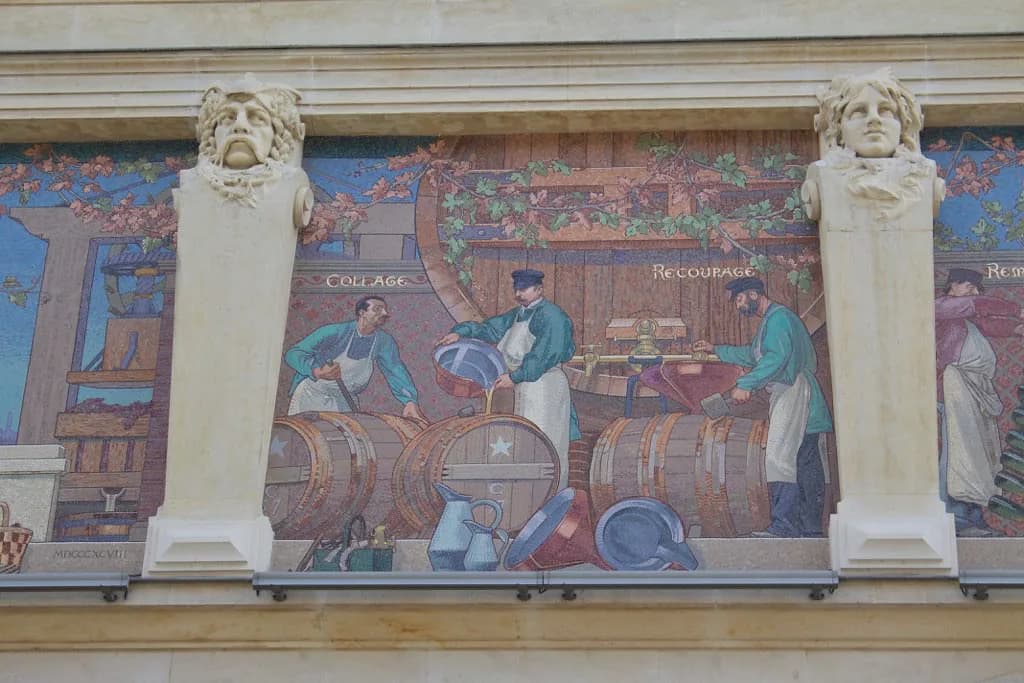
The house dates from 1895 and has long tied its identity to the Saint-Andrew's Cross, the emblem it has carried since its founding and around which it built a tradition of art patronage. That heritage is visible in the house's own account of its advertising posters and paintings, which makes the de Castellane story more about design and marketing history than about vineyard holdings.
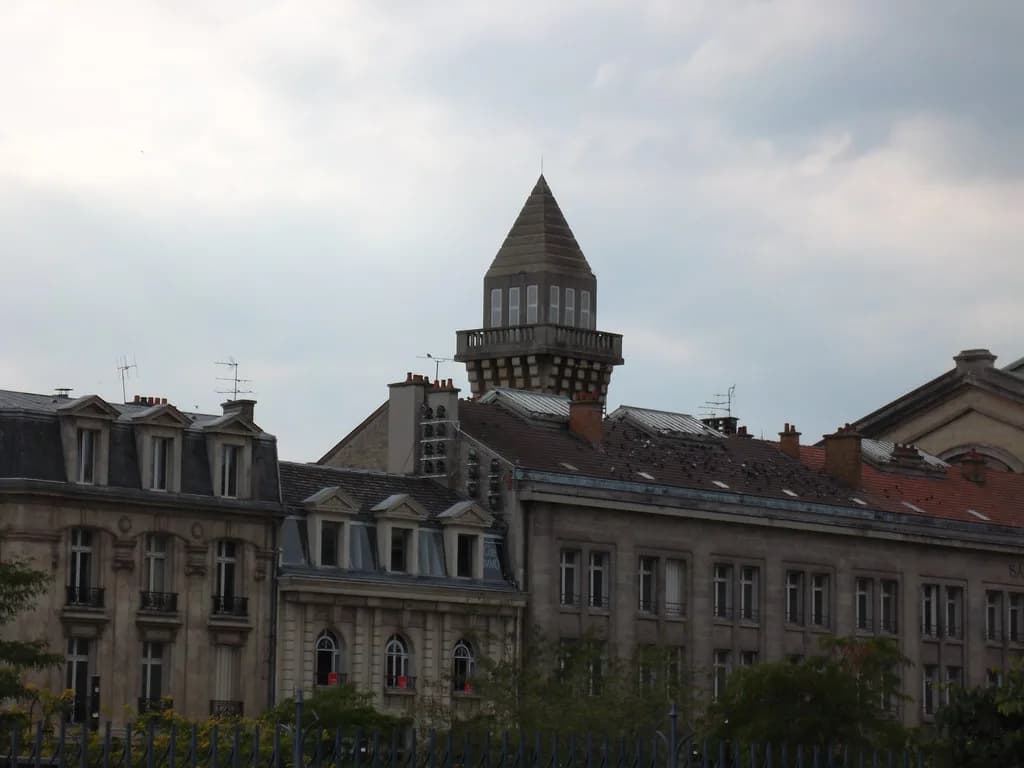
In Épernay, the tower is the practical landmark: it rises above the Avenue de Champagne and gives first-time visitors a reference point when walking from the station toward the larger cellars. If you are building a day around wine tasting in Reims and its surroundings, de Castellane is best treated as the Épernay anchor of that plan rather than a stop on a Reims circuit.
Orienting Épernay vs Reims: Distance, Train and the Avenue
Épernay lies south of Reims and is linked to it by a direct regional rail service, so a Reims base does not require a car to reach the Champagne houses on the avenue. The trade-off is timetabling: services are regular but not constant, and the walk from Épernay station to the Avenue de Champagne takes a short stretch of town walking before the cellars begin. Look up current departures on the SNCF site rather than relying on a fixed timetable, which shifts with season and works.
Once on the avenue, the geography works in your favor: over twenty Champagne facades line a street that can be walked in about a quarter of an hour end to end. Tourist listings for the house and its neighbors describe that avenue stroll as the core of an Épernay visit, which is why the town rewards a half-day on foot rather than a driving circuit.
Contrast that with the Champagne Houses in Reims, where the big names are spread through the city and often require a taxi or a longer walk between appointments. If your time is short, choose one town and commit to it; if you have two days, Reims first and Épernay second is the natural order. Those weighing a different French region altogether can weigh the same city-base versus countryside-villages decision in the Colmar wine guide.
What de Castellane Makes: Brut and Rosé Champagne
De Castellane is a Champagne house, so the wines are sparkling and built on the classic regional blend of Chardonnay, Pinot Noir and Meunier, released in non-vintage brut and rosé styles among others. Retail listings put a De Castellane Brut at an average price of around $32 per 750ml bottle, which tells you where the house sits in the market but says nothing about what a visit costs.
That positioning matters when you choose which Épernay houses to visit: de Castellane is a mid-market name alongside the larger commercial houses such as Mercier and Mumm, not a grower-producer cellar. Group it with one big house and one smaller stop rather than booking three similar tours, which quickly blur into one another. For a Reims-based comparison of house styles, the champagne houses overview on this site is a useful starting point.
The Visit Experience: Cellars, Tower and Art Heritage
The house presents its art patronage as part of its identity, with a long association between Champagne and painting that runs from nineteenth-century advertising posters to commissioned work. Visitors who book a tour should ask whether the art and poster heritage is part of the route or a separate exhibition, because the house's published material focuses on the patronage story rather than on a fixed visitor itinerary.
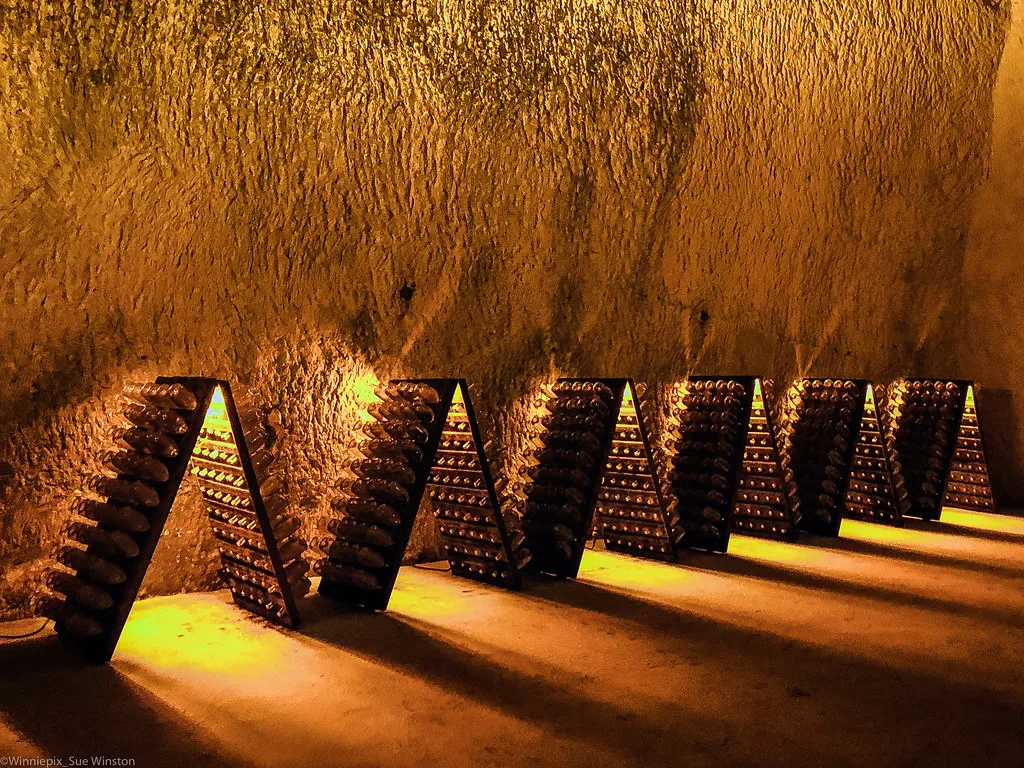
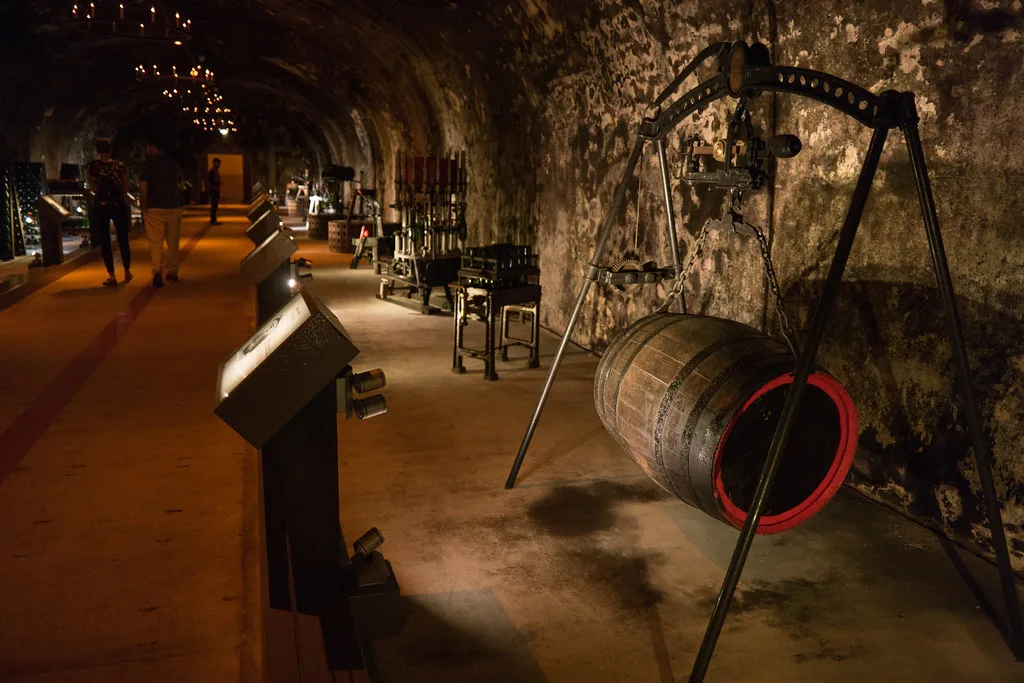
Cellar tours in Épernay typically cover the underground galleries, an explanation of how the wines are blended and a tasting at the end, and de Castellane's tower and cellars are the parts visitors most often ask about. Ask for the current tour length, number of wines poured and price when you enquire, and state your group size and language so the house can confirm the format in writing.
Booking and Appointment Culture in Épernay
The large Épernay houses generally run scheduled guided tours with set departure times, and booking ahead is the norm in the peak spring-to-autumn season and around harvest. Smaller groups, non-French speakers and anyone wanting a specific time slot should reserve rather than turn up, since walk-in places depend on whether a tour has sold out that day.
When you book, ask three things: how long the visit lasts, how many Champagnes are poured and whether a cellar walk is included. Those details determine whether de Castellane fits comfortably beside a second house in the same afternoon, and they are exactly the points a tour operator will confirm when selling a combined Champagne day. Harvest, usually in the late summer and early autumn, can disrupt visitor schedules in Épernay, so keep your day flexible if you travel in September.
Getting There Without a Car: Train, Walk and Taxi
The simplest independent route from Reims is the regional train to Épernay followed by a walk to the Avenue de Champagne, with no need for a taxi once you are on the avenue. Check SNCF for the current service pattern on your date and buy a return ticket in advance, because the last useful train back to Reims is the constraint that shapes your afternoon.
If you would rather not manage timetables, champagne tours from Reims handle the driving and often combine a large house with a smaller cellar; the trade-off is cost and a fixed itinerary against the freedom of walking the avenue at your own pace. A taxi from Épernay station is a reasonable fallback for a late finish, but book it rather than assuming one will be waiting.
Independent Visit vs Guided Day Tour
Going independently costs the train fare plus whatever the house charges for its tour, and it gives you control over how long you linger on the avenue and which second house you add. The cost of that freedom is admin: you book each visit yourself, watch the clock for the return train and absorb any schedule changes.
A guided tour from Reims removes the planning, usually includes transport between houses and sometimes a cellar visit beyond the big names, but it locks you into a group pace and a set list of stops. For a first Champagne trip with limited time, the tour is the easier introduction; for a second visit or a slower day, the train-and-walk approach lets you pair de Castellane with whatever else appeals on the avenue.
Pairing the Visit with Other Avenue de Champagne Houses
Two houses in an afternoon is the realistic maximum if you want to walk the avenue, taste properly and catch a train back to Reims. Put de Castellane first for its tower and cellars, then choose Mercier or Mumm nearby for contrast, and leave the rest of the avenue for a return trip rather than rushing three tours into one day.
If your base is Reims and you want a house visit there as well, a Taittinger tour in the city makes a good counterpart to an Épernay day, since the two experiences differ in scale and setting. Build the Reims day separately rather than trying to combine both towns in one afternoon.
Practical Timing, Lunch and Responsible Drinking
Allow a full half-day for Épernay: the train, the walk to the avenue, one house tour, a second stop and lunch in town. Épernay has plenty of places to eat near the avenue, so book lunch around your tour time rather than after it, when kitchens may be closing between services.
Anyone driving should not taste: use the spittoons offered at tastings, nominate a designated driver or take the train and walk instead. For a Reims evening after the return journey, champagne tasting in Reims is easy to arrange on foot in the city center, which keeps the day car-free from start to finish.
Plan Your Visit
Champagne de Castellane fits neatly into an Épernay half-day from Reims: train down, walk the avenue, take one house tour with the tower and cellars, and add a second stop only if the return train allows. Book the visit ahead, ask what the tour includes and confirm the current price and departure times directly with the house before you travel.
Treat the avenue as the plan rather than the car, and the day stays simple: no parking, no driving, and time left for lunch and a walk between cellars. If you want the broader context of the region, the wine tasting guide to Reims and its surrounding appellations including the Montagne de Reims is the place to start planning the rest of the trip.
Frequently Asked Questions
Is Champagne de Castellane in Épernay or Reims?
It is in Épernay, on and around the Avenue de Champagne, not in Reims. From a Reims base you reach it by regional train and a short walk, which is why it works well as a half-day trip rather than a city stop.
Do you need to book a visit to Champagne de Castellane?
Booking ahead is the safe approach, particularly in the peak season and around harvest. Contact the house directly to ask about tour times, languages and whether any walk-in places are available on your date.
How do you get to Épernay from Reims without a car?
Take the regional train from Reims to Épernay, then walk from the station to the Avenue de Champagne. The return train sets the limit on your afternoon, so check current SNCF departures before you go.
What Champagne does de Castellane make?
It is a Champagne house producing classic sparkling styles including a non-vintage brut and a rosé, built on the regional blend of Chardonnay, Pinot Noir and Meunier. Ask the house which cuvées are poured on the tour you book.
Can you walk between Champagne houses on the Avenue de Champagne?
Yes, the avenue is a walkable strip with more than twenty Champagne facades along it, and the end-to-end stroll takes about fifteen minutes. Two house visits in an afternoon is a realistic pace if you also want lunch and a comfortable train back.
Sources
Notes for your next wine trip
Optional updates to our winery and wine-town guides.
You might also like
Continue reading
More guides you'll find useful