Badia a Coltibuono: Plan Your Siena Visit
Plan a visit to Badia a Coltibuono near Gaiole in Chianti: abbey history, Sangiovese-based Chianti Classico wines, the estate restaurant and how to book.
On this page
Badia a Coltibuono is one of those Chianti places where the wine and the building are impossible to separate: a fortified former monastery on a hill above Gaiole in Chianti, in the Province of Siena, still run as a wine and olive estate. Visitors come for the Chianti Classico cellars, but the same property holds a restaurant, gardens and a cookery school, so it pays to decide which of those you are actually booking.
The practical catch is that this is countryside, not a town-centre tasting room you can drift into after lunch. Gaiole sits in the eastern part of the Chianti Classico zone, and the estate is a short drive from the village rather than a walk from a station, so transport shapes the day as much as the appointment does. This guide covers the wines, the visit, the table and the logistics, with the restaurant's published details flagged where they matter.
What Badia a Coltibuono Is
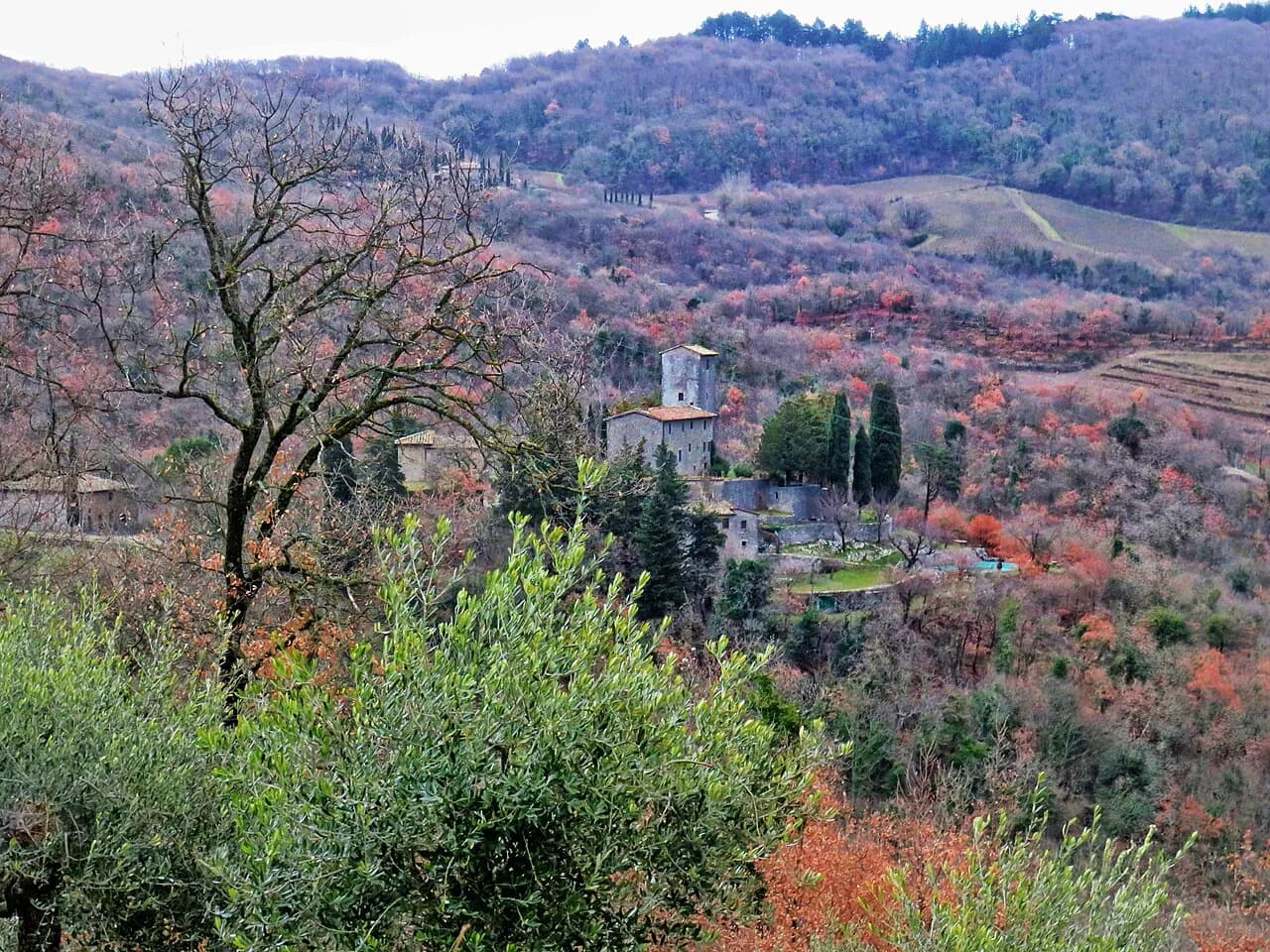
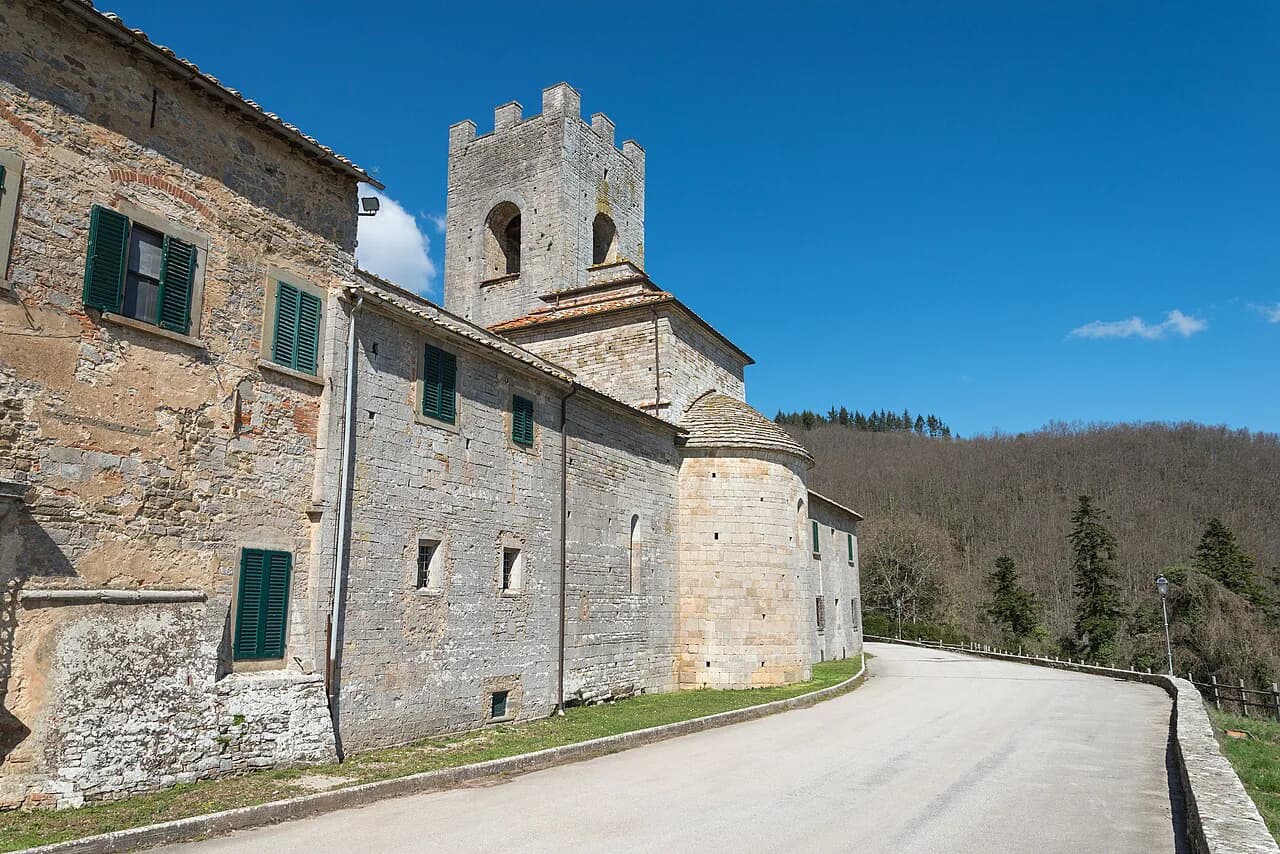
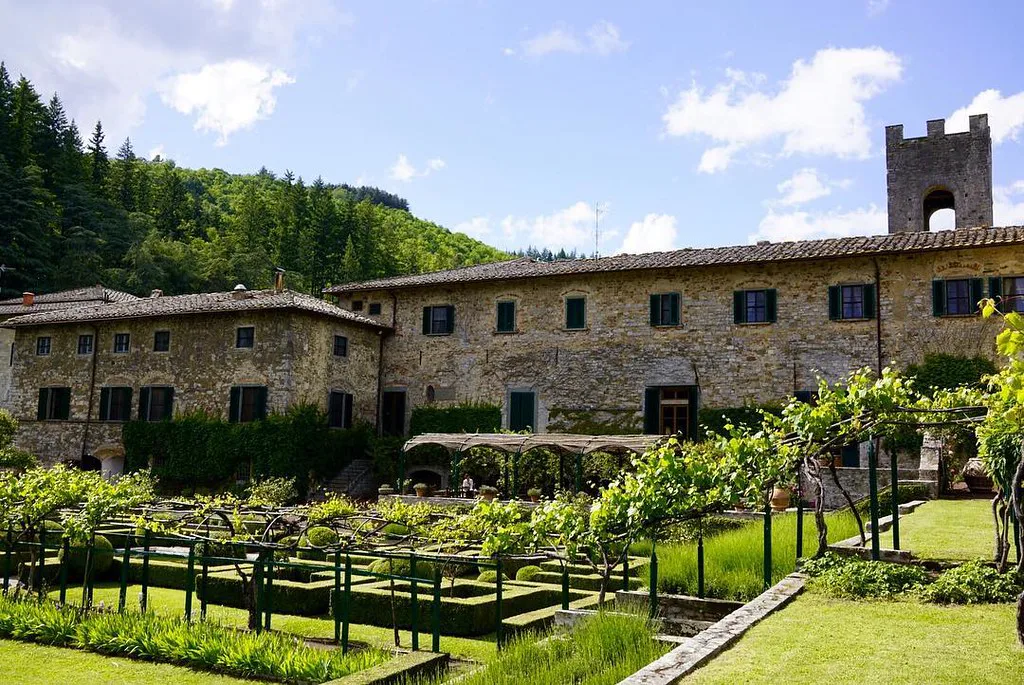
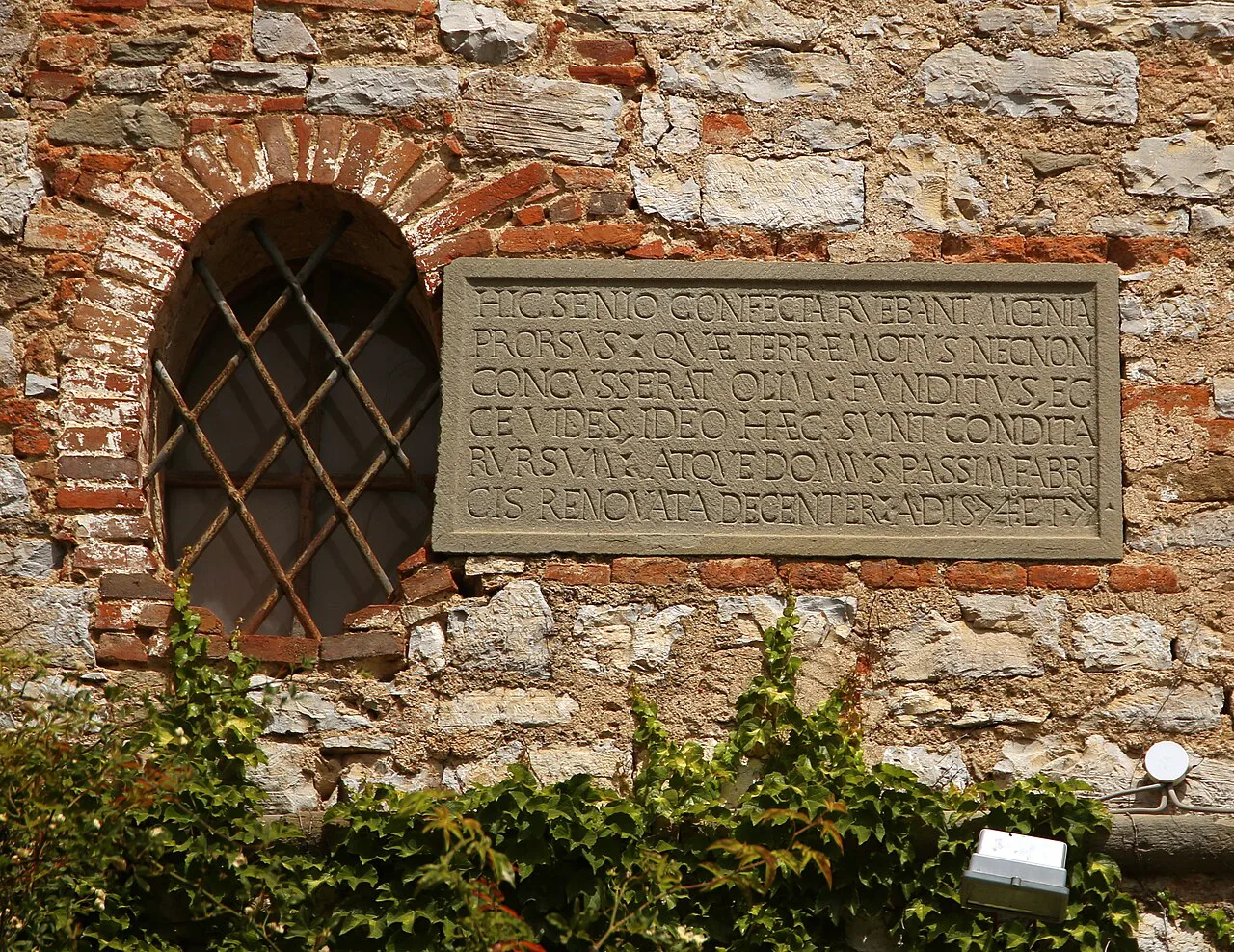
The name describes the place: badia is Italian for abbey, and Coltibuono means good harvest. The complex began as a Vallombrosan Benedictine monastery founded in 1051 and stayed in monastic hands until 1810, when the monks were forced out and the property was secularised. That long religious tenure is why the estate reads as a walled village rather than a villa, with the church and gardens on the same hilltop as the working winery.
Today it operates on two tracks. One is agricultural: vineyards, olive groves and a cellar producing Chianti Classico and related bottlings. The other is hospitality: a restaurant, guest rooms and cooking courses run alongside the wine side. Knowing which track you want prevents the classic Chianti mix-up of turning up for a tasting and finding you have booked lunch, or the reverse.
The enclosed garden is worth a few minutes on its own: a formal hortus conclusus of box hedges around aromatic and medicinal beds, restored in recent decades, with a pietra serena pool at its centre and a monumental Lebanese cedar beside the abbey. The abbey church and gardens feature on the local guided-tour circuit rather than as a standalone ticketed sight, so treat them as part of an estate visit rather than a separate stop.
Where It Sits in Chianti Classico
The estate is at Gaiole in Chianti, in the Province of Siena, in the heart of the Chianti Classico production zone between Siena and Florence. For a base-town trip, Siena is the natural anchor: it is the nearest city of size and the obvious place to sleep, eat and pick up a tour. From there the estate makes sense as one substantial stop on a day in the Gaiole countryside rather than a quick add-on between two others.
That positioning matters for choosing your day. Gaiole is quieter and more scattered than the Chianti towns closer to Florence, and estates here sit off the main roads, so a tight schedule of three or four visits rarely works without a car and driver. If you are building a wine day from Siena, it helps to see how the wider area is organized; the guide to wine tasting in Siena lays out the districts and bases before you commit to a route.
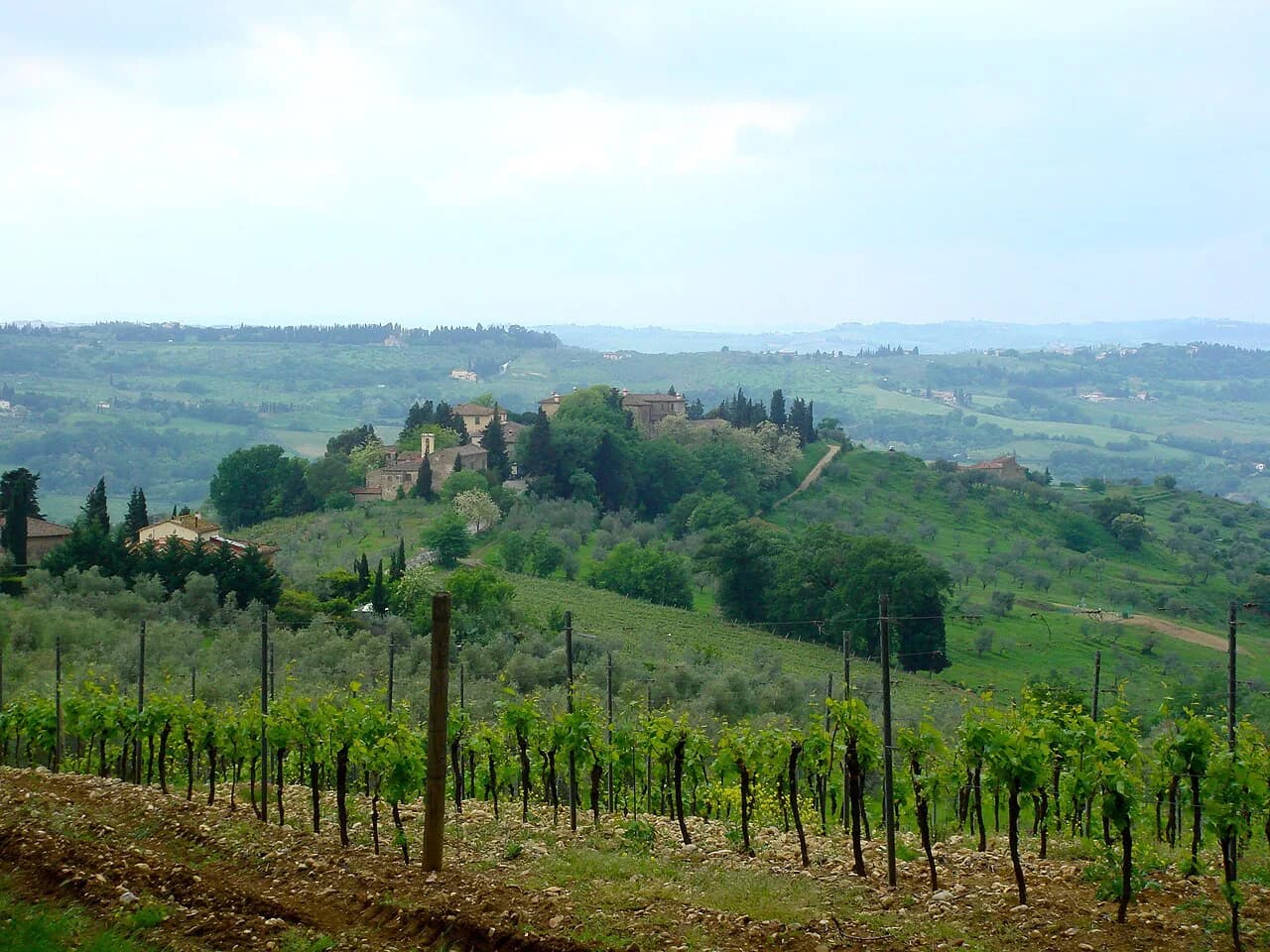
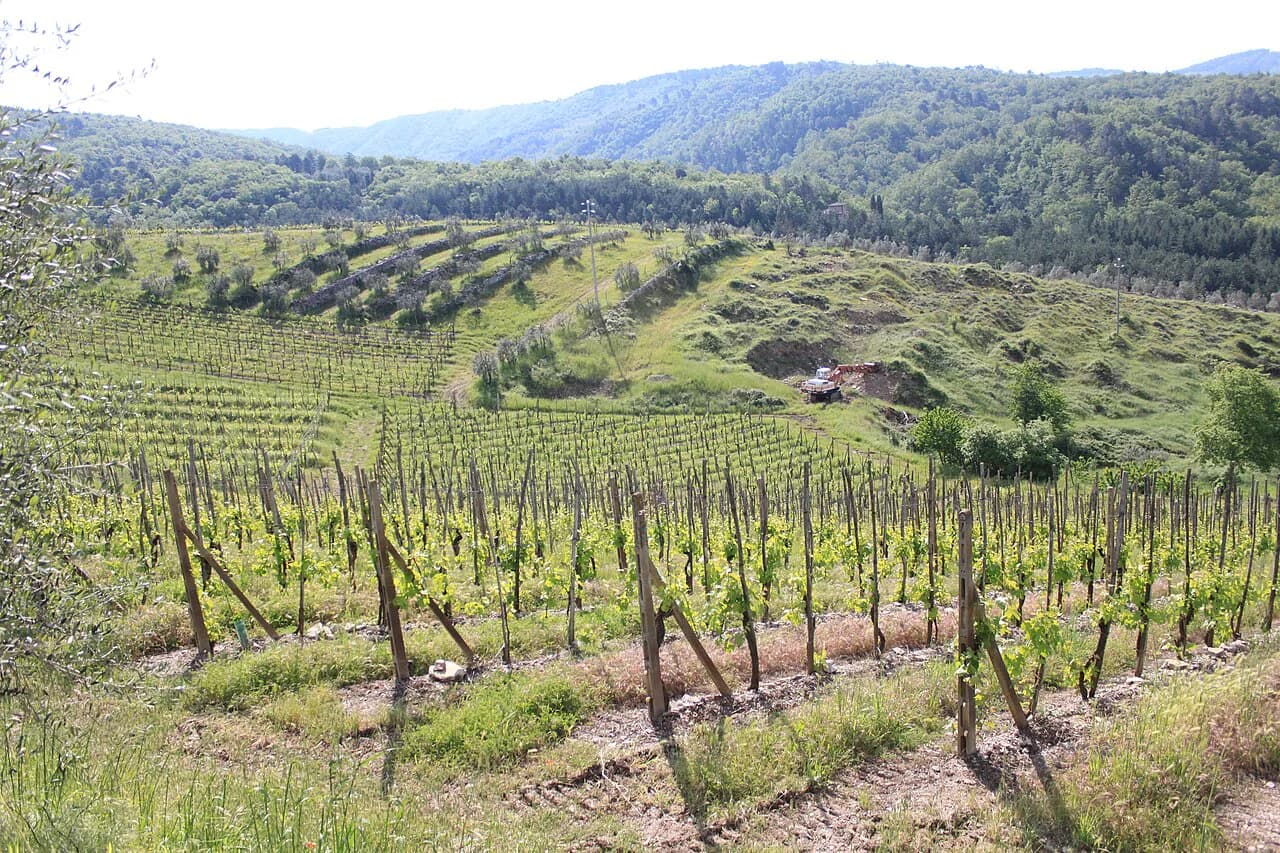
The estate's own vineyards are spread beyond the abbey hill, around Monti and toward Vitignano and Vagliagli in the Castelnuovo Berardenga direction, which is a useful reminder that the property you visit is not the same as the land that supplies it. For tasting purposes, the wines are classic eastern-Chianti Sangiovese rather than the sandier, more aromatic style associated with some western communes; comparing that with wine tasting in Montepulciano shows how Sangiovese shifts from zone to zone.
The Estate's History in Brief
The outline is easy to hold: Vallombrosan monks from 1051, a flourishing abbey under Medici patronage in the fifteenth century, expulsion in 1810 under Napoleonic rule, then private ownership. The property passed by lottery before being bought in 1846 by Guido Giuntini, a Florentine banker and ancestor of the current owners. The Stucchi Prinetti family has run it since, keeping the agricultural function intact through two centuries of change.
The modern chapter is bound up with food as much as wine. Lorenza de' Medici, wife of Piero Stucchi Prinetti, built an international reputation as a cookery writer, and the cookery school attached to the estate grew from that profile. Emanuela Stucchi Prinetti later became the first woman to preside over the Consorzio del Vino Chianti Classico, the growers' body that governs the appellation. Those two facts explain why the estate presents itself as a food-and-wine destination rather than a cellar door alone.
The Wines to Know Before You Go
The core range is what you would expect from a serious Gaiole estate: a Chianti Classico from Sangiovese with traditional supporting grapes, a Chianti Classico Riserva bottled in the better vintages, and a Sangioveto Toscana IGT that takes the grape into a broader Tuscan designation. Around these sit a Montebello Toscana IGT blended from historic local varieties and two Vin Santo del Chianti Classico bottlings, one made from Trebbiano and Malvasia and one Occhio di Pernice from Sangiovese.
The blends are the interesting part for anyone who already knows Chianti Classico. Montebello draws on varieties such as Pugnitello, Colorino, Canaiolo, Malvasia Nera, Foglia Tonda, Mammolo and Ciliegiolo alongside Sangiovese, which gives you a reason to taste beyond the flagship red. There is also a Vermentino from Maremma vineyards on the Tuscan coast, a useful white option if your group is splitting a flight.
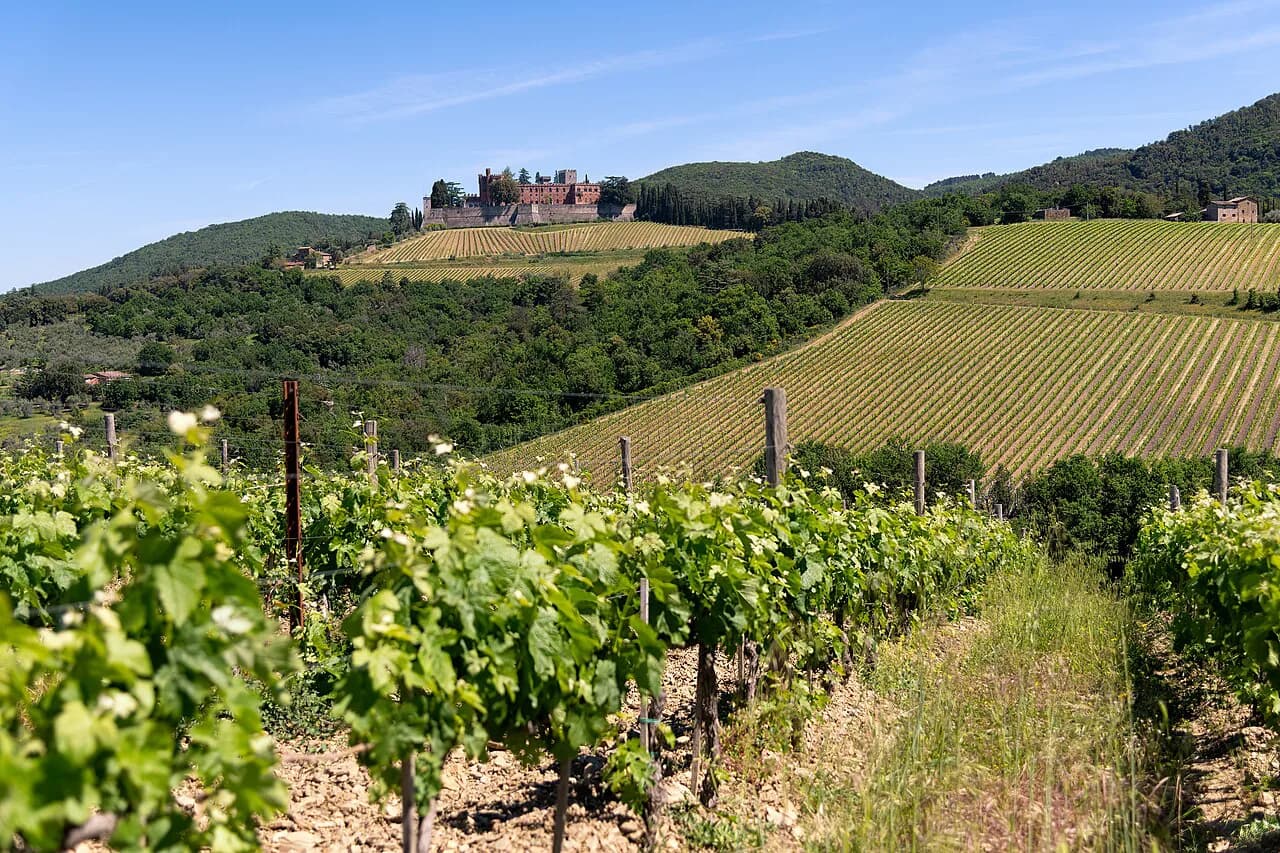
Farming is organic across the estate's produce, and the vineyards are overwhelmingly Sangiovese, roughly nine parts in ten, on a property of about 700 hectares with around 70 under vine. Annual production is in the region of 270,000 bottles depending on the vintage. Those figures tell you this is a mid-sized commercial estate with a visitor operation, not a micro-producer pouring in a barn.
Tasting and Cellar Visits
The wine side is a working cellar with wide floor areas built to move around steel vats during fermentation, designed by Roberto Stucchi Prinetti, who oversees viticulture and winemaking. Visits and tastings exist, but the estate does not publish a standard tasting price, a fixed number of wines poured or a stated tour length. Rather than guess, ask when you make contact: specify whether you want a cellar walk-through or just a seated tasting, and how many pours you expect.
When you write, name the wines you hope to try. If the Riserva or the Vin Santo matters to you, say so, because availability shifts with vintage and stock, and a short visit may only cover the entry-level reds. It is also worth asking whether the tasting includes the olive oil, since the estate sells oil alongside wine and many Chianti properties pour it as part of the visit.
Treat any booking as confirmed only when you have a reply. Italian estates commonly handle visits by email between other work, so a request sent the day before may simply go unanswered during harvest, roughly September into October, when the cellar is at full stretch. Book well ahead if your dates are fixed, and keep the party size explicit in the first message.
Booking Etiquette on Chianti Estates
The working assumption across Chianti Classico is appointment first, especially for anything involving a cellar. Independent estates rarely staff a tasting counter all day, and drop-ins get turned away or squeezed in reluctantly. A short email with your date, preferred time, number of adults and whether anyone is driving gives the estate what it needs to answer in one go.
Language is rarely a barrier, but keep the message plain and specific: visit type, time window, party size, and any dietary needs if a meal is involved. If you are coming by taxi or with a driver waiting, say so, because parking and access in the Gaiole hills are easier to arrange when the estate knows a car is staying. Confirm the meeting point as well as the time, since these properties often have more than one entrance.
Eating at the Estate Restaurant
The restaurant is run directly by the estate and leans on local produce, organic where possible, with a menu that mixes Tuscan tradition and broader Italian ideas. Service is published as lunch from 12:00 to 14:30 and dinner from 19:00 to 21:30, and the restaurant is closed on Tuesdays. Those are the hours as currently published; confirm them when you book, since seasonal service can shift.
Booking goes through the restaurant rather than a central reservations desk. The published contact is restaurant.booking@coltibuono.com and telephone (+39) 0577 74481, extension 232, with a stated reply time of within 48 hours; there is also a WhatsApp number listed on the restaurant page. If your trip is short, email first and follow up by phone after a couple of days rather than waiting on a single channel.
On the menu there is a tasting menu that includes four wines by the glass, and an à la carte alternative. The restaurant page does not list prices for either, so ask for the current menu and cost with your booking request, and mention any dietary restrictions at that point. Booking a table here is also the simplest way to combine a meal with an estate visit; ask whether a cellar appointment can be arranged on the same day.
Gardens, the Abbey Church and the Castles Route
The abbey church and the formal garden are the non-wine reasons to come, and they work best as unhurried half-hours either side of a tasting. The estate sits on the Strada dei Castelli del Chianti, the castles route promoted around Gaiole, which is the local tourism framing for the fortified sites scattered through these hills. Use it to see how the abbey fits the wider landscape rather than as a ticketed trail.
If gardens are a priority on your trip, place Badia a Coltibuono on the same day as other countryside stops rather than trying to pair it with a city morning. The drive between Gaiole and Siena is short on the map but slow on the ground, and a garden walk plus a cellar visit plus lunch comfortably fills an afternoon.
Cooking School and Experiences
The cookery school is a genuine part of the estate's identity, founded in the wake of Lorenza de' Medici's cookery writing and now run alongside the hospitality side by the family. Courses and experiences are booked separately from a wine tasting, and places are limited, so treat a cookery session as the anchor of a day rather than something to add at the last minute.
Guests sometimes stay on the property, which changes the logistics entirely: dinner and a tasting stop being a drive and become a walk. If you are considering an overnight, ask the estate directly about rooms and about combining a stay with a course or a cellar appointment, since these are sold through the hospitality side rather than as wine-shop products.
Getting There Without Driving
This is the part to plan hardest. Gaiole in Chianti has bus connections to Siena and the surrounding villages, but the estate sits outside the village on a rural road, and the last stretch is not a comfortable walk in summer heat or after a long lunch. Without a car, your realistic options are a taxi booked for both directions, a guided tour that includes the estate, or a bike for confident riders on hilly roads.
Tours solve the twin problems of access and alcohol. A driver-guide handles the lanes, the parking and the timing, and you can taste without counting units; the trade-off is fixed itineraries and less time in any one place. Siena wine tours set out what a guided day typically covers, which helps you judge whether a group format suits a visit as specific as this one.
Whoever drives should not taste. Use the spittoons, appoint a non-drinking driver, or take a tour or taxi, and remember that countryside roads here demand full attention after dark. That single rule makes the difference between a good Chianti day and a memorable one for the wrong reasons.
Pairing It With Other Gaiole-Area Stops
Badia a Coltibuono works best as the anchor of a Gaiole day with one or two lighter stops around it. Pair it with a village lunch, a second small estate nearby or a castle ruin on the Strada dei Castelli, and leave the driving to one person or a guide. Trying to bolt it onto a Florence-to-Siena transfer usually produces a rushed visit and a missed appointment.
If you want a wider choice of estates to slot around it, the survey of wineries in Siena covers options by area and helps you avoid criss-crossing the zone. Build the day geographically: Gaiole and its neighbours together, and Siena itself for an evening back in town.
For contrast, a modern purpose-built visitor centre such as Antinori nel Chianti Classico near San Casciano in Val di Pesa shows the other end of the Chianti spectrum: architecture, structured tours and a very different booking rhythm. Doing one historic abbey and one contemporary winery across two days gives a fuller picture of the appellation than either alone.
Who This Estate Suits
Come here if you want history, a proper meal and Sangiovese with traditional blending grapes in one place, and if you are willing to book ahead and arrange transport. It rewards travelers based in Siena or staying in the Chianti countryside who can give it half a day. It suits couples and small groups who value a table as much as a tasting.
Choose a town-centre enoteca in Siena instead if you are car-free, short on time or want to taste on impulse without appointments. The Siena Wine Bars and Enoteche guide covers places built for exactly that, and a walk-in pour in town is a sensible fallback when an estate visit falls through.
Plan Your Visit
To visit Badia a Coltibuono, decide first what you are booking: a cellar tasting, a meal, a cookery session or a combination. Email the restaurant for a table using the published address, and ask separately about a tasting appointment on the same day, giving your date, party size and whether a driver will be waiting.
Then lock in transport before you lock in the time. A pre-booked taxi, a guided Chianti day or a designated driver solves the rural-access problem, and building the day around Gaiole rather than around a city-to-city transfer keeps it relaxed. Confirm the details once you have replies, and keep Tuesday off the plan if the restaurant is part of your day.
Frequently Asked Questions
Where is Badia a Coltibuono located?
It is at Gaiole in Chianti, in the Province of Siena, in the Chianti Classico zone between Siena and Florence. The estate sits outside the village on a rural road rather than in the town centre, so plan a car, taxi or guided tour for the final stretch.
Can you visit Badia a Coltibuono and taste the wines?
Yes, visits and tastings exist as part of a working estate, but the estate does not publish a standard tasting price, a fixed number of wines or a tour length. Write ahead with your date, party size and whether you want a cellar walk-through or a seated tasting, and ask what the visit includes.
Does Badia a Coltibuono have a restaurant?
Yes. The estate runs its own restaurant, published as open for lunch from 12:00 to 14:30 and dinner from 19:00 to 21:30, closed on Tuesdays. Book by email at restaurant.booking@coltibuono.com or by phone on (+39) 0577 74481, extension 232, and confirm the hours with your reservation.
What wines does Badia a Coltibuono make?
The core range is Chianti Classico and Chianti Classico Riserva from Sangiovese, plus a Sangioveto Toscana IGT, a Montebello Toscana IGT blended from historic local varieties, and Vin Santo del Chianti Classico in two styles. A Vermentino from Maremma vineyards is also produced.
How do you get to Badia a Coltibuono without a car?
Buses link Siena with Gaiole in Chianti, but the estate lies outside the village on a country road, so the last stretch is best covered by a pre-booked taxi in both directions or a guided tour that includes the property. A driver in your group should not taste, so use spittoons or public transport.
Is Badia a Coltibuono worth visiting on a Chianti wine day?
It suits travelers who want history, a meal and Sangiovese-based Chianti Classico in one place and who will book ahead and arrange transport. If you are car-free, short on time or want to taste on impulse, a town-centre enoteca in Siena is the easier choice.
Sources
Notes for your next wine trip
Optional updates to our winery and wine-town guides.
You might also like
Continue reading
More guides you'll find useful