Santorini Wineries: Where to Taste Assyrtiko & Vinsanto
Plan a Santorini winery day: caldera-view estates versus village cellars, what tasting flights include, and how to reach each by bus, taxi, or tour.
On this page
Santorini packs more than twenty wineries onto a small volcanic island, and the smartest itineraries treat them as three separate groups rather than a single list. Caldera-rim terraces near Fira sell sunset views with the wine, inland estates near Oia and Exo Gonia lean on vineyard scale, and family cellars in villages such as Megalochori stay small and personal. Deciding which group you want first will save you a lot of winding road time.
This guide covers the wineries that openly receive visitors, the grapes and styles worth knowing before you book, and the transport trade-offs between a bus stop, a taxi and an organized tour. It also flags which details to check yourself, because tasting formats and seasonal openings shift from year to year. Anyone driving should skip the glass entirely and use spittoons or a designated driver, so a tour or public transport is often the simpler choice on this island.
Why Santorini Wines Taste the Way They Do
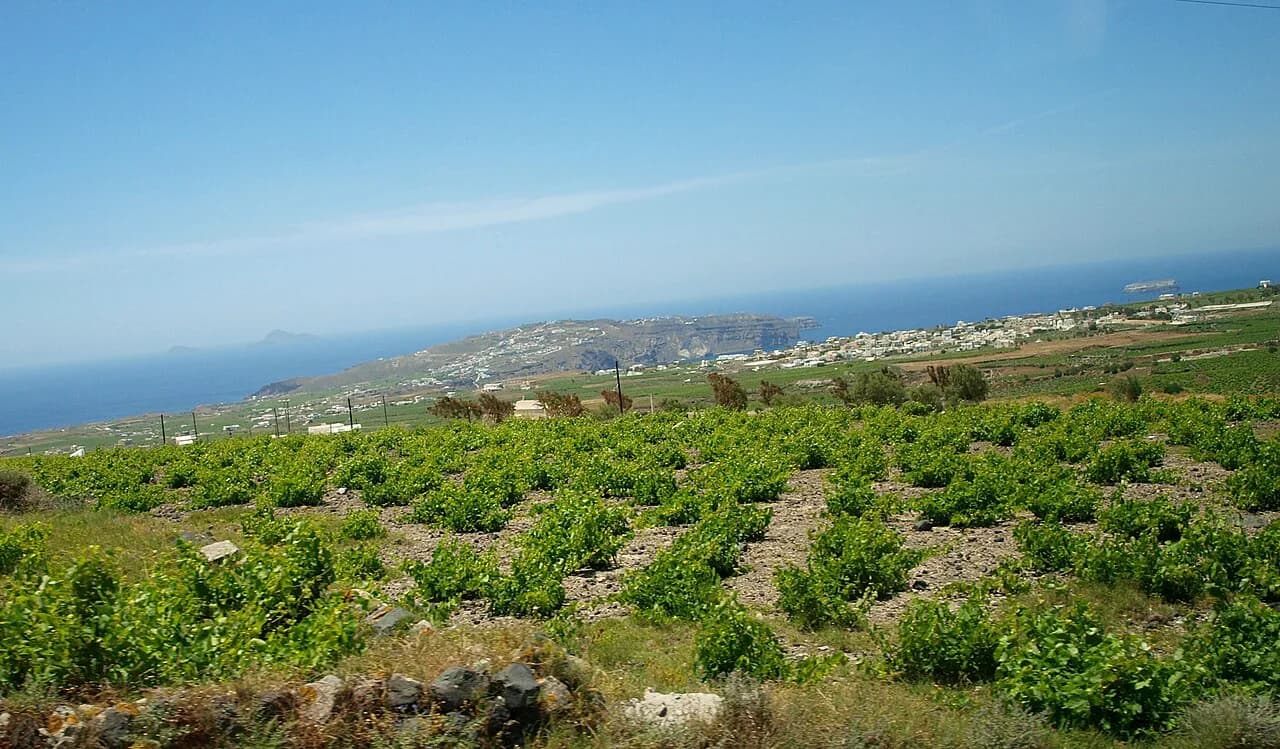
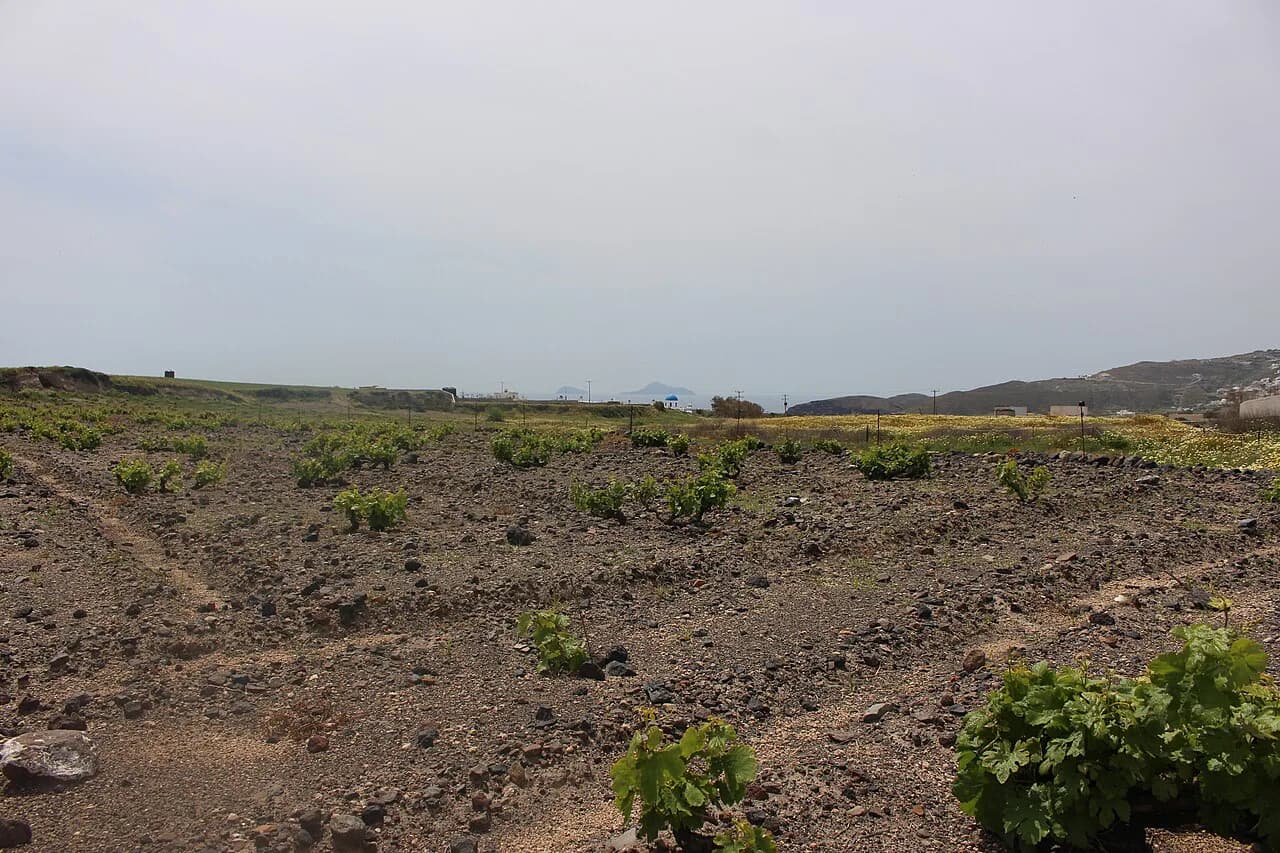
Santorini is the rim of a collapsed volcano, and the soil is mostly pumice, ash and lava rather than ordinary earth. That porous ground holds scarce rainfall and has kept phylloxera away, so many vineyards were never replanted and include some of the oldest vines in the world. The Santorini PDO covers both dry and sweet wines made on the island, which is why the label appears on everything from bone-dry whites to dessert styles.
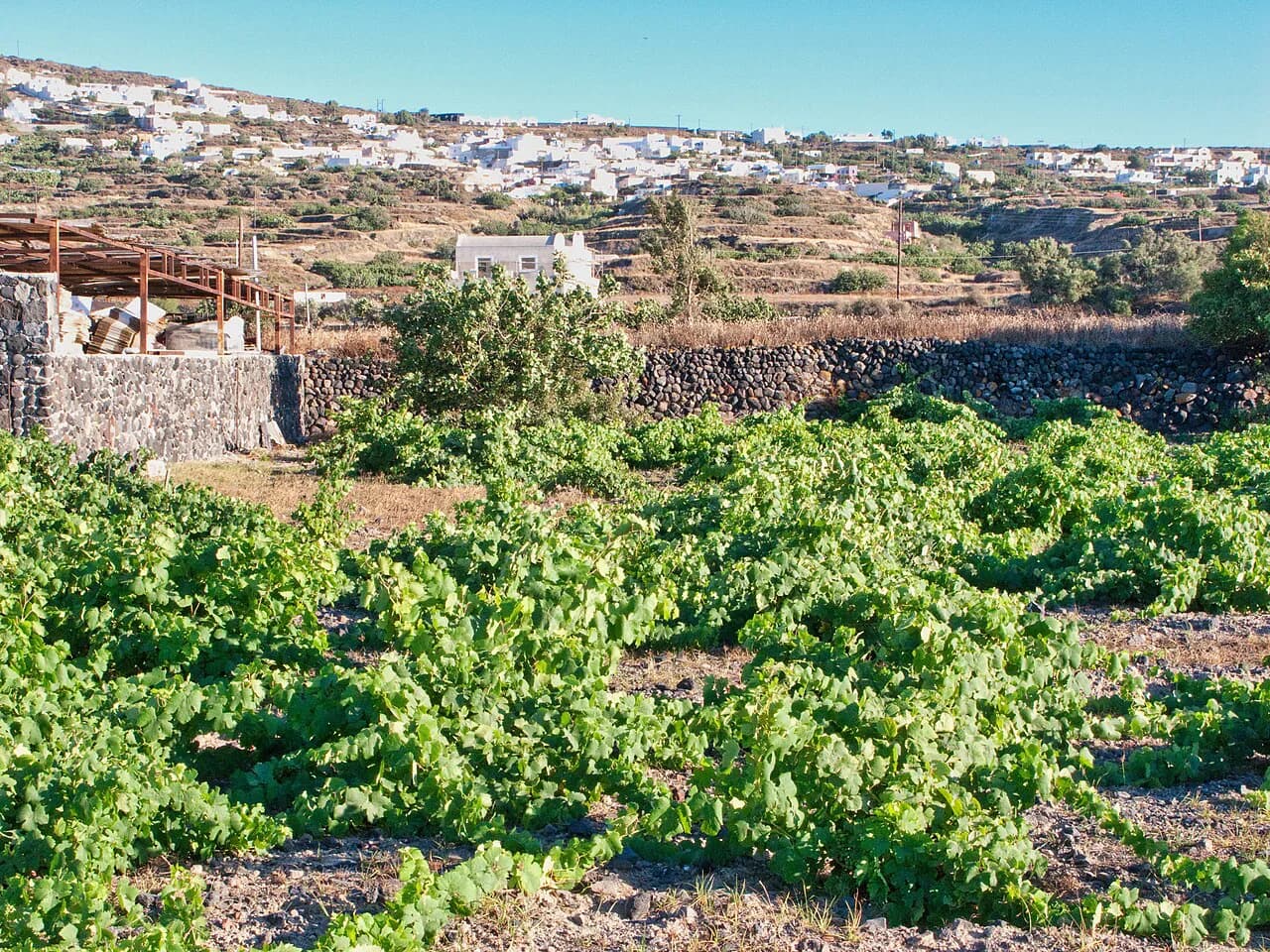
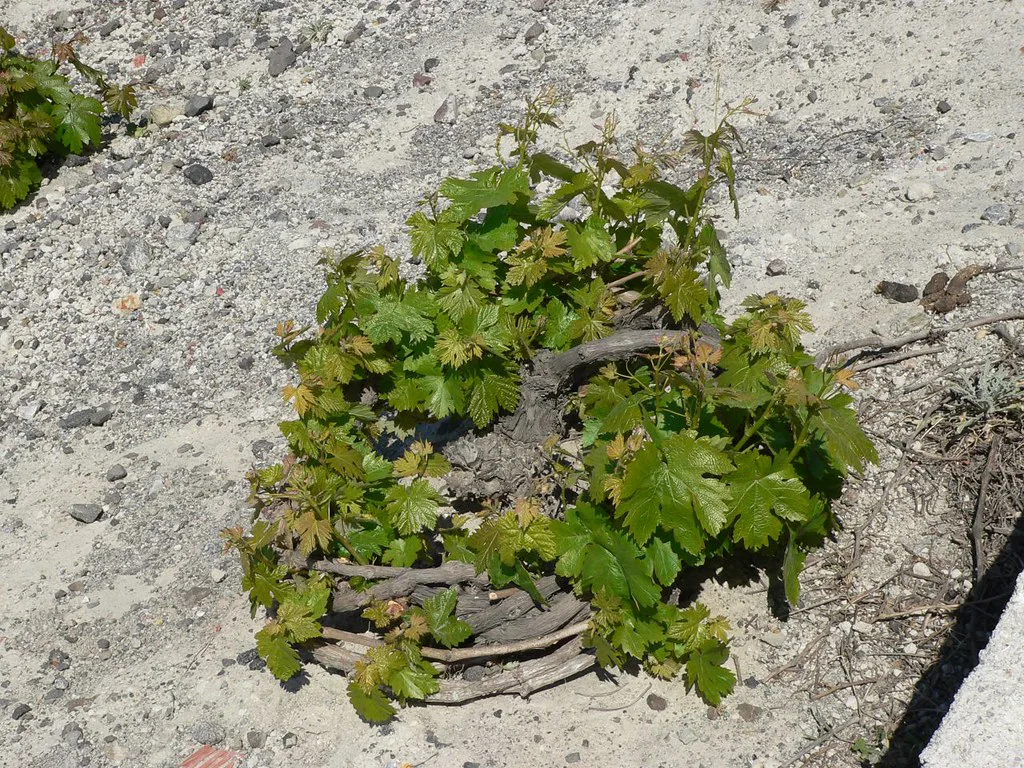
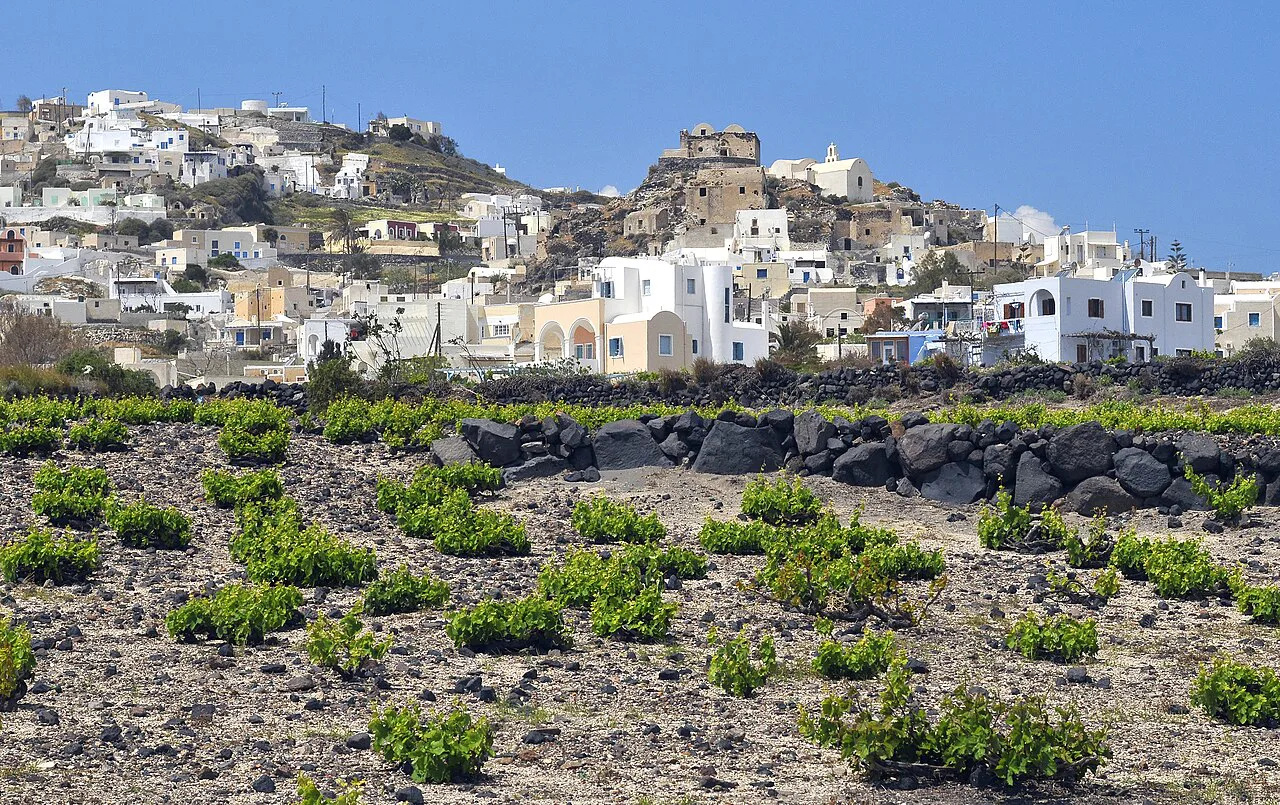
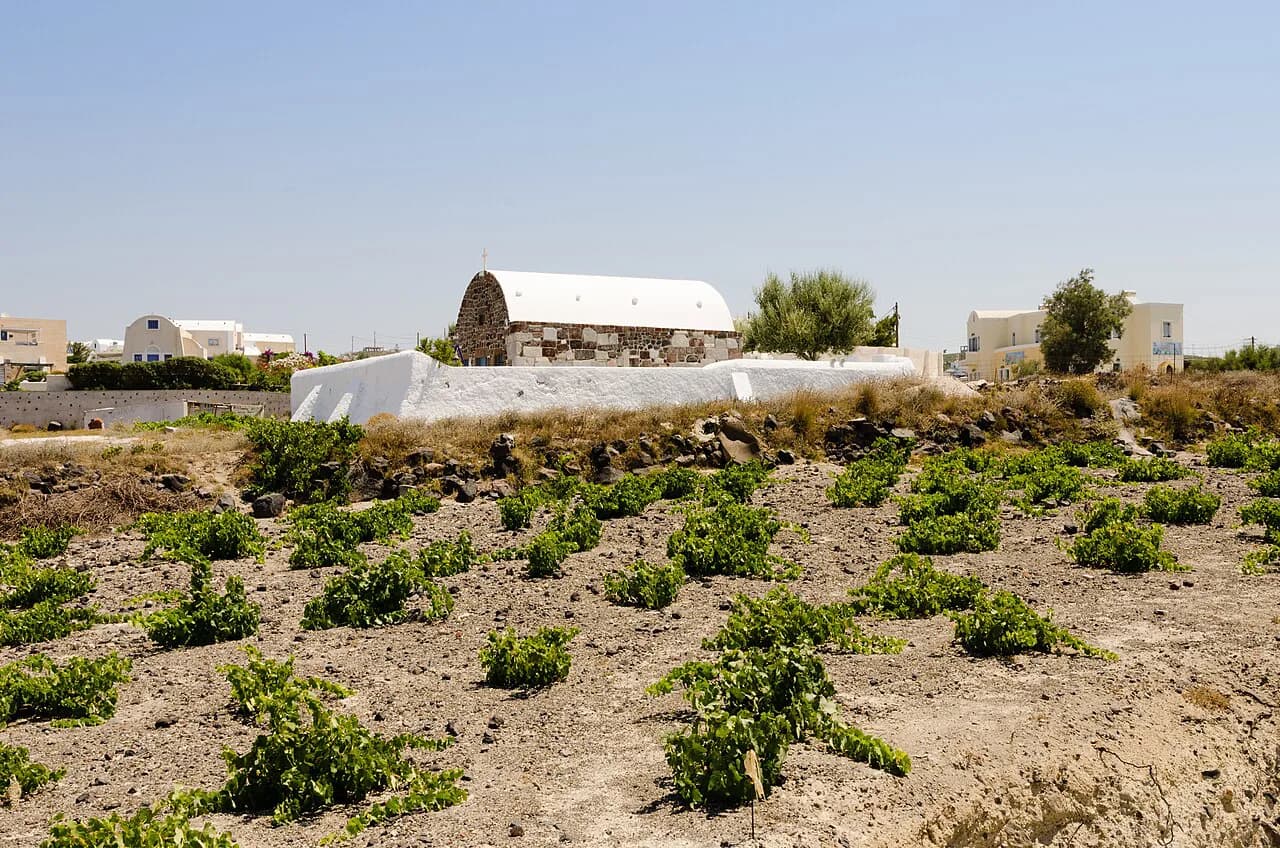
Growers train vines into low basket shapes called kouloura, coiling the wood so the fruit sits protected inside from the Cycladic wind and sun. It is slow, manual work that shapes how the vineyards look from the road, and it is the single most distinctive thing to look for on the drive between stops. Because the baskets sit close to the ground, the vineyards read as scrubby green spirals rather than the tall trellises most visitors expect.
The Grapes to Know Before You Book
Assyrtiko dominates the island's plantings and gives the taut, citrus-driven whites Santorini is known for, made both in stainless steel and in oak. Aidani and Athiri are the supporting white grapes, often blended in, and both appear in the sweet Vinsanto made from grapes dried in the sun before fermentation. Nykteri is a dry white style traditionally linked to night picking, usually based on Assyrtiko and often aged in oak.
Reds are a smaller part of the picture but worth seeking out: Mandilaria gives medium-bodied wines and is also dried for sweet styles, while Mavrotragano makes fuller, more structured reds. Gavalas Winery has also revived the rare Katsano and Voudomato varieties, and its tasting flights let you compare those against Assyrtiko in one sitting. Knowing these names makes flight menus much easier to read, and it helps you decide between a whites-focused visit and a broad survey.
How the Winery Map Is Laid Out
Think of the island in three bands. The caldera rim just outside Fira holds Santo Wines and, a short distance toward Megalochori, Venetsanos Winery, both set on terraces above the water. Inland, Domaine Sigalas sits about a 10-minute drive from Oia in the north, while Estate Argyros and several smaller producers cluster around Exo Gonia and Mesa Gonia in the center. Megalochori anchors the village-cellar group in the south. If you are comparing islands for a wine trip, Crete has a similarly clustered set of wineries near Chania to weigh against Santorini's three bands.
A workable loop pairs one caldera-rim terrace with one estate or village cellar, since the roads between them are narrow and slow. Two stops plus a village walk fills an afternoon comfortably; three wineries is realistic only with a driver or a tour. Spreading stops across opposite ends of the island looks efficient on a map but rarely is in practice.
Caldera-View Wineries: Santo Wines and Venetsanos
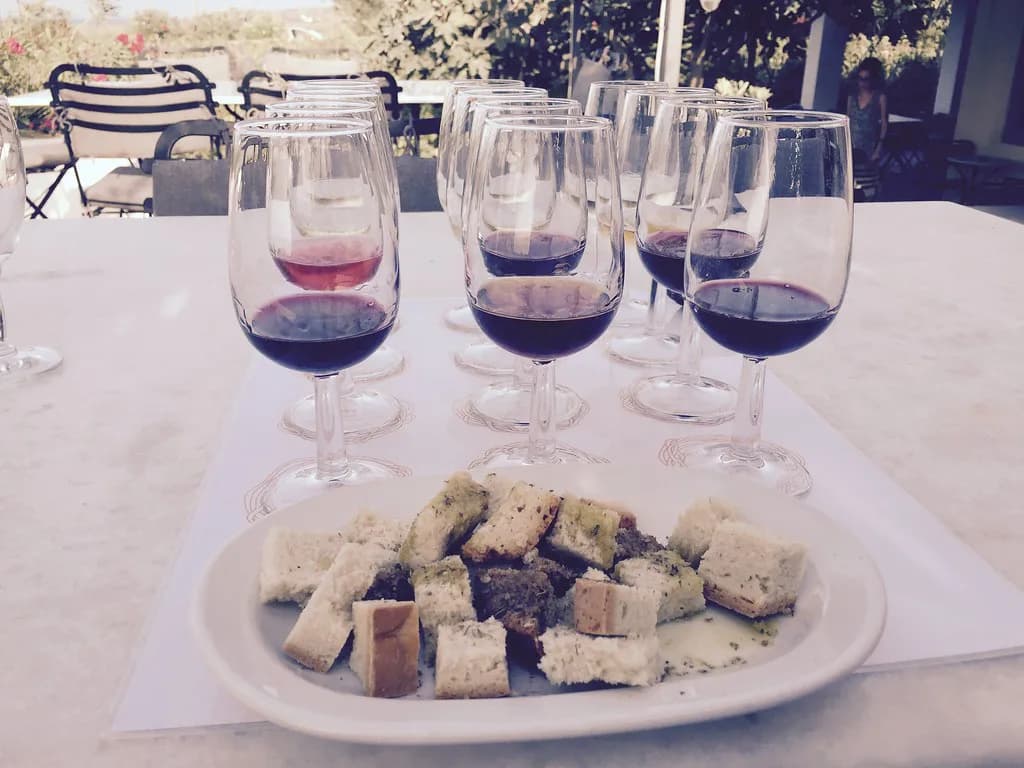
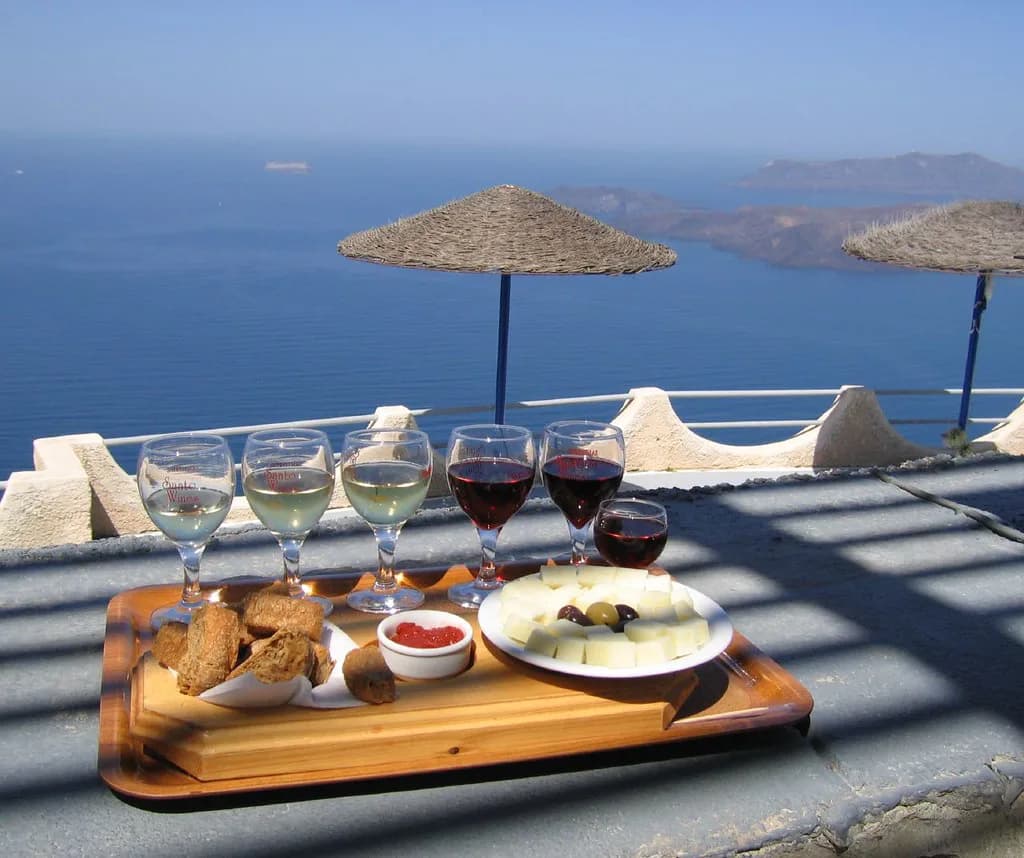
Santo Wines, just outside Fira, is the easiest winery to reach without a car: it has its own stop on the Fira–Perissa bus route, and taxis and tours also serve it directly. Flights run from four to six wines depending on the package, each served with local cheese and small bites, and the terrace has tiered seating so most tables face the caldera. It is the busiest and priciest of the three well-known options on this side of the island, so reserve online well before a summer sunset slot.
Venetsanos Winery is a short drive or walk from Santo Wines toward Megalochori, and its gravity-fed cellars were carved into the caldera slope when it opened in 1947. Visits combine a look at the old winemaking equipment with a tasting of island grapes, and the kitchen turns out dishes such as octopus cooked in Vinsanto. Online reservations must be made at least 48 hours ahead, though walk-ins have been accommodated in practice, so a booking is the safer bet in high season.
Estate-Scale Wineries: Sigalas and Argyros
Domaine Sigalas, in the north near Oia, farms around 40 hectares and makes several Assyrtiko expressions, from stainless-steel versions to single-vineyard and oaked styles. Its vine-shaded patio serves a full food menu as well as guided tastings with paired dishes, which makes it the strongest lunch stop in this group. It is a quick drive from Oia but not a walk, so plan a taxi, tour pickup or designated driver.
Estate Argyros, near Exo Gonia, is the island's largest private vineyard owner at roughly 120 hectares and has been family-run since 1902. The modern tasting room offers cellar tours explaining small-lot production, plus wine-and-food pairing experiences built around regional bites. Its old-vine Assyrtiko and long-aged Vinsanto are the wines to ask about when you reserve.
Village and Family Cellars in Megalochori and Mesa Gonia
Gavalas Winery in Megalochori is a five-generation family operation with a preserved stone winery and cellars you walk through during the visit. Tasting options range from an introductory Santorini flight to whites-only or premium and rare selections, served in a courtyard with local cheeses, bread and tomato paste, and reservations are advised if you are not arriving with a tour. It opens seasonally from April through October, which matters if you are visiting in the shoulder months.
The Koutsoyannopoulos family runs an underground wine museum in a cave roughly 300 meters long in Mesa Gonia. An audio tour traces the production process and displays tools from earlier generations, and you can add a tasting package of the family's wines afterward. It is the best stop on the island for context rather than views, and it pairs naturally with Gavalas in a southern loop.
Smaller Stops and a Beer Break
Several smaller producers appear on rotation in organized tours rather than in fixed independent itineraries. Roussos is known for its Nykteri, Art Space Winery combines a gallery with wine, and Hadzidakis and Anhydrous Winery show up on various group routes. Because availability shifts, treat these as stops to ask about through your tour company or by phone rather than as guaranteed walk-in visits.
If your group includes someone who would rather drink beer than Assyrtiko, the Santorini Brewing Company offers a tasting break that some combined tours pair with three winery stops. On those tours you try three locally made Greek beers alongside twelve wines. Check directly whether it is open on your date and whether tastings need booking.
Comparing Tasting Formats
A flight-only visit is the simplest and quickest format: you choose a set of wines, sit on a terrace or courtyard, and stay as long as the flight lasts. A guided tour adds the cellar or production walk, which is worth the extra time at Venetsanos with its gravity-fed design and at Argyros with its small-lot setup. A food-paired experience costs more and takes longer, but turns the visit into a proper meal rather than a stop.
For a first visit, pick one guided tour at an estate and one flight-only terrace session, so you get both the explanation and the view without repeating the same format twice. Ask what the flight includes before booking, since package names rarely spell out the grape list or the number of pours. Nobody can tell you a reliable price without a current menu in hand, so request the tasting sheet by email when you reserve.
Getting Around Without Driving
The Fira–Perissa bus route stops at Santo Wines, and from there Venetsanos is a walk or very short hop toward Megalochori. Bus fares on Santorini are paid in cash, so keep small notes and coins with you, and tell the driver where you are getting off. This combination is the most realistic car-free winery afternoon on the island.
Inland estates such as Sigalas and Argyros are not conveniently served by that bus line, so taxis or a pre-booked tour make more sense there. Roads are narrow and locals drive quickly, which is the practical argument against renting a car for a multi-winery day. A driver who does not taste is the other option, and it is the cheapest way to cover the inland stops.
Independent Visit or Organized Tour
Organized tours solve the two hardest problems at once: transport between scattered wineries and a guide who explains the kouloura system and the PDO rules as you go. Typical half-day options run four to five hours, cover three wineries and pour around twelve wines in total, with Cycladic cheese and snacks along the way. Many include hotel or meeting-point pickup, which matters because large vehicles cannot reach many Santorini streets.
Going independent gives you control over pace and lets you linger over a food menu, but you must handle taxis or buses between stops and keep track of reservation times. Independent visits also tend to suit two wineries rather than three. If your priority is a specific producer such as Sigalas or Gavalas, book directly and build transport around those reservations instead of choosing a tour first.
How to Book
Most Santorini wineries take bookings through their own websites, and the better-known terraces fill up for sunset slots in summer. Venetsanos asks for online reservations at least 48 hours ahead, while Gavalas advises booking in advance if you are arriving independently rather than with a tour. For groups of six or more, email rather than using an online form so you can confirm seating and timing together.
When you write, ask three things: how many wines the flight includes, whether a cellar or production walk is part of it, and how long the whole visit takes. Those answers separate a 45-minute tasting from a two-hour experience and will change how many stops you can fit into an afternoon. Settle the details with the winery itself before you finalize a tight schedule.
Best Time to Visit
The main season runs roughly April through October, and Gavalas closes outside that window, so shoulder-season travelers should build the day around estates that stay open longer. Harvest falls in late summer, when vineyard work is visible but winery teams are at their busiest. If you want a quieter terrace and more time with staff, aim for the edges of the season rather than July and August.
Sunset slots are the most contested bookings, and Santo Wines and Venetsanos both draw crowds for the view at that hour. Cruise-ship passengers compress the middle of the day in Fira and Oia, so a mid-morning or early-afternoon winery visit often feels calmer. Look up sunset time for your date and book the terrace slot accordingly rather than planning on an open walk-in.
Where to Base Yourself
Oia and Fira put you closest to Sigalas in the north and to the caldera terraces just outside Fira, but both villages are crowded and the driving in and out is slow. The south, around Megalochori and the beaches near Akrotiri, is quieter and closer to Gavalas, the wine museum and the archaeological site. The island's bus network is better than its reputation suggests, so a southern base without a car is workable.
If you plan a wine-focused trip, base near the group you care about most rather than trying to be central. A south-based stay makes a two-winery day with a village walk easy, while a northern base favors Sigalas and Oia. Either way, keep one evening free of driving so nobody has to choose between the glass and the road.
Sample Half-Day and One-Day Plans
For a half day without a car, take the Fira–Perissa bus to Santo Wines for a mid-afternoon flight, walk or hop to Venetsanos for a second tasting and the caldera view, then return to Fira before dark. Book both slots in advance and skip a third stop, since transport eats the time you would spend tasting. This is the most reliable car-free plan on the island.
With a driver or a tour, start at Sigalas near Oia for a paired lunch tasting, move south to Argyros for a cellar tour and old-vine Assyrtiko, and finish in Megalochori with a walk through the village and a Gavalas flight if it is within the April–October season. That is a full day, so drop one stop if you want a relaxed pace. Ask each winery about timing when you reserve so the day does not unravel in traffic.
Plan Your Visit
Santorini rewards a little structure: choose one caldera terrace, one estate or village cellar, and a transport plan that keeps the driver sober. Book the terrace slot online, book Venetsanos at least 48 hours out, and treat Gavalas as an April-to-October stop. Everything else is a matter of matching your flight format to how much time and food you want.
If you want more detail on individual producers, village-by-village itineraries and wine-focused places to stay, our main Santorini coverage goes deeper on each. Start there, then check current details with the wineries you plan to visit.
Frequently Asked Questions
Can you visit Santorini wineries without a reservation?
Some do accommodate walk-ins, particularly outside July and August, and Venetsanos Winery has taken guests without bookings in practice. Santo Wines, Estate Argyros and the sunset terraces are far more reliably visited with an online reservation. Gavalas Winery specifically advises booking ahead if you are not arriving as part of a tour.
How many wines are poured in a typical Santorini tasting?
It varies by format rather than by winery. Santo Wines offers flights of four, five or six wines depending on the package, Gavalas pours four wines in its introductory visit, and half-day tours covering three wineries commonly add up to around twelve pours. Ask for the flight list when you book so you know what is included.
Can you get to Santo Wines by public bus from Fira?
Yes. The Fira to Perissa bus route stops at Santo Wines, and from there Venetsanos Winery is a walk or a very short ride toward Megalochori. Bus fares on Santorini are paid in cash, so carry small notes and coins. Inland estates such as Sigalas and Argyros are easier by taxi or organized tour.
Is Gavalas Winery open year-round?
No. Gavalas Winery in Megalochori operates seasonally from April through October, so it drops out of reach in the winter months. Other Santorini wineries also run reduced hours outside the main season. Build shoulder-season days around the estates that stay open longer and confirm your dates before you travel.
What is the difference between Assyrtiko and Nykteri?
Assyrtiko is the grape, and it produces the island's signature dry whites in both stainless-steel and oaked styles. Nykteri is a style rather than a grape: a dry white usually built on Assyrtiko, traditionally linked to night picking and often aged in oak. Tasting both side by side is the quickest way to understand the difference.
Which Santorini wineries have caldera views?
Santo Wines just outside Fira and Venetsanos Winery toward Megalochori both sit on terraces above the caldera, with tiered or open seating facing the water. Both are popular at sunset and take online bookings. Inland producers such as Sigalas, Argyros and Gavalas are wine-first visits, with vineyard or courtyard settings rather than caldera panoramas.
When is harvest season in Santorini?
Harvest falls in late summer, when picking and winery work are in full swing and appointments can be harder to secure at short notice. The wider visitor season runs roughly April through October. Visiting at the edges of that window gives you quieter terraces and more time with the people pouring.
Should you book a wine tour or visit Santorini wineries independently?
Take a tour if you want transport between scattered wineries handled and a guide explaining the kouloura vines and the PDO rules. Go independent if you want to linger over a long lunch at Sigalas or keep to two stops at your own pace. Either way, the driver in your group should not taste.
Sources
Notes for your next wine trip
Optional updates to our winery and wine-town guides.
You might also like
Continue reading
More guides you'll find useful