Vinsanto on Santorini: What It Is and Where to Taste It
Vinsanto is Santorini's sun-dried sweet wine, made mostly from Assyrtiko. Learn how it is produced and where to taste it on a wine day from Fira or Oia.
On this page
Vinsanto is the sweet wine most closely tied to Santorini, and it is the bottle visitors most often wish they had understood before the ferry left. It is made from white grapes dried in the sun until they concentrate, then fermented slowly and matured in oak, which gives a rich, honeyed wine that keeps far longer than the dry Assyrtiko on the same shelf.
This guide explains what the wine is, how the island's producers make it, which wine villages to combine into a single day from Fira or Oia, and what to sort out before booking a tasting. It also covers the practical side of an island where the roads are steep and the buses thin out in the evening. For the wider picture, the companion guide to wine tasting in Santorini maps the producers and appellations in more depth. If you are weighing Greek islands for a wine trip, wine tasting in Chania offers the same decision on Crete.
What Vinsanto Is: A PDO Santorini Sweet Wine
Vinsanto is a protected designation of origin wine from Santorini, made as a naturally sweet white from grapes that have been dried before pressing. That drying step, rather than fortification or added sugar, is what concentrates the juice into a sweet wine.
The name is close to Tuscany's Vin Santo, and the resemblance is not accidental: Italian influence left its mark on modern Santorini winemaking, with the Tuscan sweet wine and the island's Vinsanto sharing a family of names. They remain separate wines from separate places, made under different rules, so treat a Tuscan Vin Santo and a Santorini Vinsanto as cousins rather than the same bottling.
Within Greece, Vinsanto sits at the sweet end of the Santorini range, alongside the dry, saline whites that made the island's reputation. If you only have time for two glasses on the island, pair one dry Assyrtiko with one Vinsanto to see how the same grape behaves at opposite ends of the style spectrum.
The Grapes Behind Vinsanto
Assyrtiko dominates the blend, and a producer's own bottling may list it at roughly seven parts in ten, with Aidani making up most of the rest and other white varieties filling out the remainder. That ratio is a useful reference point when you read a back label, though each producer blends to its own house style.
Aidani brings perfume and softness to the blend, while Assyrtiko keeps the wine's acidity sharp enough to balance the sugar. This is why Vinsanto rarely tastes cloying: the sweetness is carried by a firm acidic spine. When you taste, look for that tension between honeyed weight and a fresh, mouth-watering finish rather than judging the wine on sweetness alone.
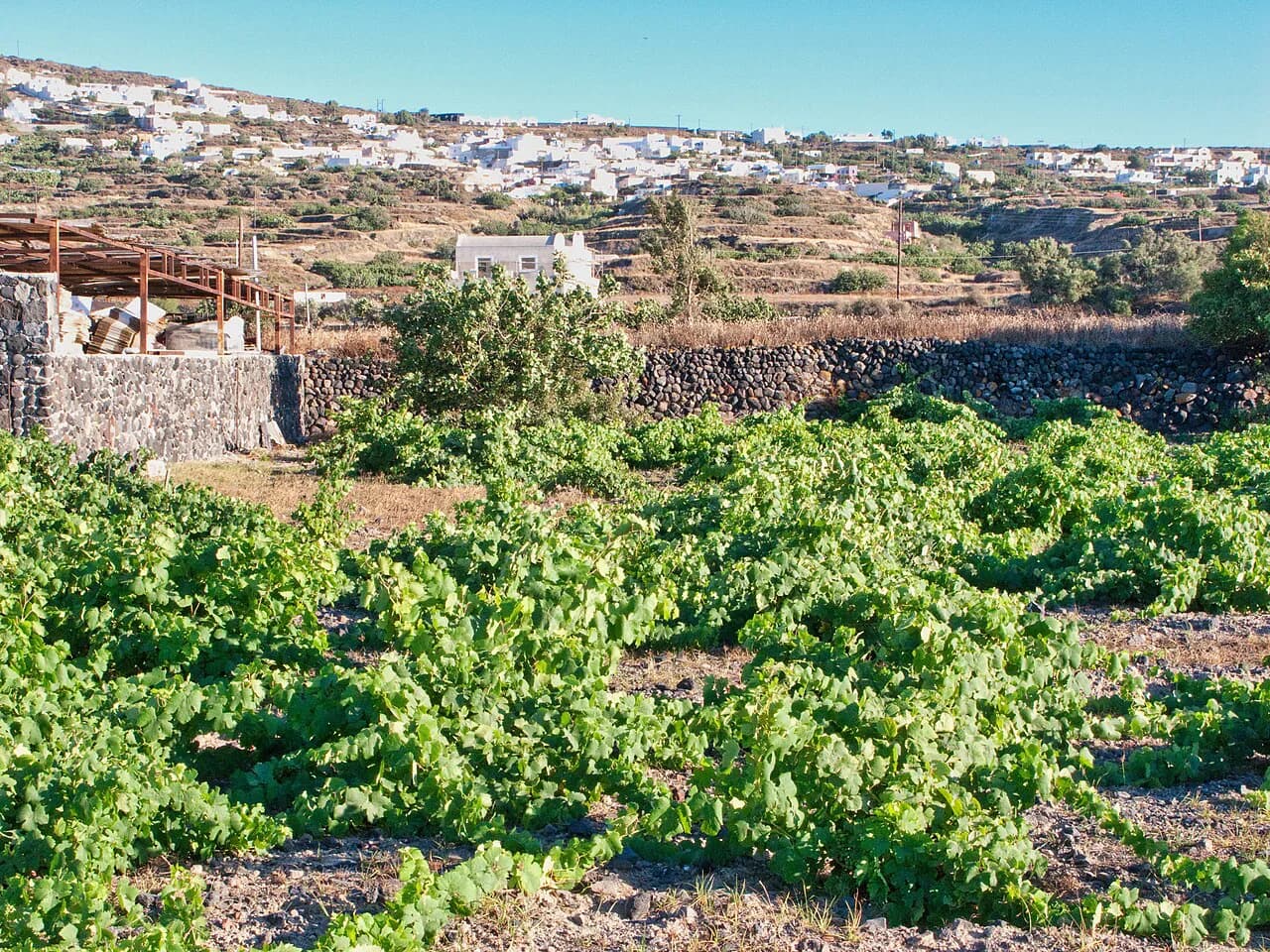
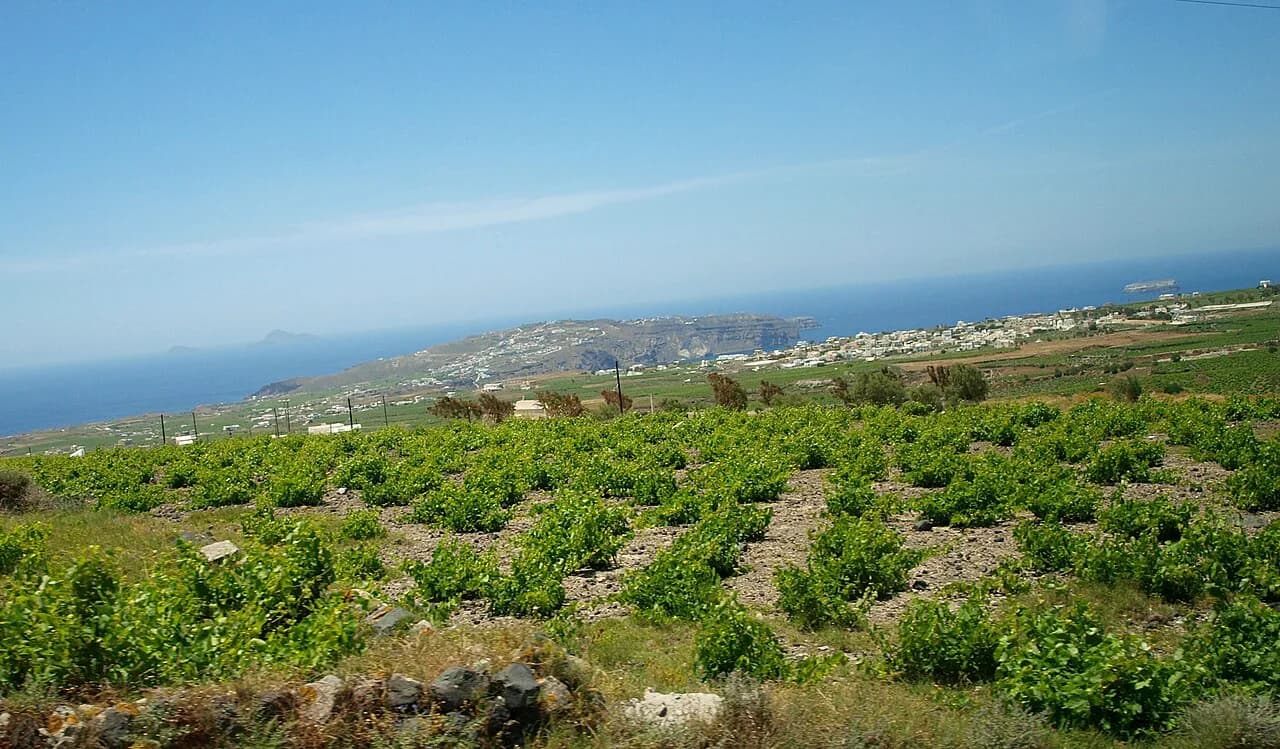
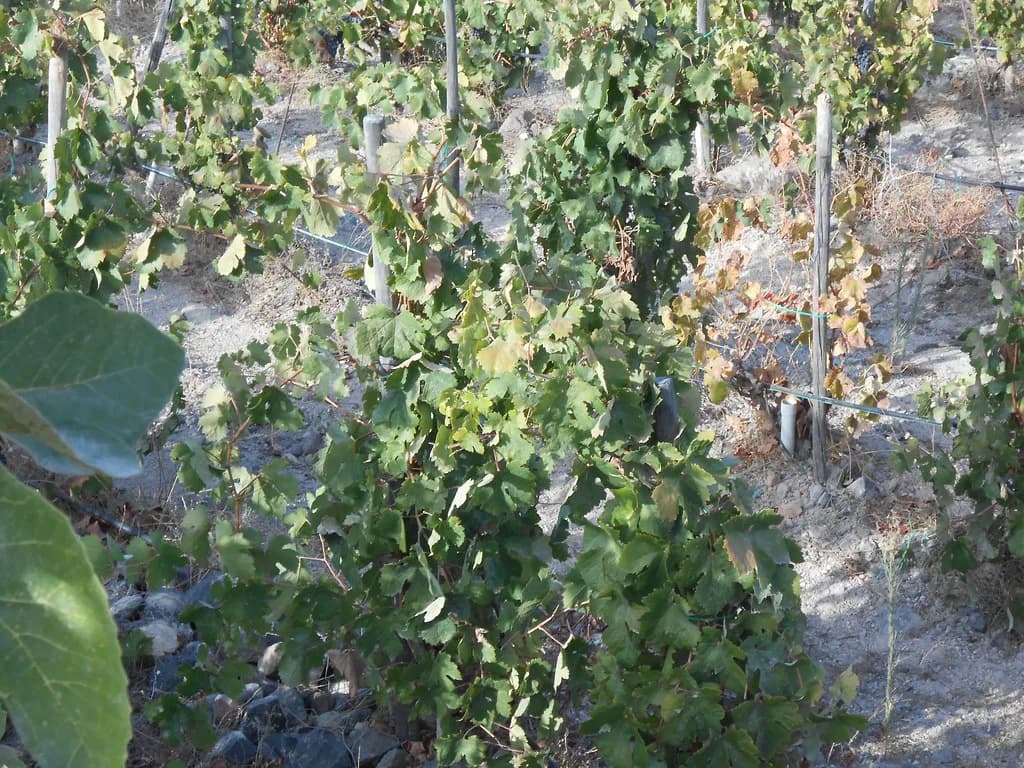
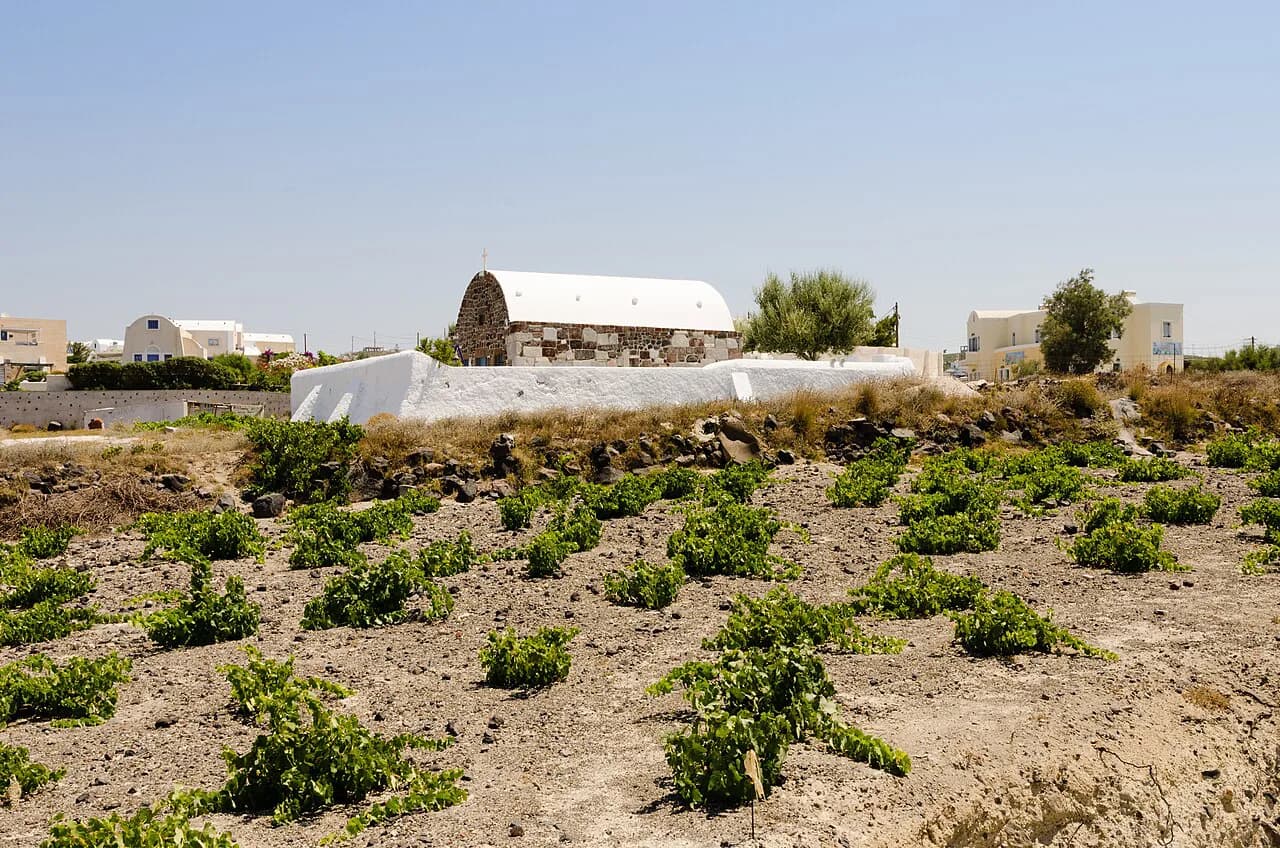
Santorini's vines grow in low, basket-woven shapes close to the ground, protected from wind and salt spray, and the grapes for sweet wine come from the same vineyards as the dry wines. If you want to see the vine training up close, ask whether a visit includes a walk through the vineyard or stops at the winery only.
How Vinsanto Is Made, Step by Step
The process begins in the vineyard, where growers leave grapes to overripen before picking. The bunches are then laid out to dry in the sun for a period of seven to fifteen days, which shrivels the fruit and concentrates sugar and flavor.
After drying, the grapes are destemmed and pressed, and the sweet juice ferments slowly for more than two months in temperature-controlled stainless steel. That long, cool fermentation is what preserves the aromatics while the yeast works through the dense sugar. Only after fermentation does the wine move into oak barrels, where it matures for at least two years before release.
The result is a wine with real aging potential, which is why older vintages appear on producers' lists. Santorini's own producers bottle multiple vintages of Vinsanto, sometimes alongside a non-vintage cuvée, and the Santo Wines range includes a bottling released after twelve years in oak. Ask which vintages are open when you book, since a vertical of two or three years is the clearest way to understand how the wine evolves.
Vinsanto vs. Vin Santo vs. Dry Assyrtiko
The confusion between Santorini Vinsanto and Italian Vin Santo is worth clearing up before you order. They are both sweet wines made from dried white grapes, but they come from different countries, different grapes and different appellation rules. A Tuscan Vin Santo will typically be built on Trebbiano and Malvasia rather than Assyrtiko, so the aromatics and structure differ even when the labels look familiar.
Dry Assyrtiko is the other half of the Santorini story: a bone-dry, high-acid white with a mineral, saline character that reflects the island's volcanic soils. Vinsanto takes those same grapes and pushes them in the opposite direction, toward concentration and sweetness. Tasting them side by side in a single visit is the fastest education in what Santorini's main white grape can do.
There is also a middle ground on many lists: barrel-fermented or lees-aged Assyrtiko, and the occasional late-harvest or sweet-finish white that is not a full Vinsanto. Ask the person pouring which wines are PDO Santorini and which fall outside the appellation, because the label status tells you a lot about what is in the glass.
Where to Taste on the Island: Grouping Your Stops
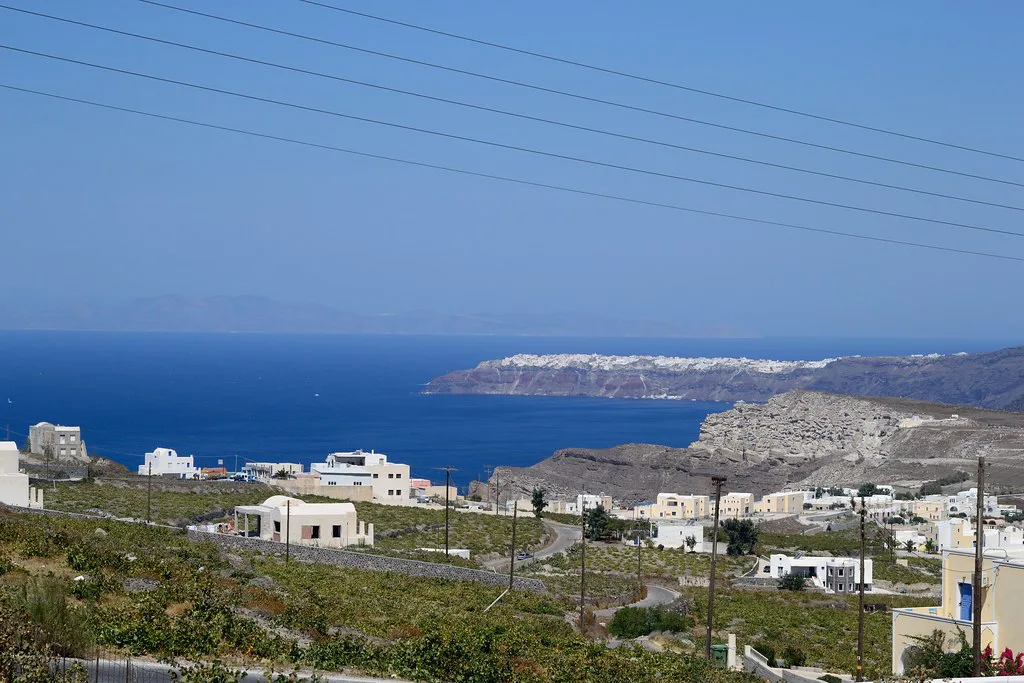
Santorini is small but the roads are slow, so the practical approach is to group visits by area rather than crisscrossing the island. The main clusters are the Akrotiri area in the south, the village of Pyrgos and the central plateau, and the producers closer to Fira and the east coast. Two or three stops in one cluster makes a comfortable half day; four across the island does not.
From Fira, Akrotiri is a straightforward drive south and pairs naturally with a morning visit and a stop at the archaeological site. Pyrgos sits roughly in the middle of the island and works well as a lunch base between a southern and a northern tasting. Oia, at the northern tip, is farther from the main wine districts, so plan your day around where you are staying rather than treating the island as one loop.
If you want the organisation handled for you, wine tours bundle transport with two or three estate visits and a tasting at each, which solves the designated-driver problem on winding roads. Independent travel is cheaper and more flexible but demands more planning around bus times and taxis. The trade-off is time versus control, and on a short trip the tour usually wins.

Venetsanos Winery Near Akrotiri
Venetsanos Winery sits on the caldera side near Akrotiri, in the southern part of the island, and it is one of the producers whose Vinsanto is sold with its production details on the label. Its Vinsanto is built on a blend of Assyrtiko, Aidani and other white grapes, with the grapes sun-dried, slowly fermented and then matured in oak for at least two years.
The winery sells its Vinsanto in a 375ml bottle and lists it at 120 euros for that size, with non-vintage, 2003 and 2016 options referenced in its shop. That is a useful benchmark for what a small-format, aged sweet wine costs direct from a Santorini producer, and it explains why Vinsanto is often bought by the half-bottle rather than the full one.
Venetsanos also sells a dry Santorini white and a rosé alongside the Vinsanto, so a single stop can cover both ends of the island's range. Its caldera setting makes it a natural sunset slot, but sunset is also the busiest time; a late-morning or early-afternoon visit is calmer if your priority is talking to the staff about the wine rather than the view.
Santo Wines and Other Producers Pouring Vinsanto
Santo Wines, on the caldera rim near Pyrgos, is one of the island's largest cooperative producers and a dependable place to taste a broad range in one sitting. Its Vinsanto is released in a twelve-year-aged bottling, which makes it a good stop if you want to compare an older style against the younger Vinsanto you tasted elsewhere.
Beyond the big names, Santorini has a cluster of smaller estates that pour Vinsanto alongside their dry wines, and several sit within a short drive of one another on the central plateau. Domaine Sigalas, in the north near Imerovigli, is among the best known for its Assyrtiko and is a natural pairing with a Vinsanto to finish.
For a more structured look at how the island's wine has been made, the Koutsoyannopoulos Wine Museum near Vothonas combines a visit with a tasting and suits a mixed group where not everyone wants to sit in a tasting room all afternoon. Whichever producers you choose, pick two or three and give each enough time to actually taste, rather than racing through five.
What a Vinsanto Tasting Involves
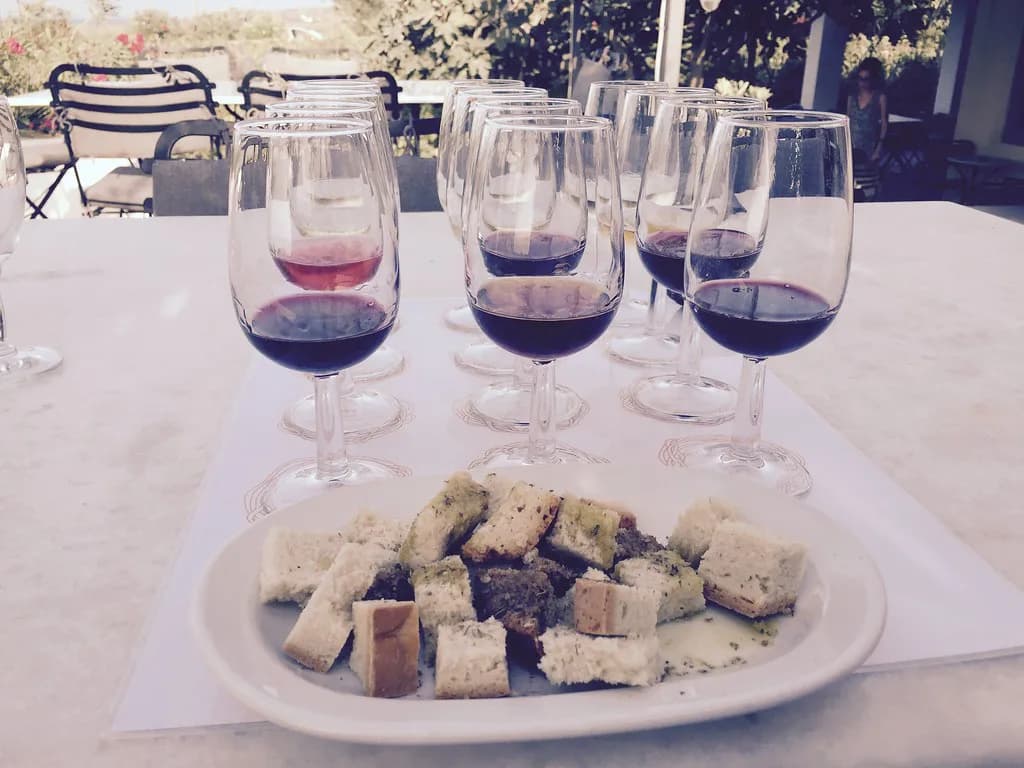
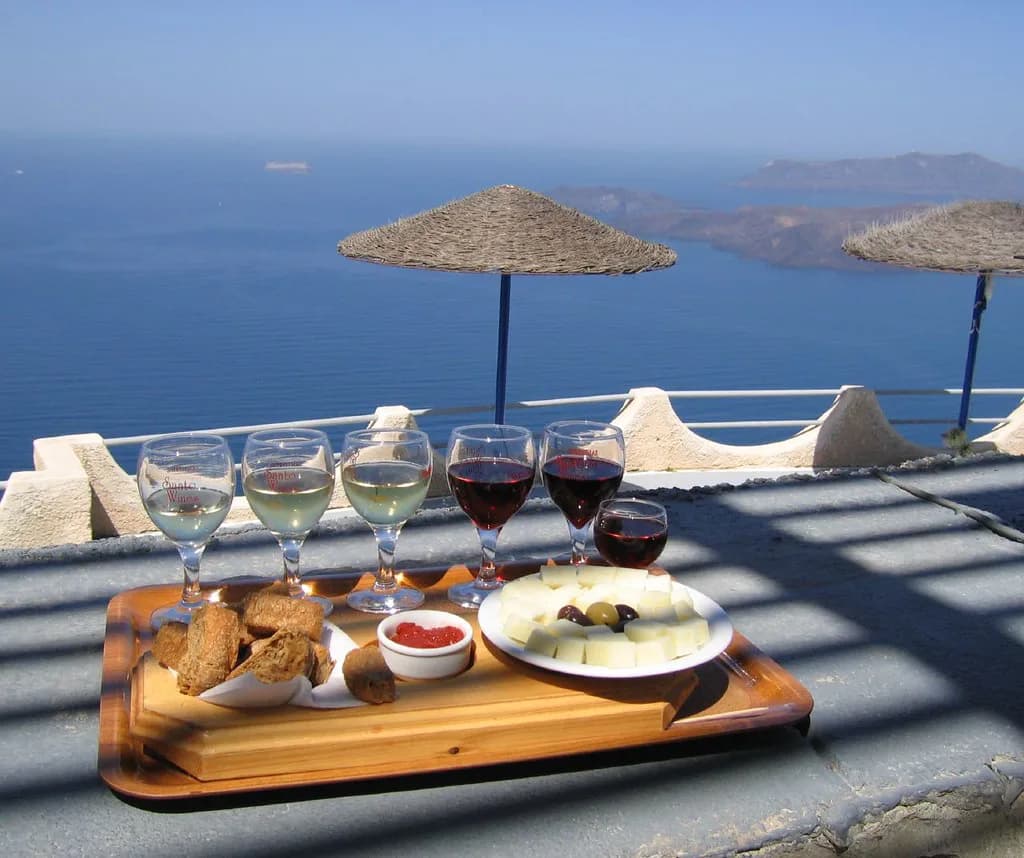
Most Santorini wineries offer a tasting flight rather than a single glass, and a Vinsanto will usually appear as the final pour in a sweet-wine finish. Some flights include a cellar or production walk, others are seated only, and the length varies from a quick half-hour to an afternoon with food. Ask what the flight includes when you reserve so you know whether to eat first.
At a specialist sweet-wine stop, ask three questions: which vintages are open, whether the pour is non-vintage or a single year, and what bottle sizes are available to buy. These answers tell you whether you are tasting a house blend or a specific aged release, and they matter more for Vinsanto than for the dry wines because the vintage difference is so pronounced.
Food pairings usually lean toward the sweet end, with dark chocolate, nut and fruit desserts, and stronger savoury matches such as blue cheese or foie gras. Serve it cool rather than ice-cold, around eight to ten degrees Celsius, so the aromatics are not shut down.
Buying Vinsanto: Bottle Sizes, Aging and Labels
Vinsanto is frequently sold in half-bottles, which suits both its sweetness and its price. The Venetsanos shop lists a 375ml bottle at 120 euros, so a full bottle from a comparable producer will be a significant outlay; budget for one good half-bottle rather than several full ones.
Because the wine is aged before release and keeps well after opening, bottle age is part of what you are paying for. A twelve-year-aged bottling from a large producer and a younger Vinsanto from a small estate are different products, not better and worse versions of the same thing. Read the back label for the vintage or the non-vintage designation, the ageing period and the bottle size before deciding.
If you plan to carry bottles home, check the producer's shipping policy, since sweet wine in glass is heavy and airline allowances are strict. Some estates ship within the EU and beyond, others sell only at the cellar door. Ask at the till whether the price includes duty and whether they can pack a bottle for a suitcase.
Getting Around Without Driving
Santorini's public buses connect Fira with the main villages and beaches, but service to individual wineries is limited and timetables thin out in the evening. Taxis exist but are few, and hailing one from a rural winery at the end of a tasting is unreliable. This is the strongest argument for booking a tour if your plan includes more than one estate in a day.
If you are driving, one person in the group should stay dry. Spittoons are standard at tastings, and the driver can taste and spit rather than swallow, or simply skip the wine and enjoy the setting. A designated driver, a booked tour or a taxi back to Fira are all better options than an unplanned drive on cliff roads at dusk.
Cycling between wineries is possible on the gentler central plateau but not advisable on the caldera-edge roads, which are narrow and busy. Walking between estates works only if two or three of them sit close together, which they rarely do. Plan your transport before you reserve your tastings, not after.
Best Time to Visit and the Harvest Calendar
Santorini's vines are harvested in late summer, and the drying stage for Vinsanto follows the main picking, so late August into September is the period when you are most likely to see activity around the wineries. That is also peak visitor season, which means tours and popular estates fill up. Book ahead if you are travelling then.
Spring and autumn are the comfortable middle ground: warm enough for the terrace, quiet enough to talk to the winemaker, and with fewer people competing for tasting slots. Winter visits are possible at some estates but many cut their hours or close, so confirm before building a day around a specific winery.
Whichever season you choose, aim for one tasting in the late morning and one in the afternoon rather than two back to back. Sweet wine is intense, and palate fatigue sets in quickly if you stack three flights into a single morning.
Plan Your Vinsanto Day
Vinsanto rewards a little planning: know that it is a dried-grape sweet wine from Santorini rather than Tuscany's Vin Santo, group your stops by area, and decide on transport in advance. Two or three producers in one cluster, with a Vinsanto at the end of each flight, is a better day than a rushed circuit of the whole island.
Check current vintages, tasting options and bottle availability directly with the winery when you book, since these change with each release. Then let the wine do the rest: a cool glass of Vinsanto, taken slowly at the end of an afternoon, is the clearest argument for the island's sweetest tradition.
Frequently Asked Questions
What kind of wine is Vinsanto from Santorini?
Vinsanto is a naturally sweet white wine made on Santorini from grapes that are dried in the sun before pressing. Assyrtiko dominates the blend, usually with Aidani and other white varieties, and it is classified as a PDO Santorini wine.
Is Vinsanto the same as Italian Vin Santo?
No. They are separate wines from separate countries, made under different appellation rules and generally from different grapes. Tuscan Vin Santo is typically built on Trebbiano and Malvasia, while Santorini Vinsanto is based on Assyrtiko.
How long is Vinsanto aged in oak?
Producers generally mature Vinsanto in oak barrels for at least two years after fermentation, and some release bottlings aged far longer. Check the label or ask which vintage or ageing period is in the bottle you are tasting.
Which wineries on Santorini pour Vinsanto?
Venetsanos Winery near Akrotiri and Santo Wines both sell Vinsanto and receive visitors, and other island estates pour it alongside their dry Assyrtiko. Confirm the current tasting options when you book, as flights and availability change.
How much does a bottle of Santorini Vinsanto cost?
Prices vary by producer, vintage, ageing and bottle size, so there is no single figure. Check each winery's shop or ask at the tasting counter for the current price of the bottle you are trying.
Can you visit Santorini wineries without a car?
Public buses connect the main villages but service to individual wineries is limited, and taxis are scarce. Booked wine tours or a designated driver are the practical options if you want to visit more than one estate.
When is the best time to taste Vinsanto on Santorini?
Late summer and early autumn follow the harvest and the grape-drying stage, while spring and autumn offer fewer crowds. Winter visits depend on whether individual estates stay open.
Sources
Notes for your next wine trip
Optional updates to our winery and wine-town guides.
You might also like
Continue reading
More guides you'll find useful