Château Galoupet: Provence Rosé Visit Guide from Cannes
Plan a visit to Château Galoupet, a Cru Classé Côtes de Provence rosé estate. See what it offers visitors, its wines, and how it fits a day out from Cannes.
On this page
Château Galoupet sits in the Côtes de Provence, the sprawling appellation that wraps the countryside behind Cannes and Toulon. It is a Cru Classé estate with three centuries of history and a recent turn toward organic farming and regenerative viticulture, which makes it a more purposeful stop than a roadside tasting room. This guide covers what the estate publishes about visiting, the wines to understand before you arrive, and how to fit it into a day from Cannes.
Why Château Galoupet Draws Wine Travelers
Château Galoupet built its reputation on rosé and counts itself among the very first Crus Classés of Côtes de Provence, a classification that still shapes how visitors read a Provence wine list. The estate describes 300 years of history on a Mediterranean terroir whose quality was recognized in the time of Louis XIV. For a traveler, that pedigree is the reason to prioritize it over the many anonymous rosé domaines along the coast.
The current chapter is about farming rather than château romance. The estate has committed to regenerative viticulture, agroforestry and cover cropping, and treats its land as a biodiversity sanctuary with particular attention to native flora and bees. A visit is pitched as a walk through that working landscape, not just a glass at a bar, so allow time for the outdoor side of the property.
It also belongs to the LVMH group, which shows in the polish of the visitor offer and in the estate's transparency work on bottles. If you are mapping a broader day of wine tasting in cannes, Galoupet works best as the anchor stop with one or two smaller domaines around it.
Where Château Galoupet Sits and How It Fits a Day from Cannes
The estate lies inland in the Côtes de Provence, in the countryside associated with La Londe-les-Maures on the Gulf of Hyères side of the appellation, rather than in the hills immediately behind Cannes. Treat it as a southern Provence excursion: the drive runs west along the coast and then inland, and the exact route, distance and travel time should be confirmed against a current map on the day you plan to go, since road works and seasonal traffic change the picture.
Practically, that means Galoupet is a half-day or full-day commitment from Cannes rather than a quick detour. Pair it with the coastal drive and a stop in a village such as Hyères or Le Lavandou, and keep the schedule loose enough for the return leg. If you plan to combine several estates, group them by geography instead of zigzagging back toward Cannes between tastings.
The estate publishes a Find Us page and visitor information on its own site, which is the place to pull a current address rather than relying on mapping apps that sometimes place Provence domaines at their village postcode. Save the estate's own page before you leave the hotel, because rural signal can be patchy. More options across the department are gathered in this guide to wineries near cannes if you want to build a two-stop loop.
The Wines to Know Before You Go
Two labels carry the estate's name, and knowing the difference sharpens the visit. Cru Classé is the flagship Côtes de Provence rosé, while G de Galoupet is a second cuvée presented alongside it on the estate's site; both are dry Provence rosés built for the table rather than for poolside sipping alone. Ask which of the two is open on the day of your visit, since tasting lineups rotate with the season.
Style matters more than scores here. Provence rosés range from pale, delicate and citrus-driven to fuller, more textured wines with saline finishes, and Galoupet positions its cuvées in the gastronomic, structured camp with aging potential. That makes them a good match for food, and a useful benchmark when you taste paler styles elsewhere in the region.
Beyond rosé, the appellation also permits red and white Côtes de Provence, though the estate's public identity is rosé-first. If you want a broader picture of the region's styles before booking, the overview of Côtes de Provence in this guide to wine tasting is a sensible primer.
Grapes Behind the Rosé
The 2025 Cru Classé rosé is reported as 60 percent Grenache, rounded out with Cinsault, Rolle, Syrah and Tibouren. That is a classic southern French formula: Grenache for body and red fruit, Cinsault for lightness, Rolle for freshness, Syrah for structure and Tibouren for the savory, herb-tinged note associated with the coast.
Knowing the blend helps you ask better questions in the tasting room. You can ask whether the Grenache is pressed directly or bled off the skins, how much Rolle goes into the final wine, and whether the Tibouren comes from estate plantings or purchased fruit. Those answers tell you more about the house style than any score.
What Visitors Can Do on Site
Galoupet runs a visitor program it calls its unique experiences, alongside Café Galoupet and a boutique on the property. The estate frames the visit as an immersion into the vineyard and its biodiversity work, so expect content on farming and landscape as well as wine, and expect to book ahead for the organized formats rather than turning up and hoping for a table.
The estate's site does not publish tasting prices, tour durations or fixed opening hours in the pages available, so the reliable move is to request the current options and rates through the estate's contact channels when you book. Ask specifically how many wines are poured, whether the vineyard walk is included, and whether the café needs a separate reservation. Those three answers determine whether you need two hours or most of an afternoon.
The boutique is worth planning for if you want bottles to take home, and Provence rosé travels fine in a suitcase if you pack it well. Private events and receptions are also offered for groups, which is relevant if you are organizing a celebration rather than a solo tasting.

Booking and Appointment Culture in Provence
Small Provence estates generally receive visitors by appointment, and even estates with a café and shop prefer to know you are coming. Galoupet's visit page is the starting point: choose the experience you want, then book through the estate's published contact details. For a weekend or a group larger than four, book well ahead, because organized experiences have limited slots.
When you write, give your date, party size, preferred language and whether anyone is driving, and ask for the visit in writing with the price and duration spelled out. That email becomes your record if a schedule shifts. It also lets the estate tell you about harvest, when the working vineyard can interrupt tours and the grounds get busy with picking crews.
Getting There Without Driving
Public transport to a rural Provence estate is thin, and Galoupet's inland setting makes a car the simplest option. A taxi or private transfer from Cannes is the low-friction alternative, but agree the return pickup time and keep the driver's number, because ride-hailing coverage fades in the vineyards. Trains run along the coast to Toulon and Hyères, but you still face a final leg by taxi, so check current timetables and connections rather than guessing they will line up with your booking.
Bicycles work for confident riders in the flatter coastal stretches, though heat and distance make it a real athletic commitment in summer. For most travelers based in Cannes without a car, an organized outing is the practical answer, and wine tours from cannes handle the driving, the appointments and the route. That is also the sensible choice if your group wants to taste rather than spit.
However you travel, whoever is behind the wheel should not drink: use the spittoons, nominate a designated driver, or book a tour or public transport instead. Provence tasting rooms are used to this and will not be offended by a request for a spittoon.
Independent Visit vs. a Guided Rosé Tour
Going independently gives you control of timing, lets you linger in the café and the boutique, and often costs less than a guided day. The trade-off is logistics: you handle the drive, the booking emails, the navigation and the parking, and you get no commentary on the appellation beyond what the estate provides.
A guided tour buys you the region's context between stops, a driver who knows the back roads, and sometimes access to smaller domaines that do not answer individual requests. The trade-off is a fixed itinerary and less time at any single property, which can feel rushed at a place like Galoupet where the landscape is part of the point. Travelers who want the contrast can also look at how Château Minuty from Cannes fits into a rosé-focused loop, since its visitor offer differs from Galoupet's.
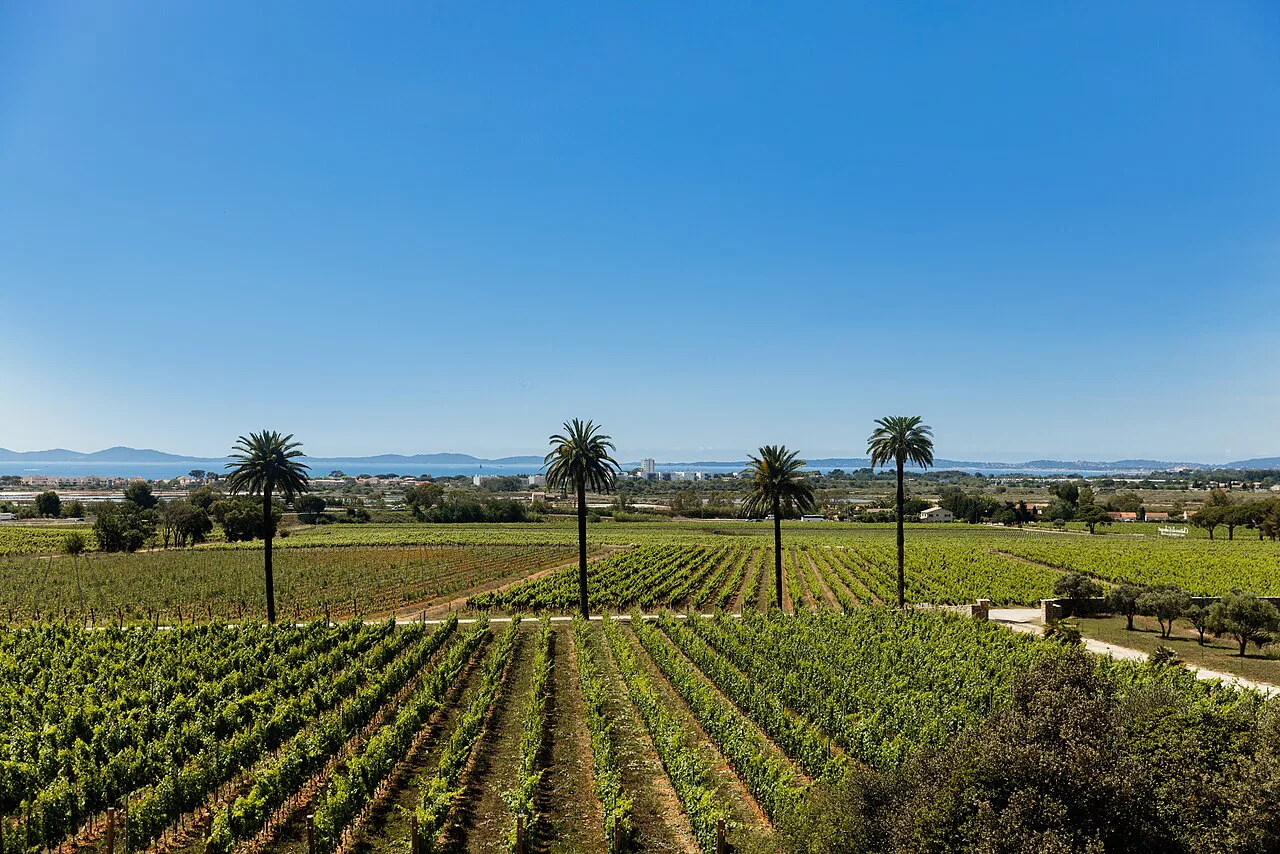
Regenerative Viticulture and Biodiversity on the Estate
The estate's environmental program runs from soil to bottle: regenerative farming, native flora and fauna, bees, agroforestry and cover cropping aimed at rebuilding soil life. It also publishes transparency information on its bottles, which is more than most Provence domaines offer. If sustainability is a deciding factor in where you taste, this is the clearest reason to choose Galoupet.
Expect the visit to touch on these practices rather than treat them as marketing. Ask how the cover crops are managed through the dry summer and whether the bees are hives on the property or part of a wider program, and you will get a more interesting conversation than a standard cellar walkthrough. The biodynamic-leaning estates of the region make a natural comparison if you are mapping a route around a theme.
Pairing Galoupet with Other Côtes de Provence Stops
Galoupet's southern position makes it awkward to combine with estates in the far east of the appellation near Cannes and Saint-Tropez, so build your day around one cluster. Choose the southern cluster with Galoupet at the center, or save the eastern estates for a separate outing. Two wineries and a long lunch is a realistic target; three tastings plus driving in summer is not.
Within the eastern cluster, the Whispering Angel winery, Château d'Esclans, is the best-known name and makes a logical counterpoint to Galoupet's more agricultural pitch. Its visitor offer and booking rules are worth reading before you commit a day to it. If you are weighing this stretch of the coast against the region's other wine cities, the Marseille wine guide covers how Cassis and Bandol tours compare.
Côtes de Provence covers a big sweep of coast and hills, so appellation rules and grape mix vary across it. Checking the appellation on each label before you go keeps your expectations honest, and the regional notes behind this guide to Côtes de Provence will help you compare what you taste.
Practical Planning: Seasons, Harvest and What to Ask
Provence rosé harvest typically falls in the late summer, earlier than in cooler French regions, and picking can run from late August into September depending on the year. During that window the estate is at its busiest and vineyard access may be restricted; if you specifically want to see the working side of the property, ask about harvest timing when you book; the date moves with the season rather than following a fixed calendar.
Spring and early autumn are comfortable for visiting, while high summer brings heat that argues for a morning appointment. Winter is quiet and some visitor services scale back, so confirm the café and boutique schedules alongside your tasting slot. Ask too about parking, accessibility and whether children can join, since a wine estate's answers vary.
Finally, ask what the estate wants you to know about drinking and driving in the region, and build in a non-tasting driver or a booked transfer. Then confirm the essentials once more close to your date, and keep the day flexible enough to enjoy the landscape as much as the glass.
Plan Your Château Galoupet Visit
Château Galoupet earns its place on a Provence itinerary because it combines a serious Cru Classé pedigree with a working regenerative farm and a proper visitor offer of experiences, a café and a boutique. The two labels, Cru Classé and G de Galoupet, are the wines to understand beforehand, and knowing the Grenache-led blend makes the tasting room conversation sharper.
Because it sits inland in southern Provence rather than in the hills above Cannes, treat it as a full excursion and book ahead through the estate's own visit page, asking about prices, duration and harvest conditions. Travelers without a car should lean on a transfer or a guided rosé tour, and anyone driving should stick to spitting or appoint a driver.
Frequently Asked Questions
Is Château Galoupet a Cru Classé estate?
Yes. The estate describes itself as one of the very first Crus Classés of Côtes de Provence, a classification of long standing in the appellation, and it produces its rosés under that designation.
What grapes go into Château Galoupet rosé?
The 2025 Cru Classé rosé is reported as 60 percent Grenache with Cinsault, Rolle, Syrah and Tibouren making up the rest. That blend is typical of southern Provence, where Grenache supplies body and the other varieties add freshness and structure.
Can you visit Château Galoupet?
Yes. The estate publishes a visitor program called Our unique experiences, along with Café Galoupet and a boutique on the property. The organized formats are best booked ahead through the estate's own site, where current options and rates are listed.
Do you need an appointment to taste at Provence rosé estates?
Usually yes. Small Provence domaines generally receive visitors by appointment, and even estates with a café and shop prefer advance notice, especially for weekends and groups. Write ahead with your date, party size and language preferences so the visit is confirmed in writing.
What is the difference between Cru Classé and G de Galoupet?
Cru Classé is the estate's flagship Côtes de Provence rosé, while G de Galoupet is a second cuvée presented alongside it. Both are dry Provence rosés in a structured, food-oriented style, and the tasting lineup rotates by season, so ask which wines are open on your visit day.
How far is Château Galoupet from Cannes?
The estate lies inland in southern Provence, on the Gulf of Hyères side of the Côtes de Provence, rather than in the hills directly behind Cannes. Expect a substantial drive west along the coast and then inland; confirm the current route and travel time on a map before setting out.
Can you get to Château Galoupet without a car?
Public transport to rural Provence estates is limited. A taxi or private transfer from Cannes is the simplest car-free option, and guided wine tours handle both driving and appointments. Coastal trains reach Toulon and Hyères, but a final taxi leg is usually still needed.
What should a driver know before a Provence wine day?
A driver should not taste. Use the spittoons provided, nominate a designated driver, or book a tour or public transport instead, and build the return leg into the plan before the day starts.
Sources
Notes for your next wine trip
Optional updates to our winery and wine-town guides.
You might also like

Continue reading
More guides you'll find useful