Wine Tasting in Cannes: Provence Estates and Tours
Taste Provence wines from Cannes with shared or private tours, countryside day trips and tutored tastings. Compare formats, prices and pickup options.
On this page
Cannes is a workable base for wine tasting because it sits between two distinct vineyard zones. Inland, the Côtes de Provence belt runs toward Saint-Tropez and produces the pale rosé the region is known for; to the northeast, the small Bellet hills above Nice grow reds and whites on steep terraces above the sea. Most visitors without a car reach either zone through an organized tour, and the formats differ sharply in what they actually deliver.
The choice that matters most is between a dedicated wine day and a countryside excursion that folds in a single tasting. A dedicated tour spends its hours in vineyards and cellars; a sightseeing loop through Grasse, Gourdon and Tourrettes-sur-Loup adds one winery stop at the end of a long day of villages. Wine-focused travelers usually get more from the former, while mixed groups often prefer the latter.
Why Cannes Works as a Wine Base
The town's advantage is geography rather than anything in the town itself. Cannes has no appellation of its own, but it sits on the coast road with the Massif des Maures vineyards to the southwest and the Bellet heights to the northeast. That means a single day trip can go in either direction without a long transfer first.
Cannes also has a cruise terminal, and several tour operators pick up directly from the port as well as from hotels. If you are arriving by ship for the day, that pickup arrangement is the deciding factor in whether a wine excursion is feasible at all, since tenders and gangway times eat into the available hours.
The trade-off against basing in Nice is mainly logistical. Nice has the Bellet vineyards on its doorstep and is the departure point for most shared Côtes de Provence tours, while Cannes departures exist but are fewer and sometimes carry a slightly different price. Pick the base town that matches the zone you most want to see. Browse the full range of wine tours from cannes to see which departures actually start in town.
The Wines You Will Meet in Provence
Côtes de Provence is the broad appellation covering the vineyard belt east of Toulon and inland from the coast. It is overwhelmingly rosé-led, made mostly from Grenache, Cinsault and Syrah, with smaller amounts of Mourvèdre, Tibouren and Rolle (Vermentino) in the blend. Reds and whites exist under the same appellation but are a small share of production, so a tasting flight will usually be rosé-heavy.
Bellet is a different proposition entirely. It is a small appellation on the hills within the Nice city limits, planted on steep terraces overlooking the Var valley and the sea, and it makes reds and whites as well as a little rosé. The reds come largely from Braquet and Folle Noire, the whites from Rolle, and the scale of production is tiny compared with the Côtes de Provence estates. Tasting there feels like visiting a hillside smallholding rather than a large château.
If you want to extend beyond Provence, the Italian border is close enough that some operators run day trips to Dolceacqua, where the Rossese grape makes light reds under its own DOP. That route suits travelers who have already tasted Provence rosé and want contrast rather than more of the same.
Where the Vineyards Actually Are Relative to Cannes
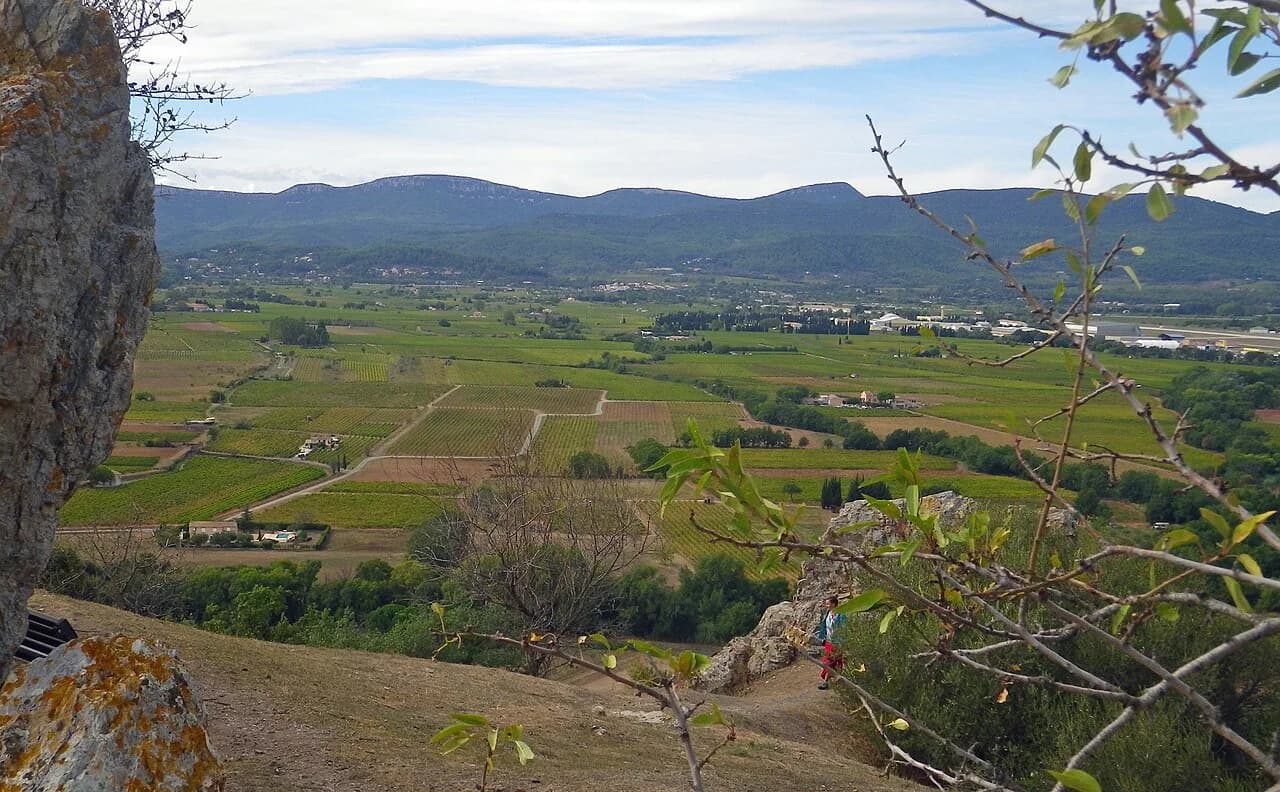
Think of two arcs. The first runs inland and southwest from Cannes into the Côtes de Provence massif, the wooded hills between Cannes and Saint-Tropez where most of the large rosé estates sit in scattered villages. The second runs northeast along the coast to the Bellet hills above Nice, a compact zone of steep terraced vineyards just behind the city.
The Côtes de Provence arc is wide, and estates are spread across villages rather than clustered in one place, which is why a car or a tour is the realistic way to string together two or three visits. Grouping by village rather than by reputation saves driving time, and a tour operator's route will already have solved that problem for you.
The Bellet arc is tighter but steeper. Roads climb narrow switchbacks through the vineyards, and a single estate visit plus the drive up and back can absorb half a day from Cannes. That makes Bellet a better fit for a private tour or a dedicated driver than for a self-guided attempt squeezed between other sightseeing.
Shared Day Tours to Côtes de Provence
The standard shared product is a full-day Côtes de Provence tour in a small group capped at eight people, departing from either Nice or Cannes. It is built around châteaux visits and landscapes rather than a single estate, and the small cap keeps the tasting rooms manageable.
Pricing is published per person and starts at 165 euros for the shared Côtes de Provence day from Nice, with a parallel departure from Cannes at the same starting rate. Treat that figure as an entry point rather than a final cost, since what is included in the day and whether lunch is part of it can shift the total.
For a wine-focused traveler, the shared day is usually the best value: you get the driving, the route planning and at least one cellar visit without paying private-hire rates. The compromise is pace, since the group moves together and you cannot linger at an estate that interests you.
Private Tours and Step-Up Options
Private versions of the same Côtes de Provence day start at 170 euros per person, which buys a route shaped around your group rather than a fixed itinerary. A private Vineyards of the French Riviera tour at the same starting rate concentrates on the heights above Nice and Saint-Paul-de-Vence, where vineyards look over the Alps on one side and the Mediterranean on the other. Above that sits a premium day, marketed as Heritage and Excellence in Provence, starting at 300 euros per person for travelers who want the finest estates and a slower, more exclusive format. There is also a private e-bike tour through Provençal vineyards from 210 euros per person, which trades the vehicle for pedal power and a closer read of the landscape.
The step-ups make sense when the group is small and the goal is depth rather than breadth. If you are two people who care about meeting winemakers and seeing specific estates, the difference between the shared and private rates is modest once split; if you are a larger group on a budget, the shared day wins. For estate-level detail on individual domaines near town, see the notes on wineries near Cannes before you commit to a route.
Countryside Tours That Fold In a Winery Stop
A different product combines sightseeing with a single tasting. The countryside tour departs from Cannes and runs through Grasse, including a guided visit to the Fragonard perfume factory, then climbs to Gourdon at 760 meters before stopping at Tourrettes-sur-Loup for free time and lunch.
The wine element comes at the end of the day, at a winery in the Bellet vineyard above Nice, with views over the sea and hills and a tasting of local wines. The rate from Cannes is 130 euros, and pickup and return from hotels, apartments or the cruise terminal are included along with the minivan, guide and wine tasting; food and drink are not.
Be clear about what this format trades away. You get one tasting rather than a sequence of cellar visits, and most of the day is spent on villages and scenery, which suits a mixed group or a first visit to the Riviera but disappoints anyone who came primarily to taste. The 8h30 figure refers to the pickup time from Cannes; the day itself runs around eight and a half hours.
Going Independently Without a Car
Independent visits are possible in principle but awkward in practice. The Côtes de Provence estates sit in scattered villages off the main coastal line, with sparse bus service and long walks between domaines, so a train-and-bus combination rarely fits more than one visit into a day. Bellet is closer to Nice's urban bus network but the estates are up steep lanes where services thin out.
If you want to try, group your targets by village and plan a maximum of two estates with a long lunch between them. Provençal estates generally work by appointment rather than walk-in, so email or phone ahead and ask three things: whether they receive visitors that day, what the tasting includes and how many wines are poured, and whether there is a charge. A taxi between two estates is often cheaper than a wasted afternoon.
A driver should not taste at all. Spittoons are standard in Provençal tasting rooms, and a designated driver, a booked tour or public transport removes the question entirely; the region's roads are winding and the penalties are strict. For a wider look at estate visits in the area, the guide to wineries near cannes covers which properties receive visitors.
When to Go and How to Time a Visit
Harvest in Provence generally falls in late August and September, when the vineyards are busiest and estate teams are least available for long tastings. Late spring and early summer are the most comfortable months for visiting, with the vines in leaf and the tasting rooms open but not overloaded. Winter is quiet, and some small estates receive visitors only by arrangement.
Cannes fills up during the major festival weeks, when hotel rates rise and coastal traffic slows everything down. If your dates overlap a big event, book the wine day early and expect pickup times to be affected by road closures along the seafront. Weekdays are generally easier for appointments than weekends, particularly at the smaller Bellet estates.
Add-Ons That Need No Driving
Not every tasting requires leaving town. Tutored at-home tastings in Provence wines are offered as a standalone experience and start at 85 euros per person for a flight covering the region's red, white and rosé styles. A prestige rosé version starts at 90 euros, and a wine-and-cheese tour of France starts at the same rate.
These suit a rainy day, a short stay or a group that would rather learn in comfort than ride in a minivan. They are also the sensible option if your trip is built around the Cannes waterfront and you cannot spare a full day for the vineyard belt. For a wider regional perspective, the guide to wine tasting in avignon covers the Rhône Valley estates further west.
Booking, Pickup and Cancellation
Most Riviera wine tour companies take bookings through their websites and confirm by email, and pickup from hotels, apartments and cruise terminals is standard. Cancellation terms vary: Liven Up charges no fee for cancellations made at least 24 hours before departure and the full fee inside that window or for a no-show. Ask for the policy in writing at the time of booking.
Confirm current prices, departure times and what the day includes directly with the tour company before you pay, since schedules shift by season and the starting rates quoted online are entry points. If you are arriving by cruise ship, tell the company your all-aboard time so the route can be planned around it.
Plan Your Cannes Wine Day
Decide first which zone you want: the rosé-led Côtes de Provence belt inland, or the small terraced vineyards of Bellet above Nice. That single choice determines whether a shared full-day tour, a private route or the countryside excursion with one winery stop is the right buy for your trip.
If wine is the reason for the day, book a dedicated Côtes de Provence or Riviera vineyards tour and treat the sightseeing loop as a fallback for mixed groups. Book early in festival weeks, name your pickup point clearly, and let someone else drive so everyone in the party can taste.
More wine guides from Cannes
- Château Minuty from Cannes
- Domaines Ott from Cannes
- Whispering Angel Winery
- Château Sainte Roseline
- Château Galoupet
- Wine Tours from Cannes
- Wineries Near Cannes
- Château de Berne
- Château Saint-Maur Cru Classé
- Château de Saint-Martin (Taradeau)
- Commanderie de Peyrassol
- Domaine de la Croix Near Saint-Tropez
Frequently Asked Questions
Can you visit Provence wineries without a car from Cannes?
It is possible but impractical. The Côtes de Provence estates are scattered across inland villages with sparse bus service, so most visitors join an organized tour or take a taxi between two pre-booked estates. Bellet is closer to Nice's bus network, but the estates sit up steep lanes where services thin out. Choose two estates in the same village and arrange both visits ahead.
How much does a wine tour from Cannes cost?
Tour operators publish starting rates per person on their own websites, and shared, private, premium and e-bike formats sit at clearly different levels, so compare them on the operator's tour list. The countryside tour that includes one Bellet tasting publishes its own per-person rate by departure town. Rates are starting points; check current details and inclusions when booking.
Is it better to base in Cannes or Nice for wine tasting?
Nice has the Bellet vineyards close by and is the main departure point for shared Côtes de Provence tours. Cannes has fewer departures but sits on the coast road with easy access to the inland belt and offers cruise-terminal pickup. Choose Nice if Bellet is your priority and Cannes if you are arriving by ship or staying on the Croisette.
What wines should I taste in Provence?
Start with Côtes de Provence rosé, usually a blend of Grenache, Cinsault and Syrah, then try the appellation's smaller red and white production. In Bellet, look for reds from Braquet and Folle Noire and whites from Rolle, grown on steep terraces above Nice. A short tasting across both zones gives a much clearer picture than rosé alone.
Do I need to book winery visits in advance?
Yes, in most cases. Provençal estates generally receive visitors by appointment rather than walk-in, and the smaller Bellet properties have limited capacity. Email or phone ahead and ask whether they take visitors that day, what the tasting includes, and whether there is a charge. Weekdays are easier than weekends for securing a slot.
What should a driver do on a wine day?
The driver should not taste. Spittoons are standard in tasting rooms and a designated driver can still enjoy the visits, but the simplest solution is a booked tour, a hired driver or public transport. The coastal and hillside roads are winding, and the drink-driving rules are strict.
When is the best time of year for wine tasting around Cannes?
Late spring and early summer are the most comfortable months, with vines in leaf and tasting rooms open without the harvest rush. Harvest falls in late August and September, when estates are busiest and least available for long visits. Winter is quiet, and some small estates receive visitors only by prior arrangement.
Sources
Notes for your next wine trip
Optional updates to our winery and wine-town guides.
You might also like
Continue reading
More guides you'll find useful