Pietradolce Winery on Etna: Tasting, Tour and Booking Guide
Pietradolce sits on Etna's northern slopes at Solicchiata. Here's what a visit involves, the wines to know, and how to reach it from Taormina.
On this page
Pietradolce is one of the northern-slope estates that make a Taormina wine day worth the drive around Mount Etna rather than a quick stop on the coast. The property combines very old vines with a new cellar built into the volcanic landscape, and it welcomes visitors by arrangement. This guide covers what the estate grows, where it sits relative to Taormina, and how to plan the trip so the tasting is the point of the day, not an afterthought.
Most travelers based in Taormina treat Etna as a half-day excursion and regret it: the mountain's wine districts are spread around the cone, and crossing from one flank to another eats the afternoon. Deciding first which slope you want, then which estates sit on it, is the single most useful planning move you can make.
Why Pietradolce: a modern cellar and old vines on Etna's north slope
The estate's name and identity are built around lava stone, the material that defines the Etna landscape and, by the winery's own account, gives its wines their character. Pietradolce describes a new cellar a few kilometers from Etna Park, with a vat room, barrel room and tasting room finished in volcanic rock, iron, wood and earth drawn from the vineyards. That makes it an unusually design-conscious stop for a region where many cellars are working farm buildings.
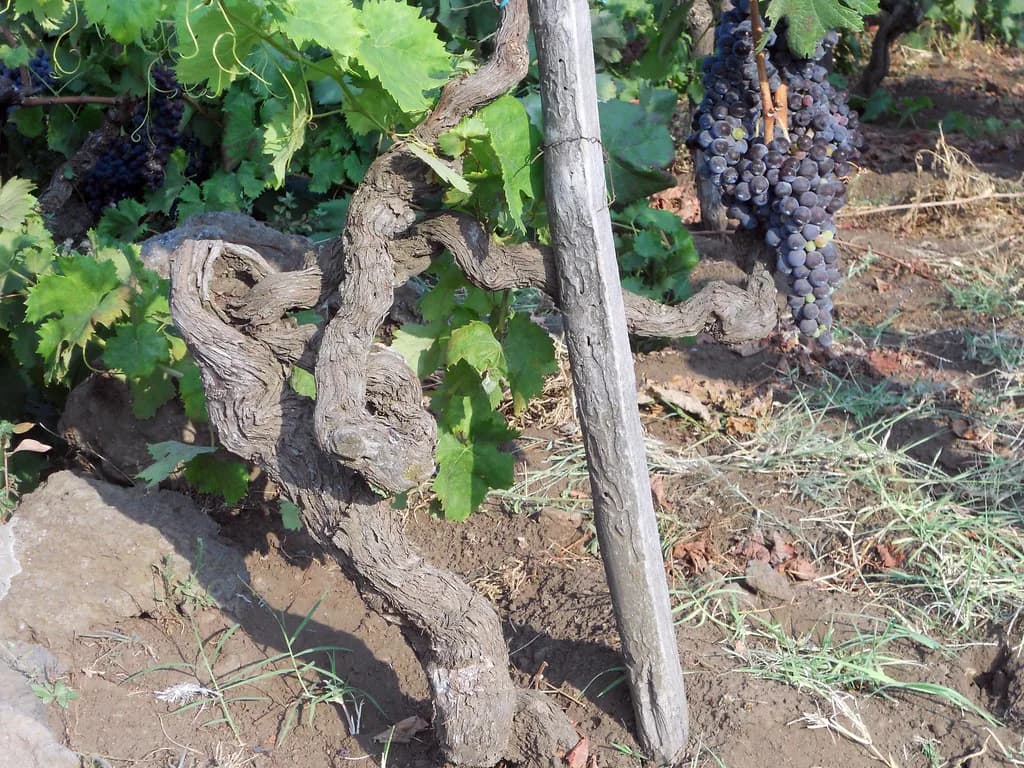
The vineyards themselves are the real attraction for wine travelers. Planted on sandy volcanic soil and framed by old stone walls, the bush vines are decades old, with the pre-phylloxera parcels on the property reported to range roughly from 90 to 150 years of age. A walk through them before the tasting gives context that a glass alone cannot.
The estate is family-run, in the hands of the Faro family, and works organically in the vineyard. Expect a small, focused range rather than a long list: the portfolio centers on two native Sicilian varieties, so a visit is a study in a couple of grapes rather than a tour of the island's diversity.
Where Pietradolce is: Solicchiata and the contrade around it
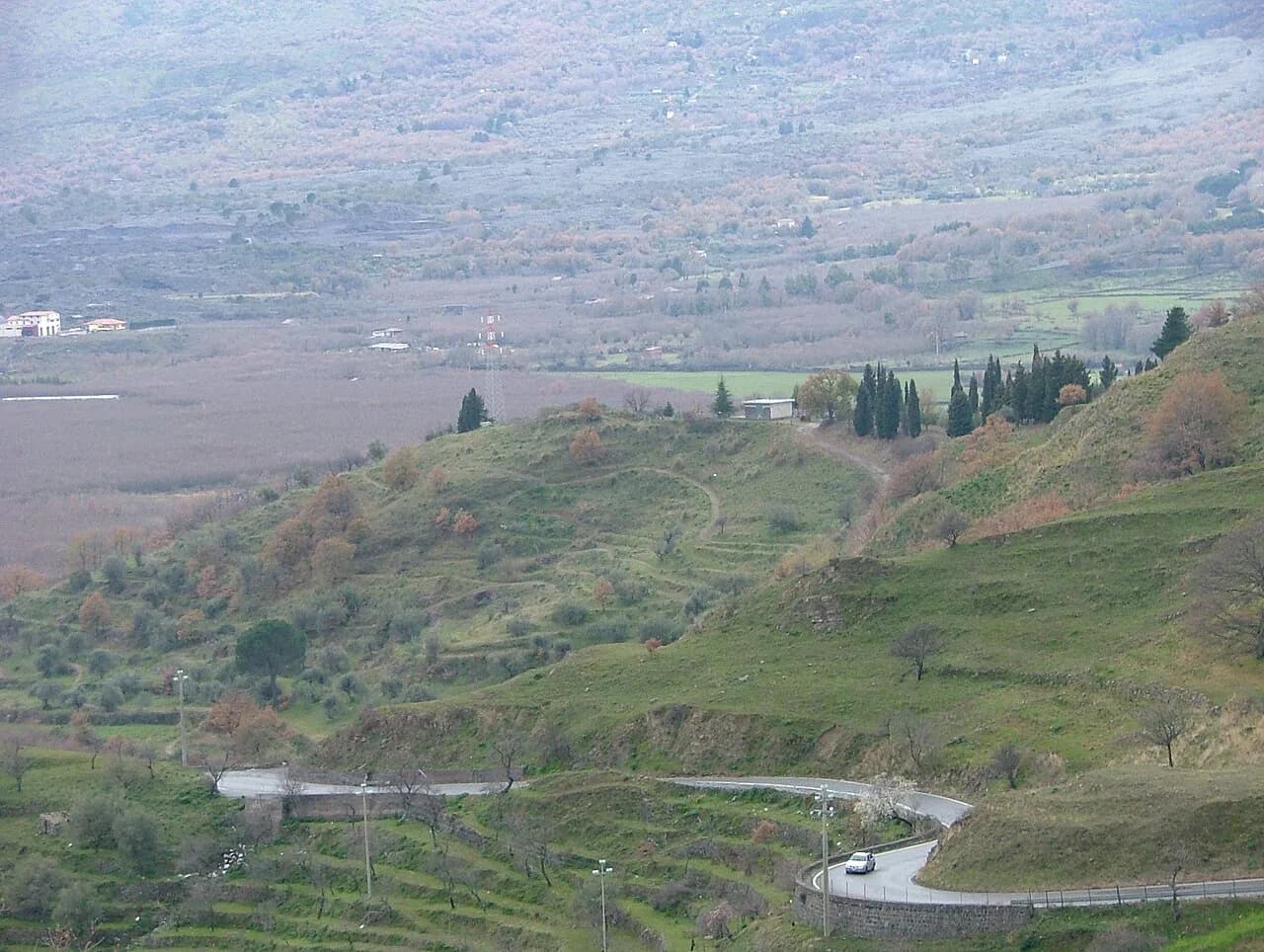
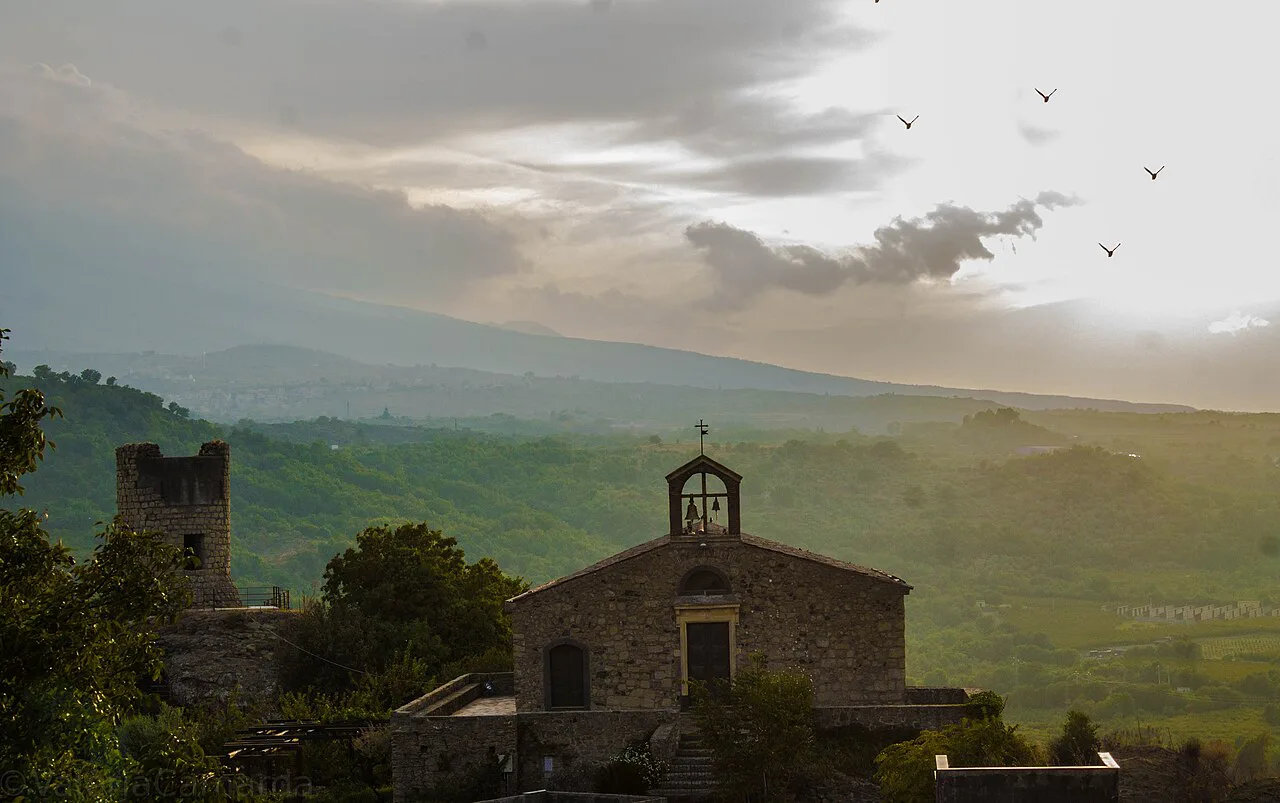
Pietradolce's vineyards lie on the northern slopes of Mount Etna, in the Solicchiata area, spread across the contrade of Rampante, Zottorinoto, Santo Spirito and Feudo di Mezzo. If you are mapping the trip, place the estate on the north side of the volcano, above the town of Linguaglossa, not on the easier-to-reach south side above Nicolosi.
That northern position is the key trade-off from Taormina. The drive wraps around the mountain and takes appreciably longer than a south-side run, which is exactly why it rewards a planned itinerary rather than a spontaneous detour. Group Pietradolce with other north-slope addresses near Linguaglossa and Castiglione di Sicilia instead of trying to combine it with a south-side estate in one afternoon. If you are weighing up which base suits a day on Etna, our wine tasting in Catania guide compares the southern approach with the northern one.
The altitude matters for what ends up in the bottle: the estate's Etna Rosso grapes grow between 700 and 800 meters above sea level on the northern slope, in sandy-loam soils with abundant volcanic rock. Higher vineyards on Etna generally mean a cooler, later ripening season, which shapes the style of both the reds and the whites.
Getting there from Taormina without driving: train, bus and tour trade-offs
Public transport will get you to the northern slope's towns, but not to the cellar door. The Circumetnea narrow-gauge railway loops around the volcano and the regional bus network connects Taormina with Linguaglossa and neighbouring towns, yet the last stretch to Solicchiata and the estate is a rural road with no practical scheduled service. Plan on a taxi from Linguaglossa if you arrive by train or bus, and agree the return pickup before you leave.
For most travelers without a car, an organized Etna wine tour is the honest answer. A guided tour handles the winding drive, the timing between estates and the return trip, and lets everyone in the group taste; the cost is a fixed itinerary and less time lingering over one cellar. Weigh that against the hassle of stitching together a train, a bus and two taxi legs with a fixed appointment time.
If you would rather build your own day, the practical shape is a morning train or bus to Linguaglossa, a pre-booked taxi up to the estate, a tasting, and a return to Taormina before evening. Build in slack: mountain roads and weather can stretch a 40-minute hop into something longer, and appointment times at the estate do not bend easily.
Independent visit by car versus a guided Etna wine tour
With a car, Pietradolce slots into a flexible northern-slope day: a morning tasting, lunch in Linguaglossa or Castiglione di Sicilia, and a second estate in the afternoon. The catch is the driver, who should not taste at all rather than sip and guess. Rotate the role between two non-consecutive days, or accept that the driver gets the scenery and the passengers get the wine.
A guided tour removes that problem and usually pairs a cellar visit with the volcano itself, which suits travelers who want landscape and wine in one day. The trade-off is depth: a group schedule rarely allows for a long conversation with your host or a second pass at a bottling you liked. Pick the tour whose description matches the estates you actually want to see, not just the price.
Whichever route you take, ask Pietradolce upfront whether the visit includes a walk in the vineyards as well as the cellar and the tasting, and check current prices and dates when you book. On Etna, where the contrade and old vines are the point, a tasting that never leaves the room is a thinner experience than one that starts among the plants.
Wines to know before you book: Carricante, Nerello Mascalese and the Etna DOC labels
Pietradolce works almost entirely with two native grapes. Carricante makes the whites, including the Archineri Etna Bianco, and Nerello Mascalese makes the reds, from the entry-level Etna Rosso up through single-contrada bottlings such as Rampante, Santo Spirito and Feudo di Mezzo. Knowing this in advance tells you what a tasting here will and will not cover.
Expect Etna Bianco in a taut, mineral-driven style rather than a rich, oaky one: the wine is typically bright in acidity and shaped by the volcanic soil, with citrus and orchard fruit alongside a flinty edge. If you normally drink fuller Chardonnay, treat the first glass as a different register rather than a lesser wine.
The flagship red, Pietradolce Etna Rosso, comes from Nerello Mascalese grown on the northern slope and is labeled under the Etna Rosso DOC. The winery describes a fairly long maceration followed by a few months in oak, which is the kind of detail worth raising with your host when you compare it with the single-contrada wines.

The contrada system explained, and which Pietradolce bottlings it produces
Etna's contrade are named parcels of vineyard, each with its own elevation, exposure and soil mix, and they function much like crus in Burgundy: the same grape and the same winemaker can produce markedly different wines from neighboring parcels. That is why Etna labels often carry a contrada name in addition to the DOC, and why the single-contrada bottles usually cost more than the blended estate wine.
Pietradolce bottles Etna Rosso from several of these parcels, including Rampante, Santo Spirito and Feudo di Mezzo, alongside its broader Etna Rosso. If your visit includes a comparative tasting, ask to line up two contrada wines side by side; the difference is the most direct lesson the mountain offers.
Other north-slope producers work the same system, so a day here can be built around contrasting approaches to the same parcels and grapes. Estates such as Tenuta delle Terre Nere, with its Contrada Calderara bottling, make a natural second stop if you are choosing among Taormina wineries for an independent itinerary.
What a winery visit on Etna typically covers, and what to ask when booking
Most Etna estates structure a visit as a short vineyard or cellar walk followed by a seated tasting of a set number of wines, sometimes with bread, cheese or local charcuterie. Duration, number of pours and any food pairing vary from one property to the next, and the estate's published information is the only reliable guide to what Pietradolce currently offers.
When you write or call, ask four things: how long the visit lasts, how many wines are poured, whether the vineyards are included, and what the fee is and how it is paid. Also ask the maximum group size and whether a minimum party applies, since small family estates often schedule visits in fixed slots.
Book well ahead for weekends and for the harvest period, and give a precise arrival time rather than a window. If you are coming by taxi, mention it when booking so the estate can advise on the access road and the pickup point.
Cellar and vineyard tours: what the Pietradolce property offers
The Pietradolce property is set up for hosting: the new cellar includes a vat room, a barrel room and a tasting room whose windows look out over the vineyards, and works by artists and artisans are integrated into the interior. A visit therefore combines winemaking spaces with the estate's contemporary architecture, which is unusual among Etna's smaller growers.
The vineyard walk is the part to insist on. Guides have led visitors through the old parcels, explaining how the sandy soil protected the vines from phylloxera and how the amphitheater layout and surrounding oaks shield the site. Whether a vineyard tour is included in your slot is a question for the estate when you book.
Seasonal timing: harvest on Etna and why the first half of October matters
The estate picks its Nerello Mascalese by hand in the first half of October for the Etna Rosso, which places the northern slope's red harvest late in the Italian calendar. Treat that as a typical window rather than a fixed date: altitude and the year's weather move it, and the whites come in earlier.
Visiting during harvest is atmospheric but not always practical, because cellar teams are at their busiest and hospitality slots may be reduced. Spring and early summer give you green vineyards and easier scheduling; late autumn gives you quieter roads and the chance of seeing fermentation underway. Either way, an October booking is worth making further in advance than a May one.
Pairing the visit with other northern-slope wine stops
Once you have committed to the north side, build a compact loop rather than a long one. Linguaglossa, Castiglione di Sicilia and the Solicchiata road put several estates within a short drive of each other, which makes two tastings and a lunch realistic in a single day; three is pushing it once you factor in driving time and the etiquette of arriving on schedule.
A sensible sequence is a mid-morning visit, a long lunch in one of the villages, and an afternoon tasting that ends by four, leaving daylight for the drive back around the mountain. If you are relying on a tour, check which estates are actually included and how long is spent at each, since operators vary widely in how much time they allow at the cellar door.
Responsible tasting: drivers, spittoons and transport
Someone has to stay sober on Etna's winding roads, and the driver is the obvious candidate: skip the wine entirely rather than tasting and hoping. Use the spittoons, share pours, or split the group so a designated driver rotates between days. A tour or a taxi from Linguaglossa removes the question altogether.
Practical booking checklist before you go
Confirm the visit in writing with the estate: date, arrival time, number of guests, whether a vineyard walk is included, and the fee. Ask for directions to the cellar entrance, because rural Etna addresses can be vague and GPS sometimes routes drivers onto unpaved tracks.
Pack layers and proper shoes for the vineyard, keep your appointment number handy, and leave a buffer before any train or tour pickup. If your plans change, tell the estate as early as you can, since small properties schedule staff around confirmed visits.
Plan Your Visit
Pietradolce rewards travelers who treat Etna's north slope as a destination in its own right rather than a detour from the coast. Old vines, a striking modern cellar and a tight focus on Carricante and Nerello Mascalese make it a strong anchor for a day built around Linguaglossa and Solicchiata.
Sort out the transport first, book the tasting second, and keep the itinerary small; that is the difference between a relaxed wine day and a rushed drive around a volcano.
Frequently Asked Questions
What kind of wines does Pietradolce make?
The estate works with native Sicilian varieties: Carricante for its whites, including the Archineri Etna Bianco, and Nerello Mascalese for its reds. The red range runs from the Etna Rosso DOC to single-contrada bottlings such as Rampante, Santo Spirito and Feudo di Mezzo.
How far is Pietradolce from Taormina?
Pietradolce is on Etna's northern slope at Solicchiata, near Linguaglossa. From Taormina that means driving around the mountain rather than up the south side, so allow a generous margin and check the route before setting out.
Can you visit Pietradolce without a car?
Public transport reaches the northern-slope towns but not the cellar door. The practical options are a train or bus to Linguaglossa followed by a pre-booked taxi, or an organized Etna wine tour that includes transport and the return trip.
Do you need to book a Pietradolce tasting in advance?
Yes, arrange the visit ahead rather than arriving unannounced. Small estates schedule hospitality around confirmed appointments, so write or call with your date, party size and arrival time, and ask what the visit includes and what it costs.
When is harvest on Mount Etna?
The estate harvests Nerello Mascalese by hand in the first half of October for its Etna Rosso, which is a late window by Italian standards. Altitude and the year's weather shift it, and whites are picked earlier, so treat it as a guide rather than a fixed date.
What should you ask when booking an Etna winery visit?
Ask how long the visit lasts, how many wines are poured, whether the vineyards are part of it, the fee and payment method, and any minimum party size. If you are arriving by taxi, mention that so the estate can advise on the access road and pickup point.
Sources
Notes for your next wine trip
Optional updates to our winery and wine-town guides.
You might also like
Continue reading
More guides you'll find useful