Tavel Rosé: A Wine-Tasting Guide from Avignon
Plan a Tavel rosé tasting day from Avignon: what defines this all-rosé Rhône cru, its main grapes and soils, how visits work, and getting there.
On this page
Tavel makes a rosé that surprises people: deep in color, firm in structure, and completely dry. It is the one cru in the Rhône Valley given over entirely to rosé, which makes it a natural target for a half-day tasting trip from Avignon rather than an afterthought squeezed between reds.
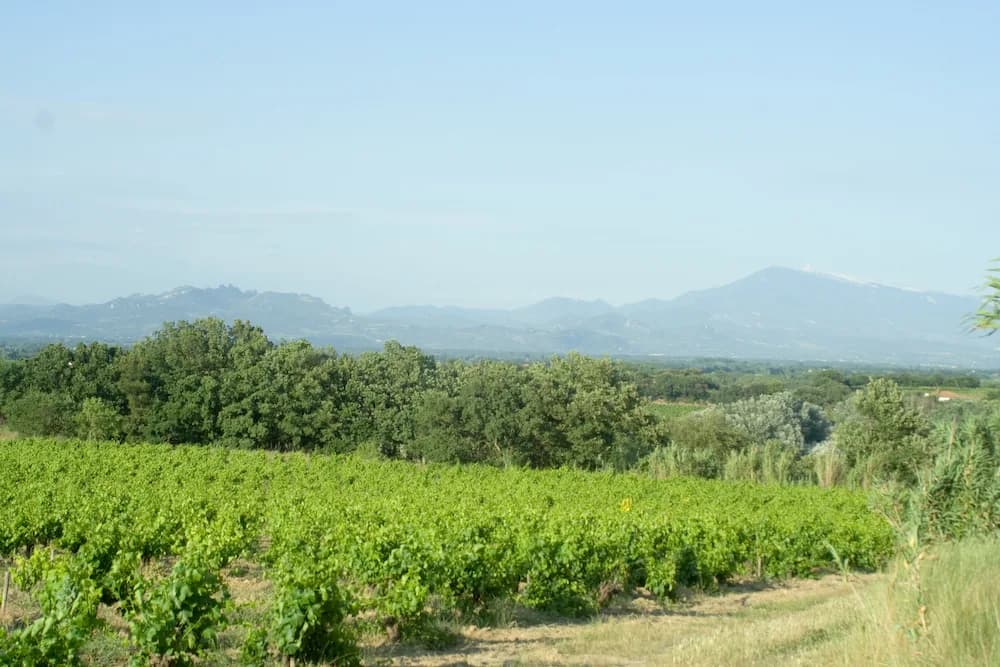
Geography helps. The vineyards sit on the right bank of the Rhône at the southern end of the cru hierarchy, west of Châteauneuf-du-Pape and northwest of Avignon, with the village of Tavel at their center. That places the whole appellation inside a compact block you can cover in an afternoon.
What follows is a planning guide rather than a list of claims about individual cellars: the appellation rules, the grape varieties, the soils, how southern Rhône domaines handle visits, and what to ask before you commit to a booking.
Where Tavel Sits in the Southern Rhône
Tavel is one of the nine crus of the Southern Rhône, and it lies west of Châteauneuf-du-Pape and northwest of Avignon, on the right bank of the Rhône. The village itself is small, and the roughly 900 hectares of vines planted solely for rosé surround it.
For an Avignon base, this is the practical advantage: Tavel, Lirac next door, and Châteauneuf-du-Pape across the water sit in one district, so you can group two or three appointments in a single loop instead of crossing the valley twice. If you are building a broader itinerary, the wider wine tasting picture in the Rhône Valley rewards that same clustering logic, and the Lyon wine guide shows how the northern end of the valley organizes its Beaujolais and Northern Rhône day trips.
The vineyards are flat to gently sloping and easy to read on a map, but the district is not walkable between villages in the way a small Italian wine town might be. Assume you will move by car, taxi, bicycle or a booked tour, and plan the day around one cluster rather than scattering appointments.
Why Tavel Looks Like a Light Red but Drinks Dry
Tavel was among the first appellations granted AOC status when the system was introduced in 1936, and by definition the name covers rosé only. Color comes from skin contact rather than blending, and Tavel must be made by the saignée method, using both free-run and press wine.
Extended maceration is the reason the wine looks the way it does. Skin contact commonly runs anywhere from 10 to 36 hours, though the range can stretch from 6 to 72 hours, and that time in contact with the skins concentrates color as well as structure.
So the deep pink to amber hue is not a signal of sweetness. Tavel is dry, and the fuller body is what lets it stand up to food that would overwhelm a lighter Provence rosé. If you have only met pale, delicate rosés, expect something closer to a light red in weight while staying firmly rosé in character.
A practical tasting note: the better cuvées benefit from a year in bottle, and some age considerably longer, which is unusual for rosé. Ask what vintage is open on the day and whether the producer holds back older bottles for visitors.
The Grapes in the Blend
Grenache Noir and Cinsault form the backbone of most Tavel, with Syrah and Mourvèdre adding color and tannic grip. White varieties including Clairette, Grenache Blanc, Bourboulenc and Picpoul appear in smaller proportions to lift acidity and aroma.
Published blends show how much latitude producers have. A Château de Ségriès Tavel, for instance, is reported at half Grenache, with Cinsault, Clairette and Syrah making up the rest, which tells you that two bottles from neighboring estates can taste quite different.
When you book, it is worth saying which style you want to focus on: a Grenache-dominant cuvée reads rounder and more generous, while a blend with more Syrah and Mourvèdre tends to show firmer tannin and deeper color. Producers usually pour a small range, so you can compare within one visit.
Soils: Sand, Galets Roulés and Lauses
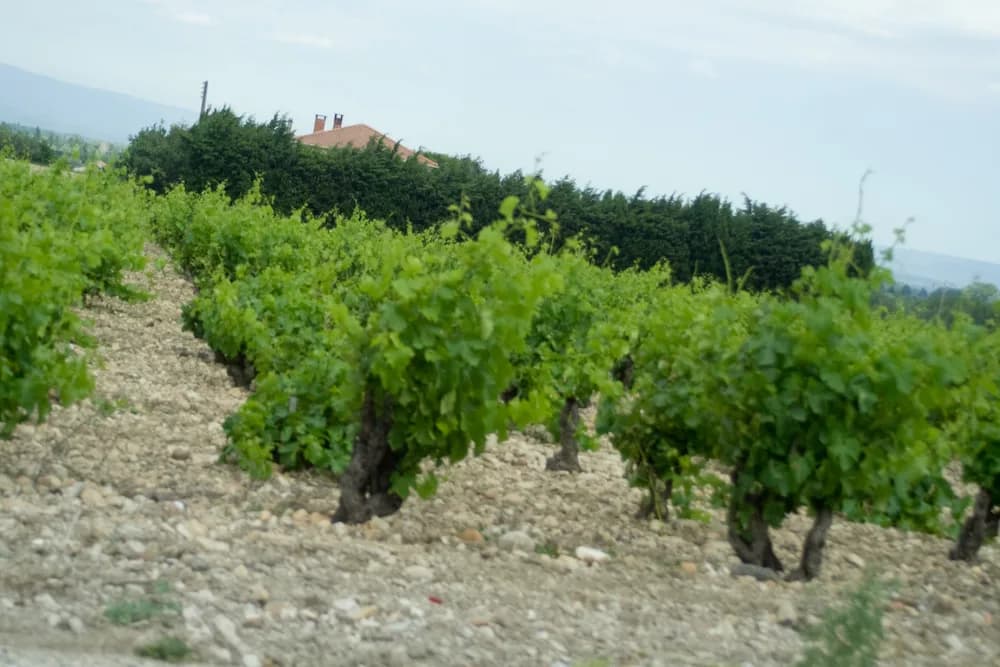
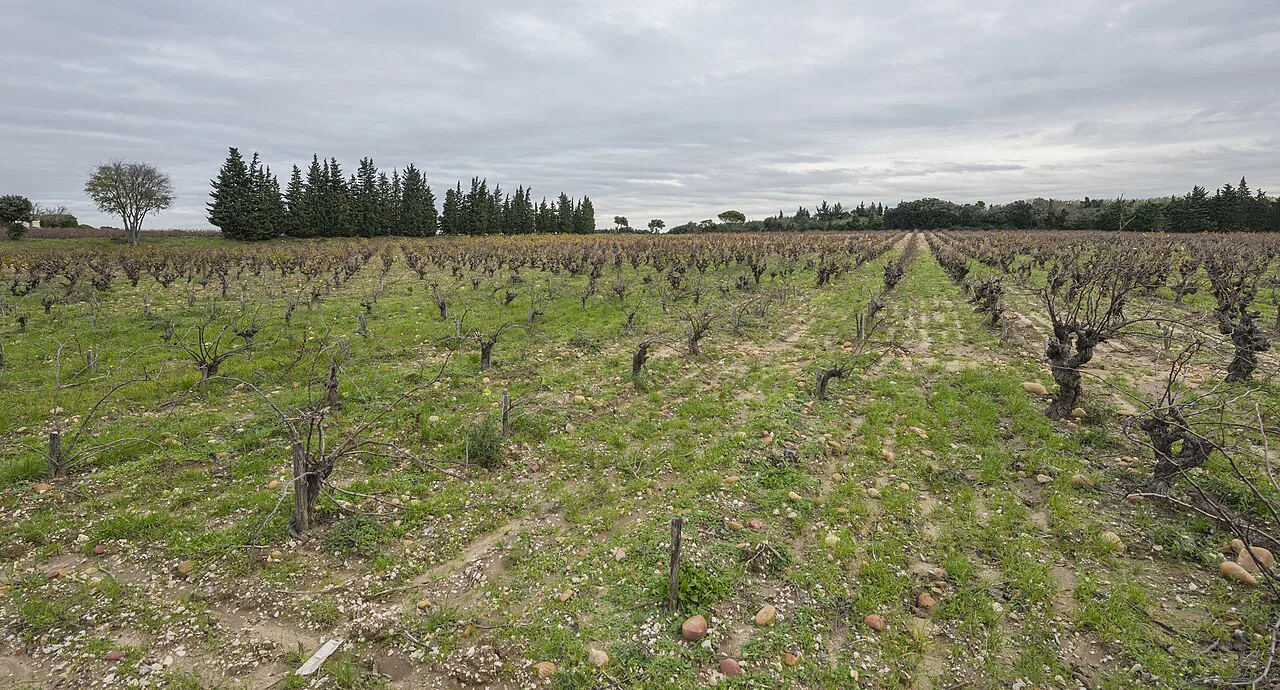
Tavel has three broad soil types, and each is associated with a different weight in the finished wine. Sandy soils, broken limestone mixed with clay and only a couple of feet deep before bedrock, are the original vineyard land and are linked to more elegant wines; galets roulés, the rounded river stones left by the Rhône, store heat and are linked to rounder flavors; lauses, brittle limestone and slate, are linked to fruitier aromas and pronounced minerality.
Most Tavel is a blend across those soil types, but a few producers bottle single-terroir cuvées, which is the fastest way to understand what the difference means in the glass. If a domaine offers both a blended wine and a single-soil bottling, taste them side by side.
The scrub around the vineyards, locally called garrigue and scented with thyme, juniper and rosemary, is part of the landscape you drive through. It also makes the vineyard walk a worthwhile part of a visit rather than a formality before the tasting room.
How Tasting Visits Work in the Southern Rhône
Small family domaines in this part of the Rhône generally receive visitors by appointment, arranged by email or phone a few days to a few weeks ahead, and they often ask for a minimum party size. The cooperative works to a different rhythm, with a shop-style tasting room that is easier to drop into.
A typical visit runs through the cellar and then a short flight of wines, sometimes with a small charge that is waived against a purchase. Confirm the ground rules when you book: how many wines are poured, whether the vineyard walk is included, whether anyone speaks English, and whether the tasting fee is deducted from a purchase.
Tavel shares its district with Lirac and, across the river, Châteauneuf-du-Pape, so a day that mixes one Tavel appointment with one neighboring visit is realistic. If you want a single estate to anchor the Châteauneuf side of the trip, the Châteauneuf-du-Pape Wineries guide covers the options.
One name that comes up in published accounts of the district is Château Trinquevedel, whose traditional bottling from sandy-soil vineyards was singled out by a visiting writer. Its presence in print confirms the estate exists and bottles Tavel; it does not confirm current visiting hours, so contact the estate directly before planning a stop.
The Cooperative and the Named Estates
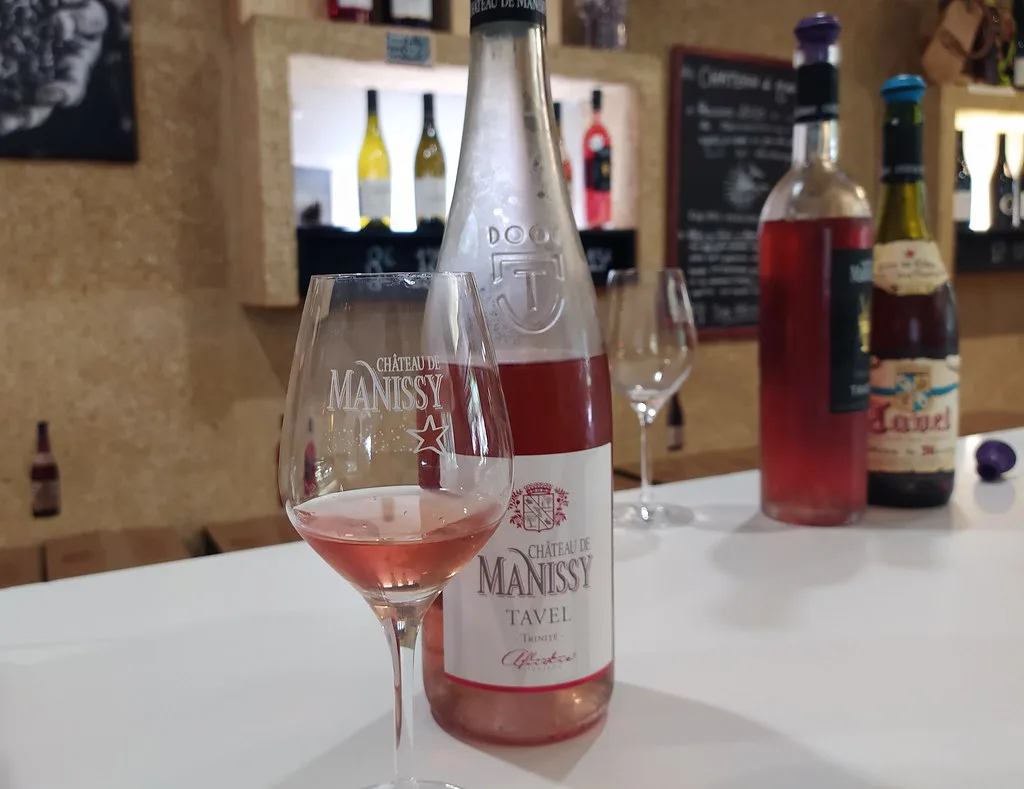
Les Vignerons de Tavel is the local cooperative, gathering around sixty growers, and it is the most straightforward place to taste broadly without booking a private appointment. Its Les Lauzeraies bottling appears repeatedly in published accounts, and at the time of that reporting the cooperative's wines were all priced under ten euros a bottle.
Among the domaines, Domaine de la Mordorée and Domaine Maby are both named in the same account for their Tavel cuvées, and Domaine Lafond is noted for an oaked example, Esprit de Roc Épine, that is unusual in a district where stainless steel is the norm. These are bottle references, not confirmation of a visiting program.
A published price for Château de Ségriès Tavel, roughly twelve and a half euros in France against around eighteen dollars in the United States, gives a sense of the gap between cellar-door and export pricing. Treat that as a bottle reference point, not as a tasting fee.
Independent Day or Booked Tour
If you drive yourself, the trade-off is flexibility against the obvious problem of tasting and driving. The district is compact and parking in the village is not the obstacle; the obstacle is that someone in the party has to stay dry, which is why spittoons exist in every tasting room and why a designated driver is the simplest solution.
A booked driver or small-group tour removes that constraint and often pairs a Tavel stop with Châteauneuf-du-Pape, but you trade control over which estates you see and how long you stay. For a first visit with limited time, the structure usually wins; for a focused return trip, self-drive with a non-tasting driver is better. The Avignon wine tours options show how the group format typically works.
Public transport exists between Avignon and the surrounding villages, but service is thin and does not connect estates, so it works best for reaching the village of Tavel itself rather than stringing together domaine appointments. Taxis are the middle path: book a return time with the driver rather than hoping to find one in a small village.
Getting There From Avignon
From Avignon, Tavel lies northwest across the Rhône, a short drive once you are over the river, with Lirac and Châteauneuf-du-Pape in the same orbit. Rather than relying on a remembered drive time, plot the route from your hotel to the specific estate on a mapping app on the day.
Cycling is a genuine option for confident riders: the vineyard land is flat and the distances between the village and the surrounding estates are modest, though you will share rural roads with farm traffic. Check whether your chosen estate has somewhere safe to leave a bike before you set out.
Train travel serves Avignon well, but there is no station inside the Tavel vineyards, so the last leg is a taxi, a bike or a booked transfer. Build that leg into the plan when you choose your appointment slot, since a missed connection in a small village is hard to recover from.
What to Buy and What to Expect to Pay
Cellar-door prices in Tavel have historically been modest, with the cooperative's range reported at under ten euros a bottle and a domaine Tavel at about twelve and a half euros in France. Those figures come from published reports and are a reference point for budgeting rather than a current price list.
Restaurant lists and export shelves price Tavel higher, and the gap is widest in the United States, where a bottle reported at around eighteen dollars shows the markup. If you find a cuvée you like at the cellar door, buying there is usually the better value.
As for which bottles to bring home: the cooperative is the safe choice for a mixed case, a single-terroir bottling is the interesting one to compare later, and an oaked cuvée like the Lafond Esprit de Roc Épine is worth buying if you want to see how Tavel takes wood. Ask how the bottles travel before you commit to a case.
Food That Suits the Wine
Tavel's structure makes it a food wine rather than a poolside pour, and it handles Mediterranean cooking well: fish soup, seafood pasta, salade niçoise, grilled meats and cheeses. It also stands up to spice, which is where many lighter rosés fall away.
In Avignon, look for restaurants with a short Rhône list and order a Tavel alongside a plate of grilled fish or lamb. The wine has enough body to carry a spiced dish, so it is a sensible bottle if the table is ordering in different directions.
Timing Your Visit
Harvest in the Southern Rhône falls in the late summer and early autumn, and the run-up is when vineyard work is most visible and tasting rooms busiest with trade. Late spring and early autumn give you comfortable weather for walking the vines, while high summer heat argues for morning appointments.
Outside harvest, the village is quiet and appointments are easier to secure at short notice, but some small domaines close for family holidays. Say clearly in your email which dates you have and ask what is open — a tasting room is not necessarily staffed every weekday.
Plan Your Tavel Day
Build the day around one cluster: the village of Tavel and the cooperative for a broad introduction, then one domaine appointment for depth, with Lirac or Châteauneuf-du-Pape as the second stop if time allows.
Book by email with your date, party size, language preference and whether you want a paid tasting, and settle the transport question before anyone pours a glass. A driver should not taste; use a spittoon, a designated driver, a booked tour or public transport instead.
Confirm the current tasting fee and opening days with your chosen estate directly, and check the appellation's own published material for harvest news and events. Tavel rewards a little planning, and the wine itself does the rest.
Frequently Asked Questions
What is Tavel rosé and why is it different from Provence rosé?
Tavel is the one Rhône Valley appellation devoted entirely to rosé, and it has held AOC status since 1936. It is made by the saignée method with extended skin contact, which gives a deeper color and a fuller, more structured wine than the paler, lighter rosés usually associated with Provence. It is dry, not sweet, despite the dark hue.
Is Tavel rosé sweet?
No. The deep color comes from skin contact during fermentation, not from residual sugar, and Tavel is a dry wine. The confusion is common because darker rosés from other regions are sometimes sweeter, but Tavel's weight comes from structure and tannin rather than sugar.
Which grapes go into Tavel rosé?
Grenache Noir and Cinsault usually form the backbone, with Syrah and Mourvèdre adding color and tannin. White varieties such as Clairette, Grenache Blanc, Bourboulenc and Picpoul appear in smaller amounts to bring acidity and lift. Exact blends vary by estate, so two neighboring bottles can taste quite different.
Where is Tavel and how far is it from Avignon?
Tavel sits on the right bank of the Rhône, northwest of Avignon and west of Châteauneuf-du-Pape, with the village at the center of the vineyard. It is a short drive from Avignon, but there is no train station in the vines, so the last leg is by taxi, bike or a booked transfer.
Can you visit Tavel wineries without an appointment?
Small family domaines generally receive visitors by appointment, arranged by email or phone ahead of time. The Les Vignerons de Tavel cooperative works more like a shop and is easier to drop into. Ask each estate directly about opening days, minimum party sizes and whether a tasting fee applies.
What does a Tavel winery tasting cost?
Tasting fees are set by each estate and are not published in a single source, so ask when you book. Some domaines charge a modest fee and deduct it from a purchase. Published bottle prices give a separate reference point: the cooperative's wines have been reported under ten euros, and a domaine Tavel at about twelve and a half euros in France.
How do you get to Tavel without driving?
Take a taxi from Avignon, join a small-group wine tour, or cycle if you are comfortable on rural roads. Local buses reach the village but do not connect the estates, so they suit a single stop rather than a day of appointments. Book a return taxi time in advance.
When is harvest in Tavel?
Harvest falls in the late summer and early autumn. Late spring and early autumn are the most comfortable months for walking the vineyards, while high summer heat favours morning appointments. Some small domaines close for holidays outside harvest, so ask about dates when you book.
Sources
Notes for your next wine trip
Optional updates to our winery and wine-town guides.
You might also like
Continue reading
More guides you'll find useful