Wine Tasting in Lyon: Beaujolais & Northern Rhône Day Trips
Plan a wine day from Lyon: choose Beaujolais or the northern Rhône, see which wineries take visitors, and weigh tours against trains and rental cars.
On this page
Lyon is one of the best-placed cities in France for a wine day: Beaujolais begins just north of the city and the northern Rhône runs south along the river, so you can be among vines within about an hour of the Presqu'île. The catch is that the two districts pour completely different wines, and choosing between them shapes everything else about your day.
This guide treats the choice as a decision rather than a menu: Gamay from granite hills on one side, Syrah and white Rhône varieties on the other. It then names the estates that sources confirm welcome visitors, explains how appointments work, and lays out the honest trade-offs between a guided tour, public transport and driving yourself.
Why Lyon Works as a Wine Base
Lyon's advantage is geography: the city sits at the top of the Rhône corridor, with the Beaujolais hills to the north and the steep northern Rhône vineyards beginning around Vienne to the south. That means a single base lets you sample two of France's most distinctive red-wine districts without changing hotels. If you are weighing a longer stay in the south, it is worth comparing this with wine tasting in Avignon, where the southern Rhône crus sit within easy reach of the city.
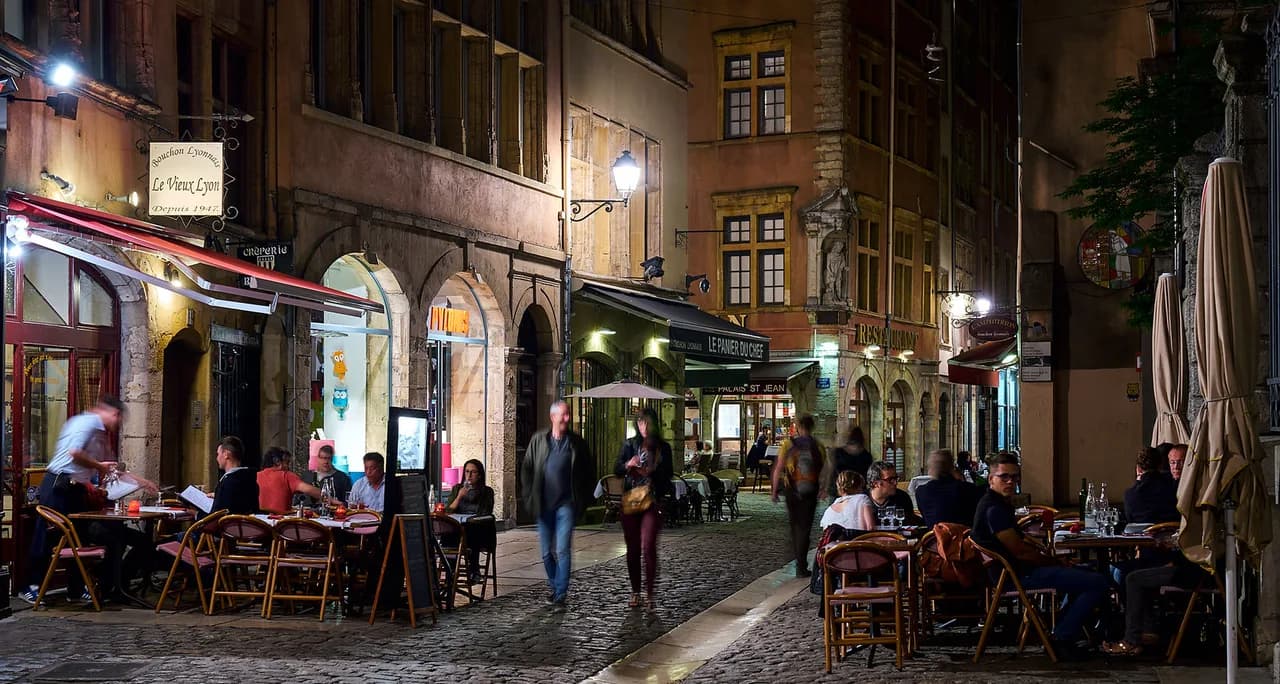
The city also has a strong claim as France's gastronomic capital, with a dense concentration of traditional bouchons whose wine lists lean heavily on both districts. Tasting in the city itself, whether in a bouchon or at a tourist-office workshop, is a sensible no-drive option for a first evening or a rainy afternoon.
Think of Lyon as a hub rather than a vineyard town: you will not walk out of your hotel into vines. The reward for a little planning is that both districts are reachable as day trips, and you can split a longer stay between a Beaujolais day and a Rhône day.
The Quick Decision: Beaujolais or the Northern Rhône?
Beaujolais is Gamay country. The best-known crus sit on granite hills and produce lighter-bodied reds with fresh red-fruit character, and the region also makes white wines from Chardonnay and rosés from Gamay. If you want drinkable, versatile reds and pretty hill villages, head north.
The northern Rhône is Syrah territory for reds, with Viognier, Marsanne and Roussanne for whites. The famous crus include Côte-Rôtie, Saint-Joseph, Crozes-Hermitage, Hermitage and Cornas, and the vineyards cling to steep slopes above the river. Choose this side if you want structured, ageworthy reds and dramatic terrain.
A practical rule: first-time visitors with a single free day often find Beaujolais easier to string together because the crus sit close to one another, while the northern Rhône rewards those willing to focus on one or two appellations. Neither district is better; they simply suit different palates and different amounts of time.
Beaujolais from Lyon: Crus, Villages and Appointment Culture
The Beaujolais crus are a set of village appellations, and the ones most often grouped for a day from Lyon include Morgon, Fleurie and Moulin-à-Vent. Each has its own character and its own cluster of small estates, so the sensible approach is to pick two neighbouring villages and book one or two visits in each rather than trying to cross the whole region.
Appointment culture matters here. Published guidance on Lyon wine trips is clear that most tastings near Lyon are by appointment only and that you cannot simply turn up at a producer expecting to taste, so a self-guided Beaujolais day needs bookings made well ahead, especially in popular periods.
When you write to a domaine, say how many people are coming, whether you need English, and whether you want a cellar visit as well as a tasting. Smaller estates often host visitors themselves, so a clear, short email in French or English gets a faster answer than a long inquiry.
Beaujolais Wineries That Receive Visitors
Sources confirm a set of Beaujolais estates that offer visitor tastings in French and English, spread across the region's villages. In the crus, these include Domaine Frédéric Berne in Morgon, Château de Poncié in Fleurie and Château des Jacques in Moulin-à-Vent, all in the northern half of the district.
Closer to Lyon and in the southern Beaujolais, the same sources list Domaine Duboeuf, Domaine Jean-Pierre Rivière and Domaine des Pampres d'Or. Road distances from the city range from about 19 km for Pampres d'Or to roughly 50 km for Château de Poncié, which gives you a rough way to group visits by drive time.
These are working estates rather than theme parks, and the sources describe them as offering tastings rather than fixed tour packages. Expect to arrange your own schedule between visits, and keep the number of estates per day modest so the driving stays relaxed.
Northern Rhône from Lyon: Côte-Rôtie, Saint-Joseph and Crozes-Hermitage
The northern Rhône begins where the river cuts south past Vienne, and its crus are strung along the valley. Côte-Rôtie sits closest to Lyon, Saint-Joseph stretches further down the west bank, and Crozes-Hermitage lies around Tain-l'Hermitage, roughly 90 km from the city. That geography shapes how much you can fit into one day.
Because the valley is linear, a good plan is to work one section rather than chase distant appellations. Côte-Rôtie and the area around Ampuis make a natural short day from Lyon, while Crozes-Hermitage and Hermitage suit a longer, full-day outing with fewer stops.
As in Beaujolais, the estates here are small and visits are generally arranged in advance. Ask about the range of wines poured and whether a cellar or vineyard walk is included, since the offer varies considerably between domaines.
Northern Rhône Wineries That Receive Visitors
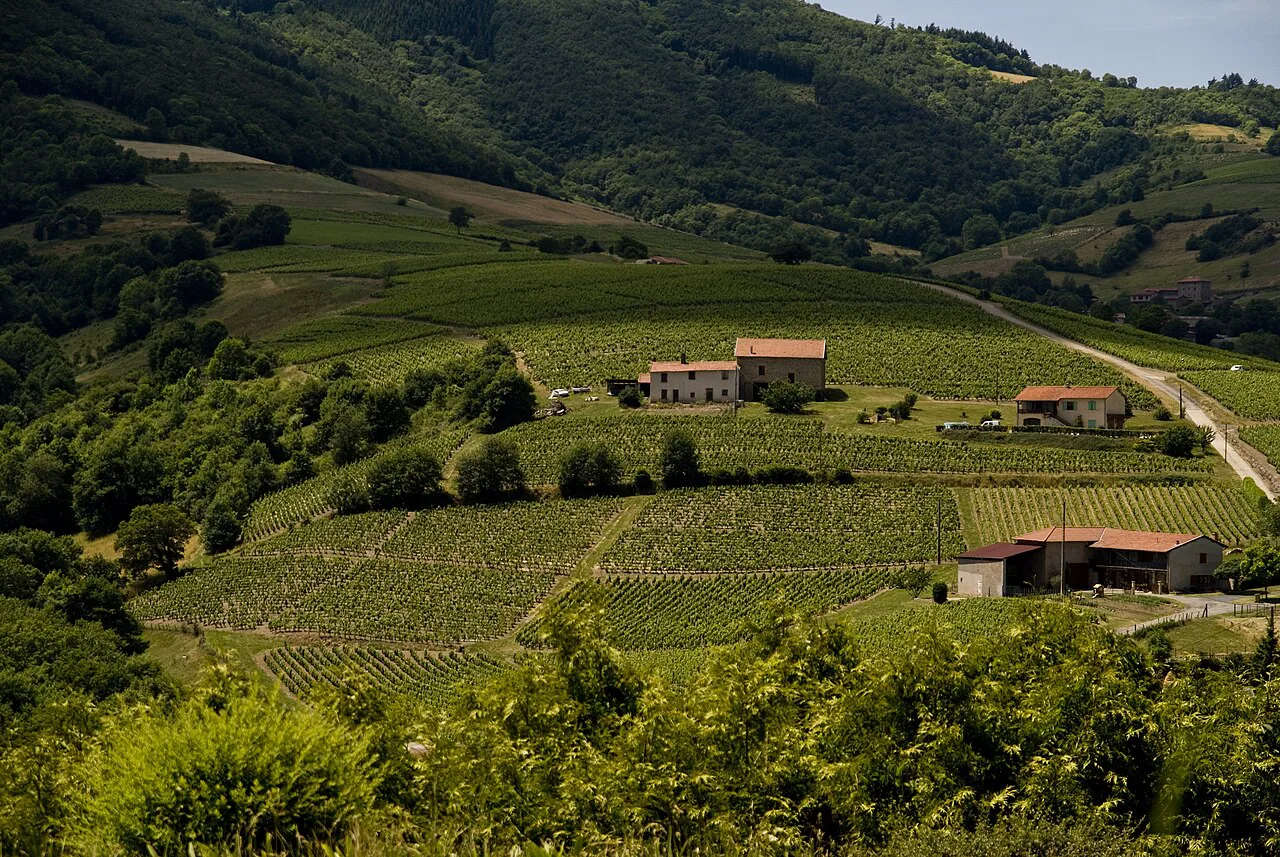
Sources confirm several northern Rhône estates that welcome visitors with tastings in French and English. In Côte-Rôtie, Domaine de Corps de Loup sits about 32 km from Lyon and Domaine Les Terriens about 39 km; in Saint-Joseph, Domaines Pierre Gaillard is roughly 54 km away.
Further south in Crozes-Hermitage, around 90 km from Lyon, Domaine Michelas Saint Jemms and Ferraton Père & Fils also receive visitors. The distance makes Crozes-Hermitage a full-day target rather than a quick add-on, so pair it with a single Côte-Rôtie stop or plan a leisurely loop.
Bear in mind that these are real producers with their own schedules, so availability can shift with the season and the harvest. Confirm times and languages when you make the appointment.
How Booking Actually Works
The single most useful thing to know about tasting near Lyon is that spontaneity rarely pays off. The available guidance is clear that most tastings around the city are by appointment and that you should reserve well in advance, particularly since wine tours from Lyon are popular activities.
When requesting a visit, give the essentials: date, preferred time window, party size, and whether anyone needs a tour in English. Ask whether there is a minimum party size, whether children or non-drinkers can come along, and whether payment is on site or in advance.
Harvest is the other variable worth raising early. Rather than guessing dates, ask the estate whether visits are possible during the vendanges and whether the tasting moves to a simpler format at that time; answers vary from domaine to domaine.
Tasting in Lyon Without a Car
If you would rather not leave the city, Lyon's tourist office publishes a program of tasting sessions described as workshops on the region's grape varieties and appellations. These are aimed at novices and keen amateurs alike and make a practical no-drive tasting option.
Beyond formal workshops, the city's bouchons and wine-focused restaurants are where many visitors first meet Beaujolais and Rhône wines. Ordering a glass of Morgon alongside Lyonnais charcuterie, or a northern Rhône white with a quenelle, gives you a useful benchmark before you commit to a day in the vineyards.
Those who want a structured city evening can also explore the dedicated wine bars of the Presqu'île and Vieux Lyon, which pour broadly across both districts and let you compare styles side by side without driving anywhere.
Guided Tours from Lyon: Half-Day Versus Full-Day
Guided tours from Lyon come in two broad formats. Beaujolais tours are typically half-day outings of roughly four to four and a half hours, while northern Rhône tours run from about four hours to six or seven hours for the longer itineraries. Groups are small, with up to eight people on the tours listed.
The trade-off is straightforward: a tour removes the driving and the appointment admin, and the guide usually explains the appellations along the way. In exchange, you follow a fixed itinerary and cannot linger at a favourite estate or add a village on a whim.
Ask before booking whether tastings are included or paid separately at each estate, and whether the group size stated is a maximum or a typical number. Those two answers change both the real cost and the feel of the day.
Going Independently: Train, Bus, Taxi and Bike
Self-guided wine trips near Lyon offer total freedom over which estates and vineyards you see and how long you stay. The same guidance notes that going independently is much cheaper than a guided tour, but that it requires substantial research and that you must reserve everything yourself.
There is also a practical constraint: the sources state that reaching the wineries near Lyon on your own means renting a car if you do not have one. Train lines reach towns such as Villefranche-sur-Saône and Vienne, but estates sit in villages and on hillsides away from the stations, so the last stretch needs a taxi, a bike or a pre-arranged transfer.
If you do drive, remember that a tasting day and a driving day do not mix. Designate a driver who spits rather than swallows, or book a tour or public transport so everyone can taste.
Tours Versus Self-Guided: Who Each Suits
Choose a guided tour if your time is short, if nobody in your group wants to drive, or if you would rather have the appellations explained as you go. Choose the self-guided route if you have a specific list of estates, want to spend an hour photographing a vineyard, or are travelling with people who prefer their own pace.
Budget is part of the calculation, but so is effort. A tour bundles transport, appointments and commentary into one booking; a self-guided day can be cheaper but consumes an evening of emails before you leave and requires a confirmed rental car.
A hybrid works well for many travelers: take a half-day guided tour to one district and spend another day in Lyon tasting at workshops and wine bars. That covers both vineyard scenery and city tasting without two long drives.
Where to Stay in the Vineyards
If you want to extend beyond a day trip, both districts have wine-country accommodation. In Beaujolais, Château de Pizay sits within its own forest and vineyard, Château de Bagnols offers a spa and pool, and Hotel des Vignes in Juliénas places you among the vines near two restaurants.
South of Beaujolais, Château de Pierreclos in the Mâcon wine area provides a base for exploring that stretch of Burgundy. Staying in the vineyards cuts morning drive time and lets you spread tastings across two days instead of squeezing them into one.
Book estate stays directly where possible and ask whether a tasting is included in the room rate. That single question often decides whether an on-site property is worth the premium over a town hotel in Villefranche or Belleville.
Practical Timing for a Wine Day from Lyon
Spring and autumn are the most comfortable seasons for vineyard visits, with autumn bringing the harvest atmosphere and spring offering green hillsides. Summer is warm and busy, and winter is quiet, with some small estates focused on cellar work rather than visitors.
Harvest timing varies year to year, so treat any specific date as approximate. Rather than booking around a calendar, ask the estate whether visits are running during the vendanges and whether the tasting format changes, then plan around the answer.
Whichever season you pick, allow more time than the map suggests. Country roads in the Beaujolais hills are slow, and a two-estate day with a lunch stop is usually more satisfying than a rushed four-estate circuit.
Plan Your Lyon Wine Day
Start with the grape question: Gamay and granite hills in Beaujolais, Syrah and steep terraces in the northern Rhône. Once you have picked a side, choose two or three estates from those confirmed to receive visitors, email them with your date, party size and language needs, and lock in the appointments before you book anything else.
Then decide how you will move. A small-group tour removes the driving and the admin, a rental car gives you freedom at the cost of planning effort, and a city-based day of workshops and bouchons needs neither. Whatever you choose, the driver should spit or abstain, and everyone should confirm the day's timings directly with the estate before travelling.
More wine guides from Lyon
Frequently Asked Questions
What wine region is near Lyon?
Two: Beaujolais begins just north of the city, and the northern Rhône valley runs south from around Vienne. Beaujolais is known for Gamay-based reds plus some Chardonnay whites and rosés, while the northern Rhône is Syrah country with Viognier, Marsanne and Roussanne whites.
Should I visit Beaujolais or the northern Rhône from Lyon?
Pick Beaujolais for lighter, fruit-forward reds and pretty hill villages with closely grouped crus. Pick the northern Rhône for structured Syrah, steep terraced vineyards and appellations such as Côte-Rôtie, Saint-Joseph and Crozes-Hermitage. With one free day, Beaujolais is easier to combine into a compact route.
Which wineries near Lyon take visitors?
Sources confirm visitor tastings in French and English at Beaujolais estates including Domaine Frédéric Berne, Château de Poncié, Château des Jacques, Domaine Duboeuf, Domaine Jean-Pierre Rivière and Domaine des Pampres d'Or. In the northern Rhône, Domaine de Corps de Loup, Domaine Les Terriens, Domaines Pierre Gaillard, Domaine Michelas Saint Jemms and Ferraton Père & Fils also receive visitors.
Do I need an appointment for wine tasting near Lyon?
In most cases, yes. Published guidance indicates that tastings near Lyon are generally by appointment only, so you cannot simply turn up at a producer and expect to taste. Reserve well ahead and include your date, party size and language preference in your request.
Can I do a wine tasting in Lyon without a car?
Yes. Lyon's tourist office publishes tasting workshops covering the region's grape varieties and appellations, and the city's bouchons and wine bars pour Beaujolais and Rhône wines. For vineyard visits without driving, a small-group guided tour is the simplest option.
Are wine tours from Lyon worth it compared with going independently?
Tours remove the driving and appointment admin and include guide commentary, but follow a fixed itinerary. Self-guided trips give you freedom and usually cost less, though they require research, advance bookings and, according to published guidance, a rental car to reach the estates.
How long does a wine tour from Lyon take?
Beaujolais tours are commonly half-day outings of roughly four to four and a half hours. Northern Rhône itineraries range from about four hours to six or seven hours, with small groups of up to eight people on the tours listed. Check current details when booking.
When is harvest in Beaujolais and the northern Rhône?
Harvest falls in early autumn, but the exact timing shifts each year with the weather. Rather than fixing a date, ask the estate whether visits are possible during the vendanges and whether the tasting format changes at that time.
Sources
Notes for your next wine trip
Optional updates to our winery and wine-town guides.
You might also like
Continue reading
More guides you'll find useful