Wine Tasting in Lucca: Which Winery and Tour to Choose
Plan wine tasting in Lucca: named wineries in the Colline Lucchesi and Montecarlo hills, published tasting prices, booking norms and car-free options.
On this page
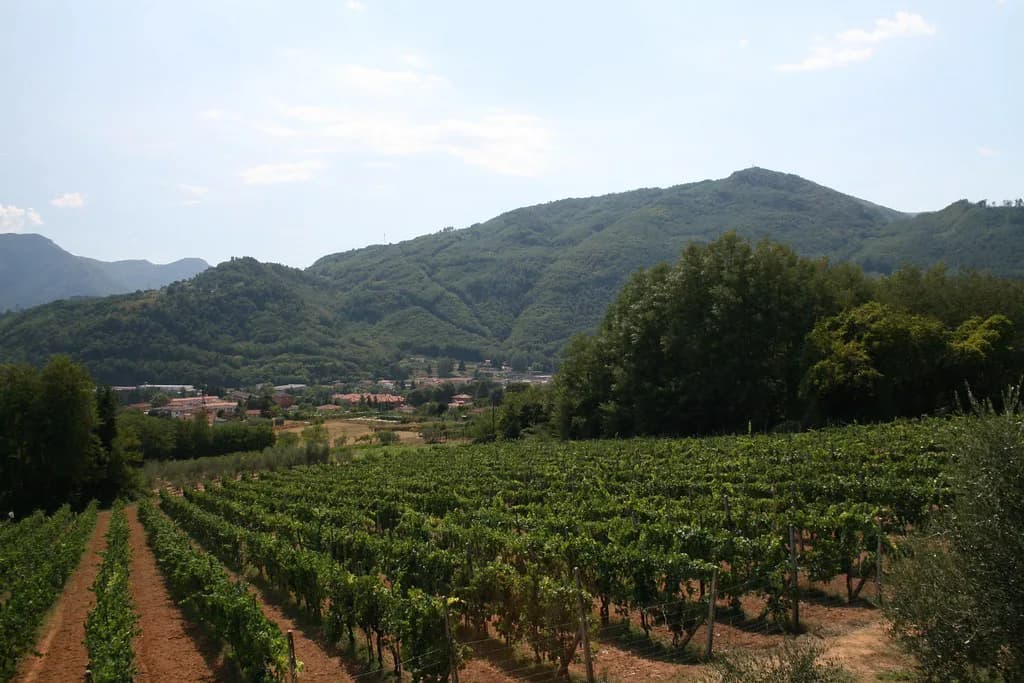
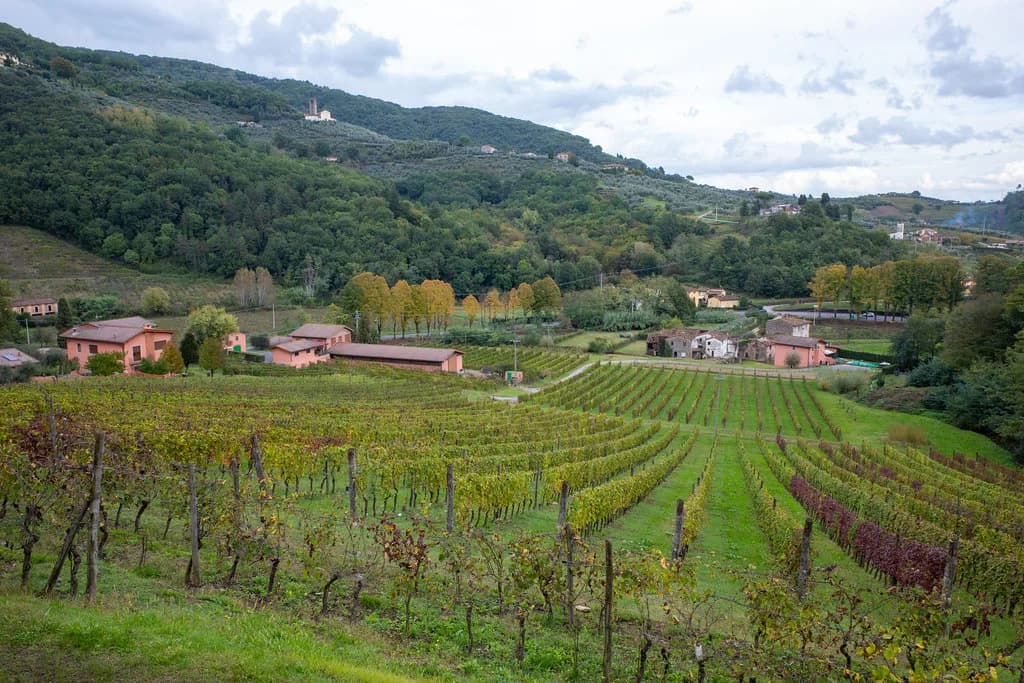
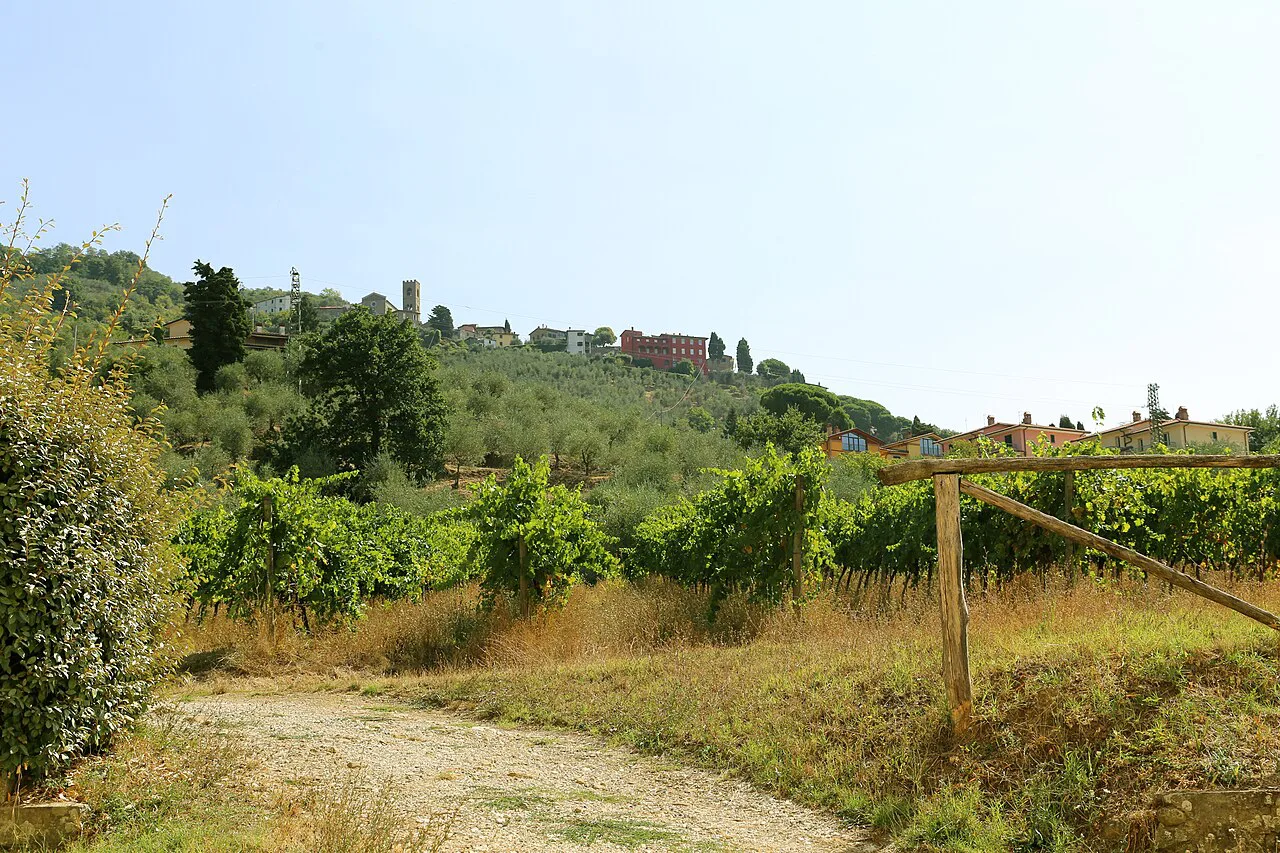
Lucca works as a wine-tasting base because the countryside starts at the walls: the vineyards wrap the city in a loose horseshoe and most estates sit within a short drive of the historic center. Winedering describes the wine country as a horseshoe shape around Lucca, with most wineries 15-20 minutes from the center by car. That layout means you can build a morning or afternoon around one or two cellars and still have time for the town.
The local wines are less famous than Chianti, which is exactly the point: you taste Colline Lucchesi and Montecarlo DOC wines in calm tasting rooms and small family estates rather than in coach groups. The trade-off is that public transport to individual estates is thin, so you should decide early whether you will book a tour, use a taxi, or taste locally in town. This guide groups the wineries by hill cluster, gives the published tasting formats and prices, and explains how booking works so you can plan a realistic day.
The two appellations that define a Lucca tasting
Two appellations frame most tastings around Lucca: Colline Lucchesi DOC and Montecarlo DOC. Winedering notes that Colline Lucchesi DOC was established in 1968, one of Tuscany's first, and that the reds are typically Sangiovese-led blends with Canaiolo, Ciliegiolo and often Merlot or Syrah. Expect medium-bodied, savory reds rather than the weight of more southerly Tuscan wines.
Montecarlo DOC, in the fortified village of Montecarlo di Lucca, is known for its white blends as well as reds. Winedering describes Montecarlo Bianco as a structured white blend that can include Sauvignon Blanc, Roussanne and Semillon, alongside Trebbiano and Vermentino in the region. Vin Santo, the sweet wine made from dried grapes aged in small barrels, is the classic finish to a Lucca tasting.
Soils and exposures change the wines across the hills: Winedering notes a mix of sandstone, clay and limestone marl at altitudes mostly between 100 and 300 meters, with sea breezes from the Tyrrhenian and protection from the Apennines. That combination gives the whites aromatic freshness and the reds bright acidity. When you choose where to taste, pick one Montecarlo estate for whites and one estate in the Colline Lucchesi DOC for reds to see the contrast.
The Montecarlo di Lucca cluster: three estates to compare
Montecarlo di Lucca, a walled village on a single hill about 20 minutes east of Lucca, is the densest cluster of visitable estates. Winedering lists three wineries there that receive visitors: Fattoria Carmignani, Tenuta del Buonamico and Tenuta San Beda. All three are in the Montecarlo area, so you can group two in one outing without crossing the hills twice.
Fattoria Carmignani offers the widest spread of formats. Winedering lists a Classic Tasting from 25 euros, a Deluxe Tasting from 30 euros, a Sommelier Tasting from 20 euros, a Sensory Tasting from 39 euros and a Light Lunch from 55 euros, most with a minimum of two people and a maximum of 50. Durations run from about one hour to 90 minutes, and the Light Lunch lasts two and a half hours.
Tenuta del Buonamico keeps it simple: Winedering lists a Tradition tasting from 35 euros lasting one hour for one to 18 people, and a Light Lunch Wine Experience from 70 euros lasting two hours for two to 18. Tenuta San Beda focuses on tastings with the winemaker, with a Wine Tasting with the Winemaker from 40 euros, 90 minutes for two to 12 people, and a Premium version from 50 euros lasting two hours. These prices are platform listings at the time of writing; the estate confirms the final format and price when you book.
The Capannori side: Fattoria Maionchi and the villa estates
Capannori, just east of Lucca toward the Montecarlo road, is home to Fattoria Maionchi. Winedering lists a two-hour winery tour with a four-wine and olive-oil tasting from 40 euros, for a minimum of two and a maximum of 20 people. It is a straightforward introduction to the Lucchesi hills, and the olive oil tasting is a useful reminder that Lucca is olive country as much as wine country.
Closer to the walls, several estates and wine shops host tastings inside or near the city. Winalist lists Enoteca Vanni, a historic wine shop in Lucca, with a tasting from 50 euros, and Tenuta di Forci, described as the oldest estate in the Lucca area with 360 hectares of woods and vineyards, with tastings from 35 to 50 euros. Tenuta Adamo, founded in 2020, lists a tasting from 25 euros, while La Badiola, a Renaissance villa in the San Pancrazio hills, lists an experience from 83 euros.
These in-town and villa options are the easiest to reach if you are staying inside the walls and do not want to arrange transport. The trade-off is that a wine-shop tasting is not a vineyard visit: Enoteca Vanni is a shop, not an estate, so choose it for a guided flight in town rather than a walk through the vines. Winalist lists average Lucca tasting prices around 55 euros across its selection, with individual experiences ranging from free entry-level tastings to much higher private tours.
How booking works: appointments, minimum parties and timing
Most Lucca-area tastings are by reservation, and the minimum party is usually two people. Winedering lists a minimum of two for nearly every tasting in the Montecarlo and Capannori cluster, with a few options open to one person such as Tenuta del Buonamico's Tradition tasting. If you are traveling solo, filter by minimum party size before you fall in love with a listing, and expect to join a shared slot rather than a private one.
Book directly with the estate or through the booking platform, and state your group size, preferred language and whether you want a cellar tour or just a seated tasting. Winalist notes that hosts update their own availability and that some experiences allow payment on arrival, so check the cancellation policy on the specific Winalist listing instead of counting on a standard rule that every host applies. In harvest season, roughly September and October, slots fill earlier, so reserve a week or more ahead.
Getting there without driving: tours, taxis and local options
Public transport to individual Lucca wineries is limited, so the practical car-free options are a taxi, a pre-booked transfer or an organized tour. Winedering notes that most wineries are a 15-20 minute drive from the center, which makes a round-trip taxi feasible for a single estate but expensive for a multi-stop day. If you plan two or three estates, a tour or a driver is usually the better value.
Organized wine tours from Lucca mostly head to Chianti rather than the local hills. BellaItaliaTour lists a half-day Chianti wine tasting from 79 euros, a Chianti Lovers tour visiting two wineries from 129 euros, and a Grand Wine Tour with a sommelier from 129 euros, all departing Lucca in small groups. These are Chianti tours, not Colline Lucchesi tours; they suit travelers who want the classic name and are happy to spend more time in the vehicle.
For a more local day without a car, compare the cost of a taxi to Montecarlo against a tour that includes transport. A taxi gives you flexibility to linger over lunch in Montecarlo village, while a tour fixes your schedule but removes the logistics. Whichever you choose, the driver in your group should not taste; use the spittoons, appoint a designated driver, or book a tour so everyone can relax.
Independent visits versus organized tours: the real trade-off
An independent visit wins on flexibility and price: a two-hour tasting at Fattoria Maionchi or a Classic Tasting at Fattoria Carmignani costs a fraction of a guided Chianti day tour, and you set your own pace. You can also combine a tasting with a walk on Lucca's walls or a stop in Montecarlo village. The catch is that you must arrange transport and book each estate yourself.
A tour wins when you want Chianti, a sommelier guide or a worry-free day. BellaItaliaTour's Chianti itineraries include transport, which matters if nobody in your group wants to drive, and the two-winery format lets you compare estates without planning the route. If Chianti is the name you are after, our guide to wine tasting in bologna shows the same classic-name logic applied to Lambrusco and the Colli Bolognesi. The trade-off is cost and a fixed itinerary: you will not have time for a spontaneous second tasting in the Lucchesi hills on the way home.
For a first visit, a sensible compromise is one independent tasting in Montecarlo or Capannori plus a guided walk or wine shop tasting in Lucca itself. That gives you the vineyard experience and the town without committing a whole day to a coach. If you later want the classic Chianti names, book a tour on a separate day so the two experiences do not compete for time.
Tasting with lunch and what a local menu adds
Lunch tastings are the best way to slow down and understand the local pairings. The Light Lunch at Fattoria Carmignani runs two and a half hours for two to 50 people, and the Light Lunch Wine Experience at Tenuta del Buonamico lasts two hours for two to 18, both at the top of each estate's price list described above. Lunch experiences generally include a seated meal with three to four wines, so plan on not driving afterward.
The local table favors unsalted Tuscan bread, peppery olive oil, pecorino and dishes such as tordelli lucchesi, the meat-filled pasta. Winedering suggests pairing the acidity of Montecarlo Bianco with rich cheeses and the tannins of Colline Lucchesi Rosso with meat sauces. If you have dietary needs, mention them when booking, since lunch formats are prepared in advance and cannot always be changed on the day.
Timing your visit: seasons, harvest and conditions
Spring and autumn are the most comfortable seasons for vineyard visits around Lucca. Winedering describes spring temperatures of roughly 15-20°C with green countryside and camellias in bloom, and autumn harvest bringing activity in the cellars and color in the vines. Summer is hot and long, which suits sunset tastings but makes early booking essential, especially for weekend slots.
Harvest, usually September and October, is atmospheric but also the busiest time for producers, so book with your chosen estate well in advance for that period. Winter is quieter and some small estates may reduce their visiting days, so mention your dates in the booking request and let the estate reply with its actual opening days rather than treating a year-round schedule as given. The winery or its booking page is the only reliable source for current opening days and seasonal breaks.
A sample half-day and full-day route
For a half-day, start in Montecarlo: book a morning tasting at Tenuta del Buonamico or Fattoria Carmignani, then walk the village and have lunch before returning to Lucca. This keeps you in one cluster and avoids crossing the hills twice. If you are relying on a taxi, agree on a pickup time in Montecarlo village so you are not stranded after lunch.
For a full day, pair a morning Colline Lucchesi tasting at Fattoria Maionchi in Capannori with an afternoon Montecarlo tasting, or reverse the order to suit your bookings. Add a short stop at a villa estate such as La Badiola or Tenuta di Forci if you want a garden setting. Keep the number of estates to two, or at most three, so you are not rushing between appointments.
Plan Your Lucca Wine Day
Lucca rewards travelers who treat the hills as a set of small clusters rather than a single wine route. Choose Montecarlo for the densest choice of visitable estates, Capannori for a straightforward winery tour with olive oil, and the town itself for a wine-shop tasting when you do not want to arrange transport. Book with a minimum of two people in mind, and reserve early in harvest season.
Decide between an independent tasting, a taxi and an organized Chianti tour based on how much driving you want to do and whether the classic name matters to you. The driver should skip the glass, so plan spittoons, a designated driver or a tour. Confirm the final price, duration and availability with the estate when you book, and you will have a realistic, enjoyable day in the Colline Lucchesi.
More wine guides from Lucca
Frequently Asked Questions
Does Lucca have wineries?
Yes. The hills around Lucca, particularly Montecarlo di Lucca and Capannori, have several estates that receive visitors, including Fattoria Carmignani, Tenuta del Buonamico, Tenuta San Beda and Fattoria Maionchi. Many are within a short drive of the city walls, and some wine shops in Lucca also host tastings.
What wine is Lucca famous for?
Lucca is known for Colline Lucchesi DOC and Montecarlo DOC. The reds are typically Sangiovese-led blends with Canaiolo, Ciliegiolo and sometimes Merlot or Syrah, while Montecarlo is also known for structured white blends. Vin Santo is the traditional sweet wine.
How much does wine tasting cost in Lucca?
Published prices vary by estate and format. Platform listings show simple tastings starting in the low-to-mid range and lunch experiences costing more, with private tours at the top end. Check the specific estate's booking page for the current price, since it depends on the number of wines, duration and whether food is included.
Can you do wine tasting in Lucca without a car?
It is possible but requires planning. Public transport to individual estates is limited, so most travelers use a taxi, a pre-booked transfer or an organized tour. A wine-shop tasting in Lucca itself is the easiest car-free option.
Do you need to book Lucca winery tastings in advance?
Yes, most estates expect a reservation, and many have a minimum party size of two. Booking ahead is especially important in harvest season, when producers are busy and slots fill quickly.
What is the difference between Colline Lucchesi and Montecarlo DOC?
Colline Lucchesi DOC covers the hills around Lucca and is best known for Sangiovese-led reds. Montecarlo DOC is centered on the village of Montecarlo di Lucca and is known for both reds and structured white blends, including some international varieties.
Sources
Notes for your next wine trip
Optional updates to our winery and wine-town guides.
You might also like
Continue reading
More guides you'll find useful