Tenuta di Valgiano: Planning a Visit to a Lucca Hills Estate
Tenuta di Valgiano is a biodynamic estate in the hills outside Lucca. Learn the wines, how to frame a visit request, and how to arrive without a car.
On this page
Tenuta di Valgiano is a biodynamic estate at Valgiano, in the hills outside Lucca in northern Tuscany. Its reds are mostly Sangiovese blended with Merlot and Syrah, bottled under the small Colline Lucchesi DOC and under broader Tuscany designations. For a wine traveler based in Lucca, it is the closest thing to a signature estate visit in the immediate hills.
This guide covers what the estate bottles, how the Colline Lucchesi zone is organized, and how to build a visit request that a small biodynamic farm can actually answer. It also sets out the transport trade-offs, because reaching a rural estate from a walled city takes planning. For the broader picture of the district, start with the guide to wine tasting in Lucca and then narrow to this single property.
Why Tenuta di Valgiano Draws Visitors
The estate sits at Valgiano, in the hills above Lucca, and farms biodynamically with minimal technological intervention in the cellar. Its flagship is a Colline Lucchesi Rosso, with a second wine, Pallistorti di Valgiano, and a Mazzapink Toscana Rosso in the range.
The wines have drawn attention beyond Italy, including reviews from critics who follow the Tuscan coast and its northern reaches. Treat that coverage as a sign of quality and consistency rather than a reason to expect a slick visitor center. This is a working farm in the countryside, and the visit experience depends on what you arrange in advance.
Where Valgiano Sits Relative to Lucca
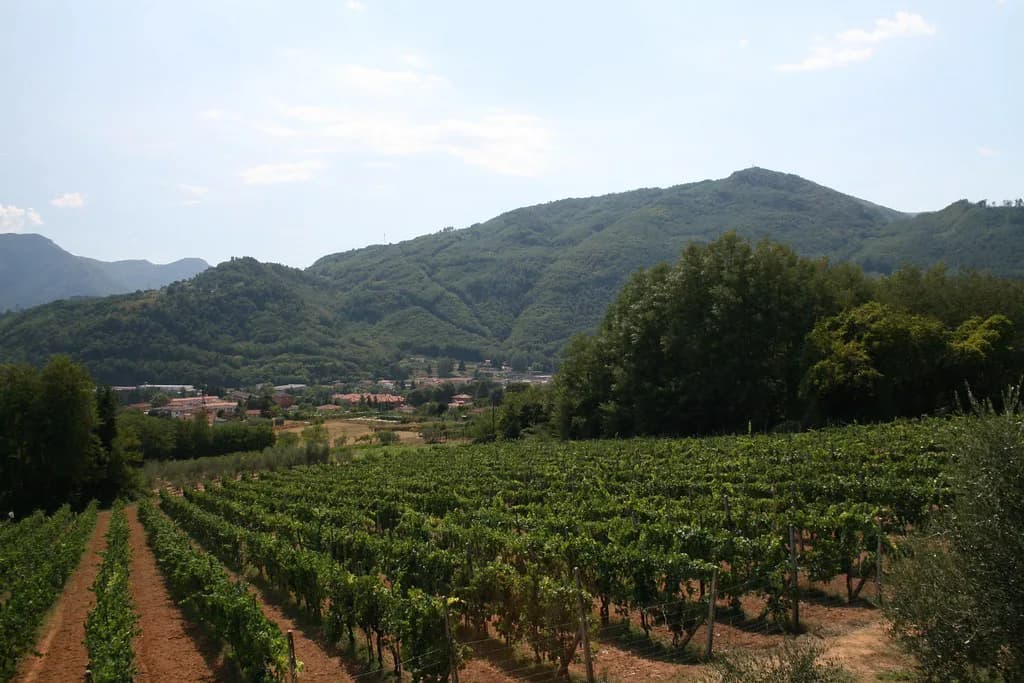
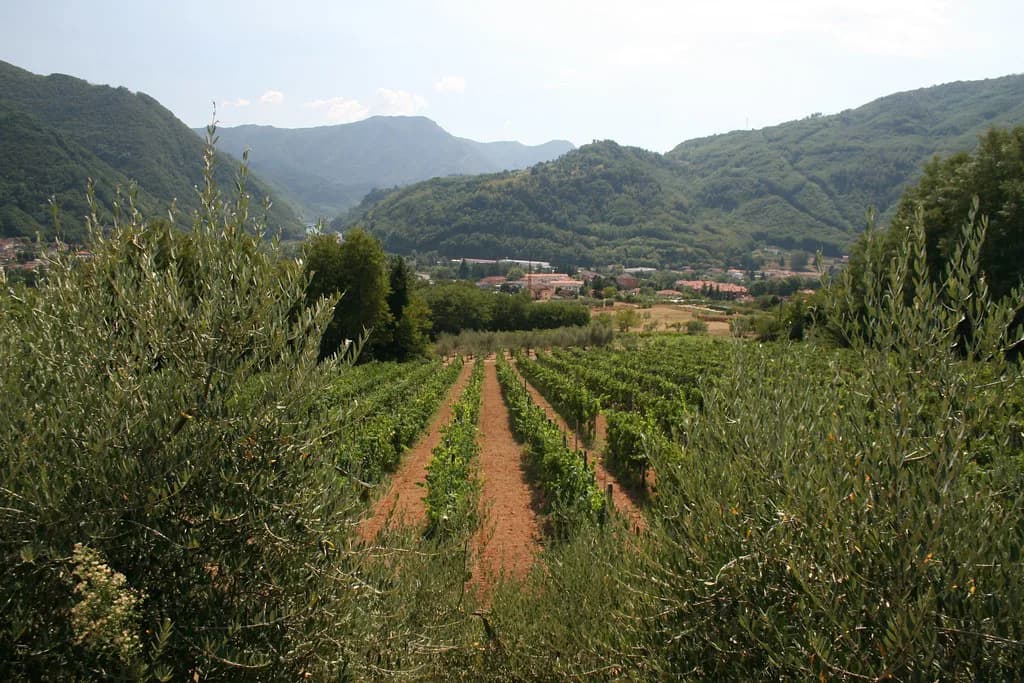
Valgiano is a hill village in the Colline Lucchesi area northwest of Lucca, and the estate takes its name from it. The zone wraps around the city on the slopes that rise toward the Apuan Alps, which is why the wines are labeled Colline Lucchesi rather than Chianti. Plan on a short drive or taxi ride out of the city, not a walk from the walls.
Because this is a single rural property rather than a village of tasting rooms, the sensible base is Lucca itself, where you can organize transport, then head out for one appointment. If you want to stack several stops into one day, use the overview of wineries near Lucca to see how the estates cluster before you commit to a route.
The Wines to Know Before You Go
The flagship Colline Lucchesi Rosso is the bottling to name first when you write to the estate. Pallistorti di Valgiano is the second wine, classified IGT Toscana and built from Sangiovese, Syrah and Merlot, so it gives a broader, more immediate read on the house style. Ask to taste across both if you want the clearest picture of what the property does.
A third bottling, Mazzapink Toscana Rosso, is an IGT blend of Sangiovese and Cabernet Sauvignon. Knowing these three names lets you ask precise questions rather than a generic request for a tasting, which matters when a small estate is fitting you around vineyard and cellar work.
Grapes and Appellations Explained
Sangiovese is the backbone here, supported by Merlot and Syrah in the blends, which softens the austere edge the grape can show in cooler, northern sites. The Colline Lucchesi DOC is a small denomination around Lucca, so a DOC bottling signals fruit from this specific hill zone rather than from Tuscany at large. IGT Toscana, by contrast, gives the estate room to blend and label more freely. Pallistorti di Valgiano itself is bottled as IGT Toscana from Sangiovese, Syrah and Merlot, while the flagship carries the Colline Lucchesi DOC.
That distinction is the single most useful thing to understand before you taste, because it explains why the same producer offers a tightly zoned wine and broader regional ones side by side. When you book, say which of the two tiers you are most curious about; it helps the estate plan what to open.
Biodynamic Farming and Low-Intervention Winemaking
The estate describes its farming as biodynamic and its cellar approach as keeping technological interference to a minimum, with fermentation in large oak vats and aging partly in cement and French oak barrels. In plain terms, that means vineyard work is done with organic and biodynamic preparations, and the winemaking leans on patience rather than additives. You do not need to accept the philosophy to enjoy the wines, but it explains the character.
If the farming is what interests you most, say so in your request and ask whether a walk through the vines can be included. That is a fair question at a biodynamic property; whether it is possible depends on the season and the day's work.
Booking a Visit: How Appointment Culture Works
Small Tuscan estates like this one generally receive visitors by arrangement rather than on a drop-in basis, since there is no separate hospitality staff waiting at a counter. Write ahead with your preferred date, the number in your party, whether you want tasting only or a cellar walk-through, and whether you need the visit in English. A short, specific email gets a better answer than a broad inquiry.
Ask directly what the estate currently offers visitors and what it charges, because published tasting fees, opening days and seasonal closures are not fixed points you can rely on from a distance. The same applies to food: travelers have described estate lunches with typical Tuscan fare, but that reflects a particular booking rather than a standing menu, so confirm whether any food is included before you count on it.
Weekday requests usually meet a calmer estate than Saturdays, and larger groups need more lead time than couples. If you are traveling in September or early October, book well ahead, since harvest reshapes the working day and shrinks the window for hosting.
What a Visit Typically Covers
Expect the core of a visit to be a seated or standing tasting of the estate's reds, with the flagship and the second wine as the natural anchors. A cellar walk-through, if offered, is where the large vats and barrel room make the low-intervention method concrete. Duration is set by the estate, so treat any estimate you read elsewhere as a guess rather than a schedule.
Phrase your request around one of two formats: tasting only, or tasting plus a walk through cellar and vineyards. Naming the format avoids the awkward moment when you arrive expecting a tour and the host has prepared a short pour.
Getting There Without Driving
The estate is in the hills outside Lucca, so public transport will not put you at the gate; a taxi from the city is the straightforward option, arranged for both directions in advance because empty cabs are scarce out in the hills. A bicycle suits confident riders who know the climb, but the return after a tasting should still be planned sober. A private driver or a small guided tour removes the logistics entirely.
Confirm the pickup point and the return time when you arrange the car, and give the driver the estate's address at Valgiano rather than the town name alone. If you are staying in the countryside instead of the city, an agriturismo base can shorten the transfer and make an early appointment easier.
Independent Visit vs Guided Tour
Going independently gives you a private appointment, your own pace and a direct conversation with the host, but you carry the transport problem and any language gap. A guided tour costs more per head and moves on someone else's timetable, yet it solves the driving, often pairs the estate with a second stop, and usually handles the booking. For a single rural property, weigh the taxi cost against the convenience of a tour.
If your trip is centered on Lucca, the practical compromise is one independent appointment at Valgiano plus a guided day elsewhere. That keeps the biodynamic estate visit personal without committing every day to logistics.
Pairing Valgiano With the Wider Lucca District
The Lucca hills hold a spread of small estates, and the Colline Lucchesi denomination is the thread that ties them together. Build a day around two appointments at most, spaced with a lunch in the city or a hill village, rather than racing between gates. Other producers in the zone, such as Fattoria Sardi, are worth adding to a second day if you want a fuller picture of the district. If you are weighing this zone against another Tuscan appellation, the Siena wine guide shows how a Sangiovese-focused day works around a larger city base.
Keep the geography honest: Valgiano is one stop, and the zone's estates sit on different roads, so a scattergun itinerary wastes the day in the car. Pick a cluster, book it, and leave slack for the drive between properties.
Practical Timing: Harvest, Weekdays and Group Size
Late September and early October bring harvest, when the estate is busiest and visits are hardest to arrange, though the vineyard is at its most active. Spring and early summer are calmer for appointments, and winter visits depend entirely on whether the estate is hosting at all. Weekdays beat weekends for attention, and small parties are easier to accommodate than large ones.
Ask about group size limits when you write, since a host can often take four more easily than fourteen. If your group is large, split it across two appointments or book a tour operator who handles the logistics.
Responsible Tasting
Anyone driving should not taste: use the spittoons, appoint a designated driver, or book a car or tour so nobody at the wheel has been drinking. This is a working rural estate with narrow hill roads, so the sober-driver point is practical, not moral. Guests should be of legal drinking age.
What to Confirm Before You Travel
Before you set out, confirm the date and time of your appointment, whether a tasting fee applies and how it is paid, and what the visit includes in terms of cellar access and food. Ask for directions to the estate entrance rather than the village, because hill properties can be hard to find on arrival. One short confirmation email a few days ahead covers all of this and spares you a wasted trip.
Plan Your Visit
Tenuta di Valgiano rewards travelers who treat it as a booked appointment rather than a drop-in attraction. Name the wines you want to taste, state your format, sort out transport, and the visit becomes the highlight of a Lucca-based wine day.
Use Lucca as your base, keep the itinerary to two estates at most, and let the Colline Lucchesi zone set the shape of the day. Browse the wider Lucca winery guide before you finalize dates, then write to the estate with specifics.
Frequently Asked Questions
Can you visit Tenuta di Valgiano without a car?
Yes, with planning. The estate is in the hills at Valgiano outside Lucca, so public transport will not drop you at the gate. Arrange a taxi for both directions in advance, book a private driver, or join a small guided tour that includes the estate.
Do you need an appointment to taste at Tenuta di Valgiano?
Small Tuscan estates of this kind generally host visitors by arrangement rather than on a walk-in basis. Write ahead with your date, party size and whether you want a tasting only or a cellar walk-through, and wait for confirmation before building your day around it.
What wines does Tenuta di Valgiano produce?
The flagship is a Colline Lucchesi Rosso, joined by the second wine Pallistorti di Valgiano and a Mazzapink Toscana Rosso. The reds are Sangiovese-led blends with Merlot and Syrah, farmed biodynamically with minimal cellar intervention.
What is Colline Lucchesi wine?
Colline Lucchesi is a small DOC covering the hills around Lucca in northern Tuscany. Its reds are typically Sangiovese-based, often blended with French varieties, and the denomination signals fruit from this specific zone rather than Tuscany at large.
How far is Tenuta di Valgiano from Lucca?
The estate is at Valgiano, in the hill country just outside Lucca, reached by road rather than on foot from the city center. Rather than relying on a fixed distance, ask the estate or your driver for directions to the entrance when you book.
Is Tenuta di Valgiano biodynamic?
Yes. The estate describes its farming as biodynamic and its winemaking as low-intervention, with fermentation in large oak vats and aging in cement and French oak barrels.
Sources
Notes for your next wine trip
Optional updates to our winery and wine-town guides.
You might also like
Continue reading
More guides you'll find useful