Château de La Chaize: Visiting the Brouilly Estate from Lyon
Château de La Chaize is a historic Brouilly estate in Odenas, Beaujolais. Here is what its wines, walled Clos, visits and the trip from Lyon involve.
On this page
Château de La Chaize sits in Odenas, one of the villages wrapped around Mont Brouilly in the southern Beaujolais crus. It is a working family estate with classified historic buildings, a walled vineyard created in the seventeenth century and a tasting room, not a museum piece. This guide covers what the estate publishes about its wines and visits, then explains how to shape a day there from Lyon.
The practical puzzle is transport. Odenas is rural, the estate has no station of its own, and the reward for solving the last few kilometers is a look at one of the most storied properties in Beaujolais. You can approach it by train with a taxi at the end, by car with a driver who spits, or on an organized day trip that removes the logistics question entirely.
What Château de La Chaize Is and Where It Sits
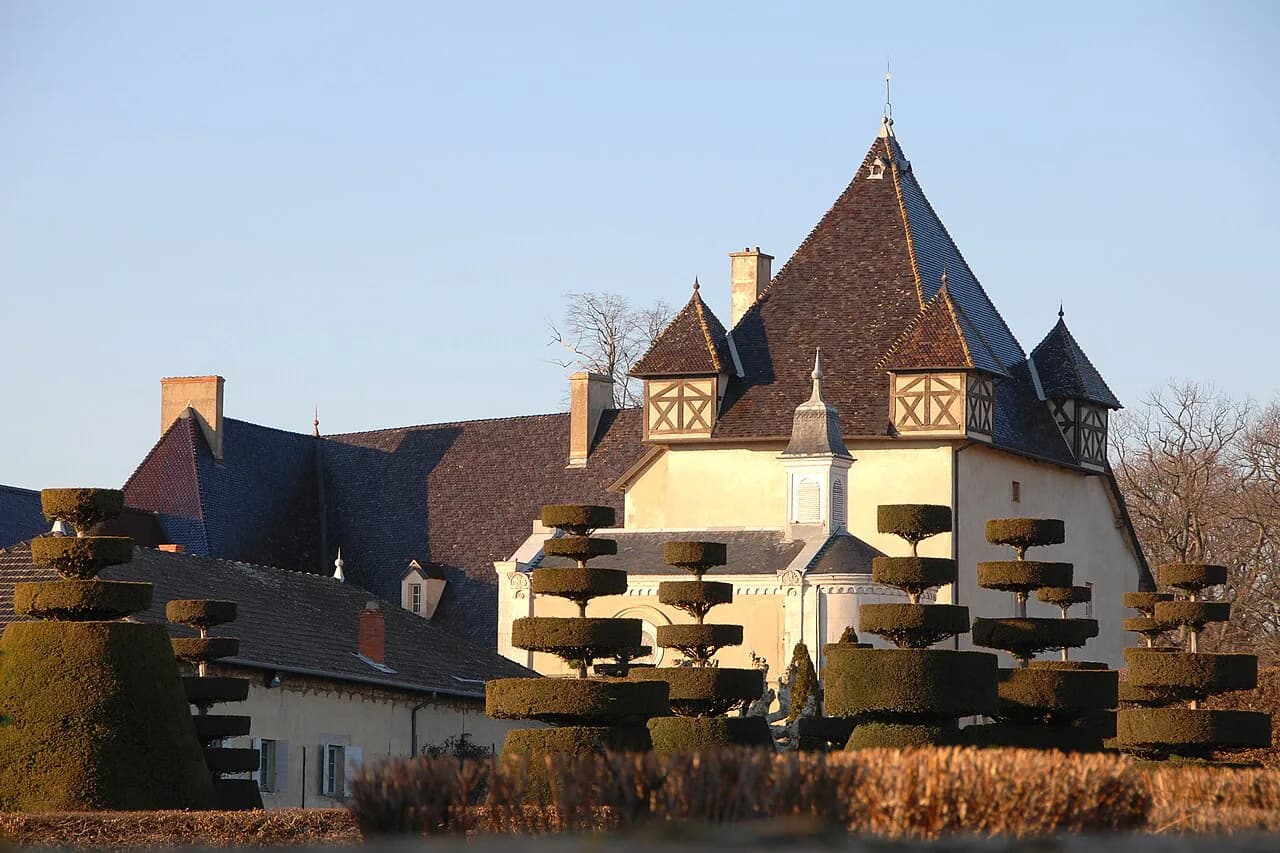
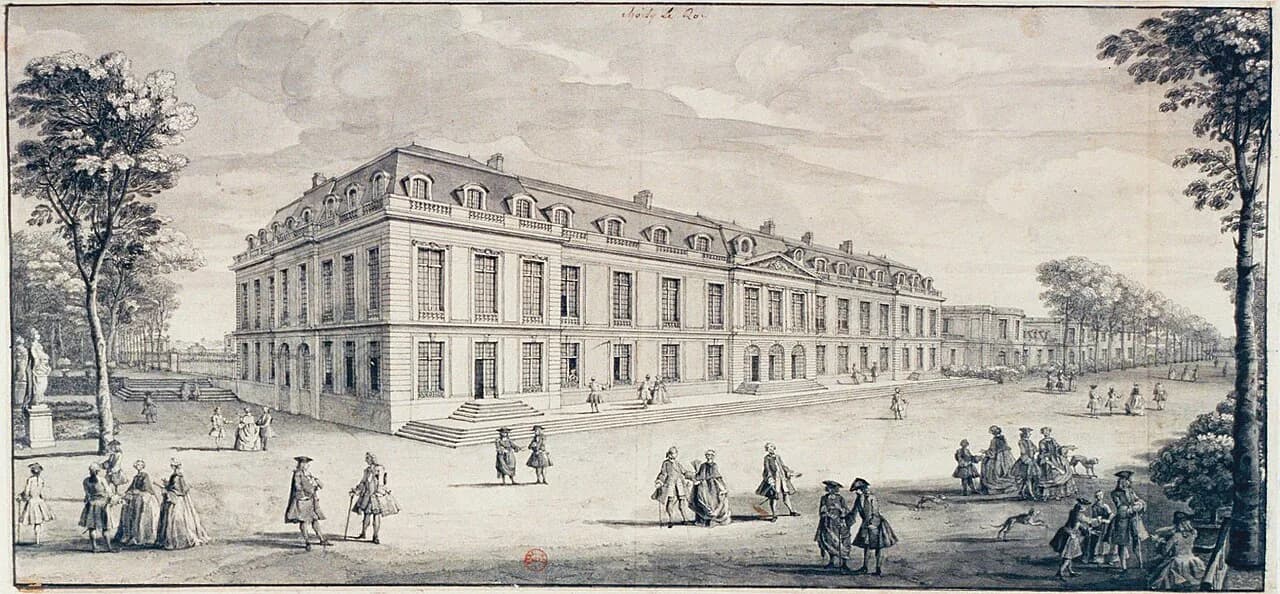
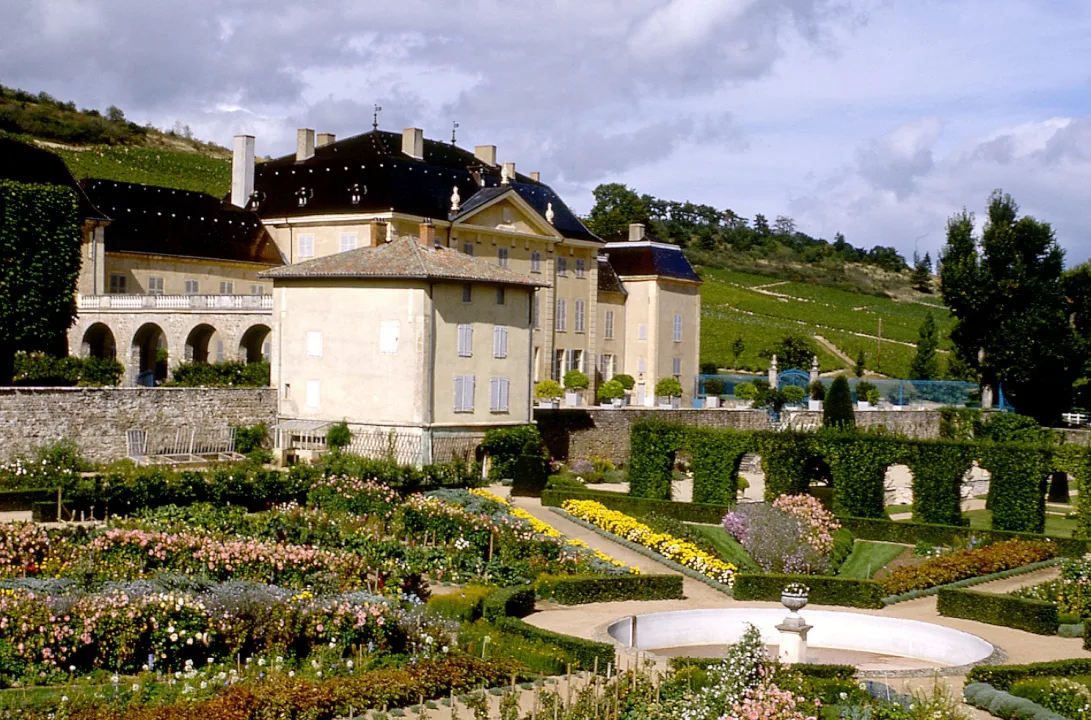
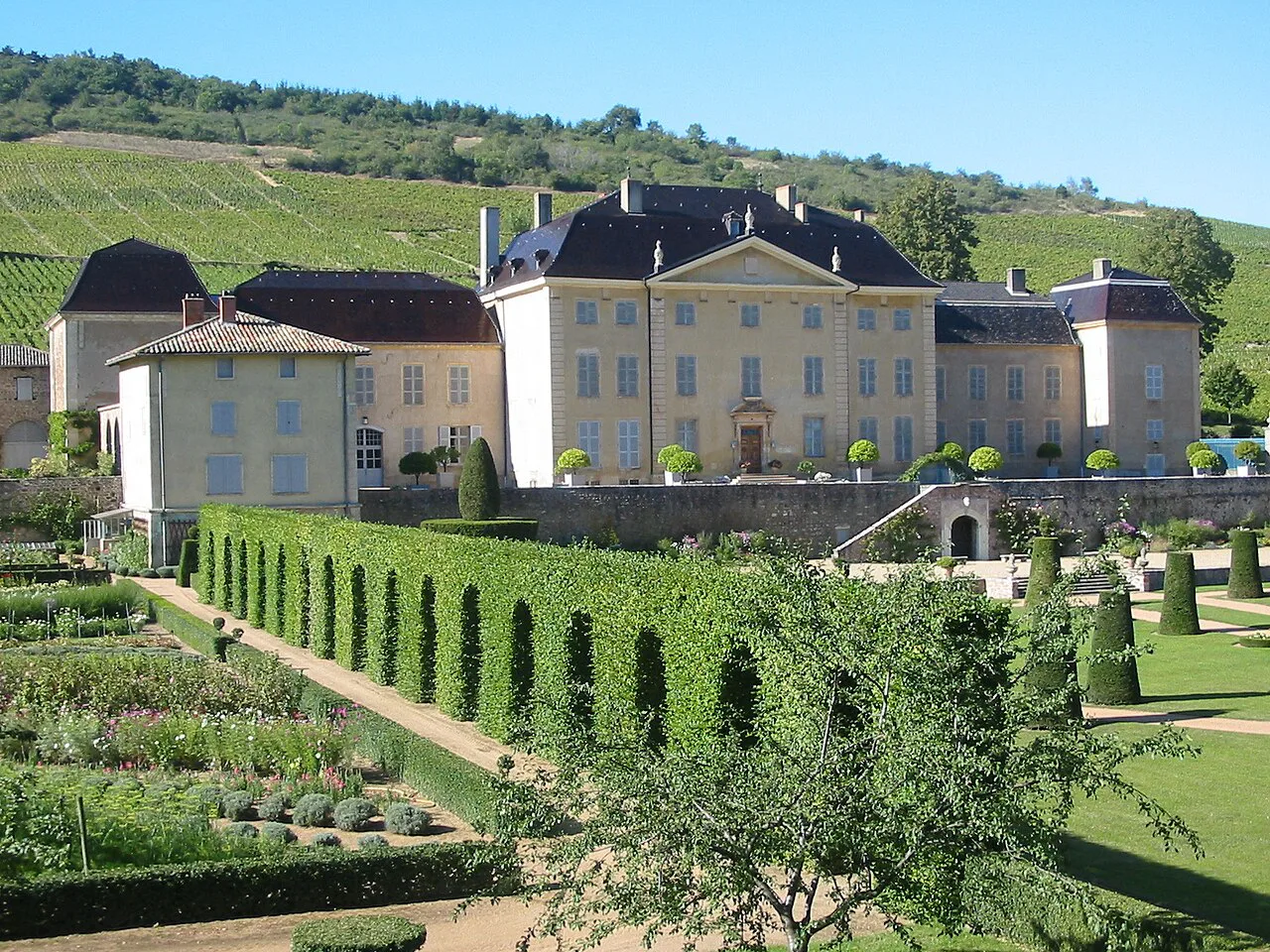
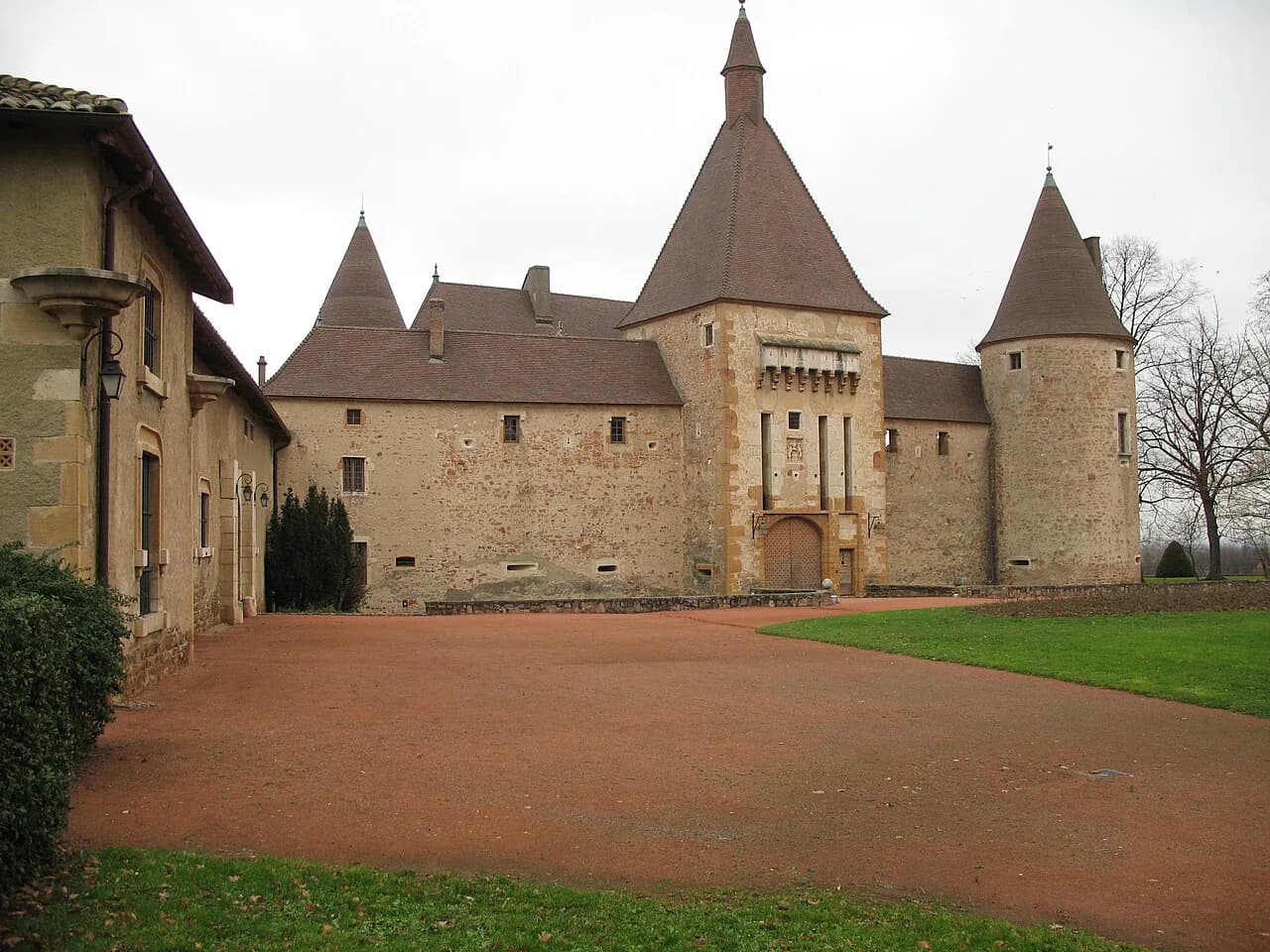
Château de La Chaize is a 450-hectare family wine estate at 500 route de La Chaize, 69460 Odenas, in the Beaujolais crus zone south of Villefranche-sur-Saône. The château, its gardens and the winery are classified as national heritage sites, and the property has been family-run since 1676. Vines, forest, meadows and moorland share the land, so the visit reads as a landscape rather than a single block of vineyard.
The estate's own presentation of its buildings and vineyards names the appellations it works with: Brouilly, Côte de Brouilly, Fleurie and Morgon. That spread makes it unusual among Beaujolais growers, most of whom stick to one or two crus, and it is a reason to taste a flight here rather than a single glass. The current generation of the Gruy family manages the property.
The Beaujolais Crus Map Around Odenas
Beaujolais produces reds almost entirely from Gamay, and its ten crus are named villages with their own character, from light and floral to firm and structured. Odenas belongs to the Brouilly and Côte de Brouilly zone, the southernmost pair, which circles Mont Brouilly. Brouilly is the broad appellation across the plain and lower slopes; Côte de Brouilly is confined to the hillside itself, on blue-stone soils, and generally gives tighter, more mineral wines.
The geography rewards grouping. Fleurie and Morgon lie to the north and northwest, so a day that starts at La Chaize can continue north through the crus villages along the N6 corridor. If you would rather let someone else do the routing, compare the options in our guide to Lyon wine tours before you commit to a self-drive plan. If your trip also takes you south, our wine tasting in Avignon guide follows the same plan-ahead logic for the southern Rhône.
The Wines: Gamay Across Four Crus
All of the estate's reds are Gamay, but the cru changes the shape of the wine. Brouilly, the largest-volume wine in the range according to Burgundy Report, comes from several parcels and is the broadest and silkiest of the line-up. Fleurie blends three main sites and leans perfumed, while Morgon, a small cuvée of roughly 2.5 hectares around Corcelettes, shows a firmer, more structured frame. Côte de Brouilly adds a chiselled, mouth-watering edge.
Those descriptions come from published tasting reports, not from a house style sheet, so treat them as orientation for choosing what to taste rather than a promise of any particular bottle. When you contact the estate, ask which crus are open at the tasting room that week, since availability moves with bottling and stock. The estate also sells its wines through a shop on site, according to its own photo captions.
The Clos de La Chaize Monopole
Behind the château stands the Clos de La Chaize, a rectangular walled plot of Gamay in the lieu-dit "La Chaize" on east-facing porphyroid granite, with the walls themselves radiating heat back onto the fruit. The estate describes it as one of three vine-planted clos listed in the French supplementary inventory of Historic Monuments. The vineyard is farmed by hand with full grass cover, and sheep graze it in winter to limit soil compaction.
A monopole means one owner holds the entire site, so no other grower can bottle wine from it; the Clos de La Chaize appears only under this estate's label. The 2020 bottling was vinified with a portion of whole clusters, aged in tuns for 18 months and released unfiltered and unfined, all details the estate publishes on the wine's technical sheet. In practice, the monopole is the bottle to seek out if you want the visit's signature wine, and the one most likely to be discussed in the tasting room.
Tours and Experiences: What the Estate Publishes
The estate runs a tours and experiences section on its website and lists a dedicated visits telephone line, +33 6 13 07 92 76, separate from the main office number, +33 4 74 03 41 05. That separation matters: a booking request sent to the general contact address may sit behind commercial correspondence. Use the visits line or the booking channel on the tours page when your question is about a tour, a group or a date.
The published material does not state tour prices, durations, tasting fees or how many wines are poured, and it does not list fixed opening hours for the tasting room. Rather than guess, ask those four questions directly when you book, along with whether the tour includes the historic cellar, which the estate describes as the longest in the Beaujolais at 108 meters. A clear answer on those points tells you whether the visit fits a half-day or a full one.
Booking Mechanics and Local Etiquette
In the Beaujolais crus, small growers expect a phone call or email before you arrive, and larger estates with dedicated tourism staff often run set slots. Treat La Chaize as the second type: enquire ahead with your date, party size and preferred language, since tours may run in French or English depending on staffing. If you are a group of six or more, say so in the first message, because group handling and timing differ.
For the rest of the day, apply the same logic to neighboring estates and confirm any current details with the winery once you have your itinerary fixed. The broader guide to Lyon wine tasting lays out how the region's appellations fit together and which bases work best for day trips.
Getting There from Lyon Without Driving
Lyon is the natural base. Trains from Lyon Part-Dieu run north along the Beaujolais corridor toward Belleville-en-Beaujolais and Villefranche-sur-Saône, but neither station is in Odenas, so the last stretch needs a taxi or a pre-arranged transfer. Book the taxi for the return leg as well when you arrive, since rural ranks are thin and phone coverage on the slopes is patchy. Check current timetables with SNCF or the regional TER network before fixing your day.
The alternative is a guided day trip, which bundles transport, a driver who is not tasting and often two or three estate stops. The trade-off is fixed timing and less freedom to linger at La Chaize's tasting room or to add an unscheduled village stop. Read our comparison of Lyon wine tours against independent travel if you are weighing the two.
If you plan to visit several crus estates, our round-up of Lyon wineries covers which properties accept visitors and how to reach them by train, bus or bike. That page is the practical companion to this one when you are stitching together a full day. For evenings back in the city, our pick of Lyon wine bars is the easiest way to keep tasting Beaujolais without driving again.
Building a Full Day Around Mont Brouilly
A sensible shape is a morning at La Chaize, a lunch stop in Odenas or a nearby village, then one or two smaller estates in Brouilly or Côte de Brouilly during the afternoon. The villages around Mont Brouilly are close together, so the driving between them is short once you are in the zone. If you head further north, Fleurie and Morgon add substantial distance and are better kept for a separate day.
Two estates in a day is realistic if appointments are spaced by at least an hour; three begins to feel rushed once you allow for cellar tours and conversation. Ask each estate how long its visit runs before you set the sequence, and leave buffer time for the rural roads.
Harvest Timing and the Calmer Seasons
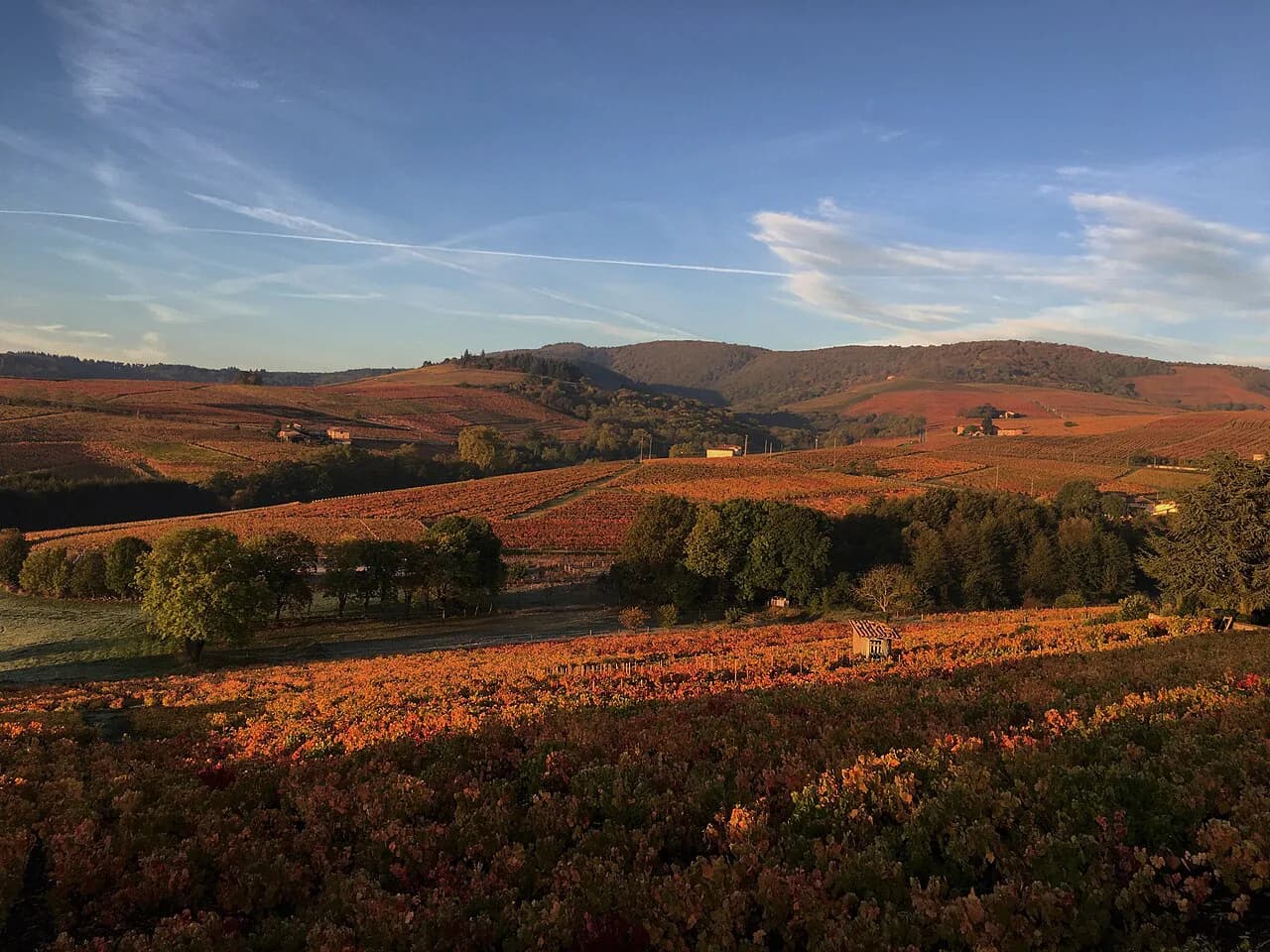
Beaujolais picks Gamay in September in most years; the estate's 2020 Clos fruit was brought in on September 5 that year, and in 2021 picking started on September 13 in Fleurie with the full team from the following day. Harvest is the busiest period in the cellars, so tourism capacity is stretched and visits may be restricted.
Late spring and early summer are calm, the vineyards are green, and appointments are easier to secure. Autumn after picking combines cellar activity with mild weather, but confirm that the tasting room is operating normally before you plan around it.
Practical Notes for the Day
Whoever is driving should not taste. Use the spittoons that tasting rooms provide, appoint a designated driver, or take a tour so that nobody has to choose between the wines and the road. Public transport plus a taxi works if you keep the schedule modest.
Bring a layer for the cellar, which stays cool year-round, and wear shoes that handle gravel and uneven ground around the walled Clos. Cash or card policies vary between estates, so ask when you book.
What to Buy and What to Ask
On the buying side, the choice is between the single-vineyard Clos de La Chaize monopole and the broader crus range of Brouilly, Côte de Brouilly, Fleurie and Morgon. The monopole is the wine that makes the visit distinctive, while the crus give you a spread of styles to compare at home. Ask what is available at the cellar door on the day, since bottling cycles affect stock.
Also ask about shipping, particularly if you are traveling onward by train, and whether bottles can be held for collection later in your trip. Published critic scores for the top wine exist, including a 98/100 from James Suckling, but they are someone else's judgment and best treated as context rather than a buying instruction.
Plan Your Visit
Château de La Chaize rewards a little preparation: a call to the visits line, a taxi booked for the return, and a clear idea of which crus you want to taste. The reward is a rare combination of historic architecture, a walled monopole vineyard and a serious Gamay range in one stop.
Build the rest of the day around the Mont Brouilly villages, keep the driver sober, and confirm the final details with the estate before you leave Lyon. That is the whole recipe for a good Beaujolais day.
Frequently Asked Questions
Where is Château de La Chaize located?
The estate is at 500 route de La Chaize, 69460 Odenas, in the Beaujolais crus zone south of Villefranche-sur-Saône, at the foot of Mont Brouilly. It is a rural property with no station of its own, so plan the last stretch by taxi or a pre-arranged transfer.
Can you visit Château de La Chaize and taste the wines?
Yes. The estate publishes a tours and experiences section and a dedicated visits telephone line, and it operates a tasting room and shop on site. Tour prices, durations and the number of wines poured are not published on the pages reviewed, so ask those questions when you book.
How do you get to Château de La Chaize from Lyon without a car?
Take a train from Lyon toward Belleville-en-Beaujolais or Villefranche-sur-Saône, then a taxi for the final stretch to Odenas. Book the return taxi in advance, or choose a guided day trip that includes transport and a driver who is not tasting.
What wines does Château de La Chaize make?
The estate makes red Beaujolais from Gamay across the Brouilly, Côte de Brouilly, Fleurie and Morgon appellations. Its signature bottling is the Clos de La Chaize monopole, a walled vineyard behind the château planted in 1676.
What is the Clos de La Chaize monopole?
It is a single walled plot of Gamay behind the château, farmed exclusively by this estate, which is what monopole means. The site is listed in the French supplementary inventory of Historic Monuments, and the wine is released as a separate single-vineyard cuvée.
Is Château de La Chaize a Brouilly or a Côte de Brouilly producer?
Both. The estate works parcels in Brouilly, the broad appellation across the plain and lower slopes, and in Côte de Brouilly, the hillside appellation on blue-stone soils. It also makes wines from Fleurie and Morgon.
Sources
Notes for your next wine trip
Optional updates to our winery and wine-town guides.
You might also like
Continue reading
More guides you'll find useful