Bandol Wineries: Planning a Tasting Day from Marseille
Plan a Bandol wine day from Marseille: which estates receive visitors, what tastings include, and how to reach the appellation without driving yourself.
On this page
Bandol is a compact appellation in Provence, and most of the driving between its towns is short—which makes a day of tasting here more about sequencing than distance. The trick is deciding what kind of visit you want and how you will move around, because the district stretches inland as well as along the coast.
From Marseille you have three practical shapes for the day: a train-and-taxi approach, a hired car with a designated driver, or an organized tour that handles the driving. Each has a different trade-off in cost, flexibility and how many estates you can realistically fit in. Readers weighing a similar coastal day further east can compare the options in the Cannes wine guide.
This guide focuses on what wineries actually publish about visits, the grapes behind the bottles, and how to group a route that works with public transport. Anyone driving should spit rather than swallow—or better, leave the car behind and let a driver, guide or train do the work.
Why Bandol Is a Distinct Appellation
Bandol earned appellation status in 1941 and today spreads across eight communes in Provence. Its reds are the signature: built mainly on Mourvèdre, they come out full-bodied with high tannins and a savory, peppery profile rather than the light, breezy style many travelers associate with Provence.
The appellation produces red, rosé and white wines, but it is dominated by rosé, with red wines a substantial minority and whites only a small fraction of output. That matters when you plan a tasting: a typical flight here may show more pink than you expected.
Treat this as a reason to ask about the full range when you book. If you want a deeper look at how Provence wines compare, a broad primer can help.
Where the Appellation Sits Relative to Marseille
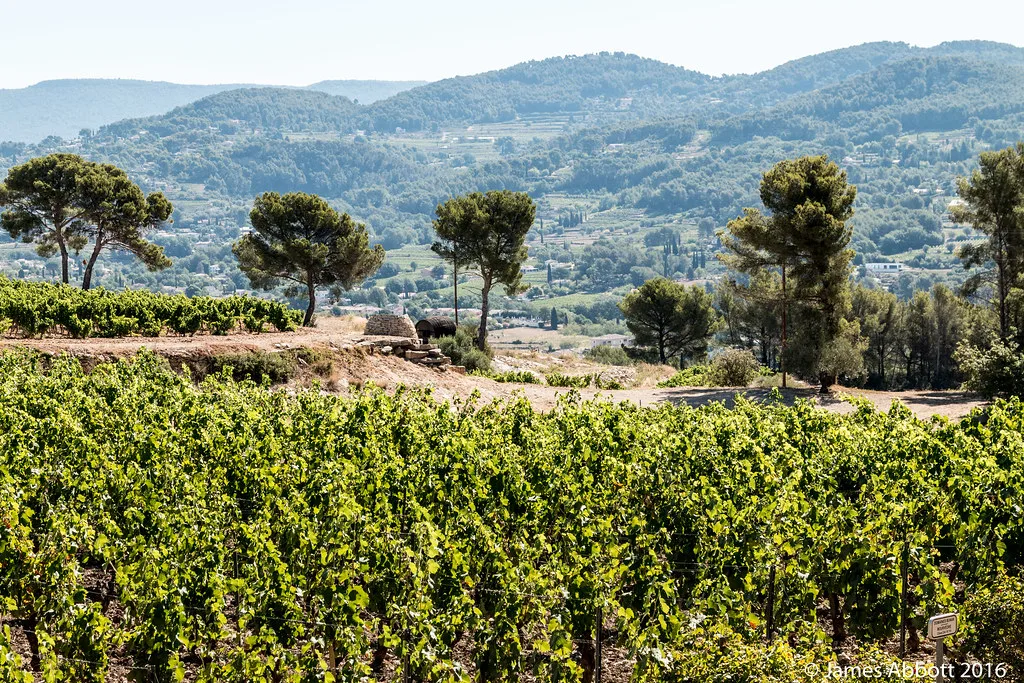
Bandol sits along the coast east of Marseille, and the appellation's communes include inland villages such as Le Castellet as well as the seaside town of Bandol itself. The inland and coastal parts feel different, and grouping visits by geography will save you a lot of driving.
A practical way to think about it: pick a cluster—Le Castellet and its neighbors, or Bandol and the coastal communes—rather than crisscrossing the whole appellation. If you are also considering the coast around Cassis, the Cassis AOC wines are a separate appellation and worth a different day.
Domaines Bunan in Le Castellet: the Self-Guided Visit
Domaines Bunan, in Le Castellet, publishes a self-guided estate and vineyard visit with an audio guide and QR codes, covering the ampelographic collection, the production facilities and the aging cellar. It finishes with a tasting of six wines spanning AOP Bandol, Côtes de Provence and Vin de Pays, and the whole visit runs about one hour.
The adult price is €10 per person, with children free. It is offered Monday through Saturday in English and French, with start times across the morning and afternoon, and it requires a minimum of two and a maximum of twenty guests.
Book online at least one day ahead, and note the free cancellation window closes one day before the start. This is the format to choose if you want a short, low-cost, self-paced stop that still covers the winery's range.
The Guided Alternative at Domaines Bunan
The same estate also lists a guided visit and vineyard discovery with tasting, which runs about 90 minutes and prices from €23 per person, with the same minimum of two and maximum of twenty guests. The extra time and cost buy a guided walk through the vineyard and cellar rather than an audio-led route.
Choose based on what you value: the cheaper self-guided option leaves more of the day for a second estate, while the guided version gives you a person to ask questions. Both finish with the wine range, so the real difference is how the story is told.
What a Bandol Tasting Flight Usually Covers
Expect reds to anchor the flight, with Mourvèdre in the lead—sometimes blended with Grenache, Cinsault or Syrah, depending on the cuvée. The reds at a good estate are structured and built to age, so don't judge them by a quick taste alone.
Rosé is the majority of production in the appellation, so a serious tasting here will usually include one. It is often a fuller, more structured rosé than the pale, light style many travelers expect from Provence, and it can age well.
Whites are a small share of output, typically based on Clairette with Bourboulenc and other grapes, so not every estate will have one to pour. If white wine is a priority for you, ask when you book whether a white is part of the lineup—there is a close neighbor worth knowing about too.
Domaine Tempier and Its Single-Vineyard Reds
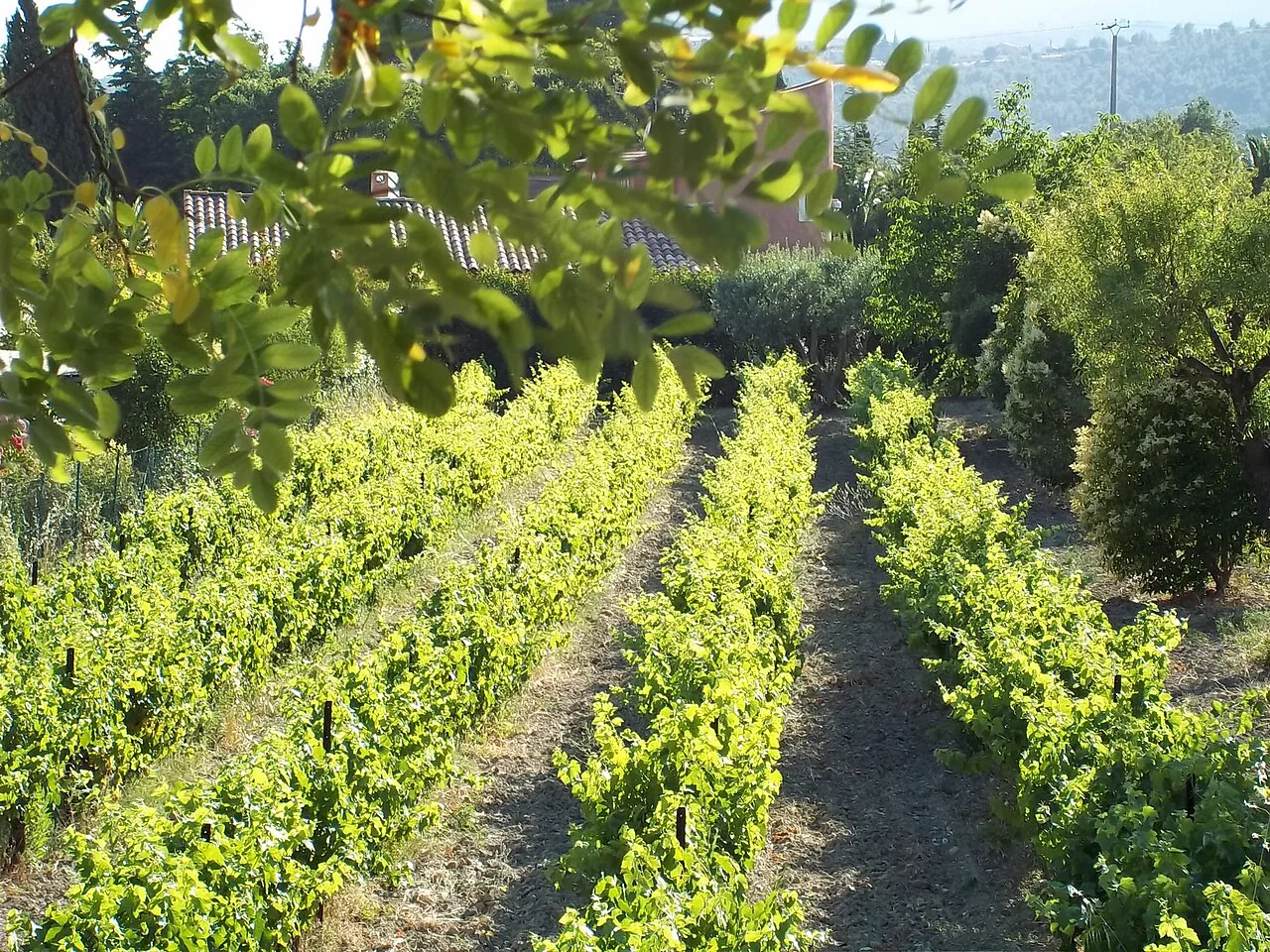
Domaine Tempier is a benchmark Bandol estate with roots in Le Plan de Castellet, and it is closely associated with Mourvèdre's revival in the region. Its wines include a classic red and three single-vineyard reds whose names you will see on labels and wine lists before you arrive.
Before you build a day around Domaine Tempier, confirm directly whether and how it receives visitors.
The Three Tempier Crus Explained
La Migoua sits highest, at around 270–300 meters on the Beausset side, with more clay diversity and a blend that leans more on Grenache and Cinsault—so it is the softest and most approachable of the three. La Tourtine comes from heavy clay soils with a very high share of Mourvèdre, giving it a more powerful build.
Cabassaou sits just below La Tourtine and combines qualities of both in many tasters' view. Knowing the difference helps you read a flight or a wine list, but it does not guarantee any of the three will be poured on the day.
Getting There Without Driving
The train from Marseille to Bandol is the simplest starting point, with the town's station putting you within reach of the coastal part of the appellation. From there, taxi or local bus can take you to inland villages such as Le Castellet, but services are limited and more reliable in summer.
Grouping estates in one village—Le Castellet, for example—makes a taxi feasible for the day. If you want to compare multiple producers, either pick nearby ones or book a driver, because bus schedules are not built around wine tastings.
If you would rather keep the itinerary simple, a guided tour from Marseille or nearby can combine estates and avoid the transport planning entirely. That flexibility is the main trade-off: you give up spontaneity but gain time and a driver who knows the roads.
Independent Day Versus Guided Tour from Marseille
Independently, a day can be cheap and flexible: a self-guided visit at Bunan is the low-cost anchor, and you add transport and perhaps a second stop. The risk is time lost to transport gaps or a closed gate, so book ahead and keep the itinerary tight.
On a tour, the cost per person is higher but you can visit more in a day and someone else handles the logistics. For a group of two or three, the math can work either way; for larger groups, a tour or a hired driver is usually the better fit.
Booking Culture, Party Sizes and Languages
Bandol estates vary in how they accept visitors, and some apply minimum party sizes. Bunan's self-guided visit, for example, requires at least two people and caps at twenty.
When you contact an estate, ask four things: whether the visit is guided or self-guided, how many wines are poured, whether it is available in English, and the cancellation policy. Getting those answers up front saves surprises on the day.
Harvest Timing and the Seasonal Rhythm
Harvest in Bandol generally falls in late summer to early autumn, when the wineries turn to production and visits are more limited. If you are planning a trip in September, book early and expect a different pace at the estates.
Outside harvest, spring and early summer are the easiest times to schedule a tasting day, when the weather is mild and the tasting rooms are open to visitors. Summer brings more demand and more limited availability, so plan your dates well ahead.
Buying and What to Expect at the Estate Shop
Many estates sell their wines and local products at the cellar door, and Bunan offers access to its shop as part of the visit. Buying directly is the simplest way to bring bottles home, but check luggage rules before you pack a case.
Ask about shipping or local delivery if you are buying several bottles. That is often cheaper than checking a heavy suitcase, and some estates will consolidate an order for you.
What Is in the Glass: Bandol Styles and Tasting Practicalities
Bandol is a tiny appellation within Provence, and while rosé makes up the majority of the area's output (65%), with reds at 30% and whites at 5%, the region is most famous for its rich, peppery, and meaty red wines made almost exclusively with Mourvèdre. Those reds show primary flavours of blackberry, dark chocolate, game, white pepper and anise, with a bone-dry, full-body profile, high tannins and medium acidity, and alcohol typically between 13.5% and 15% ABV. Serve them at 60–68°F, in an oversized glass, and consider decanting for 1 hour; the better examples can cellar for 10+ years. For food, Bandol reds pair wonderfully with gamey meats such as venison, buffalo burgers, barbecue and beefy stews, and dishes spiced with white pepper or cumin.
The white side of the appellation exists too. Domaine Tempier's 2018 Cuvée Classique Blanc Bandol is a blend of mostly Clairette plus Bourboulenc and Ugni Blanc and a whisper of Marsanne, and it represents less than 5% of Tempier's total wine production. In tasting, it showed deep straw-yellow colour with orange blossom, butter, pineapple and orange peel on the nose and in the mouth, a lifted palate with a hint of minty forest floor, and a long, suave, delicately herbal, mineral-laced finish. Clairette, Bourboulenc and Ugni Blanc are worth knowing by name if you want to identify what you are tasting.
Tasting-room mechanics matter when you are combining a winery stop with a day out. At Domaines Bunan in Le Castellet, the self-guided cellar and vineyard visit runs about 1 hour and is bookable at least 1 day in advance, with starting times at 09:00, 09:30, 10:00, 10:30, 11:00, 14:00, 14:30, 15:00, 15:30, 16:00, 16:30 and 17:00, Monday through Saturday. It runs in English and Français, for groups of 2 to 20, at €10 per adult, with children aged 0–17 free, and free cancellation until 1 day prior. The tasting at the end covers 6 wines from AOP Bandol, Côtes de Provence and Vin de Pays, and you finish at the shop. Visiting Domaine Tempier itself is a separate matter: it is a benchmark Bandol estate, and its three special single-vineyard reds — La Tourtine, La Migoua and Cabassaou — are the wines collectors seek out.
Plan Your Bandol Day
Bandol rewards an early start and a clear idea of which estates you want to see. Anchor your day with a booked visit—Bunan's self-guided tour is the simplest entry point—and add a second stop nearby.
Decide your transport first: train and taxi for a short, focused day, or a tour if you want to cover more ground without a designated driver. Either way, confirm the current details with each estate before you travel.
Frequently Asked Questions
What kind of wine is Bandol?
Bandol is a Provence appellation best known for reds built mainly on Mourvèdre, which tend to be full-bodied with high tannins. It also produces rosé, which accounts for most of the appellation's output, and a small share of white wine.
Do Bandol wineries require appointments?
Practices vary by estate. Domaines Bunan publishes a self-guided visit that must be booked at least one day ahead, with a minimum party of two and a maximum of twenty. For other estates, contact them directly to ask whether they accept walk-ins or work by appointment.
Can you visit Bandol wineries without a car?
Yes, but plan around limited transport. The train from Marseille reaches Bandol town, and from there a taxi or local bus can take you to inland villages such as Le Castellet. Grouping estates in one village makes a taxi practical for the day.
How long does a Bandol winery tasting take?
At Domaines Bunan, the self-guided visit with a six-wine tasting runs about one hour, while the guided version runs about 90 minutes. At other estates, duration depends on the format, so ask when you book.
What is the difference between Bandol red and Bandol rosé?
Bandol red is Mourvèdre-led and structured, often blended with Grenache, Cinsault or Syrah, and built to age. Bandol rosé is the appellation's largest production and tends to be fuller and more structured than the pale, light rosés many travelers expect from Provence.
Sources
Notes for your next wine trip
Optional updates to our winery and wine-town guides.
You might also like
Continue reading
More guides you'll find useful