Cassis Wineries: Which White Wines Near Marseille to Taste
Plan a wine day in Cassis, France: what the seaside AOC grows, how its small band of wineries works, and how to reach the vineyards from Marseille.
On this page
Cassis is the rare Provençal appellation where white wine leads, and the vineyards sit close enough to Marseille that you can build a serious tasting day around the train rather than a rental car. The catch is scale: this is a small, family-driven district with roughly a dozen AOC producers, so the visit rewards planning rather than wandering. This guide treats Cassis as a Marseille day trip and sets out the wines, the geography and the booking realities.
You will find here what the AOC grows, why the appellation's white-led profile is unusual, how appointment culture works at small domaines, and how the Cassis day compares with a private Bandol-and-Cassis tour. Figures for tasting fees, opening days and train times change, so no fixed numbers are quoted; the article explains where to source them when you book.
Why Cassis Is a White-Wine Appellation in a Rosé Region
Provence is shorthand for rosé, but Cassis runs the other way: whites account for about 67 percent of AOC production there, rosé around 30 percent and red only about 3 percent. That inversion is the single most useful fact for planning, because a Cassis tasting flight will be built around structured, sometimes ageworthy whites rather than the pale pinks you meet elsewhere on the coast. It also explains why the wines suit the local seafood table, bouillabaisse included.
The appellation was among the first in France to be formalized, recognized in 1936 when the national AOC system was created. That date matters less than what it protected: a long white-wine reputation stretching back centuries, when Cassis was already known for whites while much of the region made reds. For a taster, the practical consequence is that the village's identity is bound up with dry white wine, so arrive ready to taste and possibly buy white rather than treating it as a rosé stop.
Cassis also fits neatly into a wider Marseille tasting itinerary, which is helpful if you want context before committing a day. The broader picture of wine tasting around the city, including the Côtes de Provence appellations that dominate the region, makes a useful comparison point: Cassis is the compact, white-focused exception rather than the rule.
The Geography: A Small Vineyard Inside Calanques National Park
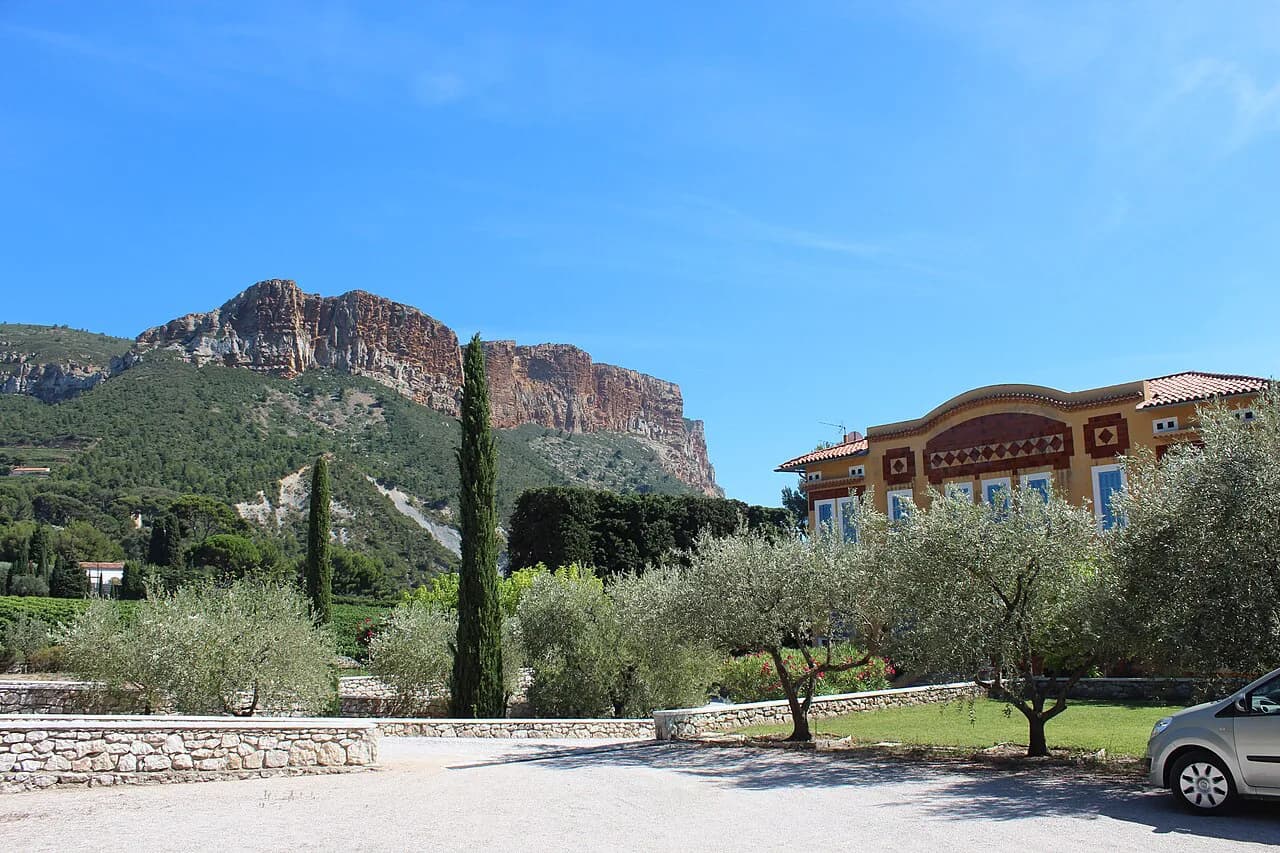
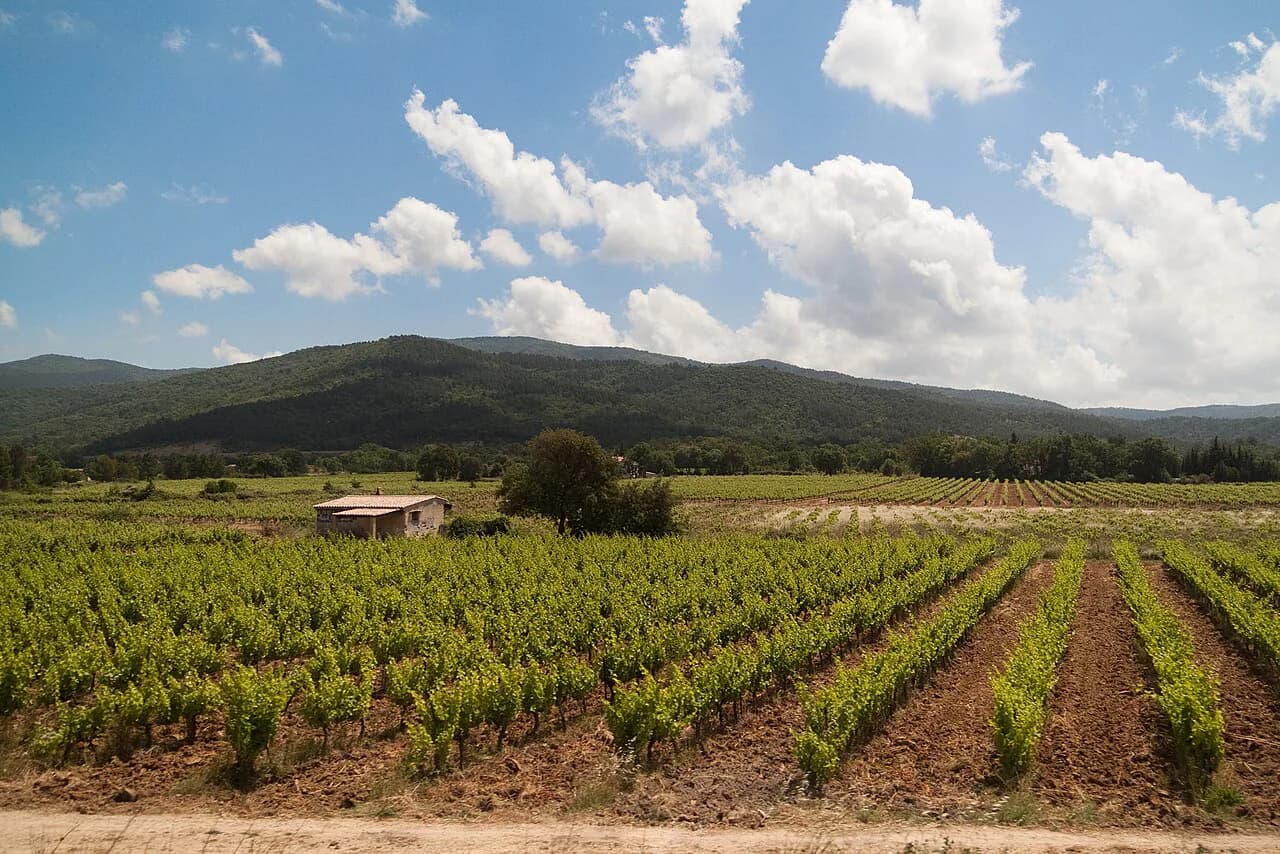
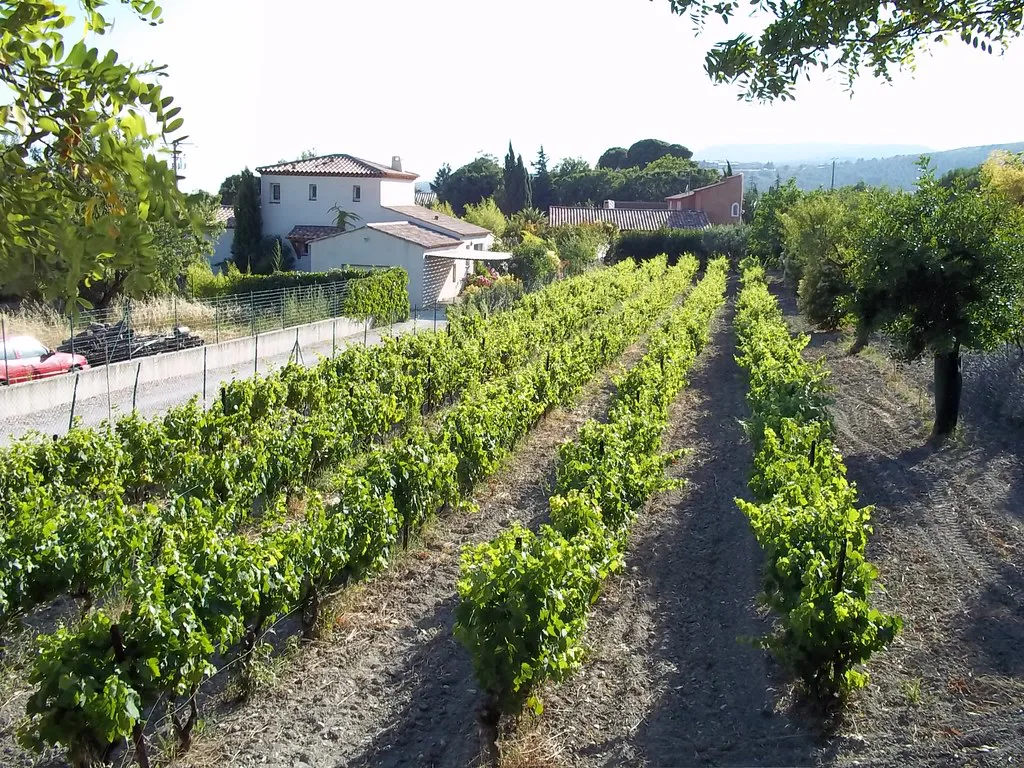
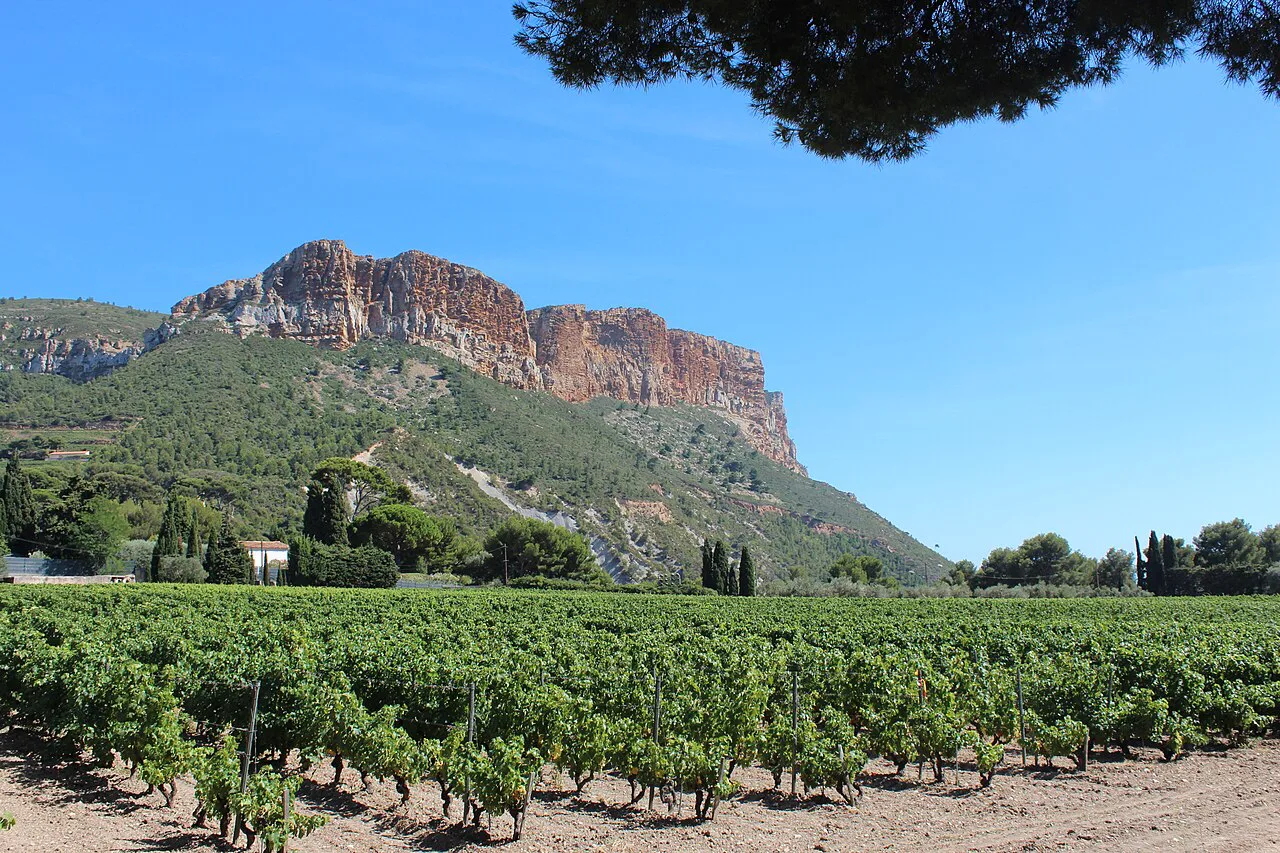
The entire Cassis vineyard covers a little over 200 hectares, and all of it lies within Calanques National Park, making it the only French AOC wholly contained inside a national park. Vines sit on terraced slopes above the town, often held in place by stone walls, dropping toward the Mediterranean in what reads as a natural amphitheater. For visitors, the payoff is compactness: the wine landscape is legible in a single day rather than spread across a sprawling region.
That setting shapes the wines as much as the view. Limestone soils drain sharply and push roots deep, sea breezes moderate the heat and deposit salt on the grapes, and the resulting whites carry a marine, iodine-tinged character that is the appellation's signature. It is worth knowing this before you taste, because the saline mineral edge is deliberate rather than a fault.
The same geography constrains a visit. With 200 hectares and a dozen producers, you cannot treat Cassis like a large wine route where tasting rooms line a road; distances between domaines are short but the number of doors open to the public is limited. Group your day around two or three confirmed appointments in the slopes above the port, and treat the rest of the time as village and coastline.
The Wines Themselves: Marsanne, Clairette and the Supporting Cast
Cassis whites must be planted with at least 60 percent Marsanne and Clairette combined, the two varieties that define the style: Marsanne for body and a long finish, Clairette for freshness and a herbal, garrigue-tinged lift. Ugni Blanc, once the founding grape of these slopes, now plays a supporting role but contributes the acidity that lets Cassis whites age. Smaller plantings of Bourboulenc, Sauvignon and Pascal Blanc round out the blends.
The reds and rosés lean on Grenache Noir, Cinsault and Mourvèdre, with Cinsault giving rosé its finesse and Mourvèdre supplying tannin and spice to the reds. If you already know Bandol, the presence of Mourvèdre here is the bridge between the two appellations. Ask at the tasting which varieties dominate each cuvée, since blends vary between domaines.
One useful expectation to set: because whites dominate, a Cassis tasting is not a rosé crawl, and the better whites are built to keep, not just to drink on a terrace. If you plan to carry bottles home, the whites reward it more than the reds. The same limestone-driven freshness shows up across the wines of the Marseille coastline, from Cassis eastward, which is why a broader tasting comparison helps.
The Producer Scene: About a Dozen Family Domaines
Roughly twelve estates produce AOC Cassis, many still in the hands of the historic families whose names run through the appellation's history. That number is the key planning constraint: with so few producers, tasting slots are limited, and the appointment calendar fills around weekends and summer. Book before you travel rather than hoping to turn up; a district this small has no slack for walk-in wine tourists.
The scale also makes Cassis one of the most bookable stops for wine tasting around Marseille: a half day, two appointments and a late lunch by the port will do. Because each domaine is a working family estate, visits are usually hosted by someone with other jobs on the property, so a confirmed time matters more than spontaneity. Where a domaine cannot take you, the village shops and bars still give you a way to taste the appellation.
Alongside the small domaines, the coast between Marseille and Cassis is studded with larger appellations to compare against, and the wider catalog of Marseille wineries is useful for building a multi-day plan. Cassis works best as one strong day inside a broader itinerary rather than the whole trip.
Bodin: The Historic Family Domaine
Bodin is the domaine most closely tied to the appellation's modern history. Emile Bodin, great-grandfather of current owner Nicolas Bontoux, helped establish the Cassis AOC and fought off plans for a cement factory in the vineyards; his family's wines were the first Cassis AOC wines sold in bottle. Today Nicolas runs the estate with his son Emile handling vinification, and they have replanted Muscat for a small sparkling side project outside the AOC rules.
The family's story gives context for what you taste: a white built on Marsanne, Clairette and Ugni Blanc, aged partly in lightly toasted acacia and oak barrels, and a serious red from Grenache and Mourvèdre with time in oak. Their approach, including a cement egg for fermenting Ugni Blanc, is an argument for asking about technique during a visit. Bodin is a name to look for when you build a shortlist, but the domaine has not published visitor arrangements in the sources here, so contact it directly to ask whether it receives visitors and how to book.
How to Arrange a Tasting
At small Provençal domaines, an appointment request should do five jobs at once: confirm the day and time, the number of people, the language of the visit, whether a cellar tour is included, and whether there is a fee. Ask how many wines are poured and whether the visit covers whites, rosé and red or just the range's core. If you want a food pairing, say so, as some estates arrange one but most do not by default.
For group sizes, assume smaller is easier: a party of two to four fits a family estate's capacity better than a minibus, and some domaines set minimum party sizes. Ask about spittoons and whether a driver in your group can taste and pour away rather than swallow; a driver should not drink, and spittoons or a designated non-taster are the sensible arrangement.
When you write, keep it short and specific: dates, party size, language, time available and any interest in a particular grape or style. Expect replies in French or English depending on the estate. Ask each domaine about visitor arrangements, hours and any charges at the time of booking, since published information varies between estates and seasons.
Getting to Cassis from Marseille Without Driving
Cassis sits east of Marseille along the coast, and the standard car-free approach is the regional train from Marseille's Saint-Charles station to Cassis, followed by a short walk or local connection down to the port. The station sits above the town, so build in the descent and the climb back. Timetables and fares change by season, so check the current TER Provence-Alpes-Côte d'Azur schedule and the local bus links the day before you travel.
From the town, the vineyards on the slopes above are within walking distance for a fit visitor, but the climb is real and the roads are narrow. Taxis are limited in a town this size, so a pre-booked ride back to the station is safer than hailing one at the port. Cycling is an option for confident riders, though the gradients and summer heat make it a workout rather than a gentle spin.
Public transport solves the drinking problem: if you arrive by train, you can taste without worrying about the drive back. The trade-off is flexibility, since a fixed timetable constrains how long you linger at a final domaine. Plan two appointments around the train times rather than three, and leave margin for the walk between them.
Independent Visit or Guided Tour
A private full-day Bandol-and-Cassis tour gives a useful benchmark for the guided alternative: an expert guide, winery visits and tastings, around eight hours, no group format and a minimum of two people. Wine Paths describes it as a customizable example rather than a fixed package and asks you to request a booking, so check current prices and dates, and note that the exact wineries are set per trip. Treat it as a template for what a guided day delivers rather than a catalogue item.
The independent route costs less and gives you control over which domaines you visit and how long you stay, but it puts the booking burden on you and leaves the driving or train logistics in your hands. The guided route solves transport and access, especially where a small domaine prefers to deal with a known guide, but you trade flexibility for someone else's schedule. For a couple who want two appellations in one day, the tour removes the awkwardness of driving between Bandol and Cassis.
A middle path works well from Marseille: take the train to Cassis for a self-guided day of two domaine appointments and a village lunch, and save the guided format for the day you want to combine Cassis with Bandol. That way you spend the tour budget where it adds most, on crossing a longer distance. The range of Marseille wine tours is worth scanning before you decide.
Cassis and Bandol: One Day or Two
Cassis and Bandol are close neighbors that share Mourvèdre in their reds but diverge sharply in emphasis: Cassis is white-led, Bandol is red-led, with Mourvèdre required at 50 percent or more of red and rosé blends. If you want to understand the difference, visiting both in one trip is more illuminating than either alone. Doing both in one day is possible by car or guided tour but tight by train.
Bandol's vineyards sit in a natural amphitheater of terraced restanques, with roughly 3,000 hours of sun a year and a warm, late-ripening climate prized for Mourvèdre. That gives a useful contrast to Cassis's cooler, sea-influenced white country. If Bandol is the priority, the dedicated guide to bandol wineries is the place to start, and a visit to domaine tempier or another Bandol AOC estate can anchor the day; the village of Le Castellet is a natural base for the area.
A practical split: one day in Cassis by train, one day in Bandol by car or tour, rather than forcing both into a single itinerary. That gives each appellation enough time and avoids the rushed dash between tasting rooms. If you only have one day, choose by wine preference, white and marine for Cassis, structured red for Bandol. If neither quite fits your base, wine tasting in Cannes covers another white-and-rosé corner of the coast worth comparing.
Seasonality and Timing
Harvest in this corner of Provence typically falls in the late summer and early autumn, and while the exact dates move with the year, that period brings activity to the vineyards and less availability for visits as estates focus on the cellar. Summer brings crowds to the port, the calanques boats and the beaches, which makes booking earlier more important. Spring and autumn are quieter and better suited to a relaxed tasting day.
Some estates close to visitors during harvest or over winter, so a date outside the peak is worth confirming before you build a trip around it. The pattern to expect is reduced availability when the cellar is busiest. If your dates are fixed to July or August, book well ahead and keep your itinerary to two domaines.
Tasting and Buying in the Village
When domaine appointments are booked out, the village itself gives you a fallback: wine shops, bars and restaurants pour Cassis AOC wines, and a glass with seafood is a legitimate way to taste the appellation. Look for white Cassis on wine lists, since that is what the region does best. Buying bottles from a shop also lets you taste at your own pace after a day in the vineyards.
Ask about shipping or carrying rules before you buy a case, and remember that airline baggage allowances are the binding constraint on how much you bring home. If you are travelling onward through France, buying at the end of the trip is simpler than hauling bottles on trains. Keep receipts for any customs declarations on the way home.
Plan Your Cassis Wine Day
Build the Cassis day around two confirmed appointments on the slopes above the port, one in the morning and one after lunch, with the train from Marseille as your transport. That structure respects the small scale of the appellation and leaves room for the walk between domaines and a look at the calanques. Book ahead, ask the questions about format and fee in your first email, and leave the rest of the day loose.
If you want to add Bandol, give it its own day rather than squeezing both appellations together. And keep the driving question settled before you leave: a driver should not taste, so use the train, a tour or a designated non-tasting driver. The rest is a matter of matching your dates to the season and confirming the current details with each domaine.
Frequently Asked Questions
How many wineries are there in Cassis?
About twelve estates produce AOC Cassis wines, many still family-owned. That small number is the main planning constraint: tasting slots are limited, especially in summer and around harvest, so book appointments before you travel rather than arriving and hoping to walk in.
Is Cassis wine white or rosé?
Both, but white leads. Whites make up roughly two-thirds of AOC production, rosé about 30 percent and red only a few percent, an unusual split for Provence. The whites are built on Marsanne and Clairette, which must together account for at least 60 percent of plantings.
Can you visit Cassis wineries without a car?
Yes: the regional train runs from Marseille to Cassis, and the vineyards sit on the slopes above the town within walking distance for a fit visitor. Timetables and fares change by season, and you can pre-book a taxi back to the station if the climb is too much.
Do you need an appointment to taste at Cassis wineries?
Plan on it. With around a dozen small, family-run domaines, visits are usually arranged in advance rather than offered on a walk-in basis. Ask each estate directly about its visitor arrangements, and mention your party size, language and whether you want a cellar tour.
How far is Cassis from Marseille?
Cassis lies east of Marseille along the coast, reached by regional train and then a short connection down to the port, with the station above the town. Journey times and fares vary by service, so check the current TER schedule rather than relying on a fixed figure.
What grapes go into Cassis white wine?
Marsanne and Clairette are the leading white varieties and must make up at least 60 percent of plantings. Ugni Blanc adds acidity, with Bourboulenc, Sauvignon and Pascal Blanc as secondary varieties. The reds and rosés rely on Grenache Noir, Cinsault and Mourvèdre.
Is a Cassis wine tour worth it?
It depends on whether you want to cross distance. A guided day solves transport and access and can combine Bandol and Cassis, such as the private full-day format offered by Wine Paths with a minimum of two people. For Cassis alone, the train and two appointments is cheaper and more flexible.
Sources
Notes for your next wine trip
Optional updates to our winery and wine-town guides.
You might also like
Continue reading
More guides you'll find useful