Sorrento Wine Bars: Where to Taste Campanian Wines
Plan a wine evening in Sorrento: how the town's wine bars and enoteche work, which Campanian grapes to seek out, and how to pair a tasting with local food.
On this page
A Sorrento wine bar is usually a small, evening-oriented place where the list leans heavily on Campanian bottles and the food is built for sharing. That is a different product from an enoteca with a retail shelf, from an agriturismo farm dinner, or from a winery visit on the slopes of Vesuvius, and knowing which one you want shapes where you spend the evening. This guide separates those formats and gives the practical details that are actually published.
Be aware that search results for "Sorrento wine bar" are dominated by Sorrento Cafe & Wine Bar, an Italian-themed restaurant in Milford, Connecticut, not the Italian town. If you are planning a trip to the Sorrentine Peninsula, ignore those listings and work from the town's own geography. The peninsula's wineries and tasting rooms are covered separately, and the town center is best treated as a base for evening drinking rather than a wine-producing district in its own right.
What a Sorrento wine bar is — and isn't
In Italy, an enoteca is a wine shop that may also pour by the glass, while a wine bar is a place to sit with a glass and something small to eat. In Sorrento, the evening bar and the enoteca often blur, and many places sell bottles to take away alongside a short by-the-glass list. Ask whether the place is a bar with a kitchen or a shop with a few stools before you settle in for a full evening.
An agriturismo is a working farm that hosts guests and serves its own produce, which makes it a different proposition from a town bar. Agriturismo Antico Casale in Piano di Sorrento, a short bus ride from Sorrento, runs a farm kitchen and lists a Farm Experience with tour, dinner, and wine tasting at 94 euros per person with free cancellation, according to the Sorrento Insider listing. That is a fixed-format evening rather than a casual glass at a bar.
A winery tasting room is a third format again, usually attached to a producer and reached by road. Bosco de' Medici – Il Casale, an estate between Pompeii and Vesuvius, lists wine tasting among guest activities at its farmhouse venue but is described primarily as a wedding and events property. Treat its wine offering as something to confirm directly with the estate rather than a public bar you can walk into for a glass.
How central Sorrento is laid out for an evening of tasting
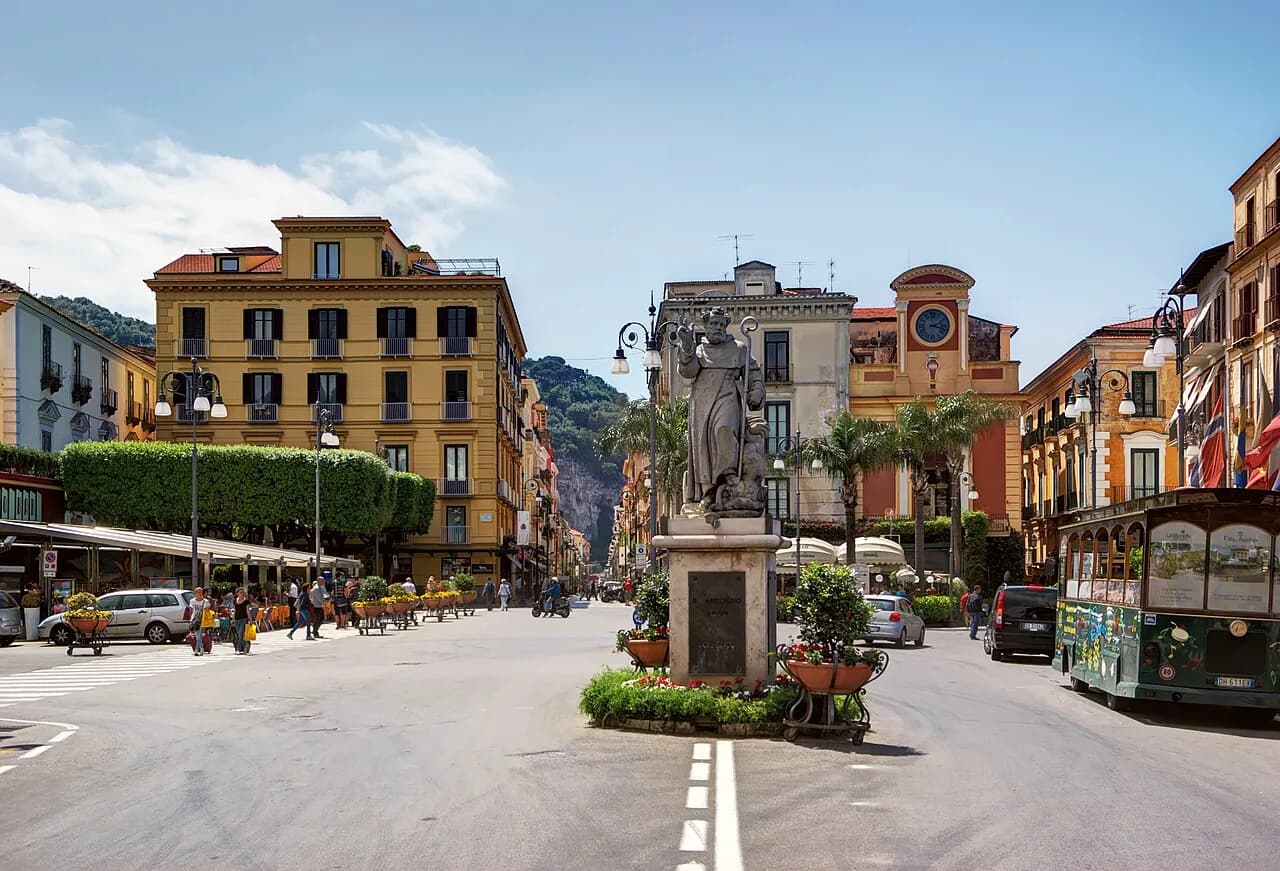
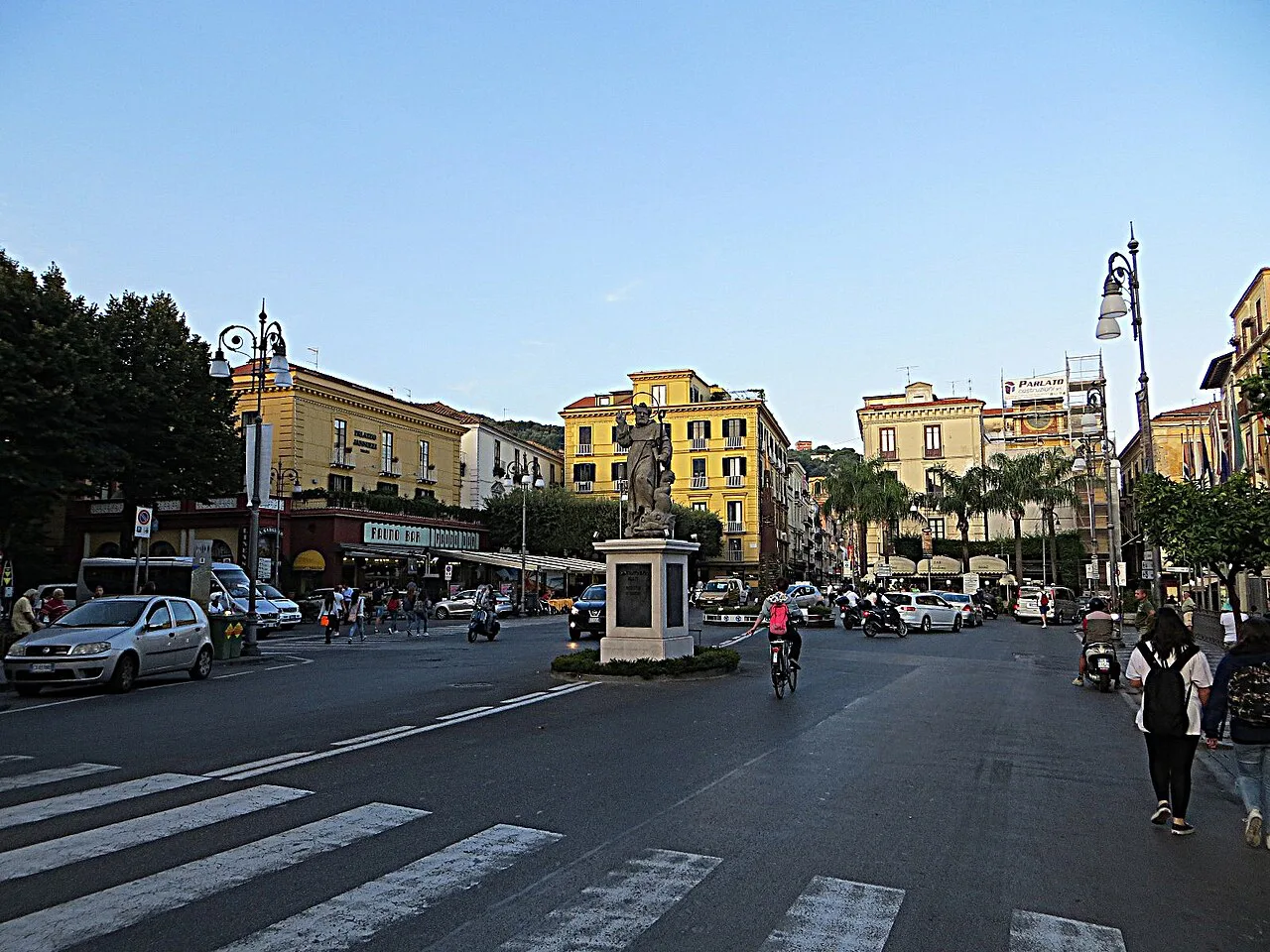
Piazza Tasso is the practical reference point for any evening in Sorrento: it is the main square, the meeting point for guided walks, and the place from which the historic center's lanes radiate. A walking food tour in Sorrento meets its guide in Piazza Tasso, which tells you the square is the standard start line for organized tasting. From there, most of the old town's bars and restaurants sit within a compact walkable area.
Because the center is small, an evening of tasting is best planned as a loop on foot from the square rather than a series of taxi hops. Pick two or three stops at most, and check closing days before you commit to a route, since small bars often close one weekday. The town's wine touring options are gathered in one place if you want to compare bar evenings with guided formats.
If you want a structured comparison point from another Italian wine town, Verona's bar scene is organized around a dense historic center in much the same way. Reading a Verona wine bar guide alongside Sorrento's layout helps you calibrate how much ground a single evening realistically covers. The same holds for a Siena wine bar evening, where the historic center sets the walking pace; see our guide to Siena Wine Bars for that comparison. The lesson is the same in both towns: walkability, not distance, sets the pace.
The grapes and appellations to order by name
Campania's white grapes are the easiest entry point for a Sorrento bar list. Falanghina gives a fresh, aromatic white, while Fiano di Avellino and Greco di Tufo are the two structured white appellations from inland Irpinia. Ordering by these names rather than by label design will get you a more interesting glass and a clearer conversation with the person behind the bar.
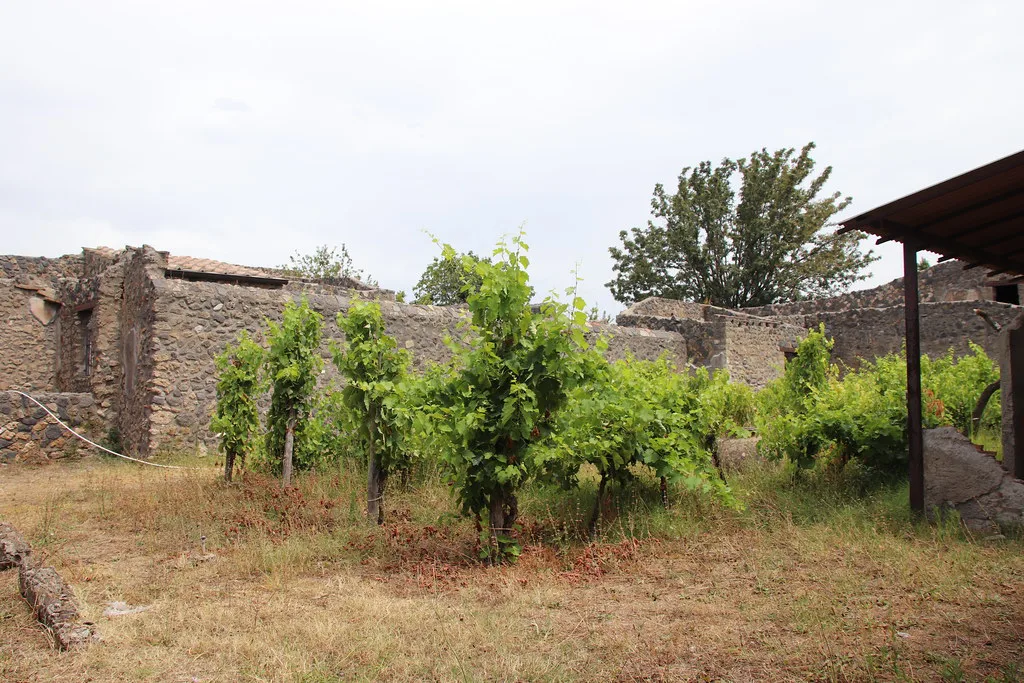
On the red side, Aglianico is the region's serious grape, planted widely in Campania and capable of ageworthy wines, while Piedirosso is a lighter, more immediate red associated with the Vesuvius area. The Pompeii vineyard project run by the archaeological park and the Tenute Capaldo Group replants historic varieties including Piedirosso, Falanghina, Fiano, and Greco, which is a useful reminder of how deep the local grape repertoire runs. Those vines are a long-term project, though: the first commercial vintage was projected for 2028 to 2030, so the wines are not yet something to seek out in a bar.
Beyond the named appellations, Campania IGT wines give producers room to blend and to work with local varieties that don't fit a stricter rulebook. These are often the affordable by-the-glass options and a good way to taste broadly. Ask what is local and what is from further inland, and let the answer guide your second glass.
Coastal versus inland lists
A Sorrento bar's list usually leans Campanian because the town sits within the region and local bottles travel short distances. That means you are more likely to find Falanghina, Fiano, Greco, Aglianico, and Piedirosso than a deep selection from Piedmont or Tuscany. The trade-off is less international breadth but a stronger regional identity by the glass.
Coastal and inland producers make different styles, and the list often reflects that split. Coastal and Vesuvius-area wines tend to be fresher and more immediate, while the inland Irpinia whites and Aglianico reds carry more structure. If you plan to eat a full dinner, start with a coastal white and move to an inland red rather than the other way round.
Food to pair with a glass
The classic Sorrento pairing is bruschetta with local extra virgin olive oil, followed by cheeses and cold cuts. A published walking food tour in Sorrento includes exactly that combination, plus a glass of Campanian wine, over about two and a half hours. It runs on Monday, Wednesday, and Friday afternoons, starting at 16:00, for groups of two to eight, at 89 euros per person, with free cancellation up to two days before, as listed by Winedering.
That format is an afternoon activity rather than a late bar evening, and it is worth treating it as such when you plan the rest of your day. The tour also includes a visit to a cheese and limoncello production facility, which makes it a broader food introduction than a pure wine tasting. If your priority is the wine list itself, a sit-down bar gives you more control over what you drink.
At a bar, keep the food simple and local: olives, oil-dressed bread, and a cheese plate will carry a Falanghina or a lighter Piedirosso without overwhelming it. Heavier dishes call for Aglianico. Ask what is made nearby rather than what is imported, and the pairing question mostly answers itself.
Agriturismo option outside town
Agriturismo Antico Casale sits on the hillside between Sorrento and Positano, in Piano di Sorrento, with a bus stop about 300 meters away for routes to both towns. That makes it reachable without a car, which matters for an evening that involves wine. The farm runs a kitchen built on its own produce and lists a cooking class with lunch at 136 euros per person alongside the farm experience, per the Sorrento Insider listing.
The trade-off is time and commitment: a farm dinner is a fixed-menu evening of several hours, not a quick glass before dinner in town. In return you get a working farm setting, a set format, and the chance to see the agricultural side of the Sorrentine Peninsula rather than only its bars. Book ahead, because a farm kitchen seats a limited number of guests.
If you would rather stay in town and keep the evening short, the agriturismo model can wait for another trip. A base in Sorrento makes both the bar evening and the farm dinner possible, so the choice comes down to how much of your day you want to give to the experience. Massa Lubrense, further along the peninsula, is another option for a quieter countryside stay.
Vesuvius-side winery visits as a day trip
Wineries on the Vesuvius side are a day trip from Sorrento rather than an evening out, because they sit across the bay and require transport. Operators sell them as guided tours that bundle transport, a cellar visit, and a tasting, which removes the driving problem. Cantina del Vesuvio is one of the estates on that circuit and is worth comparing against other operators before you book.
These tours are usually full-day or half-day products with a fixed itinerary, so check what is actually included: transport, the number of wines poured, and whether food is served. The published Sorrento wine tours give a sense of the range of formats on offer. If you prefer to build your own day, public transport to the Vesuvius area exists but adds time and planning.
Booking culture and timing
Small-group food and wine experiences in Sorrento sell out, and the published example caps at eight guests and asks for booking at least two days ahead. That is a useful benchmark for how far in advance to plan a structured tasting. Walk-in bars are more flexible, but a table for a group on a weekend evening is worth reserving by phone or through the venue.
Afternoon formats and evening formats serve different purposes. A walk that starts at 16:00 and runs about two and a half hours finishes in time for a late dinner, while a bar evening begins later and can stretch on. Decide which slot fits your day, because moving a booking is rarely free.
Getting around without driving
Within Sorrento, walking is the default: the historic center is compact and Piazza Tasso anchors it. For the hills and nearby villages, local buses run from stops close to the center, and the farm at Piano di Sorrento is a short ride away with a stop about 300 meters from the gate. Taxis are available but cost more for the same trip.
For anything involving a winery on the far side of the peninsula or near Vesuvius, a guided tour is the simplest car-free option because transport is included. The alternative is public transport plus a long walk, which eats into tasting time. Choose the tour if the wine is the point of the day.
Cost expectations
Published prices for organized tasting in the Sorrento area give a realistic frame: the walking food tour is 89 euros per person, and the farm experience at Antico Casale is 94 euros per person, while the farm's cooking class is 136 euros per person. These are operator-listed figures for specific formats, not bar prices, and they include food as well as wine. A casual glass at a bar will cost far less, but the figure depends on the pour and the bottle, so ask before ordering.
Winery day trips sold by operators bundle transport and tasting, so the price reflects the logistics as much as the wine. Compare what is included rather than the headline figure alone. For a cheaper evening, stay in town and order by the glass.
Responsible drinking
If anyone in your group is driving, they should not taste: use the spittoons, appoint a designated driver, or take a tour or public transport instead. Sorrento's compact center makes walking between bars easy, which removes the problem for an evening in town. For farm dinners and winery visits further out, plan the return trip before the first glass.
Plan Your Visit
Sorrento works best as a base for two different wine experiences: a walkable evening of Campanian wine in the historic center around Piazza Tasso, and a booked day or evening out at a farm or winery that requires transport. Decide which one you want first, because the formats, timing, and costs differ sharply. The town's wineries and tasting options are laid out in more detail elsewhere on the site.
Order by grape name, keep the food local, and reserve any small-group experience a few days ahead rather than on the day. Check the current schedule and price with the tour company when you book, since seasonal calendars change. With those steps, a Sorrento wine evening is straightforward to plan and easy to enjoy on foot.
Frequently Asked Questions
What is a wine bar like in Sorrento, Italy?
Most are small evening places with a list weighted toward Campanian bottles, often with a short food menu of bruschetta, cheeses, and cold cuts. Some also sell bottles to take away. The center is compact and walkable from Piazza Tasso.
Which Campanian wines should I try in Sorrento?
Start with the white grapes Falanghina, Fiano di Avellino, and Greco di Tufo, then move to the reds Aglianico and Piedirosso. Campania IGT wines are a good way to taste broadly at a lower price. Order by grape name rather than by label.
Do Sorrento wine bars take reservations?
Small bars often do for groups, especially at weekends. Organized tastings usually require advance booking; the published walking food tour asks for at least two days' notice and caps at eight guests. Call the venue directly for a bar table.
How much does a food and wine tour in Sorrento cost?
The per-person rate and inclusions for the walking food tour are published on the booking page; the tour runs about two and a half hours with tastings and a glass of wine. Bar drinks and winery day trips vary by venue and inclusions, so compare what is covered before booking. Check current details.
Can I visit a winery near Sorrento without a car?
Yes, but the easiest route is a guided tour with transport included. Some farm experiences outside town, such as Agriturismo Antico Casale in Piano di Sorrento, are reachable by local bus. Vesuvius-side wineries are best done as an organized day trip.
What is the difference between an enoteca and a wine bar in Italy?
An enoteca is primarily a wine shop that may also pour by the glass, while a wine bar is a place to sit and drink with something small to eat. In Sorrento the two often overlap, so ask whether the place has a kitchen before planning a full evening.
Is there a wine bar in Sorrento, Milford CT?
Yes, Sorrento Cafe & Wine Bar is in Milford, Connecticut, and is unrelated to the Italian town. If you are planning a trip to Italy, ignore those listings and use Sorrento's own town center as your reference.
Sources
Notes for your next wine trip
Optional updates to our winery and wine-town guides.
You might also like
Continue reading
More guides you'll find useful