Hospices de Beaune Guide: Hôtel-Dieu & Wine Auction
Plan a Beaune wine day around the Hospices de Beaune: the Hôtel-Dieu museum, the November auction and the estate's 60 hectares of Burgundy vineyards.
On this page
Almost every Burgundy itinerary runs through Beaune, and almost every Beaune visit runs past the Hôtel-Dieu, the striped-roofed hospital that gave the Hospices de Beaune its name. Most travelers see the museum and leave without realizing the same institution owns 60 hectares of vines whose wines are sold at a single auction each November. This guide separates the three parts, the museum, the estate and the auction, and shows how to fit them into a wine day without a car.
Why the Hospices de Beaune Matters to a Wine Traveler
The Hospices de Beaune is a single charitable institution with several faces: a hospital founded in the 15th century, the Hôtel-Dieu museum that occupies the original building, and a wine estate whose entire production is auctioned for hospital projects. That combination is unusual in Burgundy, where most estates are family businesses selling through négociants or direct. Understanding the structure explains why you cannot simply book a tasting at the estate like you would at a domaine.
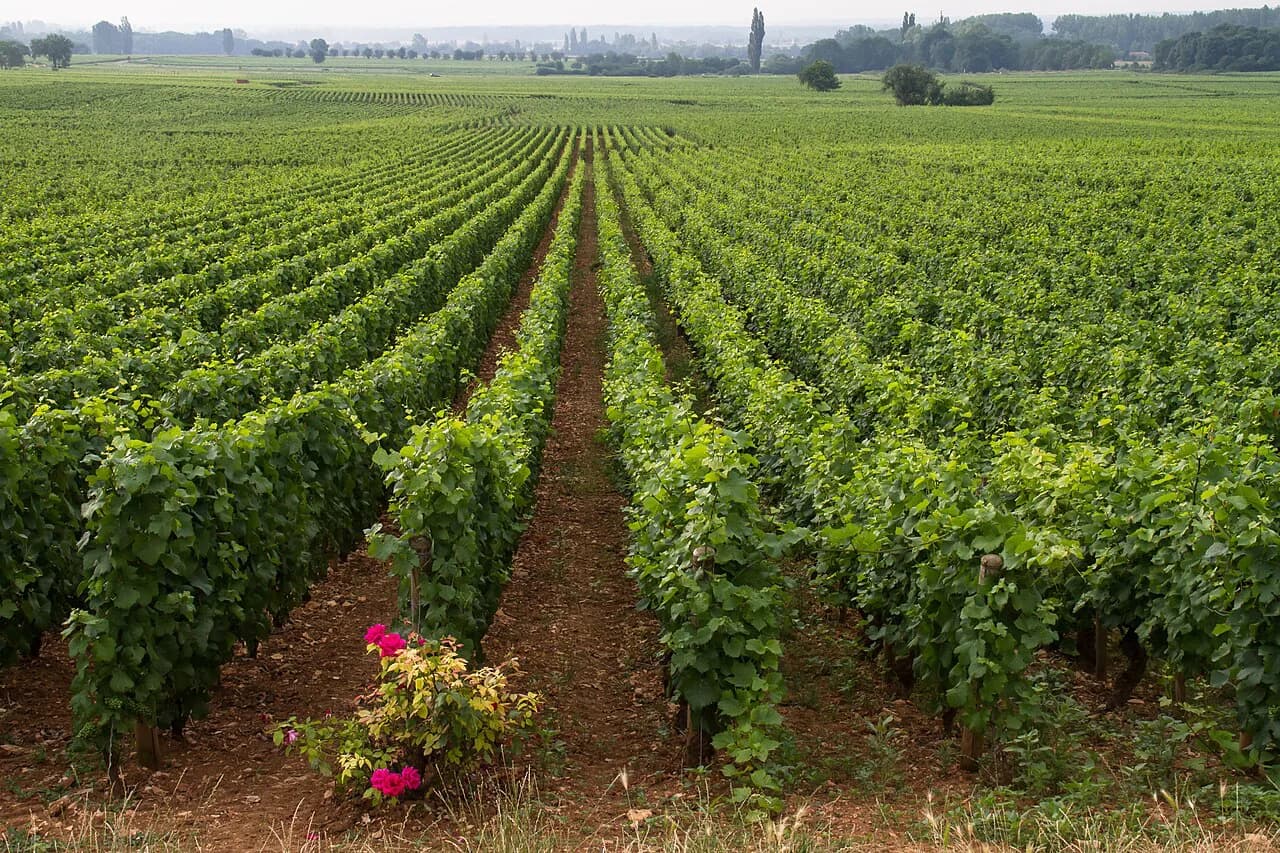
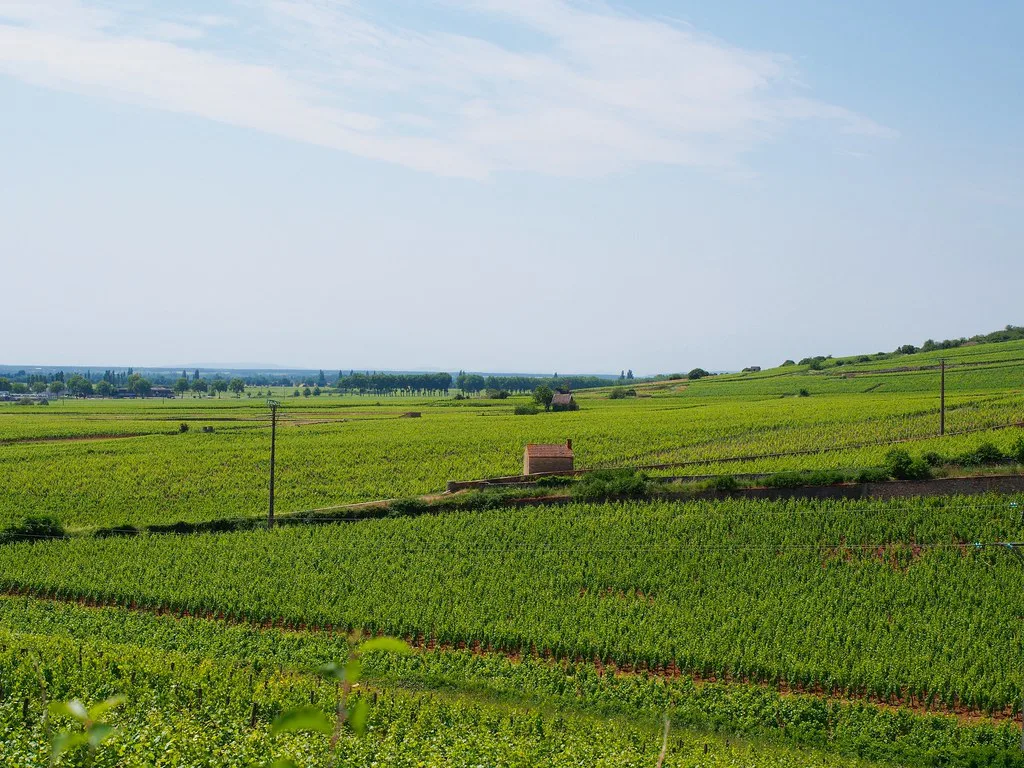
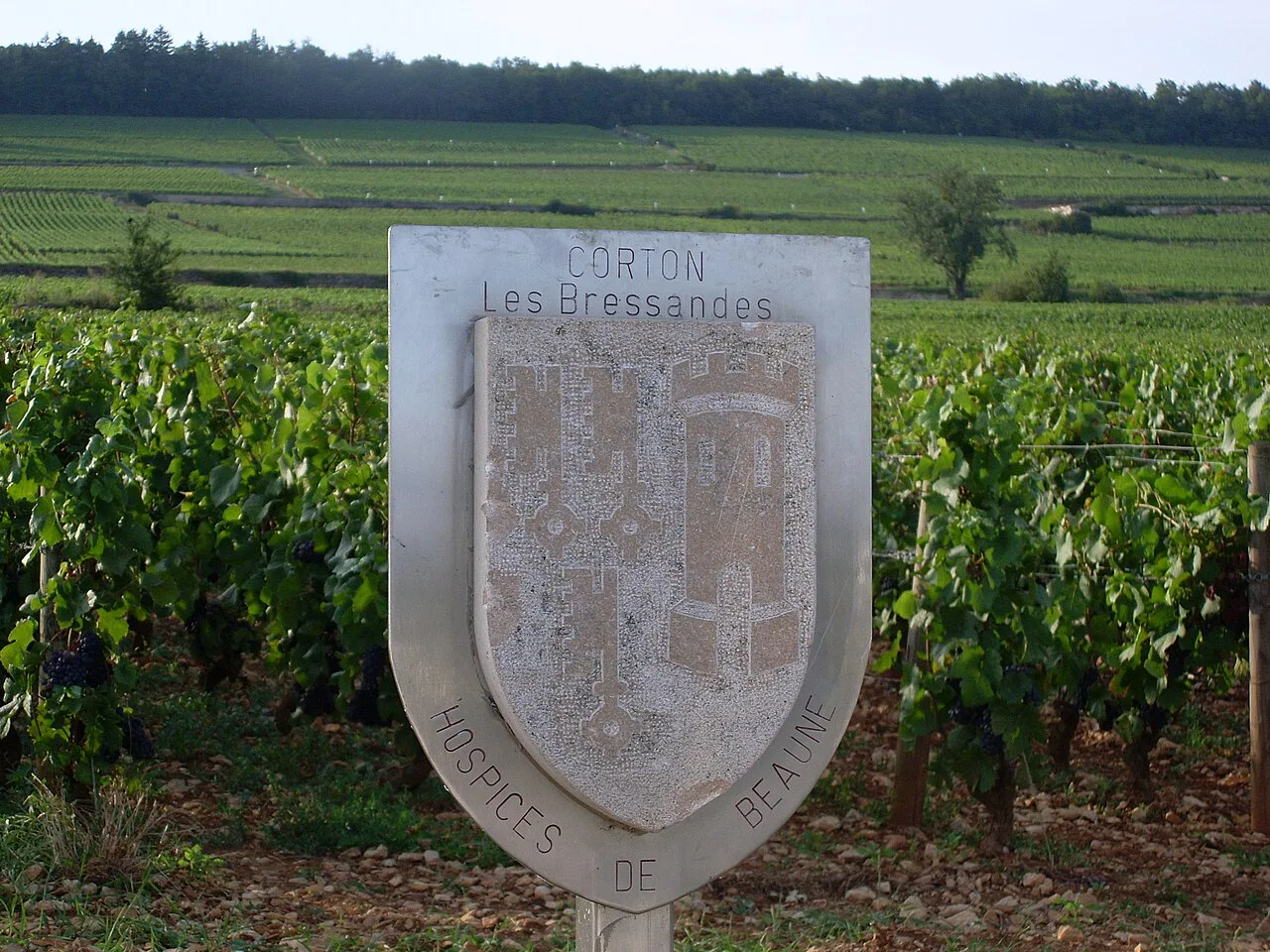
The estate covers 60 hectares across just over 120 parcels, with about 50 hectares of Pinot Noir and 10 of Chardonnay, and 85% of the vineyards are classified Premier or Grand Cru. The vineyards sit largely in the Côte de Beaune around Beaune itself, and the whole holding is part of the Climats de Bourgogne landscape recognized by UNESCO.
Where It Sits in Beaune: A Walking Wine Day
Everything happens within a few minutes on foot. The Hôtel-Dieu stands in the center of Beaune's old town, and the Halles de Beaune, the covered market hall where the auction takes place, sits directly opposite it. That means a museum visit, a market-hall look and a glass somewhere in town fit into one unhurried morning or afternoon without any transport at all.
Beaune is compact enough that the practical question is not distance but sequence: see the Hôtel-Dieu early while the courtyards are quiet, then walk the block or two to the Halles, then branch out to cellars in the center. For the broader town layout, cellars and routes, our guide to wine tasting in beaune maps the districts worth covering on foot, and the parallel list of beaune wineries helps you pick receiving estates beyond the Hospices.
Visiting the Hôtel-Dieu Museum
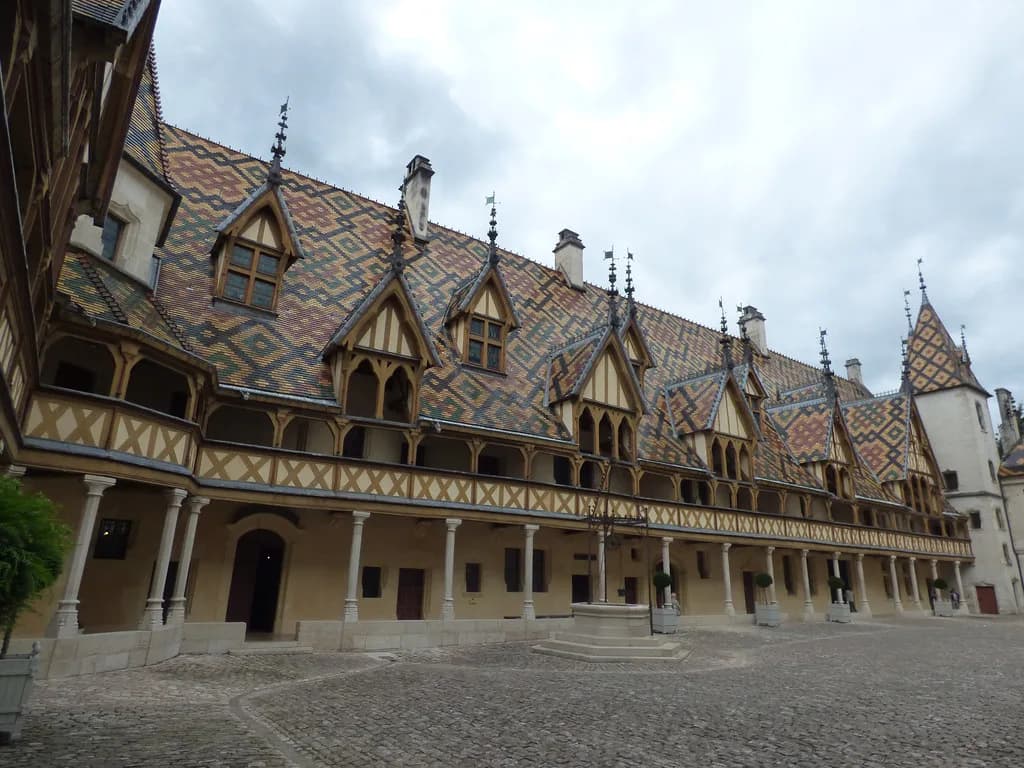
The building was founded in 1443 by Nicolas Rolin, chancellor to Duke Philip the Good, and his wife Guigone de Salins, as a hospital for the poor and sick. It served that purpose until 1971, when the hospital moved to a modern site and the medieval complex became a museum. The Flanders-inspired Gothic facade and the glazed, patterned roof are the images most travelers recognize as the emblem of Burgundy.
Inside, the route passes through the Salle des Pôvres and Salle Saint-Hugues, the long wards lined with curtained cubicles where patients were treated, then the kitchen and the apothecary with its jars and instruments. The highlight hangs behind the altarpiece: Rogier van der Weyden's Last Judgement polyptych, a multi-panel painting that originally faced the patients' chapel and was opened only on Sundays and feast days. Allow roughly an hour for the museum rooms and courtyard, more if you read the panels slowly.
Entry is bought through the official Hospices de Beaune or Beaune tourism channels rather than a third-party listing. Beaune's tourism office keeps a dedicated page for the site with current visiting information.
The Wine Estate Explained
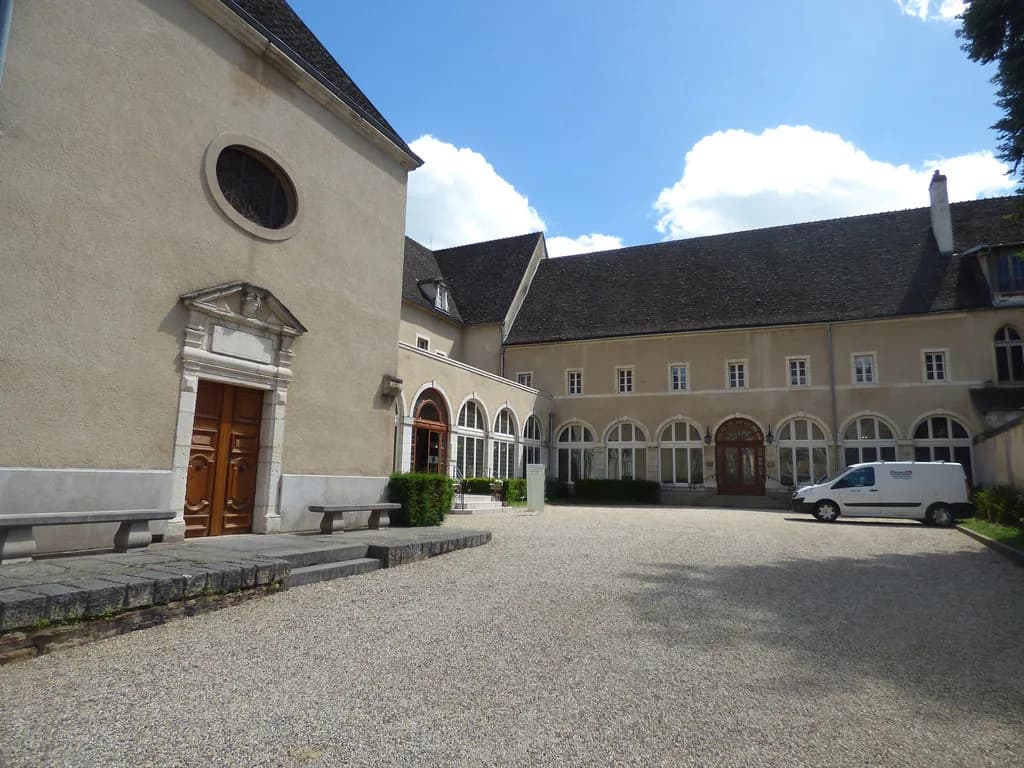
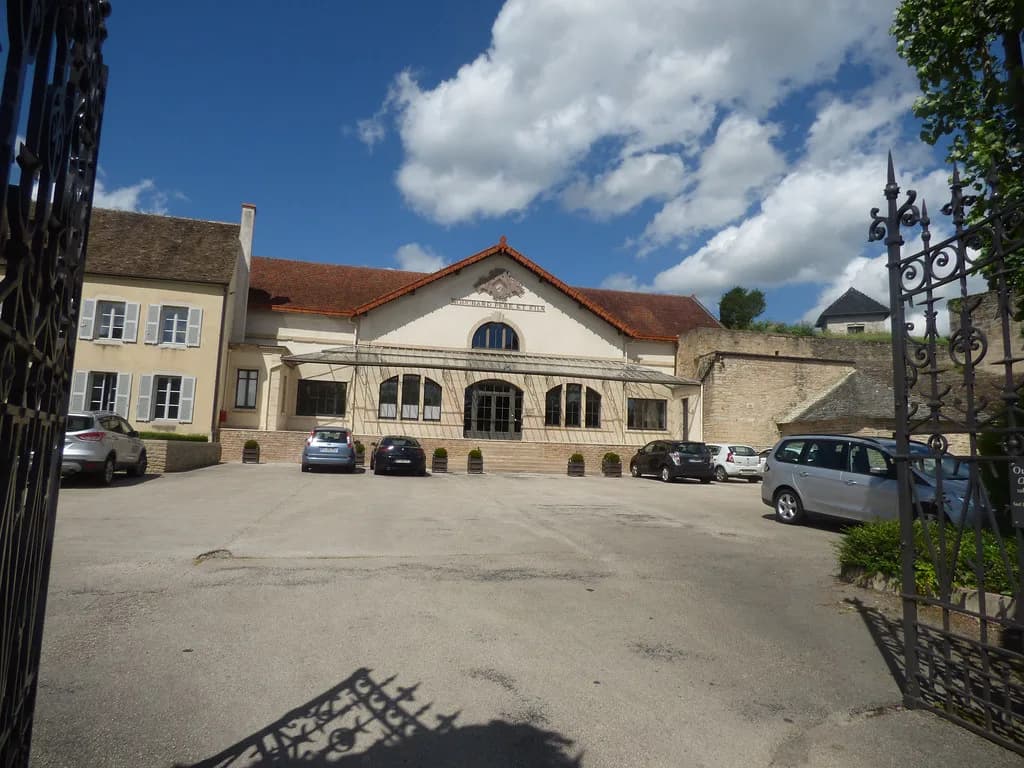
The Domaine des Hospices de Beaune is a working estate, not a tasting room. Ludivine Griveau has run it as régisseur since the 2015 vintage, overseeing both the vineyards and the vinifications, and the estate has been certified organic since the 2024 harvest after a full conversion of all 60 hectares. Visitors do not book a cellar tour here the way they would at a private domaine; the way to encounter the wines is through the museum's story, the auction, or bottles sold afterward by the négociants who age them.
Roughly 85% of the holding is Premier or Grand Cru, with the Beaune appellation alone accounting for about 20 hectares, and the rest spread across neighboring villages on the Côte de Beaune hillside. That concentration matters for anyone learning Burgundy: a single institution bottle can be a village-level Beaune or a grand cru from the Côte de Nuits, and the label tells you which.
Which Appellations the Estate Covers
The core of the estate is Côte de Beaune: Beaune itself, plus parcels in Pommard, Volnay, Meursault, Corton, Savigny-lès-Beaune, Saint-Romain, Monthélie, Auxey-Duresses, Pernand-Vergelesses and Puligny-Montrachet, with Grand Cru holdings in Bâtard-Montrachet and Montrachet. For a wine-day route, this is the cluster to plan around, since the villages line up along the same limestone slope south of Beaune.
The estate also reaches beyond the Côte de Beaune: a small Chablis Premier Cru parcel in the far north, Grand Cru vines in Mazis-Chambertin, Echezeaux and Clos de la Roche in the Côte de Nuits, and Pouilly-Fuissé Premier Cru in the far south of Burgundy. Those outliers are worth knowing because they explain why the auction catalog spans red and white wines from opposite ends of the region, and why a single sale day covers so much ground.
Understanding the Wine Before You Taste It
Hospices de Beaune wines are sold as individual cuvées, each a named blend from a specific appellation or parcel, and the estate auctions 52 wines in a typical year. Because the wines are auctioned shortly after harvest and vinification, they are not yet bottled when sold: the buyer receives barrels that a négociant then ages for 12 to 18 months before bottling. That futures model is the single most important thing to grasp, since it means auction day is a wine-futures market, not a tasting event with finished bottles.
In practice, a traveler who wants to drink Hospices wine rather than own a barrel looks for bottles from earlier vintages sold through merchants, or tastes Burgundy more broadly in Beaune's cellars. If you are building a tasting itinerary, the practical framework is to taste the appellations the estate covers, Beaune, Pommard, Volnay, Meursault, at cellars around town, then read the auction catalog with context. Our page on beaune wine tours sets out guided options that cover the Côte de Beaune villages in a single day if you prefer not to drive.
The November Auction
The auction has been held every year since 1859 on the third Sunday of November, under the Halles de Beaune, and 52 wines go under the hammer after harvest and vinification. Proceeds, which the estate's partner describes as around 25 million euros in recent years, fund hospital projects. That fixed calendar slot makes it easy to plan around: mid-November in Beaune, not a movable festival.
Spectators and buyers are different audiences. The auction is a public, high-profile event, and anyone intending to bid should start with the official Hospices de Beaune auction pages well ahead of the date to sort out registration and access to the hall. For a first visit, treating it as a spectator morning in the market hall and pairing it with the museum is the low-risk plan.
Buying at the Auction
Buyers have two basic routes. A full barrel holds 288 bottles, and fractions of a barrel, down to a quarter barrel, are also offered. Alternatively, the négociant Albert Bichot runs an online purchase route that lets individuals buy from a small selection of that year's Hospices wines, as few as one bottle, with an optional custom label; the wines are then aged by the house.
Before the gavel falls, decide three things: how much wine you can actually store and ship, whether you want the barrel experience and the aging that follows, or simply bottles with a story, and who will age the wine if you buy at auction. That last point is not a formality, since the buyer must arrange for a négociant to raise the wine for a year or more before bottling. For a closer look at the Beaune house handling these sales, our Albert Bichot profile covers the cellars and visiting side.
Tasting Around Beaune: The Wine-Day Framework
The Hôtel-Dieu gives you history; the rest of the day belongs to cellars. Beaune's town center has tasting cellars and merchants within walking distance, and the Route des Grands Crus, roughly 60 kilometers of vineyard road through the Côte de Beaune and Côte de Nuits, is the natural frame for a longer loop. A workable plan pairs the museum in the morning with two or three cellar visits in the afternoon, keeping the driving short.
If you want to end the day without moving the car, a beaune wine bar in the center lets the non-drinker in your group stay with the group while the tasters work through a glass list. Nuits-Saint-Georges, a short drive or train hop north, adds wine-tasting cellars and merchants to the top end of the route, so the region can be covered over two days rather than crammed into one.
Getting There Without Driving
Beaune has a mainline rail station on the Paris–Lyon corridor, and Burgundy tourism points travelers to high-speed trains serving Dijon, Montbard, Mâcon-Loché TGV and Le Creusot-Montchanin TGV as regional gateways. From the Beaune station the Hôtel-Dieu is a short walk into the old town, which makes a rail-based museum and auction visit genuinely easy.
For vineyard visits outside town, the trade-off is straightforward: independent travel gives flexibility but requires a driver, and whoever is driving should not taste, using the spittoon instead. The alternative is a guided tour or taxi with a professional driver, which costs more but lets everyone in the party drink. On auction weekend, when town is busy and parking is tight, arriving by train avoids the worst of it. The same driver-versus-train calculation shapes wine tasting in Lyon, where the Beaujolais and Northern Rhône vineyards lie well outside the city.
Practical Booking Questions
Three questions are worth settling before you go: whether the Hôtel-Dieu needs timed entry on the day you plan, whether the Halles area is open to spectators on auction day, and, if you intend to bid, what registration the organizers require. Only the first is a museum question; the second and third belong to the auction organizers. The Hospices de Beaune site is the place to confirm each, with the tourism office as a backup for museum logistics.
Note that the estate is a working domaine rather than a public tasting room, so anyone promising a behind-the-scenes tour of the Hospices vineyards should be able to explain exactly what access they have. Wine tasting in beaune is best planned around cellars that openly receive visitors, with the Hospices museum and auction as the cultural anchor of the day.
Fitting the Hospices into a Longer Burgundy Trip
Beaune is the natural base for the Côte de Beaune, and the Hospices gives the town its wine identity: the museum in the morning, the Halles across the square, cellars in the afternoon. From there, the Route des Grands Crus runs north through Pommard, Volnay and Meursault toward Nuits-Saint-Georges, which lets you group the estate's core appellations into one driving day. Our beaune wineries list helps fill the gaps with estates that accept visitors.
If you are visiting in November, build the trip around the third Sunday and treat the auction as the centerpiece, with the museum and two nearby cellars as the supporting acts. Any other month, the museum and the cellars carry the day, and the auction becomes something to read about afterward while tasting vintages already in bottle. Either way, book accommodation in Beaune early for auction weekend, when the town fills up.
Plan Your Beaune Visit
The Hospices de Beaune rewards travelers who see it as three connected pieces: the Hôtel-Dieu museum in the old town, a 60-hectare estate spread across Burgundy's best appellations, and a charity auction fixed to the third Sunday of November. See the museum on foot from the station, taste the appellations it covers at cellars around Beaune, and treat the auction as a spectator or buyer event depending on how much wine you can store.
Confirm museum entry and auction-day access through the official Hospices de Beaune and Beaune tourism channels before you travel, and keep the driver sober with a spittoon, a tour or the train. With those details settled, a Beaune day built around the Hospices is one of the most efficient ways to meet Burgundy's history and its wines in the same afternoon.
Frequently Asked Questions
What is Hospices de Beaune wine?
It is the wine made by the Domaine des Hospices de Beaune, a 60-hectare estate belonging to the charitable hospital institution in Beaune. The holdings are mostly Premier and Grand Cru parcels in the Côte de Beaune, with vines also in Chablis, the Côte de Nuits and Pouilly-Fuissé, and the entire production is sold at the November auction rather than through a tasting room.
How does the Hospices de Beaune auction work?
The wines are auctioned as individual cuvées shortly after harvest and vinification, so buyers bid on barrels rather than finished bottles. A full barrel holds 288 bottles, and fractions are also sold. The buyer then arranges for a négociant to age the wine for 12 to 18 months before bottling, and proceeds go to hospital projects.
When is the Hospices de Beaune auction held?
The sale takes place on the third Sunday of November under the Halles de Beaune, directly opposite the Hôtel-Dieu, and has run annually since 1859. Confirm the exact date and any access arrangements for the hall with the organizers, since spectator and bidding rules are published separately from the museum's visitor information.
Can you visit the Hospices de Beaune without going to the auction?
Yes. The Hôtel-Dieu museum is open to visitors through the year and can be seen on its own, independently of the estate and the sale. The working vineyard estate does not run a public cellar tour, so the museum is the main way to engage with the institution outside auction week, alongside Beaune's tasting cellars.
Where is the Hospices de Beaune auction held?
Under the Halles de Beaune, the covered market hall in the town center, which faces the Hôtel-Dieu across the street. Both are a short walk from Beaune's rail station, so the museum and the auction venue can be combined on foot without a car.
Sources
Notes for your next wine trip
Optional updates to our winery and wine-town guides.
You might also like
Continue reading
More guides you'll find useful