San Gimignano Wineries: Tasting Vernaccia Car-Free
Plan a wine day from San Gimignano: which estates welcome visitors, what a Vernaccia tasting includes, how to book, and how to arrive without driving.
On this page
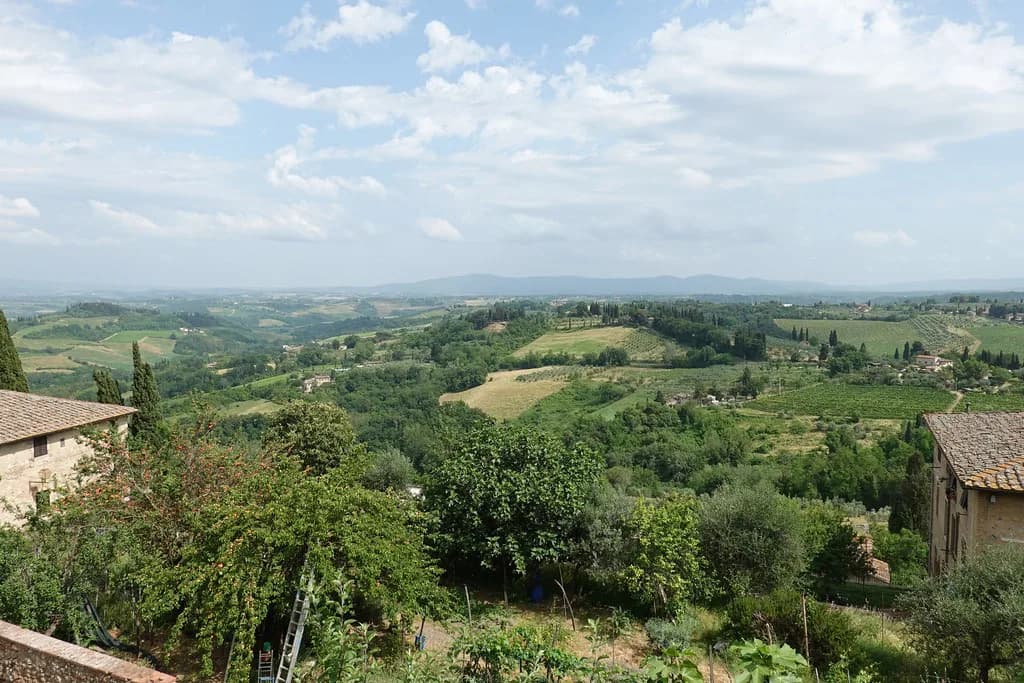
Most travelers meet San Gimignano as a morning of towers and gelato, then board a bus back to Florence. The hills around the town tell a different story: this is the home of Vernaccia di San Gimignano, the white that became the first Italian wine to receive DOC status, in 1966, and Tuscany's only white DOCG.
A wine day here is easy to organize once you understand the geography. Family estates sit within a few kilometers of the walls, larger hospitality operations cluster on the western side toward Ulignano, and the Chianti Classico properties that appear in San Gimignano booking lists are a different trip entirely. This guide sorts them, explains what a tasting actually involves, and covers transport and booking so you can commit to a plan.
Vernaccia First, Sangiovese Alongside
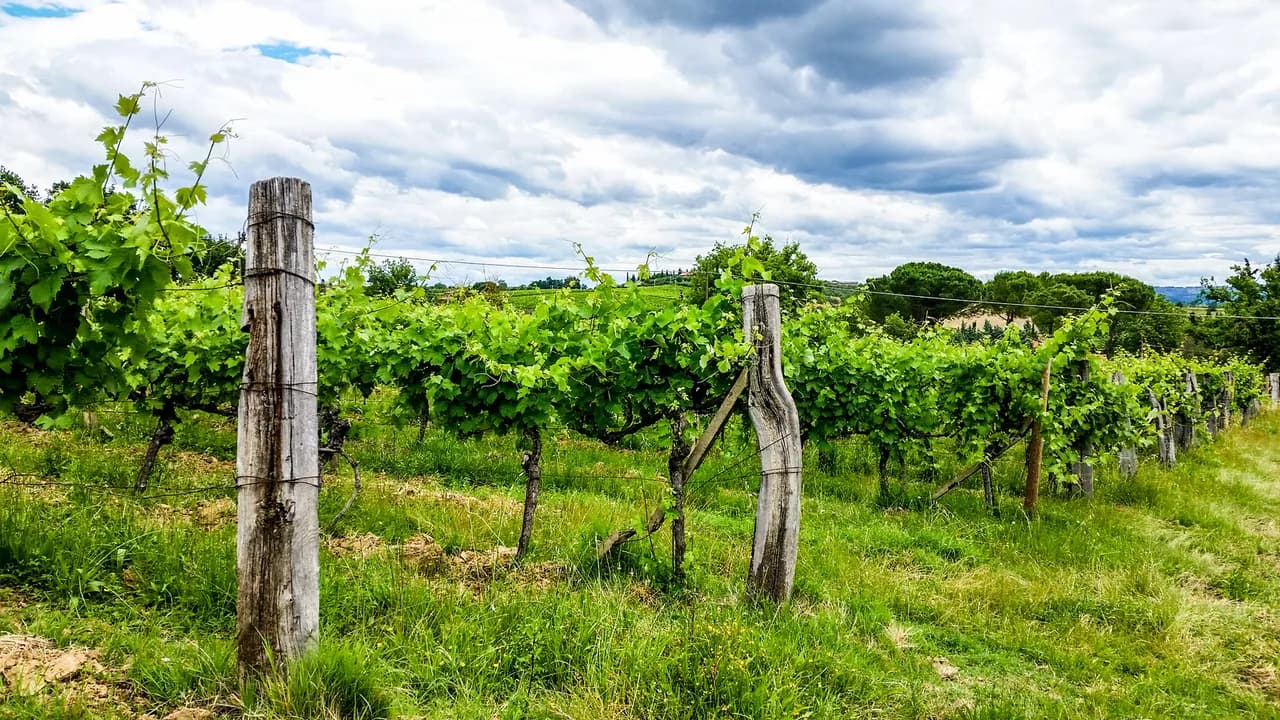
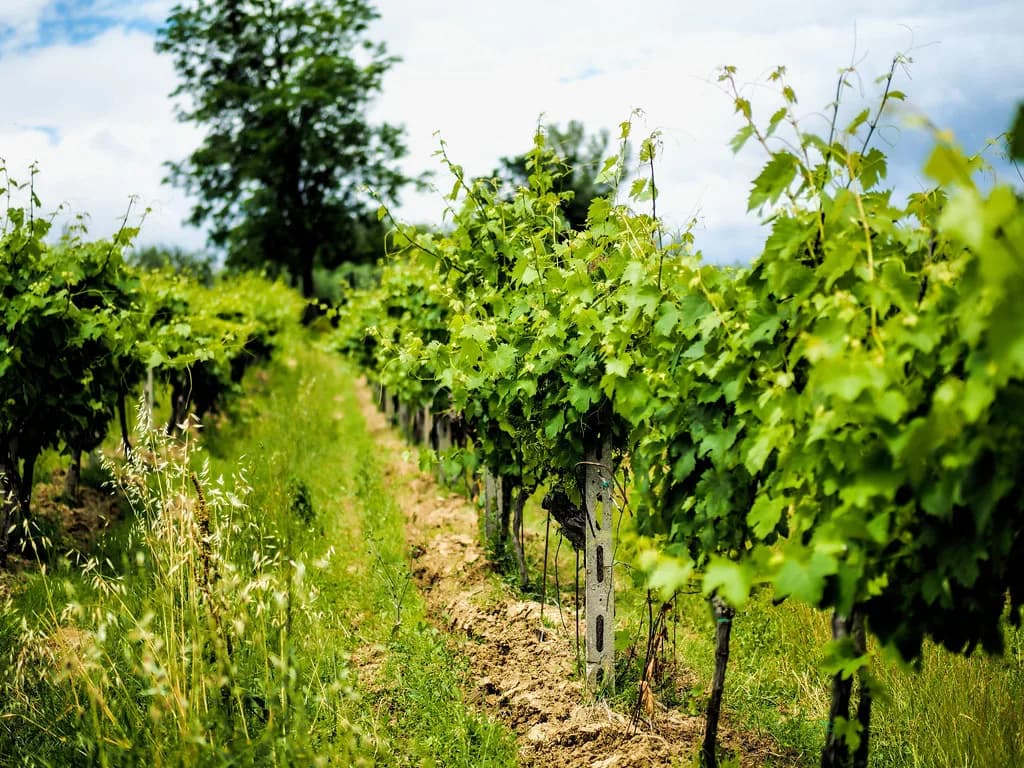
Vernaccia di San Gimignano is a crisp, aromatic white made from the local Vernaccia grape, grown on the hills that ring the town. It earned DOC status in 1966 and later became a DOCG, and it remains the only white DOCG in Tuscany, which is why nearly every estate here pours it as the flagship.
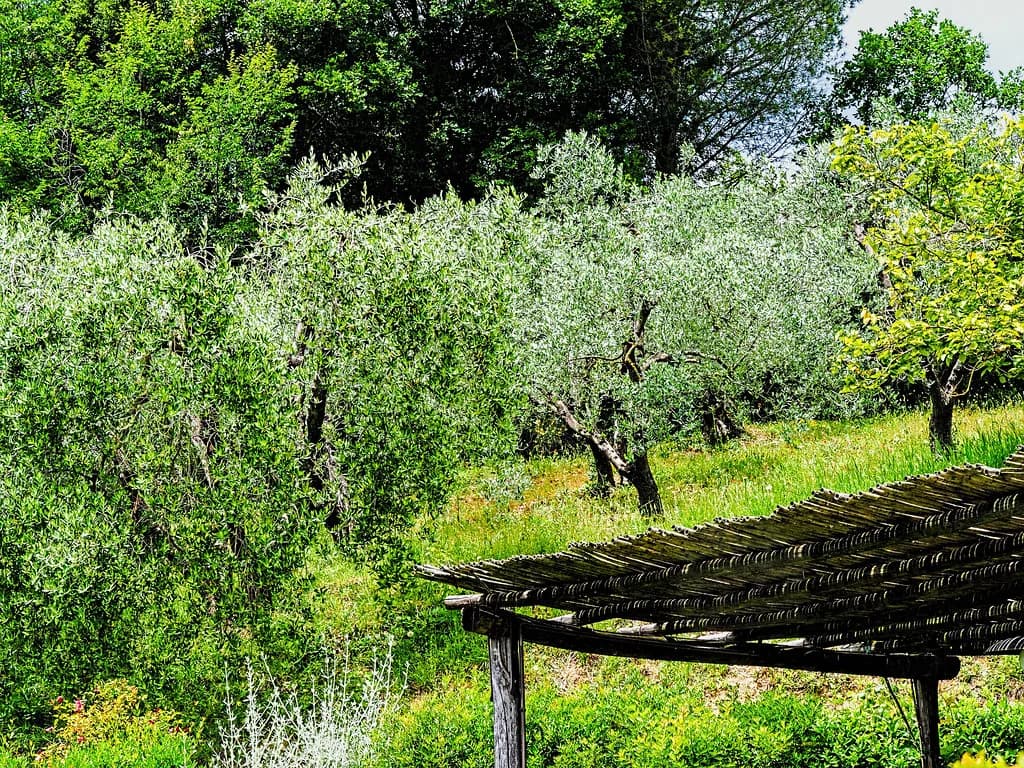
The reds poured alongside it are Sangiovese-based, labeled Chianti or Chianti Classico depending on where the vineyards fall. Many estates also make Vin Santo, the amber dessert wine dried-grape style that Tuscany serves with cantuccini, and several press olive oil that appears in the same tasting. Expect a lineup of three to six wines rather than a single glass.
That mix matters when you choose where to go. If you want to understand the town's own wine, prioritize estates whose listings lead with Vernaccia; if you want a broad Tuscan red education, a Chianti Classico property will serve you better, at the cost of a longer drive. It is the same decision travelers weigh when comparing Montepulciano wineries on their Vino Nobile di Montepulciano DOCG versus their Rosso di Montepulciano DOC.
How the Wine District Is Laid Out
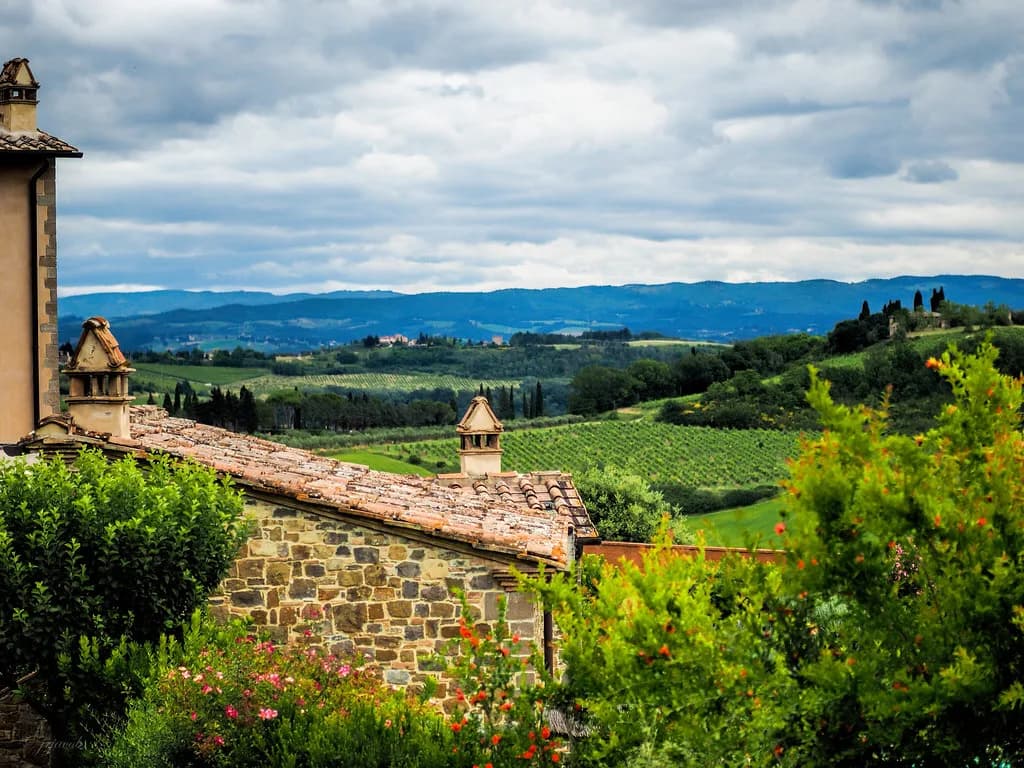
Think of San Gimignano as a small hub with three rings. The inner ring is the immediate countryside within a few kilometers of the gates, where small family farms receive visitors. The middle ring runs west toward Ulignano and the hills facing the town. The outer ring is Chianti Classico country, 30 kilometers and more away, toward Castellina, Radda and Greve.
Booking platforms blur these rings. A San Gimignano search results page on Winalist lists dozens of properties, including Chianti Classico estates such as Castello di Fonterutoli, Castello di Albola and Barone Ricasoli that are nowhere near the town. Read the map pin before you book, because the distance is the single biggest factor in whether your day works without a car.
Estates Closest to Town
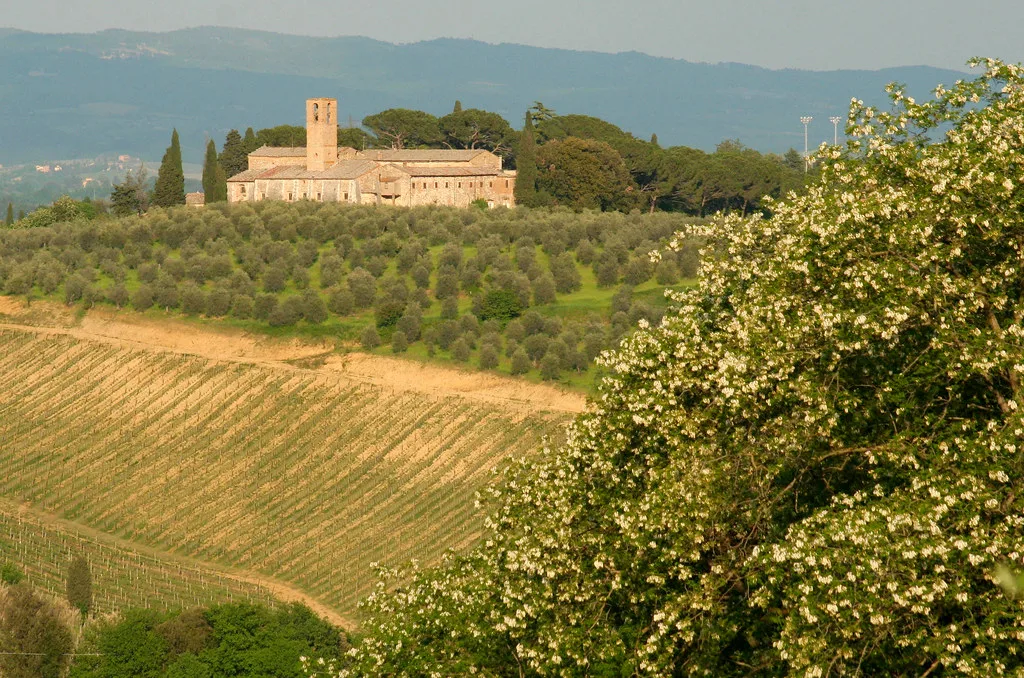
Several small producers sit just outside the walls and receive visitors by reservation. Podere La Marronaia is a family farm specializing in organic wines and olive oil, and it appears in San Gimignano tasting listings with published experience ranges. Cappella Sant'Andrea, Tenuta Guardastelle, Fattoria Il Piano and Azienda Agricola San Quirico are other estates cited for guided Vernaccia tastings, several of them family-run with vineyard views.
These are working farms, not drop-in tasting rooms. Visits are arranged in advance, usually by email or through a booking platform, and the smallest properties may only host one group at a time. Ask about the language of the visit when you write, since English may be limited at a one-family operation that does not market abroad.
Many of these farms also run an agriturismo, so staying overnight on the estate solves the transport problem and puts you in the vineyards at dusk after day-trippers leave. That is worth considering if your priority is a slow tasting rather than a checklist of towers.
Tenuta Torciano and the Western Hills
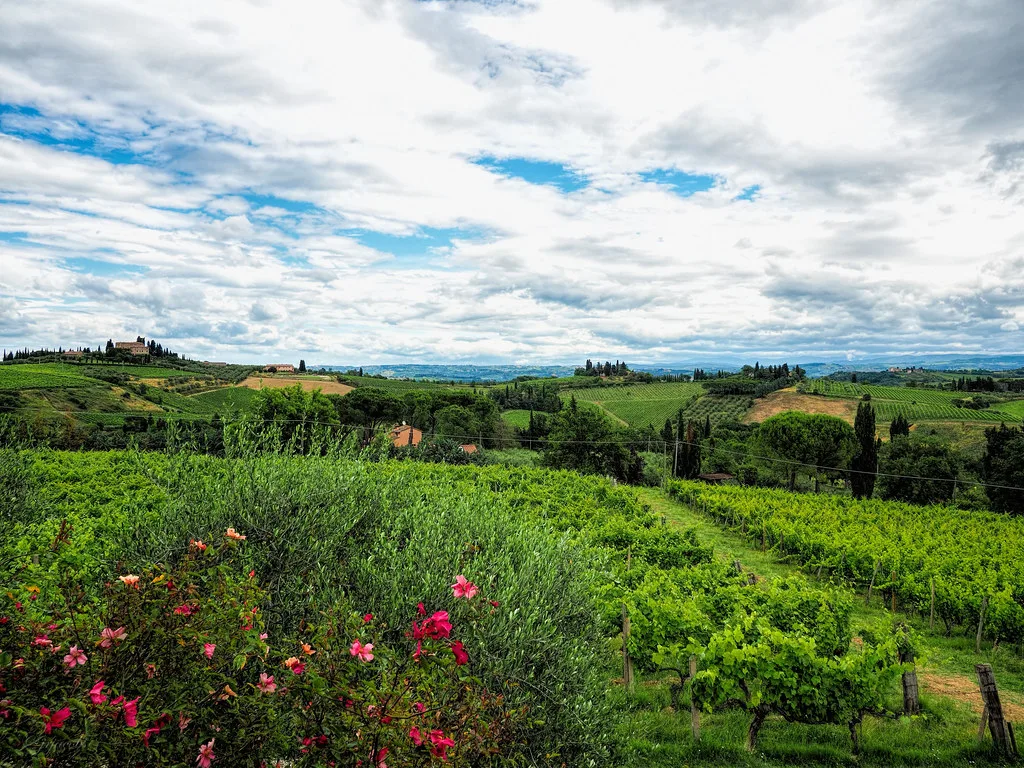
Tenuta Torciano is the most structured hospitality operation in the area and sits at Via Crocetta 16 in the hamlet of Ulignano, in the municipality of San Gimignano, between the town and Chianti. The Giachi family has farmed here for thirteen generations, and the estate says it is open every day of the year, from 9:00 am to 10:00 pm.
Its program goes well beyond a tasting counter: vineyard and cellar tours with guided tastings, lunches and dinners among the barrels, cooking classes, truffle hunting and horseback rides, all listed on the estate's own site. Booking runs by email, phone or WhatsApp, and every experience has its own page with times, duration and inclusions.
The trade-off is scale. An estate this organized can absorb a group of twenty and feed them well, but the visit feels produced rather than improvised. If you want a quiet conversation with a winemaker in a cellar the size of a garage, book one of the small farms instead; if you want lunch, a tour and a fixed schedule in one place, Torciano removes the logistics.
Larger and Structured Visits
Beyond the smallest farms, several estates around the town run visitor programs, from budget entry flights up to long lunches. Names that appear repeatedly in San Gimignano listings include Arrigoni 1913, Palagetto, Casa Lucii, MonteRosola and Villa Il Pozzo, the last offering a guided tour in four languages and a terrace tasting with a wide view of the towers.
Further out, Castello di Oliveto, a castle built in 1424 by the Pucci family, and Cantine Melini in Gaggiano give a sense of the range: one is a historic estate with a Vin Santo focus, the other a larger house based in Chianti Classico. Published ranges on booking listings start in the low double digits and climb steeply for multi-course or private experiences; the spread reflects what is included, not the quality of the pour.
Use those numbers only to sort options. Each experience page lists what is actually poured, whether a cellar tour is part of it, and how long it lasts, which is the information you need to compare two visits at different price points.
When to Widen the Net to Chianti Classico
Booking platforms mix Chianti Classico estates into San Gimignano results because travelers often base in one town and tour the other. Castello di Fonterutoli, Castello di Albola, Barone Ricasoli and Castello di Gabbiano all appear, and all sit well east of San Gimignano in the Chianti hills. Adding one of them turns a short local day into a full driving day.
If you go, plan one Chianti property and one San Gimignano property at most, grouped on the same road, rather than zigzagging between appellations. Without a car, that plan usually means a private driver or a guided tour, because rural bus service between Chianti villages is thin and slow.
Wine tours solve the geometry by packaging pickup, two estates and often lunch into a set rate. The published options from tour operators tend to run from roughly two hundred euros per person upward for a shared day, with private cars costing more per person for two travelers; those figures are worth comparing against two taxis and two tasting fees before you decide.
What a Vernaccia Tasting Involves
A typical visit is a short walk through the vineyard or cellar followed by a seated tasting of three to six wines, lasting sixty to ninety minutes. The lineup almost always opens with Vernaccia, moves through a Chianti or Super Tuscan red, and may close with Vin Santo. Olive oil tasting is common and sometimes the highlight, since many estates press their own.
Longer formats add a cellar tour, a food pairing of Pecorino, cured meats and bruschetta, or a full lunch. Cooking classes and truffle experiences are a separate category altogether and need half a day. When you book, ask what is poured, whether the cellar is included and whether food is served, because a fifteen-euro flight and a seventy-euro lunch are different products, not better and worse versions of the same thing.
Booking Mechanics That Matter
San Gimignano's estates work on appointments, even the large ones. Write with your date, party size and preferred time, and expect a reply within a day or two from organized estates; small farms can take longer in harvest season. Direct email or a phone call is often the most flexible route for odd party sizes or dietary needs.
Platform bookings, by contrast, confirm instantly and usually carry free cancellation, but you are limited to the packaged experiences listed. Payment is often made at the estate on the day. Ask about minimum party size if you are traveling solo or as a couple, and confirm the language of the visit when you reserve.
Harvest, generally late September into October, is the one period when visits get squeezed: cellars are busy and staff are in the vineyard. Book further ahead then, and treat any invitation to see grape sorting or stomping as a bonus rather than a guaranteed part of the tour.
Getting There Without Driving
San Gimignano has no train station. The nearest rail hubs are Poggibonsi and Certaldo, both on the Siena-Florence line, with buses connecting them to the town; regional bus services also link San Gimignano directly with Florence and Siena. Schedules change by season, so confirm times for your date before you commit to a tight connection.
Once in town, the closest estates are a short taxi ride or a long walk on narrow roads without sidewalks. Taxis are few, so arrange a return pickup when you are dropped off, or ask the estate for a local transfer. Bikes work for confident riders only; the hills are short but steep and traffic on the approach roads is real.
If anyone in the group is driving, they should not taste. Spittoons are standard at every estate, and a designated driver, a booked tour with a driver, or a night in an agriturismo nearby all solve the problem cleanly. The same logic makes a guided tour the better call for small groups who want a Chianti add-on.
Timing, Food and Practical Questions
Spring and autumn are the best windows: mild weather, vineyards at their most photogenic, and smaller groups before summer crowds. Harvest period adds activity but also booking pressure. A summer midday tasting is hot and bright, and the cellar is often the most comfortable place to be, so a late-afternoon slot usually works better.
Local food belongs in the plan. Pecorino cheese and saffron from the surrounding countryside appear on many tasting tables, and a winery lunch of ribollita, truffle pasta and cantuccini with Vin Santo is a reason to book the midday experience rather than the basic flight. Pairing a visit with the town's own food shops fills the rest of the day.
Before you commit, ask four things: what is poured, whether the cellar tour is included, how long the visit lasts, and what the cancellation terms are. Add how you will get back to town if you are not driving. Those answers separate a good booking from a disappointing one more reliably than any review score.
Plan Your Visit
San Gimignano rewards travelers who treat it as a wine town first and a tower stop second. Pick one small family estate for the Vernaccia and one larger property for a tour and lunch, keep them on the same side of town, and leave the Chianti Classico estates for a separate day with a driver.
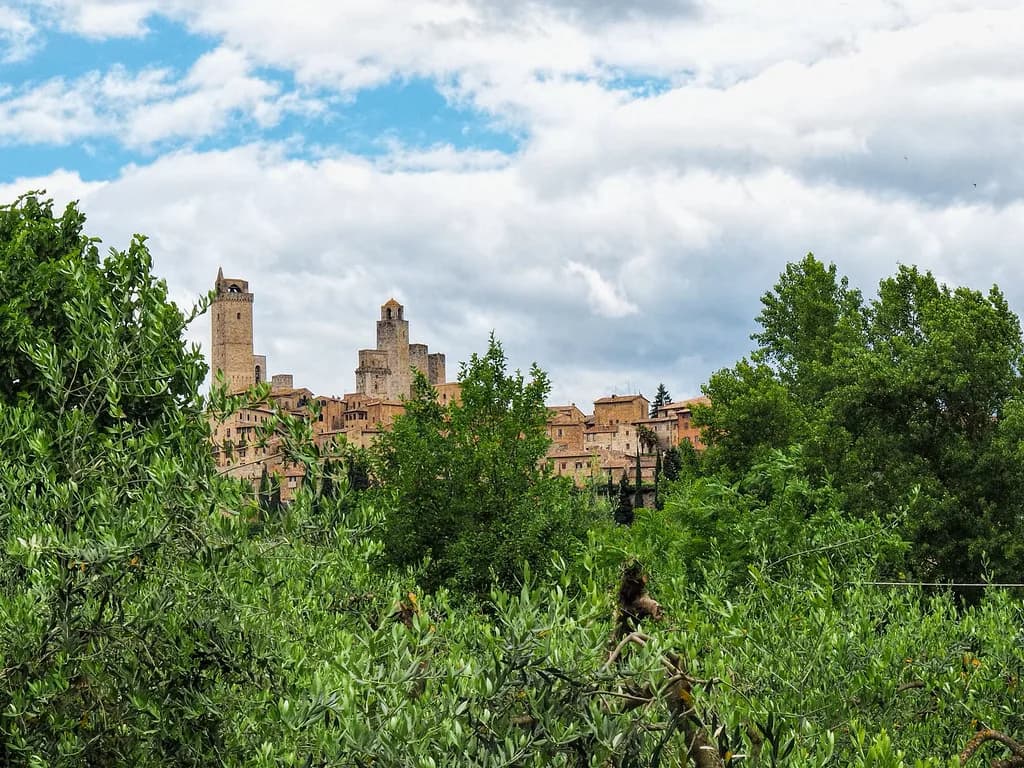
Book ahead, confirm the details that shape your day, and build in time to be in the town itself when the tour buses have gone. The towers look better with a glass of Vernaccia in hand.
Frequently Asked Questions
Do I need to book San Gimignano winery visits in advance?
Yes. Even the most visitor-oriented estates work on appointments, and small family farms may host only one group at a time. Write by email or use a booking platform with your date, party size and preferred time, and confirm the language and duration of the visit.
What wine is San Gimignano known for?
Vernaccia di San Gimignano, a crisp white made from the local grape. It was the first Italian wine to receive DOC status, in 1966, and is Tuscany's only white DOCG. Estates here also make Sangiovese-based reds, usually labeled Chianti or Chianti Classico, plus Vin Santo and olive oil.
Can I visit San Gimignano wineries without a car?
The estates closest to the walls are reachable by a short taxi ride, and taxis are few, so arrange your return pickup when you are dropped off. For anything in Chianti Classico, a guided tour or private driver is the practical solution. Drivers in the group should not taste.
How do I get to San Gimignano by public transport?
There is no train station in town. The nearest rail hubs are Poggibonsi and Certaldo on the Siena-Florence line, with buses onward, and regional buses also connect directly with Florence and Siena. Schedules vary by season, so confirm times for your travel date.
How long does a Vernaccia tasting take?
Most standard visits run sixty to ninety minutes, covering a short cellar or vineyard walk and three to six wines. Formats with food pairing or a full lunch take longer. Ask the estate what is included when you book, since a basic flight and a lunch experience are different products.
Which estates are near San Gimignano town?
Small family producers that receive visitors include Podere La Marronaia, Cappella Sant'Andrea, Tenuta Guardastelle, Fattoria Il Piano and Azienda Agricola San Quirico. Larger programs include Tenuta Torciano at Ulignano, Arrigoni 1913, Palagetto and Villa Il Pozzo. Each requires advance booking.
What should I ask before booking a winery visit?
Ask what wines are poured, whether a cellar tour is included, how long the visit lasts, whether food is served, and the cancellation terms. Also confirm the language and minimum party size, and how you will return to town if nobody in your group is driving.
Sources
Notes for your next wine trip
Optional updates to our winery and wine-town guides.
You might also like
Continue reading
More guides you'll find useful