San Gimignano Wine Tours: Vernaccia, Chianti and How to Book
Compare San Gimignano wine tours, from Vernaccia cellar visits in town to Chianti day trips, with what tastings include and how to get there without driving.
On this page
Most travelers book a San Gimignano wine tour expecting one wine region and get two. The white Vernaccia di San Gimignano DOCG grows on the hills immediately around the towers, while the Sangiovese reds of Chianti Classico begin roughly toward Greve in Chianti, an hour or more east by road. Deciding which zone you want before you compare operators prevents the common mistake of booking a Chianti day trip and then hunting for Vernaccia cellars.
The town itself is small and walkable, but the estates are not: they sit in the countryside at Ulignano, on the slopes below the walls, and along the roads toward Poggibonsi and Siena. That gap between town and vineyard is the single biggest factor in choosing between an independent visit and a guided tour. The notes below cover what tastings actually include, how appointment culture works, and where published prices exist.
Vernaccia Hills Versus Chianti Classico: Two Different Days
Vernaccia di San Gimignano was Italy's first white wine to earn DOCG status, and it is made from the Vernaccia grape grown on the sandstone and clay hills around the town. Styles range from lean, citrus-led wines to richer versions with some barrel aging, and many estates also pour Vin Santo, the dried-grape dessert wine traditional to Tuscany. A cellar visit here is short on driving and heavy on the local story. If you want depth on the appellation before choosing a producer, our guide to wine tasting in San Gimignano explains the grapes and styles in more detail.
Chianti Classico is a separate zone with its own black rooster symbol, based mainly on Sangiovese and centered on the villages between Florence and Siena. Greve in Chianti, Panzano and Radda lie east of San Gimignano across an hour or more of hill roads, so a Chianti tour is a road day, not a stroll from your hotel. If your priority is red wine and cellar architecture, choose Chianti; if you want the wine that belongs to these particular hills, stay with Vernaccia.
A third category blurs the two: many Tuscan estates, including those in the San Gimignano hills, pour both local Vernaccia and purchased or estate Sangiovese, plus Super Tuscans blended from Cabernet, Merlot and Sangiovese. A single-estate visit can therefore cover several appellations in one sitting, which suits travelers with only one free afternoon. Ask in advance which wines are actually poured, because tasting lists vary by estate and season.
The Lay of the Land: Ulignano, the Town Edge and the Greve Direction
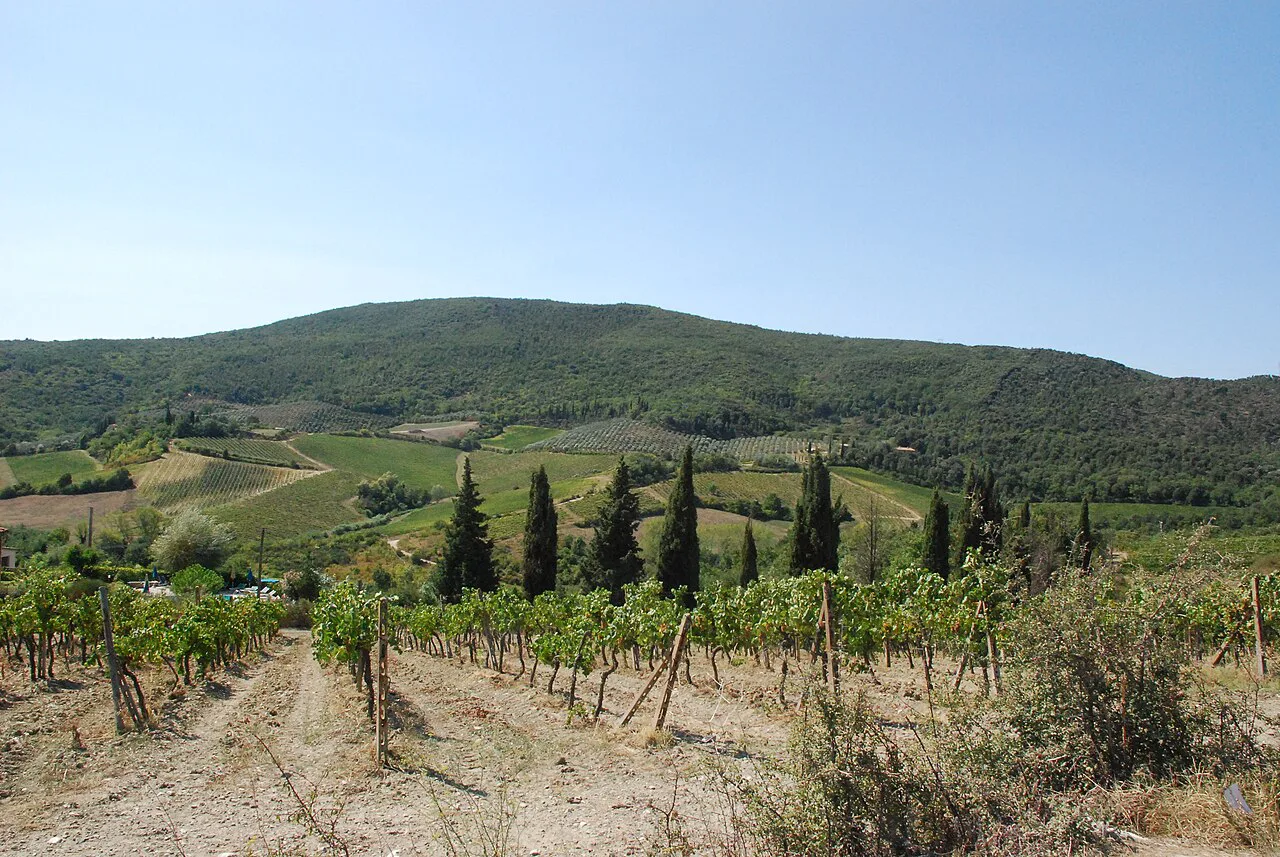
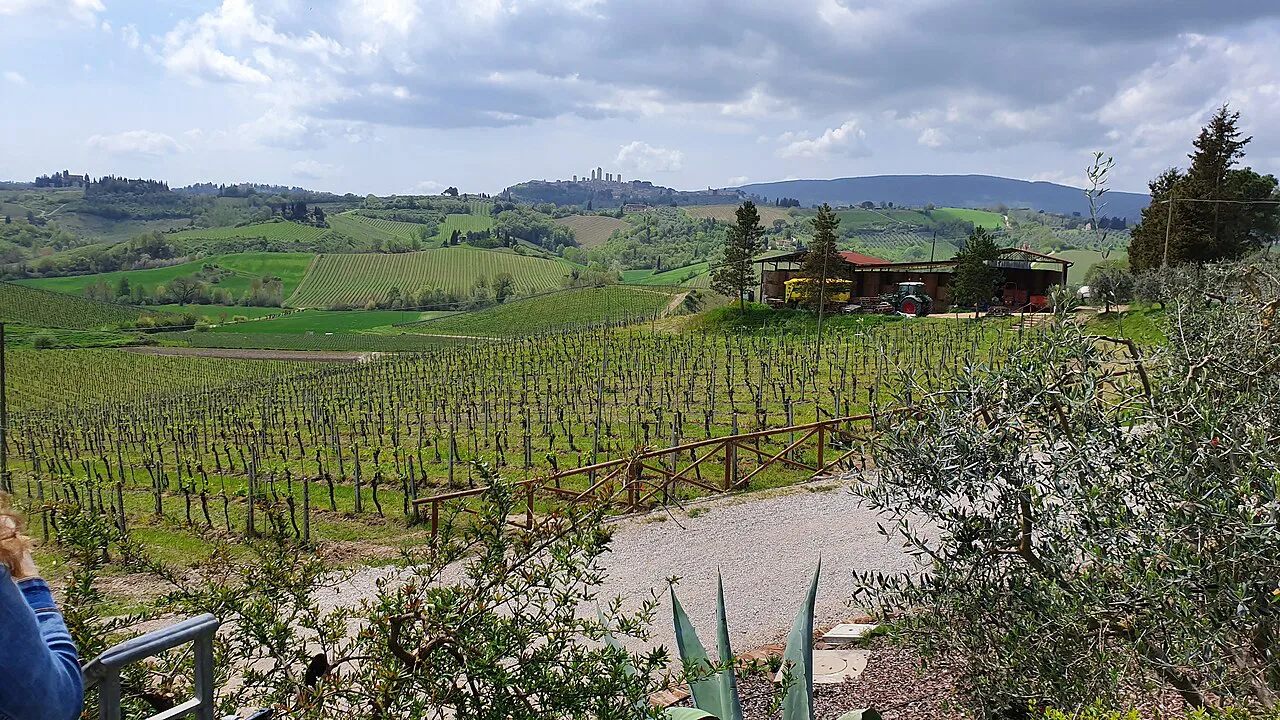
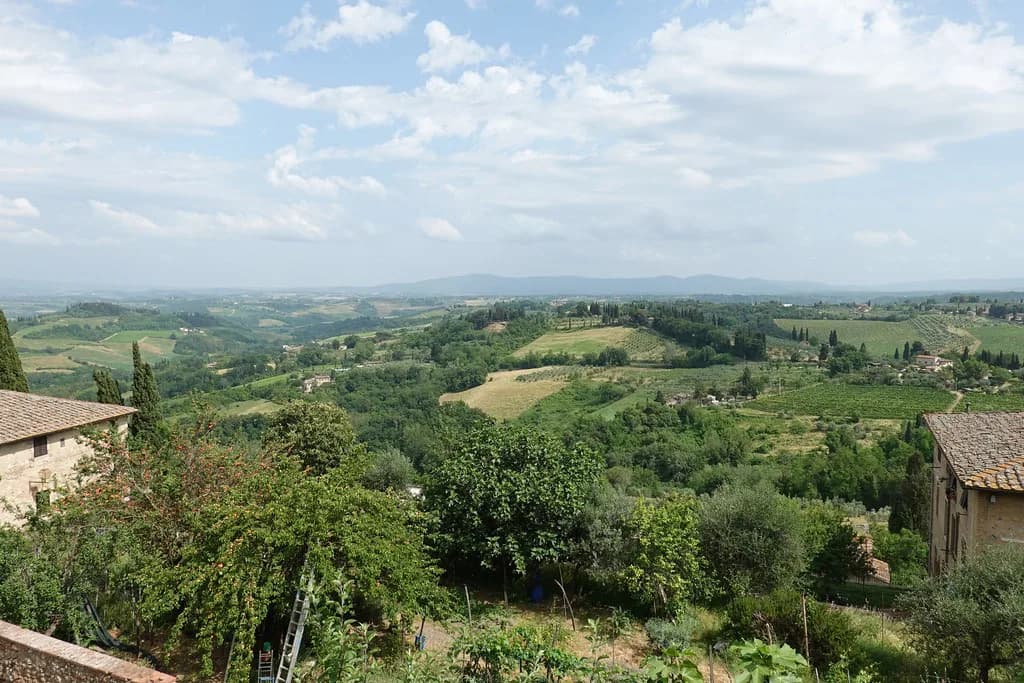
The practical geography is simple. The walled town sits on a ridge; the nearest vineyards begin on the slopes just below the walls; the hamlet of Ulignano lies a short drive west toward Poggibonsi and holds a cluster of estates; and the Chianti Classico villages lie further east. Grouping properties within one of these bands keeps a day efficient, because hill roads between them are slow.
For a one-estate day, stay within the Ulignano and town-slope band and add a walk through San Gimignano afterward. For a two-winery day, pair one Vernaccia estate with one Chianti Classico stop en route to Greve or Siena, accepting that you will spend a meaningful share of the day in a vehicle. Three or more wineries in one day from San Gimignano usually means rushing the tastings.
Tour Formats Compared: Estate Visit, Half-Day and Full-Day
An estate visit is the simplest format: you book directly with one property, drive or take a transfer there, tour the cellar and taste, and leave after two to three hours. It is the cheapest structure and the most flexible, but it puts the logistics on you, including the return trip if you have been drinking.
A half-day two-winery tour bundles transport with two tastings, often with a light lunch, and runs up to about six hours according to Italy on a Budget Tours' own description of its Chianti tour from the San Gimignano area. These suit travelers without a car and groups who want the driving handled. You trade flexibility for a fixed schedule and a shared vehicle, and you may not choose the specific estates.
A full-day tour adds a town stop, typically San Gimignano itself or Siena, and a full Tuscan lunch, which is attractive if this is your only wine day in Tuscany. The cost is a longer day and less time in any single cellar. Small-group products sold from Florence often include a San Gimignano stop alongside Chianti wineries and lunch, which is a different proposition from a tour starting in San Gimignano.
Estate Visits Around San Gimignano: How Appointments Work
Most Tuscan estates that receive visitors work on reservations rather than drop-in hours, even when the property is open daily for tastings. The booking email should state your date, preferred time, party size, whether you need a cellar tour or just a tasting, any dietary restrictions, and whether you are arriving by car or need a transfer. A reply within a few days is normal, so start the conversation at least a week ahead in high season.
What you get varies by property: some pour three wines with bread and oil, others run multi-course lunches with six or more wines across several appellations. Marketplace listings such as Winalist show a spread of experience types and listed price ranges for San Gimignano properties, from entry-level tastings to full meals, but treat those figures as booking-platform data and confirm the on-site rate when you reserve. The platform lists dozens of estates in and around the town, including Arrigoni 1913, Podere La Marronaia, Palagetto and MonteRosola.
Distances matter when you compare estates. Properties described as just outside the town center sit within a short drive of the gates, while Chianti Classico estates listed in the same marketplace lie well east near Greve, Panzano and Radda. Read the location line on each listing, since a San Gimignano label does not always mean walking distance from the towers.
A Worked Example: Tenuta Torciano at Ulignano
Tenuta Torciano is the most fully documented single estate for visitors in the San Gimignano area. Its address is Via Crocetta 16, Località Ulignano, in the municipality of San Gimignano, a short drive from the town, and the property publishes daily opening hours from 9:00 am to 10:00 pm. It states that it is open every day of the year, including holidays.
The experience list runs to more than forty options: simple red-and-white tastings with olive oil and balsamic vinegar, vineyard and cellar tours, lunches in the cellar or garden, truffle hunting with lunch, cooking classes, horseback rides through the vineyards, and a paired tour of Torciano and the sister Altezza Winery with a shuttle between the two estates. That breadth makes it a good fit for mixed groups where not everyone wants a formal tasting. Our profile of Tenuta Torciano covers the estate's history under the Giachi family.
Booking runs through the winery's own channels: email, phone or WhatsApp, with each experience listed on its own page with times and duration. The estate asks guests to book rather than arrive, and it arranges paid shuttles and driver services on request, subject to availability. The published per-person prices for a private San Gimignano and Siena day illustrate how group size changes the rate, with the per-head figure falling sharply as the party grows from one or two people to four or more.
Reading a Half-Day Two-Winery Tour
Half-day products from the San Gimignano area generally advertise two winery stops, guided cellar visits, up to nine wines across the day, and transport, with a duration of up to six hours and year-round operation. Read the inclusions line carefully: the number of wines refers to the whole day, not each estate. Confirm whether lunch is a sit-down meal or a plate of cheese and salami, because the difference changes the pace of the afternoon.
Check the pickup point before booking. Operators serving San Gimignano may collect from the town or from nearby accommodation, while tours marketed under a similar name sometimes depart from Florence or Siena. A shared half-day tour will also fix your tasting times, so you cannot linger over a favorite wine or add a spontaneous stop in the town.
For travelers comparing operators, local forums and reviews help identify which companies actually collect from San Gimignano rather than from Florence. Official tourism information and your accommodation can also confirm which local agencies currently run tours.
A Worked Example: The Private Full-Day San Gimignano and Siena Tour
The private full-day tour sold by Tenuta Torciano combines free time in San Gimignano, a guided visit and tasting at a Chianti Classico winery with a full Tuscan lunch, and free time in Siena before returning to your hotel. The menu includes Tuscan antipasti, truffle lasagna or ribollita, roast meat with potatoes, and cantuccini with sweet wine, alongside a tasting list that spans Brunello, Chianti, Chianti Classico, Morellino di Scansano, three Super Tuscans and Vernaccia di San Gimignano.
The pricing is published per person and falls as the party grows, from a steep single-traveler rate down to the lowest tier for groups of fourteen, and a separate supplement applies for a two-hour guided walking tour of Siena. A minimum of two adults applies, children under three go free and children aged three to ten pay half. Departure is from Florence with private pickup available at extra cost, and the tour company asks for a minimum of twenty days' notice for cancellation.
Note two practical details: the package states that the standard version does not include a guided tour of the winery and vineyard rows, so ask for the separate tour if you want the cellar walk, and the winery visit itself runs in the morning window listed on the booking page. Those constraints make it a sightseeing-plus-tasting day rather than a deep cellar immersion.
Wines to Ask For on a Tasting List
Build your requests around the appellations you cannot easily find at home. Vernaccia di San Gimignano DOCG is the local white and the one wine you should not skip here; ask for both a stainless-steel version and a barrel-aged one if the estate makes both. Vin Santo, made from dried grapes and often served with cantuccini, is a classic close to a Tuscan meal.
For reds, Chianti and Chianti Classico cover the Sangiovese heartland, with Chianti Classico generally the more structured of the two. Super Tuscans, blends of Sangiovese with Cabernet Sauvignon or Merlot or made from those grapes alone, appear on many estate lists, and estates with holdings in Montalcino may pour Brunello. If you are comparing estates in the area, our overview of San Gimignano wineries covers which properties pour which appellations.
If you want to stay overnight near the vineyards rather than in the town, farm stays and country relais around San Gimignano make early tastings and late dinners easier to combine, though rural properties usually require a car or a prearranged transfer.
Getting There Without a Car
Public buses connect San Gimignano with Poggibonsi, Siena and Florence, but they serve towns, not vineyard driveways. Reaching individual estates by bus therefore means a walk or taxi at the end, and rural roads often lack sidewalks. Consider the bus for getting to the town and a taxi or prearranged transfer for the final stretch to the winery.
Estates and tour operators fill the gap with paid services. Tenuta Torciano offers shuttles and driver services on request, confirmed only after booking and subject to availability, and its two-winery experience includes a shuttle between Torciano and Altezza Winery. Local taxis from San Gimignano can handle short hops to Ulignano and the nearby slopes, but book the return leg in advance because cars are scarce in the evening.
For a Chianti-focused day, the guided tour is the most practical no-car option, since the distance to Greve and beyond makes taxis expensive and buses impractical between cellars. Travelers based in Florence may find that a small-group tour with a San Gimignano stop covers both the town and Chianti wineries in one day.
Independent Visit or Guided Tour?
Going independently wins on cost and control: you choose the estate, linger over the wines you like, and can combine a tasting with a long walk through the town. It loses on logistics, since you must arrange transport to a rural property and a sober return, and on availability, because popular estates may be fully booked on your chosen day.
A guided tour wins on convenience and on breadth, especially for Chianti, where the driving is substantial. It loses on flexibility: fixed departure times, shared vehicles, and estates selected by the tour company rather than by you. For a first wine day in Tuscany without a car, the tour usually delivers more tasting time per hour of travel.
A middle path suits many travelers: one independent estate visit close to town, booked well ahead, plus a taxi or estate shuttle. That keeps the day relaxed without the cost of a full private tour, and it leaves the evening free for the town once the driver has stopped for the day.
Booking Practicalities
State the essentials in your first message: date, time, number of adults and any children, whether you want a cellar tour, any allergies or dietary needs, and how you will arrive. Ask which wines are poured and how long the visit lasts. If you need an English-language tour, say so, since some estates run tours in several languages on a fixed schedule.
Pay attention to party minimums and cancellation terms. The private San Gimignano and Siena tour requires at least two adults and specifies a twenty-day cancellation window, and its per-person rate drops as the group grows, so a larger party pays less per head. Group tours often have shorter windows; read them before paying.
If your plans are still forming, the Winalist marketplace lets you compare experience types, languages and dates across many San Gimignano properties in one search, and it lists cancellation policies on each experience page. Use it to shortlist, then confirm details directly with the estate.
When to Go and What the Season Changes
Late September and October bring harvest activity in the vineyards, which makes the countryside lively, but it is also peak booking season, so reserve tastings earlier than you would in spring. Winter visits are quieter and often easier to arrange at short notice, though some rural estates run reduced hours and fewer experiences outside the main season.
Confirm the exact dates of any harvest-themed event directly with the estate, because published calendars change and the winery's own event page is the reliable source. For everyday planning, a weekday visit gives you more choice of times and a less crowded tasting room than a Saturday in high season.
Responsible drinking matters on these hill roads: a driver should not taste, so use the spittoons, appoint a designated driver, or book a tour or transfer and let someone else handle the bends back to town.
Plan Your Wine Day
Decide first whether you want the Vernaccia hills around San Gimignano or the Sangiovese country of Chianti Classico, then choose a format: a single estate visit, a half-day two-winery tour, or a full-day combination with Siena. Booking direct suits travelers with a car and a clear target; tours suit anyone relying on public transport or wanting several estates in one day. If you are weighing in-town cellars against countryside estates, the same choice plays out on Montepulciano wine tours.
Whichever you choose, reserve ahead, state your party size and transport needs in the first email, and confirm the meeting point and return arrangements before you travel. That single step prevents most of the friction that turns a good tasting day into a rushed one.
Frequently Asked Questions
Do San Gimignano wine tours include Vernaccia di San Gimignano?
Many estate tastings in the hills around the town include Vernaccia di San Gimignano DOCG alongside reds such as Chianti and Super Tuscans. Tours that head into Chianti Classico focus on Sangiovese-based reds and may not pour Vernaccia at all. If the local white matters to you, ask which wines are included before booking.
How do I get to San Gimignano wineries without a car?
Public buses link San Gimignano with Poggibonsi, Siena and Florence but do not reach vineyard driveways, so most travelers use a taxi, a prearranged transfer, or the paid shuttle services some estates offer on request. Guided half-day and full-day tours include transport and are the simplest option for a multi-winery day.
Are San Gimignano wine tastings by appointment?
Most estates that receive visitors expect a reservation rather than drop-in visits, even when the property is open daily. Write ahead with your date, party size, whether you want a cellar tour, and any dietary needs. Booking a week or more ahead is sensible in high season.
Do half-day wine tours from San Gimignano include lunch?
Some do and some do not. Half-day products in the area often advertise two winery stops and up to nine wines across the day, with lunch as an optional or included element. Check the inclusions line to see whether the meal is a sit-down lunch or a light plate.
What is the difference between a Chianti tour and a San Gimignano wine tour?
A San Gimignano wine tour usually stays in the hills around the town and centers on Vernaccia, Vin Santo and local reds. A Chianti tour heads east toward Greve in Chianti and the Chianti Classico villages, which means more driving and a focus on Sangiovese. Some full-day tours combine both with a stop in San Gimignano or Siena.
When is the best time to book a San Gimignano wine tour?
Late September and October are busy because of harvest activity, so book well ahead if you want those weeks. Spring and winter are quieter and easier to arrange at shorter notice, though some rural estates run fewer experiences outside the main season. Weekdays give you more choice of times and quieter tasting rooms.
Should I book a tour or visit a winery independently?
Independent visits cost less and give you control over timing, but you must arrange transport to a rural estate and a sober return. Tours handle the driving and can cover several estates in a day, at the price of fixed departure times and a set list of estates. One nearby estate plus a taxi is a good middle ground.
How far in advance should I reserve a winery visit?
A week or more is sensible in high season, and longer for popular estates or large groups. The private full-day San Gimignano and Siena tour requires at least two adults and specifies a twenty-day cancellation window, so check the terms on any tour before paying. For simple tastings, a few days' notice usually works outside peak weeks.
Sources
Notes for your next wine trip
Optional updates to our winery and wine-town guides.
You might also like
Continue reading
More guides you'll find useful