Domaine Tempier: Plan a Bandol Winery Trip from Marseille
Domaine Tempier sits below Le Castellet in the Bandol appellation. Learn how an estate visit works, what Bandol wine is, and how to reach it from Marseille.
On this page
Domaine Tempier is the estate most travelers name when they say they want to taste Bandol, and it sits on the slope just beneath the hilltop village of Le Castellet, roughly an hour east of Marseille by road. The wines are red-dominant and built on Mourvèdre, the grape that defines the appellation. A visit is easy to fit into a day, but it rewards a little planning before you set out.
The main thing to understand is that the appellation and the village are not the same place. Bandol is the wine district along the coast between Marseille and Toulon, while Le Castellet is the perched village above the estate. If you are building a wider trip around the city, our guide to wine tasting in marseille covers the surrounding appellations and how they compare.
What Domaine Tempier Is
Domaine Tempier is a family-owned winery in the Bandol appellation of Provence, long associated with the Peyraud family. Lucien and Lulu Peyraud ran the estate for decades, and Lulu's cooking and table became as celebrated as the wines among visiting writers and cooks. The property sits at Le Plan-du-Castellet, the flat land at the foot of the village rather than inside its walls.
In practical terms this is a working domaine with a tasting room, not a theme park. Travelers describe arriving at the estate after a walk through Le Castellet and finding it directly below the village. Set your expectations around a short, focused stop of perhaps an hour rather than an all-afternoon program, and treat the village visit as the other half of the outing.
Where It Sits in the Bandol District
Bandol stretches along the Mediterranean between Marseille and Toulon, with vineyards climbing the hills behind coastal towns such as Bandol, Sanary-sur-Mer and La Cadière-d'Azur. Domaine Tempier's position below Le Castellet puts it in the eastern part of the appellation, inland from the water and sheltered by the hills. Drive times are not precise on winding roads, so allow roughly 45 minutes to an hour from central Marseille and rather less from Toulon.
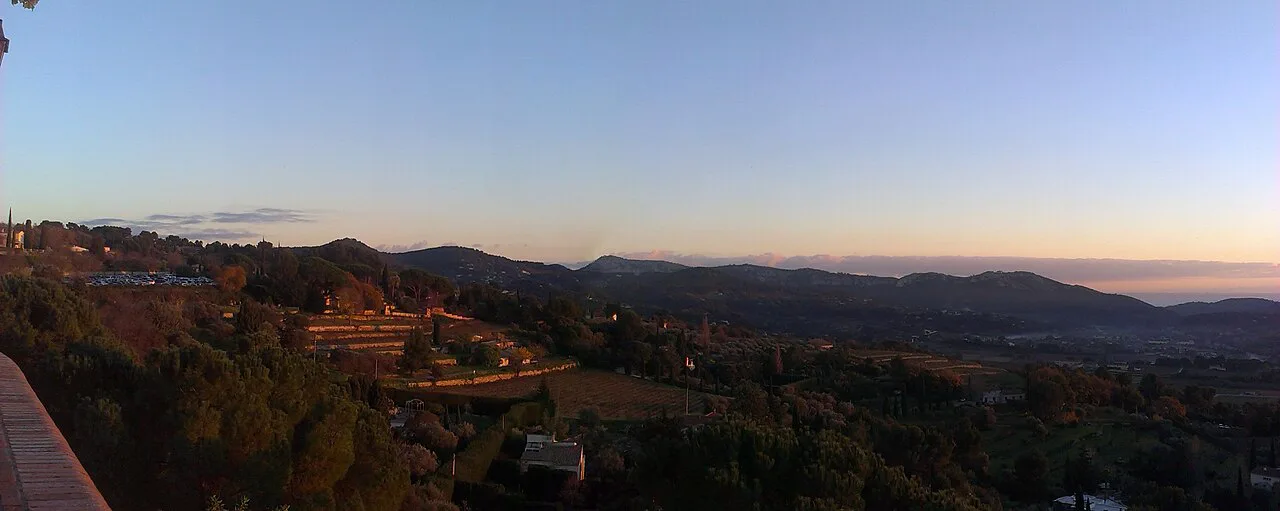
Because the district is compact, you can pair the estate with the village on foot. Le Castellet's lanes, ramparts and viewpoints are a few minutes uphill from the winery, which makes a natural sequence of tasting first, then a walk and a meal. If you want to see how other estates in the appellation compare, our page on bandol wineries maps the properties that receive visitors, including Domaines Bunan and the villages around Le Castellet.
Bandol Wine in Brief
Bandol is red-wine country first. The appellation rules require a substantial share of Mourvèdre in the reds, the late-ripening grape that gives the wines their color, tannic frame and capacity to age; Grenache and Cinsault usually fill out the blend, with smaller amounts of other permitted varieties. That structure is why Bandol reds are often described as the most serious wines of Provence, closer in build to the Rhône than to the pale, breezy rosés of the coast.
Rosé is the second pillar and makes up a large share of what the appellation produces, generally from the same grapes with less skin contact. Whites are a small minority. Knowing this helps you choose where to spend a tasting: if structured reds are the goal, group two or three Bandol estates; if you mainly want a light lunch wine, one stop plus the village is enough.
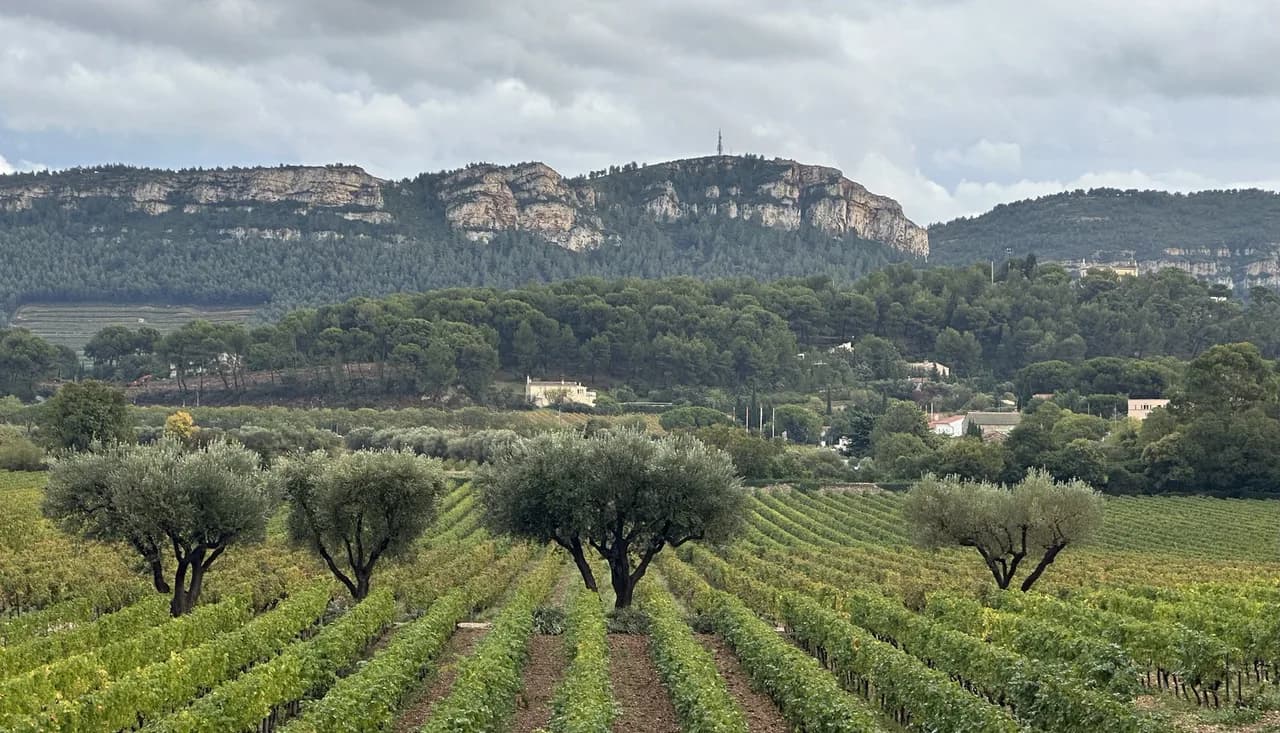
Travelers with time to spare can extend into neighboring appellations. The limestone hills of Bandol AOC give way westward to the vineyards behind Cassis and Aubagne, and the countryside northeast of Aix-en-Provence grows Coteaux d'Aix-en-Provence. If that inland direction appeals, our wine tasting in Aix-en-Provence guide helps you choose which wineries to visit there.
The Tempier Range in Plain Terms
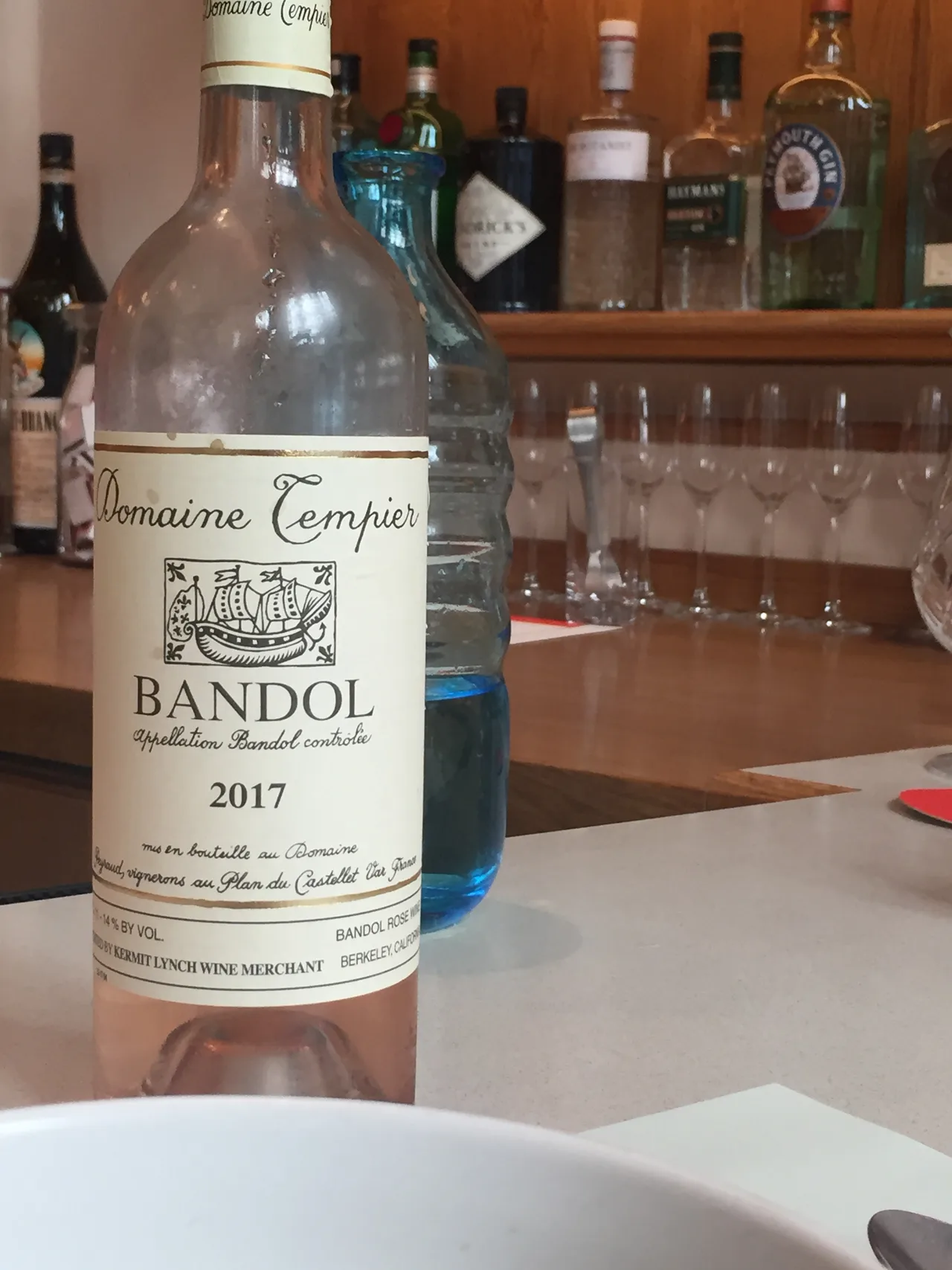
The core wine is the classic Bandol red, a blended Mourvèdre-led cuvée that varies by vintage. The estate also makes a Bandol rosé and a white, and a set of named cuvées tied to particular parcels or family history. One of these, Lulu & Lucien, honors the couple whose names are attached to the property's modern reputation.
A retailer listing for a recent vintage of Lulu & Lucien describes the blend as about three-quarters Mourvèdre with Grenache, Cinsault and smaller proportions of Carignan and Syrah; treat that as the published composition of one wine in one year, not a fixed recipe across the range. What you will actually be able to taste depends on what the estate has open that day, so ask about the current selection when you contact Domaine Tempier rather than expecting every cuvée to be poured.
Visiting the Estate: What to Expect
Domaine Tempier keeps a tasting room at the property and receives visitors, but the estate has reported weekend closures. A visitor account from a weekend in 2019 found the tasting room shut on Saturday and Sunday after the drive out from the coast, which is a useful reminder to plan the stop on a weekday and to treat any weekend opening you hear about as unconfirmed.
Provence's better-known estates run on an appointment culture, particularly for groups, cellar tours and any visit in a language other than French. Rather than assume walk-in tasting is available on the day you arrive, send an email well ahead stating your date, the size of your party and whether you want a cellar visit. The estate's own site and contact details are the place to confirm current opening days and what a tasting includes.
When you write, ask three specific questions: which days the tasting room is open that month, how many wines are typically poured, and whether a reservation is needed for your party size. Ask too whether there is a fee and how it is handled, and whether a cellar tour is offered at all. Those answers shape whether the stop is a 30-minute pause or a longer appointment, and they are the details that no third-party guide can safely fix for you.
Grouping Your Day Around Le Castellet
Le Castellet is the anchor of a half-day loop. Its restored medieval lanes, ramparts and small museums sit a short uphill walk from the estate, and several restaurants and cafés make it a sensible lunch stop before or after a tasting. Allow two to three hours for the village plus one tasting, and more if you add a second estate.
Nearby there is no shortage of alternatives that also receive visitors, and grouping two estates with the village gives a fuller picture of Bandol than a single stop. Keep the driving short and the tasting order light, and remember that the roads between villages are narrow and slow, so two estates plus a long lunch is a realistic ceiling for a day trip. Our marseille wineries page lists estates within reach of the city if you want to spread tastings across a longer stay.
Getting There Without Driving
Public transport reaches the coast, not the vineyards. Regional trains run from Marseille to Toulon and Bandol, and from either station you need a taxi or a pre-booked transfer for the final climb to Le Castellet, roughly 15 to 25 minutes depending on traffic and the route. Trains are frequent on this corridor, but taxi availability at small stations is limited, so book the return leg in advance rather than hoping to flag one down in the village.
The trade-off is time versus flexibility. Train plus taxi works well for a single estate and a village lunch, costs less than a tour, and lets you set your own pace, but you are tied to a fixed return and dependent on the taxi showing up. A car gives you freedom to add estates, at the cost of a designated driver who does not taste. Bicycles are an option for confident riders on the quieter lanes, though the climb to the village is real and the summer heat is not forgiving.
Independent Trip or Guided Bandol Tour
A guided tour from Marseille removes the transport problem entirely and usually bundles two or three estates with a driver who handles the roads, which matters if everyone in your group wants to taste. The cost is higher per person and the schedule is not yours: you go where the tour company goes, and the stops may or may not include Tempier itself. Ask the tour company directly whether the estate is on the itinerary when you book, since visiting schedules change.
Going independently suits travelers who want one focused visit, a walk in Le Castellet and a long lunch, and who are comfortable arranging a taxi. It also gives you the freedom to skip a stop if the tasting room is busier than expected. If you would rather have the logistics handled, compare the options on our marseille wine tours page, which covers itineraries in the Bandol and Cassis direction and the Coteaux d'Aix-en-Provence.
When to Go
Provence's harvest runs from late August into September, with Mourvèdre among the last varieties picked because it ripens slowly. That is an atmospheric time to be in the vineyards, but it is also the busiest period for the estates themselves, so a weekday appointment matters more than ever. Spring and early summer are quieter and the tasting rooms are calmer, while high summer brings heat and coastal traffic.
Weekends and French public holidays are the weakest bet for unannounced visits to small estates, and late-week planning is where most itineraries fall apart. Build the Bandol day early in the week if you can, and keep a fallback such as a village tasting or a cooperative if the estate turns out to be closed. Harvest, bottling and trade fairs all pull estates away from the tasting room at short notice.
A Booking Script That Works
Write a short email in French or English that covers the essentials in one message: your preferred date and a backup, the number of adults, the language you would like the visit in, whether you are arriving by taxi or with a driver who will not taste, and whether you hope for a cellar tour as well as a tasting. Mention if anyone in the party does not drink. A clear, compact request gets a clearer answer than a vague inquiry.
Expect a reply within a few working days, and follow up by phone if your visit is close. If the estate cannot accommodate you, ask which nearby domaines it would suggest for the same day, since local recommendations are usually accurate and save you a second round of research. Keep the confirmation email with you, as gates and tasting rooms on rural estates are not always staffed to check names at the door.
Tasting Responsibly
The Bandol road is winding and the wine is strong, so whoever drives should not taste. Estates routinely provide spittoons, and using them is normal rather than rude; a designated driver, a pre-booked taxi or a tour keeps the day simple. Water and food through the afternoon do the rest, and Le Castellet's restaurants make an easy place to slow down between stops.
Confirming Your Visit Before You Travel
Opening days, tasting arrangements and whether a fee applies are all set by the estate and change with the season, so confirm them close to your date rather than relying on older reports. The most reliable route is the domaine's own website and a direct email or phone call, where you can also ask what is currently open in the tasting room. Treat blogs, review sites and retailer pages as background on the wines, not as a schedule.
Plan Your Visit
Domaine Tempier is a realistic day out from Marseille if you plan around a weekday, book your transport for the return leg, and keep the itinerary to one estate plus Le Castellet. The wines reward a little context: Mourvèdre-led reds built to age, a rosé from the same grapes, and a small output of white. Knowing which style you are chasing makes the tasting room conversation far more useful.
Lock in the practical pieces first, then let the day breathe. Confirm the estate's current opening days and tasting arrangements directly before you travel, arrange a taxi or a tour so nobody drives after tasting, and leave room for a slow lunch in the village. For the wider region, start with our Côtes de Provence guide and city pages and build out from there.
Frequently Asked Questions
Is Domaine Tempier open at weekends?
A visitor account from 2019 reports the tasting room closed on Saturday and Sunday, so a weekday plan is the safer choice. Opening days change with the season and with work in the cellars, so confirm the current schedule with the estate before you travel.
Do you need an appointment to taste at Domaine Tempier?
The estate keeps a tasting room and receives visitors, but the property has not published a simple rule that covers every visitor type. Groups, cellar tours and visits in a language other than French are usually arranged in advance in Provence, so email your date, party size and what you hope to do, and follow up by phone if the visit is close.
How do you reach Domaine Tempier from Marseille without a car?
Take a regional train from Marseille to Bandol or Toulon, then a taxi or pre-booked transfer for the final climb to Le Castellet, which takes roughly 15 to 25 minutes. Taxis at the smaller stations are limited, so arrange the return leg in advance rather than relying on finding one in the village.
How far is Domaine Tempier from Le Castellet village?
The estate sits at Le Plan-du-Castellet, at the foot of the hill below the village, so the two are a short walk apart. Plan on a few minutes uphill to reach the lanes and ramparts, and allow two to three hours for the village itself.
What kind of wine is Bandol?
Bandol is a Provence appellation known first for structured reds built on a required share of Mourvèdre, usually blended with Grenache and Cinsault and smaller amounts of other permitted grapes. Rosé, made largely from the same varieties with less skin contact, makes up a large share of production; whites are a small minority.
Does a visit to Domaine Tempier include a cellar tour?
That varies, and the estate publishes the arrangement for each period rather than offering one fixed format. Ask directly whether a cellar visit is available on your date and whether it comes with the tasting, and mention if you want the visit in English or French so the reply matches what you will actually get.
Sources
Notes for your next wine trip
Optional updates to our winery and wine-town guides.
You might also like
Continue reading
More guides you'll find useful