Pol Roger from Reims: Plan Your Épernay Champagne Visit
Pol Roger is a family-owned Champagne house in Épernay, founded in 1849. Here is how the house and its wines work, and how to plan a visit from Reims.
On this page
Pol Roger is one of the Champagne houses that rewards a small amount of preparation. It sits in Épernay rather than Reims, it is still run by the founding family, and its range runs from a widely distributed Brut Réserve to a prestige cuvée released only in selected years. Knowing which of those you want to taste, and how the Épernay trip fits around a Reims base, makes the difference between a rushed stop and a proper day in the Marne Valley.
This guide treats Pol Roger as one stop in an Épernay itinerary rather than a standalone attraction. It covers where the house is, what the wines are built from, how Champagne's appointment culture works in practice, and the real trade-off between taking the train and joining an organized tour. Volatile details such as tour times and tasting fees change, so the article points you to the house itself for those rather than guessing.
Why Pol Roger Is Worth a Slot in a Reims-Based Itinerary
Most first-time Champagne visitors base themselves in Reims and treat Épernay as a day trip. Pol Roger gives that day a clear identity: an independent, family-run house rather than a large corporate brand, with cellars in the town center and a range that spans an approachable non-vintage Brut and a prestige cuvée. For travelers comparing stops, that combination of family ownership and a long, deep cellar tradition is the reason to include it.
The practical argument is equally strong. Épernay is a compact town whose major houses cluster within walking distance of the center, so one train ride from Reims can support two or three visits in a single day. If you are still mapping the region, our guide to wine tasting in Reims explains how the city, the Montagne de Reims vineyards and the Marne Valley fit together, which helps you decide whether Pol Roger belongs on day one or day three.
Where Pol Roger Sits: Épernay in the Marne Valley
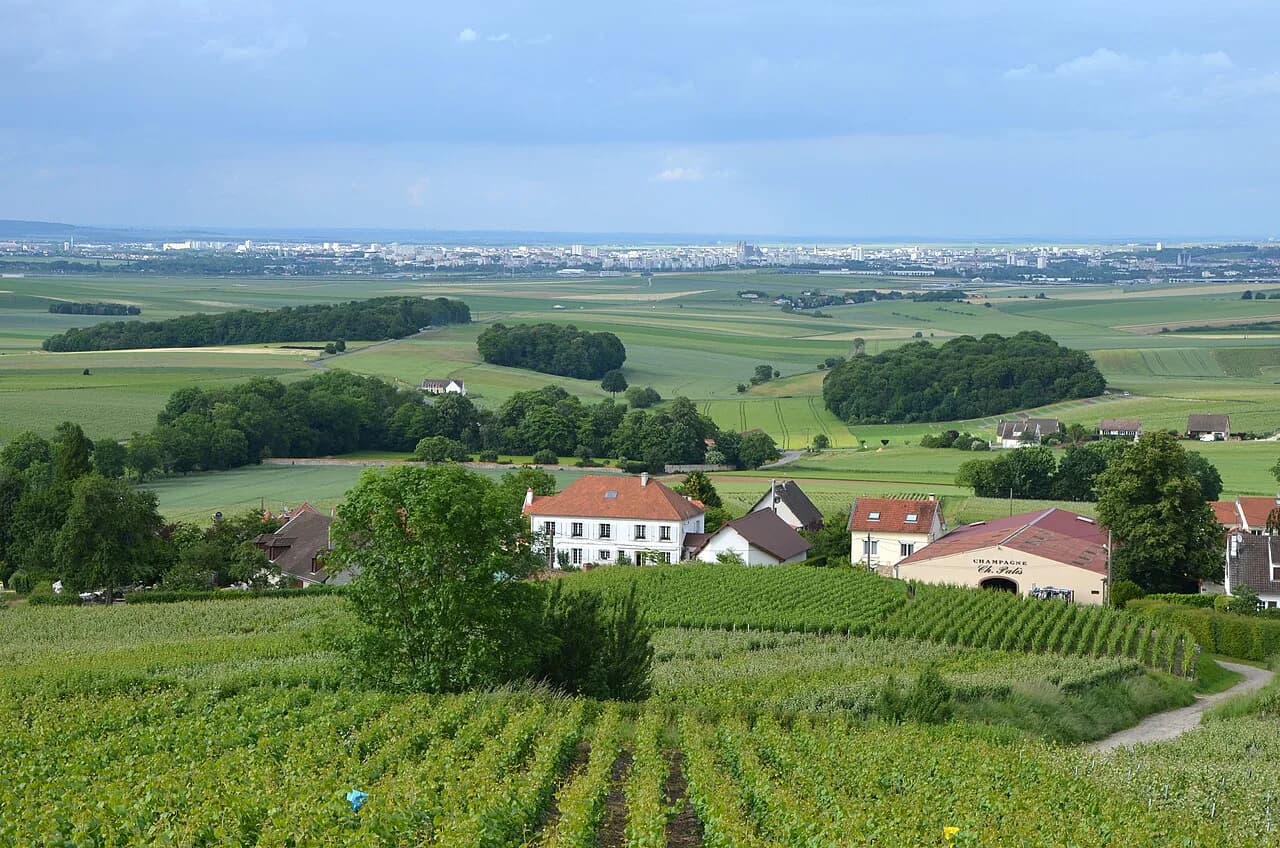
Pol Roger is located in Épernay, the main town of the Champagne region's Marne Valley and the address the house has held since the nineteenth century. Épernay lies south of Reims, and the two towns anchor opposite ends of the classic Champagne visitor circuit: Reims with its cathedral and its concentration of grand houses, Épernay with the Avenue de Champagne and its cellars. Treating them as a pair rather than rivals is the most efficient way to plan, and the same logic of pairing a base town with nearby cellars underpins wine tasting in Colmar.
Within Épernay, the geography is simple enough to walk. The Avenue de Champagne and the surrounding streets hold most of the well-known houses, and Pol Roger's cellars are part of that central cluster rather than out among the vineyards. That matters for scheduling: you can move between houses on foot and keep transport for the Reims–Épernay leg rather than negotiating rural taxis between villages.
The House in Brief: Founded in 1849, Still Family-Owned
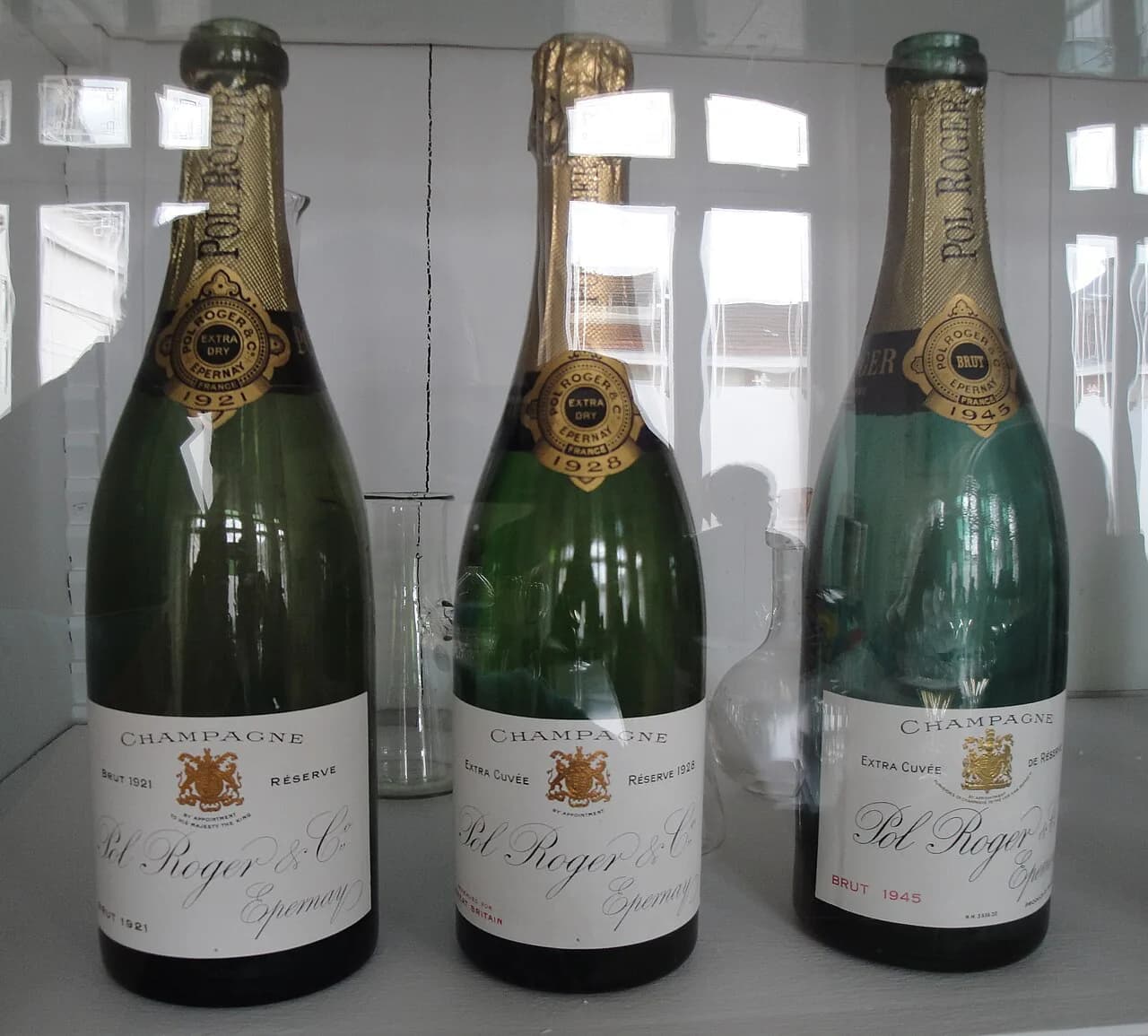
Pol Roger was founded in 1849 and remains family-owned, now managed by the fifth generation of the founding family, according to a profile of the house. That continuity is unusual among Champagne brands of its size and is the first thing to understand about how the house presents itself. It also explains why the range is relatively focused rather than sprawling.
The family owns roughly 92 hectares of vineyards, which gives it a substantial supply of its own fruit alongside purchased grapes. For a visitor, the useful takeaway is that Pol Roger is a mid-sized independent house with real vineyard holdings, not a négociant blending entirely from the open market. You can read the fuller background in this Pol Roger house profile before you decide how much time to allocate.
House Style in Practical Terms: Pinot Noir, Steel and Long Lees Aging
Pol Roger ferments its base wines in stainless steel, a choice aimed at preserving fresh, fruit-forward character rather than adding oak influence. The wines then rest in the house's deep, cool cellars for extended periods on their lees, which builds texture and produces fine, persistent bubbles. In practical terms, expect a house style built on freshness and length rather than barrel-derived weight.
The aging regime differs by wine. The non-vintage Brut Réserve spends about four years on the lees, while vintage and prestige cuvées typically rest seven to ten years before release. Those figures come from published house profiles rather than a label you will read in the cellar, but they explain why the entry wine and the top cuvée feel like different propositions and why the price gap is as wide as it is.
The Wines You Are Most Likely to Meet
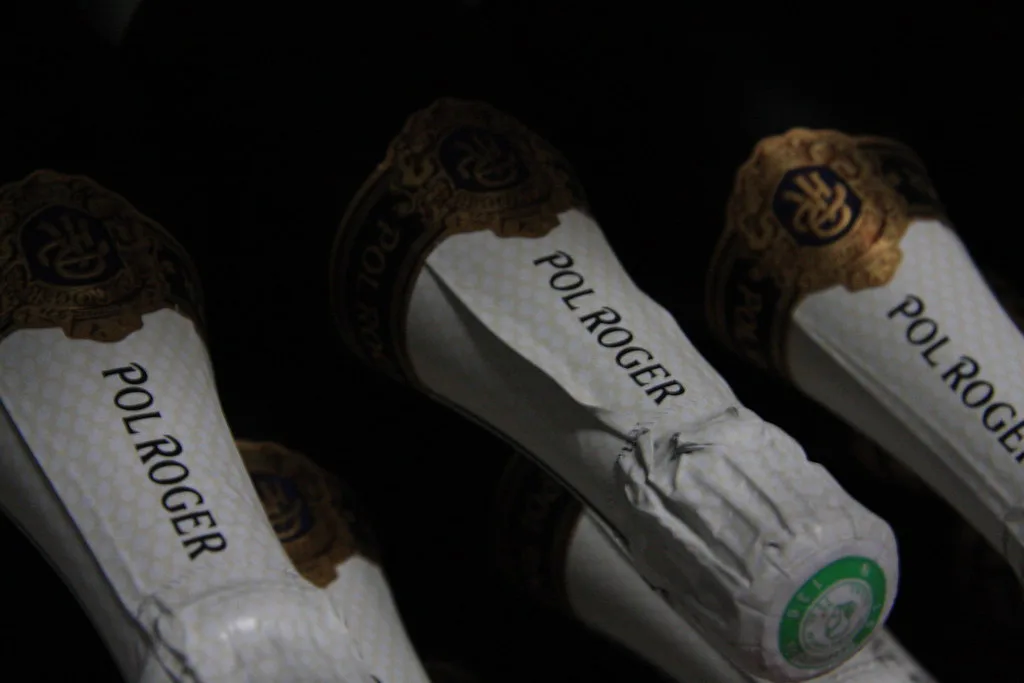
The core of the range is the Brut Réserve, a non-vintage blend that accounts for most bottles travelers will encounter in shops, restaurants and tasting rooms. Above it sit vintage wines, including a Blanc de Blancs and a Rosé, released only in years the house considers strong enough. At the top is the Cuvée Sir Winston Churchill, a prestige bottling made only in exceptional vintages.
That structure is worth knowing before booking anything, because tasting lineups usually follow it. A cellar visit may pour the Brut Réserve as a house introduction and reserve the older wines for a higher-tier tasting, and the prestige cuvée is often a separate pour or not included at all. Ask which wines are in the lineup when you book, and check current prices and dates with Pol Roger before you go.
Grape Varieties Behind the Brut Réserve
Pol Roger's standard Brut Réserve blends Pinot Noir, Pinot Meunier and Chardonnay in roughly equal proportions, a classic Champagne assembly. Pinot Noir brings structure and red-fruit weight, Pinot Meunier contributes approachability and earlier-drinking charm, and Chardonnay supplies lift and a fine, chalky edge. The roughly equal split is why the house describes the wine as balanced rather than leaning heavily toward one grape.
Knowing the blend helps you choose between houses on an Épernay day. If you want to understand how Pinot Noir behaves in Champagne, a house like Pol Roger with a substantial Pinot share is a useful benchmark; if you prefer Chardonnay-led wines, a Blanc de Blancs specialist will serve you better. Our overview of the Champagne Houses in Reims shows how the big houses there position their own blends for comparison.
Cuvée Sir Winston Churchill: A Prestige Bottle, Not an Everyday One
The Cuvée Sir Winston Churchill is a prestige cuvée made only in exceptional years, blending Pinot Noir and Chardonnay from grand cru vineyards in a fuller, more robust style. The association with Churchill is genuine house history and forms part of how the wine is marketed, though the details of that relationship are better read on the house's own materials than taken from secondhand retellings. What matters for planning is that this is a limited, expensive wine, not the bottle you will be poured by default.
Two practical consequences follow. First, if tasting the Churchill cuvée is the point of your visit, say so when you enquire, because availability depends on the vintage and the tasting tier. Second, expect the price to be well above the entry Brut if you buy a bottle to take home. US retail listings show just how wide that spread can be, and they are worth reading only as a rough guide to relative positioning.
How a Visit to an Épernay House Typically Works
Champagne houses, Pol Roger included, generally receive visitors by prior arrangement rather than as walk-in attractions. Visits usually combine a guided walk through the cellars with a seated tasting, and the format, length and number of wines poured vary from house to house and season to season. Booking ahead is the norm in Épernay, particularly in spring and autumn, and a group of any size should expect to reserve rather than turn up.
The specifics for Pol Roger are best taken from the house directly. Its own channels publish the current visiting arrangements, including whether tours run on your dates, which languages are offered and what each tasting includes. Send a short enquiry with your dates and party size before you build the rest of the day around it, and treat third-party listings as a prompt to check rather than a timetable.
Getting to Épernay from Reims Without Driving
The train is the simplest option. Regional services connect Reims and Épernay in well under an hour, and the journey puts you in the center of Épernay within walking distance of the main houses. Timetables vary by season and day of the week, so confirm the return departure you intend to take before you set out; the last train back to Reims is the constraint that shapes most day trips.
Buses and organized transfers exist as alternatives, and taxis are available but costly for a one-way run between the two towns. If you want to combine Épernay with village visits in the Marne Valley, a car or a tour becomes more attractive, because rural Champagne has thin public transport. For most travelers doing a single-town day, the train wins on cost and simplicity.
Independent Visit vs. Guided Day Tour from Reims
Going independently gives you control over pace and cost. You choose which houses to approach, how long to linger and whether to add a second visit in the afternoon, and you pay each house separately. The trade-off is administrative: you handle the bookings, the train times and the walking between stops, and a missed connection or a sold-out tasting leaves you improvising.
A guided day tour from Reims removes that friction. Transport, reservations and often a cellar visit or two are bundled, and a guide supplies the regional context that is hard to assemble on your own. You give up flexibility and usually pay more per head. Our guide to Champagne tours from Reims sets out how tour companies structure these days, which is useful if you would rather not manage the logistics yourself.
Pairing Pol Roger With Other Épernay Stops
Because Épernay's houses sit close together, a sensible day pairs one large, famous cellar with one smaller or contrasting visit. Pol Roger works well as the anchor: its central location makes it easy to reach on foot from the station, and a second house nearby fills the afternoon without additional transport. Two visits in a day is a realistic ceiling if you also want lunch and an unhurried train back.
If your trip is split between the two towns, consider doing your Reims tasting separately. The Reims houses are a short walk from the cathedral and the station, and our guide to Champagne Tasting in Reims covers the tasting rooms and bars that work around a city day. Keeping one day for Reims and one for Épernay avoids the mistake of trying to cram both into a single itinerary.
Booking Questions Worth Sending Before You Travel
A short, specific email gets a better answer than a general enquiry. Ask which languages the tour is given in, how long the visit lasts, how many wines are poured and whether the prestige cuvée is included or available as a supplement. If anyone in your party has mobility limitations, ask about stairs and cellar access at the same time, since historic cellars are rarely step-free.
It is also worth asking about group size and whether a minimum party applies, because small houses often set one for private tours. If you are traveling as a couple, ask whether you will join a shared group. And if you plan to buy bottles, ask whether the house ships or whether you will need to carry them, since that affects how you pack for the train back to Reims.
If Your Dates Don't Line Up: Buying and Tasting Pol Roger at Home
Pol Roger is widely distributed, so a canceled or unavailable visit does not mean missing the wines. US retailers list the Brut Réserve at a range of prices, and specialty shops carry the vintage and prestige bottlings alongside it. As a reference point, one US retailer listed the 750 ml Brut Réserve at about $69.99 at the time of writing, though retail prices move and vary by state and shop.
Use retail listings to understand relative positioning rather than as a proxy for cellar-door prices in France. A specialist wine merchant in the US will typically stock the Brut Réserve and can often order the Churchill cuvée, and a good Champagne bar may pour the house by the glass. If you want to taste before you commit to a bottle, that is the low-risk route.
Plan Your Épernay Day Around Pol Roger
Pol Roger fits neatly into a Reims-based Champagne trip: a family-owned house in central Épernay, reachable by a short train ride, with a range that runs from an everyday Brut Réserve to a prestige cuvée released only in selected years. Book ahead, ask which wines are in the lineup, and confirm the current visiting arrangements with the house before you finalize dates.
Plan transport before anything else. Pick your return train, group your Épernay stops on foot, and leave room for a second visit or a long lunch. If anyone in your party is driving, they should skip the tastings entirely and use spittoons, a designated driver, public transport or a guided tour instead, so the day stays enjoyable for everyone.
Frequently Asked Questions
Where is Pol Roger located?
Pol Roger is based in Épernay, in the Marne Valley section of the Champagne region, south of Reims. Its cellars are in the town center, within walking distance of the main cluster of Champagne houses and the Avenue de Champagne.
When was Pol Roger founded, and who owns it now?
The house was founded in 1849 and remains family-owned, managed by the fifth generation of the founding family. It also owns roughly 92 hectares of vineyards in Champagne.
Which grapes go into Pol Roger Brut Réserve?
The non-vintage Brut Réserve blends Pinot Noir, Pinot Meunier and Chardonnay in roughly equal proportions. The base wines are fermented in stainless steel and the wine rests on its lees for about four years before release.
Can you visit Pol Roger in Épernay?
Champagne houses in Épernay generally receive visitors by prior arrangement, and Pol Roger publishes its current visiting arrangements through its own channels. Send an enquiry with your dates and party size to confirm what is available while you are there.
How do you get to Pol Roger from Reims without a car?
Regional trains connect Reims and Épernay in under an hour, and the station is a short walk from the town center and the main Champagne houses. Confirm your return departure before you travel, since the last train back shapes the day.
What is the Cuvée Sir Winston Churchill?
It is Pol Roger's prestige cuvée, made only in exceptional vintages from Pinot Noir and Chardonnay grown in grand cru vineyards. It sits well above the Brut Réserve in price and is not the bottle poured by default on a standard visit.
Does the house ship bottles home?
Shipping arrangements vary by house and destination, so ask directly when you book or when you buy. Many travelers simply carry bottles back by train, which is easy given the short Reims–Épernay journey.
Sources
Notes for your next wine trip
Optional updates to our winery and wine-town guides.
You might also like
Continue reading
More guides you'll find useful