Fontanafredda Winery: Visiting Barolo's Serralunga Estate
Plan a visit to Fontanafredda in Serralunga d'Alba: its Barolo and Langhe wines, the Savoy-era village setting, and how to reach the Langhe from Turin.
On this page
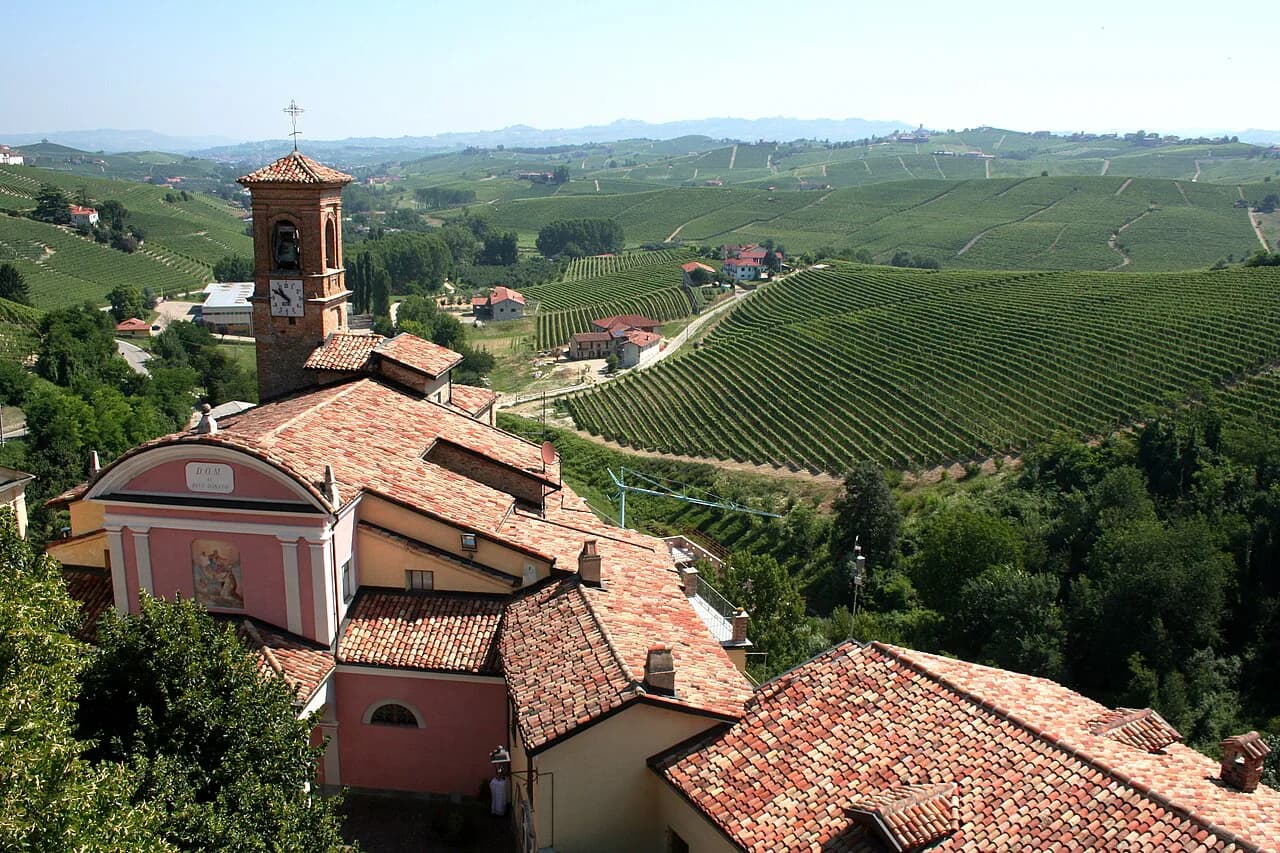
Fontanafredda sits in Serralunga d'Alba, on the eastern edge of the Barolo zone, and it is unusual among Langhe estates because the winery, the cellars and a whole hamlet of striped buildings belong to the same property. Its history reaches back to the House of Savoy, and its wine list covers far more than Nebbiolo. This guide sets out what the estate is known for, which wines to look for before a visit, and how to build a day around Serralunga rather than treating one winery as the entire trip.
What Fontanafredda Is
Fontanafredda was founded in 1858, when King Vittorio Emanuele II of the House of Savoy bought the estate; his son Emanuele Alberto, Count of Mirafiori, took it over two decades later and released one of the first bottles of Nebbiolo labeled Barolo in 1878. The village of Fontanafredda grew up around the winery, and the Count had its buildings painted in the brown and ochre stripes of the Savoy house, a look that still defines the site. That combination of royal origin and working village is what separates the estate from a standard cellar door.
The estate's record of firsts continues into the modern era: it produced a single-vineyard Barolo, Vigna La Rosa, in 1964 and released the first commune-designated Barolo, the Barolo del Comune di Serralunga d'Alba, in 1988. Today the property runs to roughly 120 hectares across Serralunga d'Alba, Barolo, Diano d'Alba, Dogliani, Farigliano, Alba and Rodello, and it is described as the largest certified organic winery in Piedmont since the 2018 harvest. Wine tourism here is therefore attached to a serious production estate rather than a showpiece facility.
Where Serralunga Sits in the Barolo Zone
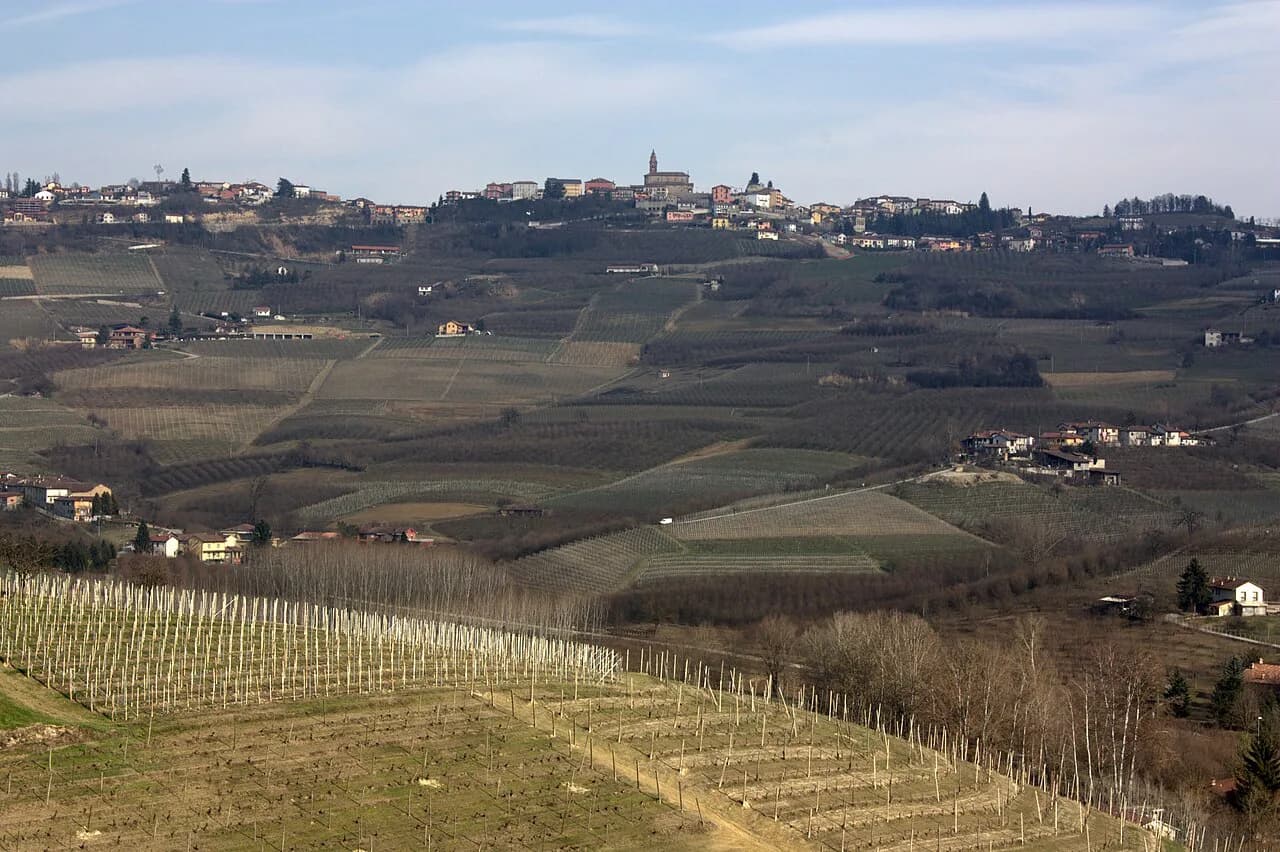
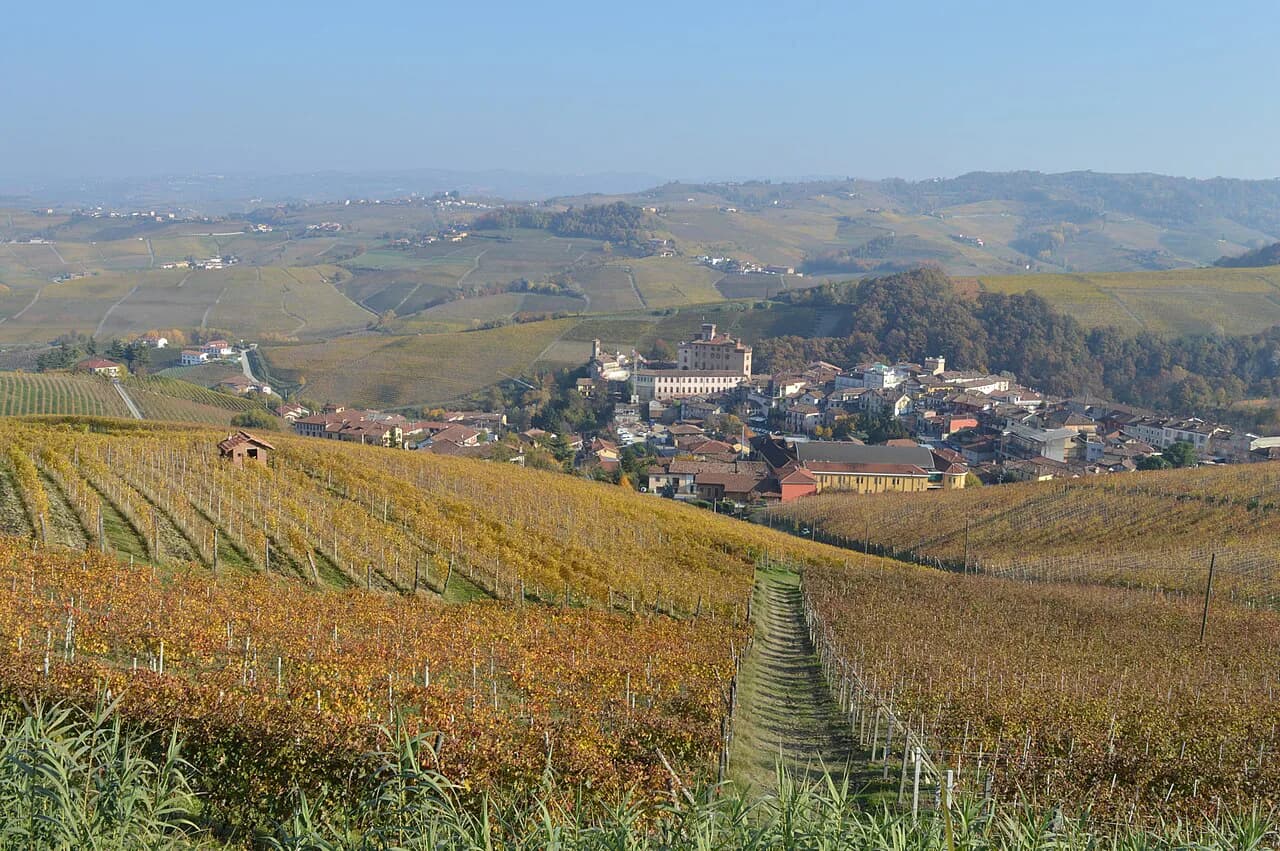
Serralunga d'Alba is one of the eleven comuni of Barolo DOCG and lies at the zone's eastern side, with the castle of Serralunga visible on its ridge. Its soils are the sandy, limestone-rich type that tends to give Nebbiolo more structure and color, which is why Serralunga fruit commonly ends up in firmer, slower-opening wines. Knowing this helps you decide how to sequence a day: start with a structured Serralunga estate and save softer, more approachable wines for later.
For a single day out of Turin or Alba, group Serralunga with the nearby villages rather than crossing the whole zone: Barolo and La Morra sit to the west, while Monforte d'Alba lies south of Serralunga. Several of the region's larger producers in these villages also receive visitors, and comparing one estate against another shows how much site matters in Nebbiolo. The Barolo wineries guide sets out which estates in these villages welcome guests and how they are laid out.
The Wines to Know Before You Go
Nebbiolo is the headline grape, and Fontanafredda makes it at several levels: the Barolo del Comune di Serralunga d'Alba, a Barolo Riserva, a Barbaresco under the Coste Rubìn label, and a Langhe Nebbiolo called Ebbio. There is also a Barolo Chinato, a fortified aromatic wine made from Nebbiolo. If you want to understand what the estate does best, plan to compare one of these structured reds with a younger Langhe bottling, and if Valpolicella's reds intrigue you too, the Verona wine guide covers another region's benchmark pours.
Beyond Nebbiolo, the range is broader than many visitors expect. Barbera and Dolcetto appear under the Briccotondo label, Arneis shows up as a Langhe white, and the estate also bottles Moscato d'Asti, a Gavi from Cortese, a Timorasso from the Colli Tortonesi, and a rosé from the Alta Langhe. For travelers who prefer lighter or white wines, these are the bottles to look for on a list. A broader survey of the area's tasting options sits in the guide to wine tasting in turin.
Barolo and Barbaresco are both made entirely from Nebbiolo, and the difference between them is place rather than grape: Barbaresco comes from a smaller zone west of Alba and generally reaches drinkability sooner, while Barolo from Serralunga tends to reward patience. Arneis is Piedmont's best-known white grape, and Moscato d'Asti is a low-alcohol sparkling wine from the Asti hills. Those four categories cover most of what you will meet in a Langhe tasting room.
Planning the Visit: Appointments and What to Ask
Langhe estates generally work on reservations rather than drop-in visits, and Fontanafredda's own site is the place to start for what it currently offers visitors, whether cellar tours, tastings or stays at the property. When you write to book, ask three things in the first message: the languages the tour runs in, whether the tasting includes a walk through the cellars, and how many wines are poured. Those answers tell you more than a generic price line.
Booking well ahead matters most around harvest and on weekends, when small estates fill their slots first. Ask about the size of the group and whether a tasting can be arranged for your party alone or is shared with other visitors, because that changes the pace and the questions you can ask. Travelers' reviews of the estate are collected on Tripadvisor and give a sense of how visits are typically structured, though they are not official information.
Because Fontanafredda combines a historic village, a working winery and a large vineyard holding, allow more time than for a simple tasting room stop. Ask when booking whether you can walk the hamlet and the vineyards on your own before or after the guided part, and whether the visit ends in a shop. A clear plan for the two hours around the appointment keeps the rest of the day flexible.
The Estate and the Village
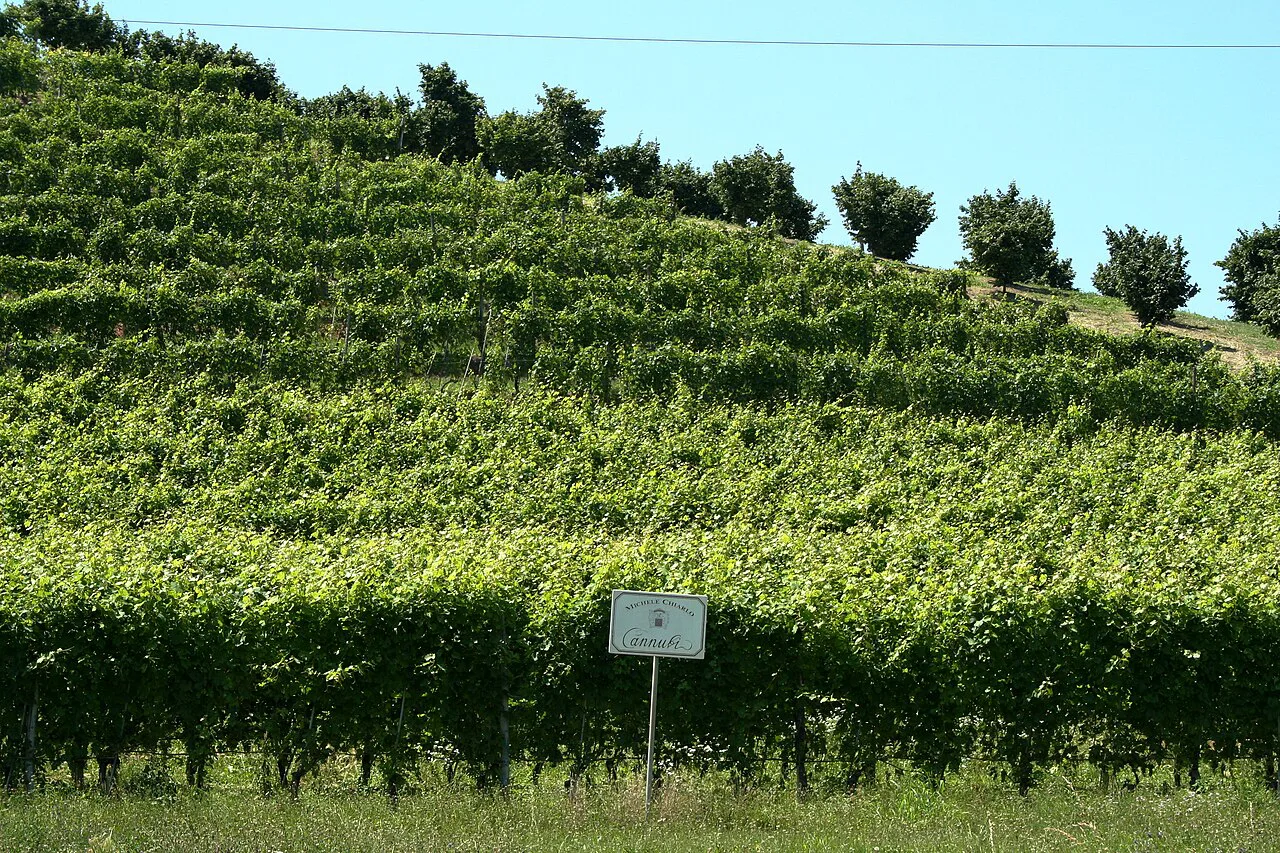
Fontanafredda is often described as a village as much as a winery: the buildings, the courtyards and the cellars sit together in Serralunga d'Alba, and the painted facades are part of the estate's identity. The property also keeps around twelve hectares of woodland, which supports the biodiversity behind its organic farming. That setting matters to a visit because you are walking through a place built around wine production, not a modern visitor center bolted onto it.
The wider holding is split across several villages and planted at altitudes of roughly 250 to 420 meters, with vines dating from 1940 to 1999 and varieties including Barbera, Dolcetto, Nascetta, Pinot Noir, Chardonnay and Moscato as well as Nebbiolo. That range explains why the tasting list reads like a small Langhe portfolio rather than a single-grape story. If you only have one appointment, use it to taste across those categories.
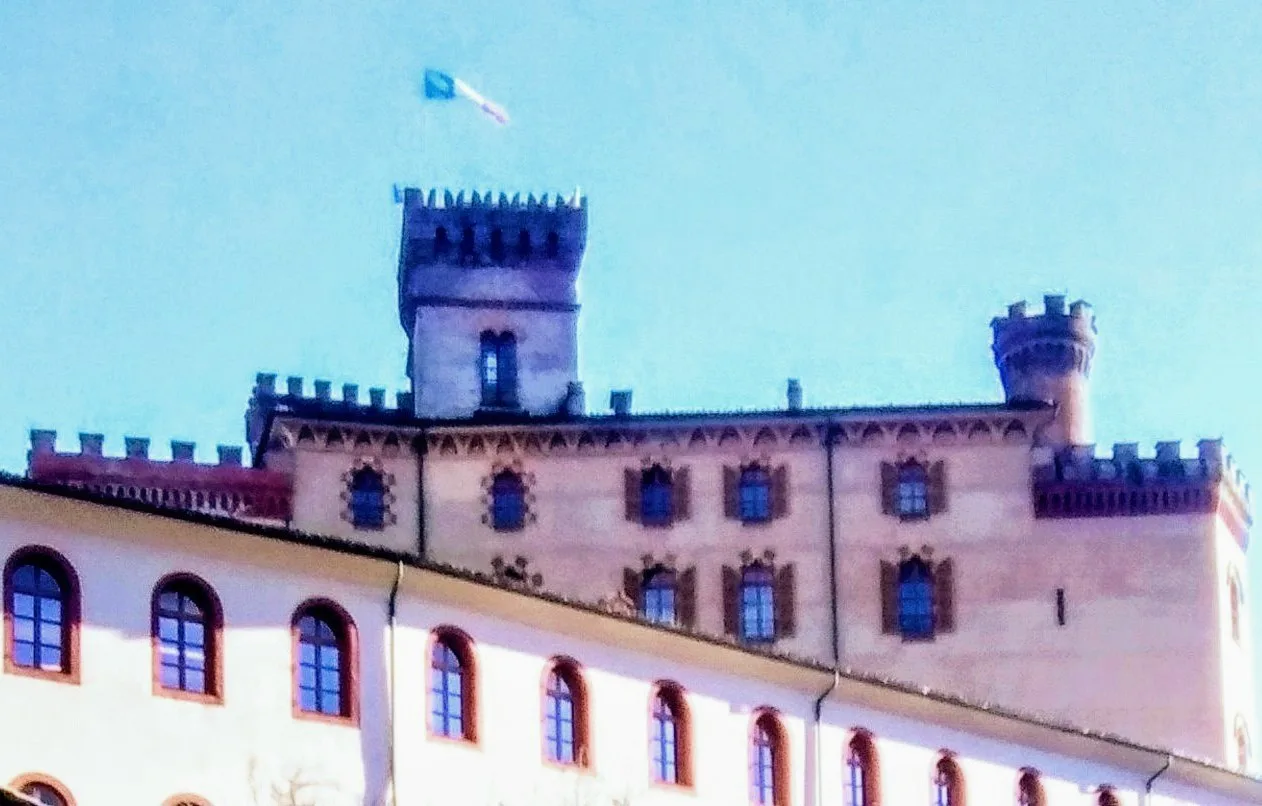
Serralunga's own village center is a short walk uphill from the estate, with the castle and a handful of places to eat. It is worth leaving time for the walk before or after a visit, since the position of the village on its ridge makes the shape of the Barolo zone easier to read than any map. Estates elsewhere in the zone, such as those listed in the Turin wineries guide, can fill a second slot the same day.
Getting There from Turin
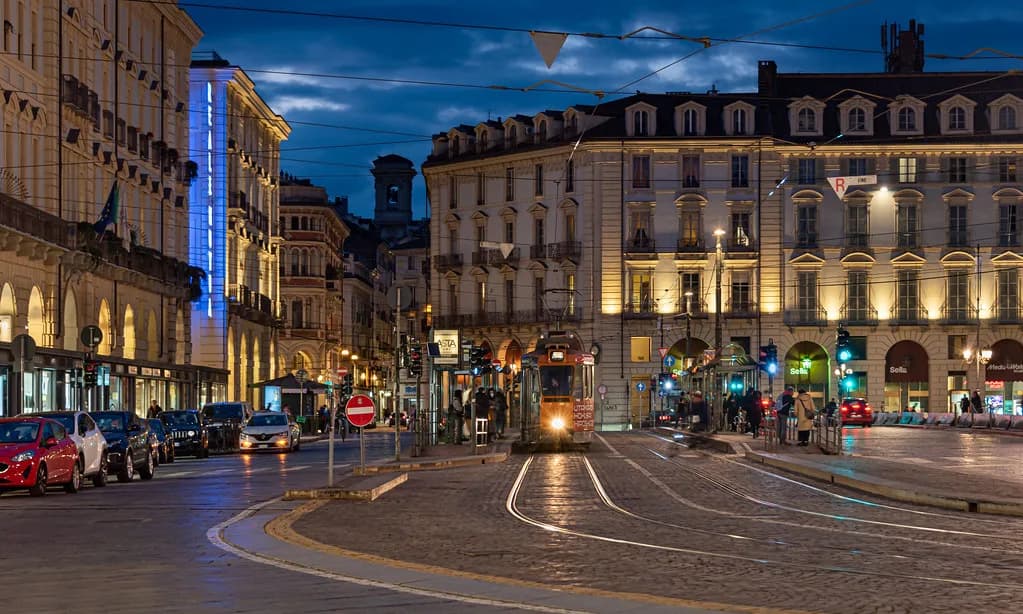
Turin is the practical base for this corner of the Langhe: trains run from Turin to Alba, and from Alba you need road transport for the last stretch to Serralunga d'Alba, either a taxi or a pre-arranged transfer. Buses serve some Langhe villages but are thin on weekends and slow between hamlets, so build the schedule around a fixed return instead of planning to hop between estates on the day. Check the current rail timetable before fixing an appointment time.
A guided wine tour from turin removes the transport problem entirely: you are driven between estates, someone else handles the tastings, and you can sample the full range without worrying about the drive back. The trade-off is cost and structure, since tours follow a set route and rarely allow long detours. The Wine Tours from Turin page sets out the options and how they compare with going independently.
If you drive yourself, remember that the driver should not taste: use the spittoons, agree on a designated driver, or book a tour or public transport instead. The roads between Serralunga, Barolo and Monforte are narrow and winding, and parking in the villages is limited. Travelers staying in Alba have the shortest onward trip, while Turin works best if you plan a full day rather than an afternoon.
Building a Langhe Day Around Fontanafredda
A sensible shape for the day is one appointment at Fontanafredda in the morning, a slow lunch in Serralunga or Barolo, and a second, smaller tasting in the afternoon. Keep the second estate close by, in Serralunga, Barolo or Monforte d'Alba, so you are not spending the day in the car. Two visits is usually the right number; three leaves no time to look at the landscape that explains the wines.
If your interests run to architecture and art as well as wine, the Ceretto estate near Alba is known for combining a winery visit with contemporary art, and its Monsordo Bernardina site is a different kind of stop from a historic cellar. Mixing one traditional estate with one design-led producer gives a fuller picture of how the Langhe has changed. Read Visiting Ceretto Winery from Turin for the practical details.
For the rest of the zone, La Morra is the village to add if you want panoramic views and a cluster of estates within walking distance of each other. It sits northwest of Serralunga and is easy to reach by road from Barolo. Pairing Serralunga with La Morra covers two very different expressions of Nebbiolo in a single loop.
Practical Notes for the Day
Harvest in the Langhe generally falls in September and early October, when Nebbiolo is picked, and that is the busiest and most atmospheric period to visit. Vineyard work continues through October, so some estates restrict visits then; ask when booking whether the date you want falls in a working period. Late spring and early summer are quieter and the weather suits walking between villages.
Lunch in the Langhe tends to be a long, set-menu affair, so book a table rather than hoping to walk in, especially in small villages like Serralunga. Many trattorias close one or two days a week, and the exact days vary by business, so ask your accommodation or the restaurant directly. Building the day around a proper lunch is more realistic than squeezing in three tastings.
Signage to individual estates is inconsistent, and addresses often refer to a hamlet rather than a street number. Note the frazione name and the nearest village when you plan the route, and give a driver the winery name rather than only the town. That small step prevents the most common lost hour in the Langhe.
Plan Your Visit
Fontanafredda rewards travelers who treat it as a place with a history rather than a box to tick: a Savoy-founded village, a large organic estate and a wine range that runs from Barolo to Arneis and Moscato d'Asti. Book through the estate's own site, ask about languages, group size and wines poured, and leave time for the village of Serralunga itself.
From Turin, decide early whether you will drive, take the train to Alba and arrange a taxi, or join a tour, because that choice fixes your appointment times. Whichever you pick, keep the driver sober and the day to two estates so the landscape has room to explain itself.
Frequently Asked Questions
Is Fontanafredda a good wine?
It is one of the historic Barolo producers, founded in 1858 and responsible for early bottlings labeled Barolo as well as the first commune-designated Barolo in 1988. Whether you like the style is a personal matter, but the estate's place in the zone's history is well documented. Tasting a Serralunga Barolo alongside one from another village is the most useful comparison.
What type of wine is Fontanafredda known for?
Nebbiolo in several forms: Barolo del Comune di Serralunga d'Alba, a Barolo Riserva, Barbaresco and a Langhe Nebbiolo, plus a Barolo Chinato. The estate also makes Barbera, Dolcetto, Arneis, Moscato d'Asti, Gavi and Timorasso, so a tasting covers both structured reds and lighter wines.
Do you need an appointment to visit Fontanafredda?
Langhe estates generally work by reservation, so plan to book ahead through the winery rather than arriving without notice. Ask in your first message about tour languages, group size, what the tasting includes and how long the visit lasts, since those details are confirmed case by case.
How do you get to Serralunga d'Alba without a car?
Take the train from Turin to Alba, then arrange a taxi or transfer for the final stretch to Serralunga d'Alba. Local buses exist but run thinly between hamlets, so a fixed return time matters. A guided tour is the simplest option if you want to taste without driving.
What other Barolo villages should you visit near Serralunga d'Alba?
Barolo, La Morra and Monforte d'Alba are the natural companions, all within a short drive of Serralunga. Barolo and La Morra suit a second estate and a walk, while Monforte works well for a slower afternoon. Two estates in a day is a realistic pace.
When is harvest in the Langhe?
Nebbiolo is generally picked in September and early October, making that the busiest window for visits. Some estates limit access during vineyard work, so ask about your dates when booking. Late spring and early summer are quieter and better for walking between villages.
Sources
Notes for your next wine trip
Optional updates to our winery and wine-town guides.
You might also like
Continue reading
More guides you'll find useful