Hautvillers Guide: Tastings, Dom Pérignon Abbey & Reims Tips
Plan a Hautvillers Champagne day: Dom Pérignon's abbey church and tomb, village grower tastings, the ten-minute run from Épernay, and village walks.
On this page
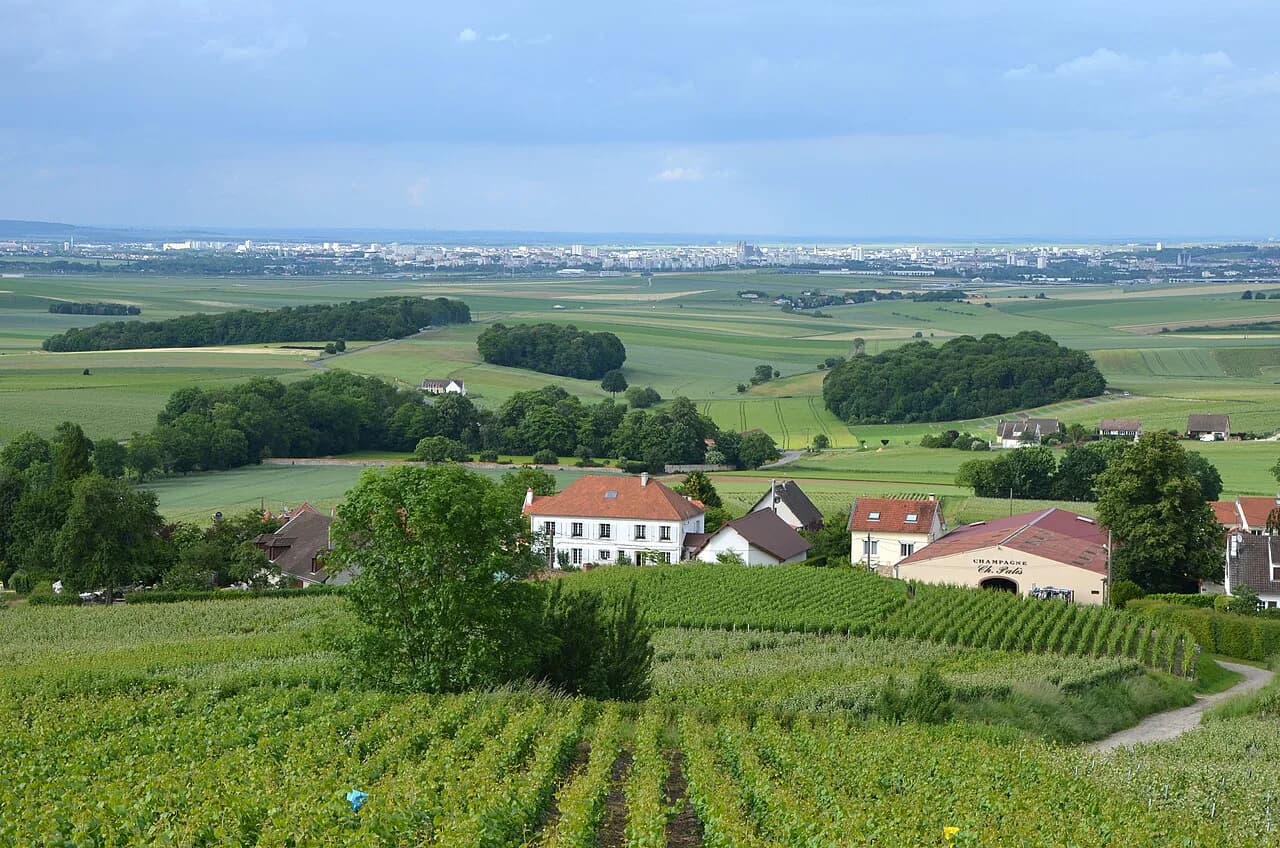
Hautvillers sits on the hillside above the Marne Valley about five kilometres north of Épernay, close enough for a short detour but far enough to feel like a village rather than a wine venue. Its fame rests on one monk and one abbey, yet its real appeal is simpler: steep vineyards, a compact old centre you cross on foot in minutes, and small Champagne growers who sell their own bottles. This guide treats it as a village stop rather than a single house visit, because that is how the day works best.
The practical logic matters more here than in Reims or Épernay, where you buy a ticket, follow a corridor and join a group. In Hautvillers you arrive, park below the village, walk up, and piece the day together from the church, the viewpoints, a cellar or courtyard tasting and lunch. Everything below shows what the published sources confirm, groups the stops sensibly from either base town, and points out the questions a grower will want you to ask before you turn up.
Why Hautvillers Matters in a Champagne Itinerary
Hautvillers is a commune in the Marne department overlooking the Marne Valley, with the vineyard slopes of the Montagne de Reims behind it. The wine tourism office for Épernay positions it as a heritage village first and a tasting destination second, which is the right order for planning: the abbey church, the narrow streets and the panorama are the core of the visit, and the tastings come around them.
Reims is the natural base for grand champagne houses and cellar tours, and a Hautvillers day slots neatly into that kind of trip as the rustic counterweight. If you are already mapping wine tasting around the region, treat the big-house visits as one day and this village as another rather than cramming both into a single afternoon. The village walks are short but the hillside is steep, and a rushed stop wastes the reason to come.
Because the village is compact, roughly half a day is enough for the church, a stroll to the Dom Pérignon viewpoint and one tasting. Adding lunch, a second grower or a longer vineyard path easily fills a full day, particularly if you are cycling up from Épernay. Plan the tasting before the walk or after lunch; walking the vineyard paths directly after a flight of champagne in the sun is the least rewarding order.
Getting There: The Ten-Minute Run from Épernay
The tourism office describes Hautvillers as a ten-minute drive from Épernay, or a slightly longer ride by bicycle, with a car park for visitors near the abbey. A second account of the village adds that the car park at the entrance to the village is free, and that a short climb on foot brings you to the centre, where the tourist office sits on one side and Le Café d'Hautvillers on the other. That climb is the key logistical detail: you park below and walk up, so luggage, cases and footwear all matter.
From Reims, Hautvillers sits beyond Épernay in the same direction as the Marne Valley villages, so it pairs well with a day that also takes in Épernay's Avenue de Champagne. The tourism office notes that Reims, Châlons-en-Champagne and Lac du Der are each reachable in under an hour from the village, which makes it a viable half-day from any of those bases. Public transport to the village itself is thin, and neither source publishes a bus line or timetable, so check current options with the Épernay tourist office before relying on one.
Cycling from Épernay is the most satisfying non-driving option: the distance is modest and the reward is the approach through the vineyards and the valley view as the road climbs. The trade-off is the hill into the village and the fact that a bike and a tasting do not mix well unless someone in your group stays off the wine. The tourism office routes three Champagne Tourist Routes out of Épernay and through Hautvillers, and its local cycling itineraries are the place to pick a route that matches your fitness and time.
Taxis from Épernay are the fallback for anyone who wants to taste without driving, and pre-booking the return leg is the only reliable way to guarantee it, since no fare or service detail is published. Group tours that collect from Reims or Épernay and stop at Hautvillers exist and remove the logistics entirely, at the cost of a fixed schedule. A driver in the party should not taste at all; spittoons, a designated driver, a tour or public transport are the choices, and growers expect spitting to be normal rather than rude.
Hautvillers Wines in Brief
Hautvillers makes Champagne, and the wines here are village-level or premier cru bottlings from the surrounding slopes, nearly always blended from the classic trio of Chardonnay, Pinot Noir and Meunier. What distinguishes the village in practice is the grower model: families farming their own plots and selling bottles under their own name, rather than the large houses whose cellars sit in Reims and Épernay. That shapes the visit, because you are tasting one estate's range rather than comparing a house's whole catalogue.
The tourism office presents the village's Champagnes as a wine of place, with some growers farming organically or biodynamically, and describes tastings that happen in a quiet courtyard, a vaulted room or on a terrace over the vines. Which cuvées are open on any given day depends entirely on the estate and the season, so ask about the range and the style you prefer when you book rather than expecting a fixed flight. If your trip is built around the larger houses and their long cellar tours, the Montagne de Reims side of your planning belongs there, and a day in Hautvillers complements it.
For a broader picture of the region's appellations and how villages differ, the vineyard slopes around the Montagne de Reims are worth understanding before you choose where to spend your tasting budget. Reims and Épernay both deliver the polished, bookable house experience, while Hautvillers delivers the introduction to the person who made the wine. Budget your days accordingly: one for spectacle, one for the village.
The Abbey Church and Dom Pérignon's Tomb
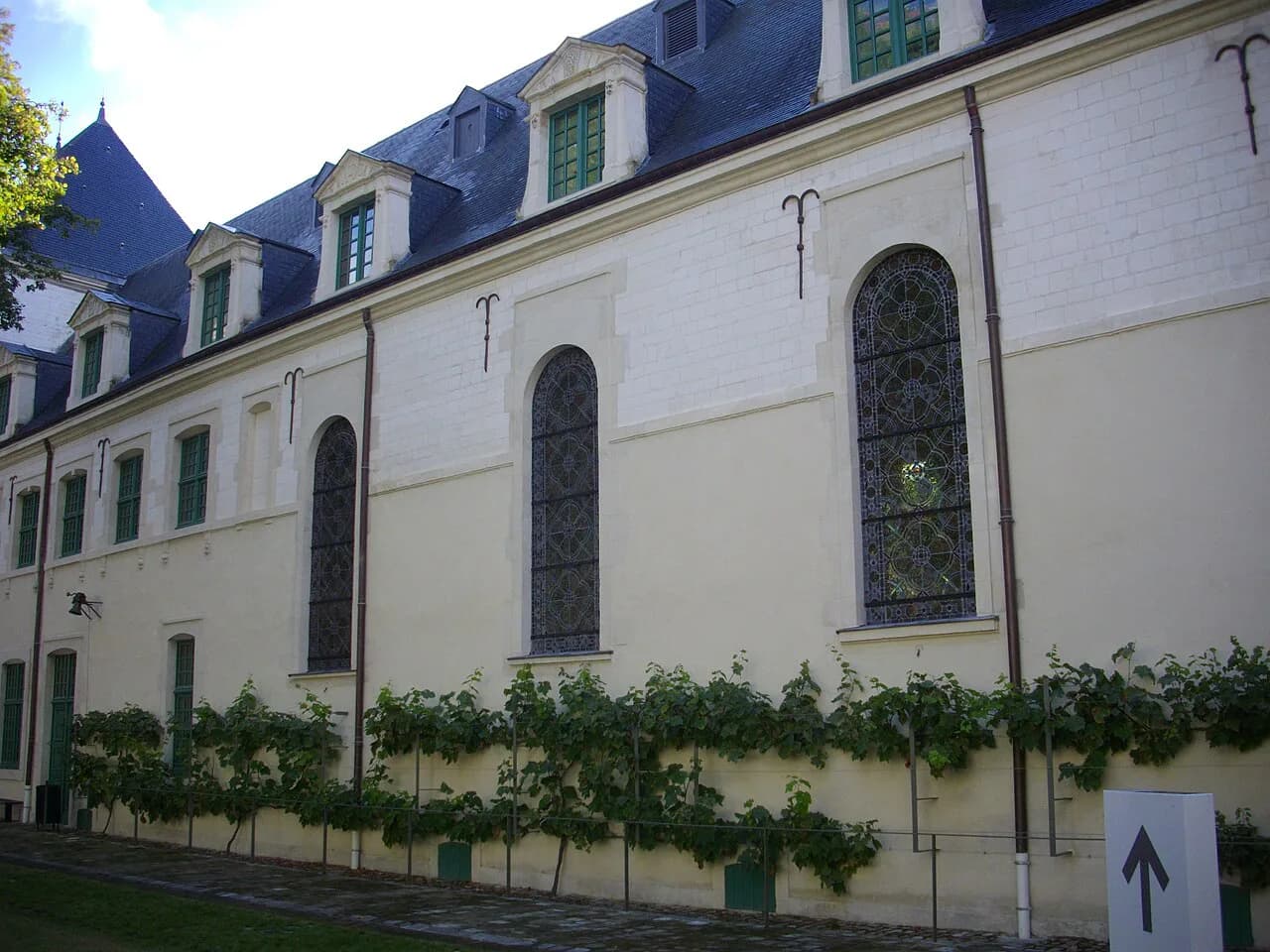
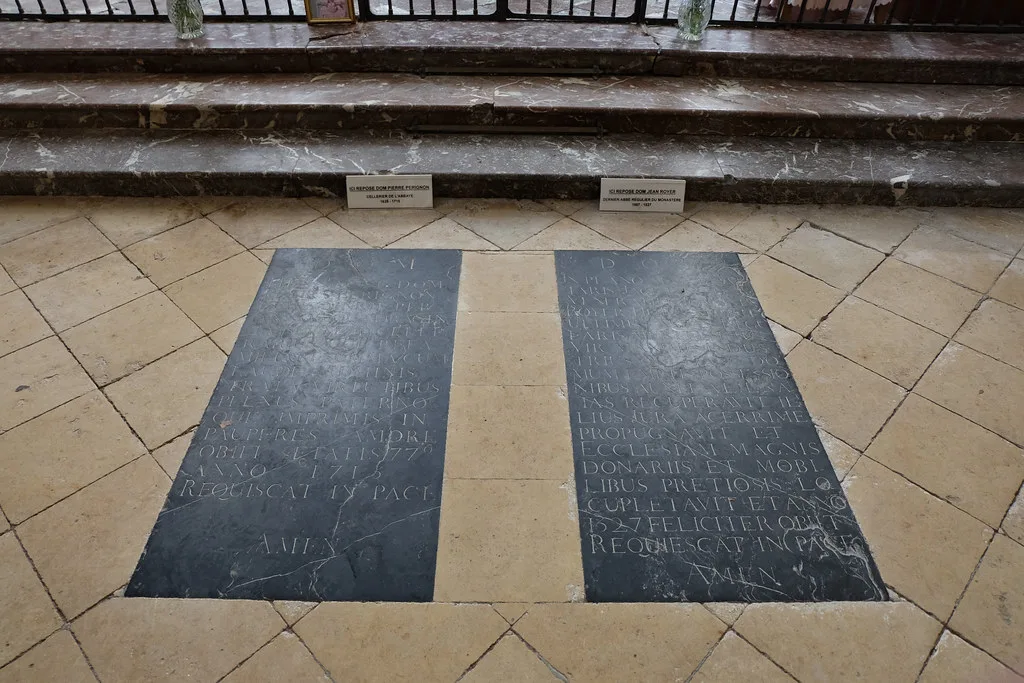
Dom Pierre Pérignon arrived at the Benedictine abbey of Hautvillers in 1668 and served as its cellar master until his death in 1715, and the village's identity still hangs on that tenure. The abbey church, Église Saint-Sindulphe, is where he is buried, and visitors can go in and see the tomb; the abbey buildings themselves are private property and not open to visitors. This is the single most useful distinction for planning: the church is the visitable part of the complex.
It is worth separating the man from the brand before you arrive. Popular history credits Dom Pérignon with discovering the second fermentation in bottle, but that process was recorded before his time; his contribution was a series of innovations in how Champagne was made and blended. The name Dom Pérignon today belongs to a prestige cuvée of Moët & Chandon, first registered by Eugène Mercier and launched as a vintage wine in the 1920s and 1930s. What you visit in Hautvillers is the church and the memory of the monk, not a house of that name.
The tourism office treats the church and its simple stone slab as the heritage centre of the village, with guided tours adding context that the building alone does not give. Parking is straightforward next to the church, and the abbey remains private; anyone expecting to wander cloisters should recalibrate. A guided walk of the village, run by the tourist office, is the efficient way to hear the abbey story, the monastic alley and the iron signs in one continuous hour or two.
Hautvillers is pronounced roughly oh-vee-yay, which is enough to be understood at a station or a tasting counter. The village's fame means it appears on heritage itineraries across the region, and a short guided walk is a reasonable investment if you want the history rather than just the photograph of the statue.
Tourist Office Tours, Viewpoints and Walking Routes
The tourist office in the centre of the village runs a range of public and private guided tours, and a village walk typically takes in the abbey church, the Dom Pérignon statue and the passage the monks used on their way to prayer. Booking through the office makes sense if you want the story assembled for you, and its reception point also supplies a map of the wrought-iron signs that hang above the streets. Those signs, installed from the 1960s and about forty in number, depict trades and identities rather than shops, so they reward looking up between tastings.
The Dom Pérignon viewpoint, or belvédère, sits above the village in a small park and looks across the valley and vineyards toward Épernay; it is a popular picnic spot and an easy add-on to the village loop. A short panoramic walk around the village and the abbey grounds reaches it without any serious climbing, which makes it the right choice for a mixed-ability group. Further out, the cliffs at Cumières offer a wider panorama for anyone with a car or a bike and an extra hour.
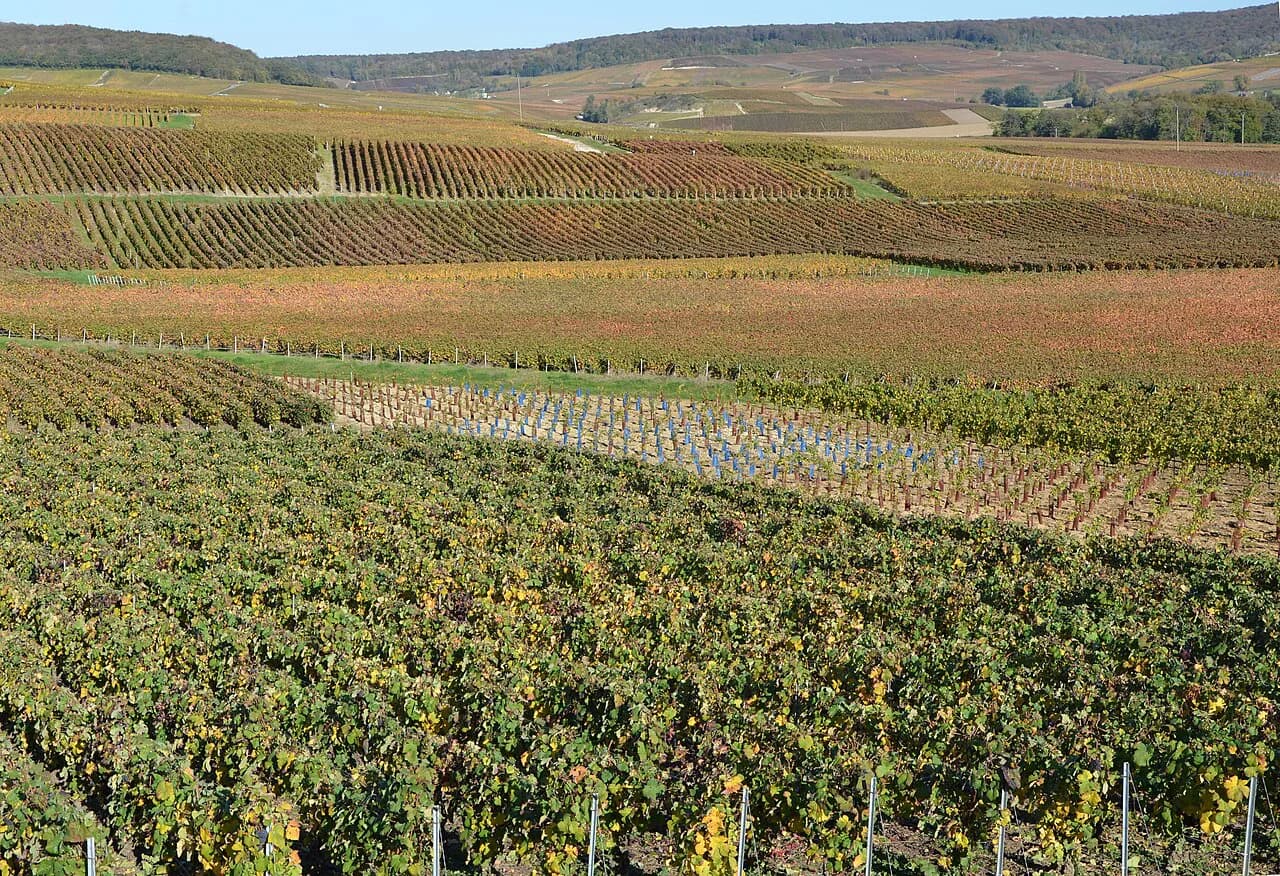
For something longer, waymarked circuits climb from the village into the woods and along the ridges above the Marne, with the tourism office listing low-carbon routes, vineyard lodges and sunken paths among the options. These are real walks rather than strolls, so proper shoes and a check of the weather belong in the plan. The vineyard paths are also the reason to visit outside high summer: the colours change through the season and the light on the slopes is what most visitors remember.
Harvest, generally in the warmer weeks of late summer into early autumn, is when the village is busiest with growers' work and when some cellars are least available. If you specifically want to see the vineyards at their most active, ask about harvest-period visits when you book and expect a shorter, more functional tasting. Otherwise spring and autumn give you the walking and the tasting without the heat.
Tasting in Hautvillers: Growers, Appointments and Walk-ins
Hautvillers has no shortage of family producers, but they do not operate like the big houses. Some open their cellars by appointment only, others welcome visitors without formalities, and the setting ranges from a courtyard to a terrace above the vines. The tourism office describes the experience as convivial and conversational rather than a standardised circuit, which is a fair signal: come ready to talk about what you like and to ask what is open that day.
The practical approach is to shortlist two growers and email or phone ahead with your dates, party size and preferred time, then treat the second as a backup. Ask three questions: whether the visit includes a cellar tour or is a seated tasting, how many Champagnes are poured, and whether there is a charge that is refunded against purchases. None of those details is published consistently, so the answers you get back are the real confirmation. A village walk fits neatly between two appointments, which is why the geography works.
This is also where Hautvillers differs most sharply from the Champagne houses in Reims, where you book a timed tour and a fixed experience weeks ahead. If you want the polished cellars and the grand marque names, that day belongs in Champagne Houses in Reims rather than in this village. Doing both, on separate days, gives you the contrast that makes Champagne legible: the brand story and the grower story.
If a structured tasting matters more than a specific producer, the village does have a low-commitment option in the form of a wine bar serving flights from several producers alongside small regional dishes. That format is useful for a group with mixed interest, or for a first stop before you commit to an appointment. For a deeper comparison of formats and bookings across the city, Champagne Tasting in Reims covers the house-side options in detail.
Producers and Tasting Rooms That Receive Visitors
Two village growers are named in published accounts as welcoming tasters: Champagne Pierre Fedyk and Champagne G. Tribaut, both in Hautvillers and both family operations rather than large houses. Neither has published opening hours, prices or a fixed tasting menu in the available sources, so the responsible step is to contact them directly with your dates and party size. Their cellars are in the village itself, which means a single parking stop can cover both.
Au 36, in the village, combines small regional dishes with tasting flights drawn from different producers, which makes it the most flexible stop if you have not booked ahead. It suits a couple who want to compare styles without committing to a full visit, and it suits a group where not everyone wants a cellar tour. For anyone assembling a broader list of houses that take visitors, Champagne Houses in Reims sets out the city-side options for comparison.
The grower model rewards a little preparation. Village-level and premier cru Champagnes from small estates vary by plot and by base year, and a producer will usually steer a tasting toward the wines they are proudest of if you tell them what you normally drink. Say whether you lean toward Chardonnay-led freshness or Pinot Noir weight, and whether you want to see the entry wine or the top cuvée. None of this requires expertise, only a sentence of honesty.
For a sense of where the village sits among the region's appellations and how its slopes compare with the grand cru villages nearby, it helps to read around the Montagne de Reims before choosing which producers to approach. If you would rather explore the same decision in Burgundy, wine tasting in Dijon offers cellars and estates to set against Champagne's village model. It also helps to know that the village is small: two tastings plus a walk is a full day, and adding a third rarely improves it.
Pairing Hautvillers with Épernay, Mutigny and the Tourist Routes
The most natural full day pairs Hautvillers with Épernay: start on the Avenue de Champagne while the big houses are fresh, drive or cycle up to the village for the church and a grower tasting, then return to Épernay for dinner. The tourism office notes that its three Champagne Tourist Routes start in Épernay and pass through Hautvillers, linking villages, vineyards and UNESCO-listed sites, so the driving is built around the wine rather than the other way round.
If you prefer a guided day that handles transport and appointments, Champagne Tours from Reims covers operators who build itineraries around the region's villages and houses. The trade-off is control: a tour decides which growers you meet and how long you stay, while independent travel lets you linger at the belvédère or add a second tasting on impulse. Pick based on whether your group wants to taste seriously or simply see the region.
Mutigny, on the wooded southern slopes of the Montagne de Reims between Épernay and Aÿ, is another village worth folding into the same loop, with vineyard trails and a hilltop position above the valley. The Loisium Wine & Spa Hotel Champagne there is a well-known base for exploring the region, and staying in the villages rather than the city changes the rhythm of a Champagne trip considerably.
Lunch in Hautvillers
Le Café d'Hautvillers sits at the centre of the village facing the tourist office, which makes it the default lunch stop for anyone arriving on foot from the car park. Its central position and traditional dishes make it convenient rather than destination dining, and that is fine for a tasting day. Other options in the village include Le Beau Lieu bistrot and Clotaire, plus Au 36 for small regional plates in tapas style.
None of these places publishes hours or menus in the available sources, so a lunch booking is worth making in advance, particularly at weekends and in harvest season when the village fills up. Eating before a second tasting is sensible anyway: Champagne on an empty stomach is a poor pairing with a steep walk back to the car. If you are staying locally, note that dining options thin out quickly in the surrounding villages in the evening.
The picnic alternative works well if the weather holds: the belvédère above the village is a popular spot for it, and the walk there from the centre is short. Buy provisions in Épernay before you drive up, since the village shops are limited. This is also the most economical way to structure a day around two grower appointments with a long gap between them.
Practical Planning: Time, Shoes, Season and Confirmations
Allow at least half a day for Hautvillers, and a full day if you are adding lunch, a guided walk and two tastings. Wear shoes that handle cobbles and a steep climb from the car park, and carry water in summer, since the village is exposed on the upper streets. The tourist office describes the village as best explored on foot, which is accurate: the streets are narrow, the distances short and the car is only useful for getting there.
The harvest period reshapes the village: growers are working, some cellars close to visitors and the roads carry more traffic. Ask about harvest timing when you fix your dates, and expect shorter, more practical tastings if you visit then. Outside that window, spring and autumn are the most comfortable for walking the vineyard paths, and winter is quiet enough that an appointment is essential rather than advisable.
Send one confirmation message to each grower a day or two before your visit, checking the time, the meeting point and whether the appointment is still held. That single check, rather than a chain of them, is all a well-planned village day needs. If you are building the Reims half of the trip around a named house, a Taittinger Tour in Reims gives you a benchmark for how the large-scale visit compares with a grower's courtyard.
Plan Your Hautvillers Day
Hautvillers rewards a deliberate plan: park at the entrance, walk up, see the church and the tomb, take the viewpoint, and book one grower and one lunch in advance. Build the day around the village rather than around a single house, and pair it with Épernay or Reims on either side. The result is a Champagne day that gives you both the history and the people who make the wine.
Book tastings directly, ask what the visit includes, and keep the driver away from the glass. For the rest of the trip, the wider guide to wine tasting in Reims covers the city's houses and cellars, and a Champagne tasting in Reims will fill an evening after a day in the vineyards.
Frequently Asked Questions
Where is Dom Pérignon's tomb?
Dom Pierre Pérignon is buried in the abbey church of Saint-Sindulphe in Hautvillers, and visitors can enter the church to see the tomb. The adjoining abbey buildings are private property and are not open to visitors. Guided walks run by the village tourist office include the church and explain the abbey's history.
Can you visit the abbey at Hautvillers?
No. The abbey buildings are privately owned, so the visitable part of the complex is the abbey church, which is open to visitors and holds the tomb of Dom Pérignon. Guided tours of the village add the monastic passage, the statue and the iron signs, which are otherwise easy to walk past.
Is Hautvillers worth visiting from Épernay?
Yes, if you want the grower side of Champagne alongside the big houses. The village is about five kilometres from Épernay, a short drive or a longer bike ride, and half a day covers the church, the viewpoint and one tasting. A full day allows lunch and a second appointment.
How do you get to Hautvillers without a car?
Cycling from Épernay is the most practical independent option, though the climb into the village is steep and a bike plus a tasting needs a non-drinking companion. Taxis can be pre-booked, and small-group tours from Reims or Épernay stop at the village. No published bus line or timetable covers the route, so ask the Épernay tourist office what is currently running.
Which Champagne producers in Hautvillers welcome visitors?
Champagne Pierre Fedyk and Champagne G. Tribaut are both village growers named as receiving tasters, and Au 36 serves flights from several producers with small regional dishes. Appointment policies, tasting formats and any charges are not published consistently, so contact each producer with your dates and party size before you go.
What is the best time of year to see the Hautvillers vineyards?
Spring and autumn give the most comfortable walking and clear views over the Marne Valley. Harvest, generally in the warmer weeks of late summer into early autumn, is the busiest and most atmospheric period, but growers are working and some cellars close to visitors. Ask about harvest-period availability when you book.
How long should you spend in Hautvillers?
Allow at least half a day for the abbey church, the Dom Pérignon viewpoint and one tasting. Add lunch and a guided village walk or a second grower appointment for a full day. The village is compact and best covered on foot, with a free car park below the centre and a short climb up to the streets.
Where can you eat lunch in Hautvillers?
Le Café d'Hautvillers faces the tourist office in the centre of the village, and Le Beau Lieu bistrot, Clotaire and Au 36 are the other named options. Published hours and menus are not available, so reserve ahead, especially at weekends and during harvest. The belvédère above the village is a good picnic spot if you bring provisions from Épernay.
Sources
Notes for your next wine trip
Optional updates to our winery and wine-town guides.
You might also like
Continue reading
More guides you'll find useful